Table of Contents
Reviewed and updated by ICD - Week 30/2026
Choosing the wrong pallet type wastes budget and can halt an entire shipment at the border or damage goods in the warehouse. This guide compares plastic and wooden pallets across lifespan, hygiene, export compliance, cost, and repairability - then shows you a break-even method to make the decision with confidence.
Plastic pallet vs wooden pallet: quick comparison
The table below covers the core criteria so you can see the key differences at a glance.
| Criteria | Plastic pallet | Wooden pallet |
|---|---|---|
| Service life | Very long (5-10 years) | Short (typically under 1 year) |
| Initial investment | High | Low |
| Washability | Excellent - fully washable | Difficult - absorbs liquids |
| Export compliance | Fumigation-free | ISPM15 treatment mandatory |
| Load safety | High - smooth surface | Medium - nails and splinters |
| Repairability | Near impossible | Easy - replace individual planks |
| Self-weight | Light and consistent | Heavy and varies with moisture |
Plastic pallets: pros and cons
Plastic pallets are becoming the standard in modern warehouses because of their exceptional durability and precise dimensional consistency.
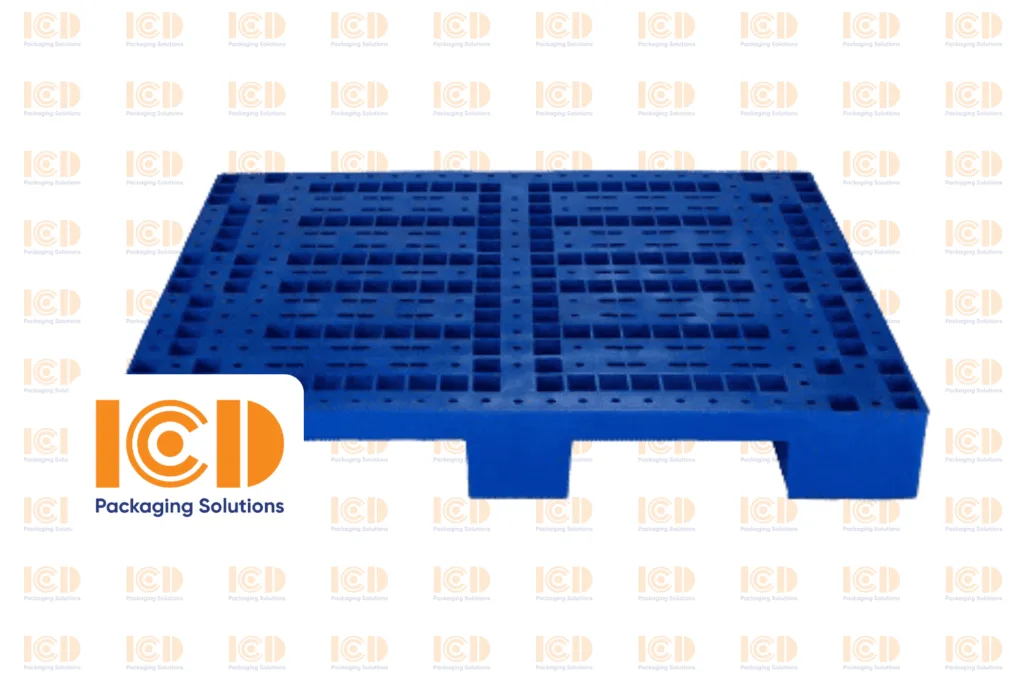
What is a plastic pallet? A plastic pallet is a transport structure manufactured by injection moulding from polymer pellets - primarily HDPE or PP. Unlike natural materials, plastic pallets have a homogeneous structure that is unaffected by ambient humidity and can bear very high loads (up to thousands of kilograms) depending on the ribbing design.
Advantages of plastic pallets
The greatest strength of a plastic pallet is its durability and hygiene. Because they are moulded in one piece, there are no nails or screws to work loose and tear packaging or injure workers. The non-porous plastic surface prevents moisture absorption and completely blocks colonisation by harmful bacteria such as E. coli and Salmonella - critical for food and pharmaceutical operations.
Operationally, plastic pallets are fully compatible with automated forklift systems and high-bay racking because their dimensions are accurate to within a millimetre. They do not require ISPM15 fumigation treatment at international border crossings, saving time and paperwork costs. Modern plastic pallets can also be fitted with RFID chips for automatic tracking throughout the supply chain.
Disadvantages of plastic pallets
The main barrier is the high upfront cost - typically 3 to 4 times more than a wooden pallet. Plastic pallets are produced in fixed moulds, so custom sizes for non-standard cargo are not available off the shelf.
Another limitation is that smooth plastic surfaces have lower friction than wood, so loads can shift unless wrapped securely with stretch film.
Finally, when a plastic pallet cracks or breaks, it cannot be repaired - it can only be sold for recycled plastic scrap.
When to buy plastic pallets
Invest in plastic pallets when running closed-loop supply chains where pallets circulate internally and are retrieved after each delivery. They are also the required choice for cold-store environments, operations with strict hygiene standards, or automated racking systems that demand dimensional accuracy to the millimetre.
Wooden pallets: pros and cons
Despite competition from plastic, wooden pallets hold their ground because of their flexibility and very low cost.

What is a wooden pallet? A wooden pallet is assembled from sawn planks - commonly pine, acacia, or melaleuca - joined with nails or screws. It is the oldest pallet type and still accounts for the largest share of global cargo movement.
Advantages of wooden pallets
The absolute advantage of a wooden pallet is its low cost and the ability to customise dimensions quickly without any tooling. You can have wooden pallets made to any specification in a short lead time.
Wood has high surface friction, which keeps stacked loads from sliding. Wooden pallets are also very easy to repair: a broken plank is simply replaced at minimal cost.
Disadvantages of wooden pallets
Wooden pallets present several safety risks: nails and screws can loosen, and splinters can puncture packaging. They absorb moisture readily, which leads to mould growth and makes them attractive to termites and insects.
For export, wooden pallets must undergo heat treatment or fumigation and be stamped with the ISPM15 mark. A shipment that fails inspection can be detained at the border or forced to return, causing significant losses.
Wooden pallets also have a short service life and can rot quickly after repeated contact with water.
When to buy wooden pallets
Wooden pallets are the optimal solution for one-way shipments where the pallet travels with the goods to the end customer and is not returned. They also suit businesses with a limited upfront budget or those shipping goods in non-standard dimensions for which no plastic pallet mould exists.
How to decide between plastic and wooden pallets
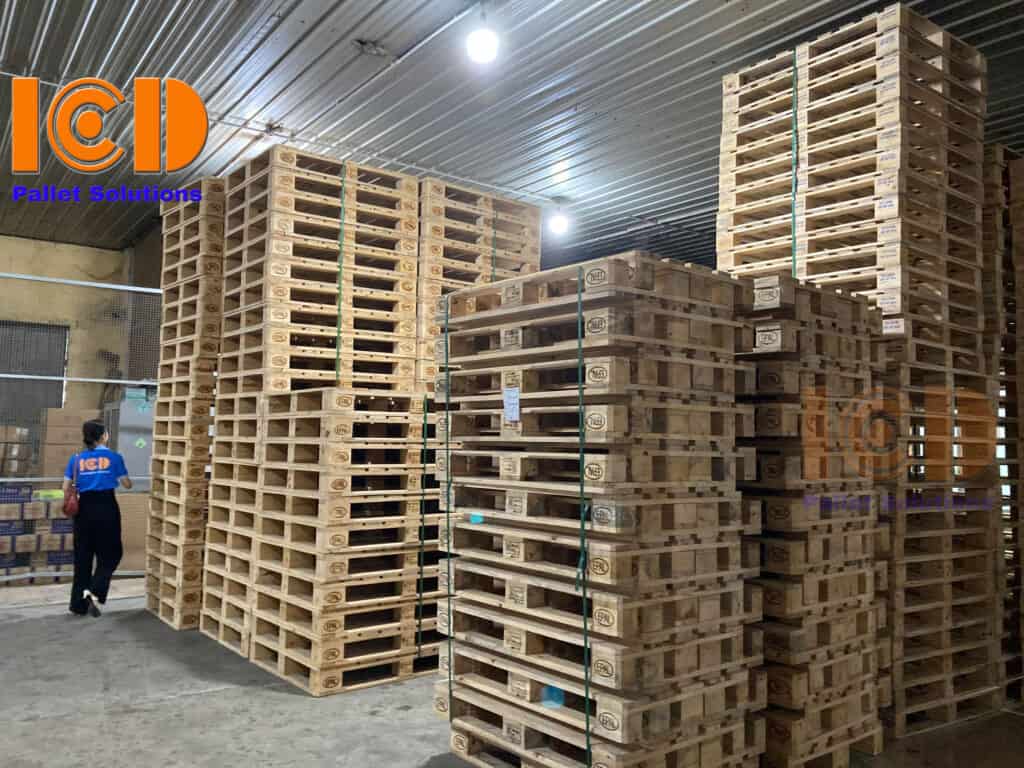
Run a break-even analysis before committing. If the cycle count for one pallet in your operation exceeds 10 trips, plastic pallets deliver better economics over their lifespan. If you ship pallets out and never recover them, wooden pallets are the more cost-efficient choice.
Consider your industry. Seafood or food exporters should prioritise plastic pallets to eliminate contamination and phytosanitary risks. Construction materials or heavy bulk goods operations, where wood’s high friction and low price are decisive, can optimise packaging costs effectively with wooden pallets. Finally, check your racking system: high-bay racking requires the dimensional accuracy and structural consistency of plastic pallets with steel-core stringers to operate safely.
See also: comparing pallet materials | static vs dynamic load capacity
Related articles
| What is a plastic pallet? Types and specifications | Static and dynamic load capacity of pallets | Which material makes the best pallet? |
Frequently asked questions about plastic vs wooden pallets
1. Which lasts longer, plastic or wooden pallets?
Plastic pallets typically last 5-10 years in closed-loop use. Wooden pallets usually last under one year, especially when exposed to moisture repeatedly.
2. Do plastic pallets need ISPM15 treatment for export?
No. Because plastic is not a raw wood product, plastic pallets are exempt from the ISPM15 phytosanitary treatment required for wooden pallets entering most countries.
3. What are HDPE and PP plastic pallets?
HDPE (High-Density Polyethylene) and PP (Polypropylene) are the two main polymers used in pallet production. HDPE pallets tolerate cold-store temperatures and impact well; PP pallets are lighter and slightly more rigid. Both are non-porous and washable.
4. Can a plastic pallet be repaired?
In most cases, no. When a plastic pallet cracks or breaks, it is sold as recycled plastic scrap rather than repaired. Wooden pallets, by contrast, can have individual planks replaced at low cost.
5. When does a plastic pallet break even against a wooden one?
As a practical rule: if a pallet completes more than about 10 retrieval cycles in your operation, a plastic pallet delivers a lower total cost over its life despite the higher purchase price.
6. Which pallet should food or pharmaceutical companies use?
Plastic pallets are the standard for food and pharmaceutical environments. The non-porous surface cannot harbour bacteria such as E. coli or Salmonella and can be fully washed and sanitised between loads.
7. Are wooden pallets suitable for export?
Yes, but they must be heat-treated or fumigated and stamped with the ISPM15 mark before crossing most international borders. Shipments using non-compliant wooden pallets can be detained or refused entry.
Contact ICD Vietnam
Hotline: 0983 797 186 / 090 345 9186 / 090 5859 186
Email: sales@icdvietnam.com.vn | Zalo: Chat Zalo