
Table of Contents
- Why a business should print its logo on pallets and plastic bins
- Methods for printing a logo on plastic pallets and bins
- Which plastics can be printed? Position and size
- Printing management codes, barcodes and QR for pooled pallets
- Minimum quantity and the print ordering process
- Common mistakes when ordering a logo print on plastic
- Frequently asked questions
- Does a logo printed on a plastic pallet fade?
- What is the standard size for a logo printed on a pallet?
- Where on the pallet should the logo be printed?
- Can a logo be printed on used plastic pallets?
- What is the minimum quantity for logo printing?
- How many colours can be printed on pallets and plastic bins?
- What file format should I send for my logo?
- Can an individual number be printed on each pallet or plastic bin?
- Contact us for pallet and plastic bin logo printing
- References
Reviewed and updated by ICD - Week 46/2026
Printing a logo on plastic pallets and plastic bins means putting a company name, logo or management code on the surface of PP or HDPE plastic products. ICD Vietnam accepts custom printing by screen printing (1-4 colours), hot stamping or pad printing for small areas, and engraves the logo into the mould when you order production by batch. The main purposes are preventing asset loss, brand identity and managing pooled pallets. Laser engraving gives a clear mark only when the plastic contains a laser-marking additive, so it is not the default choice for pallets you already have.
I have handled logo printing requests at ICD Vietnam since 2011, and most of them begin with a very ordinary problem: pallets or bins pass through a partner’s warehouse or a carrier and do not all come back, and when it comes to reconciling, nobody can prove which ones are yours. Choosing the right printing method for that problem depends on three things: the plastic of the product, where the logo sits while the pallet is carrying goods, and the quantity. This article goes through each one, with a way to check a sample print yourself before you approve the whole lot.
Why a business should print its logo on pallets and plastic bins
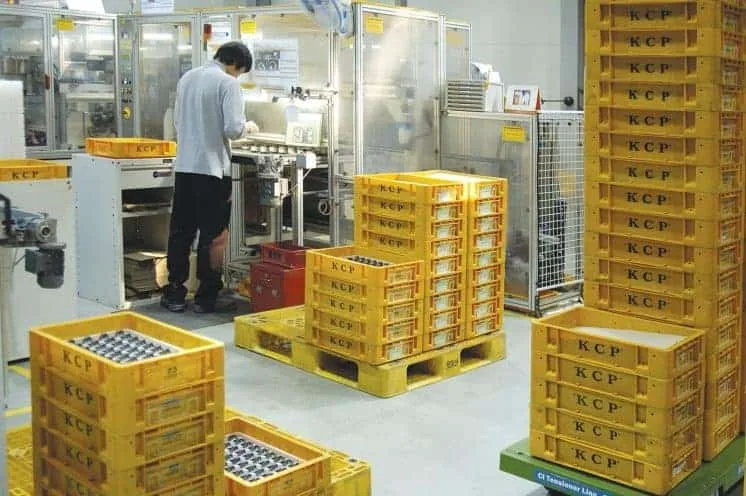
The first reason is loss prevention: pallets and bins with a logo are hard to mix up among outsourced units or when goods ship through many warehouses. For pallets circulating between plant, warehouse and customer, a logo with a number helps counting, reconciliation and recovery. Goods on logo-printed pallets and bins also look more professional at the receiving point, in a supermarket or at a trade fair. Finally there is internal management: printing a batch code, warehouse code or QR for fast stocktaking. If you want the overall picture first, you can also read our plastic pallet price list. To go deeper, see plastic pallet suppliers.
Methods for printing a logo on plastic pallets and bins
There are four ways to put a logo on plastic: screen printing, hot stamping or pad printing, engraving the logo into the mould (including in-mold labels), and laser engraving or embossing. Screen printing is cheapest in large volume on flat surfaces; mould engraving gives the most durable logo because it is part of the product. The table below compares them on real conditions, not just a vague “durability”. You can see the full range of samples in the ICD plastic pallets category.
| Method | How it is done | Durability, conditions | Colours | Best when |
|---|---|---|---|---|
| Screen printing (mesh stencil) | Plastic-specific ink is pulled through a mesh screen onto the surface | Good on a clean, treated surface with the right ink; wears gradually where forklift tines rub | 1-4 colours | Large volume, logo on a flat surface, lowest cost |
| Hot stamping, pad printing | Hot stamping transfers foil onto the surface with heat; pad printing transfers ink through a silicone pad | Hot stamping suits flat or slightly curved surfaces; a pad hugs concave corners and uneven faces | Usually 1 colour (hot stamping), 1-2 colours (pad printing) | Small logos, narrow print areas or non-flat surfaces |
| Mould engraving, in-mold labels | The logo is engraved on the mould so it is raised or recessed when moulded; or a label is placed in the mould | Most durable, does not peel or fade because it is part of the product | By plastic colour; in-mold labels can be multicolour | New production ordered by batch |
| Laser engraving, embossing | A laser beam or embossing die forms the logo, no ink | On HDPE and PP a laser mark is usually very faint; clear only when the plastic has a laser additive mixed in during moulding | Single tone | Coding on a production batch that contains a laser additive |
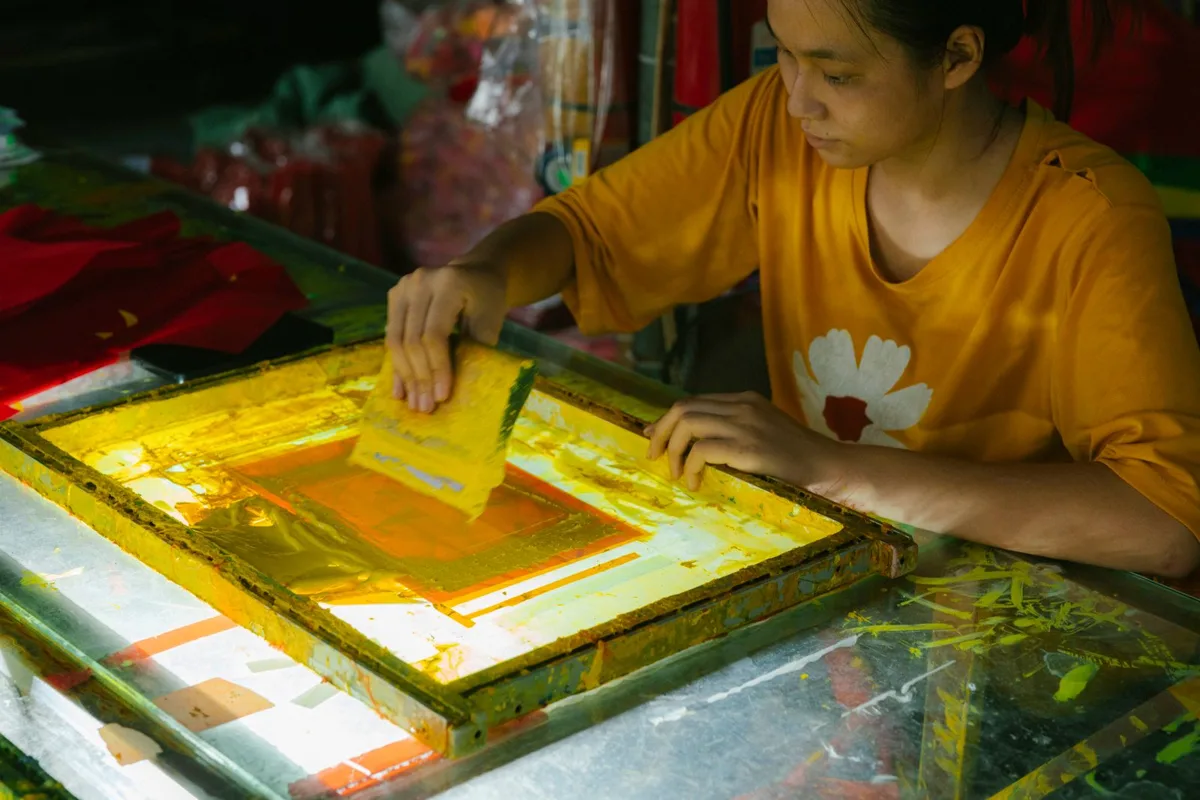
Screen printing is the most common method for custom print orders: each colour needs its own screen and its own pass, so the more colours a logo has, the more work and cost it adds. For a small logo on a curved wall or a concave corner, printers usually switch to pad printing, because a soft silicone pad follows an uneven surface that a flat screen cannot. You can also read our article on tips for buying used plastic pallets.
If you are ordering new production by batch and want a one-piece logo that never peels, engrave the logo into the mould or use an in-mold label; for a multicolour logo as sharp as a photo, in-mold labels work best. On trays and bins with a wide flat face, multicolour screen printing still gives a clear result, as in the luggage tray sample below.

Which plastics can be printed? Position and size
Both PP and HDPE can be printed with plastic-specific ink on a clean surface. ICD Vietnam pallets and bins are made of PP and HDPE, mostly virgin plastic, with some recycled lines. There is no “standard” logo size: it depends on the real flat area of each product code, so ICD Vietnam designs the artwork so the logo sits fully within that area, not over ribs, edges or drain holes.
On a pallet the logo usually goes on the side wall or the top face; bins and crates are printed on the wall or base, possibly with a management code or QR. For a warehouse with conveyors or an automated system, place the logo in the recessed zone of the pallet wall so the print does not rub against rollers, guides and forks.
Why is ink harder to bond to PP and HDPE than to paper or metal?
PP and HDPE are hard to bond ink to because the surface is chemically inert, non-porous and has low surface energy. According to the table of critical surface tension of polymers, PP is about 30.5 mN/m and PE about 31.6 mN/m, well below many other materials. The surface-treatment rule of thumb is that the surface should be about 10 units higher than the ink’s surface tension for the ink to spread evenly and bond well; this is a starting point, and a test print is still needed.
For ink to bond you need three conditions: the right ink for polyolefin plastic, a clean surface free of oil, dust and mould-release agent, and, where needed, surface treatment before printing. The common treatments are flame treatment or corona discharge; according to Wikipedia - Corona treatment, the corona method was invented in 1951 by the Danish engineer Verner Eisby precisely from the need to print on plastic, and works on both injection-moulded and blow-moulded parts.
Printing management codes, barcodes and QR for pooled pallets
For pooled pallets and bins, the logo tells you whose asset it is, while a separate number tells you where each individual unit is. The international GS1 barcode system has a dedicated identifier for returnable assets, the GRAI (Global Returnable Asset Identifier), used to identify pallets, bins and transport trays by type or by individual unit for tracking and sorting (source: GS1 - Global Returnable Asset Identifier (GRAI)). A business already using GS1 codes can print the GRAI as a barcode or QR on the pallet wall or bin. Besides printed codes, according to the summary on Wikipedia - Pallet, an RFID chip can also be moulded into a plastic pallet to track location and stock.

The approach I usually propose combines a fixed mark with a variable mark. The fixed mark is a moulded logo, a screen-printed logo or a plastic colour unique to the business, applied across the whole lot. The variable mark is a serial number, a QR code following the GRAI standard or an RFID chip, unique to each unit. If you do not want to print directly yet, a label or an ID plate attached to the flat area of the pallet wall is another option.
| Marking method | Information carried | How it is read |
|---|---|---|
| Logo, company name, own plastic colour | Owner | By eye |
| Printed or engraved number | Warehouse code, batch code, serial number of each unit | By eye, entered in a log |
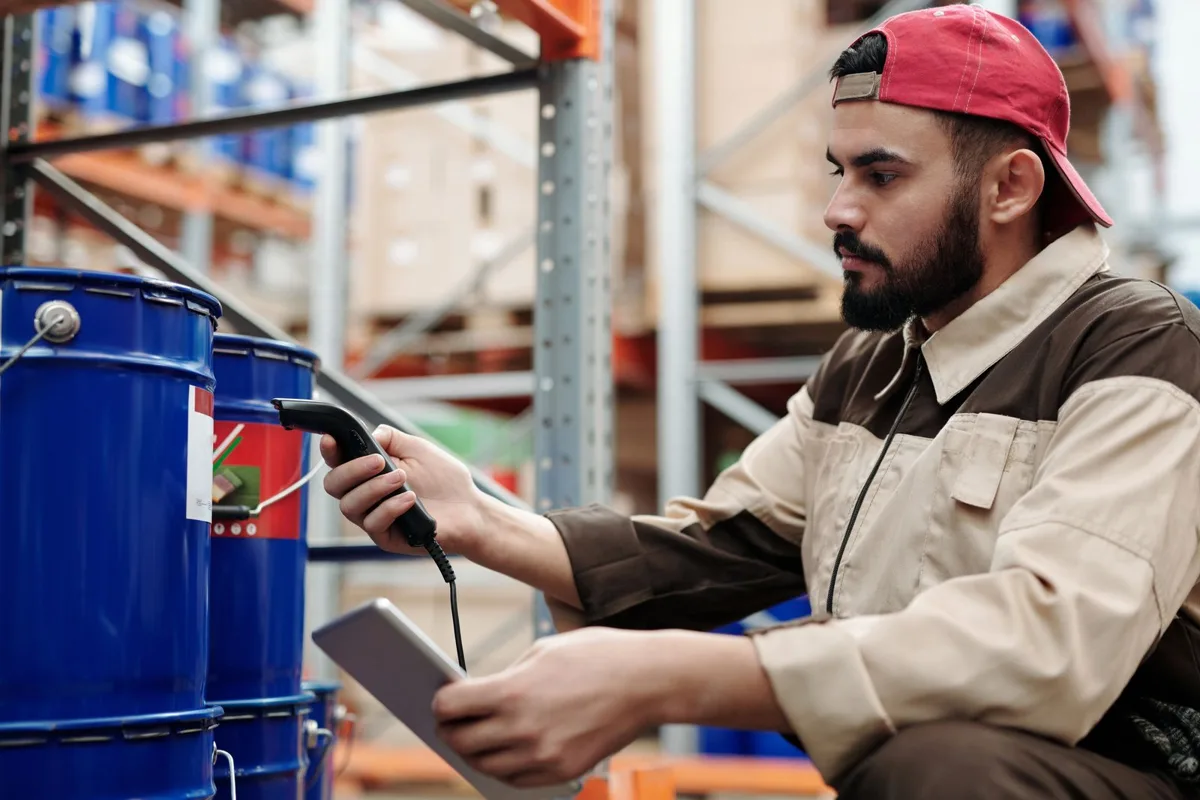
| Barcode, QR (can follow GS1 GRAI) | Identifier of each unit, linked to warehouse software | Scanner, phone |
| Moulded-in RFID chip | Identifier, bulk reading without line of sight | RFID reader |
Minimum quantity and the print ordering process
ICD Vietnam accepts both single orders and large quantities; screen printing and laser engraving have a low minimum quantity, while mould engraving and in-mold labels must be ordered as a production batch. The process is short, in 4 steps:
- Send the logo file (AI, PDF, PNG with transparent background), the position and the number of colours you want.
- ICD Vietnam designs the artwork and sends a simulation of the print position on the product for approval.
- A sample is printed for you to see and to test adhesion before running the quantity.
- Production, inspection and delivery by ICD Vietnam’s own truck fleet.
Note: the logo file should be a vector (AI/EPS) or a high-resolution PNG with transparent background so the print is sharp; avoid blurry photos.
What does the cost of logo printing include?
The cost of logo printing has two parts. The fixed part is done once: a screen for each colour in screen printing, or an engraved logo plate fitted to the mould when moulding the logo by batch. The part that varies per unit is the number of colours, the size of the print area, the number of printed faces and surface-preparation labour if needed. Because the fixed part is shared across the whole lot, the larger the order, the lower the cost per unit; a small order with a multicolour logo is the most expensive case per product.
Common mistakes when ordering a logo print on plastic
The four mistakes below are the ones that most often ruin a whole print lot, and all can be avoided at the artwork approval step.
Ink easily shifts; for curved surfaces use hot stamping or pad printing.
Each extra colour adds a screen and a print pass; reduce the number of colours or use in-mold labels when ordering by batch.
A wrong position or size only shows up once the whole lot has been printed.
Oil, dust and mould-release agent make the ink adhere poorly and peel quickly.
Frequently asked questions
Does a logo printed on a plastic pallet fade?
A print made with plastic-specific ink on a clean, treated surface bonds well, but still wears gradually where there is heavy rubbing, such as where forklift tines touch. To keep a logo from fading, engrave it into the mould or use an in-mold label when ordering production by batch, because then the logo is part of the product.
What is the standard size for a logo printed on a pallet?
There is no general standard size. The logo needs to sit fully within the flat area of the wall or face of the pallet, not over ribs, edges or holes, and be large enough to read at working distance in the warehouse. ICD Vietnam sends artwork for the exact product code so that you can approve the size before printing.
Where on the pallet should the logo be printed?
Print on the side wall if the purpose is identification, because that position stays visible when the pallet is loaded, stacked or on racking. The top face suits management codes that must be read when the pallet is empty. Many businesses print in both positions.
Can a logo be printed on used plastic pallets?
Yes, if the surface to be printed is still flat, uncracked and has been washed free of oil and dust and left to dry. Ink usually bonds less well on old plastic than on new, so print one unit as a test and test adhesion before printing the whole lot; if the surface is too worn, attaching a label or ID plate is the more reliable option.
What is the minimum quantity for logo printing?
Screen printing and pad printing accept small orders; mould engraving and in-mold labels must be ordered as a production batch. Contact ICD Vietnam for the minimum quantity by method and product code.
How many colours can be printed on pallets and plastic bins?
Screen printing can do 1-4 colours, one pass per colour. Hot stamping is usually one colour from the foil, mould engraving follows the plastic colour, and in-mold labels give the sharpest multicolour print.
What file format should I send for my logo?
Best is a vector file (AI, EPS, PDF) or a high-resolution PNG with transparent background so the print is sharp.
Can an individual number be printed on each pallet or plastic bin?
Yes. Besides the shared logo, a serial number, warehouse code, barcode or QR can be printed or engraved on each unit for counting and recovery. Businesses using the GS1 system can use the GRAI code for returnable assets.
Contact us for pallet and plastic bin logo printing
ICD Vietnam Industrial Manufacturing Co., Ltd.
North: 0983 797 186 / 090 345 9186 / 090 5859 186
South: 098 6784 186
Email: sales@icdvietnam.com.vn
Zalo: Chat on Zalo now
Plastic-specific printing ink for PP and HDPE; nationwide delivery through two offices in Hanoi and Ho Chi Minh City; view samples before ordering; payment terms up to 30 days; import and export declarations handled for export-processing enterprises (0% VAT invoice, DAP and DDP terms).
See the common types of plastic pallets at ICD Vietnam before deciding on logo printing.
References
- Surface treatment of PE and PP plastic before printing - Wikipedia - Corona treatment.
- Critical surface tension of polymers - Accu Dyne Test, Critical Surface Tension and Contact Angle with Water for Various Polymers.
- Returnable asset identifier - GS1 - Global Returnable Asset Identifier (GRAI).
- RFID chips in plastic pallets - Wikipedia - Pallet.
- Cross-cut adhesion test - ASTM D3359 (metal substrates) and ISO 2409 (non-metal substrates permitted).
- Laser marking on PP, PE and laser additives - technical documentation of the plastic surface-treatment industry.