Table of Contents
- Why should cold stores use HDPE instead of ordinary PP?
- What does each type of cold store need from its pallets?
- How do HACCP, ISO 22000 and BRCGS affect pallet choice?
- Which type of plastic pallet should a cold store use?
- What sizes do cold-store pallets come in?
- What mistakes are common when choosing pallets for cold stores?
- How should plastic pallets be used in a cold store to last longer?
- Frequently asked questions
- What temperature can a cold-store plastic pallet withstand?
- Do cold-store plastic pallets need to meet HACCP?
- What colour cold-store plastic pallet is suitable?
- When should you buy new cold-store pallets instead of used ones?
- How much does a cold-store plastic pallet weigh?
- What plastic are ICD Vietnam cold-store pallets made of?
- Why does a pallet collect water and freeze when moving in and out of a cold store?
- Contact ICD Vietnam
- References
Reviewed and updated by ICD - Week 43/2026
Cold-store plastic pallets should be made of virgin HDPE or HDPE blended with PP copolymer (PPC), because these two materials stay flexible at sub-zero temperatures, while ordinary PP turns brittle below 0°C. For freezer stores at -18 to -25°C, the usual choice is a four-way-entry mesh-deck pallet in 1200 x 1000 or 1100 x 1100 mm with a dynamic load of 1,000 kg or more.
A pallet in a cold store rarely fails from a single overload. Usually the legs crack gradually after many knocks from forklift tines while the plastic is cold, or the deck sags because it sits on racking at a load above its design rating. So when customers ask ICD Vietnam about cold-store pallets, we ask three things before talking about models: what temperature the store runs at, whether the pallet sits on the floor or goes on racking, and whether the store is audited to a food-safety or pharmaceutical standard. This article follows those three questions in turn.
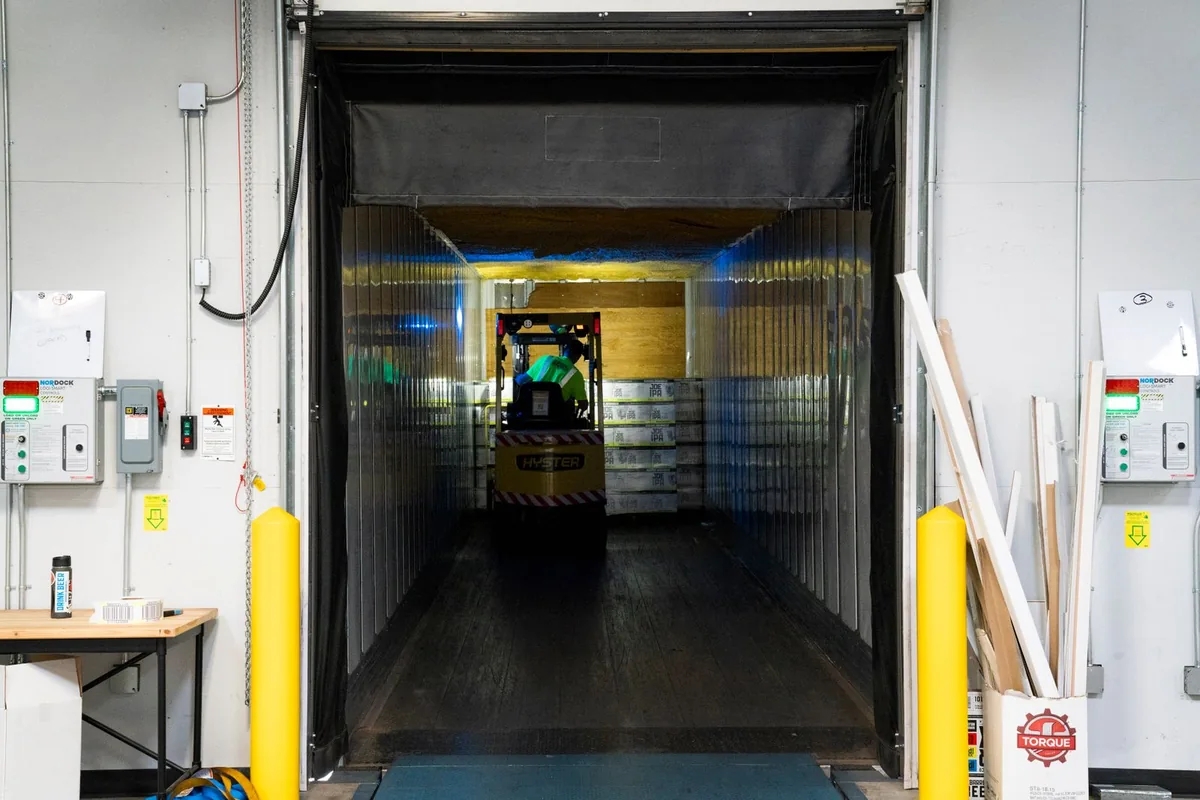
Why should cold stores use HDPE instead of ordinary PP?
Because HDPE stays flexible and impact-resistant at sub-zero temperatures, while ordinary PP has a glass transition temperature around 0°C and starts to turn brittle below it. The glass transition temperature is the threshold at which the amorphous part of the plastic changes from a flexible state to a hard, brittle one. The British Plastics Federation (BPF) places this threshold for PP around 0°C and treats it as the reason PP is brittle in the cold; for polyethylene, the equivalent threshold sits far below the temperature of any commercial cold store. Background detail is in plastic pallets for the pharmaceutical and food industries.
In the warehouse, this difference shows up in impact resistance. A pallet standing still under load rarely breaks. A pallet breaks when a fork tine is thrust against a leg, when a load is dropped hard onto it, or when the pallet falls from a low height during handling. Brittle plastic absorbs less energy before cracking, so the same knock can leave a dent at 25°C but crack a pallet leg at -20°C. To learn more about the material, see the article on what virgin HDPE plastic is and its use in pallet production. The model closest to this case is the ICD cold-store plastic pallet 1200x1000x150 mm in blue.
Why do many cold-store pallets list HDPE, PPC as the material?
PPC is PP copolymerised with ethylene, created to fix the very weakness of ordinary PP, brittleness in the cold. According to the BPF, the low-temperature brittleness of PP is improved by copolymerising with ethylene or adding rubber. When you see “HDPE, PPC” in the specifications of a cold-store pallet, it is a deliberate blend so the pallet is both stiff and cold-tolerant, quite unlike a recycled PP pallet of unknown composition.
In ICD Vietnam’s catalogue of cold-store pallets, 6 of 12 models list HDPE combined with PPC, one lists HD/PP plastic, and the rest are HDPE. There is one 1100 x 1100 mm model in recycled green plastic, so if the store needs virgin plastic for its records, say so when ordering so we can choose the right model.
- Ordinary PP (homopolymer): stiff and heat-resistant but brittle below 0°C; suits dry stores and cool stores above 0°C.
- PP copolymer (PPC): copolymerised with ethylene, takes impact at low temperatures better than ordinary PP.
- HDPE: stays flexible at sub-zero temperatures and is the main material of freezer-store pallets.
What does each type of cold store need from its pallets?
Cool stores above 0°C can use virgin HDPE or PP pallets; from cold stores at sub-zero temperatures downward, use HDPE or HDPE blended with PPC, with an airy mesh deck and a load rating that suits how goods are stacked. In provinces with ports and many industrial zones such as Hai Phong, cold stores serving seafood, food and pharmaceuticals usually fall into the groups below. The temperature ranges are typical levels; your store may set them differently depending on the goods.
| Store type | Typical temperature | Goods | Material to choose | Pallet deck |
|---|---|---|---|---|
| Cool store | +2 to +8°C | Vegetables, fruit, fresh milk | Virgin HDPE or PP | Mesh deck with drainage |
| Cold store | 0 to -5°C | Processed food, beverages | HDPE, HDPE blended with PPC | Mesh deck, four-way entry |
| Freezer store | -18 to -25°C | Seafood, frozen meat | HDPE, HDPE blended with PPC | Open mesh deck |
| Blast freezer | -30°C and below | Quick-frozen goods, ice cream | HDPE; confirm the temperature range with the manufacturer | One-piece or mesh deck depending on the model |
| GSP pharmaceutical store | +2 to +8°C, controlled | Medicines, vaccines, biologics | Virgin plastic with records | Solid or mesh deck, easy to wipe and disinfect |
The last two rows need one more check. A blast freezer is much colder than a freezer store, so do not assume every HDPE pallet works; ask for the working temperature range of the exact model. A pharmaceutical store is rarely sub-zero, but its records and hygiene requirements are stricter than for an ordinary food store, so the material must be clearly stated at the time of purchase.
How do HACCP, ISO 22000 and BRCGS affect pallet choice?
These standards do not certify pallets separately, but they put pallets on the list of things that must be controlled: material, hygiene, damage and the risk of foreign bodies. So compliant stores usually choose virgin plastic pallets that are easy to wash and have clear material information. Under HACCP, a pallet is treated as a source of physical hazard, for example broken plastic fragments, and of microbiological hazard if the surface holds water or is hard to clean. For more depth, see what HACCP stands for.
On the domestic legal side, QCVN 12-1:2011/BYT applies to plastic packaging and utensils in direct contact with food. Most pallets only carry packaged goods and so fall outside that scope. Even so, if a store places unpackaged goods directly on a pallet, for example uncovered fish crates, many plants require virgin plastic pallets with material records so they stay in control during audits.
ISO 22000 requires a site to build prerequisite programmes (PRP), including control of equipment, hygiene and handling of damaged items. For pallets this usually shows up as three actions: recording the material, setting a schedule for washing and disinfecting, and stating when a cracked or broken pallet must be removed. BRCGS Food Safety goes further on foreign-body control. The standard does not specify pallet colour, but many plants choose blue or green pallets for food areas because fragments of these colours are easy to see on light-coloured goods, while black plastic fragments are harder to spot.
- HACCP: assess the pallet as a physical and microbiological hazard, with a cleaning schedule and log.
- ISO 22000:2018: material information, conditions for removing damaged pallets, a periodic cleaning schedule.
- BRCGS Food Safety: an internal pallet colour rule and how to handle broken plastic fragments.
- Pharmaceutical GSP (Circular 36/2018/TT-BYT): supplier records, technical specifications, ability to be cleaned and disinfected.
ICD Vietnam provides a specification sheet for each pallet model, together with CO and CQ documents for imported goods when the store’s audit file for pharmaceutical GDP/GMP needs them.
Which type of plastic pallet should a cold store use?
Most freezer stores use four-way-entry mesh-deck pallets; a solid deck suits bagged goods, powders or when dripping water must be stopped from reaching the rack tier below; and stores with high racking and heavy goods should consider a steel-core pallet. No single model suits every store, because the choice also depends on the forklifts, racking and cleaning method at each site.
Four-way-entry mesh-deck plastic pallet
This is the type most used in commercial cold stores. The open mesh deck lets cold air circulate through the base of the load so cold goods chill more evenly, while defrost water drains straight to the floor instead of freezing into a layer of ice on the pallet. Four-way entry lets the forklift enter the pallet from any side, which is very useful in a cold store where space is tight because every cooled square metre costs money.
Mesh-deck pallets suit seafood stores, processed-food stores and cool stores for fruit and vegetables. The weakness is that small loose items fall through the mesh holes; in that case, put plastic crates on the pallet or add a liner sheet.
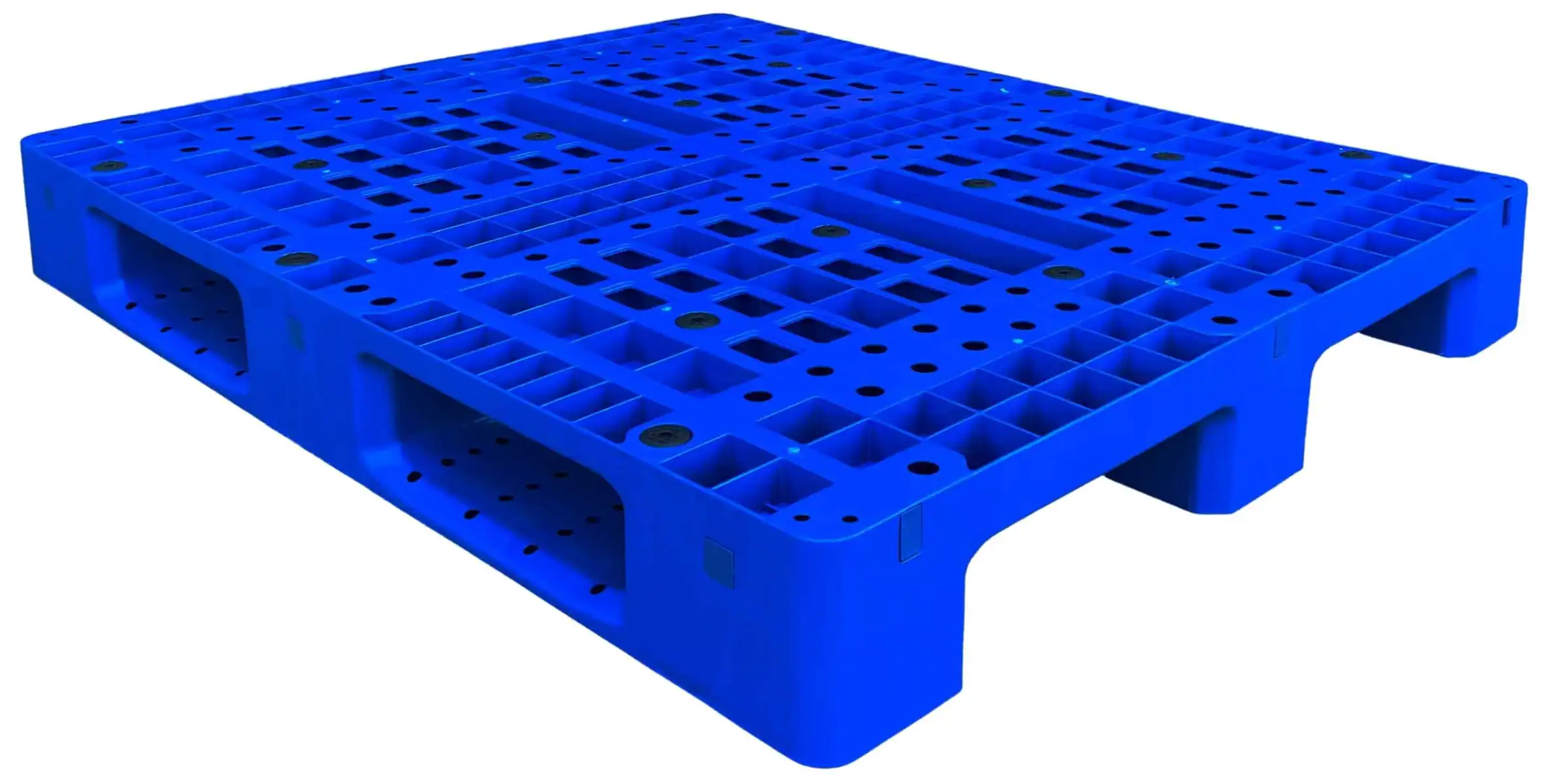
One-piece solid-deck plastic pallet
A solid-deck pallet has no open gaps, spreads load evenly across the whole deck and is easier to wipe than a mesh deck because it has no hidden corners. In return, cold air does not pass through the deck and water cannot drain, so it must be wiped dry more often. This type suits bagged goods, powders, goods that need dripping water stopped from reaching the rack tier below, and pharmaceutical stores that need surfaces wiped and disinfected.
Pallets on selective and drive-in racking
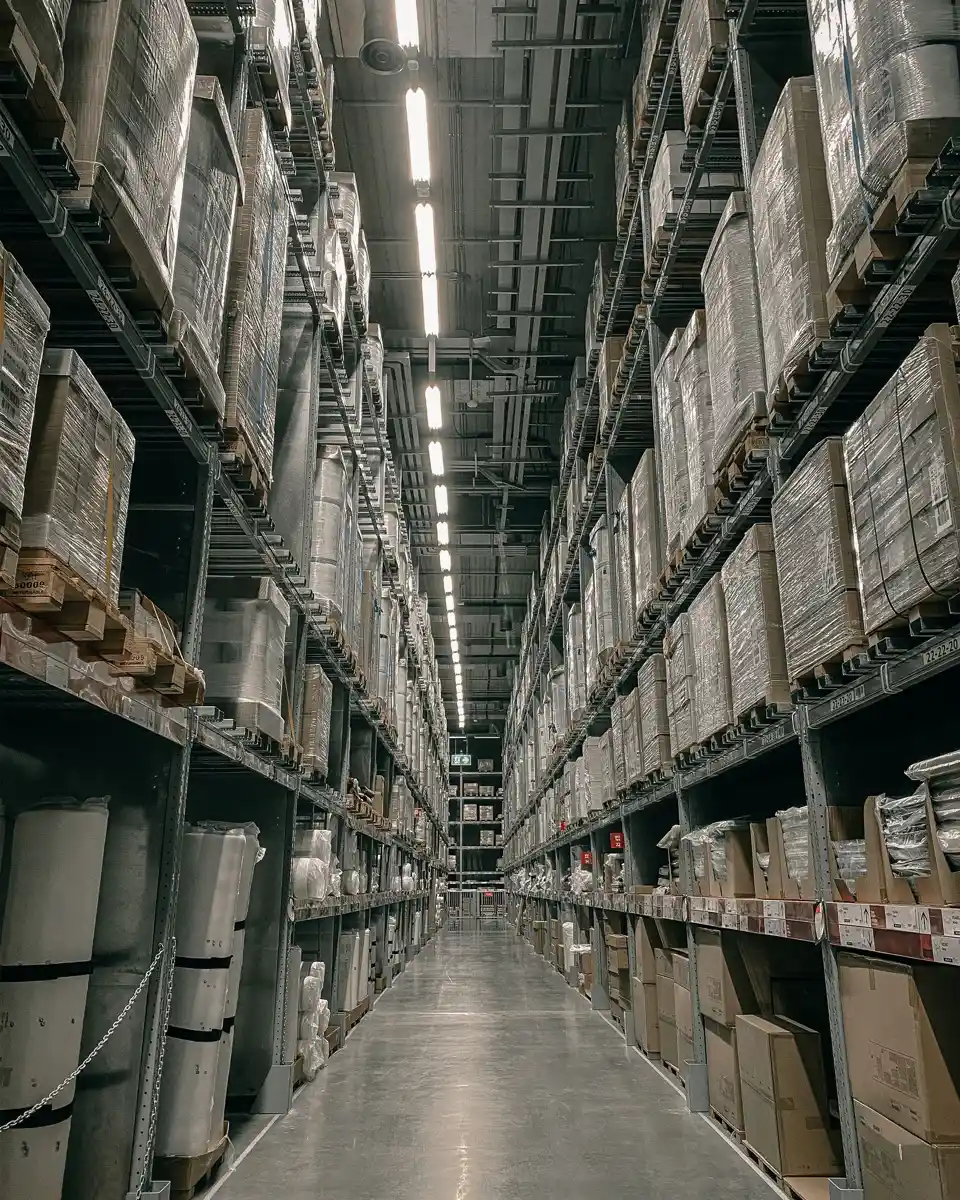
A cold store with selective or drive-in racking needs to watch the rack load, the load a pallet can carry when supported only at its two edges on two beams. This figure is lower than the static load on the floor and depends on each model’s construction, the beam spacing and how goods are spread across the deck. So ask the manufacturer for the rack load of the exact model, for the exact rack configuration of your store, rather than using a generic figure.
Frozen goods such as meat and block fish are often heavy per load, and pallets on racking at sub-zero temperatures are less elastic than at normal temperature. The safe approach is to weigh one pallet of real goods, compare it with the rack load confirmed by the manufacturer, and only then decide the number of rack tiers.
Steel-core plastic pallets
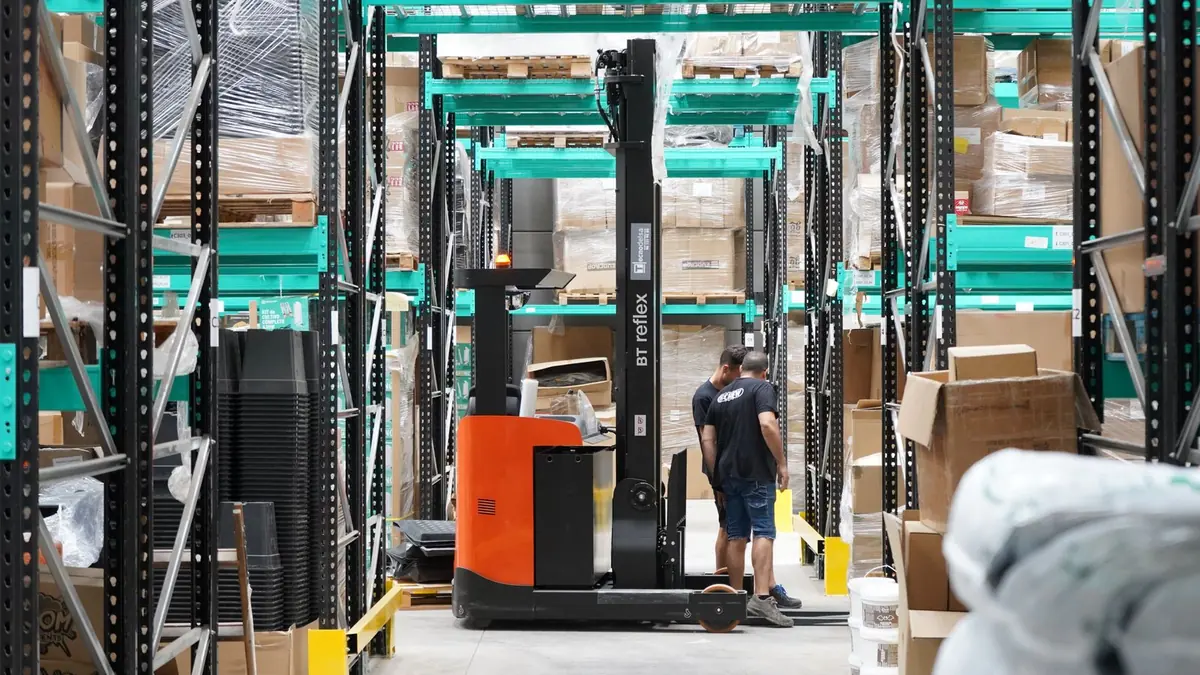
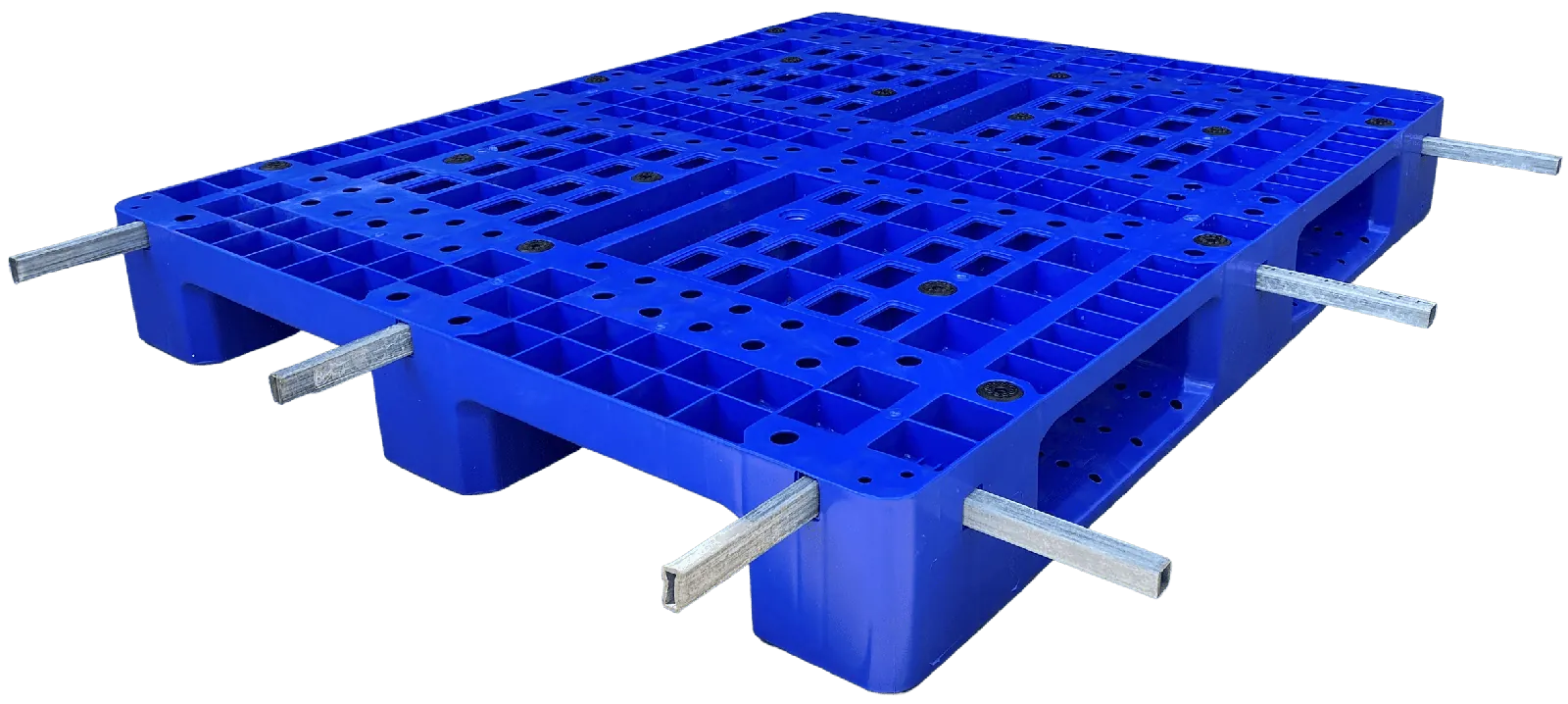
Consider a steel-core pallet when the store uses high-bay racking and heavy goods, because the steel bars threaded through the body keep the pallet from sagging on the beams. In the ICD Vietnam catalogue, the steel-core models in 1200 x 1000 x 150 mm have a dynamic load of 1,500 to 3,200 kg and a static load of 4,500 to 6,500 kg. In a freezer store, you still need to confirm the working temperature range of each model, as with an ordinary pallet.
Floor-liner plastic pallets in cold stores
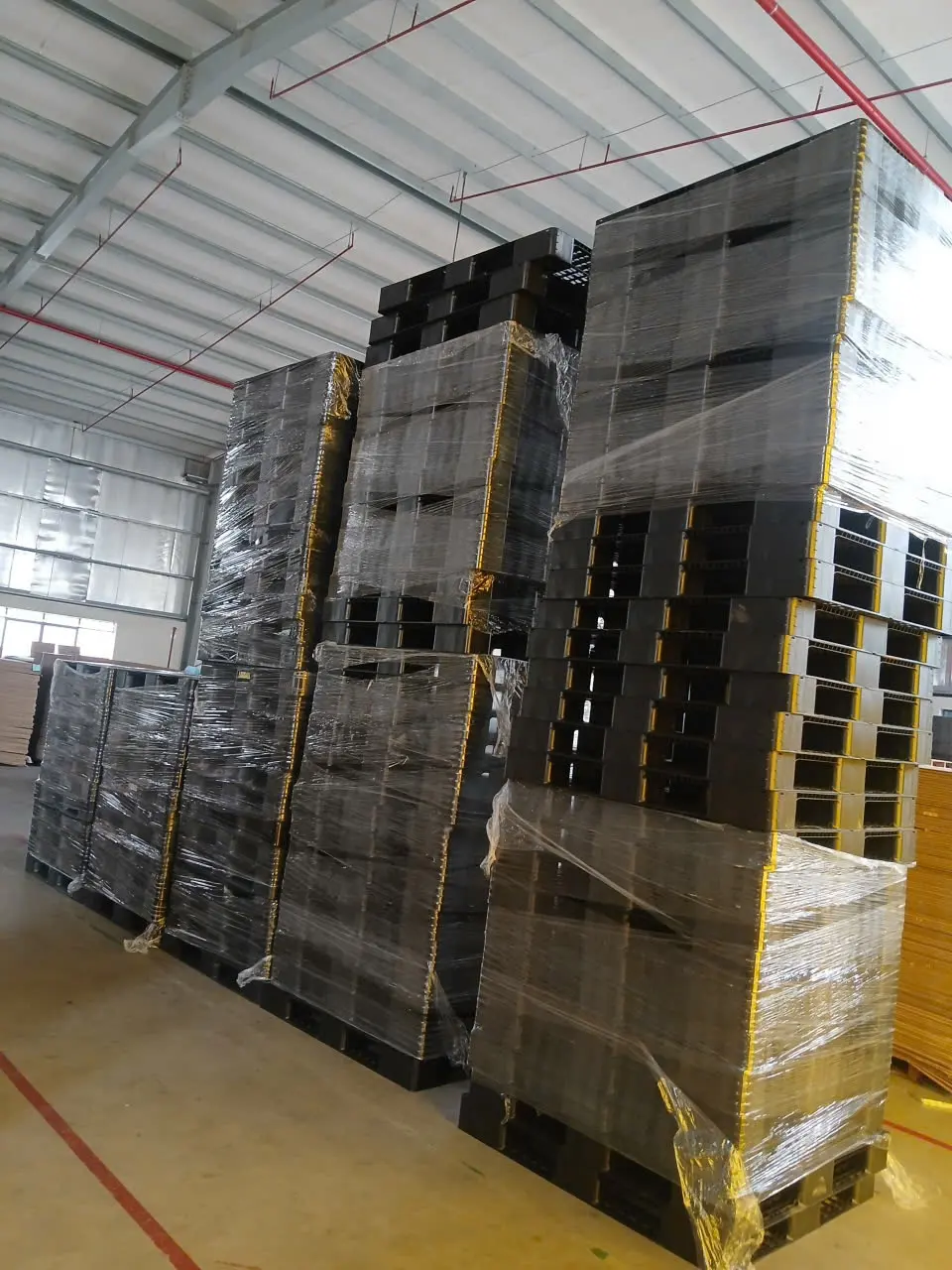
A floor-liner pallet is a low pallet that sets goods close to the floor, keeping goods off a damp floor and letting cold air circulate under the load; in stores below 0°C choose a model made of HDPE. Many thin floor-liner models on the market are made of PP, which suits dry or cool stores better than freezer stores.
What sizes do cold-store pallets come in?
The two most common sizes in Vietnamese cold stores are 1200 x 1000 mm, for domestic stores and refrigerated containers, and 1100 x 1100 mm, suited to goods bound for Japan and to Japanese and Korean standard racking; the 1200 x 800 mm size is for goods going to Europe. Choosing a size should start from where the goods will go: the racking in the store, the refrigerated container and the buyer’s store all already have fixed dimensions, and the pallet must fit them, not the other way round.
Checked against the actual catalogue, ICD Vietnam’s 12 cold-store pallet models are distributed by size as in the table below. Load ratings follow the product specifications; rack load must be confirmed for each model and rack configuration.
| Size (mm) | Models | Height (mm) | Static load (kg) | Dynamic load (kg) | Suited to |
|---|---|---|---|---|---|
| 1200 x 1000 | 7 | 145, 150, 160 | 2,000 - 5,000 | 1,000 - 1,500 | Domestic stores, refrigerated containers, selective racking |
| 1100 x 1100 | 4 | 125, 150 | 1,500 - 4,000 | 800 - 1,000 | Goods for Japan, Japanese and Korean standard racking |
| 1200 x 800 | 1 | 150 | 4,000 | 1,000 | Goods for Europe (Euro size) |
Pallet weight also differs quite a lot between models. The 1100 x 1100 x 125 mm model weighs 8.5 kg, two 1200 x 1000 x 145 mm models weigh 10.8 kg and 11.5 kg, and the 1200 x 1000 x 150 mm model with a 5,000 kg static load weighs 21 kg. A heavier pallet usually has a thicker body and thicker ribs so it takes rack load better, but it also adds weight per load when working out container load or rack load.
What mistakes are common when choosing pallets for cold stores?
The four mistakes we see most often are choosing recycled PP because it is cheap, using dark pallets in audited food areas, choosing by static load instead of rack load, and buying pallets with no records for a pharmaceutical store. All four share one root: choosing the pallet by price and looks before asking where the pallet will be used.
Choosing recycled PP because it is cheap. A recycled PP pallet can work well in a dry store, but its composition is unclear and PP is inherently brittle below 0°C, so putting it in a freezer store accepts the risk of cracked legs under impact. The saving at purchase is usually small compared with the cost of replacing pallets, plus the risk of spilled loads and broken plastic fragments mixing into the food area. Ask the supplier for the specific plastic type and working temperature range before signing the contract.
Using dark pallets in audited food areas. Black plastic fragments falling into light-coloured goods are hard to spot by eye. If the store applies BRCGS or FSSC 22000, ask the quality department for the internal pallet colour rule before ordering, so you do not have to swap pallets right before an audit.
Choosing by static load instead of rack load. The static load printed large on the catalogue is the load when the pallet lies flat on the floor. Once the pallet goes on racking, the figure to use is the rack load, which is much lower. When the real load exceeds the rack load, the pallet sags gradually and can pull the beams out of line. Weighing one pallet of real goods and comparing it with the rack load confirmed by the manufacturer is the surest approach.
Buying pallets with no records for a pharmaceutical store. A pharmaceutical store applying Circular 36/2018/TT-BYT on good storage practice for medicines must manage suppliers and equipment within its quality system. A pallet with no specification sheet and unclear material leaves the file missing an item, even if the pallet itself works well.
How should plastic pallets be used in a cold store to last longer?
Cold-store pallets last longest when strong impacts at sub-zero temperatures are avoided, loads are stacked evenly, constant movement between the cold store and hot, humid surroundings is limited, and legs and corners are checked regularly. Even HDPE is less elastic in deep cold, so operating habits decide much of a pallet’s lifespan.
One problem few people notice is water: a cold pallet going out to a hot, humid dispatch area gets condensation on its surface, and when it returns to the freezer store still wet, the water freezes in the gaps. The steps below can be done at once with no extra equipment:
- Bring the forks in straight, on the pallet’s centre, and do not thrust the tines against the pallet leg while the plastic is cold.
- Stack loads to cover the whole deck, without concentrating weight in one corner or letting goods overhang the edge.
- Pass pallets through the buffer zone between the cold store and the dispatch area, and let them drain fully before they go into the freezer store.
- Wash and disinfect on the store’s cleaning schedule and let dry completely before reuse.
- Check legs, corners and load-bearing ribs regularly; set aside cracked pallets and record them in the log.

When a store has many old pallets of unknown material, separate that group out of the freezer store first and use them for cool stores or dry areas, rather than waiting for a pallet to break under load.
Frequently asked questions
What temperature can a cold-store plastic pallet withstand?
It depends on the material and the model. HDPE or HDPE blended with PP copolymer pallets work in freezer stores at the usual -18 to -25°C; ordinary PP has a glass transition temperature around 0°C so it does not suit stores below 0°C. For blast freezers that are colder, ask the manufacturer for the working temperature range of the exact model instead of using a single figure for the material.
Do cold-store plastic pallets need to meet HACCP?
A pallet cannot be certified to HACCP, because HACCP is a management system for a site. Even so, for a store to meet HACCP, the pallet must be controlled as a hazard: clear material, an easily cleaned surface, a washing schedule and a rule for removal when cracked or broken. Keep the pallet’s material specification sheet in the prerequisite programme file.
The principles for controlling hazards that apply to pallets are explained in the article on the 7 principles of HACCP.
What colour cold-store plastic pallet is suitable?
Food processing, packing and finished-goods areas with foreign-body control usually choose blue or green so broken plastic fragments are easy to see on the goods. Industrial cold stores and stores of sealed packaged goods have no specific colour requirement, and black or grey pallets are both usable. The specific colour should follow the internal rule of the quality department.
When should you buy new cold-store pallets instead of used ones?
Food stores meeting BRCGS or FSSC 22000 should use new pallets, or used pallets with full provenance records. Industrial cold stores not audited on food safety can use good grade-A used HDPE pallets whose legs, ribs and deck have been inspected, as long as the material is clearly known to be HDPE.
How to recognise a grade-A used HDPE pallet and when to use one is covered in a separate guide.
- What temperature does the store run at, and is there a blast freezer?
- Will the pallet sit on the floor, on selective racking or on drive-in racking?
- How much does each load weigh when actually weighed?
- Is the store audited on food safety or GSP?
- Will the pallet travel in a refrigerated container?
How much does a cold-store plastic pallet weigh?
A cold-store pallet of 1200 x 1000 mm usually weighs about 10 to 21 kg depending on construction. In the ICD Vietnam catalogue, the lightest model, 1100 x 1100 x 125 mm, weighs 8.5 kg, and the heaviest, 1200 x 1000 x 150 mm with a 5,000 kg static load, weighs 21 kg.
What plastic are ICD Vietnam cold-store pallets made of?
ICD Vietnam’s catalogue of cold-store pallets has 12 models, in 1200 x 1000, 1100 x 1100 and 1200 x 800 mm. Half of the models are made of HDPE combined with PP copolymer, the others are HDPE or HD/PP plastic, mostly four-way-entry mesh decks. A store that needs virgin plastic for its records should say so in advance so the right model is chosen.
Why does a pallet collect water and freeze when moving in and out of a cold store?
A cold pallet going to a hot, humid area gets condensation on its surface; returned to the freezer store while still wet, the water freezes in the gaps and makes the deck slippery. Pass the pallet through a buffer zone, choose a mesh deck that drains, and let the pallet drain fully before it goes into the freezer store.
Contact ICD Vietnam
ICD Vietnam manufactures and supplies cold-store plastic pallets, in stock at the factory, delivered nationwide, with a specification sheet for each model. Tell us the store temperature, how goods are stacked (floor or racking) and the weight of each load to get advice on a suitable model.
- North: 0983 797 186 / 090 345 9186 / 090 5859 186.
- South: 098 6784 186.
- Email: sales@icdvietnam.com.vn.
- Zalo: Chat with ICD Vietnam on Zalo.
References
- Glass transition temperature of PP around 0°C and how copolymerising with ethylene improves it: British Plastics Federation (BPF), Plastipedia.
- Polypropylene becomes brittle below 0°C: Wikipedia, Polypropylene.
- Test method for plastic brittleness temperature by impact: ASTM D746.
- Global food safety standard: BRCGS Food Safety.
- QCVN 12-1:2011/BYT on hygiene and safety for plastic packaging and utensils in direct contact with food, Ministry of Health.
- Circular 36/2018/TT-BYT on good practice in storing medicines and medicinal raw materials, Ministry of Health.
- Cold-store pallet counts, sizes, materials, load ratings and weights, floor-liner pallets, steel-core pallets: ICD Vietnam product catalogue, checked 15 October 2026.