Table of Contents
- What jobs suit used plastic pallets?
- Decision framework: when to use used pallets, when to buy new
- Comparing used plastic pallets, new plastic pallets and pallet rental
- Break-even analysis: until when are used pallets cheaper
- What to check before buying used pallets?
- Frequently asked questions
- Contact for used plastic pallet advice
- References
| Product type | Main application | Reference price |
|---|---|---|
| Used plastic pallet 1100×1100 | Storage | 150,000 - 280,000 |
| Used plastic pallet 1200×1000 | Logistics, export | 200,000 - 390,000 |
| Used double-face block pallet | Heavy load, racking | 250,000 - 370,000 |
| Used nestable / floor pallet | Light stacking | 90,000 - 210,000 |
Market survey 14/09/2026. Reference price; contact hotline 0983 797 186 for exact quote. Call 0983 797 186 or Zalo ICD for the most accurate quote.
Use used plastic pallets for static storage, damp-proof floor bases, temporary stores or short-term needs of about 2-3 years; buy new pallets for export goods, heavy-load rack, food and pharmaceutical sectors and automated warehouses. Used pallets are usually 30-50% cheaper at purchase, but for long-term needs a new pallet used for 7 years costs about 0.14 times its purchase price per year, lower than the 0.20 of a used pallet priced at half and with 2.5 years of life left.
I am Le Van Thang, and I have worked with pallets at ICD Vietnam since 2011. What customers ask me most about used plastic pallets is not the price but “is it OK to use it for this job”. The answer depends on three things: how long you need it, the type of load and lifting equipment, and the requirements of the industry. This article goes through each in turn, with a comparison table, how to calculate the break-even point and a tool for you to enter the figures of the very lot you plan to buy.
What jobs suit used plastic pallets?
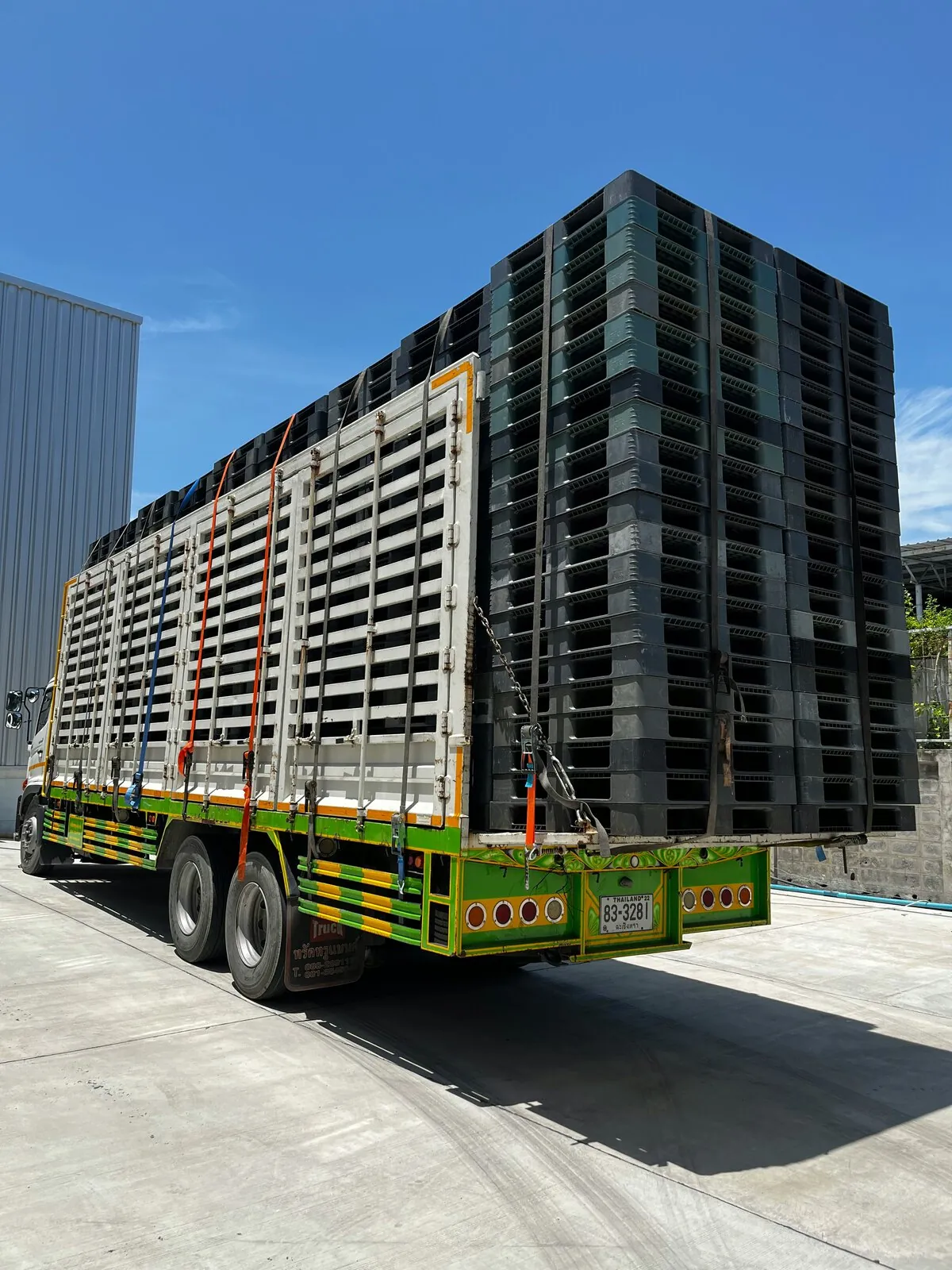
Used pallets work best in positions that need no commitment on load rating, uniformity or hygiene documents. The most common is storing goods in a dry warehouse: bagged or boxed goods placed straight on the floor, with the pallet only lifting the goods off the ground against damp and letting a hand pallet truck slide in. Here a pallet with a slightly scratched or faded surface makes no difference to the goods.
The second group is temporary stores and seasonal needs, when a business needs a few hundred more storage positions for a year or two and then no longer. Putting up capital for new pallets for such a short period is usually not sensible, because new pallets still have many years of life that you do not use. The third group is using pallets as platforms and temporary stands in a workshop, where loads are light and little moved.
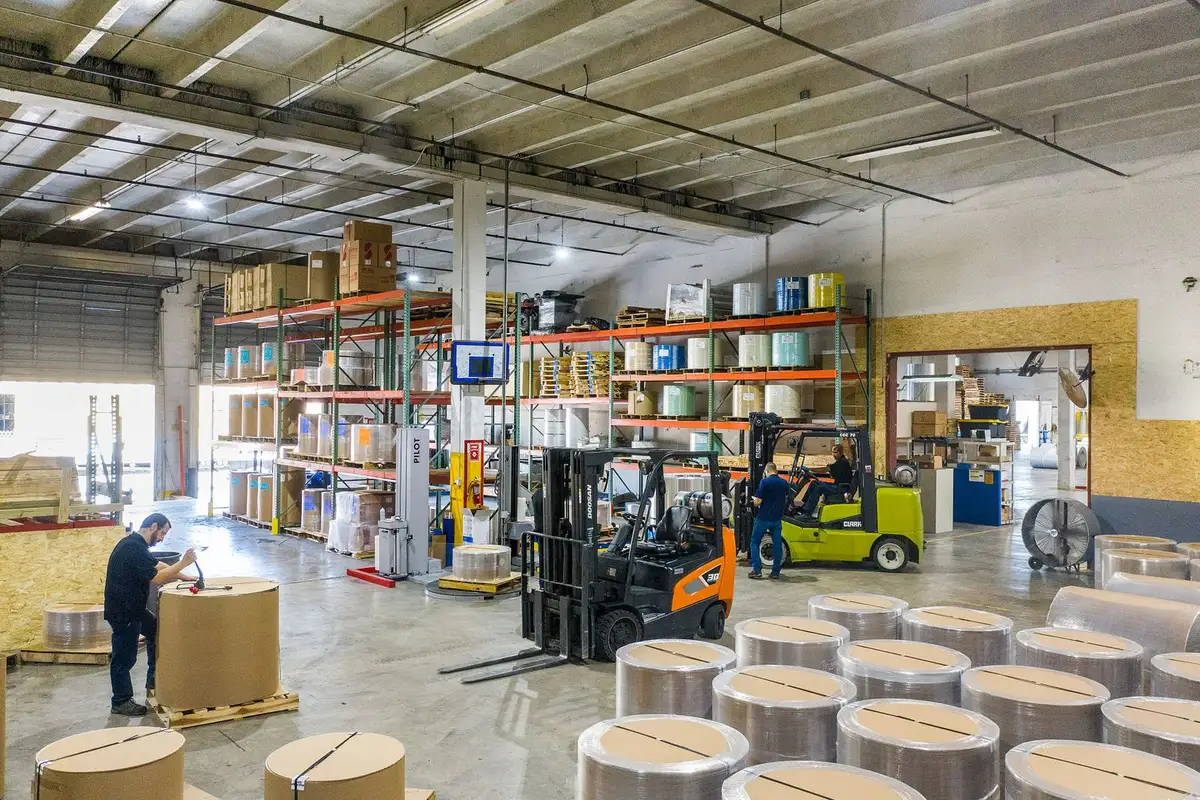
Conversely, I advise customers not to use used pallets for export goods, for racking that supports the pallet at both ends, for automated warehouses with conveyors, and for food and pharmaceutical goods that sit close to the pallet surface. The common reason is that these positions need pallets of uniform size, with full stiffness and a clear origin, which a lot of used pallets gathered from many sources can hardly guarantee.
Decision framework: when to use used pallets, when to buy new
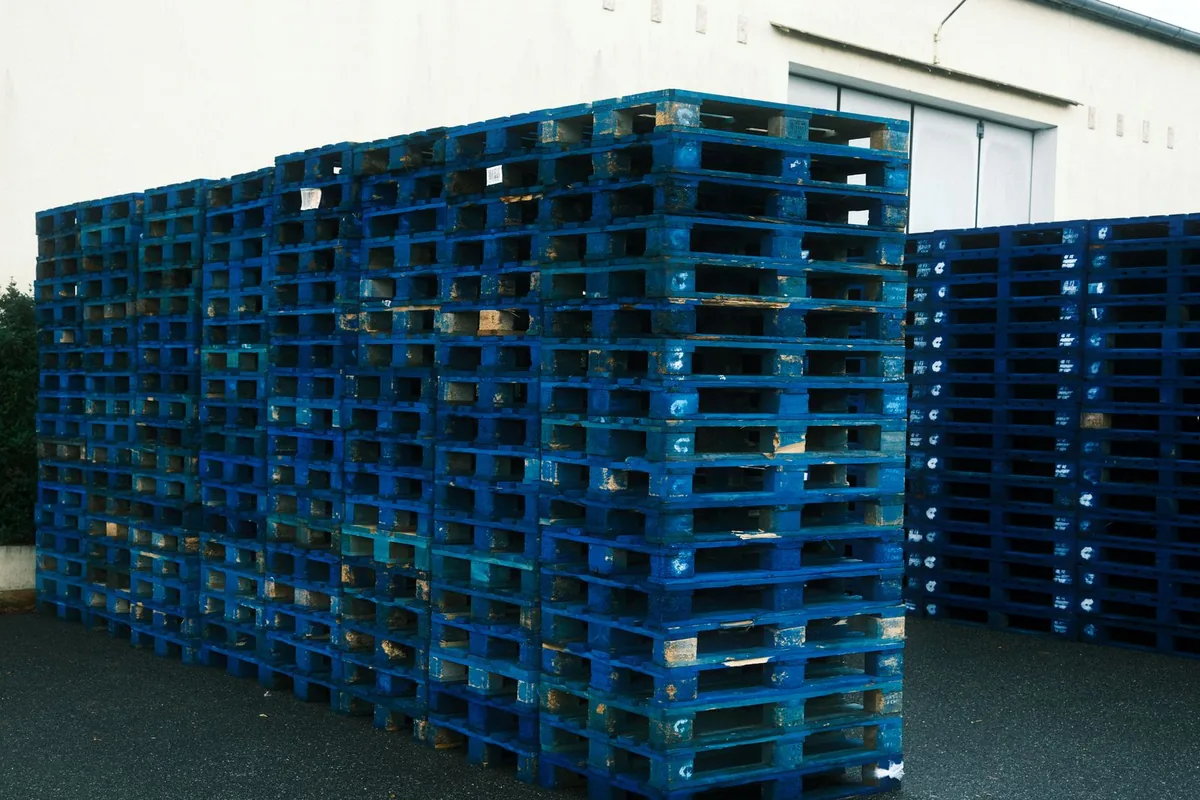
The table below gathers the situations I meet often into two columns. If your need falls in both columns, for example a warehouse with floor storage and also a row of racking, the sensible approach is to split: used pallets for the floor area, new pallets for the racking. For the bigger picture, read experience buying used plastic pallets.
| Use used pallets when | Buy new pallets when |
|---|---|
| Static storage, damp-proof floor base | Export, travelling with goods abroad |
| Temporary store, short seasonal use | Heavy-load racking, supported at both ends |
| Limited budget, light loads | Food, pharmaceuticals, hygiene requirements |
| Small quantity, no circulation | Long-term circulation, uniform size needed |
| No load or warranty commitment needed | Automated systems (AS/RS, conveyor) |

Comparing used plastic pallets, new plastic pallets and pallet rental
Compared with new pallets, used pallets are about 30-50% cheaper but uneven in quality, with shorter remaining life and almost no warranty. Besides buying used and buying new, a business whose need lasts only a few months of a season can also rent pallets from rental providers, especially when the warehouse has no room to store idle pallets. The table below sets the three options side by side by operating criteria.
| Criterion | Buy used pallets | Buy new pallets | Rent pallets |
|---|---|---|---|
| Upfront cost | Low, usually 30-50% cheaper than a new pallet of the same type | Highest | No outright purchase, pay a fee over the rental period |
| Uniformity | Uneven, depends on the lot, needs careful checking | Uniform by code | As committed by the lessor |
| Remaining life | Shorter, depends on the quality grade of the lot (example in this article: 2-3 years) | Longest when used within load (example in this article: 7 years) | The lessor replaces damaged pallets under the contract |
| Load data | Usually not published | Specifications for each code | By rental code |
| Hygiene, safety | Check for odour, stains, history of carrying chemicals | Clean, clear origin | Per the lessor’s cleaning process |
| Warranty | Almost none | Yes (ICD Vietnam: 2 years) | Replacement under the contract |
| Best suited to | Static storage, floor bases, use under 2-3 years | Long-term circulation, racking, export, food | Seasonal peaks of a few months |
On the environment, continuing to use a pallet that is still good extends the life of the plastic product, and a pallet that is fully broken can still be ground for recycling, a topic I wrote about separately in the article on recycling used plastic pallets. A new pallet at the end of its life goes down the same recycling path, so the difference between the two lies in cost and safety in use, not in whether it is thrown away.
Break-even analysis: until when are used pallets cheaper
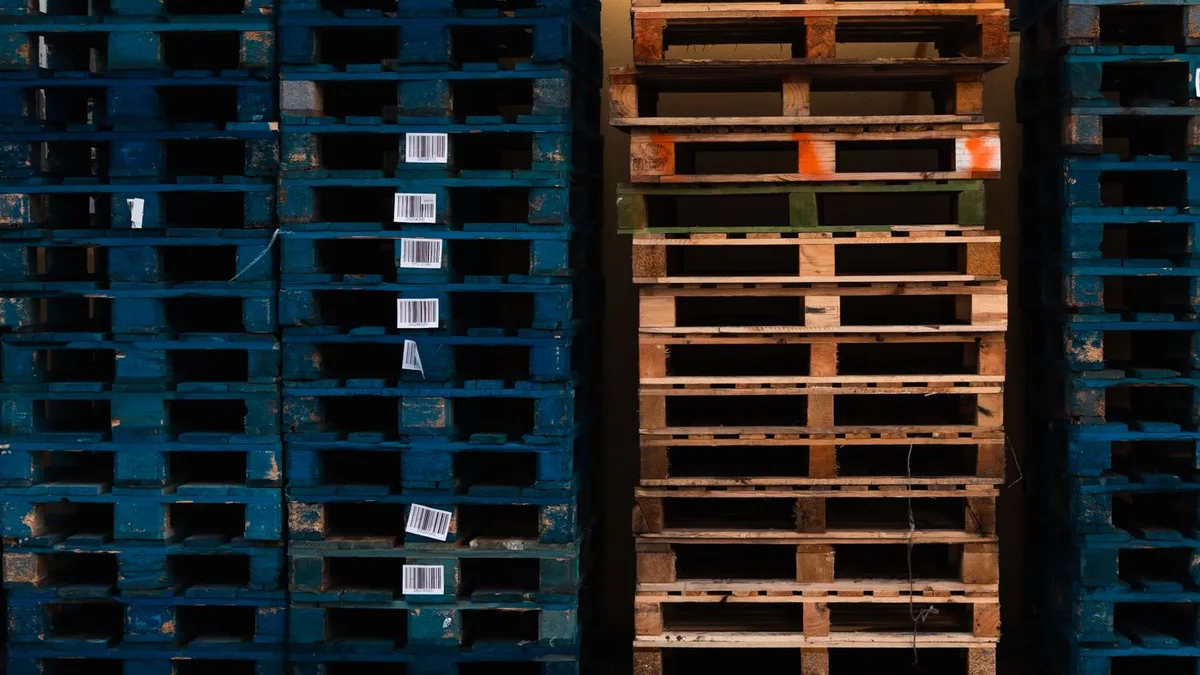
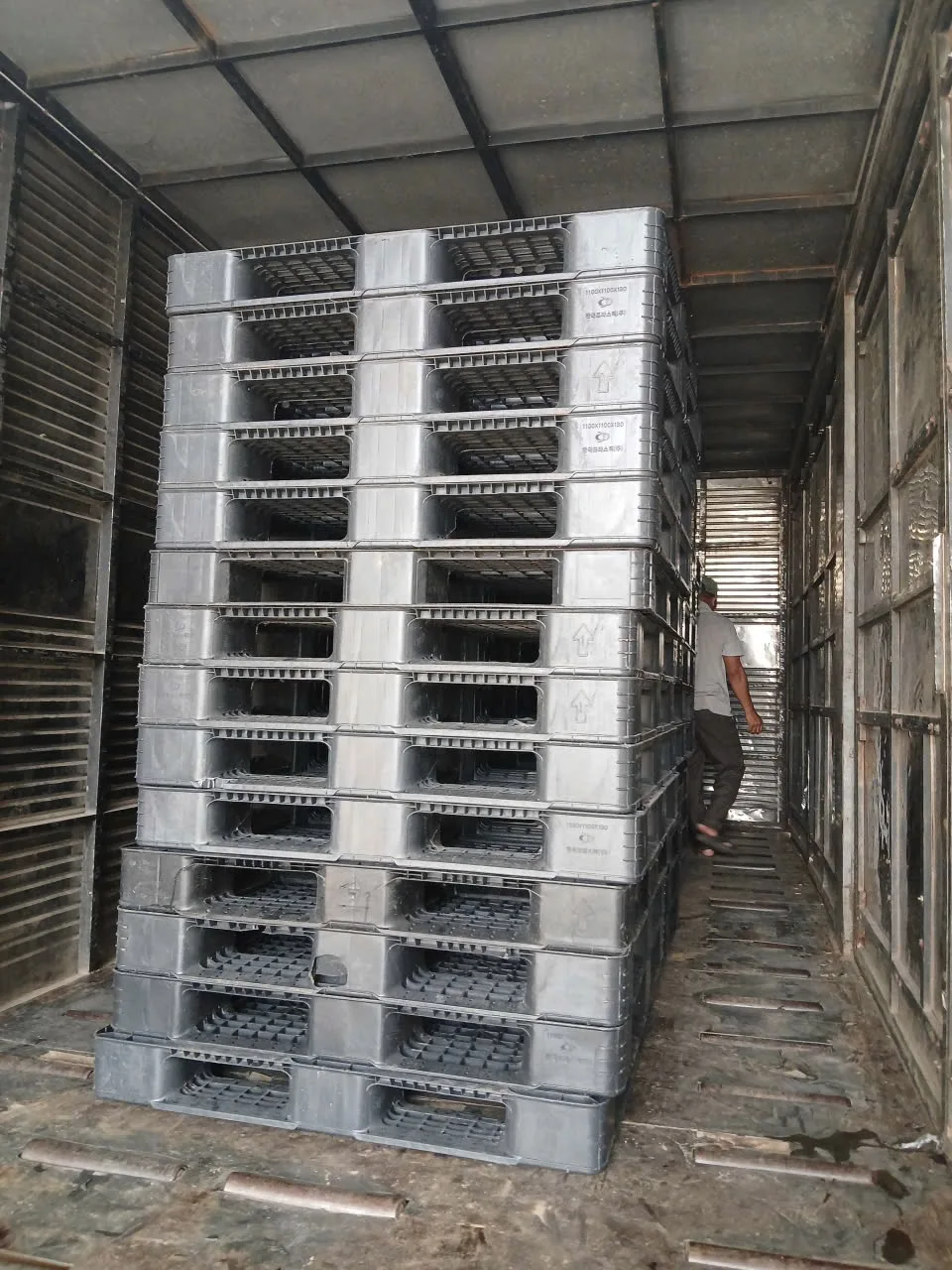
Used pallets are cheaper at purchase but have shorter remaining life, so the real cost must be counted per year of use. Suppose a new pallet costs X and lasts 7 years, while a grade B used pallet costs about 50% of X but has only 2-3 years of life left. The closest code to this case is the used black plastic pallet 1200x1000x120mm.
- New pallet: cost per year = X / 7 years = about 0.14X per year.
- Grade B used pallet: cost per year = 0.5X / 2.5 years = about 0.20X per year.
The example above uses fixed assumptions; the real remaining life of a used pallet depends on its quality grade and how it is used, so enter the figures of the very lot you plan to buy into the tool below. With the default of 2 years of use, a used pallet priced at 50% needs buying only once so costs less; raise the use time to 6 years and the used pallet must be bought three times, and the new pallet becomes the cheaper option.
So if your need runs beyond 3 years with constant circulation, new pallets are cheaper by the year. Used pallets win on cost only for short-term use (under 2-3 years), light loads or single use. To compare price and load directly for each series, see the plastic pallet catalogue and call hotline 0983 797 186 for advice on a cost-optimised configuration.
What to check before buying used pallets?
The most important advice is to inspect each lot before accepting it and to buy only from suppliers who grade quality clearly. A low price only means something if the pallet does the job you need; a pallet that breaks a foot in the middle of a shift and spills the load will cost far more than the money saved. Before closing the order, clarify four things with the supplier.
- Ask about usage history: whether the pallets ever carried chemicals, oil or food; a lot with a strange smell or stains should not be used for consumer goods.
- Ask for the load rating of the original code: of the 11 used plastic pallet codes at ICD Vietnam, only 1 publishes a load rating, so ask for the load of the original model for the rest.
- Test lifting with the exact hand pallet truck or forklift, or trial placing on the racking you will actually use.
- Agree in writing in advance the exchange rate for pallets that fail the agreed grade, especially for large orders.

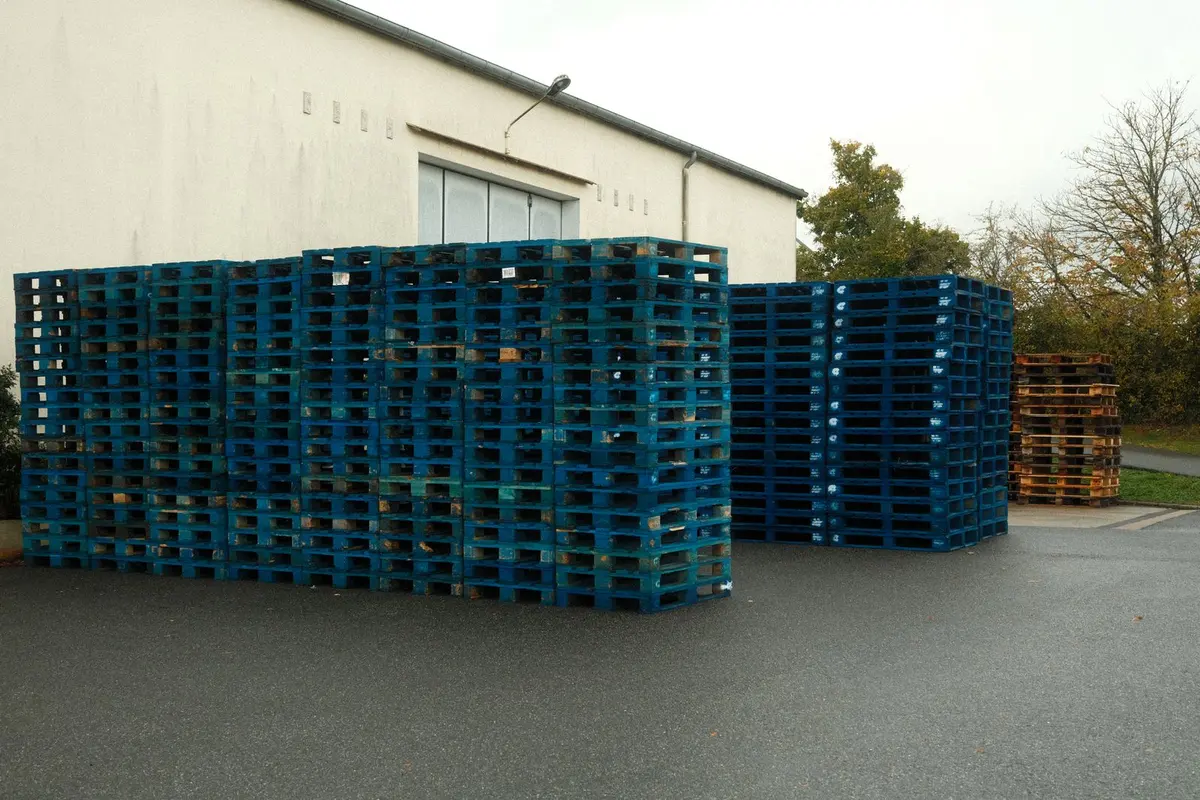
When viewing goods on site, I usually flip a few pallets from the middle of the stack instead of looking only at the top one, because the top one is often the best-looking. The places to look closely are the pallet feet and the edges of the fork openings, where forklifts hit most and cracks appear first. Place a pallet on a flat floor and press the four corners: a warped pallet will rock, and should not be used for high stacked goods. I wrote about the detailed A, B, C grading in the article on assessing used pallet quality.
Frequently asked questions
Can I use used pallets for export goods?
Not recommended. Export goods usually travel on one-way pallets and need uniformity, cleanliness and load assurance throughout the journey. Plastic pallets do not need fumigation like wooden pallets, but a lot of used pallets of uneven quality carries a higher risk of breaking on the way or being refused by the receiver. For export goods, a new low-cost single-face plastic pallet is the safer choice.
When are new pallets cheaper than used pallets?
When the need lasts more than 3 years and pallets circulate continuously. By cost per year, a new pallet (for example one lasting 7 years) is usually cheaper than a grade B used pallet with 2-3 years of life left, because the used pallet must be bought again sooner. Under 2-3 years, used pallets usually win on cost.
Can used pallets be used on racking?
High risk and not recommended. Racking that supports the pallet at both ends, with no support in the middle, requires pallets that keep their full stiffness and are not warped. Worn used pallets sag and break easily under heavy racking load, which is dangerous. If you must, use only carefully inspected grade A used pallets and reduce the load below the rating of the original code.
Can used plastic pallets be used in cold stores?
Yes, if they are HDPE pallets with intact feet and deck, not cracked. PP plastic has a glass transition temperature around 0°C so it turns brittle in the cold, so for cold stores and freezer stores ask clearly about the material of each lot; most used plastic pallet codes ICD Vietnam currently sells list PP as the material.

Can used plastic pallets be used to hold food?
Only when the usage history is known clearly: the pallets never carried chemicals or oil, have been cleaned, have no strange smell and no stains, and the food goods have sealed packaging that does not touch the pallet surface directly. For plants applying HACCP or subject to customer audits, use new pallets for clear specifications and origin.
How much do used plastic pallets cost?
The price of used plastic pallets depends on size, material and quality grade, and is usually about 30-50% cheaper than a new pallet of the same type. ICD Vietnam quotes by code and by lot; please contact us for a quote via hotline 0983 797 186 or Zalo.
Contact for used plastic pallet advice
To choose between used pallets, new pallets or pallet rental for your warehouse, contact ICD Vietnam Industrial Manufacturing Co., Ltd. for advice by load, lifting equipment and industry.
- North: 0983 797 186 / 090 345 9186 / 090 5859 186.
- South: 098 6784 186.
- Email: sales@icdvietnam.com.vn.
- Zalo: Chat on Zalo with ICD Vietnam.
References
- Catalogue of 11 used plastic pallet codes at ICD Vietnam: sizes, materials and published specifications (checked October 2026).
- The A/B/C grading framework for used plastic pallets that ICD Vietnam uses when assessing a lot.
- Properties of PP plastic at low temperature: Polypropylene (PP), Plastipedia, British Plastics Federation.