
Table of Contents
- Quick screening: which pallets to reject straight away?
- Five places to check closely on a used pallet
- How can you tell whether a used pallet is HDPE or PP?
- Used plastic pallet grading table: Grade A, B and C
- The 60-second used pallet check at the warehouse
- Accepting a whole lot: how many to sample and what to check?
- Which grade of used pallet suits your environment?
- What should you ask the supplier before placing the order?
- Frequently asked questions
- How can you tell how long a used plastic pallet will last?
- Should you buy Grade C used pallets?
- Do you need to check the whole lot of used pallets?
- Can you check the load capacity of a used plastic pallet?
- Should you buy used plastic pallets from photos alone?
- Can used plastic pallets be used in a cold store?
- Are used black plastic pallets always HDPE?
- Contact ICD Vietnam
- References
Reviewed and updated by ICD - Week 43/2026
Assessing the quality of a used plastic pallet means checking five points: the feet and bearers, the top deck (cracks, sagging), the fork entries where the forks slide in, brittleness or fading, and odd smells or stains; then grade it A, B or C by the level of wear. For a whole lot, take a random sample of about 10-15% of the pallets and spend about 60 seconds on each one before you sign for the goods.
I am Le Van Thang, and I have made pallets at ICD Vietnam since 2011. What I keep telling the people on my team is never to buy used pallets only by looking over a stack or at photos. A used pallet that looks good on top but is cracked at the feet is very common, because the top is what sellers photograph, while the feet and fork entries are what carry the load. This article follows the order I check in: a quick look to reject, a close check of five places, reading the plastic marking, grading, and only then accepting the whole lot.
Quick screening: which pallets to reject straight away?
Screening is only meant to reject pallets with visible faults at once: large cracks or breaks and warping, the two faults that make a pallet lose its load capacity. Each pallet needs only a few seconds, with no flipping or measuring yet.
A large crack or break in the deck or a corner is the clearest sign of past overloading or of being struck hard by forklift forks; such a pallet is no longer safe for supporting goods. Warping, especially sagging in the middle, shows the pallet has lost the stiffness of its structure, and once goods are stacked on it the load can fall at any time. These two faults have no reliable repair, so I advise setting them aside from the start instead of spending time checking further.
Five places to check closely on a used pallet
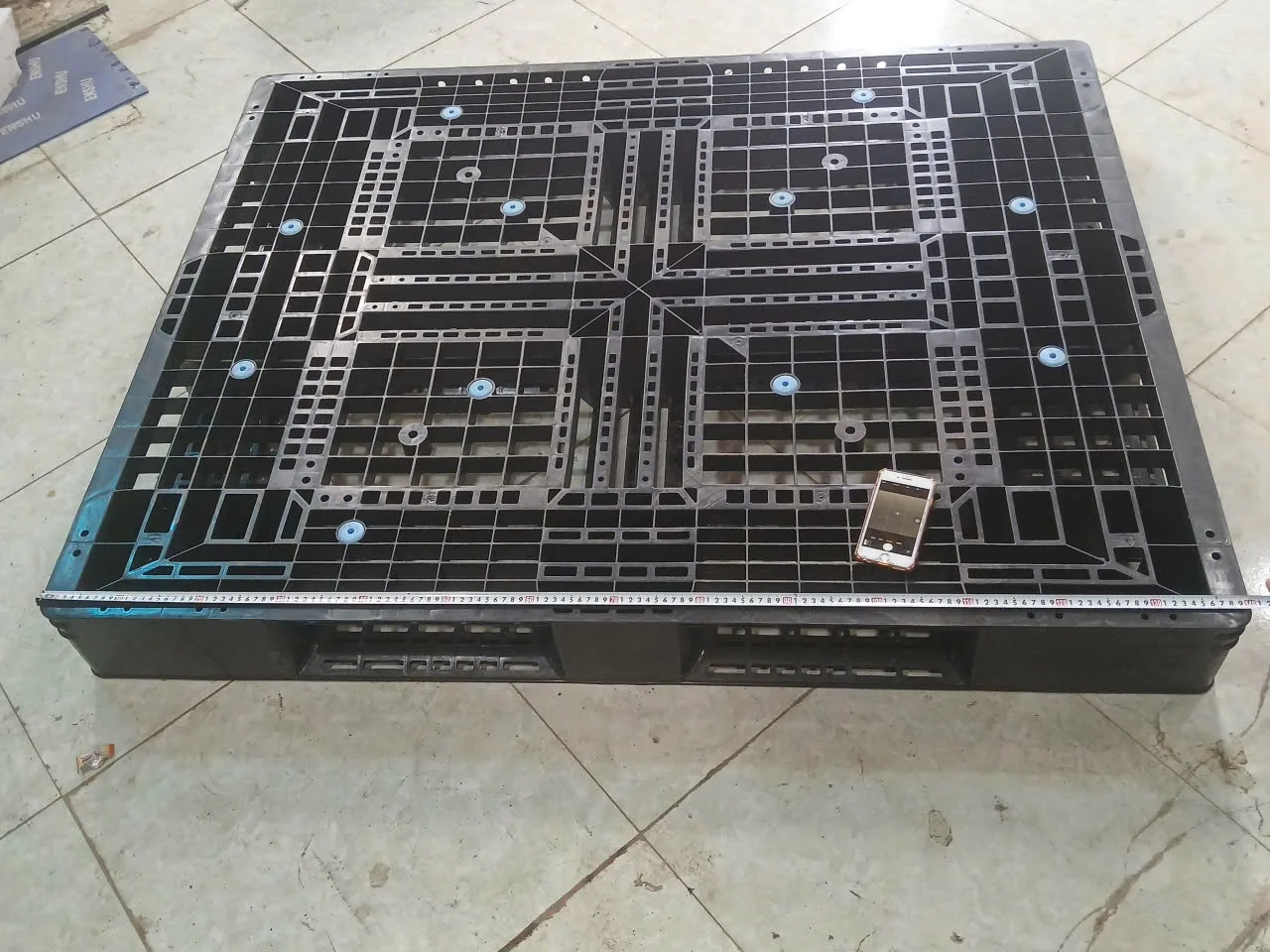
After screening, the quality of a used pallet is decided at five places: the feet and bearers, the top deck and its ribs, the fork entries, welded or patched spots, and smell or stains. The last three are where buyers often miss things, because they cannot be seen when pallets are stacked or when you only look at photos. If you are interested, the article on recycling used plastic pallets is also worth a look.
- Feet and bearers: turn the pallet over; cracked, broken or deformed feet mean the load capacity has dropped considerably.
- Top deck and ribs: the deck should be flat, the cross and lengthwise ribs intact, and shaking hard at a corner should show nothing loose or rattling.
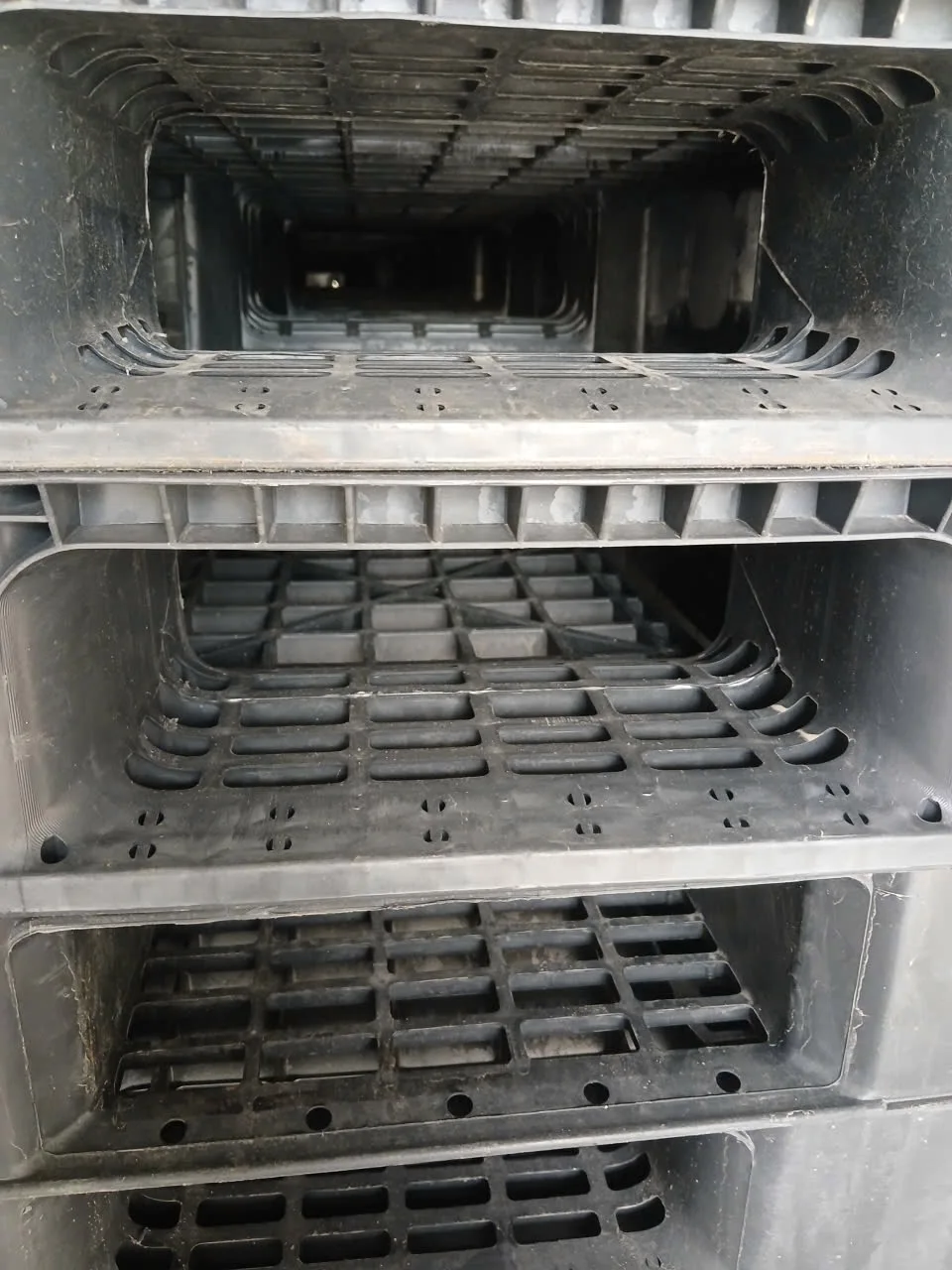
- Fork entries and openings: where the forks slide in usually wears and chips first, and a torn edge will crack quickly further when a forklift knocks it.
- Welded and repaired spots: a pallet that has been welded or patched at the feet or load-bearing ribs no longer carries its original load, so grade it lower.
- Odd smell and stains: a sharp smell, blotchy stains or a rough plastic surface from chemicals show the pallet once carried dangerous goods and is not for food use.
How can you tell whether a used pallet is HDPE or PP?
The surest way to tell whether a pallet is HDPE or PP is to read the material marking moulded into the pallet body or ask for the original product code; colour and the feel in the hand are only first hints. Many people are used to thinking black or dark blue pallets are HDPE and bright colours are PP, but with used pallets that guess is wrong very often.
When pressed by hand or shaken, HDPE feels more flexible, sags slightly then recovers and takes forklift knocks well. PP is stiffer, sags less and handles heat better in hot environments, but its edges crack easily when struck hard in cold weather. The difference in cold stores has a clear material basis: PP has a glass transition temperature around 0°C and becomes brittle when cold, according to the British Plastics Federation (BPF) Plastipedia. So for cold and frozen stores, accept only used HDPE pallets with intact feet and deck.
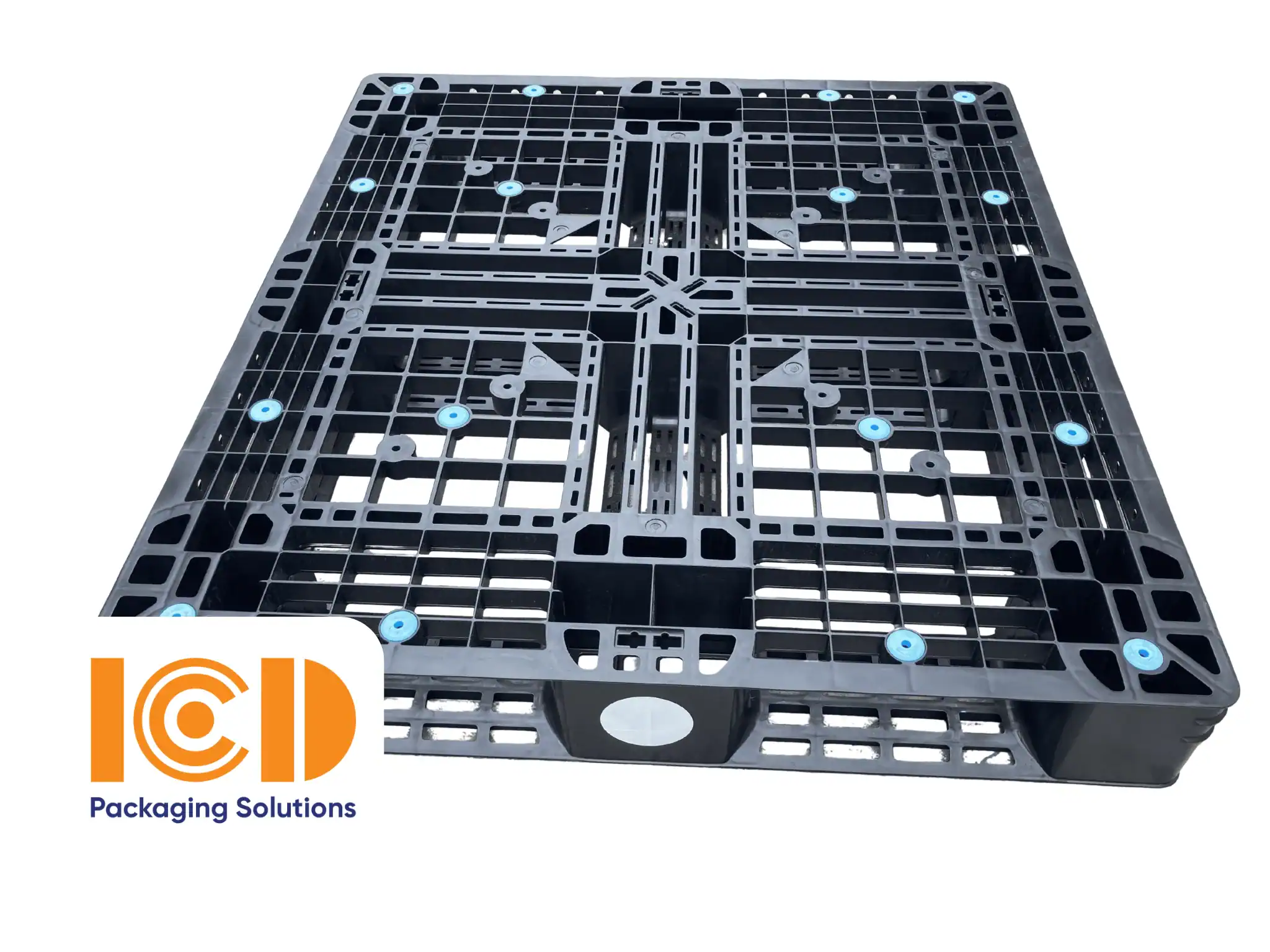
Used pallets usually no longer come with a specification sheet. Among ICD Vietnam’s 11 used plastic pallet models, only the 1100 x 1100 x 145 mm pebble-deck model (HDPE) has a published static load of 3,000 kg and dynamic load of 1,000 kg; for the other models you need to ask for the load of the original model. The sizes of the models fall in the common groups of 1000 x 1000, 1100 x 1100, 1200 x 1000, 1200 x 1100 and 1300 x 1100 mm, with heights of 120 to 150 mm, so when receiving goods, measure to the exact size ordered.
Used plastic pallet grading table: Grade A, B and C
Used plastic pallets are divided into three grades, A, B and C, by the level of cracking and breaking, sagging, warping, surface wear and the remaining service life; each grade suits its own group of uses. Grading properly means paying the right price and choosing the right type for each job, instead of buying a mixed lot and only then finding several dozen pallets unusable.
The table below is the grading frame commonly used when buying and selling used pallets.
| Criterion | Grade A (almost new) | Grade B (good to use) | Grade C (low price) |
|---|---|---|---|
| Cracks, breaks in feet/bearers | None | Light surface cracks, no breaks | Deep cracks, chipped corners |
| Sag under load | Like a new pallet | Slight sag, recovers | Clear sag, deformed |
| Heat deformation / warping | None | Slightly bent at one corner | Warped, feet lifting |
| Surface wear | Light scratches | Medium wear, ribs still visible | Heavy wear, faded |
| Remaining service life | About 80-95% | About 50-75% | Under 40% |
| Suitable for | Racking, circulation, export | Logistics, goods in motion | Static storage, floor lining, damp protection |
To apply the grading frame quickly when receiving goods, you can use the tool below for each sample pallet and also calculate how many pallets to sample from the whole lot.
The 60-second used pallet check at the warehouse
Each sample pallet can be checked in about 60 seconds in the four steps below, with no special equipment other than a ruler.
- 0-15 seconds, turn it over: look at the feet and bearers for deep cracks, breaks and welds that have come apart, because this is where failure comes first.
- 15-30 seconds, set it flat: put the pallet on a flat floor and rock it gently; a warped pallet lifts at one corner and rocks.
- 30-45 seconds, press the deck by hand: press hard in the middle of the top deck; plastic that is brittle with age will crackle, good plastic only sags slightly and recovers.
- 45-60 seconds, look at colour and surface: chalky white fading and a rough, worn surface are signs of long exposure to the sun and plastic made brittle by UV, so grade it C.
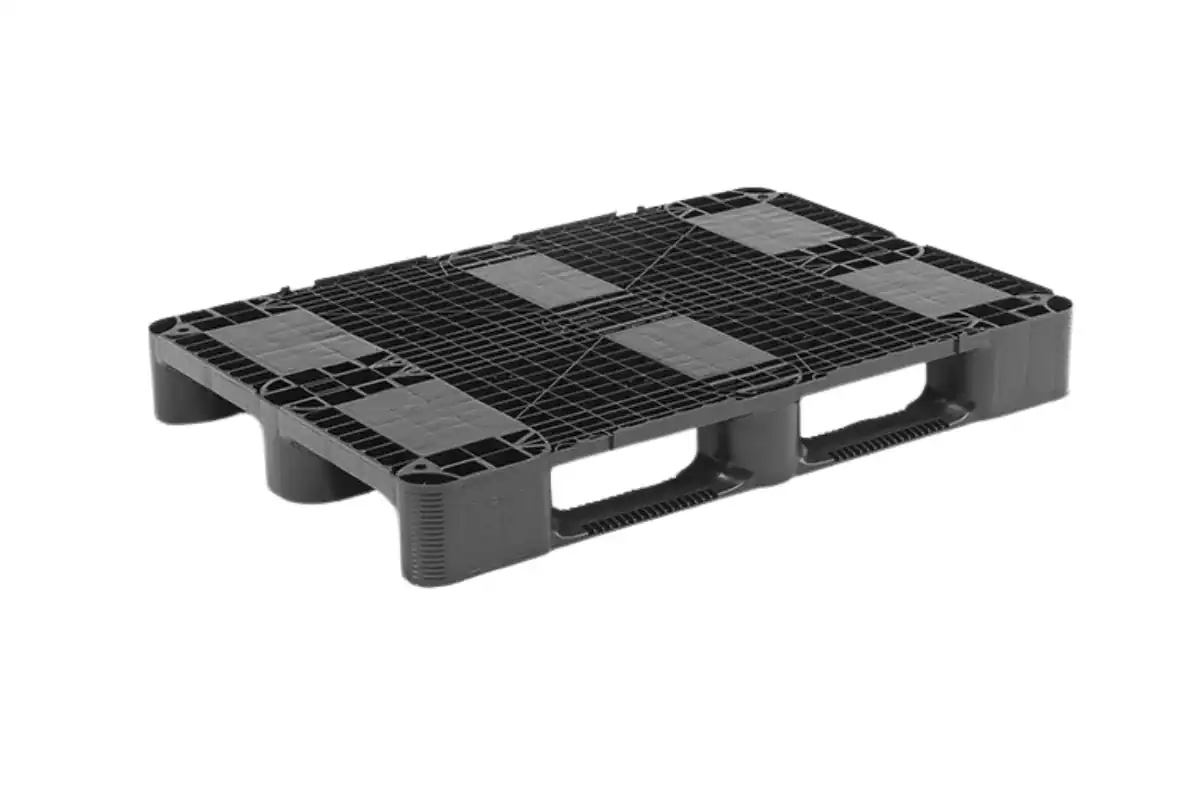
The press-by-hand step sounds crude but works, because plastic aged by sunlight usually turns brittle from the surface inward. A pallet that is still glossy black underneath but chalky white on top is one that stayed outdoors for a long time; even if it has not cracked, it will crack much faster when struck by forks.
Accepting a whole lot: how many to sample and what to check?
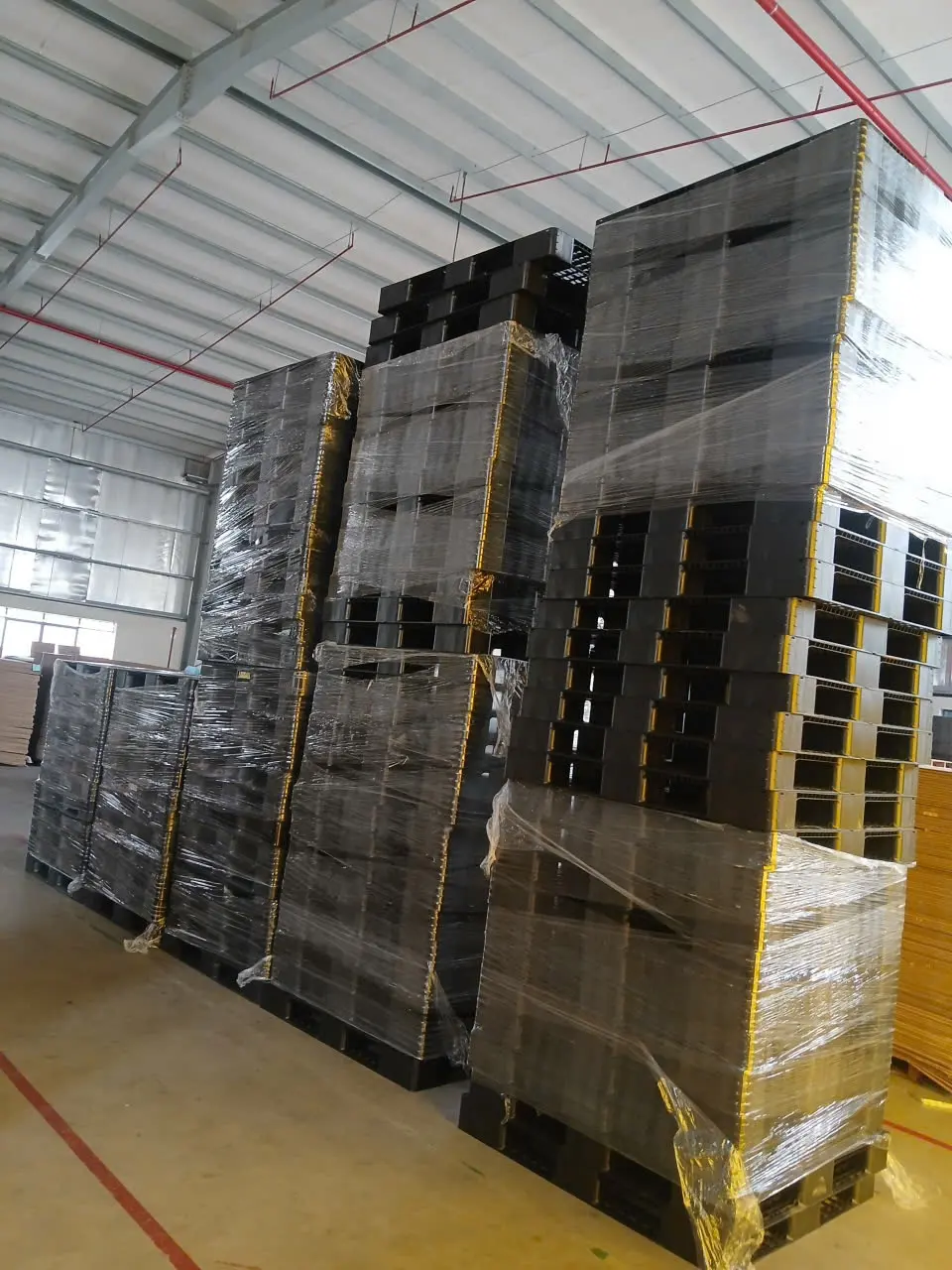
For a lot of a few hundred pallets, a random sample of about 10-15% is an easy level to apply; larger lots can follow the sampling table of ISO 2859-1 so the sample size does not grow too much. Samples must be drawn from many places in the stack, both the top pallet and those next to the bottom, because the good-looking pallets tend to be put on top.
The ISO 2859-1 standard on sampling inspection by attributes shows something many people do not notice: the amount of information about lot quality depends on the absolute number of samples, not on the ratio to lot size. Buyer and seller should write the number of samples and the acceptable proportion of off-grade pallets into the record before checking.
Besides the quality of each pallet, a lot of used pallets must be uniform, because just a few pallets of the wrong size can jam racking or topple a stack of goods. When accepting a lot, I check the following five things:
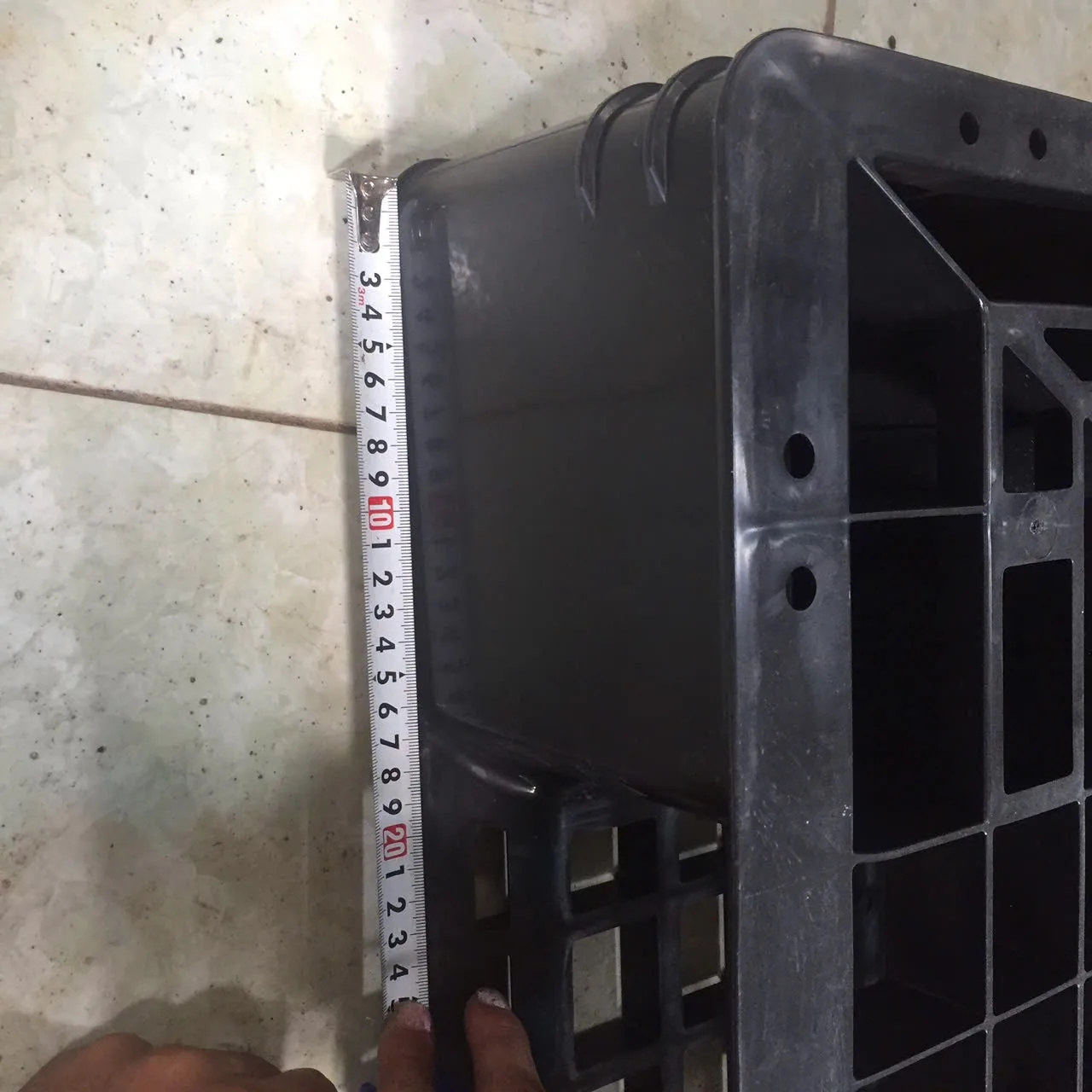
- Outside dimensions: measure length and width on the sample pallets; they must be the size ordered with no other sizes mixed in.
- Height and foot type: the same type (cup foot, 3-runner or 9-leg) and the same height.
- Model and colour: do not mix many different models when the pallets are for racking or a production line.
- Quality grade: the proportion of off-grade pallets in the sample is within the agreed level.
- Test with real equipment: try lifting with a hand pallet truck and a powered forklift and try placing on racking; the forks should enter smoothly and the pallet should not rock or make noise.
Which grade of used pallet suits your environment?
The minimum grade to choose depends on how it is used: static storage accepts Grade C, logistics with forklifts needs Grade B or better, while racking, cold stores and food need Grade A or a new pallet.
| Environment of use | Minimum grade | Notes for assessment |
|---|---|---|
| Static storage, floor lining, temporary store | Grade C | Feet not broken, sits flat without rocking |
| Logistics, hand pallet trucks and powered forklifts | Grade B | Fork entries intact, no welded spots on the feet |
| Multi-tier racking | Grade A or a new pallet | Know the load of the original model, no sag when goods are placed |
| Cold and frozen stores | Grade A, HDPE material | Read the plastic marking, avoid PP pallets |
| Food, pharmaceuticals, export | A new pallet preferred | Needs a clear origin and uniform sizes |
If you need guaranteed Grade A pallets for heavy-load racking or export goods, consider new pallets so you get a load commitment and a 2-year warranty. See the range in ICD Vietnam’s plastic pallets category.
If you are not sure about the structure of cup-foot pallets, read what a column-base plastic pallet is before assessing used pallets.
What should you ask the supplier before placing the order?
Before placing the order, ask the four questions below and ask the supplier to answer clearly, preferably in writing. My most important advice is to buy from a source with a clear quality grading, ask closely about origin and the load of the original model, and not choose a lot just because its price is the lowest.
- What goods the pallets carried before: chemicals, oil, food or dry goods decide whether the pallet can be used in your warehouse.
- What the original model and its load are: used pallets usually come without specifications, so ask for the load of the original model.
- How the lot is graded: ask clearly for Grade A, B or C and the proportion of off-grade pallets accepted in the lot.
- How returns work: agree in writing on replacing pallets that fall below the agreed grade, especially on large orders.
If you are considering buying used plastic pallets for your warehouse, ICD Vietnam has a range of used pallets with 11 common sizes, delivered nationwide from the factory; consultation hotline 0983 797 186. See also: tips for saving money with used plastic pallets.
Frequently asked questions
How can you tell how long a used plastic pallet will last?
Judge by the level of cracking and breaking, warping, sag and brittleness of the plastic. Under the commonly used grading frame, a Grade A pallet has about 80-95% of its life left, Grade B 50-75% and Grade C under 40%; this is an estimate to agree on grade, not a measurement. A pallet that is chalky white and crackles when pressed has become brittle from UV and should not be used for heavy loads.
Should you buy Grade C used pallets?
Grade C should only be used for light purposes such as static storage, damp-proof floor lining or temporary stores, not for racking or circulating goods. At a low price and for the right purpose, Grade C is still effective, but do not expect the load capacity and durability of a new pallet.
Do you need to check the whole lot of used pallets?
No need to check 100%. For a lot of a few hundred pallets, a random 10-15% sample checked with the 60-second routine is enough to assess average quality. Larger lots can follow ISO 2859-1, for example 80 samples for a lot of 501 to 1,200 pallets at normal inspection level. Only if the defect rate in the sample is high do you widen the check or downgrade the whole lot.
Can you check the load capacity of a used plastic pallet?
You cannot know the load capacity exactly by eye. The practical way is to ask for the original model and its published load, read the specifications moulded into the pallet if there are any, then try lifting a few sample pallets with real goods using a forklift before accepting the whole lot. Use used pallets with a safety margin and do not load close to the maximum load of the original model.
Should you buy used plastic pallets from photos alone?
Not for a large order. Photos usually show only the top deck, not the feet, the fork entries or the sag. View the goods in person, or ask for a close-up video of the underside, the fork entries and a hand pressing on the middle of the deck, with a commitment to replace pallets that fall below grade.
Can used plastic pallets be used in a cold store?
Yes, if they are Grade A HDPE pallets with intact feet and deck. PP plastic turns brittle when the temperature falls to around 0°C, so it cracks and breaks easily in a cold store; before use, read the material marking on the pallet (HDPE number 2, PP number 5) or ask the supplier clearly.
Are used black plastic pallets always HDPE?
No. Colour does not tell you the material. For example, all 11 used plastic pallet models of ICD Vietnam are black, but 7 are PP, 2 are HDPE and 2 are HDPE/PP. Look for the plastic marking moulded on the feet or underside of the pallet.
Contact ICD Vietnam
If you need used plastic pallets of the right grade for your warehouse, contact ICD Vietnam for advice on choosing models and checking them against the A/B/C grading frame. Goods ship from the factory and are delivered nationwide.
ICD Vietnam Industrial Manufacturing Co., Ltd
Northern Vietnam head office: 3rd Floor, Thang Long A1 Building, Bau Hamlet, Thien Loc Commune (formerly Kim Chung, Dong Anh), Hanoi - 0983 797 186 / 090 345 9186 / 090 5859 186
Southern Vietnam branch: 551/212 Le Van Khuong, Tan Thoi Hiep Ward, District 12, Ho Chi Minh City - 098 6784 186
Email: sales@icdvietnam.com.vn
Zalo: Chat with ICD Vietnam on Zalo
References
- Glass transition temperature and brittleness of PP in the cold: Polypropylene (PP), Plastipedia, British Plastics Federation (BPF).
- HDPE number 2, PP number 5: Resin identification code, Wikipedia.
- Sample size by lot size, inspection level II: ISO 2859-1, Sampling procedures for inspection by attributes.
- Dimensions, materials and published specifications of the 11 used plastic pallet models: ICD Vietnam product catalogue, checked on 15 October 2026.