

Table of Contents
- Why does a mattress on the floor easily get damp and mouldy?
- Besides damp-proofing, what other benefits does a plastic pallet mattress base have?
- Which plastic pallet should you choose for a mattress base?
- What are the advantages and disadvantages of a plastic pallet mattress base?
- Why is a wooden bed still the more popular choice?
- When should and shouldn’t you use a plastic pallet mattress base?
- Frequently asked questions
- 1. Is a plastic pallet mattress base durable?
- 2. Does a plastic pallet mattress base make noise when you lie on it?
- 3. Do you need to add anything between the plastic pallet and the mattress?
- 4. How much load can a plastic pallet mattress base carry?
- 5. Where can you buy plastic pallets for a mattress base from a reputable source?
- 6. How many plastic pallet panels does a 1.6 m x 2 m mattress need?
- 7. Should you choose a mesh-deck or closed-deck pallet for a mattress base?
- 8. Should you use a wooden pallet instead of a plastic pallet for a mattress base?
- Contact us for plastic pallet advice
- References
Reviewed and updated by ICD - Week 44/2026
This article is for information only. We do not sell this product. ICD Vietnam supplies industrial plastic pallet solutions for storing goods. See the product details here.
A plastic pallet mattress base means using a plastic floor-lining pallet under the mattress in place of a bed frame, lifting the mattress about 4 to 15 cm off the floor so its underside can breathe and does not draw moisture from the ground. It suits rented rooms, dormitories and short-stay rentals; if you need a bed for many years that also looks good, a bed frame is still the better choice.
This article answers the questions we often get when customers ask about buying floor-lining pallets to support a mattress: why a mattress on the floor easily goes mouldy, which panel size and load to choose, how many pallet panels one mattress needs, and when not to use this approach. The panel specifications in the article come from the ICD Vietnam floor-lining plastic pallet catalogue, checked on 11 October 2026.

Why does a mattress on the floor easily get damp and mouldy?
A mattress on the floor goes mouldy easily because moisture from the sleeper’s body and from the floor is trapped on the underside of the mattress, where no air circulates to dry it. Every night sweat and breath soak gradually into the mattress; when the mattress sits on a bed with an air gap, that moisture evaporates in the daytime, but when it lies flat against a tiled or wooden floor, the contact surface is always warmer and damper than its surroundings. You can see the real specifications of the floor-lining plastic pallets range, including the closed-deck 600x1000x35 mm panel.
According to the US Environmental Protection Agency (EPA) mould guidance, controlling moisture is the key to controlling mould, and wet items need to be dried within 24 to 48 hours so mould does not grow. A mattress is a thick mass of material, and on the floor its underside almost never dries fully in that time, especially in the damp season in northern Vietnam or in a sunless ground-floor room.

A layer of plastic pallet underneath fixes exactly this: the mattress is lifted, a layer of air sits between mattress and floor, and the underside dries faster. Plastic absorbs no water, has no termites and can be wiped or washed, so the base itself does not become a place that holds moisture. If the mattress does get wet, you should still stand it up to dry at once as the EPA advises; the pallet layer only helps the mattress dry faster and does not replace airing it out.
Besides damp-proofing, what other benefits does a plastic pallet mattress base have?
Besides damp-proofing, a plastic pallet mattress base supports the mattress evenly, saves money compared with buying a bed frame, is easy to clean and can be reused many times. These are the reasons the approach is popular in rented rooms and dormitories.
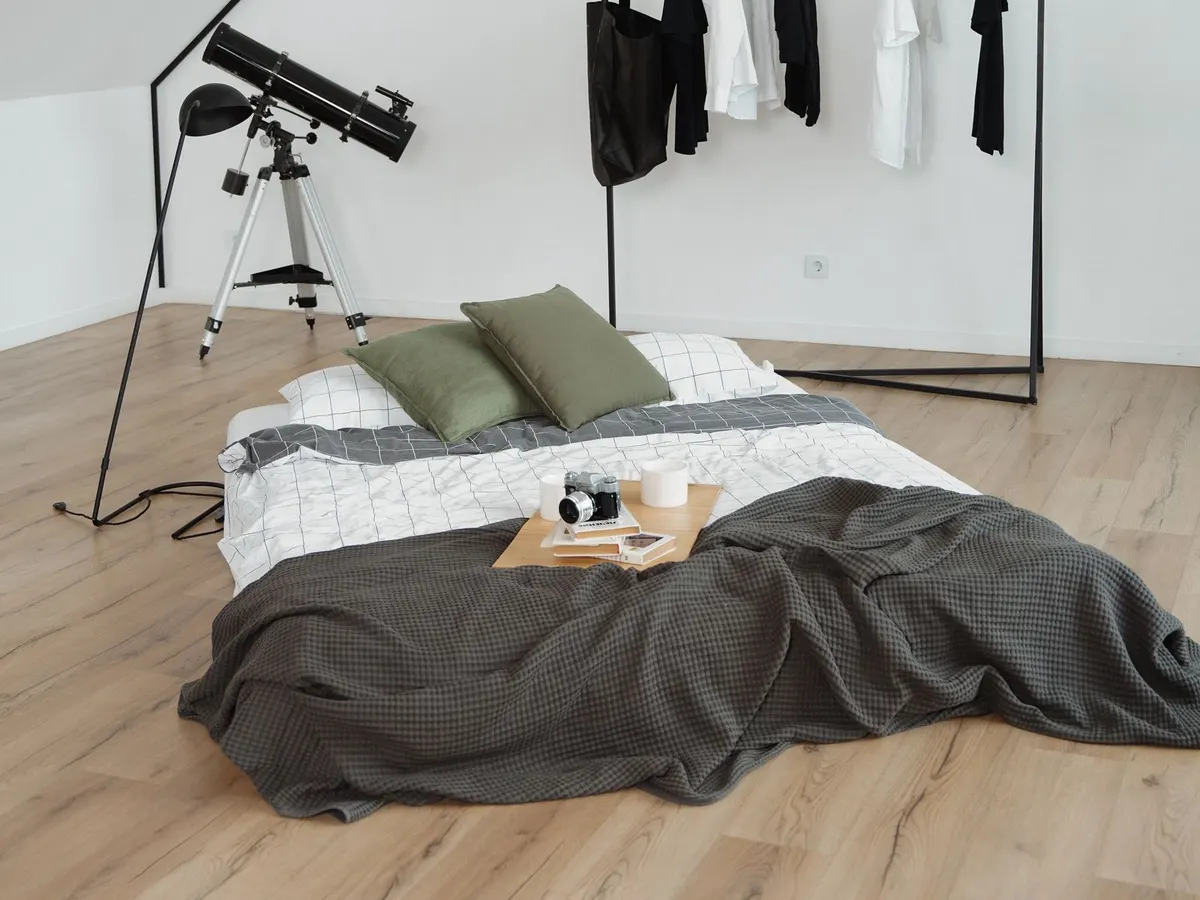
For the durability of the mattress, a flat pallet deck supports the whole underside of the mattress and does not let it sag in the middle as some widely spaced slat frames do. The mattress is also not pressed against a hard, cold, damp floor, so it keeps its resilience longer than when placed directly on the floor.
For cost and convenience, you need only a few floor-lining pallets joined together, with no assembly and no tools. When you change rooms, the panels come apart, stack and carry easily; when you no longer need them as a mattress base, they can still be used to raise goods in a store, on a balcony or in a garage.
For hygiene, the plastic surface is smooth and waterproof, and wiping or spraying with soapy water is enough to remove dust and dirt. A plastic pallet has no termites and does not go mouldy in the body as wood does, so it needs almost no maintenance. When damaged, HDPE or PP plastic pallets can be sent for recycling instead of landfill.

Which plastic pallet should you choose for a mattress base?
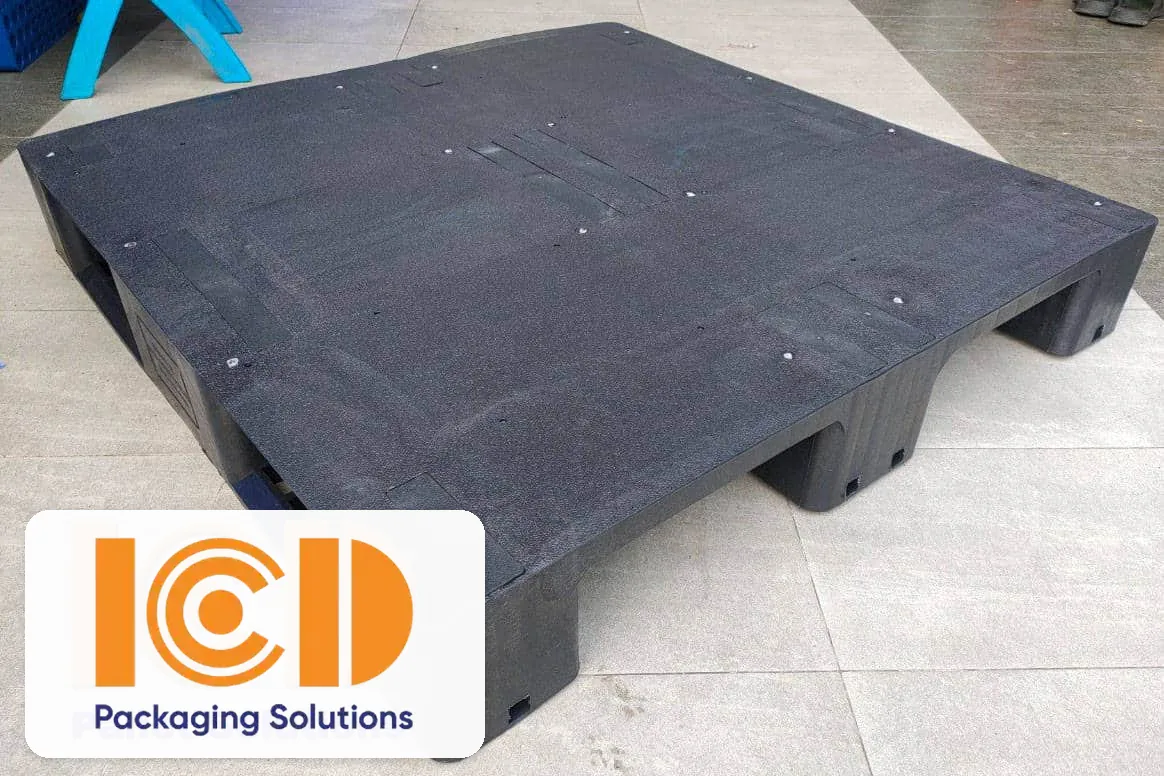
Choose a floor-lining plastic pallet with a flat deck, about 100 to 150 mm high, with a published static load of 300 to 500 kg or more, and join enough panels to cover the mattress size. Not every floor-lining pallet panel suits a mattress; the foot height, deck style and load rating of each model differ quite a lot.
The 300 to 500 kg level is our recommendation for a safety margin, because the load on the pallet deck when a person sits on the edge of the bed or stands on the mattress is much greater than when lying still. The table below summarises the criteria to check before buying.
| Criterion | What to choose | Reason |
|---|---|---|
| Assembled surface size | Equal to or a few cm wider than the mattress on each side | The mattress does not overhang or shift while lying on it |
| Height | About 100 to 150 mm | Enough air gap under the mattress; thin 35 to 50 mm panels breathe less |
| Deck style | Mesh or slat deck for ventilation; closed deck if the mattress is thin | An open deck dries fast; a flat closed deck is more comfortable with a thin mattress |
| Static load | 300 to 500 kg or more per panel | Withstands someone sitting on the edge or standing on the mattress without sagging or cracking |
| Material, surface | Virgin plastic, smooth, no sharp edges, no odour | Nightly contact in a bedroom |
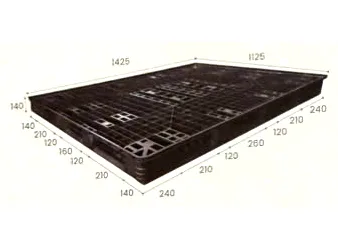
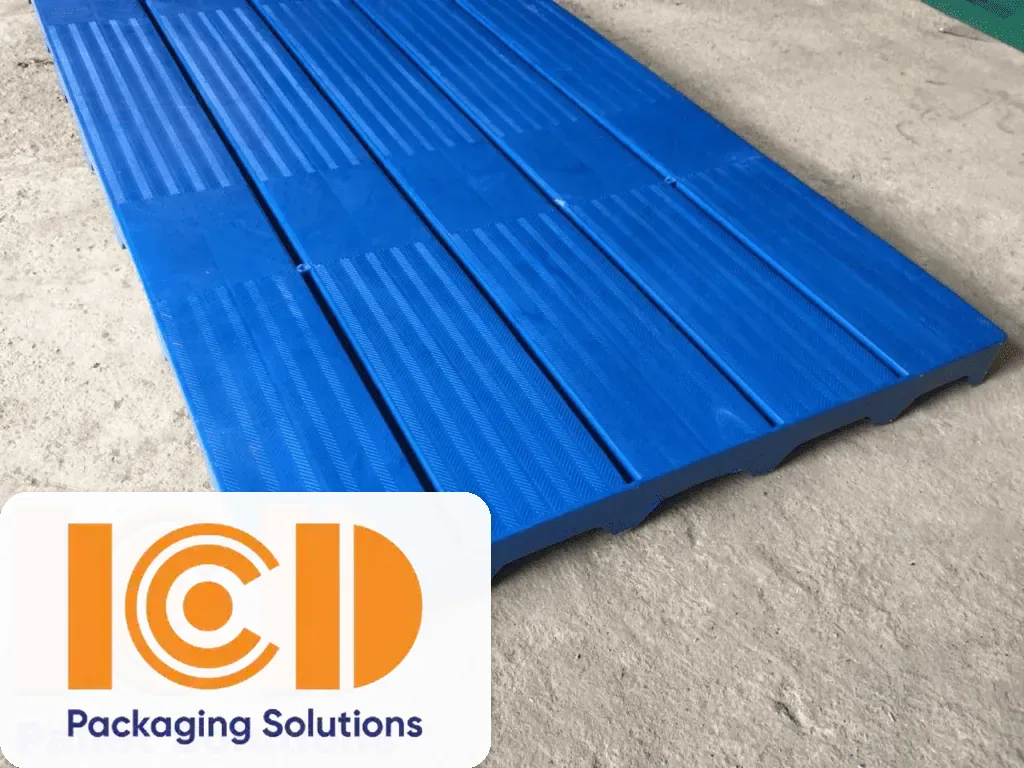
Against the ICD Vietnam catalogue, floor-lining panels with a suitable height and load for supporting a mattress include: a 1,200 x 1,000 x 78 mm HDPE panel, published static load 3,000 kg; a 1,200 x 1,000 x 145 mm HDPE panel, static load 3,000 kg, dynamic load 1,000 kg; a closed-deck 9-foot panel 1,000 x 1,200 x 140 mm, static load 2,000 kg; and a closed-deck 6-foot panel 600 x 1,000 x 100 mm, static load 800 kg. Full specifications of each model are on the page for the full floor-lining pallet range.
How many floor-lining plastic pallet panels does one mattress need?
A double mattress of 160 x 200 cm needs 6 floor-lining pallet panels of 1,000 x 600 mm or 4 panels of 1,200 x 1,000 mm. The number of panels depends on the mattress size and the panel size; the table below is pre-calculated for common mattress sizes, laid out to use the fewest panels.
| Mattress size | Panel 1,000 x 600 x 100 mm | Panel 1,200 x 1,000 x 78 mm | Panel 600 x 600 x 100 mm |
|---|---|---|---|
| Single mattress 90 x 200 cm | 4 panels (1 x 4), assembled 1.0 x 2.4 m | 2 panels (1 x 2), assembled 1.2 x 2.0 m | 8 panels (2 x 4), assembled 1.2 x 2.4 m |
| Mattress 120 x 200 cm | 4 panels (2 x 2), assembled 1.2 x 2.0 m | 2 panels (1 x 2), assembled 1.2 x 2.0 m | 8 panels (2 x 4), assembled 1.2 x 2.4 m |
| Double mattress 160 x 200 cm | 6 panels (3 x 2), assembled 1.8 x 2.0 m | 4 panels (2 x 2), assembled 2.4 x 2.0 m | 12 panels (3 x 4), assembled 1.8 x 2.4 m |
| Mattress 180 x 200 cm | 6 panels (3 x 2), assembled 1.8 x 2.0 m | 4 panels (2 x 2), assembled 2.4 x 2.0 m | 12 panels (3 x 4), assembled 1.8 x 2.4 m |
The pallet panels do not divide exactly into the mattress size, so the assembled surface is usually a few tens of centimetres wider than the mattress. You can place the mattress offset toward the wall so the surplus sits on one side, or choose a different panel size to fit the room. For your own mattress size, use the tool below.
| Panels needed | - |
| Layout | - |
| Assembled surface size | - |
| Surplus compared with the mattress | - |
What are the advantages and disadvantages of a plastic pallet mattress base?
The main advantages of a plastic pallet mattress base are damp-proofing, low cost and light weight; the disadvantages are a plain look, possible creaking and less solidity than a good bed frame. In other words, it is a practical solution, not a piece of furniture.
On the advantage side, the mattress is lifted off the floor so it is airier and drier than when laid directly on it; it costs less than a bed frame and can be set up in minutes; the panels are light so one person can move them and rearrange the room; plastic has no termites and soap and water are enough to clean it.
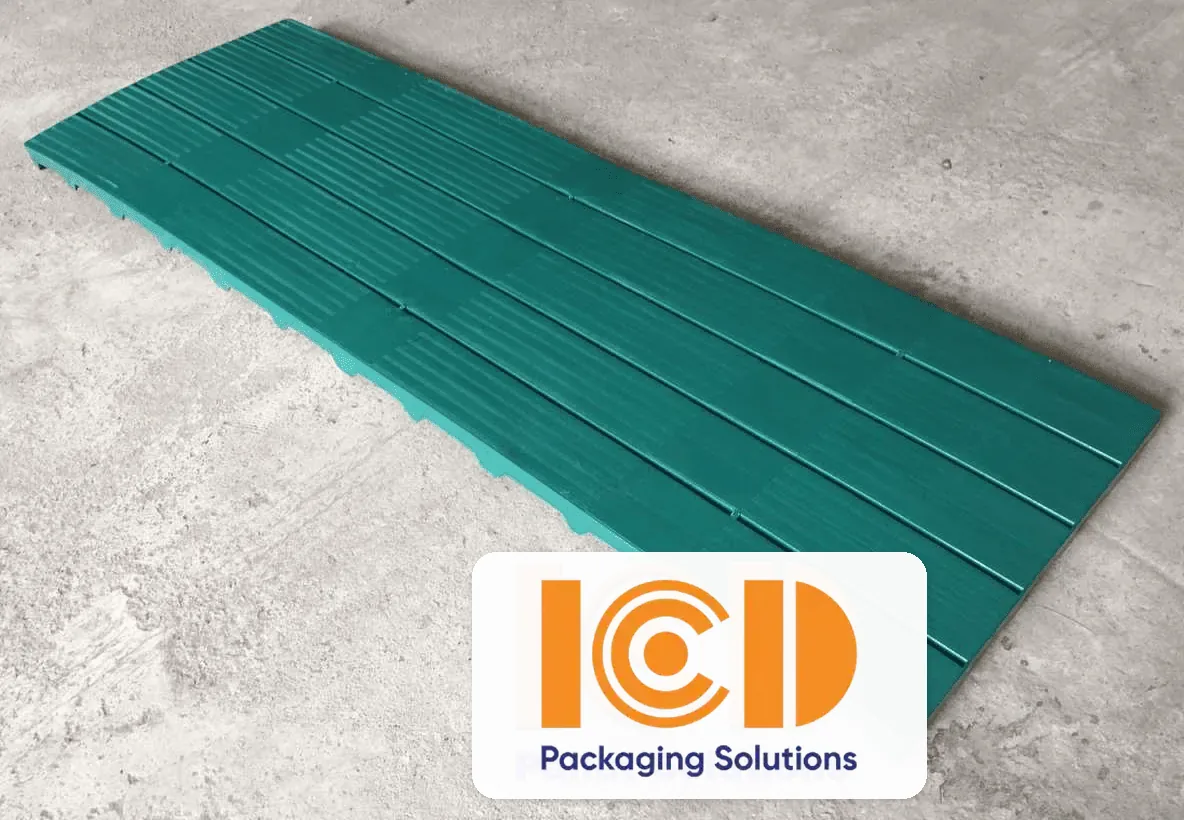
On the disadvantage side, the joined panels can creak when you turn over hard because the plastic slats rub against each other or against the floor. Overall, a pallet base still looks industrial and is hard to match to a bedroom that needs a polished finish. Plastic can also warp or crack if placed near a heat source, left in strong sun for long periods or loaded excessively at a single point, and the sense of solidity when sitting on the edge is not as good as a good wooden bed frame.
Why is a wooden bed still the more popular choice?
A wooden bed is still more popular with families because it looks good, is solid and lasts many years. A good wooden bed gives a cosy feel, goes with many interior styles from classic to modern, and tolerates sitting, standing and children jumping better than a base joined from many loose panels.
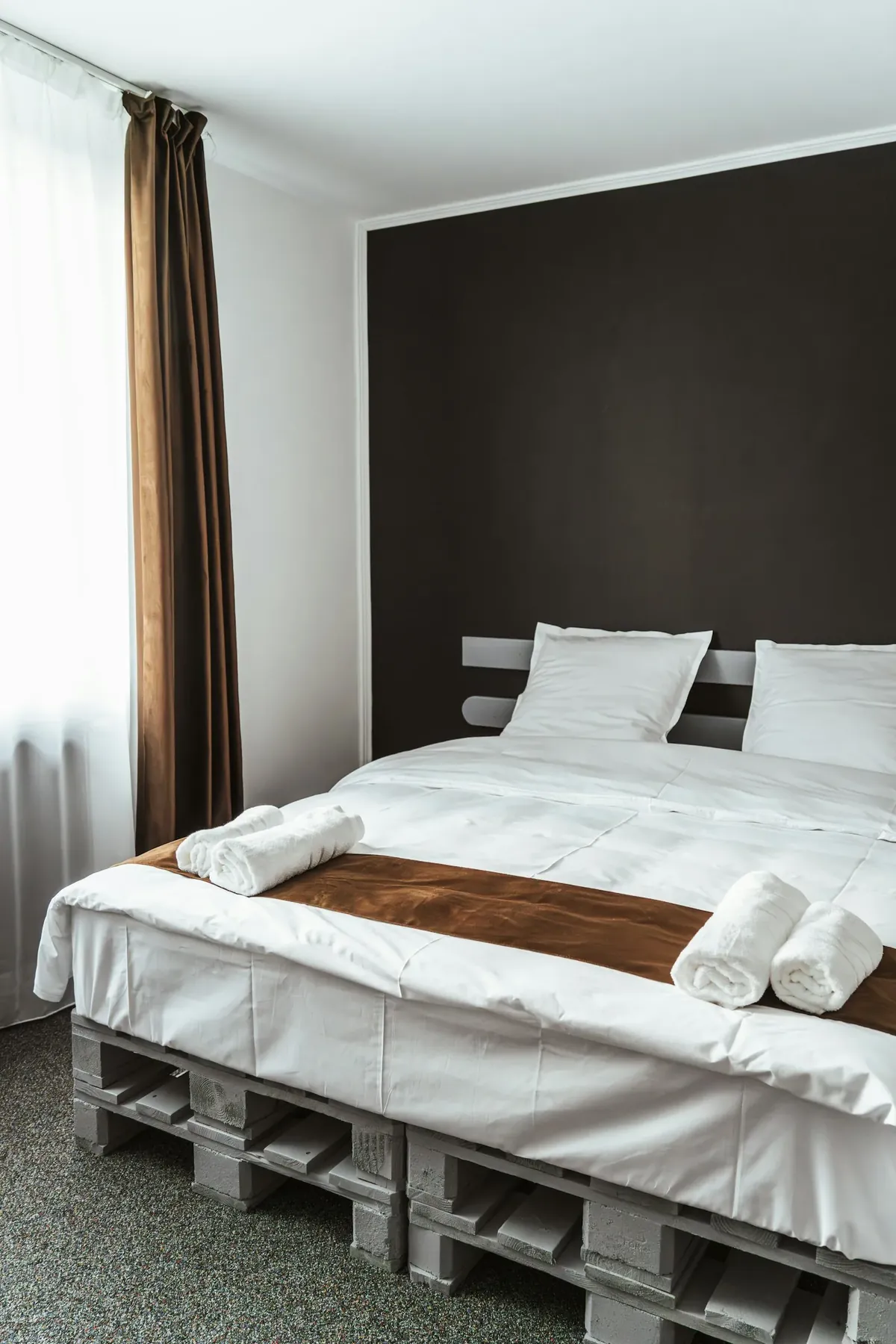
Natural wood carries load well and deforms little when properly made and kept, and a tall bed frame also leaves space underneath for storage. For a main bedroom in long-term use, we therefore still advise choosing a bed frame; a plastic pallet mattress base suits a temporary need or a spare room better.
When should and shouldn’t you use a plastic pallet mattress base?
Use a plastic pallet mattress base for short-term lodging, in a dormitory, when you need a cheap temporary solution, or for a ground-floor, damp room that needs mattress mould protection straight away. Do not use it when you need a bed for many years, put bedroom appearance first, or have a very thick, very heavy mattress such as a large spring or latex mattress that needs a solid frame.
Whichever way you choose, use new plastic pallets, not old pallets of unknown history that may have held chemicals, machine oil or other goods in a warehouse. What lies under a mattress every night in a bedroom should have a clear origin.
Frequently asked questions
1. Is a plastic pallet mattress base durable?
Durability depends on the load rating of the pallet model and how it is used. Choose a panel with a static load of 300 to 500 kg or more, join enough panels, keep it away from heat sources and do not jump on a single point, and the pallet will last a long time; when you see a panel cracked, warped or with a broken foot, replace that panel.
2. Does a plastic pallet mattress base make noise when you lie on it?
It can make a faint creak when you turn over hard, because the plastic slats rub against each other or against the floor. You can reduce it by laying a layer of cloth or thin foam between pallet and mattress, and placing the joined panels tight together on a flat floor.
3. Do you need to add anything between the plastic pallet and the mattress?
Not required, but add a sheet of cardboard, cloth or thin board if the mattress is thin, to avoid the ridged feel from the gaps between the pallet slats.
4. How much load can a plastic pallet mattress base carry?
It depends on the model. In the ICD Vietnam floor-lining pallet catalogue, the published static load ranges from 100 kg (the 600 x 600 x 100 mm panel) to 3,000 kg (the 1,200 x 1,000 mm panel). To support a mattress for two people, choose a model with a static load of 300 to 500 kg or more per panel and join enough panels.
5. Where can you buy plastic pallets for a mattress base from a reputable source?
Choose a supplier with a clear origin that publishes the size, material and load of each model instead of selling by a vague description. ICD Vietnam supplies a floor-lining plastic pallet line with technical specifications for each model so customers can compare before buying.
6. How many plastic pallet panels does a 1.6 m x 2 m mattress need?
A 160 x 200 cm mattress needs 6 floor-lining pallet panels of 1,000 x 600 mm (3 panels across x 2 panels along the length, assembled surface 1.8 x 2.0 m), or 4 panels of 1,200 x 1,000 mm (assembled surface 2.4 x 2.0 m), or 12 panels of 600 x 600 mm. Large panels have fewer joints, small panels are easier to transport and stack compactly when not in use.
7. Should you choose a mesh-deck or closed-deck pallet for a mattress base?
A mesh-deck or slat-deck pallet is more breathable and suits hot, humid climates and rooms prone to condensation; a closed-deck pallet is flatter, a thin mattress lies more comfortably and less dust collects in the gaps. If you use a mesh deck for a thin mattress, add a layer of cloth, cardboard or thin board.
8. Should you use a wooden pallet instead of a plastic pallet for a mattress base?
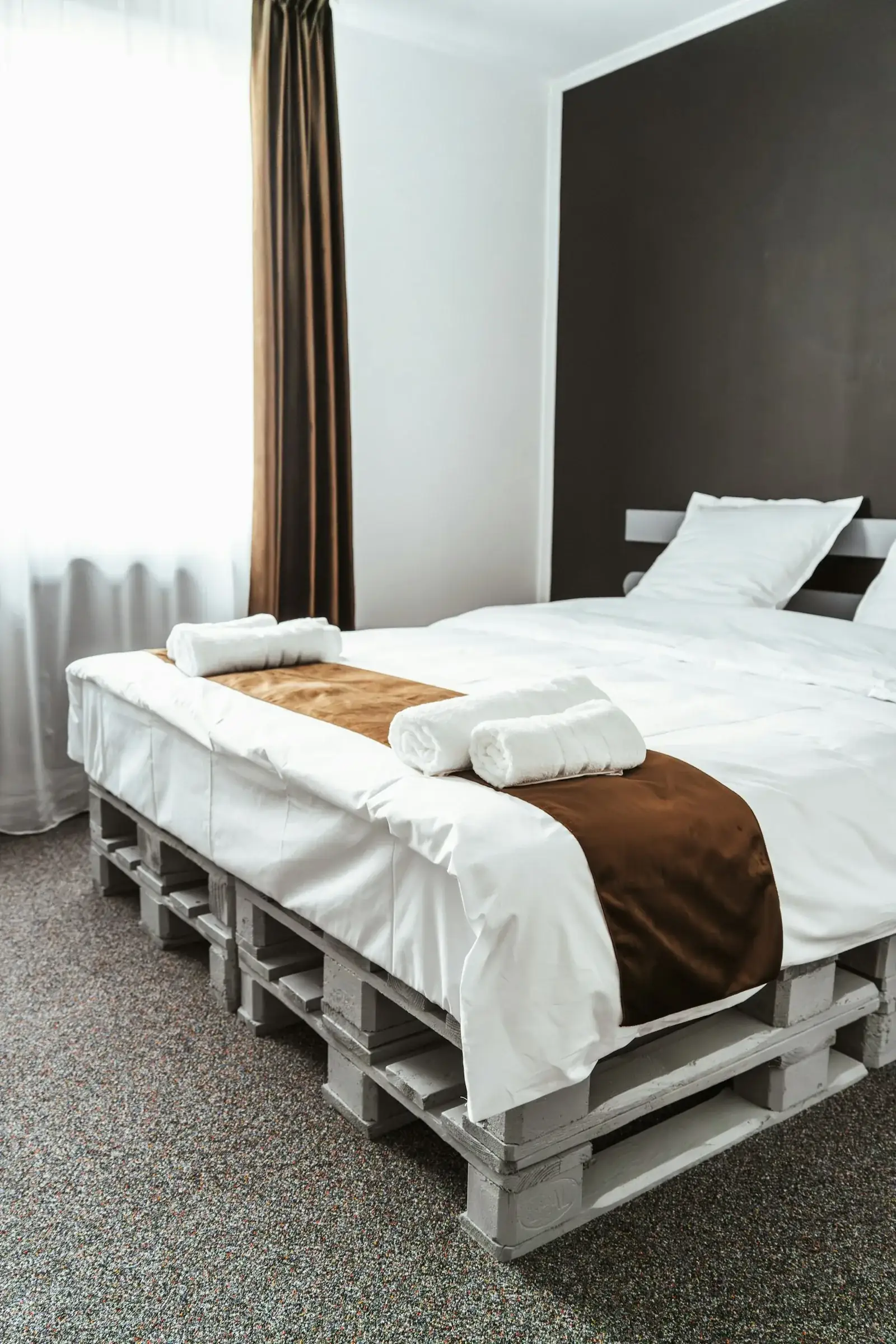
A wooden pallet has an attractive rustic look but absorbs moisture, goes mouldy easily and may have termites, splinters and protruding nails, so it needs sanding, cleaning and surface treatment before going into a bedroom. If you use a used wooden pallet, choose one with an HT heat-treatment mark under ISPM 15 instead of a pallet of unknown origin. A plastic pallet needs no quarantine treatment and can be washed with water and soap.
Contact us for plastic pallet advice
ICD Vietnam Industrial Manufacturing Co., Ltd
- Hotline: 0983 797 186 / 090 345 9186 / 090 5859 186.
- Northern Vietnam: 3rd Floor, Thang Long A1 Building, Bau Hamlet, Thien Loc Commune, Hanoi.
- Southern Vietnam: 551/212 Le Van Khuong, Tan Thoi Hiep Ward, District 12, Ho Chi Minh City, 098 6784 186.
- Email: sales@icdvietnam.com.vn.
- Zalo: Chat with ICD Vietnam on Zalo.
See also the ICD Vietnam floor-lining plastic pallet range in the category listed in this article.
References
- Moisture and mould control in the home: EPA, A Brief Guide to Mold, Moisture and Your Home.
- Treatment of wood packaging material: IPPC, ISPM 15.
- Size, material and load of floor-lining plastic pallets: ICD Vietnam plastic pallet catalogue, checked on 11 October 2026.
- Floor-lining plastic pallet advisory experience of ICD Vietnam.
Related article: Floor-lining plastic pallet panels and stage plastic pallets | 7 Beautiful Plastic Pallet Bed Designs That Save Space