
Table of Contents
- What is a cup-foot plastic pallet, and why does it have so many names?
- What parts make up a cup-foot plastic pallet?
- Why do cup-foot pallets nest when empty?
- Limits of the cup-foot pallet: racking and single deck
- Specifications of the 9 cup-foot plastic pallet models in the ICD Vietnam catalogue
- When should you choose a cup-foot pallet, and when not?
- Can cup-foot pallets be used for export goods?
- What should you check when buying used cup-foot pallets?
- Frequently asked questions
- Are cup plastic pallets and 9-foot plastic pallets different?
- Can a cup pallet be used with a hand pallet truck?
- Do cup pallets carry less load than 3-runner pallets?
- How do virgin and recycled cup pallets differ?
- How many kilograms does a cup-foot plastic pallet weigh?
- What sizes do cup-foot pallets come in?
- Do export cup-foot pallets need fumigation?
- Where can you buy cup-foot pallets and how is a quotation made?
- Contact us for a cup plastic pallet quotation
- References
Reviewed and updated by ICD - Week 44/2026
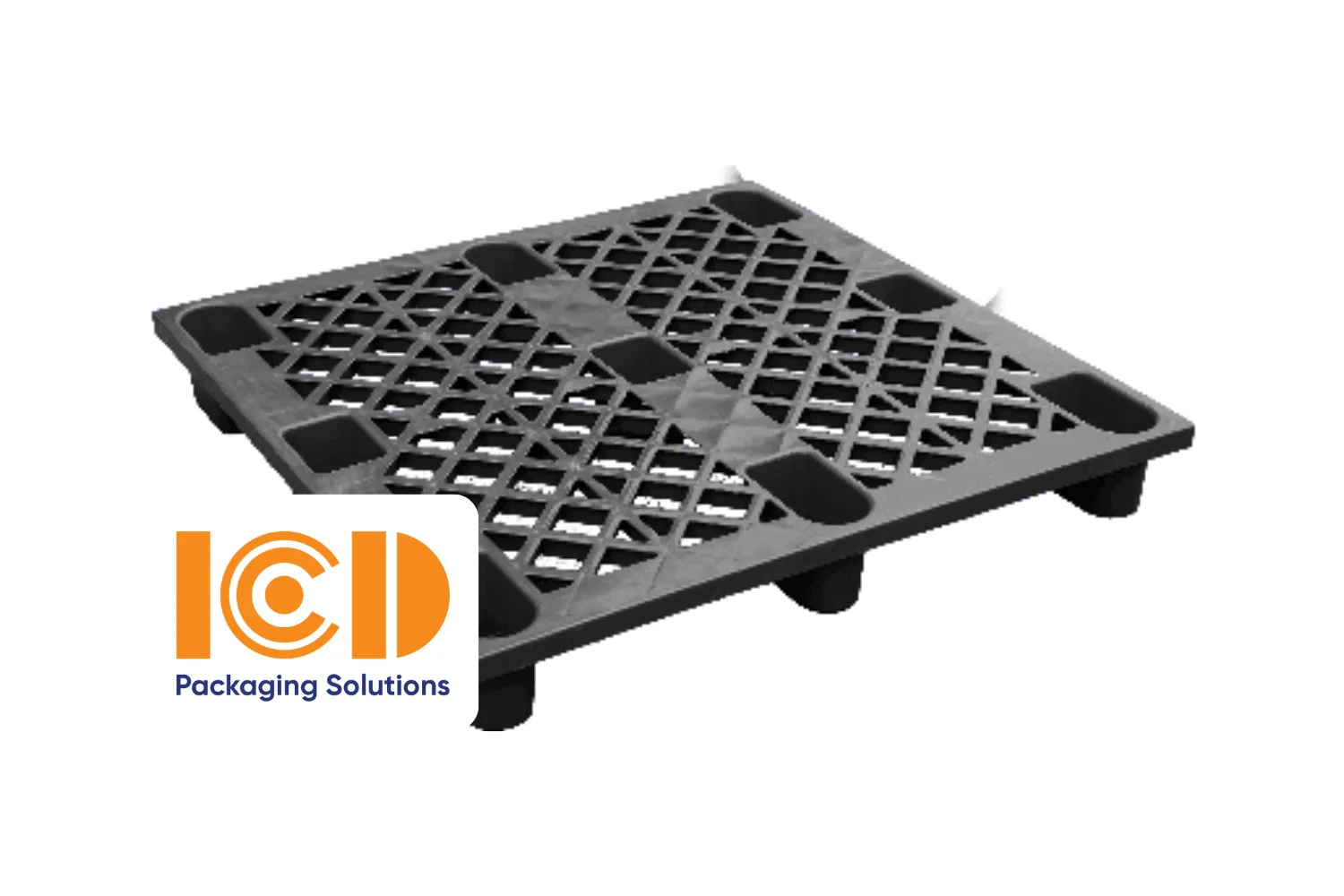
A cup-foot plastic pallet (also called a 9-foot pallet or hump-foot pallet) is a single-deck pallet with 9 hollow feet shaped like inverted cups; when empty the pallets nest into each other, so a stack of empty pallets is short and compact. This type suits warehouses that stack goods on the floor and one-way export goods; the ICD Vietnam catalogue currently has 9 models, with a static load from 1,000 kg (injection-moulded line) to 6,000 kg (blow-moulded line).
Cup-foot plastic pallets come in two clearly different lines. The injection-moulded hump-foot line weighs about 5.5 to 7.5 kg, carries a dynamic load of 500 to 600 kg and is used for light goods and one-way shipments. The blow-moulded 9-foot HDPE line is heavier, with a static load of 6,000 kg and a dynamic load of 2,000 kg, used for heavy goods placed on the floor. Mixing up the two lines, or putting a cup-foot pallet on a pallet rack, are the two errors we meet most often when advising.
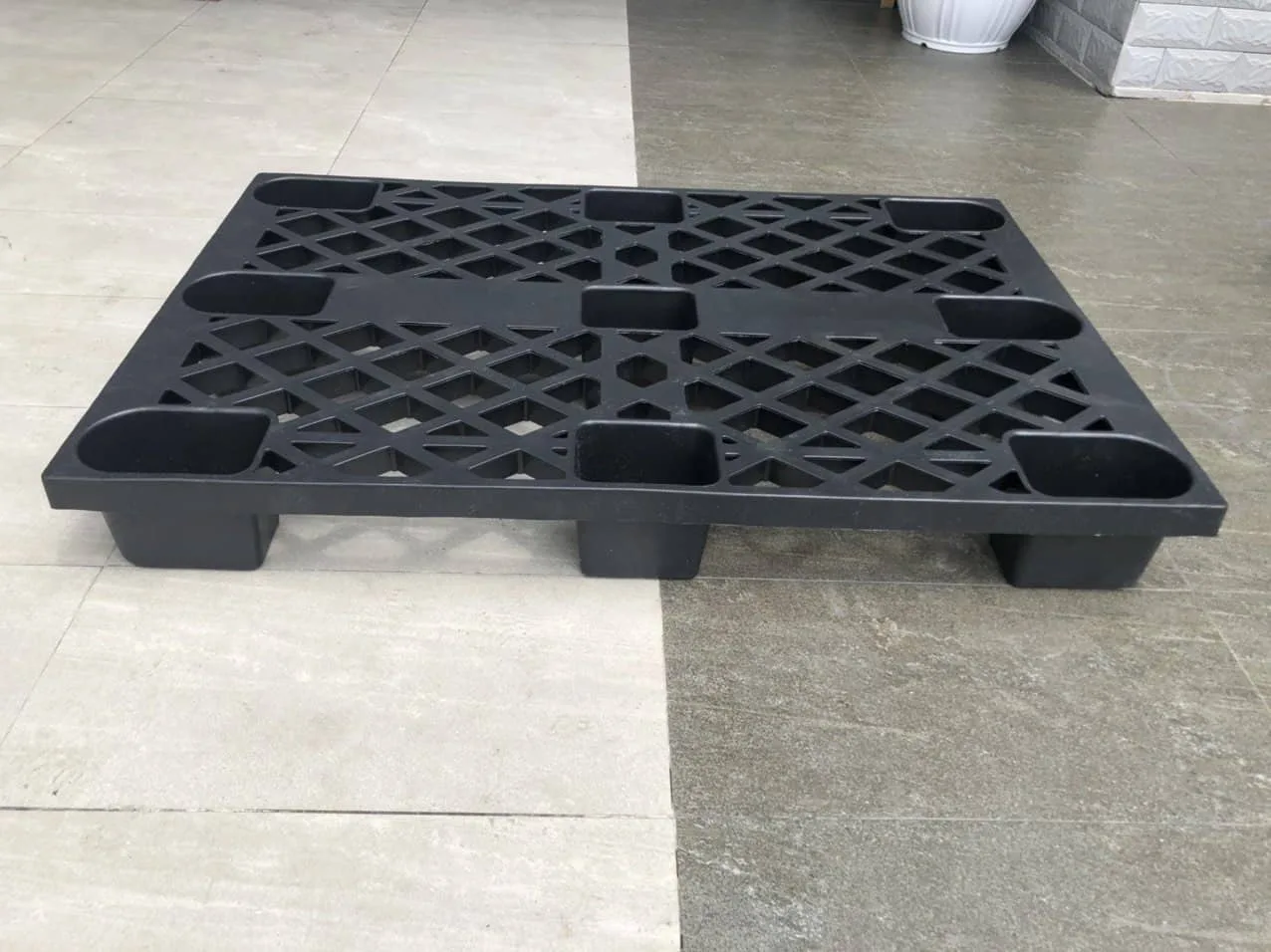
This article explains what a cup-foot pallet is, how it is built, why it nests, its limits compared with a 3-runner pallet, and the specifications of the 9 models in the catalogue so you can cross-check before asking for a price.
What is a cup-foot plastic pallet, and why does it have so many names?
A cup-foot pallet is a single-deck pallet, meaning it has only a top deck to carry goods and below it stand separate feet, with no bottom deck or bottom boards. The pallet terminology standard ISO 445 uses the concept of a single-deck pallet to distinguish it from a double-deck pallet that has both a top and a bottom deck. In English, the type with hollow feet that nest is usually called a nestable pallet. If interested, the article on plastic pallet dimensions and load is also worth a look.
In Vietnam, the same product has three names. “Cup pallet” stresses the foot shape like an inverted cup. “Hump-foot pallet” is the usual name in the South, meaning feet that bulge out below the deck. “9-foot pallet” stresses the number of feet, but this name is easily confused because there are also solid 9-foot pallets (block feet, which do not nest) and 9-foot pallets with bottom boards. When ordering, describe it clearly as “hollow feet, nesting when empty” instead of just saying “9 feet”.
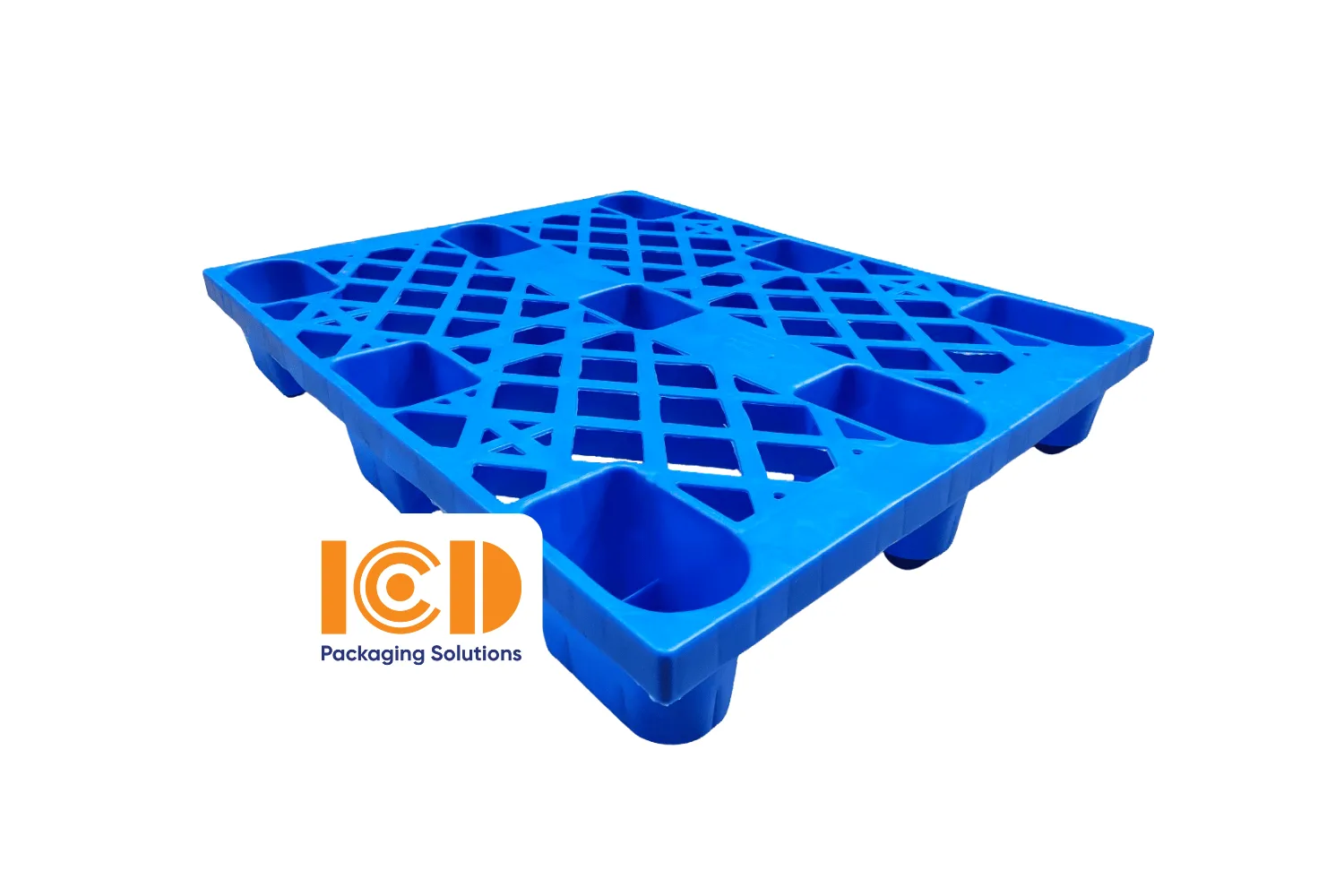
What parts make up a cup-foot plastic pallet?
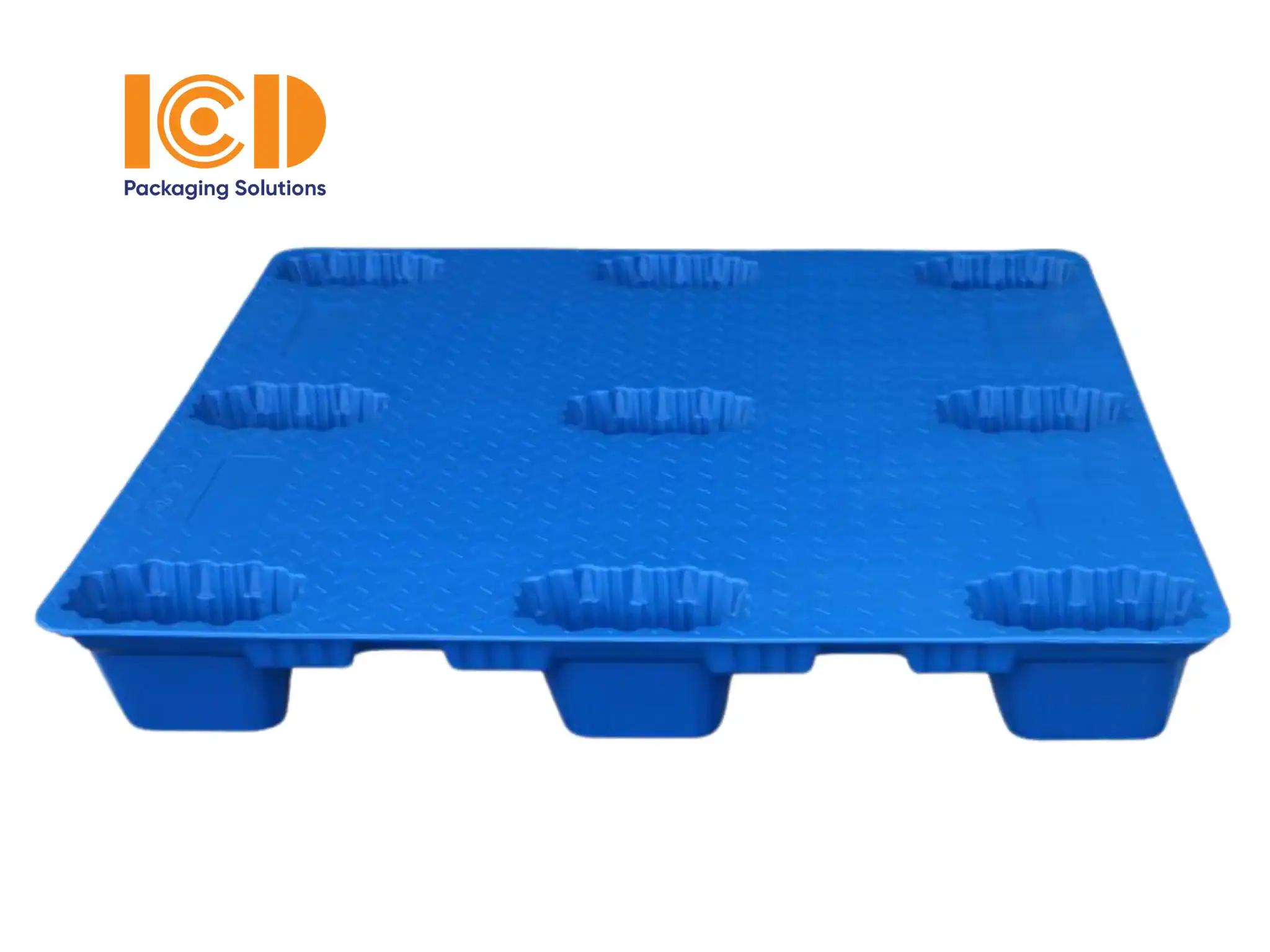
A cup-foot pallet has two parts moulded as one: the deck and 9 hollow feet arranged 3 rows x 3 columns, consisting of 4 corner feet, 4 mid-edge feet and 1 centre foot. There are no bars joining the feet, so hand pallet trucks and forklifts can enter from all four sides, and it is precisely because there are no bottom boards that empty pallets nest into each other.
The deck comes in two styles. Most hump-foot models use a diamond-pattern open mesh deck: light, airy and fast-draining, suited to dry stores and goods in cartons. The closed-deck style is slightly heavier but lets no dust or water fall through, suiting bagged goods, loose goods or areas that need washing.
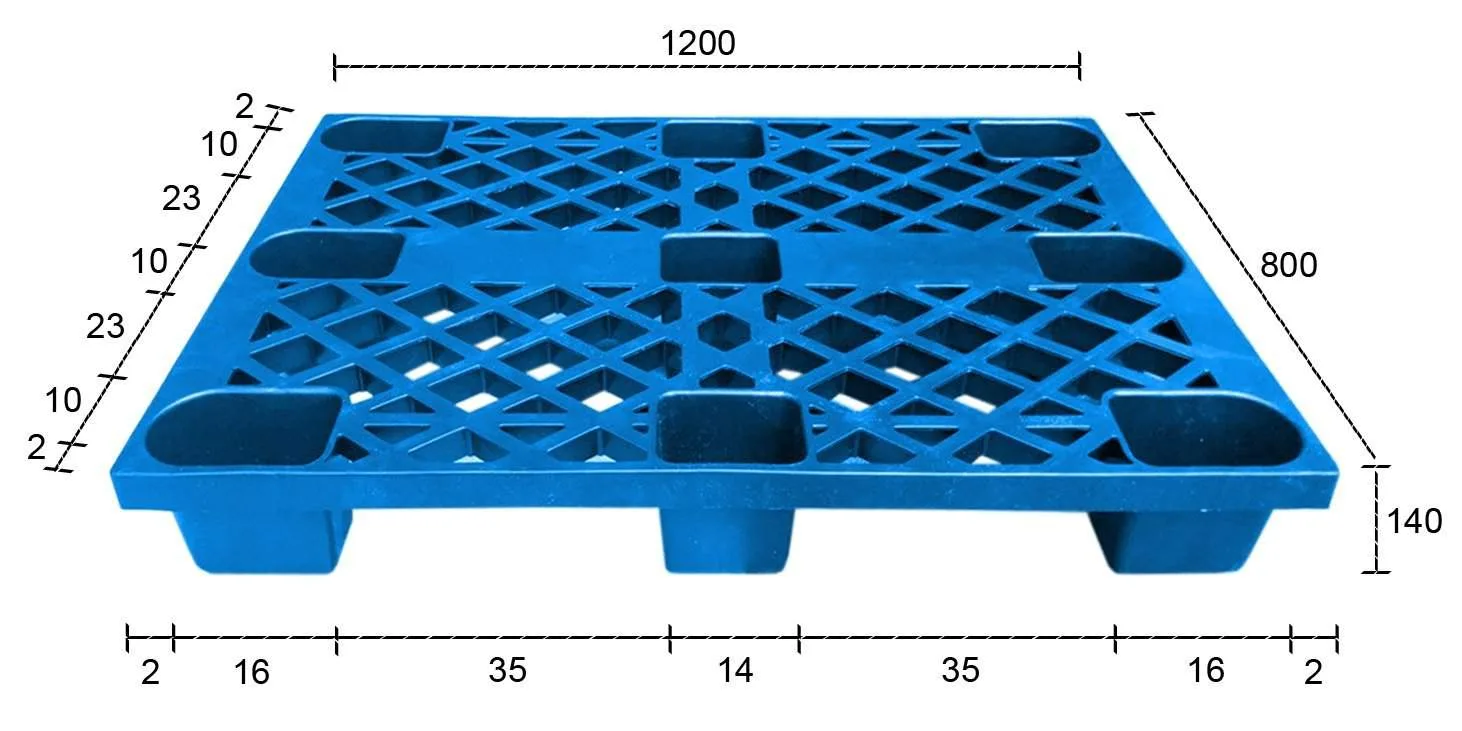
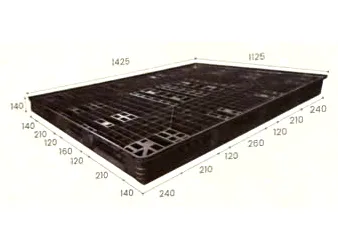
The drawing above shows how to read a cup-foot pallet. Along the 1200 mm long side, the corner feet are 160 mm wide, the middle feet 140 mm wide, and the two gaps between feet are 350 mm each. Along the 800 mm short side, the feet are 100 mm wide and the gaps only 230 mm. So the short side is much narrower, and the forks of a large hand pallet truck may not enter from this side. This is a figure to ask the supplier for the exact model you plan to buy, because every mould differs.
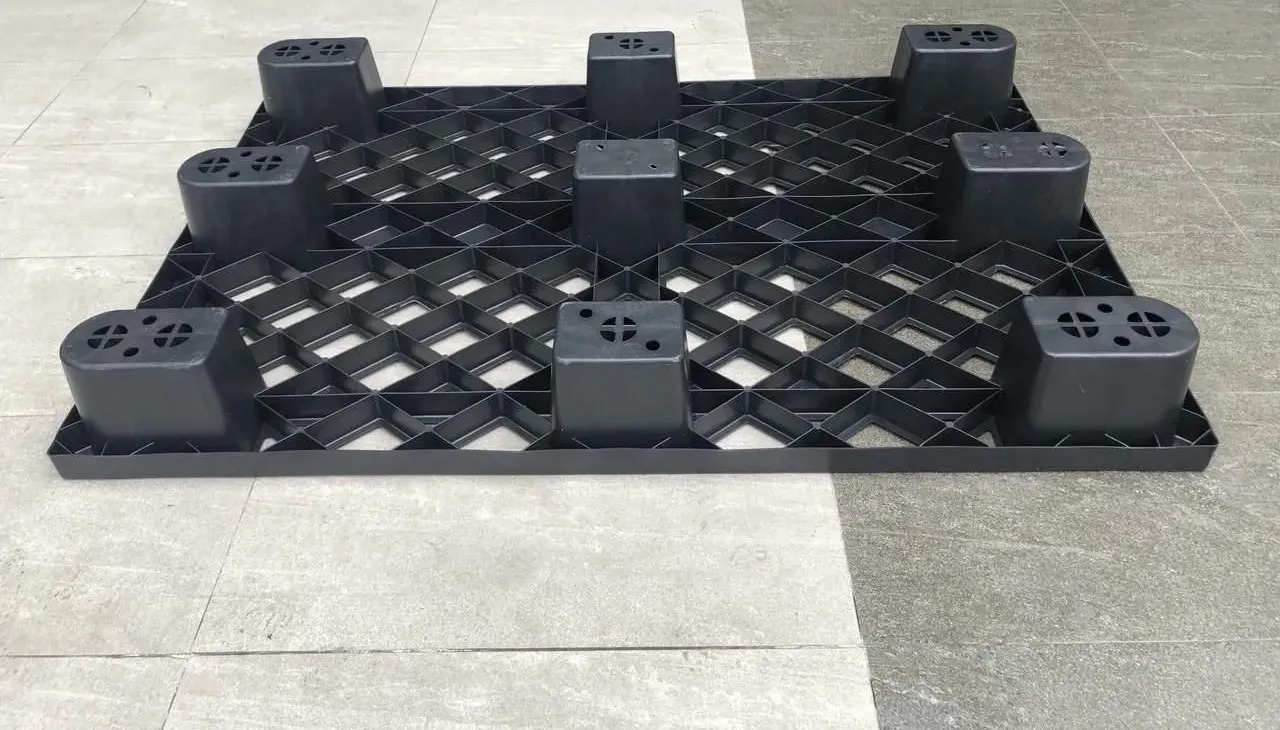
On technology, there are two ways of making it. The injection-moulded line injects plastic into a mould as a thin ribbed layer, so it is light and cheap; the injection-moulded hump-foot models in the catalogue are made of HDPE or an HD/PP blend. The blow-moulded line blows HDPE into a hollow two-wall body, the same way plastic jerrycans are made, so it is much stiffer and carries a much higher load at the same size. At a glance the two lines look quite similar but their loads differ by several times, so always read the line name on the product page.
Why do cup-foot pallets nest when empty?
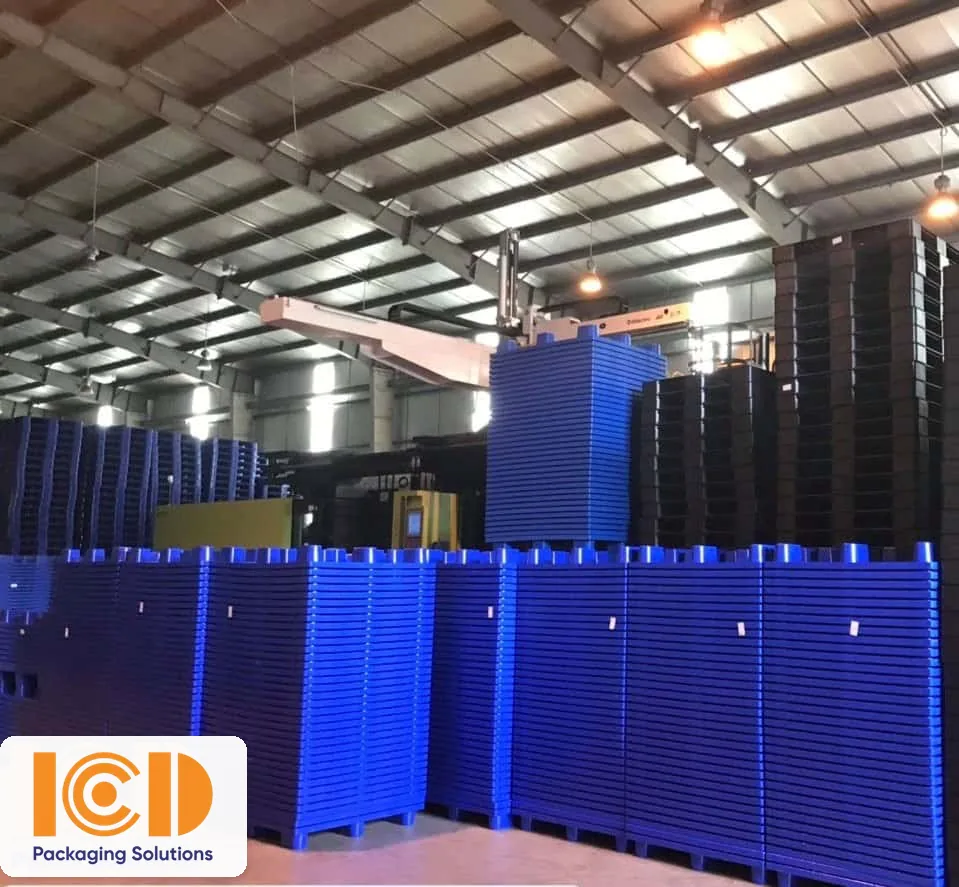
Cup-foot pallets nest because the feet are hollow and taper towards the bottom: the feet of the upper pallet sit inside the feet of the lower pallet. Each pallet added to the stack makes it only a short step taller, called the nesting pitch, instead of the full 140 to 150 mm height as with straight stacking.
To picture it, 10 pallets of 140 mm height stacked straight are already about 1.4 m tall. The same 10 hump-foot pallets nested make a distinctly shorter stack, by an amount that depends on the nesting pitch of each mould. The product pages do not currently publish the nesting pitch, so when you need to calculate storage space or the number of empty pallets on a truck trip, ask the supplier to measure the height of 10 nested pallets of that exact model.
This advantage is worth most in two situations. The first is a distribution warehouse with fast turnover, where pallets are constantly unloaded and wait for new goods, and the empty pallet area takes up considerable space. The second is carrying empty pallets on the return trip: in the same truck body, nested pallets let you carry more than pallets only stacked straight.
| Criterion | Cup-foot pallet | 3-runner pallet | One-piece double-deck pallet |
|---|---|---|---|
| Nests when empty | Yes | No | No |
| Placed on rack beams | Not recommended (no bottom boards) | Yes, per the published rack load | Yes, per the published rack load |
| Hand pallet truck entry | 4 sides (short side may be narrow) | 2 sides | 2 or 4 sides depending on model |
| Both sides usable | No | No | Yes (reversible type) |
| Best suited to | Floor-stacking warehouses, one-way export goods | Warehouses with pallet racking | Racked warehouses, heavy goods, many circulations |
Limits of the cup-foot pallet: racking and single deck
The biggest limit of a cup-foot pallet is that it should not go on the beams of selective, drive-in or push-back racking. Racking supports the pallet on two horizontal beams; a 3-runner pallet or a pallet with bottom boards lies across both beams along the full length of its boards. A cup-foot pallet rests on the beam only through a few separate feet, with nothing supporting the deck in the middle, so it sags easily, and the feet may slip off the beam edge when the forklift sets it down off-centre. Related to this section is the article on single-face and double-face plastic pallets.
Of the 9 cup-foot models in the ICD Vietnam catalogue, none publishes a rack load. So if the warehouse has or is about to install selective racking, choose a 3-runner pallet or a pallet with bottom boards, or if you must use a cup-foot pallet, add a solid support panel (a rack decking mesh) across the whole bay. Conversely, a warehouse that only stacks goods on the floor or block-stacks without beams finds the cup-foot pallet a compact and economical choice.
The second limit: a cup-foot pallet can be used on one side only. The side with the feet cannot carry goods, so it does not suit automated lines that need to flip pallets, or roller conveyors that need a continuous flat bottom for the pallet to run smoothly. For an ordinary forklift warehouse this is rarely a problem.
Specifications of the 9 cup-foot plastic pallet models in the ICD Vietnam catalogue
The ICD Vietnam cup-foot catalogue currently has 9 models: 4 injection-moulded hump-foot models and 5 blow-moulded 9-foot models. The table below follows the product pages on 15 October 2026; where a product page shows two different figures, we put “being updated” instead of picking one at random. Loads are for a new pallet; virgin and recycled pallets can differ (see also static and dynamic load), so always read the exact page of the model you plan to buy. A model available for reference: the ICD blow-moulded 9-foot cup-foot plastic pallet, 1100x1100x150 mm, blue (hump-foot).
| Line | Size (mm) | Static load | Dynamic load | Weight |
|---|---|---|---|---|
| Injection-moulded hump-foot | 1000 x 800 x 140 | 1,000 kg | 500 kg | 5.5 kg |
| Injection-moulded hump-foot | 1200 x 800 x 140 | Being updated | Being updated | 6.5 kg |
| Injection-moulded hump-foot | 1100 x 1100 x 140 | Being updated | 500 kg | 7.5 kg |
| Injection-moulded hump-foot | 1200 x 1000 x 145 | 1,500 kg | 600 kg | Being updated |
| Blow-moulded 9-foot, HDPE | 1100 x 1100 x 150 | 6,000 kg | 2,000 kg | 10 kg |
| Blow-moulded 9-foot, HDPE | 1200 x 1000 x 150 | 6,000 kg | 2,000 kg | 7.5 to 13 kg depending on type |
| Blow-moulded 9-foot, HDPE | 1200 x 1200 x 150 | 6,000 kg | 2,000 kg | Not published |
| Blow-moulded 9-foot, HDPE | 1690 x 1010 x 150 | 6,000 kg | 2,000 kg | 18 kg |
| Blow-moulded 9-foot, HDPE | 1970 x 1010 x 150 | 6,000 kg | 2,000 kg | 20 kg |
Reading the table shows the two lines are very far apart. The injection-moulded hump-foot line is light, nests compactly, with a dynamic load of 500 to 600 kg, suited to cartoned goods, consumer goods and one-way export goods. The blow-moulded 9-foot line carries a static load of 6,000 kg and a dynamic load of 2,000 kg, with long formats of 1690 and 1970 mm for paper reels, film reels and long sheet materials. The blow-moulded 1200 x 1000 x 150 model comes in several weights, meaning several wall thicknesses; when asking for a price, say clearly how many kilograms of weight you need.
Cup-foot pallet prices vary with size, injection or blow moulding, virgin or recycled plastic and the quantity per order, so we do not give a general price in the article. A quotation for the exact model and quantity is the fastest way to compare.
When should you choose a cup-foot pallet, and when not?
Choose a cup-foot pallet when the warehouse stacks goods on the floor, needs empty pallets nested compactly, or pallets travel with the goods and do not come back; do not choose it when pallets must go on pallet racking or the load is heavier than the dynamic load of the line you plan to buy. The two lists below are the questions we ask customers before advising.
Suits a cup-foot pallet:
- Floor or block stacking warehouses that do not use rack beams.
- Fast-turnover cartoned goods, where empty pallets need compact storage.
- Many empty pallets that must be carried back to the warehouse or moved between sites.
- One-way export goods, where pallets are not recovered.
- A load within the dynamic load of the line: 500 to 600 kg for injection-moulded hump-foot, 2,000 kg for blow-moulded.
Does not suit, choose another type:
- Warehouses using selective, drive-in, push-back or pallet-flow racking.
- The receiving warehouse of export goods puts pallets on pallet racking.
- Loads moved by forklift that weigh more than 2,000 kg.
- Automated lines or roller conveyors that need a flat-bottom pallet or a double-face one.
Can cup-foot pallets be used for export goods?
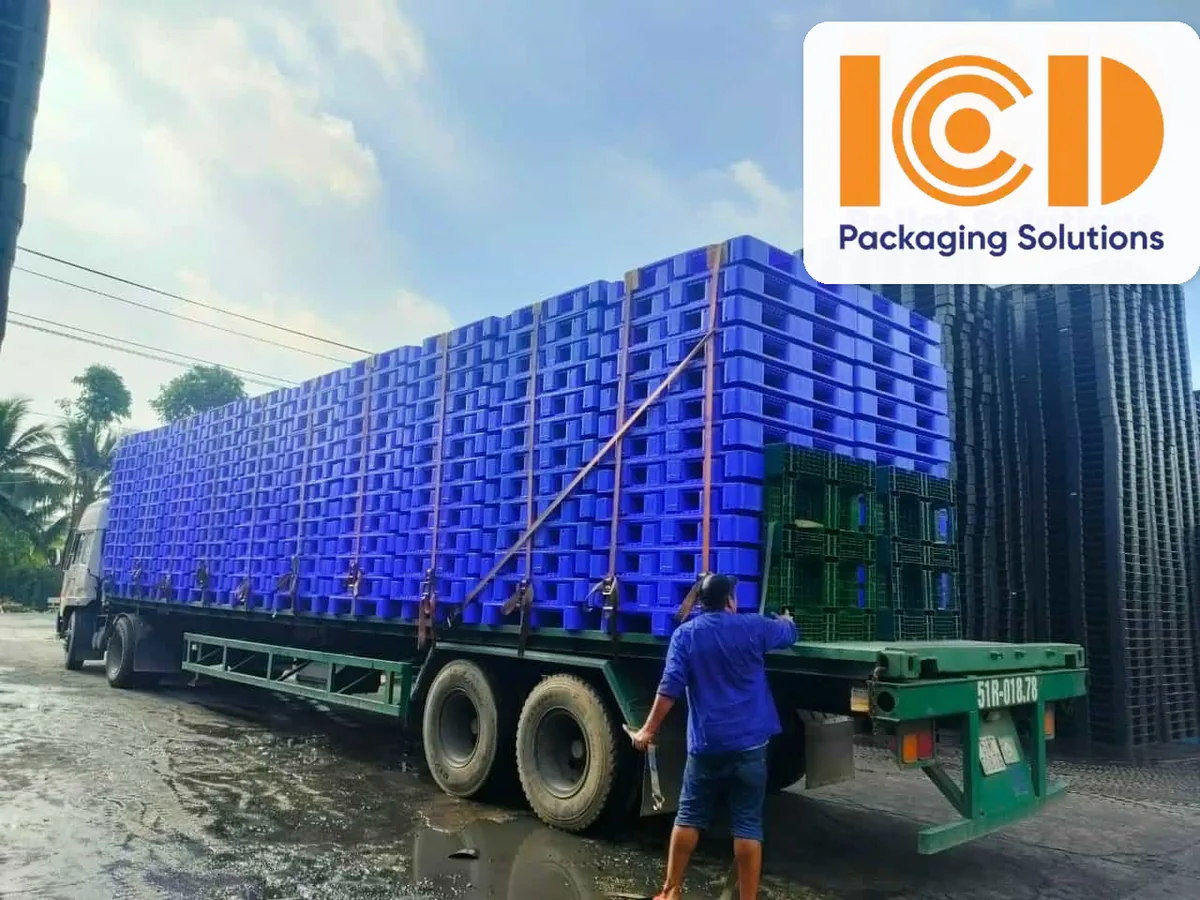
Yes, the cup-foot pallet is a popular choice for one-way export goods because it is light and needs no fumigation: the ISPM 15 quarantine standard of the International Plant Protection Convention (IPPC) applies only to wood packaging material. A plastic pallet travelling in a container needs no heat treatment or IPPC stamp, and its light weight reduces the total weight of the shipment.
The thing to ask first is the receiving party’s warehouse. If the receiving warehouse puts pallets on pallet racking, they will have to transfer the goods to other pallets and may charge a transfer fee. For light one-way goods, the injection-moulded hump-foot line is usually enough; for heavy goods such as paper reels and metal components, the blow-moulded 9-foot line is safer and worth recovering for many cycles if the route allows.
What should you check when buying used cup-foot pallets?
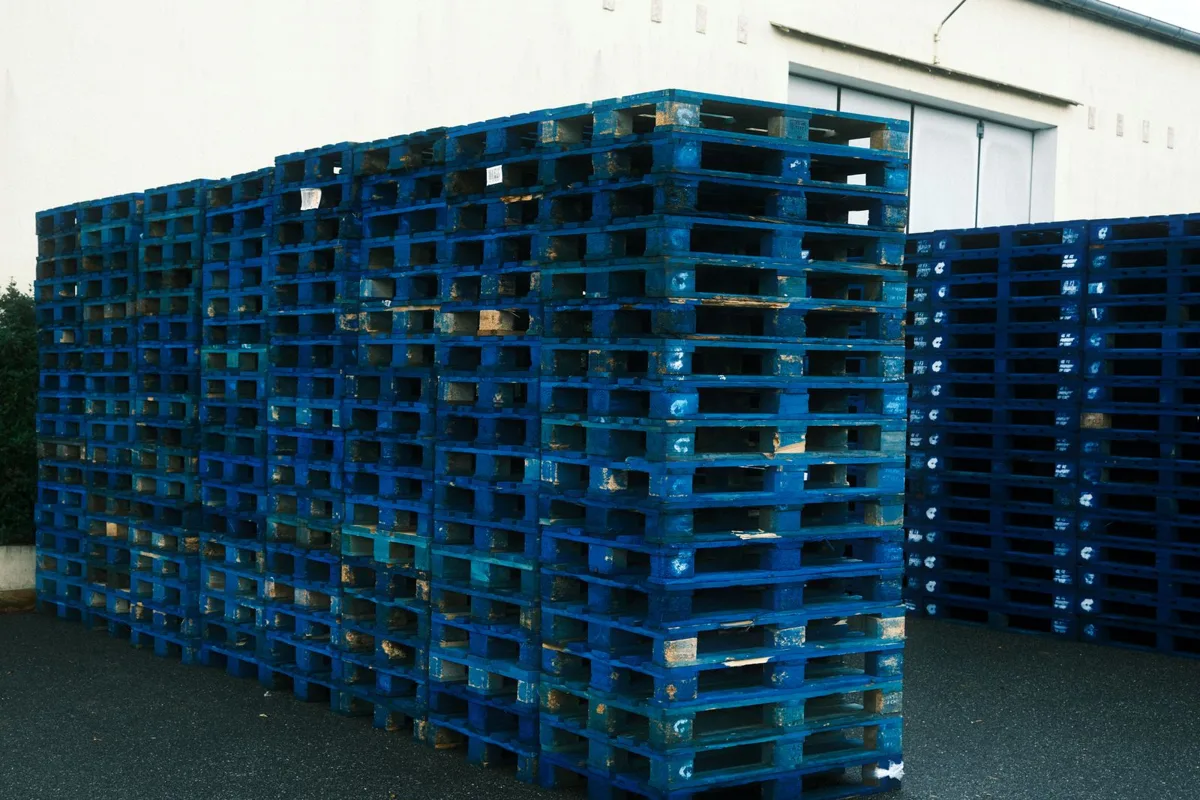
Used cup-foot pallets can be used for floor-stacking warehouses and one-way goods, but you must check each foot carefully, because the cup foot is where fork impacts land and hairline cracks easily form at the base. A small crack is hard to see by eye but can make the pallet break while lifting goods. Before you buy used cup pallets, check these four points:
- Colour: a pallet in good condition has an even colour, without patchy fading or white spots.
- Cup feet: turn the pallet upside down and inspect each foot for cracks, dents or deformation.
- Toughness: drop it gently from a height of 20 to 30 cm onto the floor; a brittle pallet will thud or crack.
- Origin: pallets from beverage and consumer goods warehouses are usually in better condition than those from chemical warehouses or left outdoors.
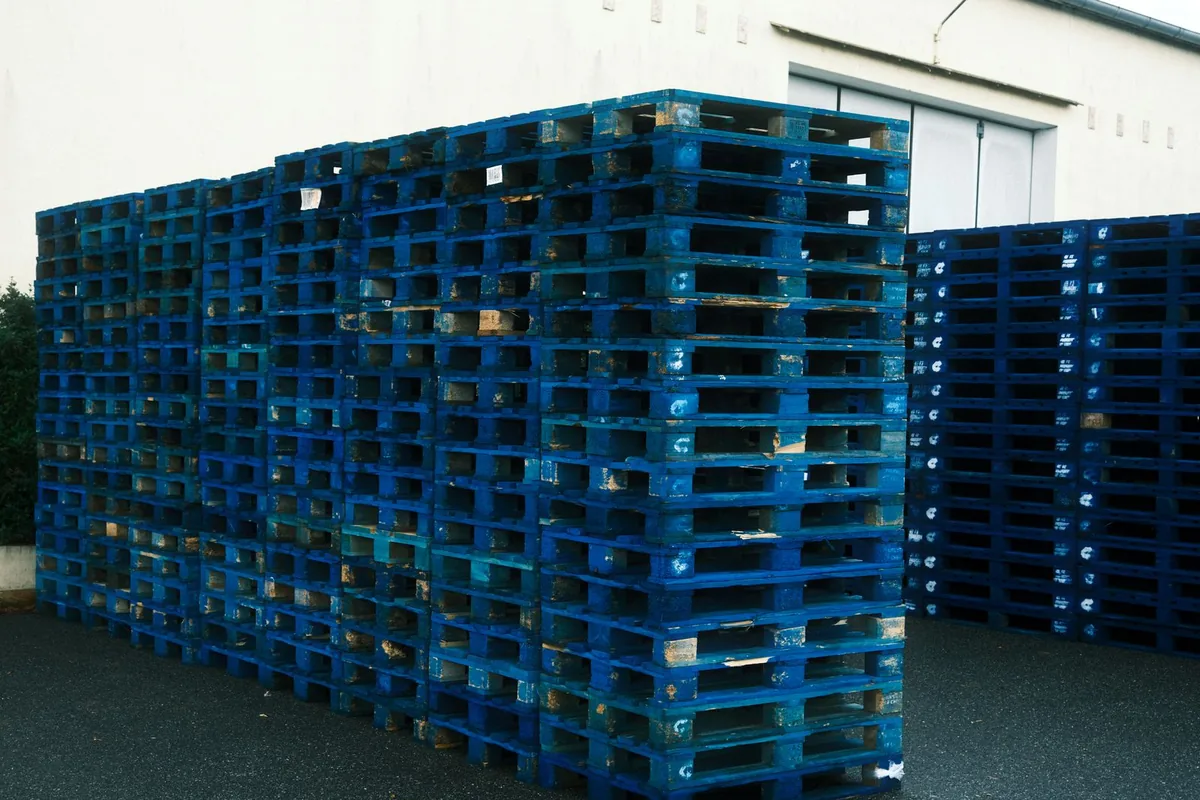
Injection-moulded hump-foot pallets are thin to begin with, so once old they should be used for goods lighter than the load stated on the product page for a new pallet. How to grade and sample a lot of used pallets is described in detail in the guide to assessing used pallet quality.
Frequently asked questions
Are cup plastic pallets and 9-foot plastic pallets different?
Usually they are the same type: a single-deck pallet with 9 feet arranged 3 x 3. “Cup pallet” stresses the hollow foot shaped like an inverted cup, “9-foot pallet” stresses the number of feet. However, there are 9-foot solid models or 9-foot models with bottom boards that do not nest, so when buying ask clearly whether the feet are hollow or solid.
Can a cup pallet be used with a hand pallet truck?
Yes. A cup-foot pallet has no bottom boards so a hand pallet truck can enter from four sides, but the short side is usually narrower. For example, the 1200 x 800 x 140 mm model has a 350 mm gap between feet along the long side but only 230 mm along the short side. Compare this gap and the distance between the two forks with the hand pallet truck in use before placing a large order.
Do cup pallets carry less load than 3-runner pallets?
It depends on the line. The injection-moulded hump-foot line carries a static load of 1,000 to 1,500 kg and a dynamic load of 500 to 600 kg, much lower than many 3-runner models. The blow-moulded 9-foot line carries a static load of 6,000 kg and a dynamic load of 2,000 kg, higher than most 3-runner pallets. The common weakness is that there is no published rack load, so they are not used for pallet racking.
How do virgin and recycled cup pallets differ?
A virgin pallet is made of plastic that has not been used before, with a clear composition, and the cup feet are tough and less brittle under repeated impact. A recycled pallet is cheaper but its quality depends on the source of the plastic, and the feet are more likely to turn brittle and break. For warehouses with daily inbound and outbound movement, virgin HDPE pallets are usually more durable and need replacing less.
How many kilograms does a cup-foot plastic pallet weigh?
According to the ICD Vietnam product pages, the injection-moulded hump-foot line weighs about 5.5 kg (1000 x 800 mm), 6.5 kg (1200 x 800 mm) and 7.5 kg (1100 x 1100 mm). The blow-moulded line is heavier: 10 kg for the 1100 x 1100 mm size, 18 kg for 1690 x 1010 mm and 20 kg for 1970 x 1010 mm.
What sizes do cup-foot pallets come in?
The ICD Vietnam catalogue has 1000 x 800, 1200 x 800, 1100 x 1100 and 1200 x 1000 mm for the injection-moulded hump-foot line (140 to 145 mm high), and 1100 x 1100, 1200 x 1000, 1200 x 1200, 1690 x 1010 and 1970 x 1010 mm for the blow-moulded 9-foot line (150 mm high).
Do export cup-foot pallets need fumigation?
No. ISPM 15 applies only to wood packaging material, so plastic cup-foot pallets used for export goods need no fumigation or IPPC stamp.
Where can you buy cup-foot pallets and how is a quotation made?
ICD Vietnam supplies 9 cup-foot pallet models in two lines, injection-moulded and blow-moulded, quoted by model, plastic type and quantity. Just tell us the size, weight of goods per pallet, how you store them (floor stacking or racking) and the quantity to get advice on a suitable model.
Contact us for a cup plastic pallet quotation
ICD Vietnam advises on choosing the cup-foot pallet line that suits your warehouse, stacking method and forklifts:
- Northern Vietnam: 0983 797 186 / 090 345 9186 / 090 5859 186
- Southern Vietnam: 098 6784 186
- Email: sales@icdvietnam.com.vn
- Zalo advice: Chat with ICD Vietnam on Zalo
For fast-turnover warehouses, prefer virgin HDPE cup-foot pallets to reduce the number of pallets replaced each year.
References
- Terminology for single-deck and double-deck pallets: ISO 445:2013, Pallets for materials handling, Vocabulary.
- Quarantine of wood packaging material: IPPC, list of ISPM standards, including ISPM 15.
- Size, load and weight: ICD Vietnam cup-foot plastic pallet catalogue product pages, checked on 15 October 2026.