Table of Contents
- What are the 7 HACCP principles?
- Example: applying the 7 principles to a metal detection CCP
- How do the 7 principles differ from the 12 HACCP steps?
- Pallets in a plant applying the 7 HACCP principles
- Frequently asked questions
- What is the first of the 7 HACCP principles?
- What is a CCP in HACCP?
- How do the 7 principles and the 12 HACCP steps relate?
- Is washing and disinfecting pallets a CCP?
- How does a CCP differ from an OPRP?
- Why should plants applying HACCP use plastic pallets instead of wooden pallets in open-product areas?
- Are the 7 HACCP principles the same as the 10 golden rules of food safety?
- Contact us for pallets for plants applying HACCP
- References
Reviewed and updated by ICD - Week 43/2026
The 7 HACCP principles are: conduct a hazard analysis, determine the critical control points (CCPs), establish critical limits, monitor the CCPs, take corrective action, validate and verify the system, and keep documentation and records. Under Codex Alimentarius CXC 1-1969 (revised 2020) and TCVN 5603:2023, these seven principles are carried out in steps 6 to 12 of the 12-step sequence for applying HACCP.
- 7: core principles of the HACCP system
- 12: application steps, of which the first 5 are preparation
- 2020: the year Codex revised CXC 1-1969, the basis for TCVN 5603:2023
I have made pallets at ICD Vietnam since 2011, and food-industry customers usually ask about HACCP just as the plant is preparing for an audit. This article does not repeat the general definition of the system (that is in the article What is HACCP), but goes through the principles one by one: what each principle requires, what Codex 2020 changed from the earlier edition, common audit errors, and where warehouses and plastic pallets appear in each principle.
What are the 7 HACCP principles?
The 7 HACCP principles are a framework that helps a food business find significant hazards, choose the steps that must be controlled, set measurable limits and keep daily evidence of compliance, instead of waiting for finished-product testing to discover errors. You can see the full range in ICD’s closed-deck plastic pallets for food warehouses.
The first two principles are used to design the plan, the middle three run daily at each CCP, and the last two keep the system valid. Codex 2020 adds a precondition: HACCP is built only on Good Hygiene Practices (GHP) that are already running stably. TCVN 5603:2023 (Decision 586/QD-BKHCN of 6 April 2023, replacing TCVN 5603:2008) likewise separates the GHP and HACCP parts.
Principle 1: Hazard Analysis
Hazard analysis means listing every biological, chemical and physical hazard that may arise at each step, assessing likelihood and severity to select the significant hazards, then determining control measures for each. If a hazard is missed at this stage, the six later principles cannot make up for it.
Beyond the three groups of biological, chemical and physical, Codex 2020 and TCVN 5603:2023 bring allergens under control on an equal footing. With plastic pallets for the food industry, the hazards commonly met are recycled plastic of unknown origin or a soiled surface contacting open packaging.
| Hazard group | Example in processing | Example related to pallets and warehouses |
|---|---|---|
| Biological | Salmonella, Listeria, E. coli, parasites | Micro-organisms accumulating in cracks and damp wood grain of pallets |
| Chemical | Pesticide residues, cleaning chemicals, allergens | Wood treatment chemicals, cleaning agent residue on the pallet surface |
| Physical | Metal fragments, glass, grit | Wood splinters, nails, plastic fragments from a damaged pallet |
A common error is to analyse by product group instead of by each step on the flow diagram, so receiving, storage and internal transport are missed; or to conclude a hazard is not significant without recording the reason.

Principle 2: Determine Critical Control Points (CCPs)
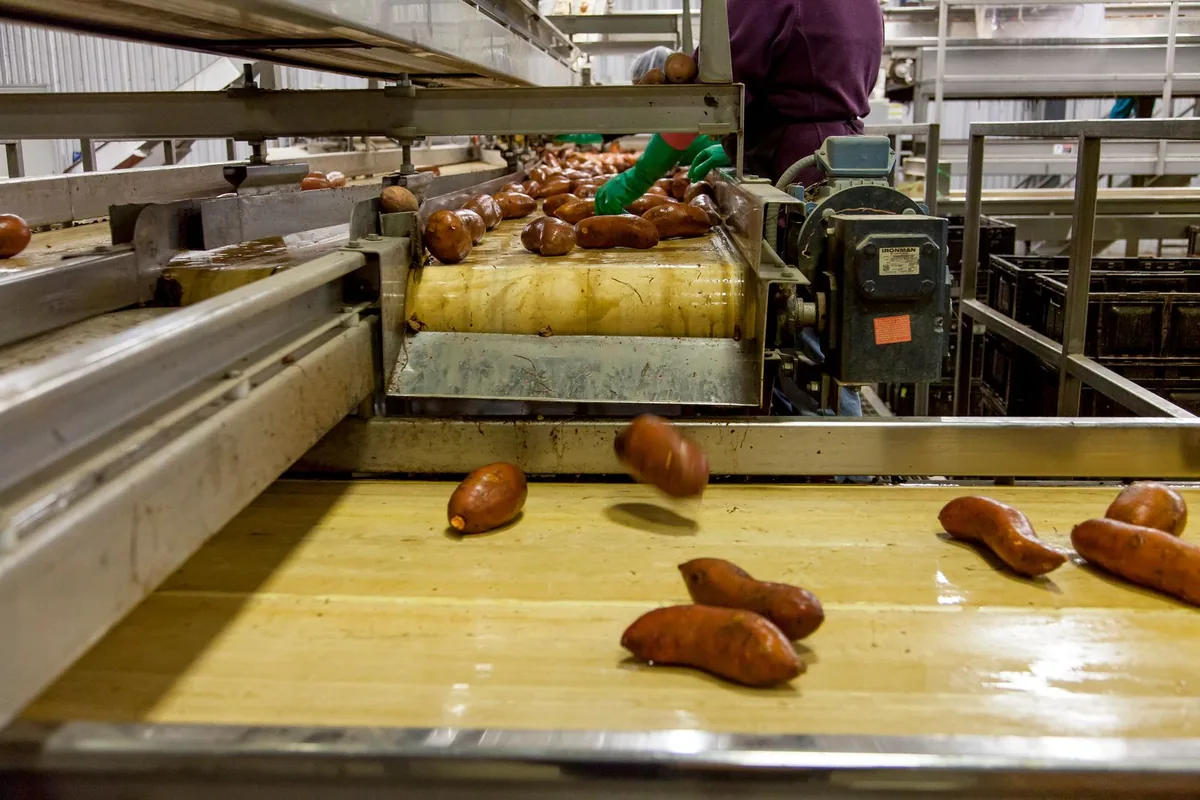
A CCP is a step at which a control measure is essential to prevent, eliminate or reduce a significant hazard to an acceptable level. Typical examples are cooking, rapid chilling, pasteurisation and metal detection. A good plan usually has only a few CCPs because GHP already controls most hazards.
To decide whether a step is a CCP, the HACCP team usually uses a decision tree. Three core questions are asked in order:
- Is this hazard already adequately controlled by GHP?
- Is this step designed to eliminate or reduce the hazard to an acceptable level?
- Is there any later step that can eliminate that hazard?
Codex treats the decision tree as a supporting tool, not a requirement. A common error is to set too many CCPs to be safe, for example turning hand washing and pallet cleaning into CCPs; each CCP brings its own limits, monitoring and records and dilutes attention from the steps that truly decide safety.
Principle 3: Establish Critical Limits
A critical limit is a measured or observed value that separates acceptable from unacceptable product at a CCP. Commonly used values are temperature, time, pH, water activity and preservative concentration; one CCP may need more than one limit, for example both temperature and holding time.
Limits must have a scientific basis and be validated for the business’s own product and equipment. The table below gives a few commonly used values from the Food Code 2022 of the US Food and Drug Administration (FDA).
| Typical CCP | Critical limit | Monitoring method |
|---|---|---|
| Cooking poultry | Core temperature of at least 74°C (165°F) | Probe thermometer on every batch |
| Cold holding of perishable food | Hold at 5°C (41°F) or below | Store temperature logging with automatic alarm |
| Hot holding of cooked food | Hold at 57°C (135°F) or above | Temperature checks each shift |
Each business must re-validate limits for its own product and equipment; the values above are examples for reference only.
Do not confuse the critical limit with the operating limit: setting the oven at 78 °C when the critical limit is 74 °C lets workers adjust the machine before it reaches the threshold; only when the critical limit is exceeded must the corrective action of principle 5 be triggered.
Principle 4: Establish Monitoring Procedures
Monitoring is a planned series of measurements or observations to know whether a CCP is within its critical limit, and to produce records for later verification. The monitoring procedure must answer four questions: what is measured, how, how often and who is responsible.
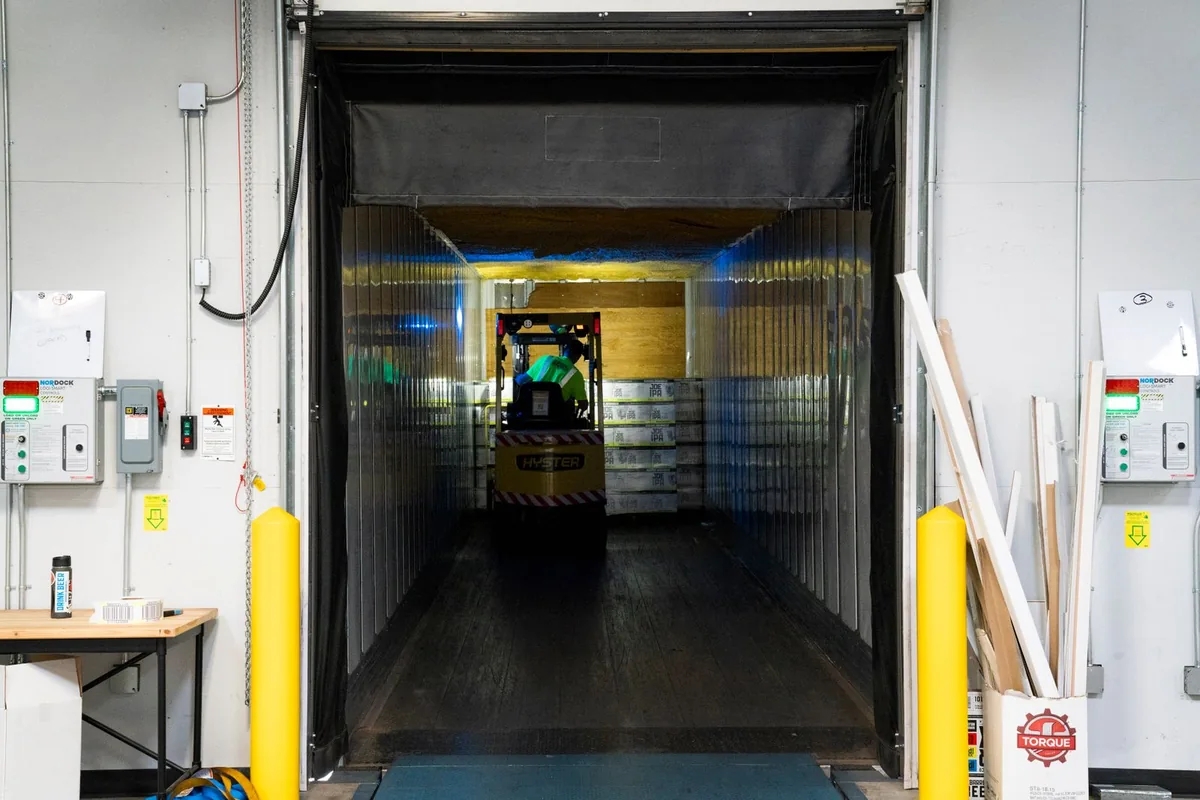
Continuous sensor monitoring is better than manual measurement because it leaves no gap of lost control between two readings; if measuring manually, the frequency must be dense enough that the affected lot can still be isolated. Checking the surface and cracks of pallets before loading usually falls under GHP, but should be recorded with the same discipline.
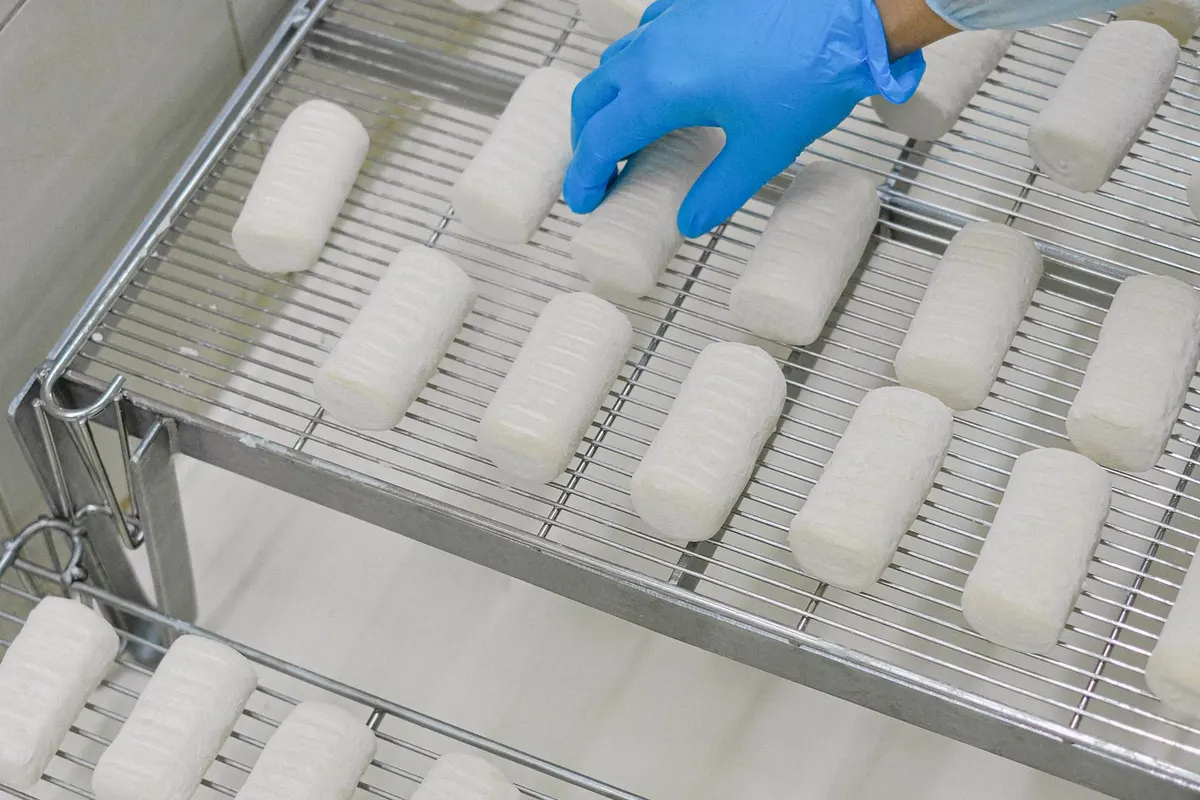
A common error is that the monitor is not trained, has no authority to stop the line, or signs records after the shift from memory.
Principle 5: Establish Corrective Actions
Corrective action is what must be done immediately when monitoring shows a CCP has exceeded its critical limit: regain control and deal with the product made while control was lost. According to Codex, a complete corrective action has four parts, and all four must be written in advance for each CCP before an incident occurs:
- Regain control: adjust the equipment or process so the CCP returns within its limit.
- Isolate the product: hold the affected lot separately and do not release it.
- Dispose of the lot: reprocess, divert or destroy according to assessment.
- Prevent recurrence: find the root cause and record it.
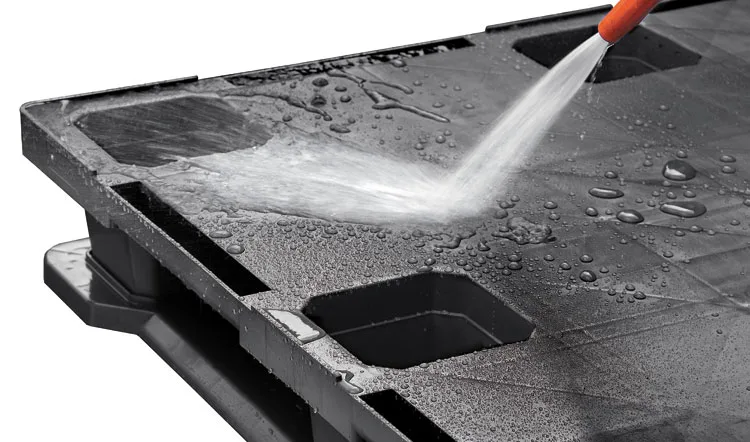
In the warehouse, a cracked or dirty pallet is removed from the product area, re-washed or replaced, with the cause recorded. A common error is only adjusting the machine without tracing how much product was made while the limit was exceeded.
Principle 6: Validation and Verification
Principle 6 covers two different jobs: validation proves before application that the control measures and critical limits are enough to control the hazard, while verification periodically checks that the plan is being followed correctly. The Codex text before 2020 combined the two into one step, so many older documents mention only “verification”.
Validation relies on scientific literature, microbiological challenge studies, equipment manufacturer data or the plant’s own trials. Verification includes reviewing monitoring and corrective records, calibrating measuring instruments, taking test samples and internal audits. The plan must be re-validated when raw materials, formulation or equipment change.
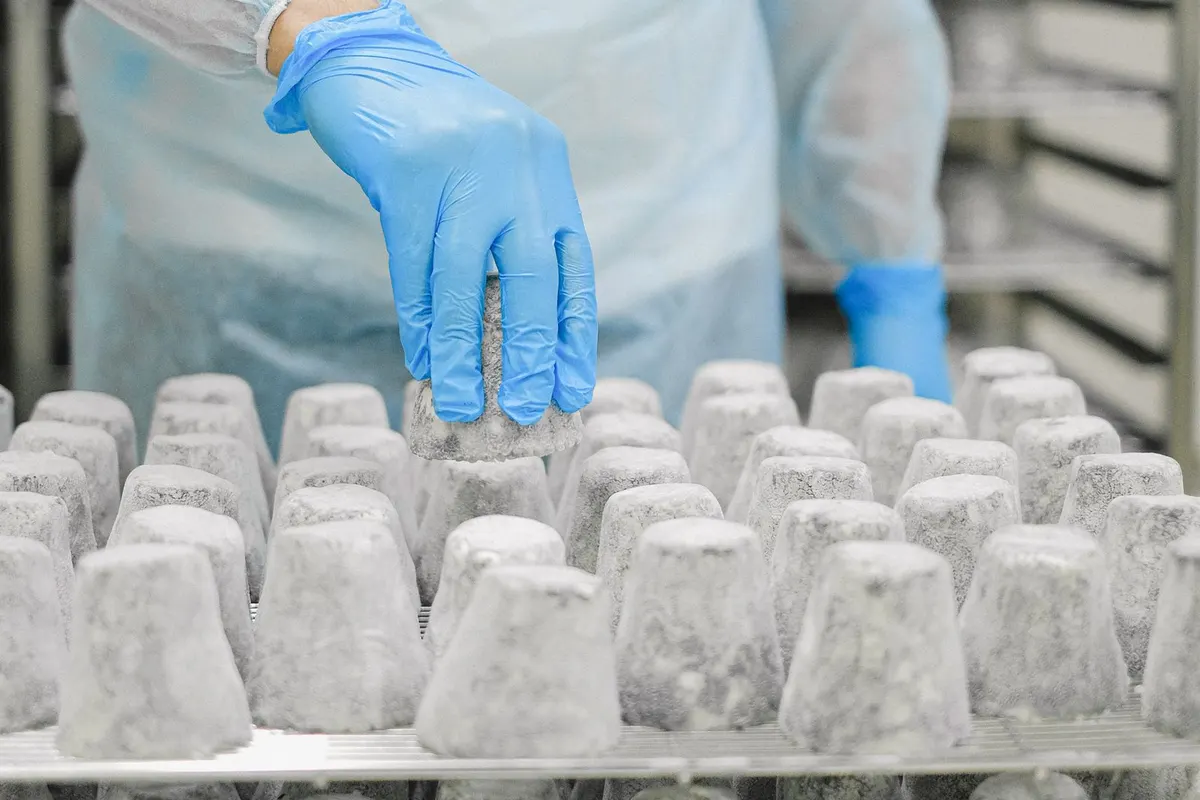
A common error is to copy limits from another document without validation records, or to use a thermometer past its calibration date: a thermometer that is 2 °C off makes every “pass” record of that period worthless.
Principle 7: Documentation and Record Keeping
Principle 7 requires keeping documents and records sufficient to prove that the HACCP plan was built correctly and run correctly, in proportion to the size of the business. Documents include the hazard analysis, the basis for choosing CCPs and the critical limits with validation records; records include monitoring results, corrective actions and verification.
In the warehouse, the records usually examined include the pallet cleaning log, the cold store temperature log and the record of damaged pallets removed. A common error is forms that are so complicated they are left blank, or that exist only in the office and not on the floor.
Example: applying the 7 principles to a metal detection CCP
Metal detection is the most common CCP in confectionery, dry food and frozen food plants, and is an easy example for seeing how the 7 principles link together. The values below are a reference framework; the sensitivity, test pieces and frequency are validated by each plant for its own product and equipment.
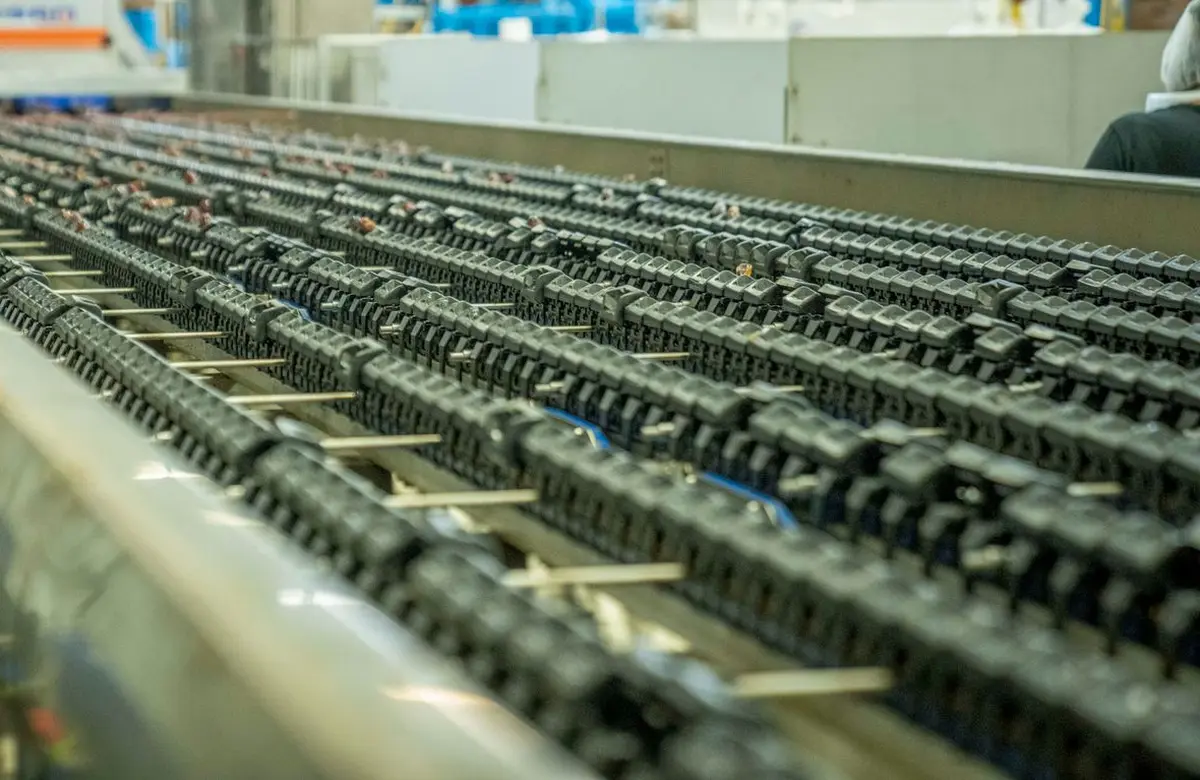
- Hazard analysis: metal fragments from cutting knives, sieve mesh and screws can get into the product; FDA guidance CPG Sec. 555.425 treats hard or sharp objects 7 to 25 mm long as capable of causing injury.
- Determine the CCP: no later step can remove metal, so the end-of-line detector is a CCP.
- Critical limit: the machine detects and rejects ferrous, stainless steel and non-ferrous test pieces of the size the plant has validated.
- Monitoring: QC passes test pieces through the machine at the start of the shift, periodically during the shift and at product changeover.
- Corrective action: if the machine misses a test piece, stop, hold the product since the last passing check and re-run it through the repaired machine.
- Validation and verification: validate sensitivity when installing the machine and at product changeover; QC reviews records weekly.
- Records: test piece check forms, incident log, and the record of how held lots were handled.
This example also shows the limits of a detector: plastic and wood are not detected, so fragments from pallets and plastic crates must be controlled by GHP, that is, cracked pallets are removed before entering an open-product area.
The table below summarises the seven principles, the question each must answer and an example at the warehousing and transport stage for food on pallets.
| Principle | Step | Question to answer | Example at the warehouse and pallet stage |
|---|---|---|---|
| 1. Hazard analysis | Step 6 | Which hazards are significant? | Wood splinters, micro-organisms on pallets contacting open packaging |
| 2. Determine CCPs | Step 7 | At which step is control applied? | Mostly GHP; CCPs usually sit at heat, cold and metal detection steps |
| 3. Critical limits | Step 8 | What is the safe threshold? | Cold store temperature not above the validated level |
| 4. Monitoring | Step 9 | Who measures, what, and how often? | Log store temperature each shift, check pallet surface before loading |
| 5. Corrective action | Step 10 | What to do when the limit is exceeded? | Isolate the lot, remove damaged pallets, clean again |
| 6. Validation, verification | Step 11 | Is the system really effective? | Internal audit, surface sampling, thermometer calibration |
| 7. Documentation, records | Step 12 | Where is the evidence? | Pallet cleaning log, temperature log, corrective action record |
How do the 7 principles differ from the 12 HACCP steps?
The 7 principles are the content of the HACCP system, while the 12 steps are the sequence of application: the first 5 steps prepare data (HACCP team, product description, intended use, flow diagram, flow diagram verification), and the last 7 steps are the 7 principles. Step 2 is where pallets and packaging first appear in the file: storage and distribution conditions decide whether you need a cold-resistant, wash-resistant or one-way pallet. How to prepare this part is in the article on the HACCP product description.
Pallets in a plant applying the 7 HACCP principles
Pallets used in HACCP areas should be made of virgin plastic (HDPE or PP), with a one-piece surface that is easy to wash, with no splinters or nails and no moisture absorption. These criteria stop the pallet becoming a physical or biological hazard source at principle 1, and make monitoring and hygiene record keeping under principles 4 and 7 simpler.
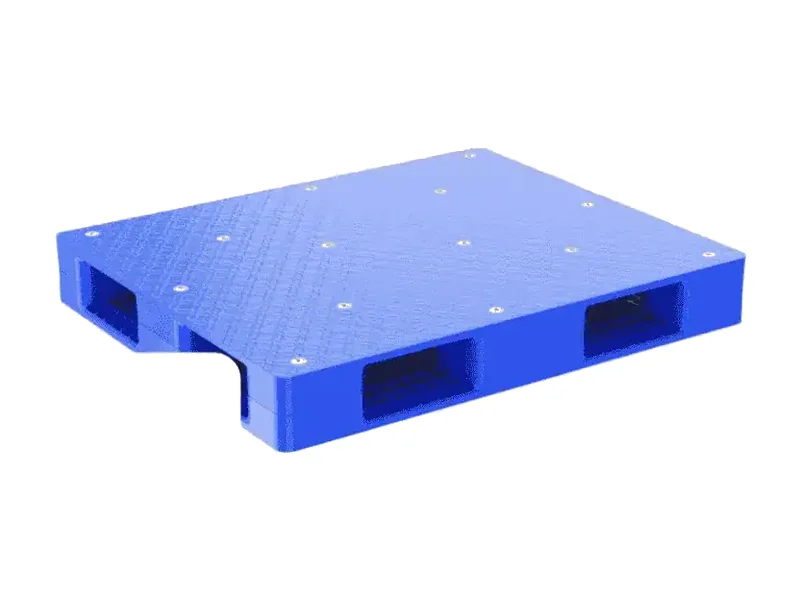
When buying, ask for material documents, choose a closed deck for open-product areas and check the working temperature range against cold stores and washing areas. No pallet is awarded HACCP certification: certification belongs to the business’s system, and the pallet only needs to meet the requirements in that business’s plan.
Frequently asked questions
What is the first of the 7 HACCP principles?
Principle 1 is Hazard Analysis: identify the biological, chemical, physical and allergen hazards that may arise at each step, assess likelihood and severity, then select the significant hazards that need a control measure.
What is a CCP in HACCP?
A CCP (Critical Control Point) is a step at which a control measure is essential to prevent, eliminate or reduce a significant hazard to an acceptable level, for example cooking, rapid chilling or metal detection.
How do the 7 principles and the 12 HACCP steps relate?
The 12 steps are the sequence for applying HACCP. The first five steps are preparation: forming the HACCP team, describing the product, identifying intended use, drawing the flow diagram and confirming the flow diagram on site; steps 6 to 12 correspond in order to the 7 principles.
Is washing and disinfecting pallets a CCP?
Usually not. Under Codex 2020, cleaning pallets and contact surfaces falls under GHP; it is a CCP only when it is the sole step that controls a significant hazard and has a measurable critical limit.
How does a CCP differ from an OPRP?
A CCP controls a significant hazard with a measurable critical limit; exceeding the limit requires disposition of the lot. An OPRP (operational prerequisite programme) in ISO 22000 also controls a significant hazard but uses action criteria and does not demand an absolute threshold as a CCP does.
Why should plants applying HACCP use plastic pallets instead of wooden pallets in open-product areas?
Wooden pallets can shed splinters and nails and hold moisture in the grain, which are physical and biological hazards that must be put into the analysis. Virgin closed-deck plastic pallets shed no splinters, absorb no moisture and withstand washing, so they are easier to control with GHP.
Are the 7 HACCP principles the same as the 10 golden rules of food safety?
No. The 10 golden rules for safe food preparation were written by WHO in the early 1990s for people who prepare and cook food directly; in 2001 WHO merged them into the Five Keys to Safer Food. The 7 HACCP principles are a management system of a production facility, with a plan, limits and records.
Contact us for pallets for plants applying HACCP
If you need plastic pallets suited to a HACCP plan, cold store or washing area, contact ICD Vietnam for advice based on your plant’s real conditions.
ICD Vietnam Industrial Manufacturing Co., Ltd
Northern Vietnam: 3rd Floor, Thang Long A1 Building, Bau Hamlet, Thien Loc Commune, Hanoi - 0983 797 186 / 090 345 9186 / 090 5859 186
Southern Vietnam: 551/212 Le Van Khuong, Tan Thoi Hiep Ward, District 12, Ho Chi Minh City - 098 6784 186
Email: sales@icdvietnam.com.vn
Zalo: Chat with ICD Vietnam on Zalo
References
- General Principles of Food Hygiene CXC 1-1969, revised 2020: FAO/WHO - Codex Alimentarius.
- TCVN 5603:2023 General principles of food hygiene, issued under Decision 586/QD-BKHCN of 6 April 2023, Ministry of Science and Technology (Vietnamese text).
- HACCP Principles and Application Guidelines; Food Code 2022; CPG Sec. 555.425 Foods, Adulteration Involving Hard or Sharp Foreign Objects: US FDA.
- Five Keys to Safer Food Manual, World Health Organization (WHO), 2006.
- ISO 22000:2018 Food safety management systems, International Organization for Standardization (ISO).