
Table of Contents
Reviewed and updated by ICD - Week 43/2026
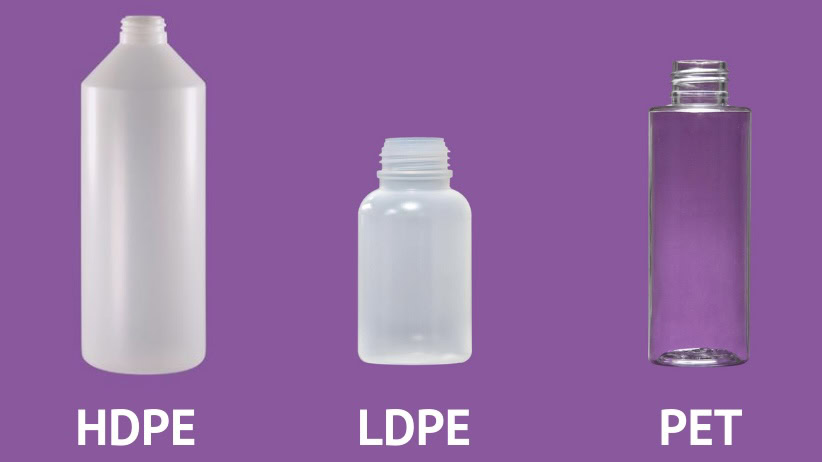
HDPE (high-density polyethylene) is a thermoplastic made from ethylene, with a density of 0.93 to 0.97 g/cm3, crystals that melt at around 130 °C and recycling code 2. Its straight, lightly branched chains give higher stiffness and tensile strength than LDPE, which is why HDPE is the material of bottles, jerry cans, pipes, crates and plastic pallets.
This is the overview article for our HDPE knowledge group: what HDPE is, the technical specifications sourced from resin-maker datasheets, advantages and disadvantages, applications, food safety and recycling. The deeper questions (how much heat it takes, how virgin differs from recycled, the melt flow index) have their own articles, and the figures are kept consistent across them. Continue with HDPE heat resistance and temperature limits, the melting point of HDPE and recycled HDPE.
What is HDPE plastic?
HDPE (High-Density Polyethylene, also written PE-HD or PEHD) is a thermoplastic polymer made by polymerizing ethylene, sourced from petroleum or natural gas. Unlike LDPE, whose long branches hold the chains apart, HDPE has almost only straight chains, so they pack tightly, crystallize more and form a denser material. This high crystallinity is what gives HDPE its stiffness, tensile strength and chemical resistance.
Industry makes HDPE with Ziegler-Natta or Phillips catalysts at low pressure, a process that dates from the early 1950s. The resin is then processed by injection molding, extrusion, blow molding or rotational molding (Wikipedia). A common claim online is that HDPE was used for radar cable in World War II; that detail belongs to LDPE, which dates from the 1930s.
HDPE technical specifications
Each HDPE grade has slightly different figures, so the table below gives ranges taken from the datasheets of resin makers and sheet manufacturers, not a single number. To design a specific product, use the datasheet of the exact grade you are buying.
| Property | Typical value | Source and notes |
|---|---|---|
| Density | 0.93 to 0.97 g/cm3 (injection and blow molding grades 0.945 to 0.964) | Wikipedia; datasheet CPChem, PTT |
| Crystalline melting peak | 129 to 135 °C | ExxonMobil (ASTM D3418), datasheets 130 to 132 °C |
| Vicat softening point | 118 to 127 °C | PTT 118, CPChem 120, IRPC 120 to 122, ExxonMobil 126 to 127 |
| Heat deflection temperature HDT, 0.45 MPa load | 62 to 80 °C | ExxonMobil 62 to 74; HDPE sheet 79 to 80 |
| HDT, 1.8 MPa load | about 46 °C | CPChem Marlex 9010 |
| Continuous service temperature (sheet) | 80 °C long-term, 90 °C short-term | GEP datasheet; one other datasheet gives a long-term maximum of 90 °C per UL 746B |
| Brittleness temperature | below -75 °C | CPChem (ASTM D746) |
| Tensile yield strength | about 21 to 31 MPa | HDPE sheet datasheet |
| Flexural modulus | about 0.8 to 1.55 GPa | HDPE sheet datasheet |
| Processing temperature | injection molding 190 to 240 °C; blow molding 150 to 210 °C | IRPC, PTT; ExxonMobil |
Two figures in the table are often misread. The melting peak of 129 to 135 °C is the temperature at which the crystals melt under slow laboratory heating; the 190 to 240 °C is the barrel temperature of the molding machine, set above the melting point so the resin flows thinly enough. A range of about 210 to 270 °C sometimes quoted as the “melting temperature” is really a processing temperature, and it exceeds even the injection molding range in the datasheets.
Advantages of HDPE
The biggest strength of HDPE is its strength-to-weight ratio: lighter than water, stiffer than LDPE and tough enough to take impact at very low temperatures. Wikipedia gives a tensile strength at break of about 38 MPa for HDPE against 21 MPa for LDPE, so HDPE is about 1.8 times higher, not 4 to 5 times as some articles claim.
Chemically, HDPE resists many acids, dilute alkalis, salts, alcohol and cleaning solutions, and it absorbs no significant water, so moisture passes through it with difficulty. That is why HDPE is used for bottles, cans, tanks and even buried pipe. For concentrated strong oxidizing acids or certain organic solvents, check the resin maker’s chemical compatibility chart first rather than assuming HDPE withstands every chemical.
In processing, HDPE melts and forms easily, can be recycled and is reasonably priced compared with engineering plastics. It is also a good electrical insulator, so it is used for cable sheathing and conduit.
Disadvantages of HDPE
The first is aging: under outdoor sun and heat, HDPE oxidizes, so outdoor grades need antioxidants and UV stabilizers. The second is environmental stress cracking (ESCR): HDPE under continuous load in contact with detergents or solvents can crack early, so grades for blow-molded cans and crates are usually sold with an ESCR rating.
Third, the surface is inert, hard to print or glue without surface treatment (corona or plasma), and HDPE is only translucent, never clear. Fourth, heat resistance is limited: it deforms under load at temperatures far below its melting point, and it cannot be sterilized in an autoclave the way PP can (Wikipedia).
HDPE versus LDPE, PP and PET
The table below compares HDPE with three plastics often confused with it when choosing packaging and containers; the figures come from Wikipedia and the datasheets cited above.
| Plastic | Density g/cm3 | Melting | Key features |
|---|---|---|---|
| HDPE | 0.93 to 0.97 | 129 to 135 °C | Stiff, tough, chemical resistant, code 2 |
| LDPE | about 0.92 | lower than HDPE | Soft and flexible; continuous use about 65 °C, short-term 90 °C |
| PP | about 0.90 | about 130 to 171 °C, common grades above 160 °C | Higher heat resistance, can be autoclaved |
| PET | about 1.38 | above 250 °C | Clear, rigid, used for water bottles and fibers |
Applications of HDPE
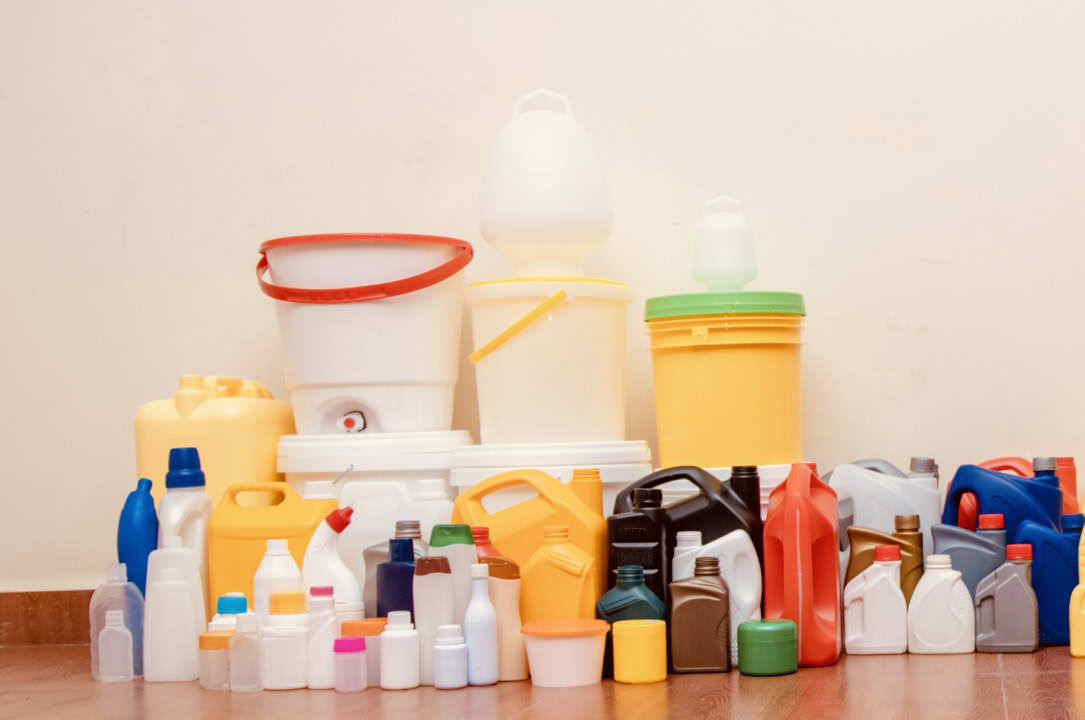
HDPE is found in packaging (milk jugs, shampoo bottles, chemical cans), household goods (cutting boards, storage boxes, bins), construction (water pipe, buried conduit, damp-proof sheet) and agriculture (irrigation pipe, fish cages, livestock fencing). There are also specialized uses:
- Composite and wood-plastic lumber for outdoor use, garden furniture and play equipment.
- Ionizing radiation shielding and fireworks components (Wikipedia).
- Medical: some porous PE forms are used in facial bone reconstructive surgery.
- Shoe soles, ski bases and 3D printing filament.
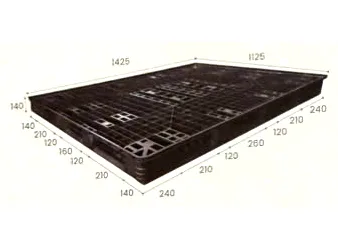
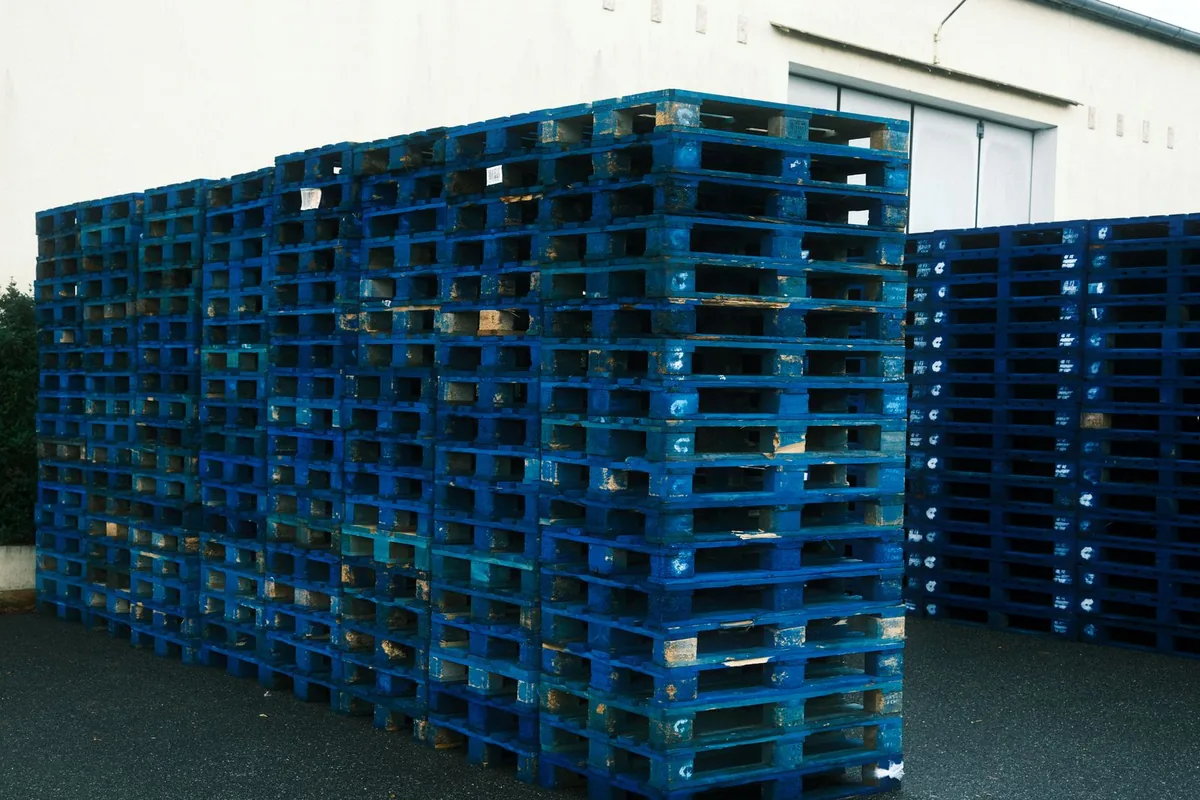
In logistics, HDPE is the familiar raw material of crates, trays and pallets. An HDPE plastic pallet resists impact, does not rot, does not absorb moisture and can be washed with water, so it suits cold storage, the food industry and export cargo that does not need wood fumigation. Recycled and virgin resin give pallets that differ in strength and price, which our comparison articles analyze separately. See also: What material is best for pallets?
HDPE and food safety
There is no blanket certification for the HDPE plastic as a whole: food contact is judged by grade and by product. In the US, polyethylene for food use must meet 21 CFR 177.1520; in Vietnam, PE and PP plastic packaging and utensils in contact with food must follow QCVN 12-1:2011/BYT, which sets limits on volatile substances and heavy metals when tested in food-simulating solvents. So HDPE used for food packaging must be a grade and a product that has been certified.
Details on virgin and recycled resin and the limits of recycled plastic in food are in the in-depth articles of this knowledge group.
Recycling HDPE
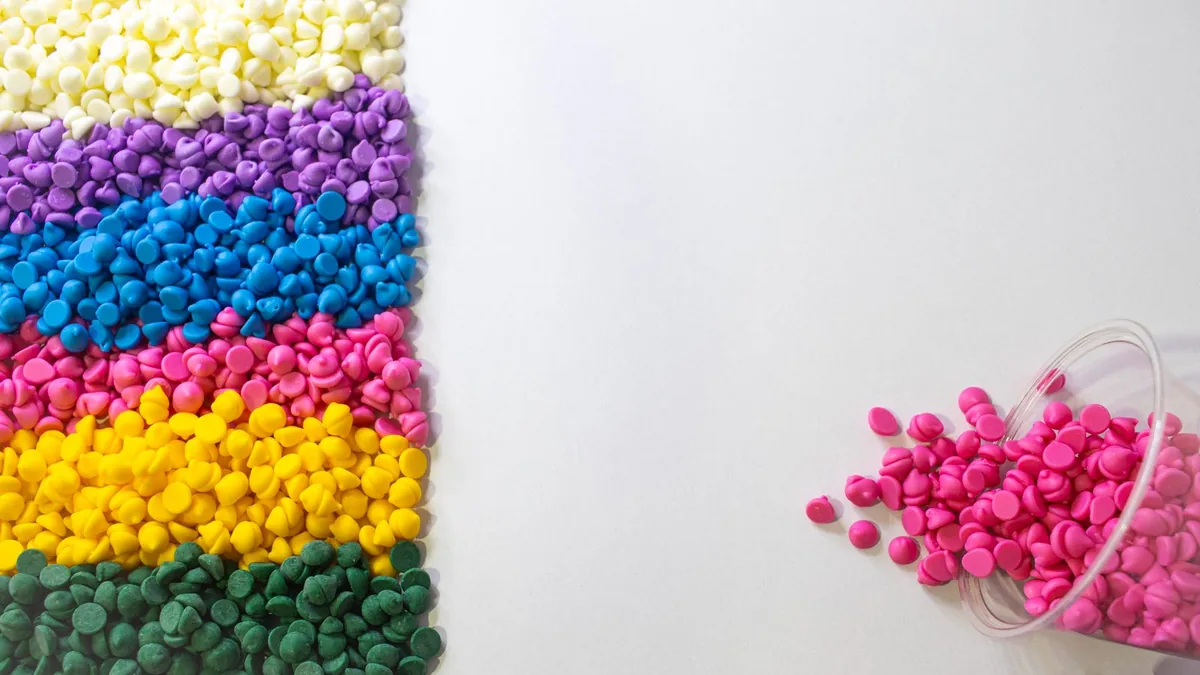
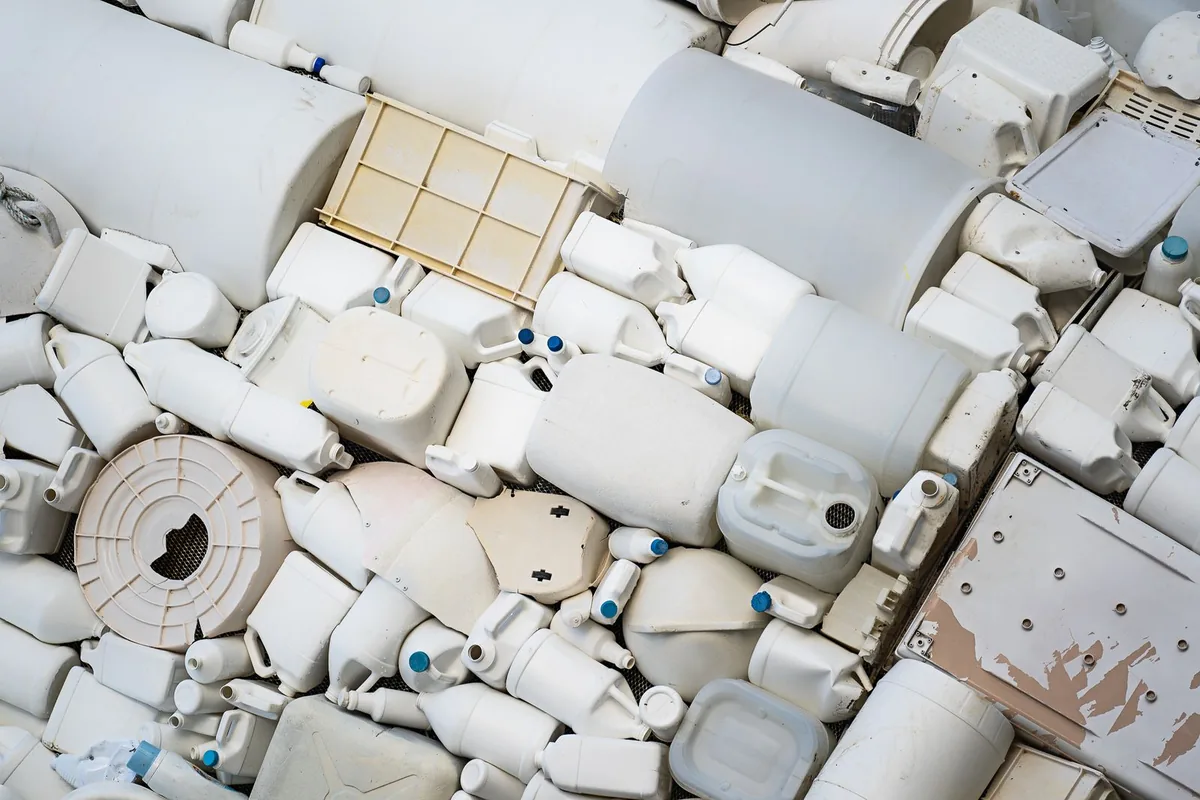
HDPE carries recycling code 2 and is one of the most recycled plastics. The general process is collection, sorting by plastic type and color, shredding, washing, drying and then extruding into pellets or molding into new products. Each hot processing cycle changes the chain structure, and research on reprocessed HDPE shows that mechanical properties fall after each cycle, most strongly after the first (Mnif and Elleuch, 2015), so recycled resin is usually used for products that do not touch food.
Frequently asked questions
What plastic is HDPE?
High-density polyethylene, a thermoplastic polymerized from ethylene, with a density of 0.93 to 0.97 g/cm3, used for bottles, cans, pipe, crates and pallets. Recycling code 2.
What does HDPE stand for?
High-Density Polyethylene, also written PE-HD or PEHD.
What is the melting point of HDPE?
The crystalline melting peak is about 129 to 135 °C (ExxonMobil, ASTM D3418); manufacturer datasheets give 130 to 132 °C. A temperature of 190 to 240 °C is the injection molding processing temperature, not the melting point.
Is HDPE toxic?
Finished solid HDPE is generally non-toxic and is used for food packaging if it is a grade that meets the standard (21 CFR 177.1520, QCVN 12-1:2011/BYT). Plastic dust can irritate the eyes, and hot plastic fumes during processing call for extraction and protective equipment.
How does virgin HDPE differ from recycled HDPE?
Virgin is freshly polymerized resin that has never been used; recycled is made from collected products that are shredded, washed and re-extruded. Recycled resin is harder to control for impurities and uniformity, so it is not used for food without a certified process.
How much heat can HDPE take?
HDPE sheet can be used up to about 80 °C long-term and 90 °C short-term per the datasheet; under load, the deflection temperature is only 62 to 80 °C. It tolerates cold well, with a brittleness temperature below -75 °C.
Contact ICD Vietnam for plastic pallet advice
ICD Vietnam Industrial Production Co., Ltd.
Northern Vietnam: 3rd Floor, Thang Long A1 Building, Bau Hamlet, Thien Loc Commune, Hanoi - 0983 797 186 / 090 345 9186 / 090 5859 186
Southern Vietnam: 551/212 Le Van Khuong Street, Tan Thoi Hiep Ward, District 12, Ho Chi Minh City - 098 6784 186
Email: sales@icdvietnam.com.vn
Zalo: Chat on Zalo now
References
- Wikipedia, High-density polyethylene (density 0.93-0.97 g/cm3, applications, recycling code 2) - en.wikipedia.org
- ExxonMobil Chemical, HDPE product guide (melting range 129-135 °C per ASTM D3418, HDT, processing temperatures, MI by application group) - exxonmobilchemical.com
- Chevron Phillips Chemical, Marlex 9010 technical data sheet (Vicat, HDT, brittleness temperature) - cpchem.com
- PTT Global Chemical, HD1600J technical data sheet (injection molding, MI 12 g/10 min, Vicat 118 °C) - productsandsolutions.pttgcgroup.com
- IRPC, HDPE V1160 technical data sheet (injection temperature 190-240 °C, Vicat 120-122 °C) - polimaxx.irpc.co.th
- GEP Plastics, HDPE sheet data sheet (long-term service temperature 80 °C, short-term 90 °C) - geplastics.co.za
- eCFR, 21 CFR 177.1520 Olefin polymers (polyethylene for food contact in the US) - ecfr.gov
- Ministry of Health (Vietnam), QCVN 12-1:2011/BYT on hygiene and safety of synthetic plastic packaging and utensils in direct contact with food - nafiqad5.gov.vn
- Mnif R., Elleuch R., Effects of reprocessing cycles and ageing on HDPE blends, Materiaux & Techniques (2015) - doi.org
- US EPA, Plastics: Material-Specific Data (natural HDPE bottle recycling rate 29.3% in 2018) - epa.gov