Table of Contents
Reviewed and updated by ICD - Week 38/2026
Dunnage in shipping is the protective material - airbags, foam, wood, plastic or paper - placed around cargo to brace it, fill voids and stop it shifting inside a container or truck. Good dunnage prevents damage, balances load and is counted in container weight.
Dunnage is material used to secure, brace and protect cargo in containers, trucks or storage. When goods do not fill the space, gaps let packages collide, shift and topple as the vehicle moves. Dunnage fills those gaps and spreads forces, holding cargo in place throughout the journey.
Common types of dunnage
| Dunnage type | Used for |
|---|---|
| Dunnage (air) bags | Fill large gaps between loads/pallets in a container |
| Wood dunnage | Bracing heavy loads, creating fork-entry gaps |
| Foam, bubble | Cushion fragile goods, fill small gaps |
| Edge boards, strapping | Protect edges, lash packages tight |
Why bracing is needed
In transit, cargo faces vibration, hard braking and sea swell - inertia makes packages slide and collide. Proper dunnage cuts damage, prevents pallet-stack collapse, keeps the centre of gravity stable and makes opening the container door safe. Cargo shifting inside also moves the centre of gravity, affecting balance during craning and transport.
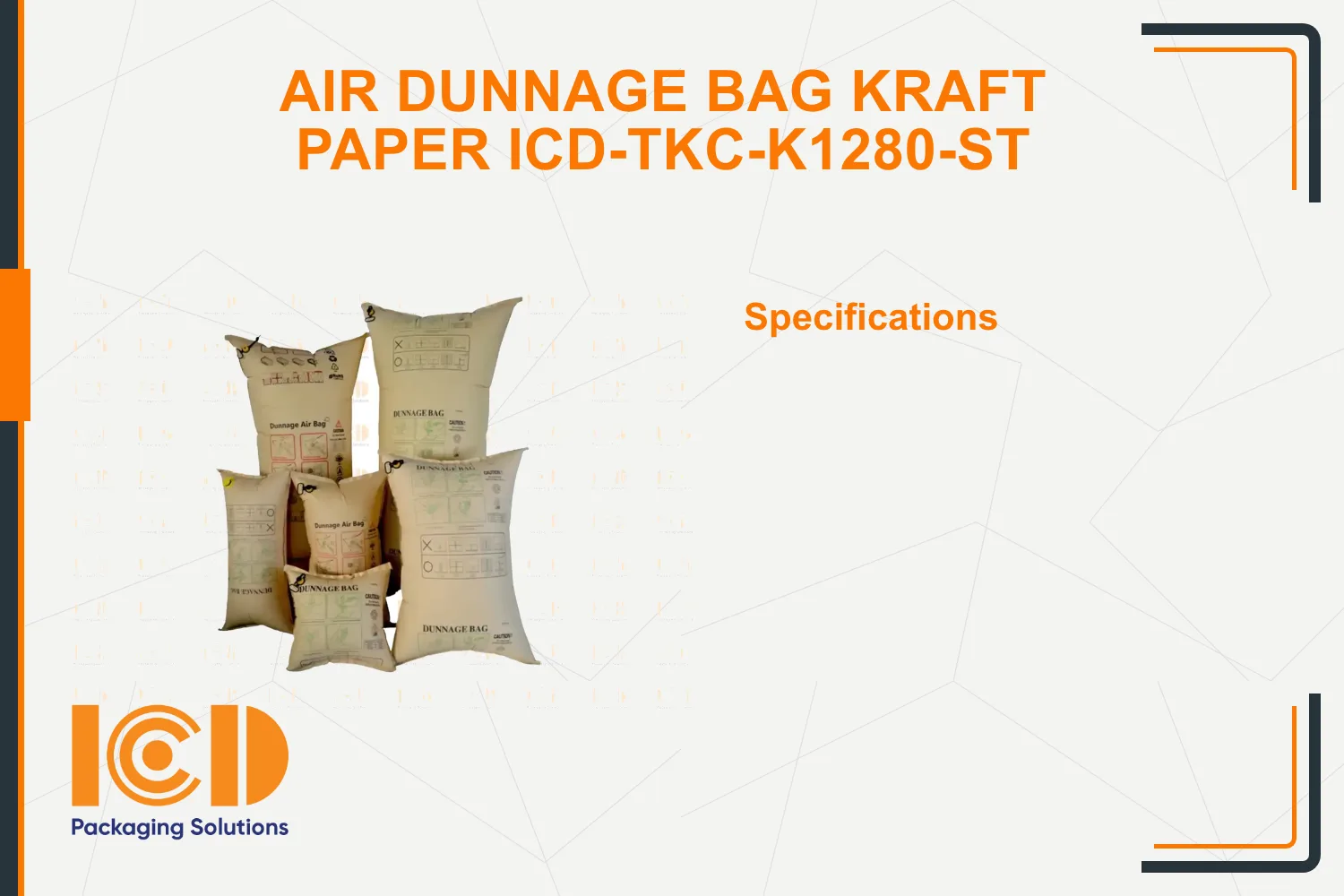
Dunnage bags - the popular solution
A dunnage (air) bag is an inflatable bag placed in the gap between loads or between cargo and the container wall. Inflated, it presses cargo in place, spreads forces and self-adjusts to the load shape. Pros: light, fast to fit, reusable (durable types), fills large gaps wood cannot. Choose the bag level by load and transport mode (road, sea, rail).
How to brace cargo safely
Stack tightly, heavy at the bottom; fill gaps with air bags or wood dunnage; lash packages to the walls with straps; protect edges with edge boards; stretch-wrap to stabilise the pallet block. Re-check before closing the container door - any remaining gap is where cargo will shift.
Dunnage and VGM
Dunnage weight counts toward the verified gross mass (VGM) of the whole container declared to the carrier - along with cargo and container tare. So when using heavy wood dunnage, add this in correctly. ICD supplies dunnage bags, pallets, stretch film and bracing materials for safe container loading.
More on dunnage bags
Topic pillar
In-depth analysis articles
| › Dunnage bag structure & types | › Dunnage bag materials |
| › Dunnage bag technical metrics | › Dunnage bag valve |
| › How to use a dunnage bag | › Dunnage bag quality standards |
Frequently asked questions
What is dunnage?
Material used to secure, brace and protect cargo in containers, trucks or storage, filling gaps between loads.
What types of dunnage are there?
Dunnage (air) bags, wood dunnage, foam and bubble, edge boards and strapping - each for a different bracing purpose.
Is a dunnage bag dunnage?
Yes. A dunnage (air) bag is a common type of dunnage, filling large gaps between loads or pallets in a container.
Why is bracing needed in transit?
Because vibration, hard braking and sea swell make cargo slide and collide; dunnage holds it in place, cutting damage and making opening safe.
How do I choose a dunnage bag?
By load and transport mode (road, sea, rail); each bag level withstands a different restraining force.
Does dunnage weight count toward VGM?
Yes. Dunnage weight is added to the container’s verified gross mass (VGM) declared to the carrier.
Contact ICD Vietnam
ICD Vietnam Industrial Manufacturing Co., Ltd - pallets, plastic crates, stretch film, forklifts and packaging solutions.
Hotline: 0983 797 186 / 090 345 9186
Email: sales@icdvietnam.com.vn | Zalo: Chat on Zalo
Common types of dunnage
- Inflatable dunnage bags (air bags) - fill gaps between pallets.
- Wood/plywood blocking and bracing.
- Foam, PE foam and corner protectors for fragile goods.
- Plastic/honeycomb sheets and void fillers.
- Note: dunnage weight is included when calculating container VGM.
How to choose dunnage by gap, load and route
The point many dunnage guides skip is this: not every gap needs an air bag, and not every air bag suits every route. The wrong bracing material lets cargo shift, splits the bag, or adds removal cost at the receiving end. For container cargo, choose dunnage by three variables: the gap to fill, the weight and rigidity of the load, and the vibration level of the route.
| Situation | Dunnage to use | Practical note |
|---|---|---|
| Gap of 5-15 cm between carton pallets | Kraft or PP dunnage bag | Place the bag in the load-bearing zone, not against sharp edges or protruding corners. |
| Heavy load, hard contact face | Wood dunnage, struts plus strapping | If using wood for export, control ISPM 15 requirements. |
| Scratch- or dent-prone goods | Foam, honeycomb board, corner protectors | Spread the force; avoid pressing a small point onto the product surface. |
| Long sea voyage | Right-level air bag plus stretch film and straps | Account for vibration, humidity and pressure or temperature change. |
7 bracing mistakes that still damage cargo
Even with dunnage fitted, cargo still arrives damaged when bracing is done wrong. These seven mistakes account for most claims.
- Bracing across only, not lengthwise: hard braking or ship roll still slides the load along the container length.
- Air bags against sharp edges: pallet lips, steel strapping or box corners can tear the bag in transit.
- Wrong inflation pressure: an under-filled bag fails to hold; an over-filled one loses elasticity or blows the valve.
- No lock on the first and last rows: when the door opens, the row nearest the door can topple out.
- Moisture-weak materials: paper and carton degrade fast in a damp or refrigerated container.
- Ignoring the centre of gravity: dunnage cannot fix a load stacked heavily on one side.
- No photo before closing: without evidence, damage disputes and insurance claims are hard to win.
ICD Vietnam supplies dunnage bags and bracing materials for safe container loading. Hotline: 0983 797 186.
Reference
Dunnage materials used to secure and protect cargo in transit - International Safe Transit Association (ISTA).