

Table of Contents
Reviewed and updated by ICD - Week 43/2026
Danpla (corrugated plastic) sheet is fabricated with knives, saws or cutting dies. To fold it, score a groove or slit through one face so the other face acts as a hinge; it is not heat-bent the way solid plastic sheet is. Join sheets by heat welding, ultrasonic welding, rivets or glue made for PP; ordinary glue and standard double-sided tape do not bond.
This guide summarizes fabrication methods from the documentation of fluted polypropylene manufacturers (Coroplast, Inteplast, Duralight, Interstate Plastics). Published bend-temperature tables, bend radii and heating times by thickness do not exist for fluted sheet, so none are given here rather than repeating figures without a source. For sheet structure and sizes, see the guide to Danpla structure and specifications and the standard Danpla sheet dimensions.
Cutting Danpla sheet
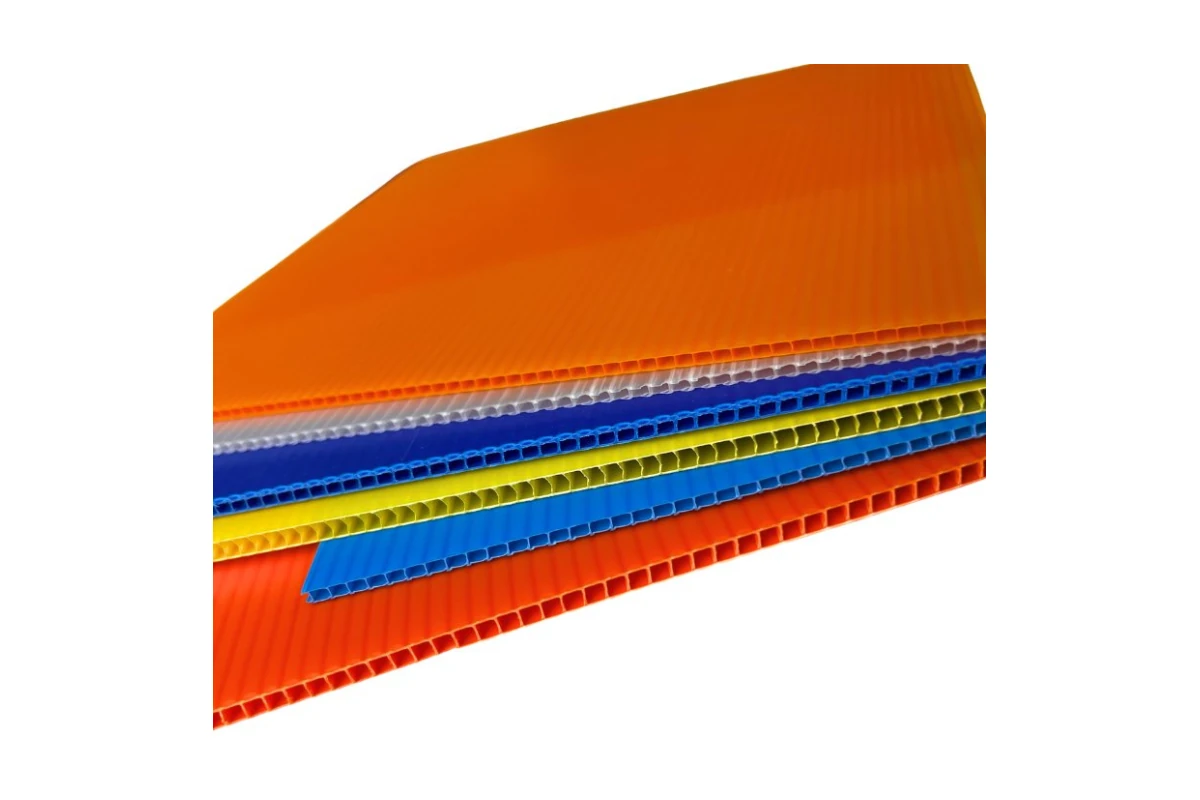
Sheet of 2 to 4 mm can be cut with a sharp utility knife or sturdy shears. Duralight advises making several light passes instead of one heavy stroke and guiding the knife along a metal straightedge. Cutting parallel to the flutes is harder to keep straight than cutting across them, so Duralight recommends a bevel-edged knife for cuts along the flutes. For volume, use a cutting die: Coroplast notes that a paper cutter handles 10 to 15 sheets at a time and that a flat-bed die gives good results. Unlike cardboard, plastic sheet must be cut completely through, and a sharpened bevel rule needs less force. The main cause of worn die edges is raising the force across the whole die to rescue one section that did not cut through.
Let the sheet reach room temperature before cutting and creasing: Coroplast notes that at very low temperatures cutting and creasing performance drops sharply. Cutting direction also affects squareness. Extruded sheet has two edges that run parallel to the flutes, while the cross-flute edge can be out of square by up to 3/8 inch (about 9.5 mm), so feed the sheet into the machine guided by the two parallel edges. For CNC routers, lasers and hot knives, manufacturers do not publish speed or power settings for fluted sheet. Run a test on offcuts and watch for melted edges, since PP melts at roughly 150 to 170 °C.
Folding: creasing and scoring
Danpla is a copolymer plastic that can be folded repeatedly without breaking (Coroplast calls this a living hinge). For a clean fold, Coroplast recommends creasing with a wider crease rule than usual when creasing across the flutes, because the two faces must be pressed together and then pressed further to set the fold. The height difference between the cutting rule and the crease rule is also smaller than for cardboard. The rule figures Coroplast gives are starting points for 4 mm sheet, and each shop should run its own trials to set machine conditions.
The manual method is scoring. Duralight describes slitting through the top face and leaving the bottom face as the hinge when folding across the flutes; when folding parallel to the flutes, only a light score is made and the face is not cut through. The advantages are speed and no need for heat. The drawback is that a slit through the face weakens the fold, so it suits neither heavy-load boxes nor folds that flex back and forth many times. No scoring depth percentage is given here because there is no source for one; test on offcuts and check whether the fold cracks.
Joining sheets: welding, gluing, riveting
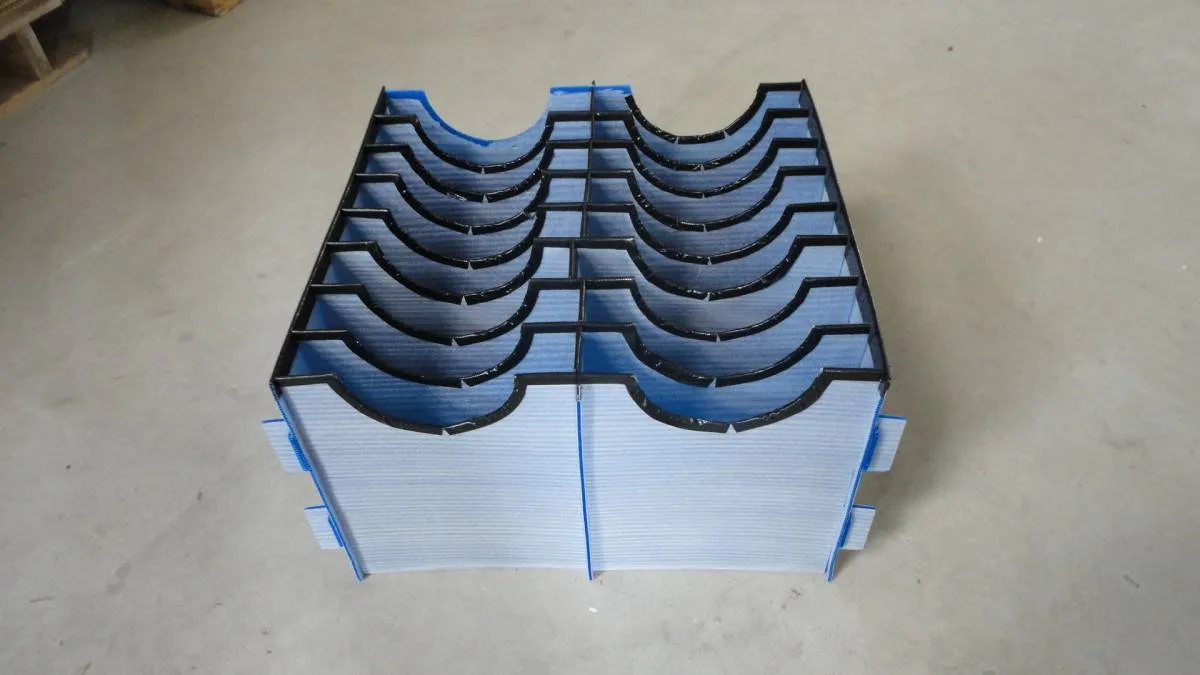
Welding is the strongest way to join sheets. Coroplast describes heat welding or ultrasonic welding with the right tools as an excellent way to join two sheets, and Inteplast lists ultrasonic welding, edge heat welding and die cutting among its fabrication services. Glue is the second option: PP has low surface energy and is very hard to bond. Coroplast points to structural adhesives made for PP (3M Scotch-Weld DP-8005 is the example they cite, though they have not tested it), and Duralight advises asking the adhesive maker about compatibility. Corona-treated sheet bonds better as long as hands and dust do not contaminate the surface, since Coroplast states that fingerprints on the sheet face cause adhesion failure.
Sheet can be drilled with a bit that has side spurs for clean holes (Duralight), and plastic rivets or nylon bolts are the mechanical option for boxes that must be taken apart. For anti-static sheet, use fasteners from the same material family as the box; this is a design suggestion, not a manufacturer specification. A fabrication drawing should state the flute direction, sheet size, and which folds are creased and which are cut, so the fabricator can quote accurately. To compare Danpla with other materials before fabrication, see the Danpla vs corrugated cardboard comparison.
Ordering fabrication from ICD Vietnam
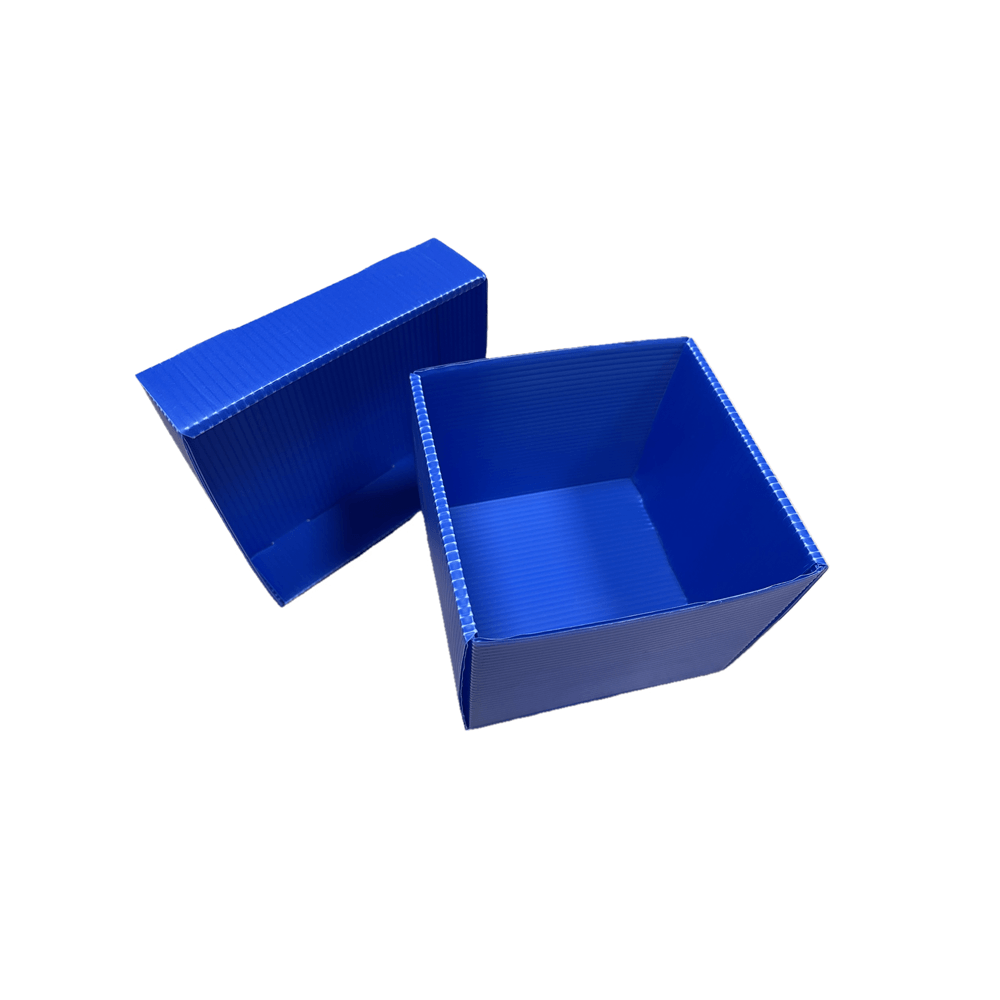
Raw sheet is listed in the Danpla category, including 3, 4 and 5 mm sheet, white, clear and anti-static. Fabrication to drawing has a minimum order of 50 pieces; send a DWG or PDF drawing or a physical sample and ICD will confirm the lead time. Once a sample exists, test folding, drop and load with real goods before placing a large order.
Frequently asked questions
Can Danpla be heat-bent?
Manufacturers do not publish bending temperatures or times for fluted sheet. The methods documented are creasing and scoring. PP melts at roughly 150 to 170 °C, so any heat test must be run on offcuts.
Is ESD Danpla fabricated like standard sheet?
Cutting and creasing are similar, but ESD sheet must keep its resistance properties after fabrication. Ask the supplier which joining methods and tools are suitable before starting a production run.
Why does ordinary glue not stick to Danpla?
PP has low surface energy, so glue does not bond. Use a structural adhesive made for PP, or heat or ultrasonic welding; corona-treated sheet and a clean surface improve adhesion.
Does ICD Vietnam fabricate Danpla boxes to drawing?
Yes, from a DWG or PDF drawing or a physical sample, with a minimum order of 50 pieces. The lead time is confirmed after the drawing is received.
Contact
ICD Vietnam Industrial Manufacturing Co., Ltd.
North: 3rd Floor, Thang Long A1 Building, Bau Hamlet, Thien Loc Commune, Hanoi - 0983 797 186 / 090 345 9186 / 090 5859 186
South: 551/212 Le Van Khuong Street, Tan Thoi Hiep Ward, District 12, Ho Chi Minh City - 098 6784 186
Email: sales@icdvietnam.com.vn
Zalo: Chat on Zalo now
References
- Coroplast, General Conversion Information (sizes, squareness, corona, cutting, creasing) - coroplast.com
- Coroplast, Overview & Product Details, Technical Bulletins CSS-001/002/005 (copolymer, properties, chemical resistance, fabrication, sterilization) - professionalplastics.com
- Duralight Plastics, Fluted Polypropylene Installation Guide (cutting, scoring, drilling, gluing) - duralightplastics.com
- Inteplast, IntePro Product Guide (ultrasonic welding, heat welding, die cutting, gluing, scoring) - inteplast.com
- Interstate Plastics, Fluted Polypropylene specifications (melting 150 to 170 °C, water absorption 0.03%) - interstateplastics.com
- Americover, Corrugated Plastic Boards Standard Products and Tolerance (g/m² by thickness, corona treatment above 46 dyne/cm) - americover.com