

Table of Contents
Reviewed and updated by ICD - Week 43/2026
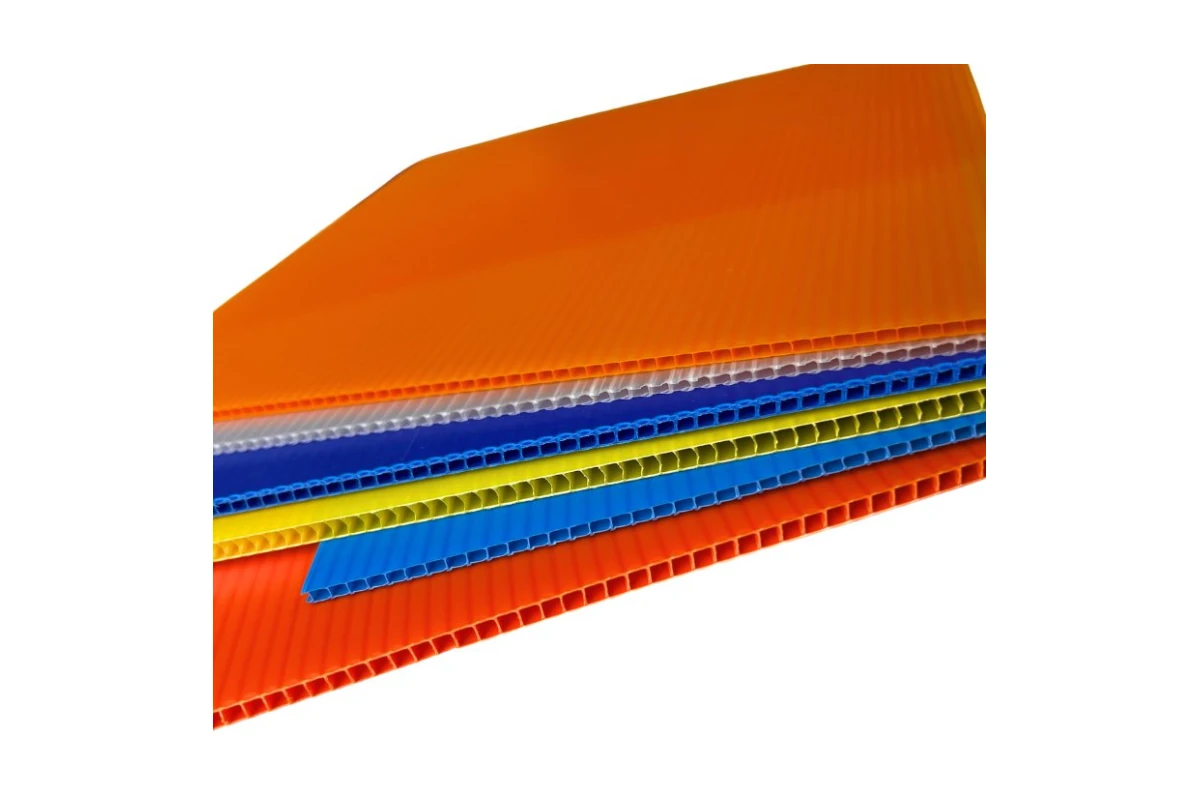
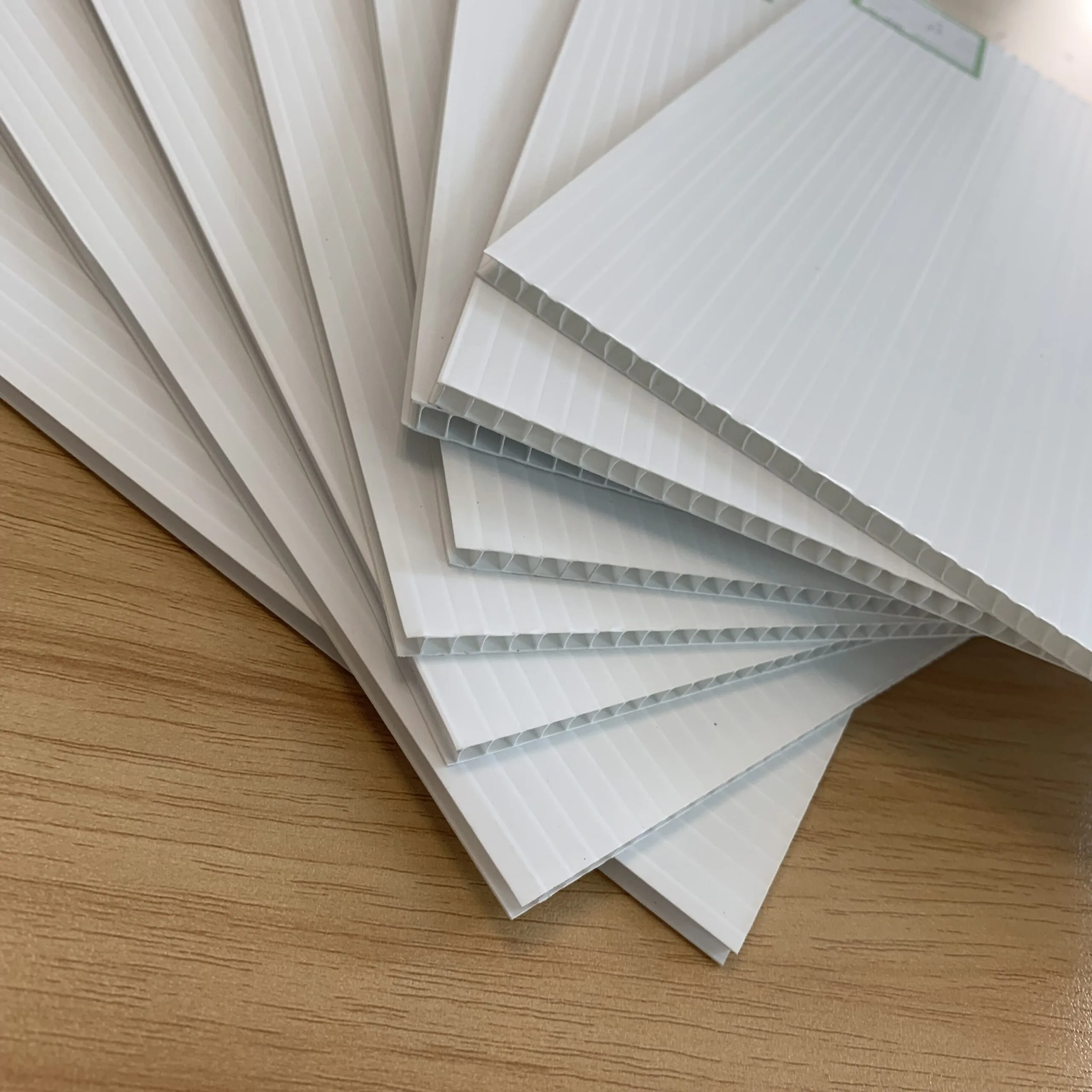
The most common Danpla sheet size is 1220 x 2440 mm (4 x 8 feet) in thicknesses of 2 to 10 mm; a sheet this size covers 2.977 m² and weighs about 1.8 to 2.7 kg at 4 mm thickness. The first dimension in the size always runs across the flutes and the second along the flutes.
Choose the wrong size and you must splice or waste a lot of offcuts; choose the wrong flute direction and a folded box will bow. This guide covers sheet sizes, the weight per sheet calculated from g/m², the real tolerances manufacturers’ datasheets state, and how to choose thickness. For construction and sheet grades, see the guide to Danpla sheet construction and specifications.
Sheet sizes and how to read dimensions
The 1220 x 2440 mm size is the one many sellers and datasheets quote; Cloroplast gives a maximum width of 1220 mm, and Americover sells 4 x 8 foot sheets (about 1219 x 2438 mm). However, not every manufacturer makes this size: Corplast (Malaysia) gives standard sizes of 1360 x 2300 and 1360 x 2440 mm with a maximum width of 1400 mm. When comparing prices between suppliers, compare the same size.
Coroplast’s naming convention: the first number is the dimension across the flutes, the second is along the flutes. A 1220 x 2440 sheet therefore has flutes running along the 2440 mm long edge. As a result, a fold across the sheet (perpendicular to the flutes) cuts across the flutes, while a fold along the sheet runs parallel to them. Coroplast advises a wider scoring blade than usual when making folds across the flutes, because the sheet is more flexible than paperboard and needs scoring so the two skins touch. When drawing a box layout, set the main folds along the flute direction and state the flute direction on the drawing you send the supplier.
One detail easily missed: a sheet extruded at the machine has two parallel edges along the flutes, but the two edges across the flutes can be out of square by up to 3/8 inch (about 9.5 mm), per the Coroplast bulletin. To get a square sheet it must be recut from the two parallel edges, so an order that needs truly square sheets must ask for the square cut type.
Weight per sheet: calculate from g/m²
Many weight tables online give a fixed weight for each thickness without saying where the g/m² comes from. A more reliable method is to take the g/m² of the exact product and multiply by the area. The table below multiplies the common g/m² ranges (Corplast, Americover, Cloroplast) by an area of 2.977 m²; the results are my own calculation, not measured weights.
| Thickness | g/m² range | Estimated weight of one 1220 x 2440 mm sheet |
|---|---|---|
| 2 mm | 300 to 500 | about 0.9 to 1.5 kg |
| 3 mm | 400 to 600 | about 1.2 to 1.8 kg |
| 4 mm | 600 to 900 | about 1.8 to 2.7 kg |
| 5 mm | 800 to 1,200 | about 2.4 to 3.6 kg |
| 6 mm | 900 to 1,600 | about 2.7 to 4.8 kg |
The ranges are wide because each manufacturer chooses a different rib thickness. For example, Americover gives 4 mm as 750 g/m², which is 2.2 kg a sheet. When ordering, state both: thickness and the g/m² you want, for example 4 mm / 700 g/m². A small reminder: g/m² is what decides stiffness and price, and thickness is only half the information.
Tolerance: read it carefully before drawing the cutting layout
Tolerance lives in the datasheet and is not one general number. Americover gives thickness and unit weight tolerance of ±5%. Cloroplast gives thickness error of ±0.15 mm (±0.20 mm for 10 mm sheet); width when square cut ±3.5 mm; square-cut length from 0 to +3.5 mm. For unsquared sheet from the extruder (offline), length can run over by 0 to +15 mm on short sheets under 915 mm and up to +30 mm on sheets longer than 2440 mm, with a maximum diagonal difference of 10 mm for sheets narrower than 1524 mm. So when designing a folded box with tight joints, leave a 2 to 3 mm gap at each fold and choose square-cut sheet; this is my design suggestion, not a manufacturer specification.
Working out how many sheets to buy
The formula: number of sheets = total area of the parts ÷ (2.977 m² x cutting efficiency). Cutting efficiency is the percentage of the sheet area actually used, which depends on part shapes and how they are laid out on the sheet, so it can only be measured from a real nesting layout; I give no fixed waste figure because it varies widely. An estimated example: to cover 30 m² of floor with full sheets you need at least 30 ÷ 2.977 = 10.1, so 11 sheets, before allowing for cut-offs at the edges; if the supplier cuts to your drawing, they will quote the number of full sheets needed.
A 2440 mm length is the minimum truck bed length needed for a full sheet; with a smaller vehicle, order sheets cut in half along the length (two sheets of 1220 x 1220). Check the actual bed length, because trucks of the same payload have different bed dimensions.
Choosing 3, 4 or 5 mm thickness
The ICD catalog includes Danpla sheet in 3 mm, 4 mm and 5 mm, plus white, clear and anti-static sheet; see ICD Danpla plastic. There is no general formula from thickness to load capacity, because stiffness depends on g/m², flute direction, box size and how goods are stacked. A practical approach: start at 3 mm for trays and light dividers, move up to 4 mm for boxes with a wide base and dividers that bear light load, use 5 mm or more when the sheet is a base supporting goods or a pad that is walked on, then test a small batch with real goods to see whether the sheet sags at the base or bows at the edges. Cost rises with g/m², so do not choose a thickness higher than needed.
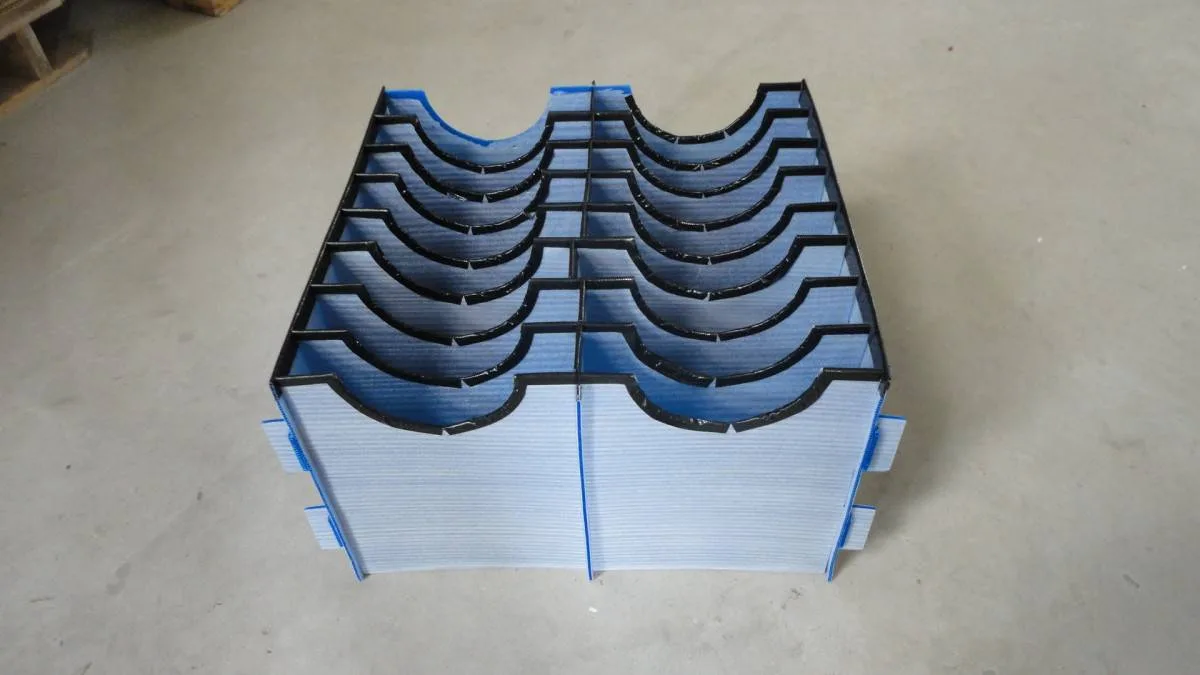
The size, thickness and color grades of black, clear and anti-static sheet may differ from white sheet; ask the supplier for the size and thickness table of each grade rather than assuming all are 1220 x 2440 mm. For cutting or assembly to a drawing, ICD Vietnam Danpla plastic sheet accepts custom fabrication; send your drawing on the contact page.
Frequently asked questions
What is the standard Danpla sheet size?
The most common is 1220 x 2440 mm, equal to 4 x 8 feet. Some manufacturers make other sizes, for example 1360 x 2300 or 1360 x 2440 mm, so compare the same size when quoting.
How much does a 4 mm Danpla sheet weigh per sheet?
About 1.8 to 2.7 kg when g/m² is in the 600 to 900 range (area 2.977 m²). A 750 g/m² sheet weighs about 2.2 kg. This is a calculation from g/m², not a measured weight.
Can Danpla sheets be ordered in custom sizes?
Yes, as sheets cut to a drawing. ICD applies a minimum order of 50 pieces. Send the drawing with the flute direction and the thickness you want.
Why is the sheet not perfectly square?
An extruded sheet can be out of square on the two edges across the flutes by up to 3/8 inch (about 9.5 mm) per the Coroplast bulletin. For truly square sheets, ask for square cut sheet, with tolerance usually ±3.5 mm.
Does thickness affect water resistance?
No. Water resistance comes from PP plastic, which does not absorb water (about 0.02% after 24 hours per Coroplast), and it does not change with thickness.
Contact
ICD Vietnam Industrial Production Co., Ltd.
Northern Vietnam: 3rd Floor, Thang Long A1 Building, Bau Hamlet, Thien Loc Commune, Hanoi - 0983 797 186 / 090 345 9186 / 090 5859 186
Southern Vietnam: 551/212 Le Van Khuong Street, Tan Thoi Hiep Ward, District 12, Ho Chi Minh City - 098 6784 186
Email: sales@icdvietnam.com.vn
Zalo: Chat on Zalo now
References
- Corplast (Malaysia), General Specifications for twinwall hollow profile sheets (g/m² range by thickness, -20 to +70 °C) - corplast.com
- Americover, Corrugated Plastic Boards Standard Products and Tolerance (g/m² by thickness, corona treatment above 46 dyne/cm) - americover.com
- Technical Data Sheet, Cloroplast (g/m² range 2-12 mm, rib thickness) - polycenter.cr
- Coroplast, Overview & Product Details, Technical Bulletins CSS-001/002/005 (copolymer, properties, chemical resistance, fabrication, sterilization) - professionalplastics.com