

Table of Contents
- What RFID in warehouse management is and how it works
- How RFID differs from barcodes
- Choosing a frequency: LF, HF or UHF
- What RFID does in warehouse processes
- Real figures on inventory accuracy
- Why RFID projects read worse than expected
- How to assess the return on investment
- Frequently asked questions
- Contact ICD Vietnam
- References
Reviewed and updated by ICD - Week 43/2026
RFID (Radio Frequency Identification) uses radio waves to read an identifier stored on a tag, with no line of sight between the tag and the reader. In a warehouse, each pallet, carton or item carries a tag; a reader portal or handheld reader logs goods in and out and counts many tags almost at once, then pushes the data to the WMS.
This article covers four things: how RFID works and how it differs from barcodes, which frequency to choose (including the bands allowed in Vietnam), how to apply it in warehouse processes, and why many projects read worse than the brochure promised. Inventory accuracy figures come from Auburn RFID Lab research, standards from GS1 and ISO, and frequency rules from the consolidated Circular 08/2021/TT-BTTTT; full sources are at the end.

What RFID in warehouse management is and how it works
An RFID system has three physical parts and one piece of software. The tag holds a chip with an identifier. The reader emits radio waves and receives the reply. The antenna carries the signal between the two. Middleware filters the data and passes it to the WMS or ERP.
With passive tags, the common type in warehouses, the tag has no battery. Under the GS1 EPC Gen2 specification, the tag draws both information and power from the reader’s signal, answers by changing the reflection of its antenna (backscatter), and only replies after the reader asks. That is why passive tags are cheap and durable, but their read range depends heavily on reader power, antenna type and the surrounding materials. Active tags carry their own battery, reach farther and cost more, and are usually kept for high-value assets such as containers or vehicles.
Gen2 is also the basis of ISO/IEC 18000-63, the air-interface standard for the 860 to 960 MHz range. Both documents define how a reader selects a group of tags to read and how it arbitrates when many tags answer at once, which means bulk reading is a feature of the protocol and not a matter of luck.
How RFID differs from barcodes
| Criterion | 1D/QR barcode | RFID UHF (EPC Gen2) |
|---|---|---|
| Reading conditions | The code must be visible and correctly oriented | No line of sight needed; reads through carton packaging |
| Codes per read | One at a time | Many tags at once thanks to the anti-collision protocol |
| Data | Pre-printed, cannot be rewritten | Rewritable; 96-bit EPC code plus user memory |
| Dirty or wet environments | A torn or dirty label means a lost code | Hard-cased tags still read; but metal and liquids weaken UHF |
| Cost | Printed labels are cheapest | Tags cost more than printed labels, plus readers, antennas and integration |
The two technologies are not mutually exclusive. Barcodes remain a cheap and sufficient choice for slow-moving goods scanned at a fixed point. RFID pays off when volumes are large, reading must be fast, or items sit in hard-to-reach positions. Many warehouses run both: barcodes on cartons, RFID tags on returnable pallets.
Choosing a frequency: LF, HF or UHF
The three bands used in warehouses differ in read range, speed and sensitivity to materials. Read ranges below come from SATO documentation; Vietnamese bands follow Appendix 6 of Circular 08/2021/TT-BTTTT (consolidated document 01/VBHN-BKHCN of 2025) for RFID equipment exempt from frequency licensing.
| Band | Typical read range | Standard | Licence-exempt band in Vietnam | Warehouse use |
|---|---|---|---|---|
| LF 125-134 kHz | 3 to 30 cm | ISO 11784/5, ISO 18000-2 | 115 to 150 kHz (centred on 125 and 134.2 kHz) | Fixed assets, rarely used for stock counts |
| HF 13.56 MHz | 5 to 50 cm | ISO 14443, ISO 15693, ISO 18000-3 (including NFC) | 13.553 to 13.567 MHz | High-value items, close-range reads, liquid-heavy environments |
| UHF 860-960 MHz | 3 to 8 m | EPC Gen2 = ISO/IEC 18000-63 | 918.4 to 923 MHz, up to 500 mW ERP | Receiving, stock counts, returnable pallets |
A note when reading foreign documents: the “860 to 960 MHz” range is the scope of the standard, not the band allowed in Vietnam. UHF equipment used in a warehouse must operate at 918.4 to 923 MHz at up to 500 mW ERP, using frequency-hopping spread spectrum, listen-before-talk (LBT) or a limited duty cycle as the circular requires. Higher power or another band needs a separate licence, and the equipment supplier must confirm the device is configured for the Vietnam region before handover.
What RFID does in warehouse processes
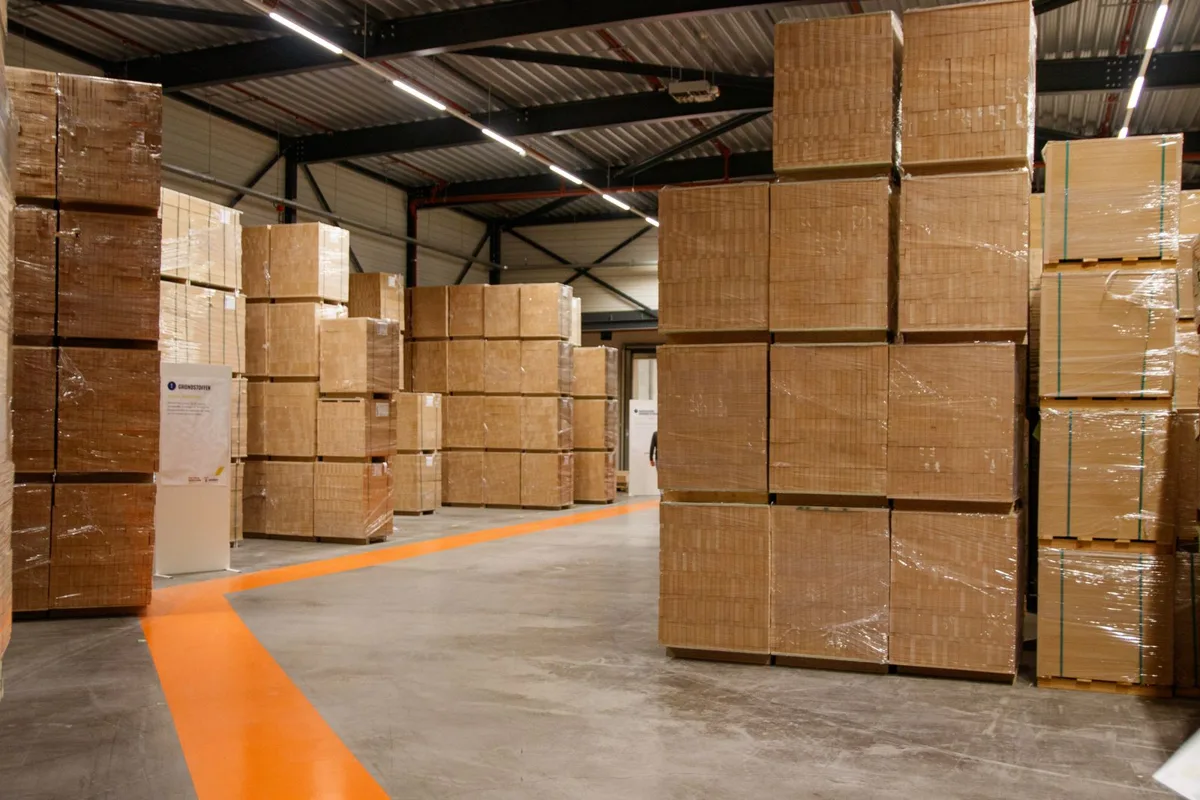
Receiving. A pallet passes through a reader portal at the dock, and the system matches the tag count to the delivery note and flags shortages or overages at once, instead of keying in each line by hand. Stock counting. Staff walk along the racks with a handheld reader and read hundreds of tags in minutes instead of counting carton by carton. Cycle counting becomes feasible every week instead of once or twice a year. Traceability. Each read point records time and location, so you know which lot passed where. For food, pharma and warranty goods, this is the data you can use in a recall.
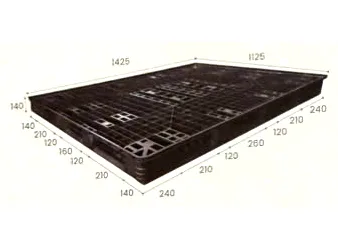
Returnable assets. Pallets, plastic bins and trays circulating between the warehouse and customers are easily lost. Tagging the pallets and bins themselves tells you where they are, how many cycles they have made and whether maintenance is due. This is the direction ISO/IEC 17363 to 17367 takes for supply chains (17363 applies to freight containers, per the RAIN RFID Alliance’s standards list). Plastic pallets are a good carrier because a tag can be moulded in or fixed permanently, unlike a sticker that peels off a wooden pallet. Loss prevention. A reader portal at the exit door raises an alert as soon as a pallet without an order passes through.

Real figures on inventory accuracy
Auburn RFID Lab, the longest-running retail RFID research lab in the United States, measured inventory accuracy (the share of items where the system count matches the physical count) at many retailers. The average came out at about 60%, with a low of 28% and a high of 80% in their surveys. When RFID is deployed in a pilot or early phase, accuracy rises above 95%. They also say plainly that 100% is very hard to reach because most errors sit in process, not in technology.
| Sources of error (apparel) | Rate per Auburn RFID Lab |
|---|---|
| Items that should be tagged but are not | about 2.3% |
| Two tags on one item (often from returns) | about 0.5% |
| Dead tags | about 0.35% |
| Wrongly encoded tags | about 0.3% |
| Poorly performing tags, with quality testing | about 0.3% (can exceed 30% without testing) |
| Tag detached from the item but still reporting stock | about 0.1% |
An experiment at Dillard’s (a US retail chain) shows the mechanism. A full physical count raised accuracy by 17% in the test store and by 12% in the control store. In the following month the control store fell back by 13%, losing almost all of the gain. The RFID store held its level and improved a further 4%. Auburn estimates RFID contributed about 17% improvement over the control. A later field experiment across 62 stores and 5 product categories confirmed that RFID reduces inventory record inaccuracy, with the effect varying by category. This is US apparel retail data; a distribution warehouse or factory store in Vietnam will see different figures, so you must measure through your own pilot.
Why RFID projects read worse than expected
UHF waves are reflected by metal or detune the tag antenna, and are absorbed by water, liquids and organic materials. ICAR documentation states that UHF is sensitive to almost every surrounding material and often needs special on-metal tags; LF and HF tolerate liquids better but have short range. A warehouse full of steel racks, water containers or canned goods is the hardest environment: multipath reflections make signal strength swing widely, so one tag may read one moment and not the next.
The easily missed issue is tag selection. The same tag on a carton, a plastic bin or an aluminium can gives very different read ranges, so test tags on your own products and your own pallets rather than relying on the range table in a catalogue. The last piece is integration: readers generate large, repetitive data, and the WMS must filter duplicates, assign the right tag to the right location, and handle new, faulty or returned tags.
How to assess the return on investment
| Cost item | Benefit to measure |
|---|---|
| Tags (multiplied by the number of cycles if single-use) | Less counting labour, more frequent counts |
| Readers, antennas, portals | Fewer losses and shipping mix-ups |
| Middleware, WMS integration | Fewer stock-outs caused by wrong records |
| Tagging labour and training | Lower safety stock, freeing capital |
RFID benefits are usually counted on four lines: counting labour, shrinkage, stock-outs from wrong records, and capital tied up in safety stock. When the system knows the exact quantity, a company can cut buffer stock; when records are wrong, people over-order to compensate. Costs include tags (multiplied by the number of cycles if single-use), readers, antennas, middleware, WMS integration and tagging labour. A simple payback estimate: payback = total investment / (annual counting-labour savings + value of shrinkage avoided + capital released from inventory multiplied by the interest rate). Payback time varies by warehouse; the 1 to 2 year figures in marketing material cannot be used as a general conclusion.
Frequently asked questions
What does RFID deployment cost include?
Tags, fixed or handheld readers, antennas, middleware, integration with the WMS or ERP, and the initial tagging labour. The cheapest tags are passive UHF labels; metal-mount or hard-case tags cost noticeably more. The safe approach is a small pilot to get real numbers before budgeting a whole warehouse.
A basic EPC Gen2 tag can be read and its code copied if left unprotected. GS1 added security and privacy features from Gen2v2 (2013), and ISO/IEC 29167 defines security services for the air interface. If the data is sensitive, ask the supplier whether the tag supports authentication or encryption.
ISO/IEC 18000-63 describes the ability to read, write many times and permanently lock memory. In warehouses many companies write the code once and then lock it to avoid accidental edits, but that is a configuration choice and not a limit of the tag.
Which band does UHF RFID use in Vietnam?
The consolidated Circular 08/2021/TT-BTTTT allows licence-exempt RFID equipment in the 918.4 to 923 MHz band at up to 500 mW ERP, using frequency-hopping spread spectrum, LBT or a limited duty cycle. Equipment imported from abroad must be configured for this band.
Do you need to replace the WMS when adding RFID?
Usually not a full replacement, but integration is needed: the WMS must receive data from the readers, filter duplicate reads, map tags to item or pallet codes, and handle new, damaged or wrongly attached tags. Ask your WMS vendor about an RFID event interface before buying readers.
Which industries benefit most?
Places with many SKUs, fast turnover and hard stock counts, such as fashion retail, and places that need to track circulating assets such as pallets, bins and containers. Goods with a lot of metal or liquid need more careful tag testing before wide rollout.
Contact ICD Vietnam
ICD Vietnam Industrial Manufacturing Co., Ltd. - pallets, plastic bins, stretch film, forklifts and packaging solutions for warehouses.
Hotline: 0983 797 186 / 090 345 9186
Email: sales@icdvietnam.com.vn | Zalo: Chat Zalo
References
- GS1, EPC Radio-Frequency Identity Protocols Generation-2 UHF RFID (passive tag protocol, backscatter, ISO/IEC 18000-63) - ref.gs1.org
- RAIN RFID Alliance, RFID Relevant Standards (list of ISO/IEC 18000-63, 29167, 17363 standards) - rainrfid.org
- Ministry of Science and Technology, consolidated document 01/VBHN-BKHCN of 2025 (Circular 08/2021/TT-BTTTT), Appendix 6 on licence-exempt RFID equipment - thuvienphapluat.vn
- Auburn RFID Lab, Key Considerations for RFID Pilots and Deployments (inventory accuracy 60%, above 95% with RFID, sources of error) - rfid.auburn.edu; same authors: Item-Level RFID for Apparel: The Dillard’s RFID Initiative (2009) and RFID-Enabled Visibility and Retail Inventory Record Inaccuracy: Experiments in the Field
- ICAR, Technology Selection RFID (comparison of LF, HF, UHF; effect of metal and liquids) - icar.org
- SATO, RFID brochure 2024 (LF, HF, UHF read range) - satoasiapacific.com
- IntechOpen, UHF RFID in a Metallic Harsh Environment (multipath reflection in metal environments) - intechopen.com
- RFIDFYI, RFID vs Barcode (technical comparison) - rfidfyi.com