
Table of Contents
Reviewed and updated by ICD - Week 43/2026
HDPE is not a rival of PE but a branch of PE: PE is the family name for polyethylene, and HDPE is the high-density type (0.93 to 0.97 g/cm3), which is stiffer and tougher; when people say “PE” in everyday use, they usually mean the soft, flexible LDPE or LLDPE used for bags and film. So the question “which is better” only makes sense when tied to the intended use.
This article compares soft PE plastic with HDPE by structure, temperature, strength and applications, using sourced figures.
PE is a family, HDPE is one member
Polyethylene is classified by density and by the degree of chain branching: LDPE (low density), LLDPE (linear low density), MDPE (medium density) and HDPE (high density). HDPE has almost straight chains with few branches, so the chains pack closely, giving higher density, more stiffness and more strength. LDPE has many long branches and loosely packed chains, so it is soft, tough and clearer.
For that reason the phrase “PE and HDPE are two different plastics” is a common misreading: HDPE is PE. The comparison below uses “PE” in its everyday sense, meaning the lower-density PE types used for bags and film.
Soft PE compared with HDPE
| Criterion | Soft PE (LDPE) | HDPE |
|---|---|---|
| Density | About 0.91 to 0.94 g/cm3 | 0.93 to 0.97 g/cm3 |
| Melting peak | 105 to 120 °C | 129 to 135 °C |
| Stiffness, load capacity | Soft, tough, easy to bend | Stiffer, better under load and impact |
| Continuous use temperature | Lower than HDPE | About 65 to 80 °C |
| Typical applications | Bags, shrink film, stretch film | Jerrycans, crates, pipes, pallets |
| Recycling | Yes, often contaminated in film | Yes, with code 2 |
Keep the temperatures apart: the melting temperature is the point where the material turns liquid, while the continuous use temperature is much lower. HDPE sheet makers state a long-term limit of about 80 °C and a short-term limit of 90 °C (GEP Plastics); the melting peak is 129 to 135 °C (ExxonMobil, ASTM D3418). So HDPE does not withstand 120 °C without deforming.
When to choose soft PE and when HDPE?
Choose soft PE when you need flexibility, clarity or a wrapping fit: bags, shrink film, stretch film. Choose HDPE when you need stiffness and load capacity: jerrycans, crates, pipes and pallets. Chemically, HDPE resists acids, dilute alkalis, salts and alcohols well, but it is not “unaffected by every chemical”; concentrated strong oxidising acids and aromatic hydrocarbons still act on polyethylene.
On food safety, both families have grades for food contact under 21 CFR 177.1520 (United States) and QCVN 12-1:2011/BYT (Vietnam); the conditions of use depend on the grade and the manufacturer’s declaration. Details are in the article on recycled HDPE plastic, including the limits on using recycled plastic for food.
Do plastic pallets use HDPE or PE?
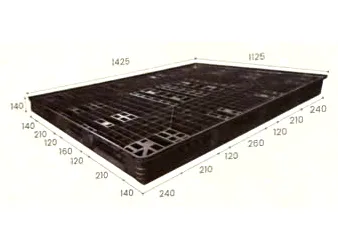
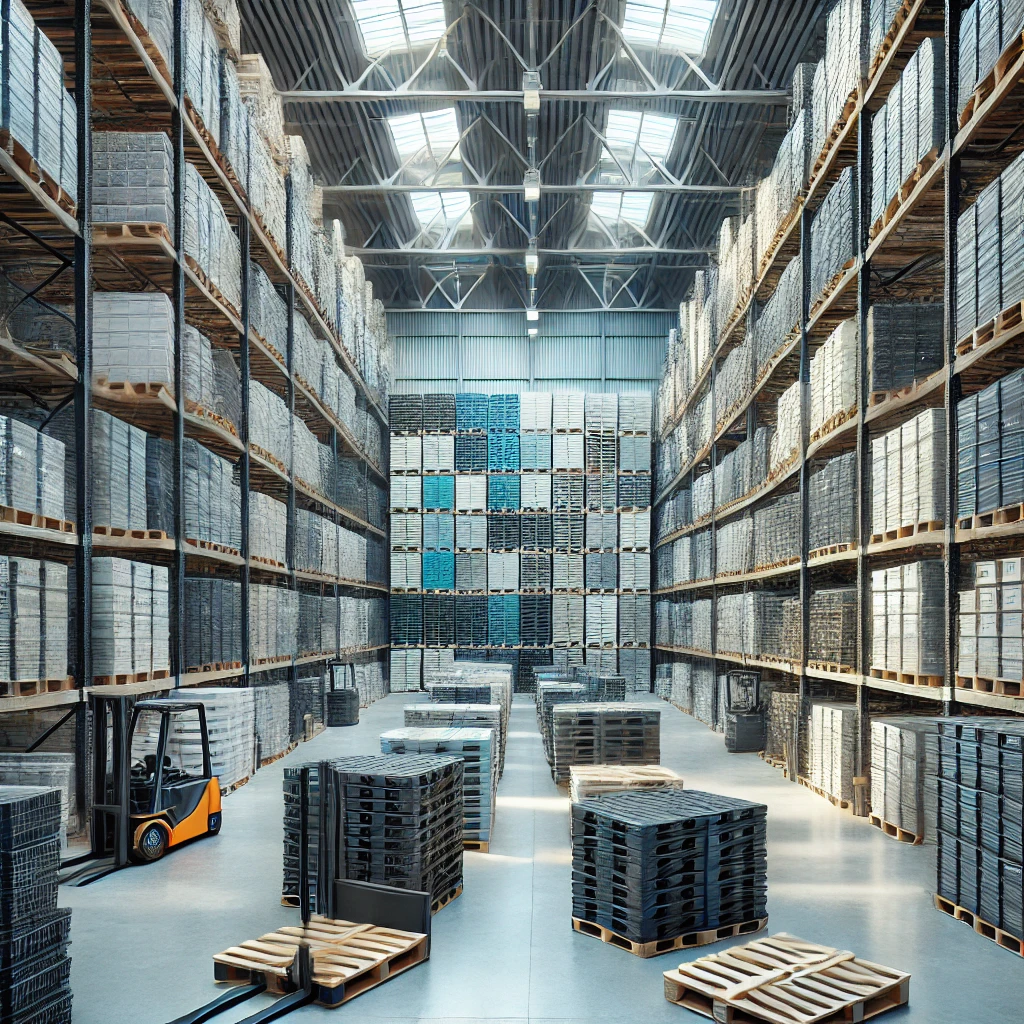
Plastic pallets mainly use HDPE (some lines use PP) because they need stiffness and load capacity. The melt flow index of injection-moulded HDPE for crates and pallets is a few g/10 min, well above blow-moulding grades. No sourced share of HDPE in pallet output is available, so none is quoted here.
Two more detailed articles: HDPE pallets and the plastic pallet category. If you are considering PP instead of PE, see PP versus HDPE plastic, PP versus PE: which is better and is PP plastic safe.
Frequently asked questions
Are PE and HDPE two different plastics?
Not exactly. HDPE is high-density polyethylene, a member of the PE family together with LDPE, LLDPE and MDPE.
Why is HDPE stiffer than soft PE?
HDPE chains are almost straight with few branches, so they pack closely and give a higher density; LDPE has many branches, so its chains pack loosely and the material is soft.
What temperature can HDPE withstand?
The melting peak is 129 to 135 °C, but continuous use is about 65 to 80 °C and short-term use up to 90 °C depending on the grade.
Should I choose PE or HDPE for industrial packaging?
HDPE for rigid load-bearing products such as crates and pallets; soft PE for bags and stretch film.
Contact ICD Vietnam for plastic pallet advice
ICD Vietnam Industrial Manufacturing Co., Ltd.
Northern Vietnam: 3rd Floor, Thang Long A1 Building, Thon Bau, Thien Loc Commune, Hanoi - 0983 797 186 / 090 345 9186 / 090 5859 186
Southern Vietnam: 551/212 Le Van Khuong Street, Tan Thoi Hiep Ward, District 12, Ho Chi Minh City - 098 6784 186
Email: sales@icdvietnam.com.vn
Zalo: Chat on Zalo now
References
- Wikipedia, Polyethylene (PE types, catalysts, history) - en.wikipedia.org
- ExxonMobil Chemical, HDPE product guide (melting range 129 to 135 °C under ASTM D3418, HDT, processing temperature, MI by application group) - exxonmobilchemical.com
- GEP Plastics, HDPE sheet data sheet (long-term service temperature 80 °C, short-term 90 °C) - geplastics.co.za
- eCFR, 21 CFR 177.1520 Olefin polymers (polyethylene for food contact in the United States) - ecfr.gov
- Ministry of Health (Vietnam), QCVN 12-1:2011/BYT on safety and hygiene of synthetic plastic packaging and utensils in direct contact with food - nafiqad5.gov.vn