Table of Contents
Reviewed and updated by ICD - Week 43/2026
“Transparent” PP sheet is in fact only translucent: PP homopolymer has a haze of about 30% at 1 mm thick, and random copolymer grades are clearer but still not as clear as PET, PS or acrylic. If you need to see through it like glass, PP is not the first choice; if you need translucency, heat resistance and chemical resistance, PP is very suitable. This article states the limits of clarity, the working temperature and the uses, with sources. For background on the material, see polypropylene plastic.
Key points in brief
- Clear PP is only translucent; Wikipedia states PP is not as clear as PS or acrylic.
- Random copolymer grades are clearer than homopolymer; haze depends on the grade and the thickness.
- Practical heat resistance is about 95-102 °C under a light load, not 120 or 160 °C as many pages state.
- PP resists chemicals well and can be autoclaved according to the manufacturer; it has poor UV resistance without additives.
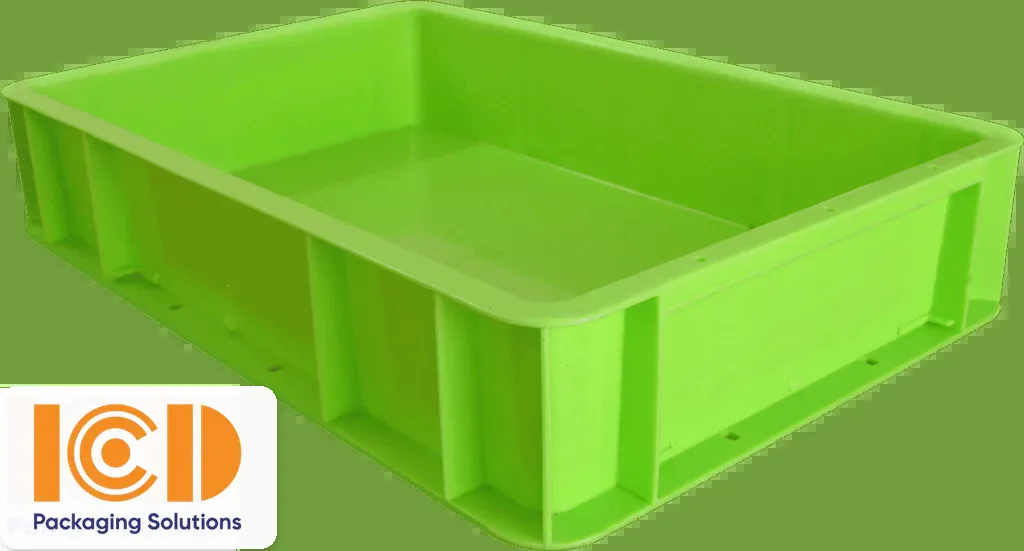
What is clear PP plastic sheet?
It is polypropylene (PP plastic, code 5) extruded as thin sheet, commonly used for box shells, trays, file covers and screens. The material is lighter than water and stiffer than PE, but its clarity is limited by the semi-crystalline structure of PP.
Clarity of PP compared with other plastics
According to the Ducor DuPure G 72 TF datasheet, PP homopolymer has a haze of about 30% at 1 mm thick; this figure is measured at 1 mm, so ask the supplier for the haze at the thickness you need. Wikipedia describes random copolymer grades as clearer, but still not as clear as polystyrene or acrylic. PET in its amorphous form can be transparent.
| Criterion | PP | PET | PE |
|---|---|---|---|
| Clarity | Translucent; homopolymer ~30% haze at 1 mm | Can be transparent (amorphous) | HDPE is usually opaque; LDPE is softer and clearer than HDPE |
| Melting point | 160-165 °C | 250-260 °C | LDPE 105-115 °C; HDPE 120-130 °C |
| Softening/deformation | HDT 95-102 °C (light load) | Starts to soften at 70-80 °C | Lower than PP |
| Stiffness | Stiffer than PE | Stiff, strong | Soft and flexible |
Main features of PP sheet
- Light: density 0.90-0.91 g/cm³, lighter than water.
- Chemical resistance: inert to most acids, alkalis and alcohols at room temperature.
- Living hinge: the EPA notes that PP is well known for parts that flex repeatedly, so it is used for hinged box shells.
- Autoclaving: Poly Processing states that PP withstands autoclaving.
- Weak points: homopolymer becomes brittle around 0 °C and has poor UV resistance without additives.
Uses of PP sheet
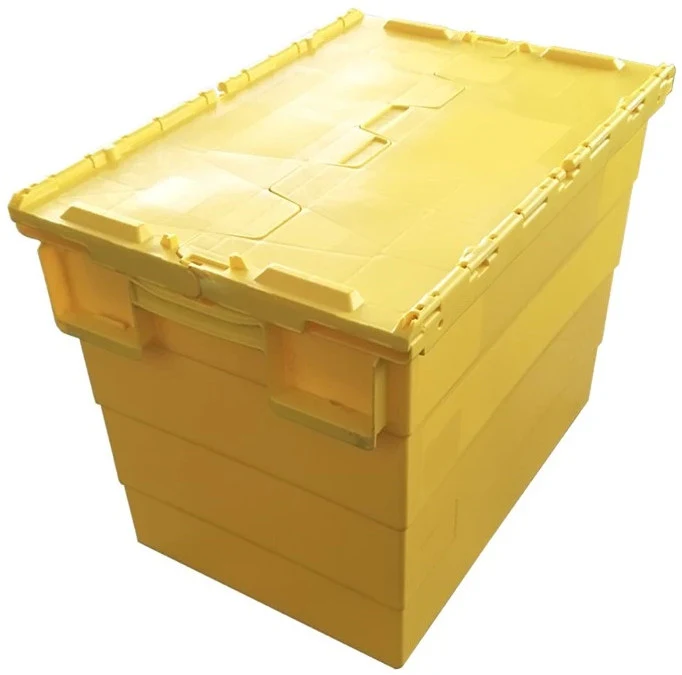
PP is widely used in packaging and containers, car parts, fibre and household goods. For translucent sheet, reasonable uses are trays, boxes, document covers, light screens and tools that need autoclaving. Where food is in direct contact, the material must meet regulations such as FDA 21 CFR 177.1520 or QCVN 12-1:2011/BYT, with a dry residue limit of 30 µg/ml for PE and PP.
How to choose PP sheet
- Clarity needed: ask for the haze at the exact thickness; if full transparency is needed, consider PET.
- Working temperature: ask for the HDT or Vicat of the resin, not only the melting point.
- Resin type: homopolymer is stiffer, copolymer takes impact and cold better (Simona).
- Food contact or outdoor use: ask for food-grade documents or UV-stabilising additives.
For PP industrial boxes and crates, see what plastic number 5 PP is to understand the identification code. If you need advice on ICD Vietnam PP products, contact us to be pointed to the right line.
Frequently asked questions
What is clear PP plastic sheet?
A translucent polypropylene sheet, with a haze of about 30% at 1 mm for homopolymer; random copolymer grades are clearer but not as clear as PET, PS or acrylic.
What is clear PP plastic sheet used for?
Packaging and boxes, car parts, fibre, household goods and tools that need autoclaving. Use with food must meet food contact regulations.
Why is clear PP sheet valued?
For being light, stiff, chemical resistant, more heat tolerant than PE and autoclavable; not for being transparent like glass.
Contact us for ICD Vietnam plastic crates and pallets
ICD Vietnam Industrial Manufacturing Co., Ltd.
North: 3rd Floor, Thang Long A1 Building, Bau Hamlet, Thien Loc Commune, Hanoi, 0983 797 186 / 090 345 9186 / 090 5859 186
South: 551/212 Le Van Khuong Street, Tan Thoi Hiep Ward, District 12, Ho Chi Minh City, 098 6784 186
Email: sales@icdvietnam.com.vn
Zalo: Chat on Zalo now
References
- Wikipedia, Polypropylene (clarity compared with PS and acrylic, random copolymer, uses) - en.wikipedia.org
- Ducor Petrochemicals, DuPure G 72 TF datasheet (haze, density, temperature) - ducorchem.com
- Basell, Moplen HP500N datasheet (HDT, Vicat, density) - pimd.vn
- Poly Processing, Polyolefins technical data (PP brittle at 0 °C, UV, autoclaving) - tanks.polyprocessing.com
- Simona, technical Handbook (PP homopolymer brittle in the cold, copolymer impact resistant) - simona.de
- Smith R.L., Takkellapati S., US EPA, Recycling Plastics in the U.S.: Polypropylene Flows and Recycling Processes (AIChE 2023; plastic code list, PP properties) - cfpub.epa.gov
- US FDA, 21 CFR 177.1520 Olefin polymers - law.cornell.edu
- QCVN 12-1:2011/BYT, National technical regulation on safety and hygiene for synthetic plastic packaging and utensils in direct contact with food - nafiqad5.gov.vn