Table of Contents
- What is plastic number 5? Why is it called number 5?
- Characteristics of plastic number 5 (PP)
- What are the pros and cons of number 5 PP plastic?
- Is plastic number 5 safe?
- Rigid and flexible number 5 plastic
- Decoding the symbols commonly found on plastic goods
- Conclusion
- Frequently asked questions
- Contact ICD Vietnam for bin and plastic pallet advice
- References
- Related articles
Reviewed and updated by ICD - Week 43/2026
Plastic number 5 is polypropylene (PP): the 5 in the triangle under a product only tells you the type of plastic, not whether the product is safe, how much heat it withstands, or whether it can be recycled where you live. This article explains what the symbol means, the characteristics of PP, and how to read the other codes. Food safety and regulation are covered in the overview article: What is PP plastic? Properties and is it safe?.
What is plastic number 5? Why is it called number 5?
Plastic number 5 is the common name for polypropylene, a polymer made from propylene monomer. The numbered triangle code system was created by the Society of the Plastics Industry (SPI) of the United States in 1988; since 2008 ASTM International has managed the system in the standard ASTM D7611. The number 5 is assigned to PP, in the order of seven codes from 1 to 7.
What easily causes confusion is that the triangle looks like a recycling symbol. According to Wikipedia’s description of the code system, a resin code does not tell you whether a product is recyclable; ASTM changed the arrows to a solid triangle in 2013 precisely to reduce this confusion. Whether number 5 plastic is collected depends on the collection system of each place.
Characteristics of plastic number 5 (PP)
- Heat resistance: melts at about 160-165 °C; products under load soften from about 85-100 °C (HDT 95-102 °C at light load, Vicat 85-92 °C per the Basell and Ducor data sheets). Details are in the article on PP heat resistance.
- Light: density about 0.90-0.91 g/cm³, lighter than water.
- Chemical resistance: inert to most acids, alkalis and alcohols at room temperature.
- Stiff, suited to hinges: the EPA describes PP as stiffer than PE and known for parts that flex repeatedly such as flip-top lids.
- Technically recyclable: but it needs collection and sorting; the EPA does not publish a separate rate for PP.

What are the pros and cons of number 5 PP plastic?
Advantages include being light and stiff, with higher heat resistance than PE, chemical resistance, easy injection moulding, extrusion and blow moulding into many shapes, and no water absorption. Food-grade PP containers meet rules such as FDA 21 CFR 177.1520, EU 10/2011 and QCVN 12-1:2011/BYT.
Disadvantages include poor UV resistance without additives (all polyolefins can degrade when left in light for long), brittleness in the cold for homopolymer grades (a PP tank maker lists brittleness at 0 °C), and early softening under hot load. Outdoor life therefore depends on the resin grade and additives, and there is no general figure.
Is plastic number 5 safe?
Food-grade PP containers and utensils are widely used to hold food and are safe within their heat limit. Containers that are scratched, cracked or used for too long should be replaced because they leach more. For the microwave, Harvard Health advises using only containers marked microwave-safe and leaving the lid ajar; takeaway tubs and butter or cream tubs are not in this group. The code 5 does not replace that label. Rules and leaching limits are in the overview article on PP plastic.
Rigid and flexible number 5 plastic
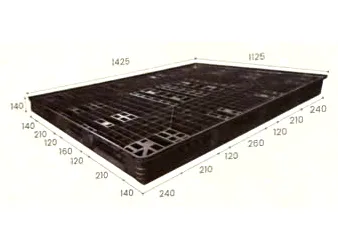
PP can be rigid or flexible depending on structure and product form. Rigid forms are food tubs, bottle caps, straws, toothbrushes, bins and plastic pallets. Flexible forms are fibre and fabric: rope, and nonwoven fabric for diapers, face masks and filter media. A copolymer with ethylene is more flexible and impact-resistant than homopolymer (Simona).
Decoding the symbols commonly found on plastic goods
The table below lists the seven codes under ASTM D7611 with example products cited by the EPA. The code only classifies the type of plastic; safety and recyclability must be judged separately for each product and each place.
| Code | Plastic | Common examples |
|---|---|---|
| 1 | PET | Soft drink bottles, trays |
| 2 | HDPE | Milk bottles, shampoo bottles, motor oil bottles, bags |
| 3 | PVC | Cling film, squeeze bottles, pipes, window frames |
| 4 | LDPE | Bottles, film, bags |
| 5 | PP | Yogurt tubs, cups, lids, trays, film |
| 6 | PS | Plastic cutlery, cups, CD cases, foam |
| 7 | Other | Plastics outside the groups above, copolymers, blends, multilayer |
If you want to reduce contact with plastic, the alternative is metal or glass for hot items. With PP, what matters is using it at the right temperature, for the right purpose, and replacing it when the product degrades.
Conclusion
Plastic number 5 is PP: light, stiff, more heat-resistant than PE and good against chemicals. The number 5 helps identify the plastic but does not guarantee safety or recyclability; also check the food-use label, the heat limit and the condition of the product.
Frequently asked questions
How much heat can number 5 PP withstand?
PP melts at about 160-165 °C, but products under load soften from about 85-102 °C; the practical limit is set by each product’s manufacturer.
Why is it called number 5?
The US plastics industry association created the 1-7 code system in 1988 and assigned 5 to polypropylene; since 2008 the system has been managed by ASTM International (ASTM D7611).
What is the density of PP plastic?
About 0.90-0.91 g/cm³ per the data sheets of PP grades, lighter than water and lighter than HDPE.
Contact ICD Vietnam for bin and plastic pallet advice
ICD Vietnam Industrial Manufacturing Co., Ltd.
North: 3rd Floor, Thang Long A1 Building, Bau Hamlet, Thien Loc Commune, Hanoi, 0983 797 186 / 090 345 9186 / 090 5859 186
South: 551/212 Le Van Khuong Street, Tan Thoi Hiep Ward, District 12, Ho Chi Minh City, 098 6784 186
Email: sales@icdvietnam.com.vn
Zalo: Chat on Zalo now
References
- Wikipedia, Polypropylene (melting point, history, clarity, applications) - en.wikipedia.org
- Wikipedia, Resin identification code (codes per ASTM D7611)
- Smith R.L., Takkellapati S., US EPA, Recycling Plastics in the U.S.: Polypropylene Flows and Recycling Processes (AIChE 2023; plastic code catalogue, PP properties) - cfpub.epa.gov
- US FDA, 21 CFR 177.1520 Olefin polymers - law.cornell.edu
- Commission Regulation (EU) No 10/2011 on plastic materials and articles intended to come into contact with food - eur-lex.europa.eu
- QCVN 12-1:2011/BYT, National technical regulation on safety and hygiene for synthetic plastic packaging and utensils in direct contact with food - nafiqad5.gov.vn
- Harvard Health, Microwaving food in plastic: dangerous or not? - health.harvard.edu
- Basell, Moplen HP500N datasheet (HDT, Vicat, density) - pimd.vn
- Ducor Petrochemicals, DuPure G 72 TF datasheet (haze, density, temperature) - ducorchem.com
- Poly Processing, Polyolefins technical data (PP brittle at 0 °C, UV, autoclaving) - tanks.polyprocessing.com
- Simona, technical Handbook (PP homopolymer brittle in the cold, copolymer impact resistance) - simona.de
Related articles
See also: is PP plastic safe.