Table of Contents
- Should you put desiccant packets in a wardrobe
- Choosing the packet type for each item
- How to place packets in a wardrobe
- Shoes, handbags and leather goods
- Can you put a desiccant packet in the refrigerator
- Combining with other moisture-control methods
- Common mistakes
- Frequently asked questions
- Should leather bags be wrapped in plastic when stored?
- Should I put desiccant packets in a wardrobe?
- How many grams of desiccant for a wardrobe?
- How long do desiccant packets last in a wardrobe?
- How do you use desiccant packets for shoes?
- How do you use desiccant packets for handbags?
- Can I put a desiccant packet in the refrigerator?
- What can I put in a wardrobe to prevent mold?
- Contact ICD Vietnam for desiccant advice
- References
- Related articles
Reviewed and updated by ICD - Week 40/2026
To prevent mold in wardrobes, shoes and handbags, use silica gel or clay desiccant packets: about 100 to 200 g for a 20 to 40 cubic foot wardrobe (0.6 to 1.1 cubic meters), 10 to 20 g for a shoebox, spread over several spots, placed in a closed space and replaced after 4 to 8 weeks in humid regions. This is a synthesis of common technical guides.
Equally important: desiccant packets only help; if the wardrobe stays shut with damp clothes inside or the house floor is sweating, the packets fill up quickly and mold still appears.
This article explains how to choose the type, dose and position, and answers common questions such as whether a desiccant packet can go in the refrigerator.
Should you put desiccant packets in a wardrobe
Yes, if you meet three conditions: the wardrobe is reasonably closed, the packet does not touch clothes directly (put it in a mesh bag or small box), and the packet is out of reach of small children and pets. Desiccant packets lower local humidity in the wardrobe, limiting mold, musty odor and dulling of fabric.
For the general guide see how to use desiccant packets correctly.
Choosing the packet type for each item
| Item | Suitable packet | Reference dose | Notes |
|---|---|---|---|
| Bedroom wardrobe | Silica gel or clay, small packets spread across spots | 100 to 200 g total, split across 2 to 4 spots | Place at mid height, avoid the floor |
| Shoebox, shoe cabinet | 5 to 20 g packet, possibly with odor control | 10 to 20 g per box (about 0.5 cubic ft) | Tuck inside the shoe or place alongside |
| Handbag, leather wallet, backpack | Small 1 to 5 g packet, fabric-wrapped | 1 to 2 packets per bag | Avoid direct contact with leather, wrap in fabric |
| Refrigerator (condensation control) | Small silica packet, not touching food | 1 to 2 packets on average | Must be replaced very quickly because refrigerator humidity is high |
Figures for wardrobes, shoeboxes and refrigerators follow industry technical documents (1 g of silica per cubic foot for moderately humid regions, increased 1.5 to 2 times in regions above 65% RH). The numbers above are starting points, and the damp season in northern Vietnam usually requires a higher dose.
How to place packets in a wardrobe
First, dry everything: dry clothes completely in the sun, wipe the wardrobe with a dry cloth and leave the doors open for 1 to 2 hours to air, because a desiccant packet cannot rescue clothes stored while still damp.
Then split into small packets, one or two per compartment instead of one large packet (industry documents recommend spreading across several spots), placed at mid height or on a shelf and not on the floor.
Packets should not touch fabric directly: use a mesh bag or small box, especially since gel-form calcium chloride packets can leak and stain fabric. Close the wardrobe and avoid opening it often in the damp season, then check weekly and replace or re-dry when the packet changes color, softens or feels wet.
Recommended replacement varies by source, from every 1 to 2 months to every 3 to 5 months depending on the environment.
Shoes, handbags and leather goods
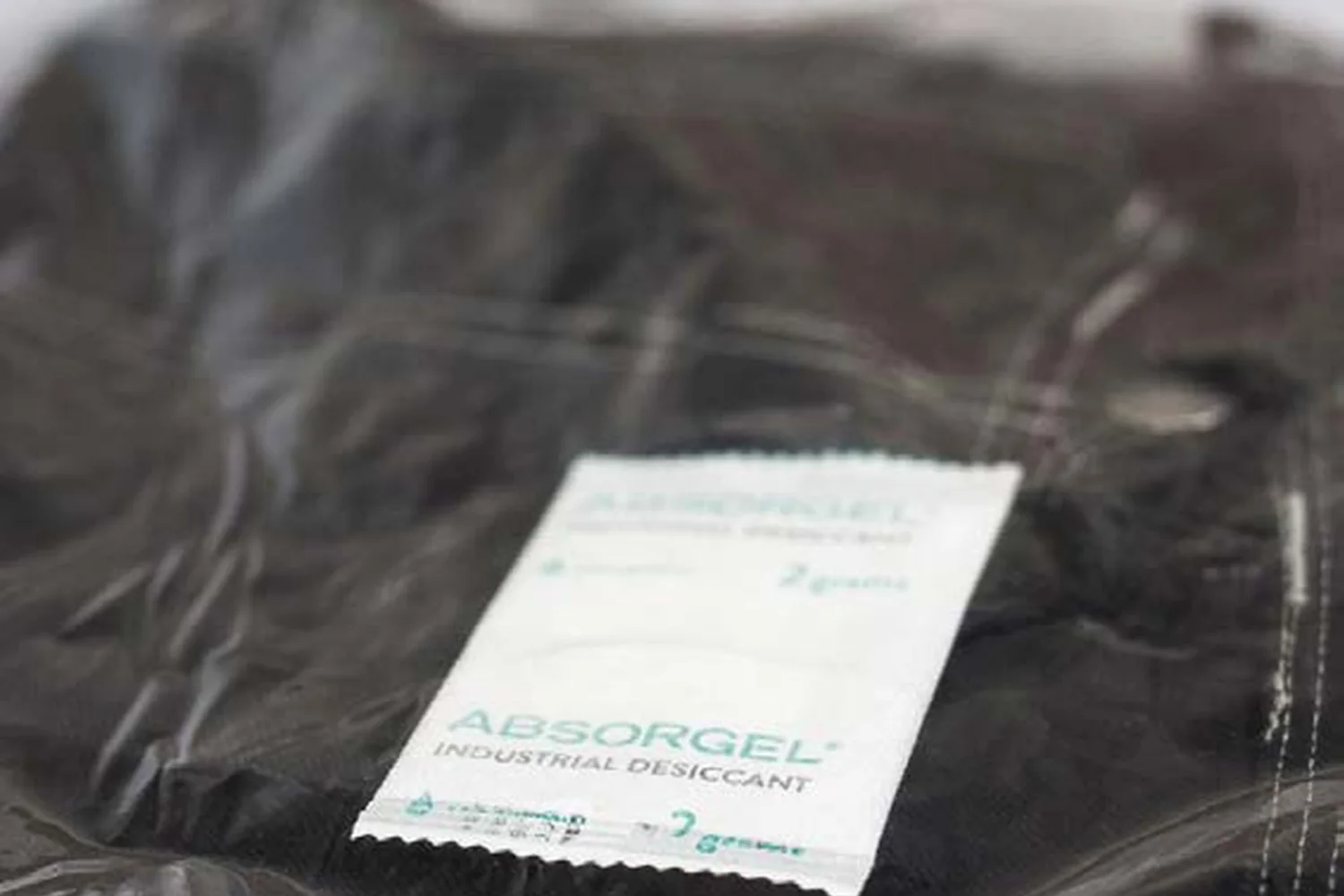
Leather shoes and sneakers mold easily when stored for a long time or after being worn in the rain. Tuck a 5 to 20 g silica packet into each shoe or place it in a sealed shoebox to absorb moisture and reduce odor.
Wet shoes must be dried naturally before storage, because a packet cannot dry a pair of soaking shoes, and shoes are better kept in a cotton cloth bag than a sealed plastic bag.
Leather is an organic material, so mold grows quickly when humidity is high and the air is still.
Guides to storing leather (Tanner Bates, Desiccant Pak) advise keeping humidity below 50 to 60% and temperature around 18 to 21 °C, storing in a breathable cotton or linen bag, and avoiding a fully sealed plastic box because trapped moisture feeds mold.
You can add a small fabric-wrapped silica gel packet in a bag compartment, not touching the leather directly and taking care that a torn packet does not let beads into the lining; in regions above 80% humidity every day this is the recommended approach, along with periodic airing and a monthly check.
Do not store in a basement, bathroom or damp wall corner, but do not leave them next to an air conditioner blowing directly either, since leather dries and cracks. Mold is far easier to prevent than to treat, and mold that has sunk into porous material is hard to clean completely; how to deal with it is in prevent mold and damp in home and wardrobe.
Can you put a desiccant packet in the refrigerator
Yes with a silica gel packet: silica still absorbs moisture at low temperature and can help reduce condensation and frost in a refrigerator, according to some suppliers. Because refrigerator humidity is high the packet fills up very fast, and one source says only 2 to 3 days.
More importantly, do not let the packet touch food, and if you place it near food you must use a food-contact type. Calcium chloride packets and cobalt indicator beads must not be used in a refrigerator.
Combining with other moisture-control methods
Many places suggest dried coffee grounds, activated carbon, dried orange peel or tea leaves in a cloth bag in a wardrobe corner. They absorb moisture and deodorize at a light level, so they cannot replace silica gel in a heavy damp season.
When the whole room is damp, a dehumidifier and ventilation matter more; see prevent mold and damp in home and wardrobe and ideal indoor humidity level.
Common mistakes
The worst mistake is storing clothes that are not fully dry, in which case mold still appears despite the packets. Using too few packets makes them fill quickly while the wardrobe stays damp, so calculate by volume and spread them across several spots.
Letting a packet touch clothes causes stains and stuck beads; forgetting to replace a saturated packet makes it release moisture again, so write the date and check weekly.
Leaving the wardrobe open all the time makes the packet absorb the whole room, and leaving packets where small children and pets can reach them risks accidental swallowing; see what happens if you swallow a desiccant packet. Saturated beads can be reused as in how to reuse desiccant beads; for packets at the right dose for cartons and warehouses see ICD desiccants or the AbsorTerra clay packet.
Frequently asked questions
Should leather bags be wrapped in plastic when stored?
No. Plastic traps moisture and causes mold; use a breathable cotton bag and add a small silica gel packet if you are in a high-humidity region.
Should I put desiccant packets in a wardrobe?
Yes, if the wardrobe is reasonably closed, the packet does not touch clothes and it is out of reach of children and pets. The packets reduce mold and musty odor.
How many grams of desiccant for a wardrobe?
About 100 to 200 g in total for a 20 to 40 cubic foot wardrobe, split across 2 to 4 spots. Increase in the damp season.
How long do desiccant packets last in a wardrobe?
Usually 4 to 8 weeks in humid regions and 3 to 6 months in dry regions. Replace when they change color, soften or feel wet.
How do you use desiccant packets for shoes?
Tuck a 5 to 20 g packet into the shoe or a sealed shoebox; the shoes must be dry before storage.
How do you use desiccant packets for handbags?
Use a small 1 to 5 g fabric-wrapped packet inside the bag; keep the bag breathable and avoid sealed plastic boxes.
Can I put a desiccant packet in the refrigerator?
Yes with a silica gel packet that does not touch food; the packet fills fast so it needs frequent replacement.
What can I put in a wardrobe to prevent mold?
Silica gel or clay packets work best; coffee grounds, activated carbon and dried orange peel absorb lightly and remove odor.
Contact ICD Vietnam for desiccant advice
ICD Vietnam Industrial Production Co., Ltd.
North: 3rd Floor, Thang Long A1 Building, Bau Hamlet, Thien Loc Commune, Hanoi, 0983 797 186 / 090 345 9186 / 090 5859 186
South: 551/212 Le Van Khuong, Tan Thoi Hiep, District 12, Ho Chi Minh City, 098 6784 186
Email: sales@icdvietnam.com.vn
Zalo: Chat on Zalo
References
- Tanner Bates, How to protect leather bags from humidity
- Desiccant Pak, Protect leather shoes from fungus