
Table of Contents
Reviewed and updated by ICD - Week 40/2026
To get rid of damp and mold in a home, the first thing to do is not buy desiccant packets but find out where the water is coming from. The EPA sets a goal of keeping indoor humidity below 60%, ideally at 30 to 50%, and drying anything that gets wet within 24 to 48 hours. Desiccant packets have their place, but only in enclosed compartments such as wardrobes, shoe cabinets and storage boxes; for a whole room in the damp season they cannot replace a dehumidifier, ventilation or repairing a leak.
Find the right moisture source before treating it
The most common mistake is repainting a moldy wall or stuffing more desiccant packets into a wardrobe while water is still getting into the house. There are four main moisture sources, and each leaves a different sign.
- Condensation: happens when humid air meets a surface colder than the dew point (glass, wall corners, floors with droplets), worst in the damp season; wiping dry only helps briefly and the surface is wet again soon after.
- Leaks from outside: a damp patch in a large area, fairly uniform in color and worse after each rain; water enters through cracks, open mortar joints or from bathroom floors and balconies.
- Plumbing leaks: the damp patch has a clear center and spreads from there.
- Rising damp from the ground: wet at the foot of the wall and peeling paint in the lower part, because the building lacks a damp-proof layer in the foundation and floor.
If you suspect condensation, there is a simple trick: tape a sealed sheet of plastic to the wall for 24 hours. Water on the outer face of the plastic is moisture from the air, while water on the inner face against the wall is moisture coming out of the wall.
This is a practical trick and not a standard measuring method, so also check with a hygrometer; how to use one is in how to measure humidity. Condensation is dealt with by lowering humidity, while the other three sources must be fixed by waterproofing or repairing the pipes; a desiccant packet solves none of them.
Things to do all year round
According to EPA guidance, most mold prevention is controlling moisture at the source. The kitchen and bathroom need ventilation, especially when cooking and showering; washed clothes should not be dried in a closed room. Pipes and roofs must be repaired as soon as they leak. Cold surfaces such as ducts and wall corners need insulating so water vapor does not condense. Where dampness lasts, use a dehumidifier, and if materials get wet, dry them completely within 24 to 48 hours before mold can germinate.
Room humidity should be measured with a hygrometer rather than judged by smell. When the reading exceeds 60%, mold begins to grow, and that is the time to turn on the dehumidifier, not to wait until black stains appear. The ideal humidity level and the reasons behind it are explained in ideal indoor humidity level.
Wardrobes, shoe cabinets, wooden items and books
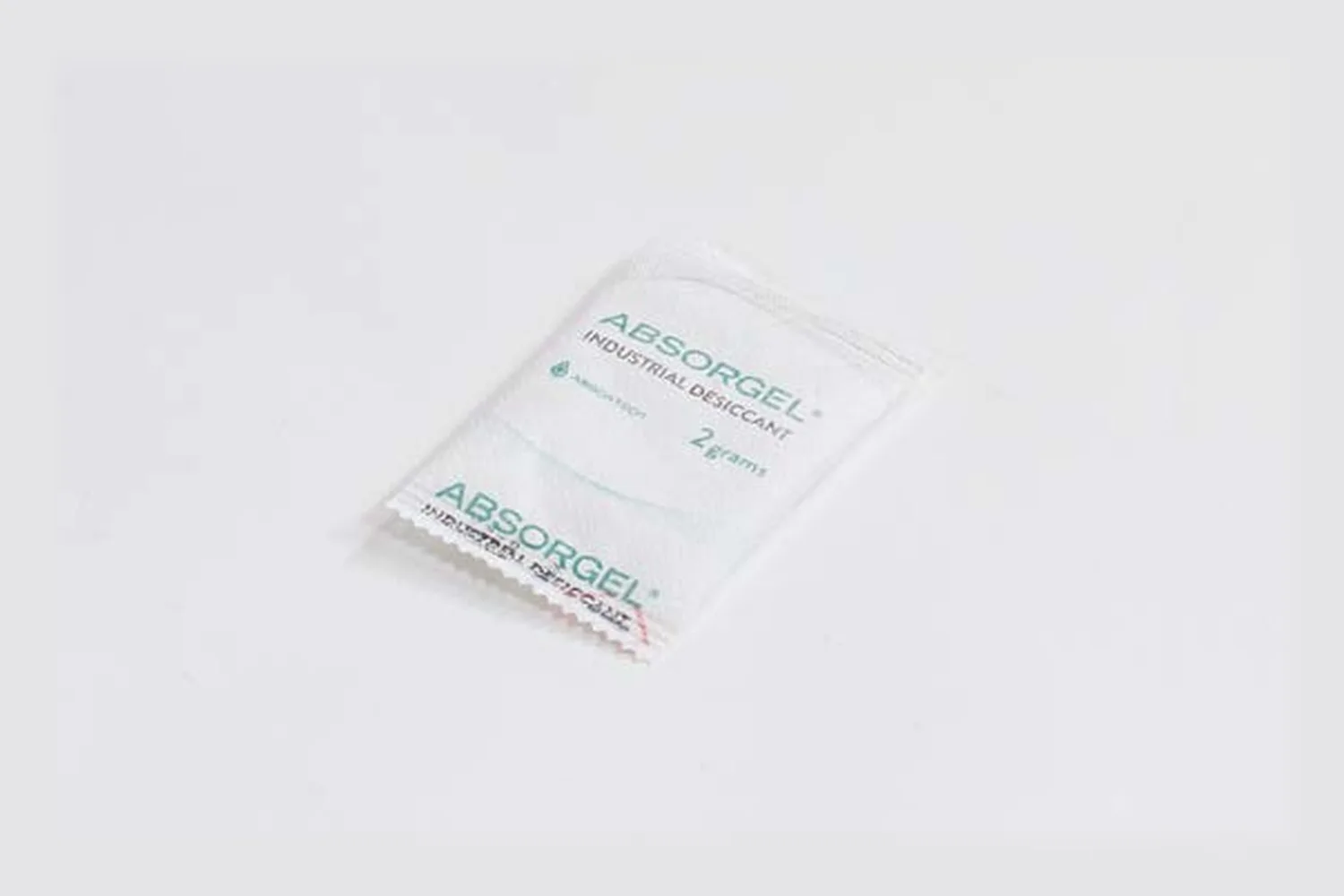
Enclosed compartments are where desiccant packets genuinely work, because there is little air and it is not constantly topped up with moisture from outside. For a wardrobe, a good approach is to dry clothes completely in the sun or by machine before storing them, not to pack the wardrobe too tight so the air still circulates, to open the doors periodically, and to place 2 to 3 desiccant packets in the compartments and corners, replacing or re-drying them after about 3 to 4 weeks. Shoes need airing dry before being stored, with a small packet in each compartment; wooden items, books and paper keep best at 40 to 50% humidity, and a sealed box with a desiccant packet is enough for precious items. Dose, packet type and placement in detail are in desiccant packets for wardrobes, shoes and handbags.
Besides silica gel there are some folk remedies such as activated carbon, coffee grounds or dried tea in a cloth bag, and newspaper lining a shelf. They remove odors fairly well but absorb moisture more weakly than silica gel and must be replaced often, so they suit use alongside rather than as a replacement. Some people also use a dehumidifier for the room holding the wardrobe, which works well but costs electricity. If you want a tidy approach, dry the clothes, keep the wardrobe ventilated and use desiccant packets for the enclosed compartment.
When mold has already appeared
The EPA distinguishes by material and area. Mold on hard surfaces such as tile, glass and plastic is scrubbed with water and detergent and then wiped completely dry. Mold on porous materials such as carpet, ceiling plasterboard or upholstered furniture has sunk in deep, usually cannot be cleaned completely and may have to be thrown away. If the mold area is under about 10 square feet (about 0.9 m²) you can usually handle it yourself; larger than that, or with a lot of water, suspected sewage, or someone in the house with respiratory illness, you should call a professional. When scrubbing mold, wear a mask, gloves and goggles, open windows for ventilation and keep young children and people with allergies away.
The most important thing is that cleaning without dealing with the moisture source means the mold will return, and everything must be dried completely after cleaning. For clothes, shoes and bags with light mold, wash or wipe clean and then dry completely before storing; items where mold has soaked into the fibers are hard to save.
A seasonal rhythm of work
In northern Vietnam, check the roof, plumbing and wall bases and replace the desiccant packets in wardrobes before the damp season. During a damp spell, close the doors, run a dehumidifier, read the hygrometer daily, do not dry clothes in a closed room and wipe the floor dry. After the damp spell is the time to air blankets and clothes, dry or replace the desiccant packets and look again at wall corners and behind furniture. Southern Vietnam does not have that kind of damp season but has a long rainy season, so check for leaks after heavy rains and ventilate the kitchen and bathroom. The safe humidity level for goods in a warehouse is covered in safe humidity for storing goods; and if there are small children or pets at home, read what happens if you swallow a desiccant packet before placing packets within reach. Desiccant products for warehouses and cartons are in the ICD desiccants range.
Frequently asked questions
How do I tell if a damp wall is condensation or a leak?
Condensation shows droplets on a cold surface and is worst in the damp season; a leak makes a large patch that is worse after rain; a plumbing leak has a clear center. Identify the source before treating it.
At what humidity does mold grow?
Above 60% RH according to the EPA; keep it below 60%, ideally 30 to 50%.
How do I prevent mold in a wardrobe?
Dry clothes before storing, do not pack too tight, place 2 to 3 desiccant packets per wardrobe and replace them after 3 to 4 weeks.
Do desiccant packets prevent mold on walls?
No. Wall mold comes from leaks or condensation and needs the water source and ventilation dealt with; packets only absorb moisture in small enclosed compartments.
How big a mold area can I deal with myself?
According to the EPA, under about 10 square feet (about 0.9 m²) can usually be handled yourself; larger areas or a lot of water should go to a professional.
What if mold comes back after wiping it off?
It means the moisture source has not been dealt with. You must lower humidity, fix the water source and dry the surface completely.
Contact ICD Vietnam for desiccant advice
ICD Vietnam Industrial Production Co., Ltd.
North: 3rd Floor, Thang Long A1 Building, Bau Hamlet, Thien Loc Commune, Hanoi, 0983 797 186 / 090 345 9186 / 090 5859 186
South: 551/212 Le Van Khuong, Tan Thoi Hiep, District 12, Ho Chi Minh City, 098 6784 186
Email: sales@icdvietnam.com.vn
Zalo: Chat on Zalo