Table of Contents
- HS codes for desiccant types
- A real classification example from US Customs
- Duty, licensing and documents
- Import procedure
- MSDS and SDS for desiccants: where to get them and what they contain
- Do you need to import: buy locally to skip the procedure
- Frequently asked questions
- What is the HS code for desiccant?
- What is the HS code for silica gel desiccant packets?
- What is the HS code for calcium chloride container desiccant bags?
- What is the import duty on desiccant?
- Does importing desiccant need a license?
- Where do I get a desiccant MSDS?
- What is the penalty for declaring the wrong HS code?
- Do desiccants have to be labeled?
- Contact ICD Vietnam for desiccant advice
- References
- Related articles
Reviewed and updated by ICD - Week 40/2026
The HS code of a desiccant depends on what is inside and how it is packed: silica gel beads are usually declared under 3824.99.99 according to Vietnamese procedural guides, activated clay under 3802.90.20, and pure calcium chloride falls under heading 2827.20; a calcium chloride and starch packet, however, is classified as a chemical preparation under heading 3824.99. Import duty is commonly 0% and VAT 10% according to several lookup sources, but you must check the tariff schedule currently in force.
Desiccants are not on Vietnam’s list of prohibited imports; what matters most is declaring the correct HS code, labeling as required and preparing complete safety documents (SDS).
HS codes for desiccant types
| Type | Reference HS code (Vietnam) | Import duty | VAT | Classification notes |
|---|---|---|---|---|
| Packaged silica gel beads | 3824.99.99 (many guides); some sources give 3824.90.99 | 0% | 10% | International code 2811.22 is synthetic silicon dioxide; US Customs places small silica gel packets in 2811.22.1000 (CBP ruling). Check the form of the goods |
| Activated clay beads (bentonite, montmorillonite) | 3802.90.20 | 0% | 10% | Activated natural mineral product |
| Pure calcium chloride (salt-type desiccant) | 2827.20 | Check the tariff | 10% | Inorganic chemicals heading |
| Calcium chloride and starch desiccant bag (container) | 3824.99.99 (chemical preparation) | Check the tariff | 10% | US CBP places a bag of 80% calcium chloride and 20% starch in 3824.99.9295 |
These differences are why the same “desiccant packet” can end up with a different code on different shipments. When unsure, ask customs for an advance ruling on the tariff code to avoid penalties and delays.
A real classification example from US Customs
US Customs ruling NY N292791 (5 January 2018) deals with exactly the kind of desiccant bag used in sea containers, made of 80% calcium chloride and 20% starch, used and discarded on arrival.
Customs placed it in 3824.99.9295 (chemical preparations not elsewhere specified), at a 5% duty, because the mixture is a preparation and no longer a single substance. For small silica gel packets (about 1.5 square inches, 0.25 to 0.75 g), a different ruling places them in 2811.22.1000 (synthetic silica gel).
This is a reference point and does not bind Vietnamese customs, but it shows that the code is decided by composition and form of the goods, not by trade name.
Duty, licensing and documents
Domestic procedural guides state a 0% import duty for both silica gel (3824.99.99) and clay (3802.90.20); you can look this up on the Ministry of Industry and Trade’s VNTR portal. VAT is 10%.
Accounting communities hold that desiccant beads packed into small sachets still bear 10%, because that is only a packing operation and does not change the nature of the goods. Periods when the Government reduces VAT can change the rate, so check the document in force when you declare.
On management policy, silica gel and activated clay are not prohibited goods or conditional imports, so they clear customs as ordinary goods.
For calcium chloride and chemical mixtures, check additional rules on chemicals and labeling, because detailed classification may subject a shipment to different management; confirm with your customs broker or customs authority before importing a large lot.
The usual set of documents includes:
- Electronic customs declaration on VNACCS (to be filed within 30 days of the goods arriving at the border gate)
- Contract and commercial invoice stating the bead type, composition and weight
- Packing list and bill of lading
- Certificate of origin, if you want preferential duty
Attach the SDS and test reports to prove composition when customs or the customer asks.
Import procedure
The first and most important step is to determine the HS code from composition and packing form; if unsure, ask for an advance ruling. Declaring the wrong code can bring a fine from VND 2 million up to 3 times the tax amount, delay the goods and lose preferential duty.
Then prepare the documents and SDS from the manufacturer, label under Decree 43/2017/ND-CP (name of goods, manufacturer’s name and address, origin, importer information, Vietnamese preferred), file the electronic declaration and pay the duty, and keep the file for post-clearance audit.
MSDS and SDS for desiccants: where to get them and what they contain
An SDS (formerly MSDS) is a chemical safety data sheet issued by the manufacturer, usually in a 16-section structure: substance identification, hazard identification (GHS classification), composition, first aid, firefighting, spill handling, storage, exposure controls, physical and chemical properties, toxicity, ecology, waste disposal, transport and regulations.
Silica gel usually has a short SDS, while calcium chloride is classified as causing eye irritation (H319).
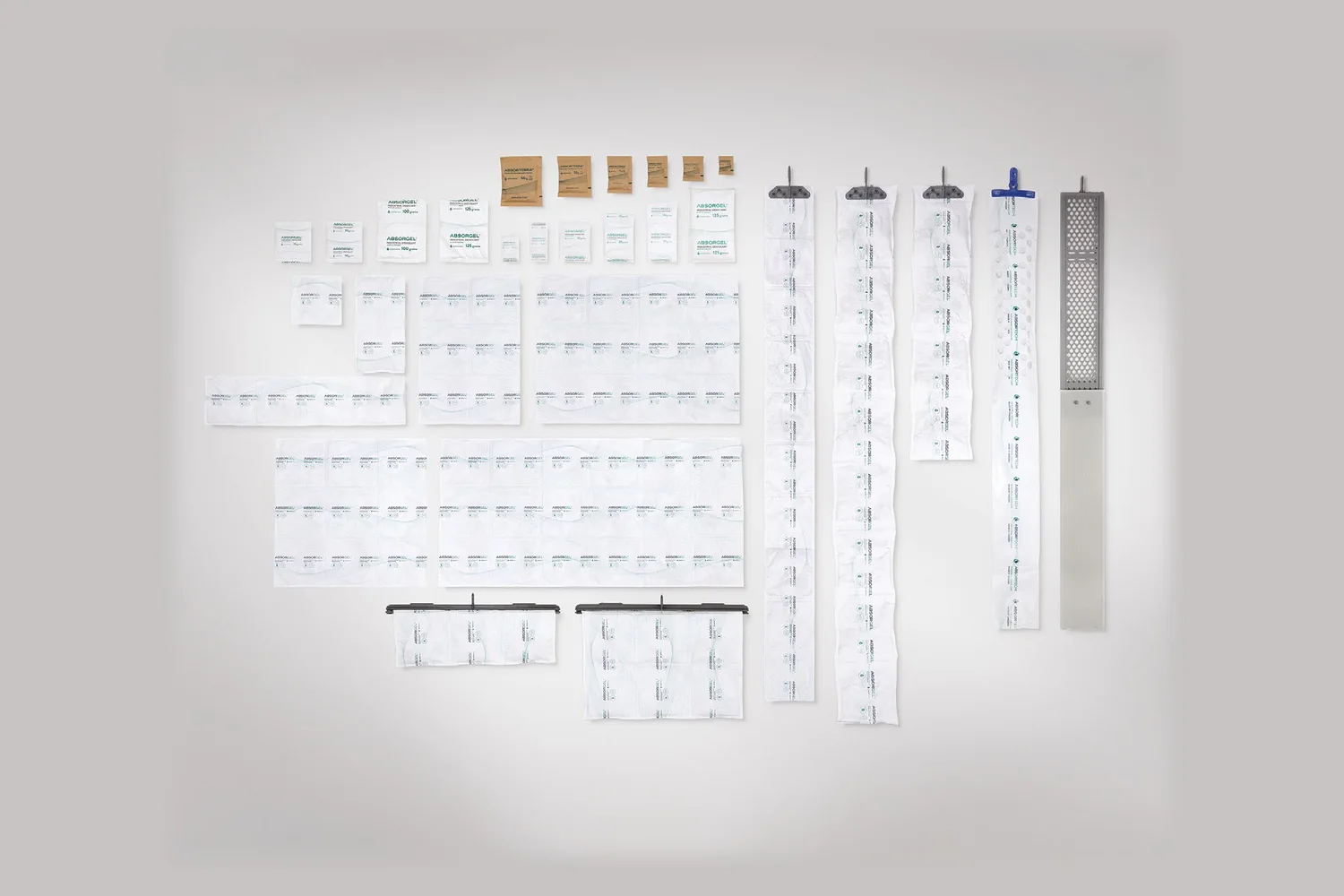
For the AbsorGel line, the manufacturer Absortech publishes compliance statements for REACH, RoHS, POPs, PPWR and PFAS (31 March 2026) and an SGS test report dated 29 September 2025 for the calcium chloride and starch mixture, passing RoHS and REACH SVHC. This set of documents is useful when an importer or a European customer asks for proof that the product contains no restricted substances.
Every AbsorGel box carries a QR code linking to the SDS and exposure scenarios.
Do you need to import: buy locally to skip the procedure
A business that only needs desiccants to protect export goods can buy them locally, avoiding the declaration, label checks and waiting for clearance.
ICD Vietnam supplies Absortech desiccants for containers and cartons: the Hanging-C container bag, the Blanket-C blanket, the Pouch calcium chloride packet and the AbsorTerra clay packet; see the full range at ICD desiccants.
Containerized goods need other packing elements as well: pallets treated to ISPM 15, PE stretch film for pallets and air dunnage bags. To choose the right bead type see types of desiccant, and for safety when handling see what happens if you swallow a desiccant packet.
Frequently asked questions
What is the HS code for desiccant?
Packaged silica gel beads are usually declared 3824.99.99 under Vietnamese procedural guides; activated clay 3802.90.20; pure calcium chloride heading 2827.20. The exact code depends on composition and form of the goods, and you can request an advance ruling.
What is the HS code for silica gel desiccant packets?
Many Vietnamese sources give 3824.99.99. US Customs places small silica gel packets in 2811.22.1000. Check the form and composition, and ask for an advance ruling when unsure.
What is the HS code for calcium chloride container desiccant bags?
A calcium chloride and starch mixture is usually classed as a chemical preparation under heading 3824.99 (US CBP places a bag of 80% calcium chloride and 20% starch in 3824.99.9295). Check the 8-digit code in Vietnam.
What is the import duty on desiccant?
According to domestic guides, 0% import duty for codes 3824.99.99 and 3802.90.20, and 10% VAT. Look up the current tariff schedule before declaring.
Does importing desiccant need a license?
Silica gel and activated clay are not prohibited or subject to specialized inspection according to procedural guides. Chemicals such as calcium chloride and mixtures need additional checks on chemical and labeling rules.
Where do I get a desiccant MSDS?
From the manufacturer or supplier. For AbsorGel, the SDS is available through the QR code on the box; ICD provides the SDS on request.
What is the penalty for declaring the wrong HS code?
A fine from VND 2 million up to 3 times the tax amount, plus delays and loss of tax preference.
Do desiccants have to be labeled?
Yes, under Decree 43/2017/ND-CP: name of goods, manufacturer, origin and importer information, with Vietnamese preferred.
Contact ICD Vietnam for desiccant advice
ICD Vietnam Industrial Production Co., Ltd.
North: 3rd Floor, Thang Long A1 Building, Bau Hamlet, Thien Loc Commune, Hanoi, 0983 797 186 / 090 345 9186 / 090 5859 186
South: 551/212 Le Van Khuong, Tan Thoi Hiep, District 12, Ho Chi Minh City, 098 6784 186
Email: sales@icdvietnam.com.vn
Zalo: Chat on Zalo
References
- US CBP, Ruling NY N292791: desiccant bag of 80% calcium chloride and 20% starch
- Caselaw Vietnam, HS code 38249999 (tariff)
- VNTR, Ministry of Industry and Trade tariff lookup portal