Table of Contents
- Oxygen absorber vs desiccant packet
- Why oxygen absorbers and desiccants should not share a bag
- When to choose a desiccant and when an oxygen absorber
- How many cc of oxygen absorber to choose
- Other packet types: ethylene absorbers, odor control, quicklime
- Food safety when using oxygen absorbers
- Common mix-ups
- Frequently asked questions
- What is the difference between an oxygen absorber and a desiccant packet?
- Is an oxygen absorber a desiccant?
- Can an oxygen absorber absorb moisture?
- Can oxygen absorbers and desiccants be used together?
- Are oxygen absorbers poisonous?
- Is it a problem if an oxygen absorber gets hot?
- What is a 100cc oxygen absorber?
- What is an ethylene absorber used for?
- Contact ICD Vietnam for desiccant advice
- References
- Related articles
Reviewed and updated by ICD - Week 40/2026
An oxygen absorber removes oxygen inside a sealed package through a chemical reaction of iron powder, while a desiccant packet only holds water vapor and cannot take up oxygen; the two do not replace each other. Choosing the wrong one is a common reason why goods still turn damp and moldy, or food still goes rancid, even after a packet was put in the box.
The most common rule: an oxygen absorber needs an airtight package and a little moisture to work, so it should not share the same sealed bag with a desiccant packet.
Oxygen absorber vs desiccant packet
| Criterion | Desiccant packet | Oxygen absorber |
|---|---|---|
| Active material | Silica gel, clay, calcium chloride, quicklime | Iron powder, possibly with activated carbon, salt, clay, catalysts |
| Mechanism | Adsorbs or absorbs water vapor (physical) | Iron reacts with oxygen to form iron oxide (chemical, one-way) |
| Goal | Prevent mold, rust, clumping, packaging damage | Prevent oil oxidation, inhibit aerobic microorganisms, extend shelf life |
| Result achieved | Absorbs up to about 40% of weight (silica gel), over 300% (calcium chloride gel) | Reduces oxygen in the bag to about 0.1% to under 0.2% |
| Sizing | By grams: 1 g, 2 g, 5 g, 10 g, 20 g, 50 g, 100 g, 500 g, 1 kg | By cc of oxygen absorbed: 15 cc, 30 cc, 50 cc, 100 cc, 200 cc |
| Needs an airtight bag | Not required (more effective in an enclosed space) | Required, with an oxygen-barrier bag |
| Reusable | Silica gel can be dried again | No, single use |
| Suited to | Containers, cartons, garments, footwear and leather, electronics, medicine, crisp dry food | Dried meat, dried seafood, bakery, coffee, rice, nuts, medicine in sealed bags |
An oxygen absorber contains iron powder, and the rusting reaction needs water vapor. Prepper Press and Wallaby Goods both state the rule: do not put a desiccant packet in the same bag as an oxygen absorber, because the desiccant dries the environment, making it hard for the iron powder to react and weakening the oxygen absorber.
Some international suppliers note that the two can be used together in certain applications, for example when each sits in its own compartment or bag. The safe approach: if you need both, design each goal for its own layer of packaging, and ask your supplier.
When to choose a desiccant and when an oxygen absorber
The simple question for choosing is whether your goods are spoiled by water or by oxygen.
Export garments, footwear and leather spoil through mold and yellowing, so use clay or calcium chloride desiccant inside the carton, for example AbsorTerra. Metal parts and machinery shipped by sea spoil through rust and need a desiccant together with VCI anti-corrosion. Long-haul container cargo suffers container rain, so use the Hanging-C bag or Blanket-C blanket. Dry food that must stay crisp, such as biscuits, sweets and nuts, uses a food-contact desiccant packet.
Conversely, dried meat, dried seafood, oily nuts and coffee spoil mainly through fat oxidation and aerobic microorganisms, so they need an oxygen absorber in an airtight bag.
Rice, grains, noodles and beans stored for a long time also use oxygen absorbers in sealed Mylar bags to prevent insects and oxidation. For medicines and herbal products, follow the manufacturer’s requirements, since some products fear moisture and some fear oxygen.
How many cc of oxygen absorber to choose
An oxygen absorber is rated in cc, the amount of oxygen the packet can absorb.
Prepper Press gives reference guidance by container: a glass jar from 1 quart about 50 cc; a half-gallon Mylar bag 100 to 400 cc; a 1-gallon bag 300 to 400 cc; a 5 to 6 gallon bucket 2,000 to 3,000 cc depending on how dense the food is. A packet that is too small leaves excess oxygen in the bag.
Common sizes in Vietnam run from 15 to 200 cc, and goods with fat need a larger packet.
Other packet types: ethylene absorbers, odor control, quicklime
An ethylene absorber slows ripening of fruit and vegetables by removing ethylene, usually using potassium permanganate on a carrier such as silica or alumina (Wikipedia, Active packaging), and is not a desiccant. An activated carbon packet absorbs odors and gases but is poor at absorbing moisture.
A quicklime packet (calcium oxide) absorbs moisture chemically and very strongly but needs care when it meets water; see desiccant packet hot, wet or leaking.
Food safety when using oxygen absorbers
Prepper Press warns against using oxygen absorbers with food above 10% moisture, because an oxygen-free environment allows anaerobic bacteria such as botulinum toxin producers to grow.
The packet is not for eating: iron powder can be harmful if swallowed, with high risk for small dogs and small children; see what happens if you swallow a desiccant packet. The European Union also has specific rules for active materials in food contact (Regulation EC 450/2009) with migration limits and safety assessment.
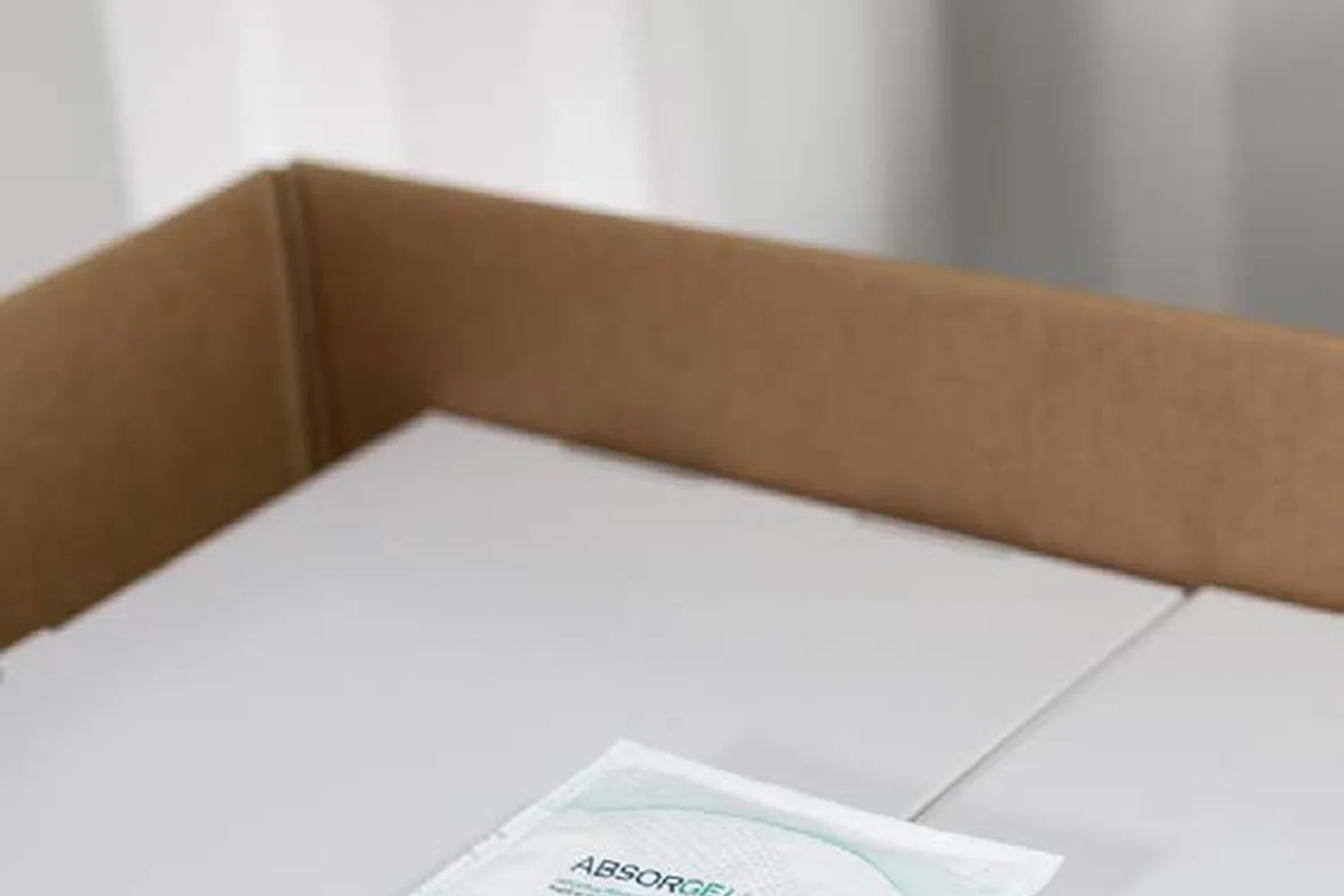
ICD’s calcium chloride and AbsorGel packets are for cartons and containers and do not touch food directly.
Common mix-ups
The most common mix-up is using a desiccant expecting it to “absorb oxygen”: the oxygen is still there and the food still goes rancid. The reverse is also wrong: an oxygen absorber in a container or a carton that is not airtight does not work and the goods stay damp, whereas a desiccant does not need a perfectly sealed space.
Putting a desiccant next to an oxygen absorber in one small bag makes the oxygen absorber less effective; if you need both, separate them and ask your supplier. And using an oxygen absorber for food that is too moist is an anaerobic bacteria risk, so reduce the moisture first.
To choose the right desiccant see types of desiccant, and for the right dose see how to use desiccant packets correctly. The ICD desiccants range is for goods, cartons and containers.
Frequently asked questions
What is the difference between an oxygen absorber and a desiccant packet?
A desiccant packet takes up water vapor (silica gel, clay, calcium chloride); an oxygen absorber takes up oxygen by reacting with iron powder. The two serve different goals and do not replace each other.
Is an oxygen absorber a desiccant?
No. An oxygen absorber does not absorb meaningful moisture; to control moisture you need a separate desiccant packet.
Can an oxygen absorber absorb moisture?
Not meaningfully. It even needs a little moisture to work.
Can oxygen absorbers and desiccants be used together?
Not in the same sealed bag, because the desiccant dries the environment and weakens the oxygen absorber. If you need both, use two separate layers of packaging and ask your supplier.
Are oxygen absorbers poisonous?
The main ingredient is iron powder that turns into iron oxide. Do not eat; especially dangerous for small dogs and small children. Seek a doctor or vet if swallowed.
Is it a problem if an oxygen absorber gets hot?
The iron oxidation reaction gives off heat so the packet may feel slightly warm, which is usually not dangerous.
What is a 100cc oxygen absorber?
A packet that can absorb about 100 cubic centimeters of oxygen, enough for a certain amount of packaging. Choose the cc by volume and type of food.
What is an ethylene absorber used for?
It slows ripening of fruit and vegetables by removing ethylene. It does not replace a desiccant or an oxygen absorber.
Contact ICD Vietnam for desiccant advice
ICD Vietnam Industrial Production Co., Ltd.
North: 3rd Floor, Thang Long A1 Building, Bau Hamlet, Thien Loc Commune, Hanoi, 0983 797 186 / 090 345 9186 / 090 5859 186
South: 551/212 Le Van Khuong, Tan Thoi Hiep, District 12, Ho Chi Minh City, 098 6784 186
Email: sales@icdvietnam.com.vn
Zalo: Chat on Zalo
References
- Prepper Press, Desiccant or oxygen absorber: which should you use
- Wallaby Goods, Oxygen absorbers vs silica gel desiccant packets
- Wikipedia, Active packaging
- Pet Poison Helpline, Packaging freshness packets