
Table of Contents
- Electronics and semiconductors: choose the right resistance group
- Logistics and warehousing: layer pads
- Textiles and footwear: liners and dividers
- Automotive and mechanical: trays and dividers
- Agriculture and greenhouses: use selectively
- Advertising and printing
- Surface protection during construction
- Medical and cleanroom: batch documents needed
- Quick selection table by industry
- Frequently asked questions
- Contact
- References
Reviewed and updated by ICD - Week 48/2026
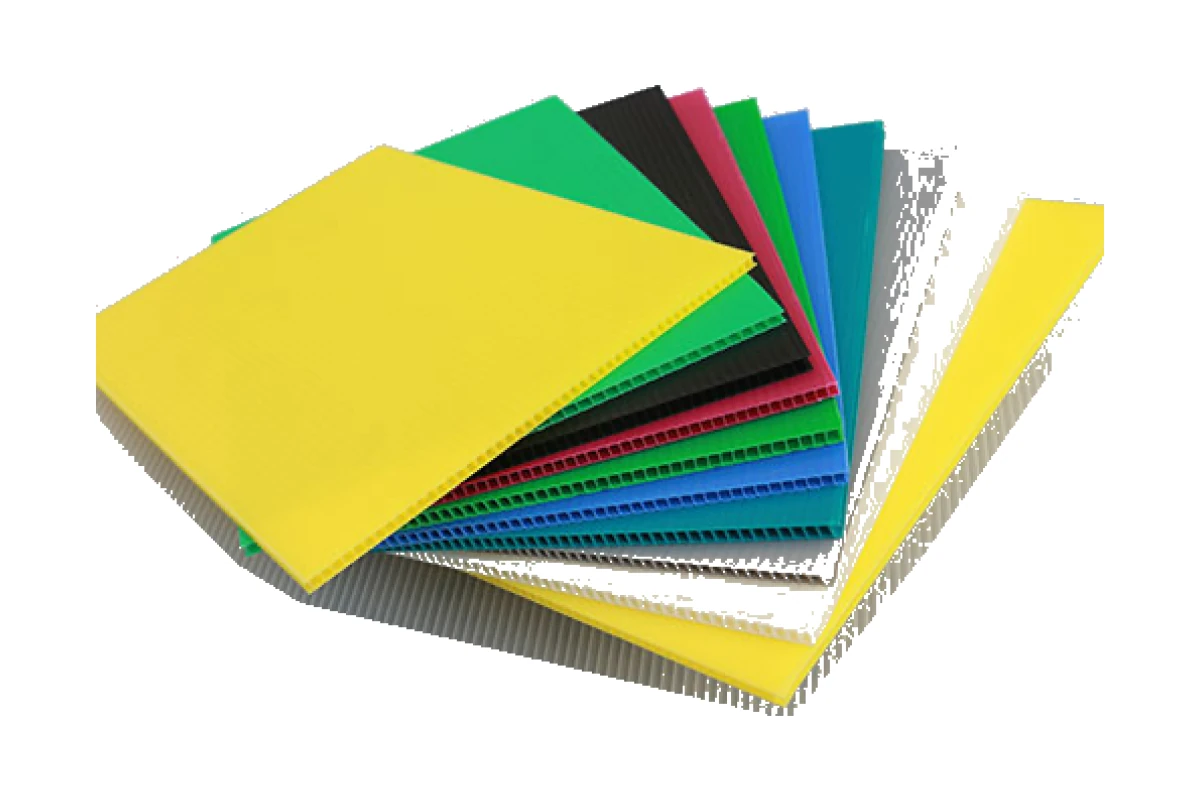
Danpla sheet can be used anywhere you need a light sheet that is stiff for its weight, absorbs no water and cuts and folds easily: packing and dividers in factories, warehouse floor liners, surface protection during construction, signage, and some greenhouse and cleanroom uses. What differs between industries is which sheet to choose (g/m², colour, surface treatment), not whether the sheet can be used at all.
This article goes through eight application groups, says what to check in each before ordering, and marks which points rest on manufacturer documents and which are only practical suggestions. Claims such as “saves X percent” or “reused 50 to 100 times” are left out because there is no independent source for each industry.
Electronics and semiconductors: choose the right resistance group
This group demands the most in terms of sheet type. Packaging for static-sensitive components is classified by surface resistance in ANSI/ESD S541 and the STM11.11 measurement method: shielding material has a surface resistance of 10³ Ω or below, and dissipative material is greater than 10⁴ and less than 10¹¹ Ω (ESD Association). When ordering ESD Danpla sheet or boxes, ask the supplier which group it falls in, which method was used to measure it, and whether there is a test report for each batch. Black does not automatically mean anti-static: black sheet is often just coloured, and only sheet with conductive or dissipative additives may be labelled ESD.
On mechanism, ESD Danpla replaces ESD foam boxes because it is stiffer, does not shed crumbs, and wipes clean with a damp cloth; I give no price or weight comparison with aluminium boxes because there is no reliable general data. ICD’s anti-static sheet lines are covered in the article on Danpla sheet structure and specifications.
Logistics and warehousing: layer pads
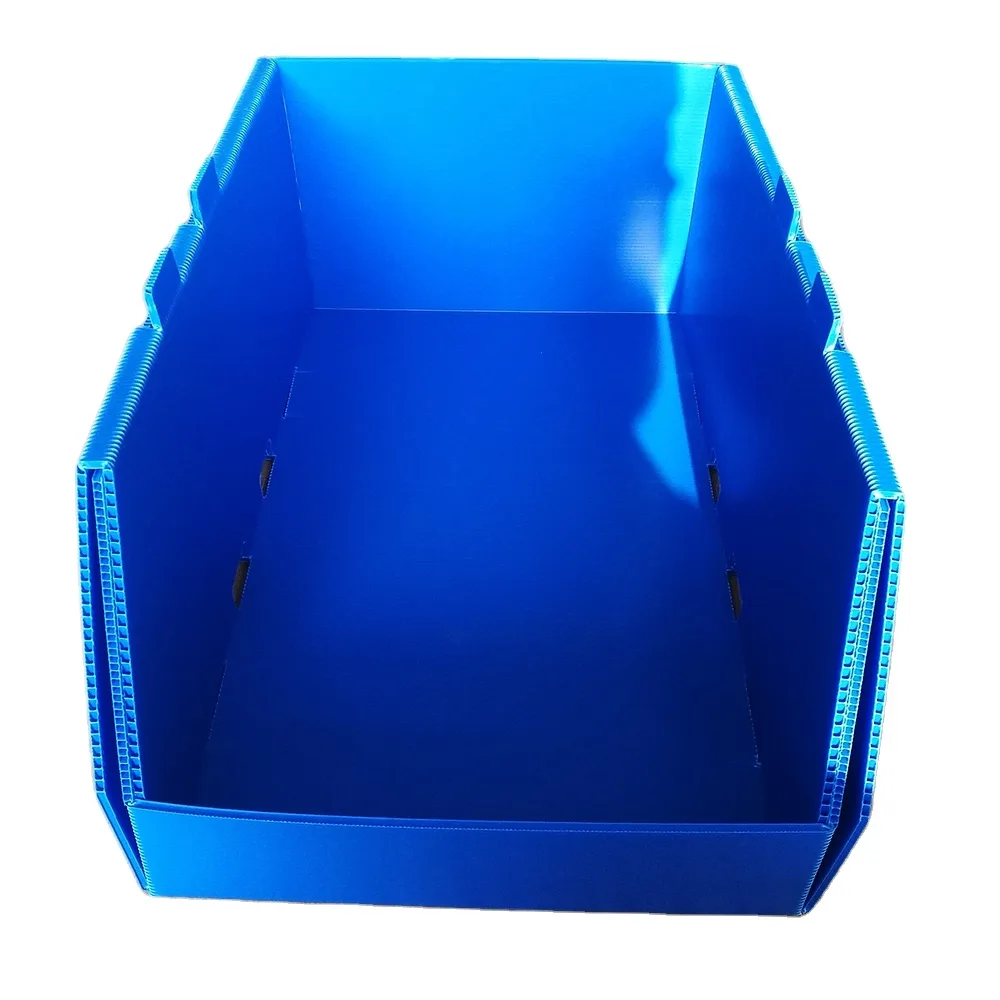
By volume, the biggest use is layer pads between tiers of goods on a pallet and liners for truck floors and racks. Sheets of 1220 x 2440 mm are cut to pallet size; folding carton-style boxes serve goods going out and back in a closed loop. To count sheets, divide the total area to be lined by 2.977 m² per sheet, then add cutting waste, and then test with one batch in practice; the typical quantity per warehouse area depends on stacking, so I give no general figure. Instead of throwing away carton liners each trip, Danpla sheet can be reused as long as it is not punctured or stained; the number of reuses depends on how you operate and should be measured in your own warehouse.
Textiles and footwear: liners and dividers
Sheet of 3 to 4 mm is used as dividers in fabric roll bins, as padding between fabric bales, and as a liner for the base of export cartons to add stiffness. The technical reason is that PP absorbs no water and does not grow mould, and fabric dust wipes off with a cloth or compressed air. A hybrid solution (Danpla sheet placed inside a carton) suits when you only need stiffness on the base and the four inner faces while the outer layer is still a printed carton; this is the approach I see commonly in practice, not a standard.
Automotive and mechanical: trays and dividers
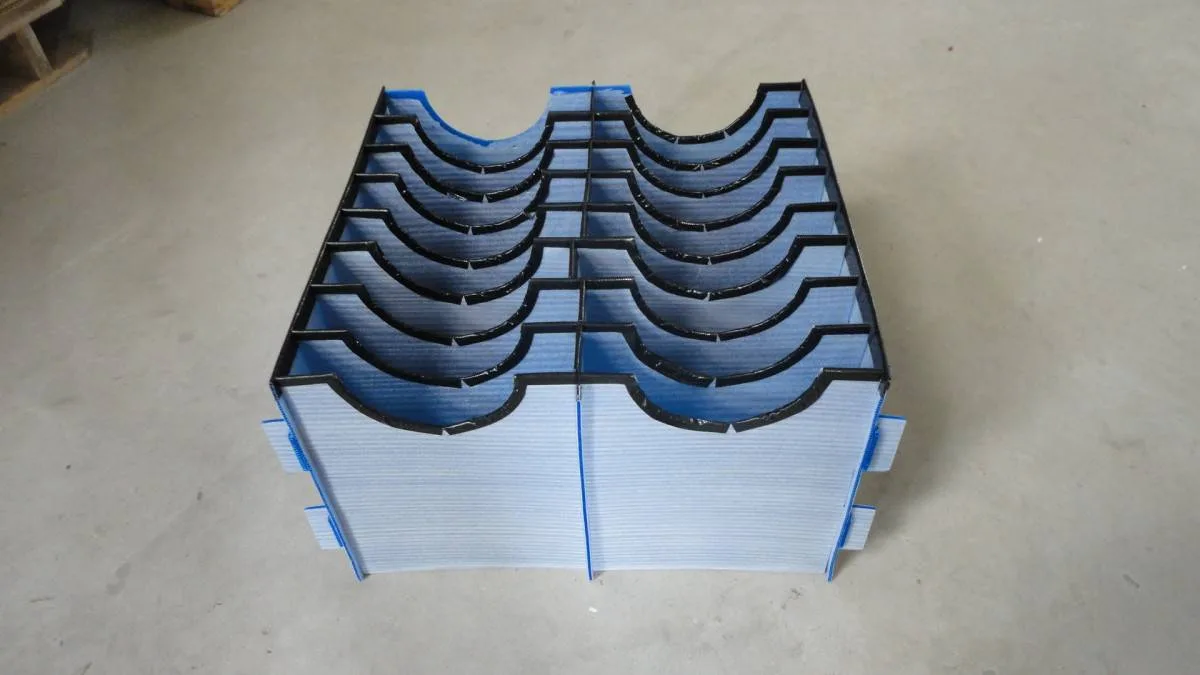
Machined parts need to be kept apart so they do not scratch the paint or knock each other: compartment trays, container floor liners, protective padding sheets. The -20 to +70 °C range of PP sheet (Corplast) is enough for most warehouses and workshops, but it should not be used near high heat sources. PP sheet resists many common chemicals, and Coroplast documentation has a chemical resistance table; if parts carry oil or a particular solvent, check this table against that exact solvent instead of trusting a general claim that it resists oil. Many mechanical plants use returnable boxes on internal routes; the conditions under which such a route pays off are in the article on reusable Danpla packaging.
Agriculture and greenhouses: use selectively
Hollow PP sheet can serve as a temporary cover for nurseries, small windbreaks, and trays and dividers in net houses; but it cannot replace glass or polycarbonate sheet when long-term light transmission is needed. PP sheet left in constant sun lasts only about 6 to 12 months according to one Australian supplier (PALSGC), and that figure was measured in Australian UV conditions; UV-stabilised grades last longer but I have no independent data for each grade. So I give no lifespan figure for greenhouses and only advise: use it for temporary or diverting applications, and trial one batch before rolling out.
Advertising and printing
Sheet of 3 to 5 mm makes a printing base for signs, standees and backdrops: light, water-resistant, and it takes flatbed UV printing or decals. The surface must be treated to above 46 dyne/cm for ink to adhere (Coroplast, Americover), so when ordering sheet for printing say clearly “corona treated”. For short-term outdoor signs, PP sheet suits; for semi-permanent flat signs or indoor use, also compare with foam PVC as analysed in the article comparing Danpla with other sheet materials.
Surface protection during construction
The clearest documentation is in this group. Coroplast sells 4 mm surface protection sheet treated to above 46 dyne/cm, with an NFPA 701 option, to cover floors, walls and equipment; Piedmont Plastics presents hollow PP sheet as a temporary cover for floors and walls. How to use: cut to size, tape down, lift off clean after construction, and reuse on a later site if not torn. The sheet is softer than stone so it does not scratch surfaces, but dragging grit between the sheet and the floor will still scratch, so sweep dust before laying it.
Medical and cleanroom: batch documents needed
PP sheet contains none of the common plasticisers found in PVC, has a flat, easy-to-wipe surface, and Coroplast has disinfection guidance for its sheet; so it can serve as trays and temporary partitions in ordinary clean areas. I do not claim that a specific sheet is “ISO Class 7 or 8 cleanroom compliant” or “food grade”: these certifications attach to each manufacturer and each batch, so documents must be requested before bringing it into a regulated area. Black ESD Danpla and recycled sheet are not for direct food contact.
Quick selection table by industry
| Industry | Sheet type to ask for | Usual thickness |
|---|---|---|
| Electronics, semiconductors | ESD, with the resistance group and measurement method stated | 3 to 4 mm |
| Logistics, warehousing | White or grey standard PP | 4 mm |
| Textiles, footwear | Standard PP | 3 to 4 mm |
| Automotive, mechanical | Standard PP, high g/m² | 5 mm and above |
| Agriculture (temporary use) | PP with UV additive | 4 to 6 mm |
| Advertising, printing | Corona-treated PP, even surface | 3 to 5 mm |
| Construction surface protection | Standard PP, flame-retardant option | 2 to 4 mm |
| Medical, cleanroom | Virgin PP with batch documents | 3 to 4 mm |
Thicknesses in the table are what is common in practice, not mandatory specifications; the final choice depends on g/m² and the size of the part. To choose a size and calculate the weight of each sheet, see standard Danpla sheet sizes and the factors that decide Danpla sheet price.
Frequently asked questions
Can Danpla be used in cold storage?
PP sheet has a recommended temperature range of -20 to +70 °C (Corplast), so it can be used in cold stores above -20 °C. Below that, ask the manufacturer, because PP is more brittle when very cold.
Can Danpla touch food directly?
Only when the manufacturer supplies food-contact documents for the exact batch of sheet. Black ESD sheet and recycled sheet should not be used in direct food contact.
Does ICD Vietnam deliver Danpla to distant provinces?
Yes. Small orders go by courier and large orders by truck; order processing takes 1 to 2 days, inner Hanoi and Ho Chi Minh City 1 to 3 days, between regions 2 to 5 days, other provinces 3 to 7 days.
What tools cut Danpla?
A sharp utility knife or a special knife for thin sheet; a fine-tooth saw or a CNC machine for thick sheet and large quantities. Cutting along the flutes is cleaner than cutting across.
Contact
ICD Vietnam Industrial Manufacturing Co., Ltd.
North: 3rd Floor, Thang Long A1 Building, Bau Hamlet, Thien Loc Commune, Hanoi - 0983 797 186 / 090 345 9186 / 090 5859 186
South: 551/212 Le Van Khuong Street, Tan Thoi Hiep Ward, District 12, Ho Chi Minh City - 098 6784 186
Email: sales@icdvietnam.com.vn
Zalo: Chat on Zalo now
References
- ESD Association, Fundamentals of ESD Part 3 (resistance classification per ANSI/ESD S541 and STM11.11) - esda.org
- Corplast (Malaysia), General Specifications for twinwall hollow profile sheets (g/m² range by thickness, -20 to +70 °C) - corplast.com
- Coroplast, Overview & Product Details, Technical Bulletins CSS-001/002/005 (copolymer, properties, chemical resistance, fabrication, disinfection) - professionalplastics.com
- Coroplast, IntePro & Coroplast Surface Protector (4 mm, >46 dyne/cm, NFPA 701 option) - coroplast.com
- Piedmont Plastics, Temporary Floor and Wall Protection (PP fluted sheet, concrete forming) - piedmontplastics.com
- Print and Laminating Specialists, Corflute vs Foam Board (g/m² table, outdoor life, wind barriers) - palsgc.com.au
- Americover, Corrugated Plastic Boards Standard Products and Tolerance (g/m² by thickness, corona treatment above 46 dyne/cm) - americover.com