Table of Contents
- Choosing the packet type by food group
- Choosing the right bead: silica gel, clay or molecular sieve
- Water activity decides whether you need a desiccant at all
- Food-contact rules
- Desiccant packets for mooncakes
- How to place the packet and common mistakes
- Frequently asked questions
- At what water activity does mold stop growing?
- What is a food desiccant packet?
- Which desiccant packet should I use for dry food?
- Can a desiccant packet be used directly in food?
- How many desiccant packets for mooncakes?
- Should mooncakes use a desiccant or an oxygen absorber?
- Can blue desiccant beads be used for food?
- Does Vietnam have a separate standard for food desiccant packets?
- Contact ICD Vietnam for desiccant advice
- References
- Related articles
Reviewed and updated by ICD - Week 40/2026
A desiccant packet for dry food (biscuits, sweets, tea, coffee, nuts, spices) is a food-grade silica gel or activated clay packet wrapped in paper or non-woven fabric, placed inside sealed packaging and touching the food only indirectly; do not use blue color-changing beads containing cobalt, and for oily cakes with wet fillings (mixed-filling mooncakes, salted egg yolk) consider an oxygen absorber instead of a desiccant. This article collects the packet types, food-contact rules, how to choose for each food group and the mistakes that are easy to make.
Choosing the packet type by food group
Biscuits, snacks, rice crackers, nuts and dried fruit need to stay crisp, so they suit food-grade silica gel packets, although it can over-dry products that need to stay soft.
Tea, coffee and powdered spices use silica gel or clay packets in sealed bags to prevent clumping and preserve aroma, and the packet must be placed separately and not mixed into the powder.
Mooncakes with dry fillings such as lotus seed and sweet mung bean suit a desiccant packet in a sealed box, while cakes with salted egg yolk or oily mixed filling spoil from oxygen more than from moisture and need an oxygen absorber, which is very different from a desiccant.
Noodles, vermicelli and dry agricultural exports shipped by sea need large packets in cartons lined with sealed PE, with the dose calculated as in the article on using desiccant packets. For foods high in water such as fresh cakes and meat, a desiccant packet is not suitable and a different solution is needed.
Choosing the right bead: silica gel, clay or molecular sieve
According to common industry guidance, the beads used for food are all in the indirect-contact category, meaning they sit inside the packet and do not touch the food.
Silica gel works over a wide range of humidity and temperature and suits snacks, dried fruit and spices but can over-dry soft food. Clay (montmorillonite) is cheap and works well at room temperature, losing effectiveness when hot, so it suits powders and grains in air-conditioned warehouses.
Molecular sieve absorbs the most, holding very low humidity even when hot, and suits high-value goods exported to the tropics but easily over-dries. A detailed comparison is in types of desiccant.
Water activity decides whether you need a desiccant at all
Food does not spoil because of “humidity” in general but because of the free water that microorganisms can use, called water activity (aw, a scale of 0 to 1).
Inside sealed packaging, the food and the air around it come to balance, so the aw of the food corresponds to the relative humidity in the package divided by 100. A desiccant packet keeps the RH in the package low, and thereby keeps the aw of the food below the threshold that causes mold or sogginess.
The commonly quoted thresholds:
| Water activity (aw) | Meaning | Examples |
|---|---|---|
| Below 0.60 | No microorganism growth | Flour, tea, coffee, dry spices, hard candy |
| About 0.60 to 0.70 | Mold stops growing at a practical level (about 0.70) | Biscuits, snacks, dried fruit |
| 0.65 and below | Avoids most mold problems for baked goods | Crisp baked goods |
| 0.70 to 0.85 | Mold and yeast grow; 0.85 is the FDA maximum for shelf-stable baked goods | Soft cakes, filled mooncakes |
| Above 0.85 | Pathogenic bacteria grow | Fresh food, meat, wet fillings |
From this comes a practical consequence: desiccant packets suit dry food with aw below about 0.6 to 0.7 to keep it crisp and stop mold.
For food with high aw, a desiccant packet is not enough and also dries the surface, so you need another solution such as oxygen-absorbing packaging, MAP or cold storage. If the product is exported by sea over a long time, put packets in each carton and use container desiccant for the outer cartons.
The final check is to measure aw with a water activity meter, or test in practice: pack samples with and without a desiccant packet, keep them in a chamber at 30 degrees C and 75% RH (the stability testing condition for Southeast Asia) and compare after 2 to 4 weeks.
These thresholds come from technical guidance on water activity; the result for each product may differ.
Food-contact rules
The packet sits only inside the packaging and does not touch the food, and the casing must be strong enough not to tear so beads do not fall into the food.
According to Desiccant Pak, food-grade silica gel must meet the rules in Title 21 of the US Code of Federal Regulations (CFR) and good manufacturing practice (GMP) for indirect-contact materials.
Blue beads that turn pink contain cobalt chloride, a hazardous substance not for use with food, so choose orange or white cobalt-free beads.
When buying, ask the supplier to provide:
- A compliance certificate for the materials
- Toxicity test results
- The production process and quality control
- For export goods: documents updated for the market, such as FDA and EU
In Vietnam, QCVN 12-1 to 12-4 apply to plastic, rubber, metal and glass packaging in contact with food, and we have not found a separate standard for desiccant packets.
So you need to ask the supplier for a written food-contact declaration and for wrapping material that meets food-packaging standards.
The “do not eat” text on the packet should still be kept so users do not confuse it with a spice sachet, and packets are always kept away from children; see what happens if you swallow a desiccant packet.
Desiccant packets for mooncakes
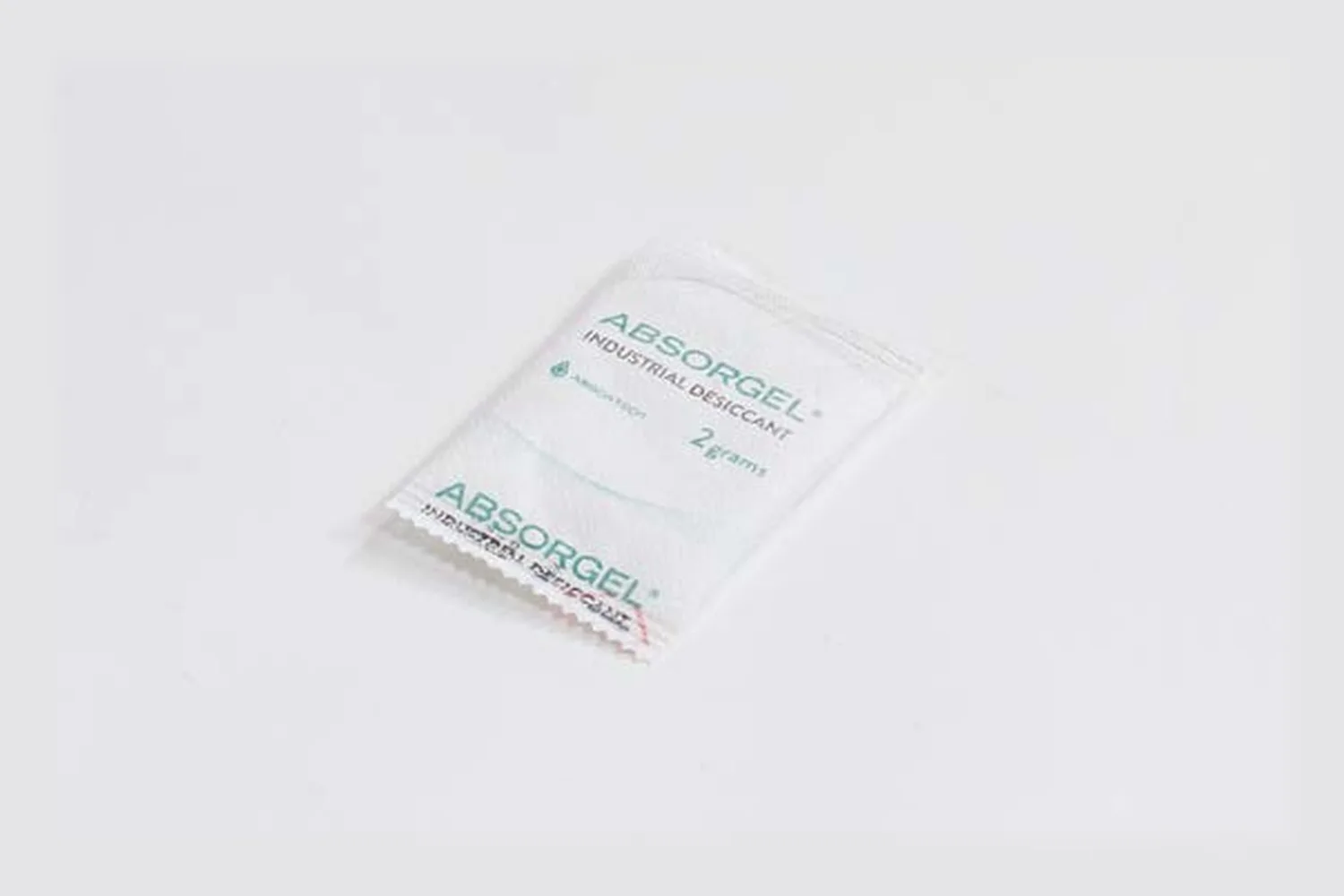
Mooncakes fall into two groups: dry fillings (lotus seed, low-water sweet mung bean) and wet, oily fillings (mixed filling, salted egg yolk). For an average box of cakes, sellers usually use 1 to 2 desiccant packets, and 2 to 3 for a large box or one with a lot of filling, placed in the box with the product.
Oily cakes and salted egg yolk filling spoil and mold through oxygen and not only moisture, so an oxygen absorber combined with sealed packaging is often used; commercial guidance says heavily filled cakes last about 30 to 60 days with an oxygen absorber and sealed packaging.
A desiccant packet works best when each cake has already been sealed in a bag before it goes into the box.
How to place the packet and common mistakes
Choose packaging with low water vapor permeability such as foil bags, coated PET or plastic boxes with a tight seal, because permeable packaging fills the packet quickly.
Calculate the dose from the volume of the cavity and the aw target (see how to use desiccant packets), and place the packet above or beside the product, not pressed on the cake and not inside a bag of powder.
A silica gel packet left in humid air absorbs moisture before use, so take it out of its sealed bag only right at packing time. Replace packets by their expiry date, or when an indicator packet changes color.
Common mistakes are using cobalt beads for food, using a desiccant for oily cakes without an oxygen absorber so they still go rancid, leaving the packet in the air for a long time before packing, choosing permeable packaging, overdosing so food that needs to stay soft dries out, and having no certification documents, which makes it hard to export or handle a complaint.
If you need goods to travel a long way for export, read oxygen absorber vs desiccant packet, the humidity thresholds in safe humidity for storing goods and the ICD desiccants range. ICD industrial desiccant packets (CaCl2, clay) are for cartons and are not to be put into food.
Frequently asked questions
At what water activity does mold stop growing?
About 0.70 is the practical limit; below 0.60 no microorganisms grow. Baked goods should be held at aw 0.65 or below to avoid mold.
What is a food desiccant packet?
A food-grade silica gel or activated clay packet wrapped in paper or non-woven fabric, placed inside sealed packaging to keep food dry, with indirect contact.
Which desiccant packet should I use for dry food?
Cobalt-free food-grade silica gel is the most common; clay suits powders and grains in cool stores; molecular sieve for high-value export goods.
Can a desiccant packet be used directly in food?
Only indirectly: the packet sits in the packaging but is not mixed into the food. Do not pour beads onto food.
How many desiccant packets for mooncakes?
An average box 1 to 2 packets, a large or heavily filled box 2 to 3; oily cakes should be combined with an oxygen absorber.
Should mooncakes use a desiccant or an oxygen absorber?
Dry-filling cakes use a desiccant packet; salted egg yolk and oily mixed-filling cakes usually use an oxygen absorber with sealed packaging.
Can blue desiccant beads be used for food?
No. Blue beads that turn pink contain cobalt chloride and are not for food; choose orange or white cobalt-free beads.
Does Vietnam have a separate standard for food desiccant packets?
Not yet. Ask the supplier for a food-contact declaration and for wrapping material that meets food-packaging standards (QCVN 12 for related packaging).
Contact ICD Vietnam for desiccant advice
ICD Vietnam Industrial Production Co., Ltd.
North: 3rd Floor, Thang Long A1 Building, Bau Hamlet, Thien Loc Commune, Hanoi, 0983 797 186 / 090 345 9186 / 090 5859 186
South: 551/212 Le Van Khuong, Tan Thoi Hiep, District 12, Ho Chi Minh City, 098 6784 186
Email: sales@icdvietnam.com.vn
Zalo: Chat on Zalo
References
- Aqualab, Water activity guide for food manufacturers
- Neutec, The shelf life of bakery products simplified with water activity
- Desiccant Pak, Why FDA approval matters for food grade silica gel