
Table of Contents
- Summary of key points
- Raw material quality decides how often it can be reused
- Product design and thickness
- Environment and how it is used
- Recycling PP plastic: different from reuse
- Figures often seen and why to be cautious
- A closing note from ICD Vietnam
- Frequently asked questions
- Contact ICD Vietnam for crate and plastic pallet advice
- References
Reviewed and updated by ICD - Week 43/2026
There is no fixed number of times PP plastic can be used: a PP product lasts or fails early depending on the resin, wall thickness, temperature, UV and the real load. For crates and pallets, lifespan is a matter of service conditions, not one “how many times” figure for every kind. This guide explains which factors decide it, which figures have sources, and why round numbers such as “can be used 10 times” should not be trusted. PP plastic is a thermoplastic with better heat resistance than PE, but how durable it is still has to be judged for each application.
Summary of key points
- PP does not fail after a fixed number of uses; it degrades gradually from heat, UV, impact and load.
- Virgin resin, sufficient thickness and good rib design give a longer life than thin recycled-blend resin.
- Recycling PP is different from reusing it: the number 5 code does not tell you whether your area collects it.
- PP items used with food need the right grade and the right regulations; see the separate guide on safety.
Raw material quality decides how often it can be reused
Virgin PP resin has a stable composition and comes with a data sheet (melt flow, impact strength, stiffness). Recycled resin mixes many batches, so its properties vary, especially toughness. According to Poly Processing, every kind of polyolefin can be damaged by prolonged exposure to light, which is why UV additives are decisive when a product is placed outdoors.
Product design and thickness
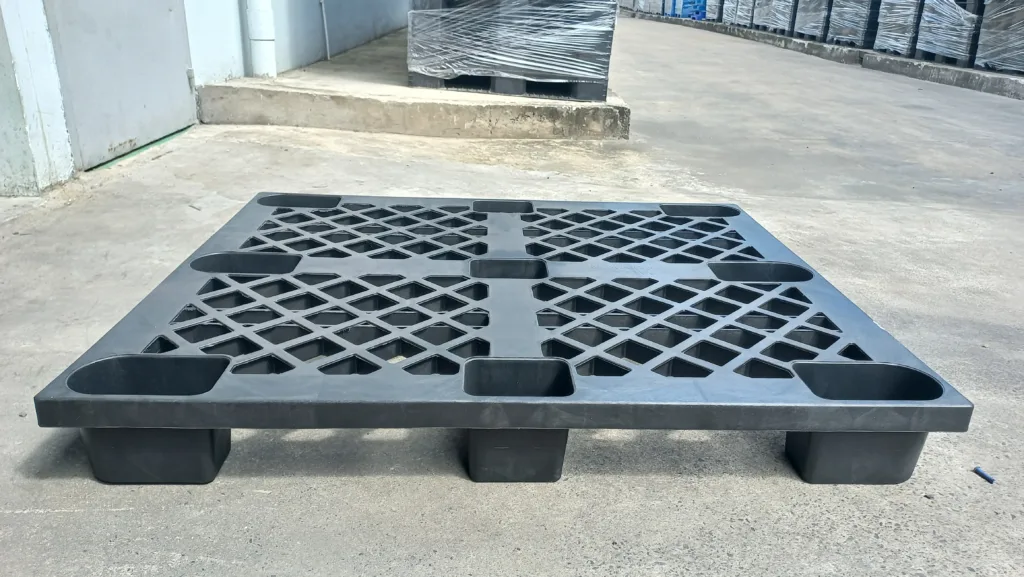
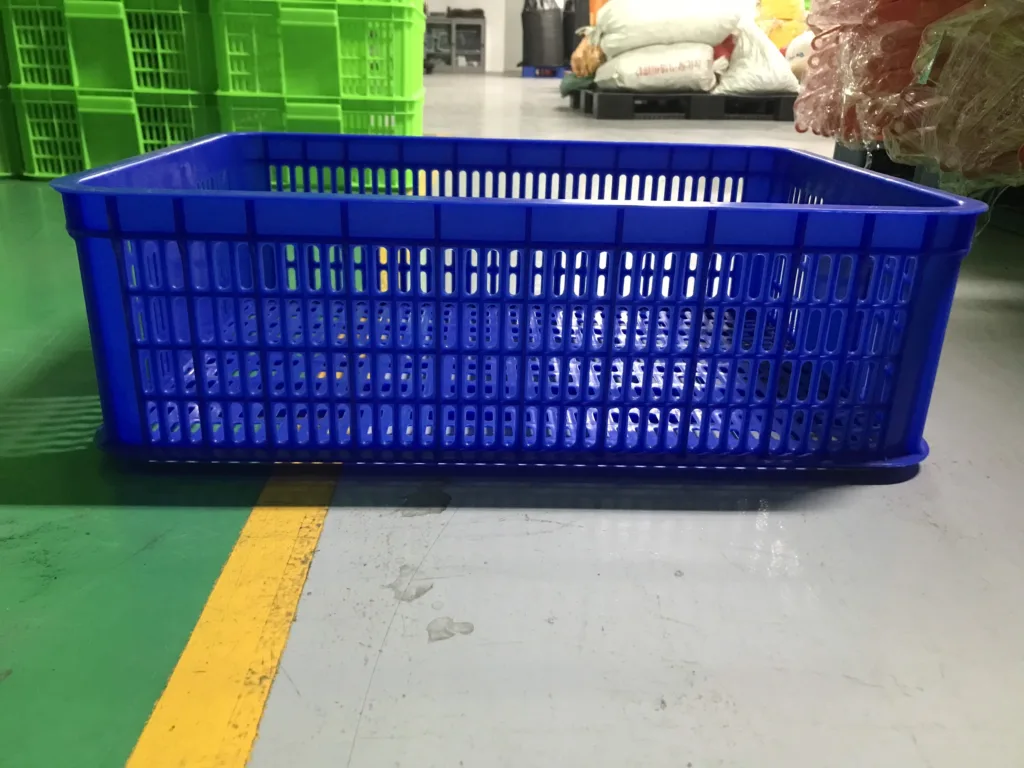
With the same resin, a crate with reinforcing ribs and thick walls withstands impact better than a thin-walled one. PP homopolymer turns brittle around 0 °C, while copolymer grades handle impact better (Simona), so crates used in cold storage or refrigerated trucks should be a copolymer grade.
Environment and how it is used
- Heat: the heat deflection temperature is about 95-102 °C at 0.45 MPa and 57 °C at 1.8 MPa (Basell datasheet), so a heavily loaded PP item softens much earlier than the melting point suggests.
- UV: left in the sun for long, PP ages unless it has UV additives.
- Chemicals: PP is inert to most acids, bases and alcohols; INEOS notes that PP is not affected by environmental stress cracking.
- Load and impact: overloading, dropping or dragging across rough floors causes early wear and cracking.
Recycling PP plastic: different from reuse
Reuse means using the same product again; recycling means grinding and melting it into new pellets. The number 5 belongs to the SPI code system created in 1988 and now managed by ASTM International (ASTM D7611), and it only identifies the plastic type; it does not signal that the item can be recycled. The EPA reported that in 2018 PET bottles were recycled at 29.1%, natural HDPE bottles at 29.3% and all plastic packaging at only 13.6%; PP has no figure of its own. For more, see whether PP plastic can be recycled.
For recycled plastic used with food, the European Union requires the recycling process to be assessed by EFSA and authorized under Regulation 2022/1616. Ordinary recycled PP boxes should therefore not be used to hold food.
Figures often seen and why to be cautious
Many pages state a PP lifespan of “15 years” or that it can be recycled “10 times”. No standard or datasheet was found confirming these figures for PP in general, so this guide does not use them. To know how long a specific crate or pallet will last, you need load test data and the real conditions for that product.
A closing note from ICD Vietnam
Choose the product by need: heavy load, cold storage, outdoor or food use each call for a different resin and design. ICD Vietnam’s PP plastic pallets come in many sizes and load ratings; tell us your load, temperature and environment to get advice on the right line.
Frequently asked questions
How many times can PP plastic be used?
There is no fixed number. Durability depends on the resin, thickness, temperature, UV and load; look at the specifications and conditions of each product.
How many times can PP plastic be recycled?
No standard source gives a general number. Recyclability also depends on local collection, and the number 5 code does not tell you whether an item can be recycled.
What decides the lifespan of a PP plastic product?
Resin quality (virgin or recycled), UV additives, thickness and reinforcing ribs, working temperature, load and how it is used.
Contact ICD Vietnam for crate and plastic pallet advice
ICD Vietnam Industrial Manufacturing Co., Ltd.
North: 3rd Floor, Thang Long A1 Building, Bau Hamlet, Thien Loc Commune, Hanoi, 0983 797 186 / 090 345 9186 / 090 5859 186
South: 551/212 Le Van Khuong Street, Tan Thoi Hiep Ward, District 12, Ho Chi Minh City, 098 6784 186
Email: sales@icdvietnam.com.vn
Zalo: Chat on Zalo now
References
- Poly Processing, Polyolefins technical data (PP brittle at 0 °C, UV, steam sterilization) - tanks.polyprocessing.com
- Simona, technical Handbook (PP homopolymer brittle when cold, copolymer impact resistance) - simona.de
- Basell, Moplen HP500N datasheet (HDT, Vicat, density) - pimd.vn
- INEOS, Environmental Stress Crack Resistance of Polyethylene - ineos.com
- Wikipedia, Resin identification code (SPI 1988, ASTM D7611, resin codes do not indicate recyclability) - en.wikipedia.org
- US EPA, Containers and Packaging: Product-Specific Data (2018 recycling rates) - epa.gov
- Commission Regulation (EU) 2022/1616 on recycled plastic food contact materials (OJ L 243, 20.9.2022, EUR-Lex)