Table of Contents
- What is PP (Polypropylene) plastic?
- Key properties of PP plastic
- Advantages of PP plastic
- Disadvantages of PP plastic
- Is PP plastic safe?
- Applications of PP plastic
- PP compared with other common plastics
- How polypropylene is manufactured
- How to clean polypropylene surfaces
- Related articles
- Frequently Asked Questions
- Contact ICD Vietnam
Reviewed and updated by ICD - Week 39/2026
PP (polypropylene) is a thermoplastic polymer produced from propylene monomers, widely used in packaging, industrial components, and consumer goods. It offers a melting point of 130-170 C, chemical resistance to acids and solvents, and a food-safe profile - no BPA or phthalates. Identified by recycling code 5, it is one of the most versatile and cost-effective plastics in commercial use today.
What is PP (Polypropylene) plastic?
Polypropylene was developed in the 1950s and rapidly became one of the most widely produced plastics in the world. It is manufactured by polymerizing propylene monomers, resulting in a polymer with a distinctive molecular structure that delivers strong mechanical properties at a relatively low cost.
As a thermoplastic, PP softens when heated and can be remolded without losing its mechanical properties. In its natural state it is milky white or translucent and can be easily pigmented to produce a wide range of colored products.
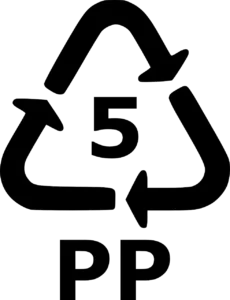
PP carries recycling code 5 - the triangle-with-5 symbol - making it straightforward for consumers and facilities to identify and sort for recycling.
The material is found across a broad range of sectors: food packaging, household containers, water bottles, baby bottles, plastic pallets, automotive parts, and medical devices all rely on PP to some degree.
Key properties of PP plastic
Heat resistance
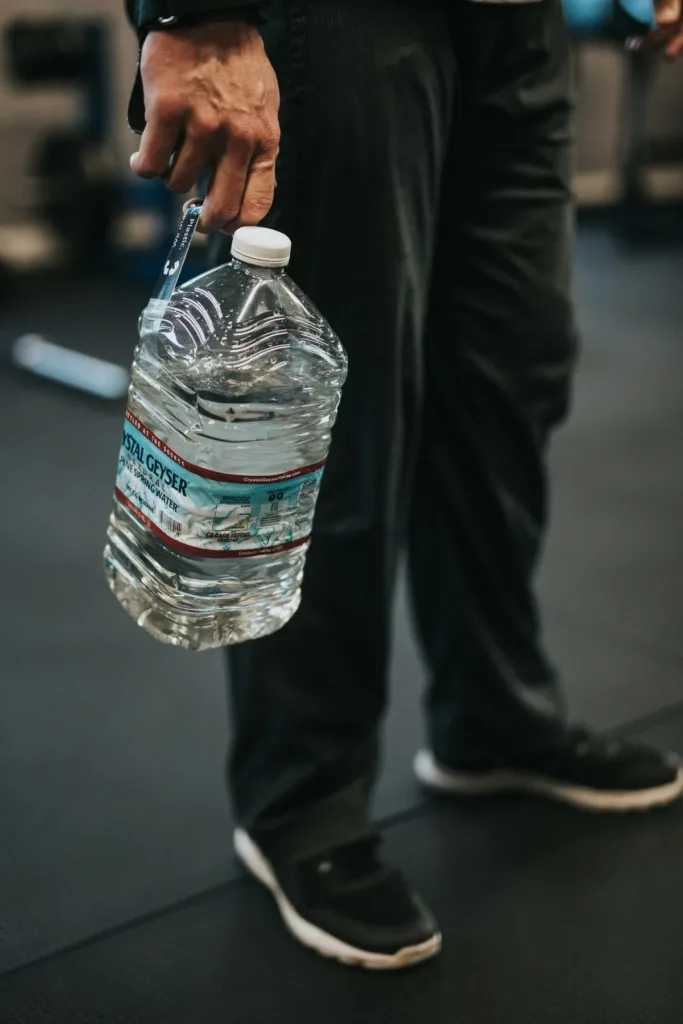
PP has a melting point of 130-170 C, the highest among common commodity plastics. This makes it suitable for applications requiring intermittent exposure to heat, such as microwave-safe food containers. Manufacturers recommend avoiding prolonged continuous exposure to high temperatures to maintain product integrity.
Chemical and moisture resistance
PP is resistant to moisture, gases, and oils, protecting the contents of a package from environmental degradation. It also withstands exposure to acids, alkalis, and many organic solvents, making it a preferred material in chemical processing and storage applications.
Mechanical strength
PP withstands impact, tensile stress, and compressive loads effectively. This durability makes it well suited for industrial packaging, plastic pallets, and food-grade containers that must survive repeated handling cycles.
Smooth surface finish
The naturally glossy surface of PP is easy to clean, resists soiling, and accepts printing well - an advantage for branded consumer packaging.
Low weight
PP is lighter than HDPE and ABS, reducing the overall weight of finished products while maintaining structural integrity. This is particularly valuable in logistics and transport applications where payload efficiency matters.
Advantages of PP plastic
- Food-safe with no BPA or phthalates: PP is approved for direct food contact, used in food containers, water bottles, and baby bottles.
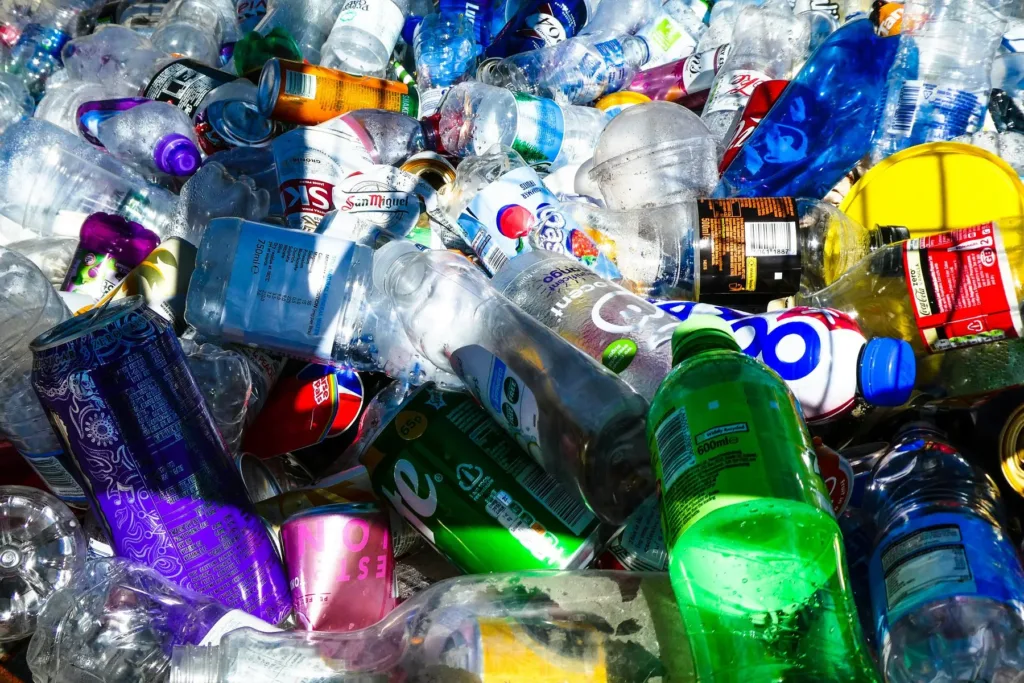
- Recyclable: PP can be recycled and repurposed into a range of products, from packaging components to automotive parts. It produces less solid waste by weight and fewer CO2-equivalent emissions per kilogram than PET or PVC.
- High durability: Resistance to deformation, impact, and fatigue makes PP a reliable choice for demanding applications.
- Cost-effective: Lower raw material and processing costs compared to engineering plastics make PP attractive for high-volume production.
Disadvantages of PP plastic
- Non-biodegradable: PP requires 20-30 years to break down in a natural environment, contributing to long-term waste accumulation if not collected and recycled.
- UV sensitivity: Prolonged exposure to sunlight and UV radiation causes PP to become brittle and lose color. Stabilizer additives are required for outdoor applications.
- Low temperature brittleness: Below -20 C, PP becomes noticeably more brittle and prone to cracking, limiting its use in extreme cold-chain environments without modification.
Is PP plastic safe?
PP is considered one of the safest plastics for consumer and food contact use. It contains no BPA, phthalates, or other known endocrine-disrupting compounds.
For microwave use, manufacturers recommend keeping heating cycles short - generally no more than 2-3 minutes per session - to avoid any degradation of the material over time. Virgin PP is safer than recycled PP because the base polymer has not been exposed to prior contamination cycles.
Applications of PP plastic
- Food packaging: PP film and rigid containers offer gas and moisture barriers with a high-gloss surface that accepts printing cleanly.
- Consumer goods: Food storage containers, water bottles, baby bottles, and children’s toys all rely on PP for safety and durability.
- Industrial use: Woven bags, fibers, plastic pallets, plastic bins, and automotive components use PP for its combination of strength and low weight.
- Apparel and textiles: PP fiber wicks moisture away from skin, making it effective in base layers for cold-weather sports and breathable summer activewear.
See also: Large plastic containers with lids
PP compared with other common plastics
| Property | PP | HDPE | PET | ABS |
|---|---|---|---|---|
| Heat resistance | Good (130-170 C) | Moderate (110-130 C) | Low (~80 C) | High (220-250 C) |
| Weight | Light | Heavier than PP | Moderate | Heaviest in this group |
| Recyclability | Good | Good | Good | Difficult to recycle |
| Mechanical strength | Good | Very good | Moderate | Very good |
| Surface finish | Glossy, easy to print | Matte/opaque | Transparent | High gloss, paintable |
How polypropylene is manufactured
Polypropylene is produced using slurry, solution, or gas-phase processes. The steps are as follows:
Propylene monomer is first derived from petroleum or natural gas through refining. The monomer is then subjected to heat and pressure in the presence of a catalyst system. Inside the reactor, propylene monomer and catalyst initiate polymerization, forming long molecular chains that eventually become a solid polymer.
The process operates at relatively low temperatures and pressures. The resulting polymer is naturally translucent but can be easily colored. Variations in catalyst type and production conditions allow manufacturers to tune the final properties of the resin.
The crude polymer is typically purified by washing with water to remove residual catalyst and other impurities before pelletizing for downstream processing.
How to clean polypropylene surfaces
PP surfaces are easy to maintain. For light soiling, a damp cloth or soft sponge is sufficient. For heavier contamination, use water with a mild liquid detergent. Avoid abrasive or solvent-based cleaners as they can damage the surface. Key points:
- Use a soft cloth, wet wipe, or synthetic sponge - never steel wool or abrasive pads
- Use mild liquid soap only
- Use a soft brush for crevices and joints
- Treat ink or marker stains before they dry for easier removal
- For surfaces contaminated with paint, adhesive, or spray paint, consult a specialist rather than attempting aggressive cleaning
Related articles
Frequently Asked Questions
1. What does PP plastic stand for?
PP stands for polypropylene, a thermoplastic polymer made by polymerizing propylene monomer. It is identified by recycling code 5.
2. Is PP plastic safe for food contact?
Yes. PP contains no BPA or phthalates and is approved for food contact by regulatory bodies in most markets. It is used for food containers, baby bottles, and drinking cups. For microwave use, limit heating cycles to 2-3 minutes at a time.
3. What temperature can PP plastic withstand?
PP has a melting point of 130-170 C, the highest among common commodity plastics. Below -20 C it can become brittle, so it is not recommended for extreme cold-chain applications without modification.
4. What is the difference between PP and HDPE?
PP is lighter, has a higher melting point, and a glossier surface. HDPE offers greater mechanical strength and is better suited for very heavy-duty applications. Both are recyclable and food-safe.
5. What products are made from PP plastic?
PP is used to make food containers, water bottles, baby bottles, woven bags, plastic pallets, plastic bins, automotive parts, and textile fibers for sportswear and cold-weather base layers.
6. Can PP plastic be recycled?
Yes. PP carries recycling code 5 and can be recycled into a range of secondary products. It produces less solid waste by weight and fewer CO2-equivalent emissions per kilogram than PET or PVC.
7. How long does PP take to decompose?
In a natural environment without recycling, PP takes approximately 20-30 years to break down. Proper collection and recycling significantly reduces its environmental footprint.
Contact ICD Vietnam
Hotline: 0983 797 186 / 090 345 9186 / 090 5859 186
Email: sales@icdvietnam.com.vn | Zalo: Chat Zalo
Reference
Material properties and safety of Polypropylene plastic - British Plastics Federation (BPF).