
Table of Contents
Reviewed and updated by ICD - Week 43/2026
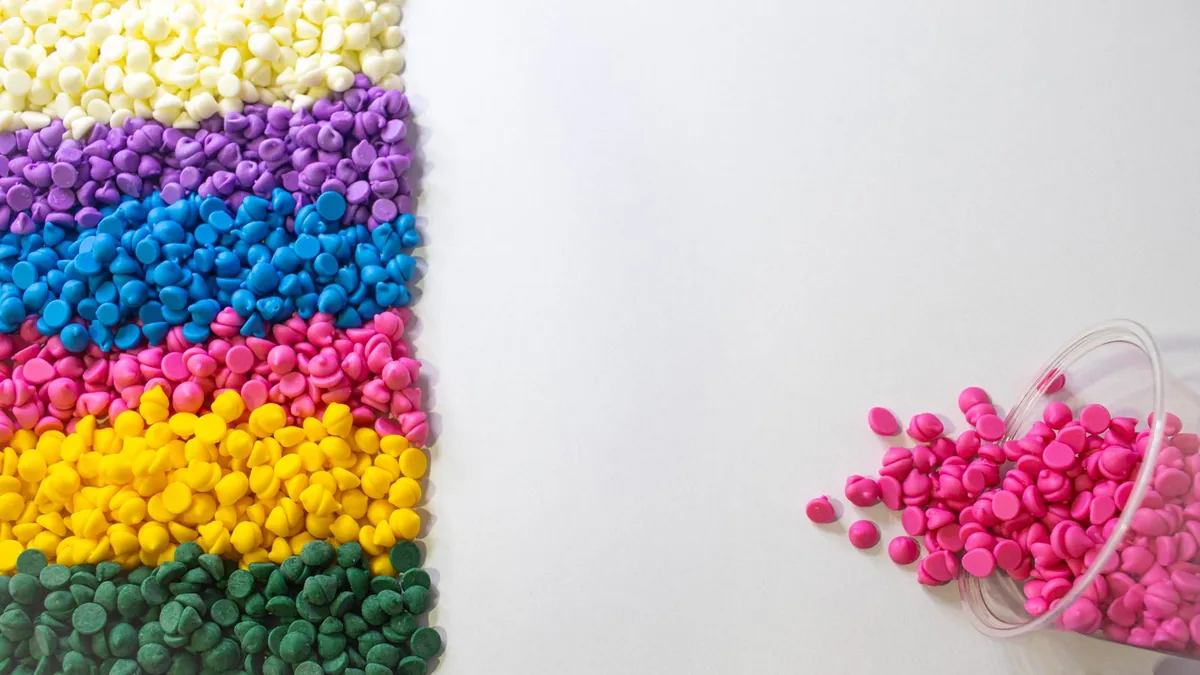
Recycled HDPE pellets are the pellets obtained from used HDPE after sorting, washing, grinding, melt filtration and pelletising; they are cheaper than virgin pellets and good enough for many industrial products, but their properties vary from batch to batch and they are not assumed to be usable for food. The full recycling process is in the article on recycled HDPE plastic; this article focuses on the finished pellets: their properties, colours, how to assess the quality of a batch, and the limits for food safety.
Recycled pellets are also called recycled HDPE (rHDPE) pellets. Makers of pallets, waste bins, drainage pipes and floor mats use them to cut cost and make use of scrap. What matters to the buyer is knowing where the pellets come from, what treatment they have been through and what test data exist, rather than looking only at colour and price.
What are recycled HDPE pellets?
The raw material of recycled pellets is used HDPE products: bottles, jerrycans, crates, pipes and old plastic pallets (see plastic pallets). Instead of becoming waste, they are sorted, washed clean, ground, melted and made into new pellets. A full industrial process includes hot washing, sink-float separation, melt filtration and, where needed, vacuum decontamination (Veolia Plastics). For an overview of HDPE, see what HDPE plastic is.
Properties of recycled HDPE pellets
HDPE is a thermoplastic, so in principle it can be melted again, but every processing step changes its properties. Mnif and Elleuch (2015) recorded that mechanical properties fall after each reprocessing cycle, most strongly after the first, while Zhang (2024) found melt viscosity rising up to 6 times from cycle 4 to 8 because of branching. Statements such as “recycled resin carries load as well as virgin” or “resists chemicals exactly like virgin” therefore have no general basis; the specific result is decided by the batch of pellets.
The real advantages of recycled pellets are a lower price than virgin and environmental benefit. The APR life cycle inventory report (2018) shows that recycled HDPE pellets need 12% of the energy of virgin plastic by the cut-off method and 56% by the open-loop method. The drawbacks are lower consistency, and possible odour, impurities and colour that is unstable from batch to batch. Virgin pellets are compared in the article on virgin HDPE plastic.
Colours of recycled HDPE pellets
The colour of recycled pellets is decided by two things: the colour of the incoming scrap and the masterbatch added. When multi-coloured scrap is mixed, the pigments blend into a dark colour, and mechanical recycling cannot lighten it again; white, milky white or a specific colour is only available with strict colour sorting or re-dyeing. Black and grey pellets usually come from mixed sources, while white and milky white need cleaner sources and so are asked for more often.
What to avoid is treating colour as proof of quality. Black pellets can be clean recycled material, white pellets can be poor recycled material, and virgin pellets can also be dyed black. To know the quality you have to rely on the test data of the batch.
Uses of recycled HDPE pellets
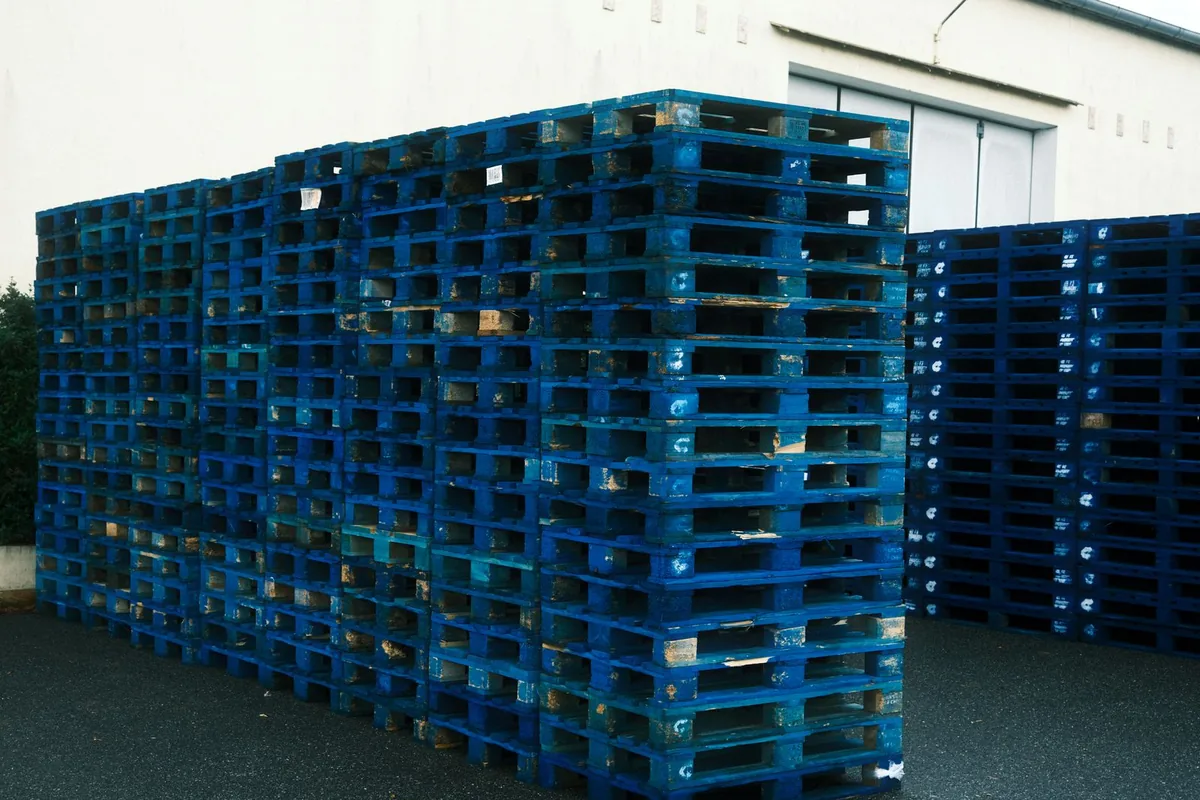
Suitable uses are products that do not touch food and do not need perfectly uniform properties: plastic pallets for goods without hygiene requirements, waste bins, industrial containers, drainage pipes, floor mats, barriers and partitions. Packaging, plastic bags, wrap film, water pipes and chemical pipes have their own technical requirements (pressure pipe needs a certified material, food packaging needs an approved recycling process), so they should not be regarded as default uses of recycled pellets.
Limits for food use
Vietnam’s QCVN 12-1:2011/BYT sets migration limits for plastic packaging in contact with food and requires a declaration of conformity; it has no separate provision for recycled plastic. In Europe, Regulation (EU) 2022/1616 allows recycled plastic to contact food only when the recycling process is on the approved list. In the US, the FDA reviews each case and is concerned with negligible exposure, about 0.5 ppb. In 2015, EFSA assessed the HDPE recycling processes for milk and juice bottles submitted at that time and concluded that they did not meet the safety criteria.
Scientific studies explain the caution: Horodytska (2020) found 134 substances in recycled LDPE and HDPE, and Vera (2024) recorded 69 migrating substances from recycled HDPE used in toys and residues of cleaning products. Recycled pellets are therefore not used for food packaging, pharmaceuticals or children’s toys unless documents show the process is approved by the regulator.
Quality of recycled pellets and how to assess it
The quality of a batch depends on the raw material source, the recycling process and consistency. When buying, ask for the scrap source (bottles, industrial crates or a mix), whether there is hot washing and filtration, and ask for the test results of each batch.
- Melt flow index MFI under ISO 1133 (190 °C, 2.16 kg) and density, checked against the grade’s characteristics.
- Moisture, ash or filler content, and whether another polymer (PP, PVC) is mixed in.
- Scrap source, washing and filtration process, and batch traceability.
- For cargo that will touch food: documents showing the recycling process is approved, and a declaration of conformity.
The price of recycled pellets depends on colour, cleanliness and the market, and is lower than virgin pellets of the same type. Prices with a source and date are tracked separately.
Conclusion: recycled HDPE pellets are reasonable for industrial products when the batch has clear data, and are not an option for food contact unless the process is approved. ICD Vietnam advises on choosing virgin or recycled plastic pallets to suit warehouse requirements; contact us below.
Frequently asked questions
What are recycled HDPE pellets?
Pellets obtained from used HDPE after sorting, washing, grinding, melt filtration and pelletising; also called recycled HDPE (rHDPE).
Are recycled HDPE pellets the same quality as virgin?
Usually less consistent: mechanical properties change after each reprocessing and with the scrap source, so test data for each batch are needed.
Can recycled HDPE pellets be used for food?
Only when the recycling process is approved by the regulator (EU 2022/1616, FDA case by case) and the product has a declaration of conformity under QCVN 12-1:2011/BYT.
What does the colour of recycled pellets tell you?
Mainly the scrap source and the masterbatch. Black is often due to mixing many colours, but colour does not prove quality.
Why use recycled HDPE plastic?
A lower price than virgin and a smaller environmental impact: according to the APR, recycled HDPE pellets need 12% or 56% of the energy of virgin plastic depending on the calculation method.
Contact us for ICD Vietnam plastic pallets
ICD Vietnam Industrial Manufacturing Co., Ltd.
North: 3rd Floor, Thang Long A1 Building, Bau Hamlet, Thien Loc Commune, Hanoi, 0983 797 186 / 090 345 9186 / 090 5859 186
South: 551/212 Le Van Khuong Street, Tan Thoi Hiep Ward, District 12, Ho Chi Minh City, 098 6784 186
Email: sales@icdvietnam.com.vn
Zalo: Chat on Zalo now
References
- Veolia Plastics, Technical dossier for the rHDPE recycling process (hot washing, sink-float separation, vacuum decontamination) - dagenhamplastics.veolia.co.uk
- Association of Plastic Recyclers, Life Cycle Impacts for Postconsumer Recycled Resins: PET, HDPE and PP (2018; recycled HDPE needs 12% of the energy of virgin plastic by cut-off, 56% by open-loop) - plasticsrecycling.org
- US EPA, Plastics: Material-Specific Data (recycling rate of natural HDPE bottles 29.3% in 2018) - epa.gov
- EFSA CEF Panel, Scientific opinion on the safety assessment of recycling processes for HDPE (2015) - efsa.onlinelibrary.wiley.com
- EUR-Lex, Regulation (EU) 2022/1616 on recycled plastic materials intended to come into contact with food - eur-lex.europa.eu
- FDA, Guidance: Use of Recycled Plastics in Food Packaging (Chemistry Considerations), 2021 - fda.gov
- Ministry of Health, QCVN 12-1:2011/BYT on safety and hygiene of synthetic plastic packaging and utensils in direct contact with food - nafiqad5.gov.vn
- Mnif R., Elleuch R., Effects of reprocessing cycles and ageing on HDPE blends, Matériaux & Techniques (2015) - doi.org
- Horodytska O. et al., Non-intentionally added substances (NIAS) in recycled plastics, PubMed (2020) - pubmed.ncbi.nlm.nih.gov
- Wikipedia, High-density polyethylene (density 0.93-0.97 g/cm3, uses, recycling code 2) - en.wikipedia.org