
Table of Contents
- What is a large lidded plastic container?
- 4 large lidded plastic container models from ICD Vietnam
- Which container holds the most per square meter of floor?
- Choose capacity by the weight of the goods, not only by volume
- PP and HDPE: how to choose for a large lidded container
- What paperwork do large lidded plastic containers for food need?
- What do I need to tell you when ordering large lidded containers to spec?
- Frequently asked questions about large lidded plastic containers
- What sizes do large lidded plastic containers come in?
- What are the dimensions of a 220 liter plastic container?
- How heavy is a 220 liter plastic container when full of goods?
- Should I choose a square or round large lidded container?
- What plastic are large lidded containers made of?
- Can large lidded plastic containers have wheels fitted?
- How long is the warranty on lidded plastic containers?
- Contact ICD Vietnam to order large lidded plastic containers
- References
Reviewed and updated by ICD - Week 43/2026
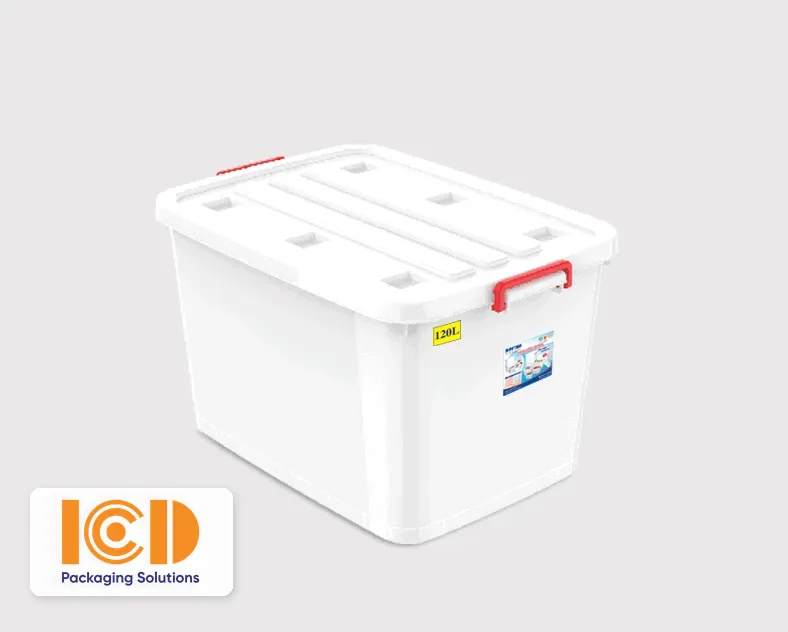
A large lidded plastic container is a container of 90 to 220 liters with a loose lid, used to store raw materials, spare parts and dry farm produce and to move supplies between workshops. ICD Vietnam has 4 sizes: 90 liters (No.747, 70 x 49 x 41 cm), 120 liters (No.213, 74.5 x 53 x 45 cm), 140 liters (No.214, 78.5 x 56 x 47 cm) and 220 liters (No.853, 102 x 60.5 x 46 cm). Which size suits your warehouse depends on whether the goods are heavy or light and whether the container has to be lifted by hand.
I am Le Van Thang, and I have worked at ICD Vietnam since 2011. Customers asking to buy large industrial plastic containers usually ask only about capacity, while what decides whether a container is durable and convenient is the weight of the goods when full, the place where it sits, and how the lid is opened and closed every day. This article goes through the 4 large lidded container models on sale, how to work out floor area, the limit for lifting by hand, the material, and the paperwork needed when holding food.
What is a large lidded plastic container?
These are lidded plastic containers of about 90 liters and up, with a thick body, a flat base and a loose lid that covers the whole mouth. The lid blocks dust, insects and drips from a warehouse roof, and also gives a flat surface for stacking another container on top when space is tight.
Unlike crates or stacking bins made for small parts, large lidded containers are mainly for long storage, opened to take goods out in batches. The three uses below make up most of the orders we receive for this range.
4 large lidded plastic container models from ICD Vietnam
ICD Vietnam currently sells 4 large lidded container models, from 90 to 220 liters, all square in shape with a loose lid. The table below lists the overall size and the packing; the 220 liter and 140 liter product pages give both figures, while the 90 liter and 120 liter models do not yet list measurements on the product page, so the figures in the table are the sizes we use when advising, and you should ask again when you need to fit them tightly onto a shelf. The sizes of ICD Vietnam’s other plastic crate lines are in the plastic crate dimension lookup table.
| Capacity | Product code | Overall size L x W x H | Packing | Best suited to |
|---|---|---|---|---|
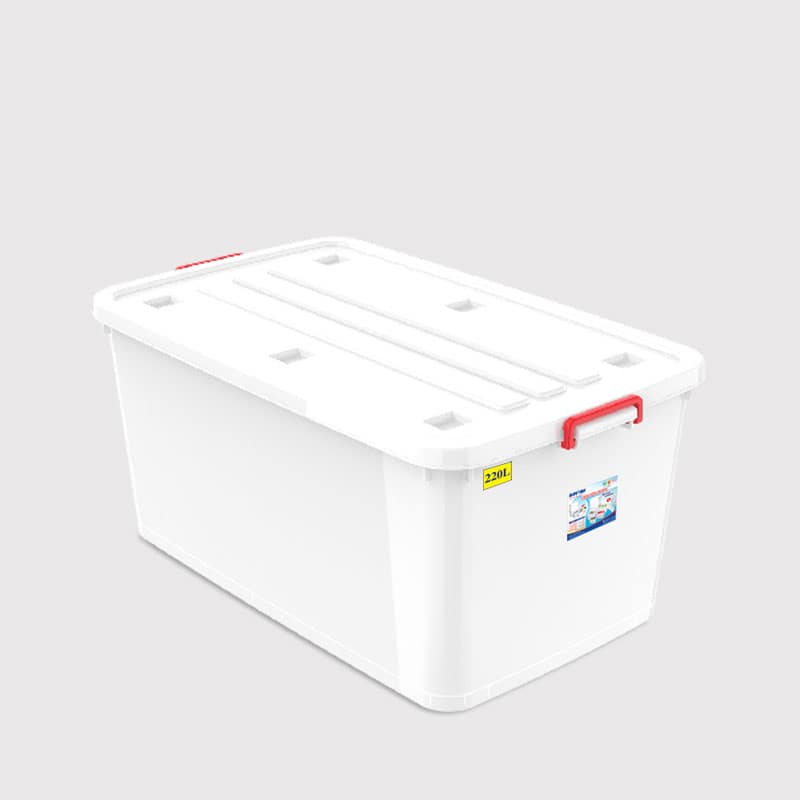
| 220 liters | ICD-No.853 | 102 x 60.5 x 46 cm | 5 pieces per carton | Light, bulky materials; container kept in a fixed place |
| 140 liters | ICD-No.214 | 78.5 x 56 x 47 cm | 5 pieces per carton | Spare parts and mid-size supplies, periodic stock rotation |
| 120 liters | ICD-No.213 | 74.5 x 53 x 45 cm | Ask when ordering | Dry goods, production supplies that need to be moved |
| 90 liters | ICD-No.747 | 70 x 49 x 41 cm | Ask when ordering | Heavier goods, warehouses that need stacking and hand lifting |
The 220 liter container is more than 1 m long, so it does not fit many medium-duty shelf bays, but it is ideal on the floor as a fixed storage container. The three sizes from 90 to 140 liters differ by a few centimeters in each direction; the simplest way to choose is to measure the shelf bay or the available floor space and take the largest size that fits.
Which container holds the most per square meter of floor?
The 220 liter container holds the most per square meter of floor, about 357 liters, against 262 liters for the 90 liter container. The reason is that the capacity printed on the container is only about 64 to 78% of its overall volume: walls, base, lid and stacking rims take up the rest, and this loss shrinks as the container gets larger.
| Container | Overall (cm) | Overall volume | Capacity ratio | Floor area | Liters held per 1 m² of floor |
|---|---|---|---|---|---|
| 90 liters (No.747) | 70 x 49 x 41 | 141 liters | 64% | 0.34 m² | 262 liters |
| 120 liters (No.213) | 74.5 x 53 x 45 | 178 liters | 68% | 0.39 m² | 304 liters |
| 140 liters (No.214) | 78.5 x 56 x 47 | 207 liters | 68% | 0.44 m² | 318 liters |
| 220 liters (No.853) | 102 x 60.5 x 46 | 284 liters | 78% | 0.62 m² | 357 liters |
The table above is ICD Vietnam’s own calculation from overall dimensions, rounded, and does not allow for gaps between containers or aisles. The figure tells only half the story: a larger container holds more per square meter, but it is also much heavier when full, and the next section is where many warehouses choose wrongly.
Choose capacity by the weight of the goods, not only by volume
If the container has to be lifted by hand, choose by the weight of the goods when full, not by capacity. Water weighs about 1 kg per liter, so a 220 liter container filled with liquid or wet goods weighs about 220 kg without the shell, and a 90 liter container about 90 kg.
Both figures are far beyond what one person can lift. The NIOSH lifting equation (from the US National Institute for Occupational Safety and Health) sets 23 kg as the maximum for lifting under ideal conditions: the load close to the body, at hip height, with no twisting. A large container 50 to 60 cm wide forces the person to reach out, so the real safe limit is lower still.
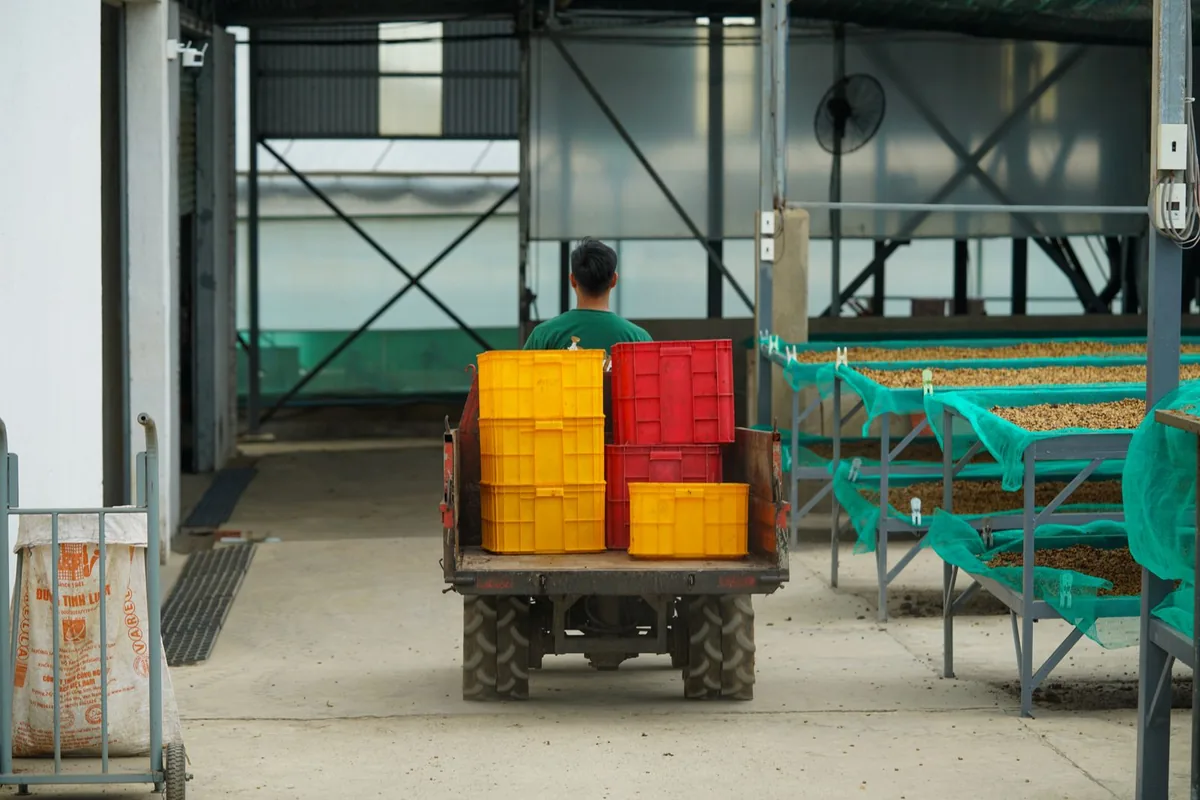
So the sensible approach is to split by type of goods. Light, bulky goods such as cotton fiber, empty packaging and plastic parts can go into the 220 liter container. Dense goods such as rice, grain, flour and metal parts should go into 90 to 120 liter containers, filled to a level two people can lift, or the container should be fixed in place and goods scooped in and out on the spot. When you need to push or pull, ask about fitting wheels and tell us the weight of the goods in advance so we can pick wheels with a suitable load rating.
PP and HDPE: how to choose for a large lidded container
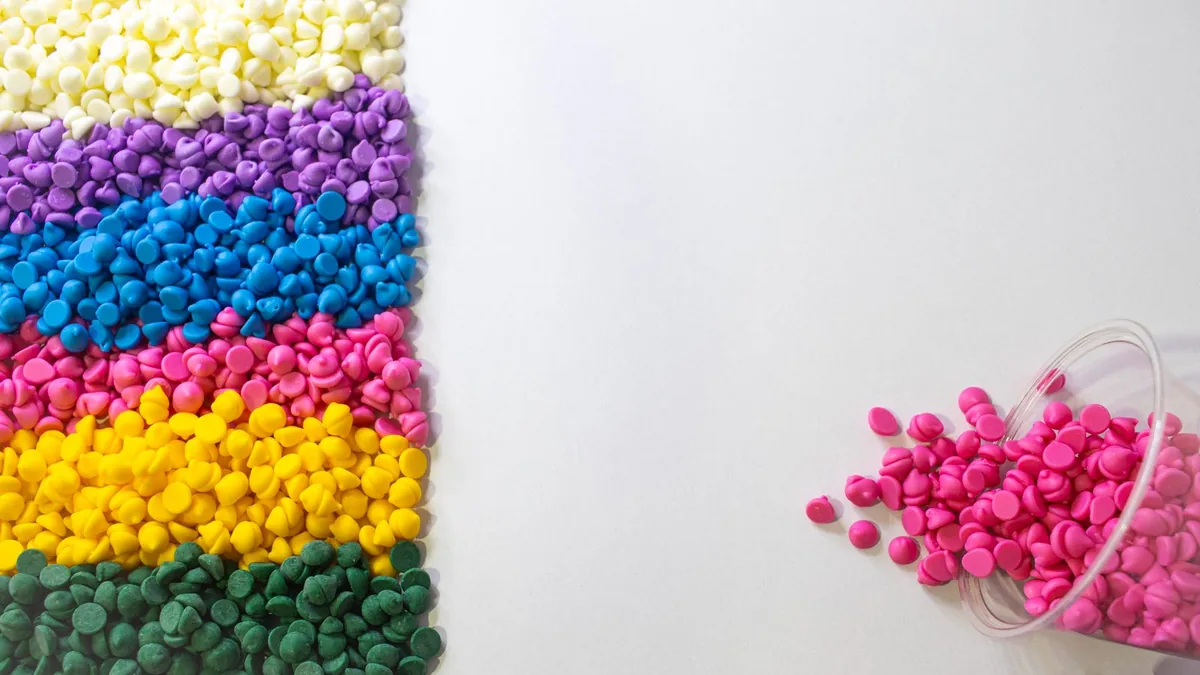
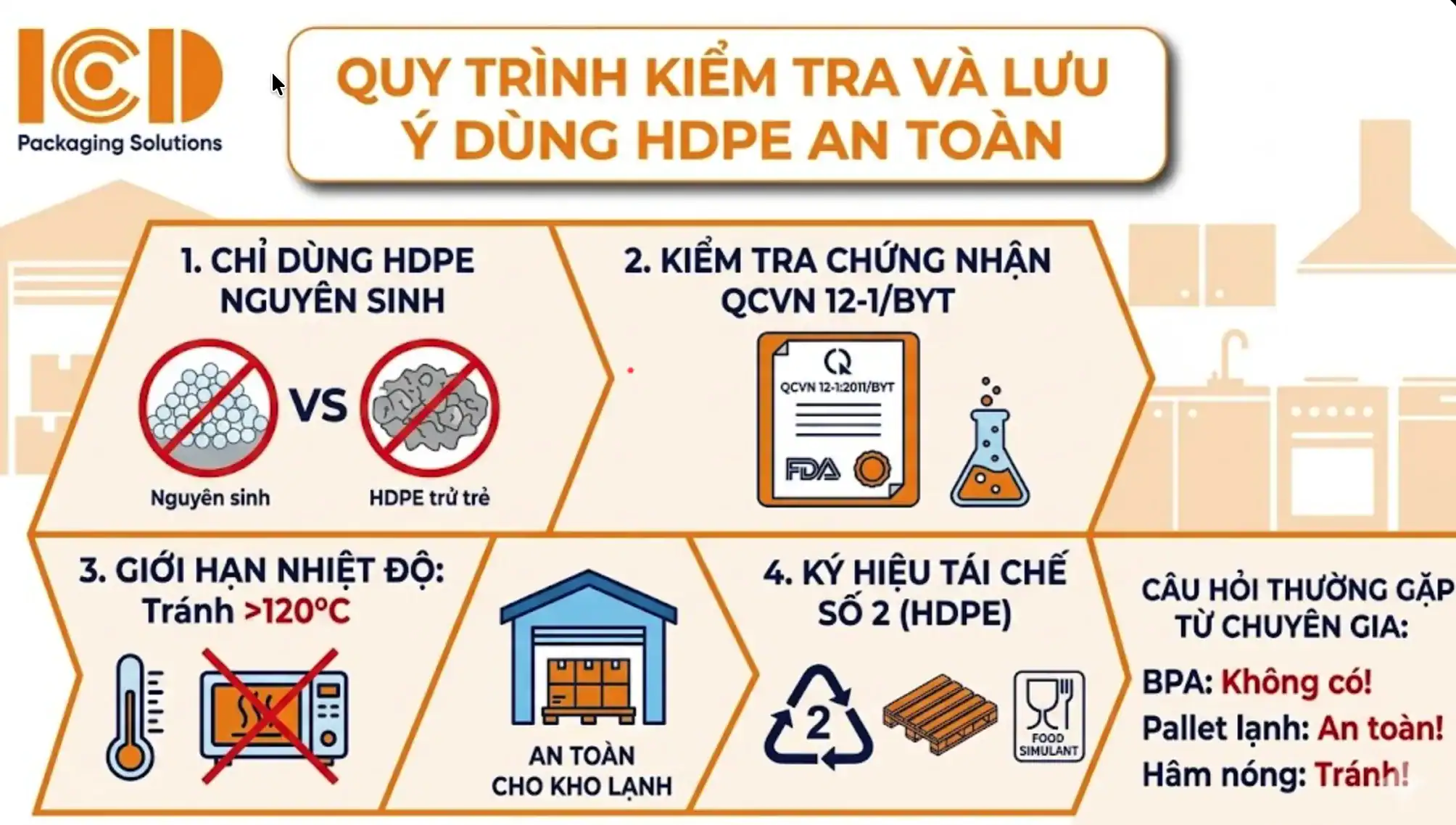
Large lidded containers are usually made of virgin PP or HDPE; for an ordinary warehouse both work well, and the difference only shows when a container has to withstand deep cold or direct sun. HDPE is tough and takes impact well at low temperature. PP is stiffer and the walls sag less when stacked, but ordinary PP (homopolymer) turns brittle below 0 °C; for a deep-freeze store, choose PP copolymer or HDPE.
Recycled plastic is cheaper, but its color is uneven, its mechanical properties change from batch to batch and it cannot be used for food. For a large container that must carry load for years, I always advise customers to ask whether it is made of virgin or recycled plastic before comparing prices.
What paperwork do large lidded plastic containers for food need?
A food container must be made of virgin plastic and carry a declaration of conformity under QCVN 12-1:2011/BYT, the Ministry of Health standard for plastic packaging and utensils in direct contact with food. When you buy, ask for the declaration of conformity and the test report for the exact plastic the container is made of, not just a verbal assurance.
A tight lid keeps out dust and insects, but dry food still needs a dry warehouse; a plastic container does not replace humidity control. A warehouse with rats, which can gnaw through thin plastic, should also set a DIY rat trap made from a plastic bucket. Before first use and between batches of goods, wash the container with clean water and let it dry fully before putting the lid on.
What do I need to tell you when ordering large lidded containers to spec?
For an accurate quote and advice, you need to give three groups of information: quantity, conditions of use and identification requirements. Custom colors or logo printing have to be ordered by batch, so the earlier you tell us the quantity, the easier it is to schedule.
I advise ordering 5 to 10 samples, loading them with real goods and stacking them in the warehouse for a few weeks before placing a large order. This quickly exposes what a data sheet does not fully say: whether the lid fits the way your staff open and close it, whether the stack stays steady, and whether the aisle has room for a 1 m container.
Frequently asked questions about large lidded plastic containers
What sizes do large lidded plastic containers come in?
ICD Vietnam has 4 sizes: 90 liters (No.747, 70 x 49 x 41 cm), 120 liters (No.213, 74.5 x 53 x 45 cm), 140 liters (No.214, 78.5 x 56 x 47 cm) and 220 liters (No.853, 102 x 60.5 x 46 cm). All 4 are square in shape, with a loose lid.
What are the dimensions of a 220 liter plastic container?
The ICD-No.853 220 liter lidded container has overall dimensions of 102 x 60.5 x 46 cm, packed 5 pieces to a carton. It takes up about 0.62 m² of floor and holds about 357 liters per square meter of floor.
How heavy is a 220 liter plastic container when full of goods?
If it is filled with water or wet goods, a 220 liter container weighs about 220 kg without the shell, far beyond what one person can lift by hand. For heavy goods, split them across 90 to 120 liter containers, fit wheels, or fix the container in place and load and unload on the spot.
Should I choose a square or round large lidded container?
Square and rectangular containers sit close together and stack, so they save warehouse space and suit spare parts, dry goods and packaged goods. Round containers spread liquid pressure evenly on the wall, so they are often used to hold water or to soak or ferment materials. All 4 large lidded container models from ICD Vietnam are square.
What plastic are large lidded containers made of?
Usually virgin PP or HDPE. HDPE takes impact well at low temperature; PP is stiffer but ordinary PP is brittle below 0 °C. A container kept outdoors needs a UV additive, so ask clearly when you order.
Can large lidded plastic containers have wheels fitted?
Yes, swivel wheels can be fitted for pushing and pulling in a warehouse. When ordering, tell us the weight of the contents so we can pick wheels with a suitable load rating, and ask whether the containers can still be stacked once the wheels are on.
How long is the warranty on lidded plastic containers?
ICD Vietnam plastic crates carry a 12-month warranty under the warranty and repair policy published on the website, covering manufacturing faults.
Contact ICD Vietnam to order large lidded plastic containers
ICD Vietnam Industrial Manufacturing Co., Ltd.
Send us the type of goods, the estimated weight and where the container will sit, and we will suggest a suitable size and send a quote for plastic crates by quantity.
- North Vietnam: 0983 797 186 / 090 345 9186 / 090 5859 186.
- South Vietnam: 098 6784 186.
- Email: sales@icdvietnam.com.vn.
- Zalo: Chat with ICD Vietnam on Zalo.
ICD Vietnam plastic crates carry a 12-month warranty under the warranty and repair policy published on the website.
References
- Plastic packaging and utensils in direct contact with food: QCVN 12-1:2011/BYT, Ministry of Health.
- Mechanical properties of PP by temperature: Wikipedia, Polypropylene.
- The 23 kg lifting limit under ideal conditions: NIOSH, Applications Manual for the Revised NIOSH Lifting Equation.
- Dimensions and packing of the 140 liter and 220 liter containers: ICD Vietnam product pages, checked on 16 October 2026.