
Table of Contents
- Why ordinary plastic cracks in a freezer store
- How cold is a seafood freezer store?
- Choosing the crate material for a freezer store: HDPE or PP?
- ICD 610 x 420 mm crates and bins for seafood freezer stores
- Plastic, aluminium or stainless steel trays for freezing
- Resisting thermal shock going in and out of the store
- Choosing crates by seafood processing stage
- Frequently asked questions about cold store plastic crates
- How low a temperature can plastic crates withstand?
- What type of plastic crate should a seafood freezer store use?
- Why do plastic crates often crack in a freezer store?
- Which is better for freezing, an open-sided crate or a solid bin?
- How do I avoid crates failing from thermal shock?
- Which plastic tray should I choose for freezing durian?
- Do aluminium or plastic trays freeze faster?
- What standards do plastic crates for seafood need?
- Contact and quotation for ICD cold store plastic crates
- Related articles
Reviewed and updated by ICD - Week 43/2026
Seafood freezer stores run from -18°C to about -30°C or colder, so plastic crates and bins used there must be made from a plastic that stays flexible at deep sub-zero temperatures, usually virgin HDPE; ordinary PP starts to turn brittle below 0°C. Use low open-sided crates (about 100 mm high) for the freezing stage and lidded solid bins for storing goods that are already frozen.
I am Le Van Thang and I have worked at ICD Vietnam since 2011. The question seafood customers ask most is not the price but whether the crate can survive the freezer tunnel. This article separates three things: the brittleness threshold of each plastic according to published sources, the real temperatures of freezer tunnels and cold stores, and the 610 x 420 mm crate specifications in the ICD Vietnam range, including what you should ask again when ordering for a deep-freeze store.
Why ordinary plastic cracks in a freezer store
As temperature falls, plastic loses its flexibility and turns brittle. Each plastic has a different embrittlement threshold; below it, a light knock during handling is enough to crack the crate or break a corner. This is why a crate that works well for years in a chiller can fail quickly when moved into a freezer.
According to the material reference on polypropylene, PP becomes brittle below 0°C. Manufacturers improve low-temperature impact strength by copolymerising PP with ethylene (PP copolymer) or blending in EPDM rubber; the exact usable temperature depends on the grade. HDPE is quite different: the data sheets of HDPE grades used for carboys and containers publish an ASTM D746 brittleness point below -75°C, meaning it stays flexible in every ordinary freezer store.
How cold is a seafood freezer store?
A store for frozen goods is at -18°C at the minimum, while freezer tunnels are usually much colder. Under the Codex CXS 36 standard for quick-frozen fish from FAO and WHO, quick freezing is only considered complete when the product core reaches -18°C or lower after thermal stabilisation, and the label must state storage at -18°C or lower. The Torry Institute fish freezing guidance published by FAO recommends bringing the fish core down to at least -20°C so that the average temperature on entering the store reaches -30°C, and storing at -30°C.
For tuna eaten raw, FAO records Japanese fishing vessels running freezer holds at -50°C to -60°C. So the crate must withstand the temperature of the freezer tunnel, not only the storage store, and at every one of these levels ordinary PP is already below its brittleness threshold.
Choosing the crate material for a freezer store: HDPE or PP?
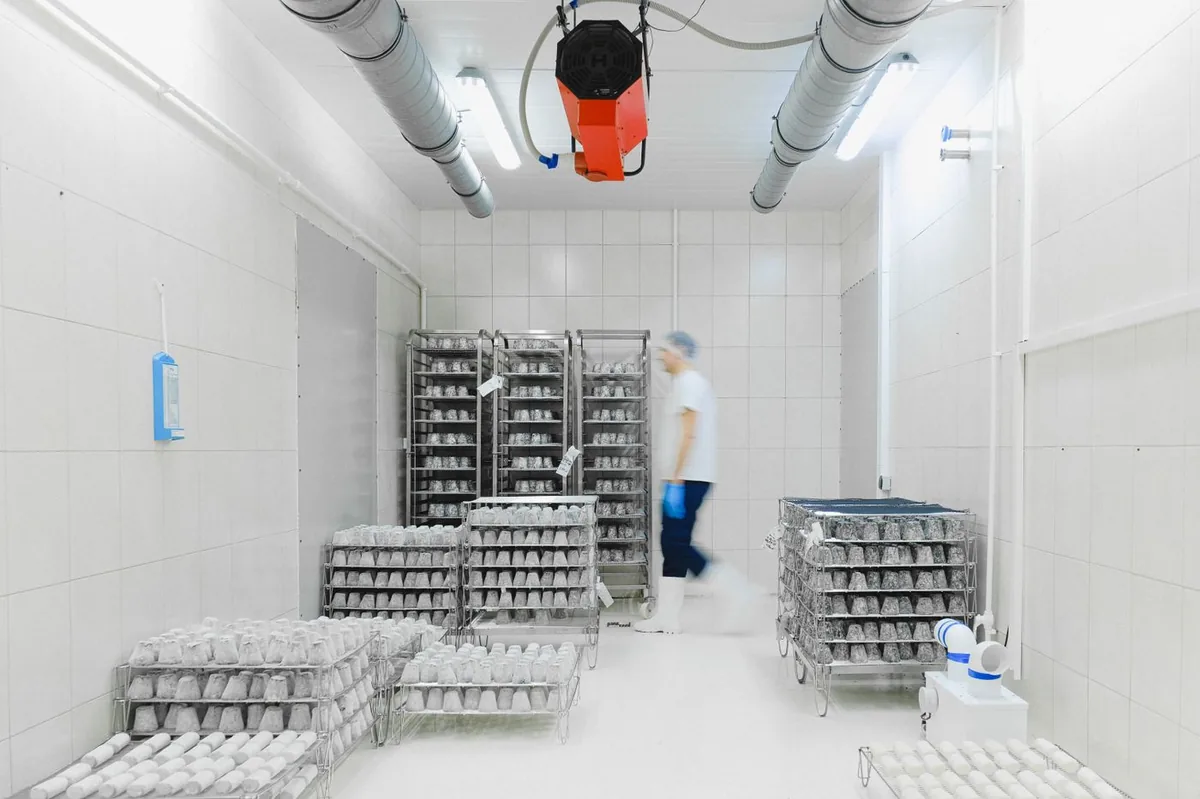
For seafood freezer stores at -18°C and below, choose a virgin HDPE crate or a crate with a published working temperature range that covers your freezer tunnel temperature. PP copolymer can be used for chillers and light freezing if the manufacturer clearly states the temperature for that plastic grade. Do not use recycled plastic for deep-freeze stores: the mixed plastic composition cannot be controlled, so no one can commit to a brittleness threshold.
ICD 610 x 420 mm crates and bins for seafood freezer stores
ICD Vietnam has open-sided crates and solid bins (closed-wall crates) of 610 x 420 mm at six heights from 100 to 390 mm, so a plant can use one footprint for every stage, stack them with one another and put them on uniform pallets. Low crates are for freezing, tall crates for receiving and transport:
| Height (mm) | Open-sided crate (model) | Closed-wall crate, solid bin (model) | Suggested stage |
|---|---|---|---|
| 100 | HS010 | HS025 | IQF trays, block freezing, durian freezing |
| 150 | HS008 | HS007 | Freezing thick goods, size grading |
| 190 | HS009 | HS003 | Storing small packs of frozen goods |
| 250 | HS014 | HS017 | Receiving raw material with ice, in-plant transport |
| 310 | HS004 | HS019 | Collecting goods, bulk transport |
| 390 | HS005 | HS026 | Holding large quantities of raw material, rejects |
Model codes are taken from the ICD Vietnam plastic crate product pages, checked on 16/10/2026. These pages state the material as virgin PP combined with HDPE and have not published a working temperature range. So when ordering for a freezer store, ask ICD Vietnam to confirm the plastic of the production batch before you place the order.
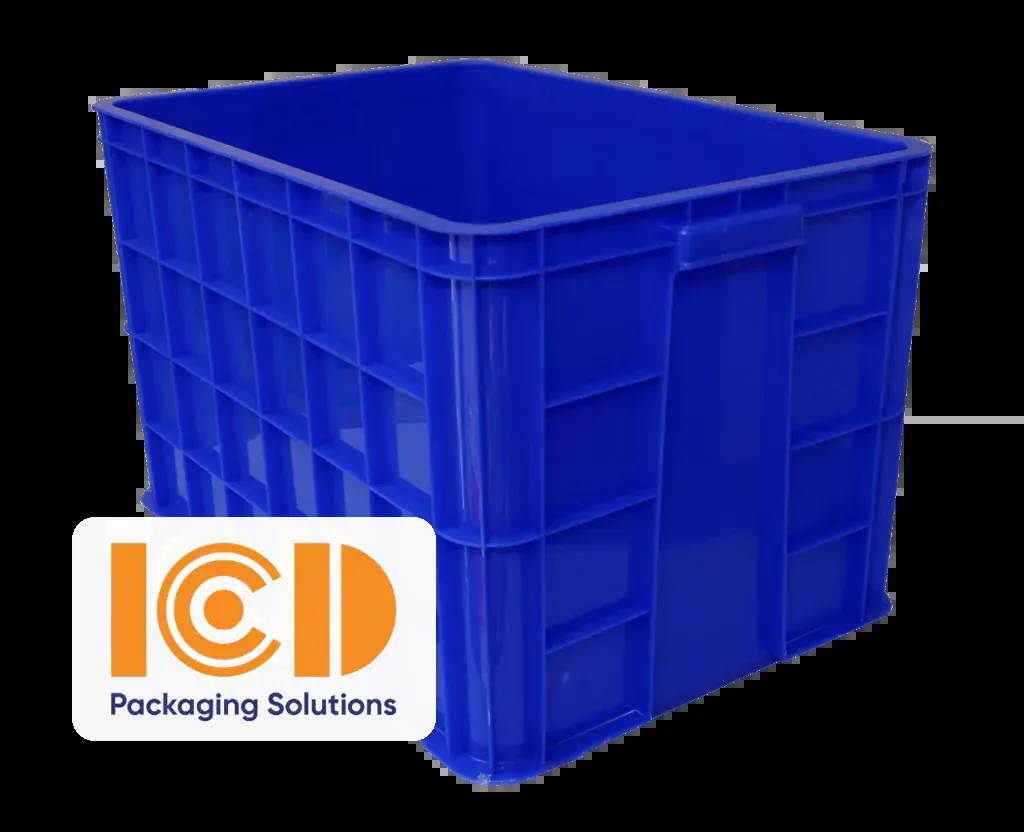
The open-sided crate suits the freezing stage because its mesh walls and base let ice melt-water drain out and cold air pass through quickly. The lidded solid bin suits storing frozen goods, because it limits sublimation and surface moisture loss. The 610 x 420 x 250 mm open-sided crate weighs about 1.6 kg according to its product page, light enough for workers to carry all day in the primary processing area.
Plastic, aluminium or stainless steel trays for freezing
Aluminium and stainless steel trays transfer cold much faster than plastic trays, so they are used when the freezing time must be shortened; HDPE plastic trays are light, cheap, rust-free and impact-resistant, and make up for it with an open-sided design for cold air circulation. According to the Wikipedia table of thermal conductivities, aluminium conducts about 200 W/m.K, stainless steel about 15 W/m.K, and HDPE only about 0.5 W/m.K, meaning aluminium conducts heat hundreds of times better than HDPE.
| Criterion | Aluminium tray | Khay inox | HDPE plastic tray or crate |
|---|---|---|---|
| Thermal conductivity (approx.) | About 200 W/m.K | About 15 W/m.K | About 0.5 W/m.K |
| Speed of cold transfer through the tray base | Fastest | Medium | Slow, offset by mesh walls and base |
| Corrosion in a brine environment | Corrodes easily without surface treatment | Rust resistant | Does not rust |
| Impact in the freezer store | Dents | Durable, heavy | Durable if virgin HDPE, light |
| Suitable for | Contact freezing, very fast freezing needed | Lines with high hygiene requirements | Air-blast freezing, storage, transport |
In practice many plants combine them: metal trays for contact freezers, and HDPE plastic crates for air-blast tunnels, storage stores and transport, where light weight and impact resistance matter more than heat transfer speed.
Resisting thermal shock going in and out of the store
Plastic crates last a long time in a cold store when they are not moved in and out constantly, there is an intermediate temperature buffer zone, and they are not knocked just as they leave the freezer.
Why thermal shock damages crates
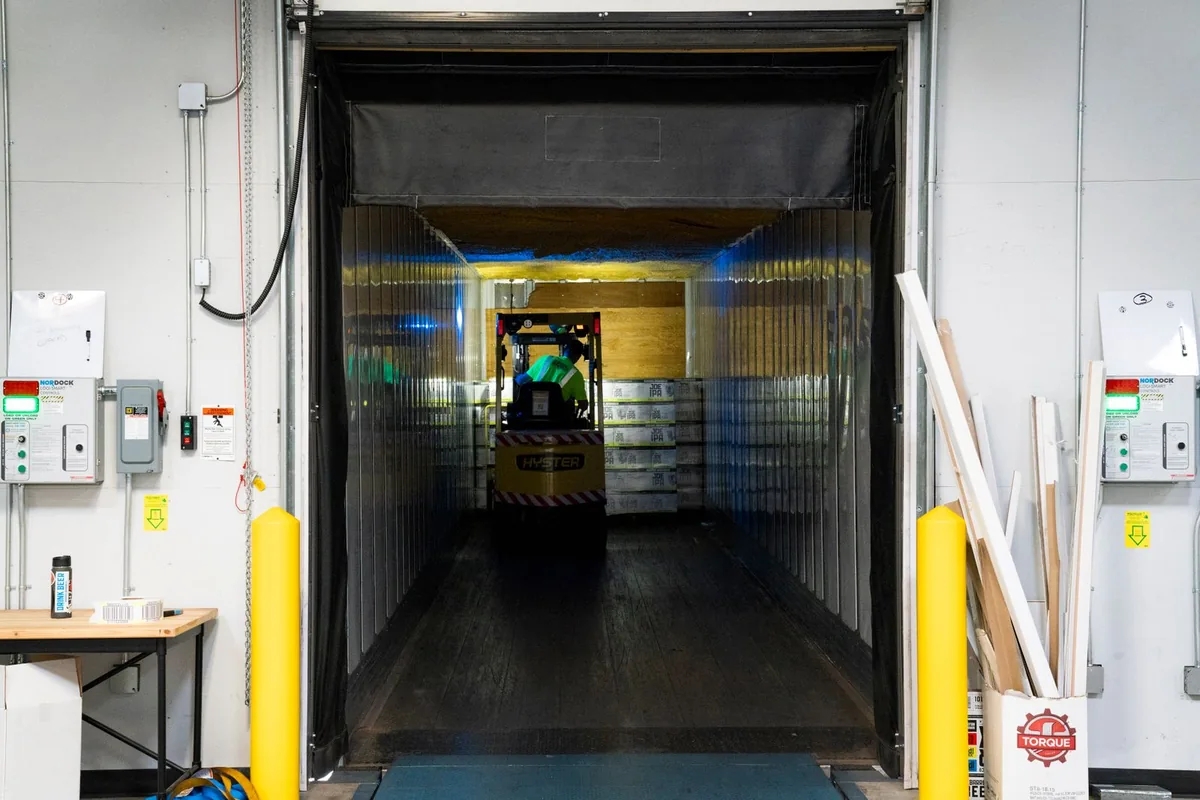
A crate moved suddenly from a -25°C freezer to 30°C outdoors suffers a difference of more than 50°C, expands unevenly and collects condensation. Repeated many times, this fatigues the plastic and shortens its life, especially for plastics other than virgin HDPE. Just after leaving the store the crate is still deeply cold and more brittle than usual, so this is when it is most likely to break if thrown or dropped.
How to reduce thermal shock
Limit constant in-and-out movement of the same crate, use an intermediate-temperature transfer zone if you have one, and avoid hard knocks just as the crate leaves the freezer. The three habits below make crates last noticeably longer:
Choosing crates by seafood processing stage
Each stage needs a different crate type. At receiving and primary processing, use HDPE open-sided crates with ice to drain water and keep cold. At IQF or block freezing, use low HDPE open-sided trays so cold air flows evenly. For storage in the freezer store, switch to lidded solid HDPE bins to prevent moisture loss and stack neatly. For transporting frozen goods outside, you need insulated solid bins to hold temperature on the way.
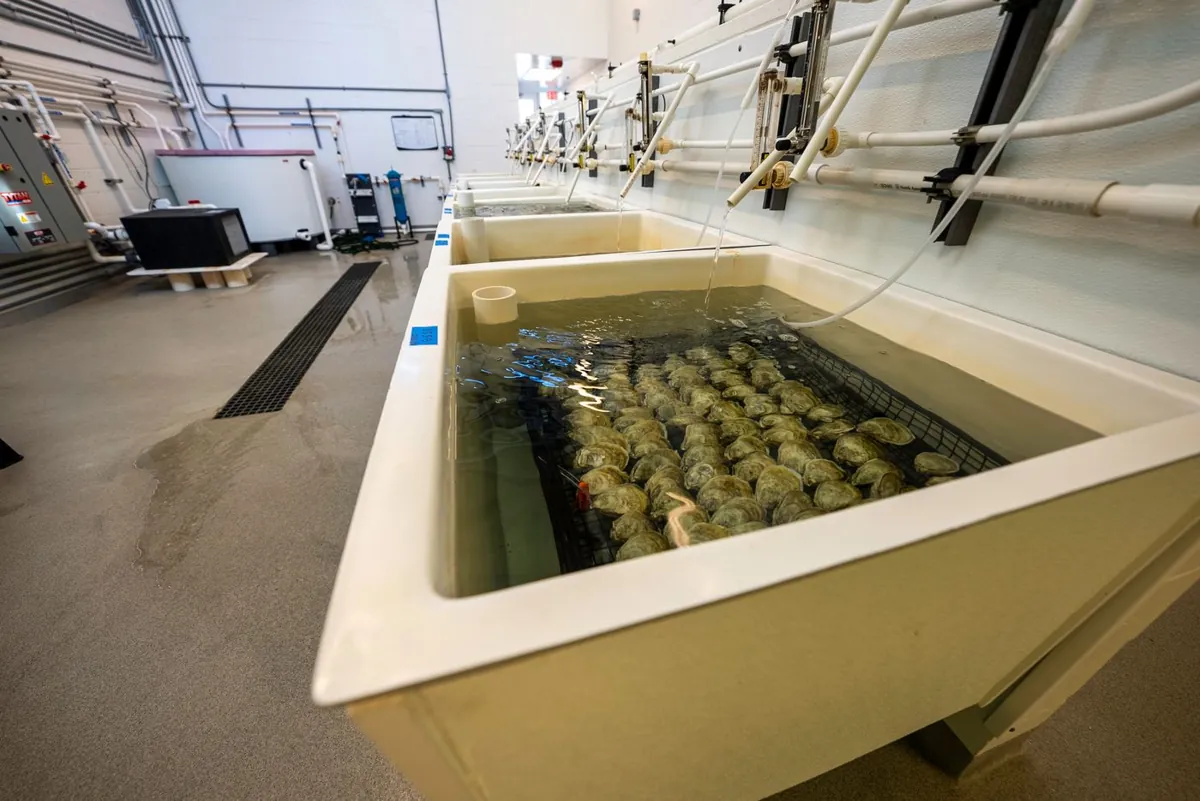
For crates in direct contact with seafood, besides cold resistance they must also meet QCVN 12-1:2011/BYT, the national technical regulation on hygiene and safety for synthetic plastic packaging and utensils in direct contact with food. When buying, ask the supplier to send test results under this regulation for the exact plastic of the crate batch.
Frequently asked questions about cold store plastic crates
How low a temperature can plastic crates withstand?
It depends on the plastic. HDPE has an ASTM D746 brittleness point below -75°C on the data sheets of many grades, so it can be used in freezer stores. Ordinary PP turns brittle below 0°C; PP copolymer tolerates cold better but the temperature depends on the grade. Ask for the published working temperature range for the exact crate model.
What type of plastic crate should a seafood freezer store use?
Use virgin HDPE crates. Open-sided crates for freezing because they drain melt-water and let cold air through quickly; lidded solid bins for storing frozen goods to prevent moisture loss. Avoid ordinary PP and recycled plastic.
Why do plastic crates often crack in a freezer store?
Because plastic loses flexibility and turns brittle below its own temperature threshold. Ordinary PP turns brittle below 0°C, so even a light knock during handling in a freezer store cracks it or breaks a corner. A crate that has just left the freezer, still deeply cold, also breaks very easily if dropped.
Which is better for freezing, an open-sided crate or a solid bin?
Open-sided crates are better for the freezing stage because they drain melt-water and let cold air through for fast, even freezing. Lidded solid bins are better for storing frozen goods because they prevent sublimation and moisture loss. Each type suits one stage.
How do I avoid crates failing from thermal shock?
Limit constant in-and-out movement of the same crate, use an intermediate-temperature transfer zone if you have one, let crates dry before they enter the store, and avoid hard knocks just as the crate leaves the freezer.
Which plastic tray should I choose for freezing durian?
Choose a low open-sided crate, about 100 mm high, in a cold-resistant plastic such as virgin HDPE, so cold air passes through the mesh walls and base and the durian segments or fruit freeze evenly. Trays in direct contact with food need documentation showing they meet QCVN 12-1:2011/BYT. The 610 x 420 x 100 mm size stacks stably on a pallet.
Do aluminium or plastic trays freeze faster?
Aluminium trays freeze faster because aluminium conducts about 200 W/m.K, hundreds of times more than HDPE (about 0.5 W/m.K). Plastic trays make up for it with an open-sided design that lets cold air circulate, are light, do not rust, cost less and resist impact well, so they are common in air-blast tunnels and storage stores.
What standards do plastic crates for seafood need?
Crates in direct contact with seafood must meet QCVN 12-1:2011/BYT on the hygiene and safety of synthetic plastic packaging and utensils in contact with food. For freezer stores, the crate must also be made from a cold-resistant plastic and have a smooth surface with rounded corners for easy cleaning.
Contact and quotation for ICD cold store plastic crates
ICD VIETNAM INDUSTRIAL MANUFACTURING CO., LTD
Northern Vietnam: 3rd Floor, Thang Long A1 Building, Bau Hamlet, Thien Loc Commune, Hanoi - 0983 797 186 / 090 345 9186 / 090 5859 186
Southern Vietnam: 551/212 Le Van Khuong Street, Tan Thoi Hiep Ward, District 12, Ho Chi Minh City - 098 6784 186
Email: sales@icdvietnam.com.vn · Zalo: Chat on Zalo now
Tell us your store temperature and processing stage, and ICD Vietnam will advise a suitable crate type. Price: contact for a quote. Plastic crates carry a 12-month warranty under the warranty and repair policy published on the website; delivery time follows the shipping policy.
References
- Wikipedia, Polypropylene: PP turns brittle below 0°C, PP copolymer and EPDM raise impact strength at low temperature.
- Chevron Phillips Chemical, Marlex HXM 50100 HDPE data sheet: ASTM D746 brittleness point below -75°C.
- ASTM International, ASTM D746: test method for brittleness temperature of plastics by impact.
- FAO/WHO Codex Alimentarius, CXS 36-1981: standard for quick-frozen fish.
- FAO, Torry Advisory Note 27: Quick freezing of fish: fish core temperature and -30°C storage.
- FAO, Freezing and refrigerated storage in fisheries (Fisheries Technical Paper 340): tuna freezer holds at -50°C to -60°C.
- Wikipedia, List of thermal conductivities: thermal conductivity of aluminium, stainless steel, HDPE.
- Ministry of Health, QCVN 12-1:2011/BYT on the hygiene and safety of synthetic plastic packaging and utensils in direct contact with food.
- ICD Vietnam 610 x 420 mm plastic crate product pages: model codes, dimensions, material, checked on 16/10/2026.
Related articles
| ICD industrial plastic crates | How to read plastic crate codes | Plastic crate dimensions: reference table |