


Table of Contents
- Can you raise field crabs in plastic containers?
- Which container to choose and how many crabs to stock?
- Layout inside the container: pool, dry area and mesh lid
- Moulting: the stage when crabs die most easily
- How do you limit crabs biting each other in the container?
- Rearing water and water change schedule
- What do field crabs eat and how should you feed them?
- Common diseases and prevention
- How long until harvest?
- Frequently asked questions
- Does raising field crabs in plastic containers need an aerator?
- Can I raise field crabs in a foam box?
- How many field crabs can one 300-litre container hold?
- Where do I buy juvenile crabs?
- Why do field crabs raised in containers often die after moulting?
- How does raising field crabs in a tarpaulin tank differ from a plastic container?
- Contact ICD Vietnam
- References
Reviewed and updated by ICD - Week 43/2026
Raising field crabs in plastic containers suits nursery rearing, trial growing and family-scale keeping: choose a square container with a wide base, keep one shallow pool 4 - 7 cm deep, make the rest a dry area with roof tiles and plastic pipe sections as shelter, stock 20 - 30 crabs per square metre of container floor and always close the mesh lid. Two things decide the survival rate: stopping other crabs from eating a crab that has just moulted, and stopping crabs from climbing out of the container.
I am Le Van Thang and I have worked at ICD Vietnam since 2011. Most of the industrial plastic containers we sell are used in warehouses and workshops, but every year a few customers still ask to buy large square containers for raising crabs or snails. This article does not copy out the pond method. I compared three extension-service methods from Nghe An, Ninh Binh and Ha Tinh against the real dimensions of each container, to show which parts apply as they are and which must change when you move crabs from a pond into a container.
Can you raise field crabs in plastic containers?
Yes, provided you understand the scale. The field crab (Somanniathelphusa sinensis) lives in paddy fields, ditches and pond banks; it needs a wide floor, shallow water and holes to hide in more than deep water. A square plastic container meets these three needs on a small footprint, and has its own advantages: smooth plastic walls that are easy to scrub, easy to drain for inspection, and each container is a separate rearing unit so a sick crab does not infect the whole stock.
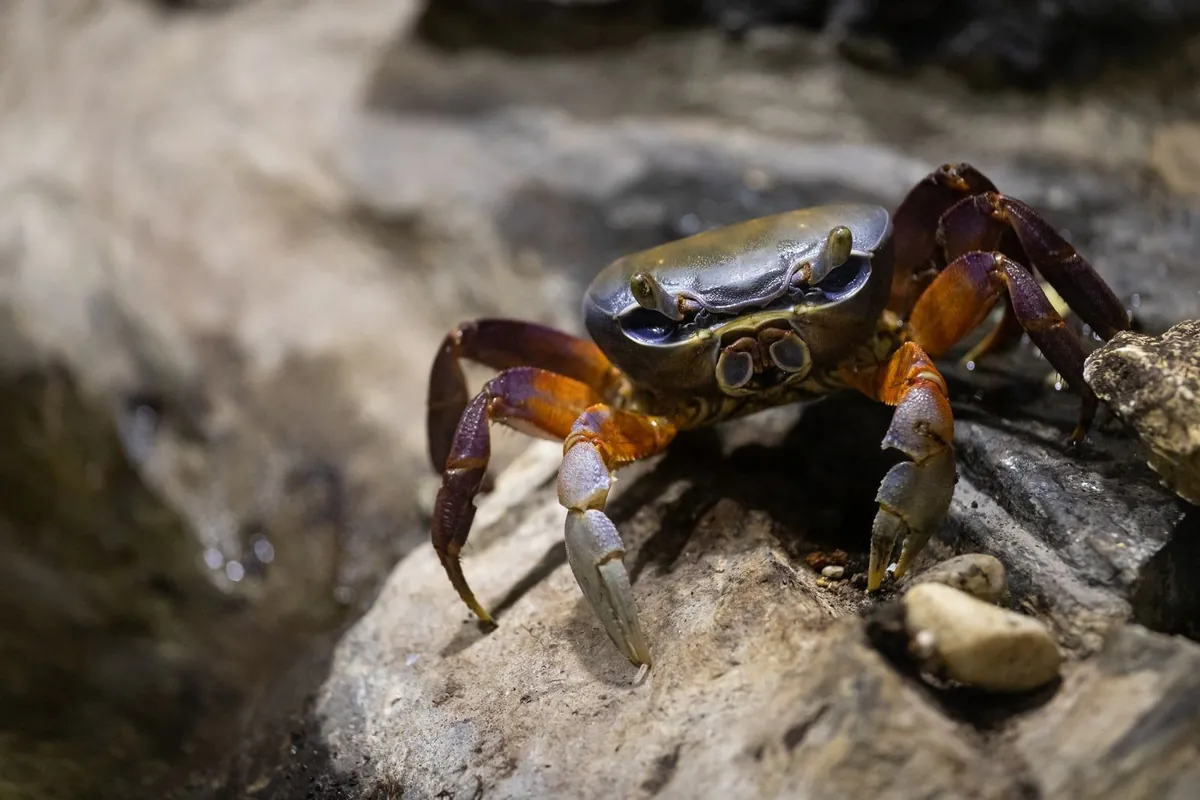
The drawbacks are just as clear. The floor of one large container is only about 1 m², so a meaningful quantity of crabs needs several containers. A water layer a few centimetres deep heats up very fast in the sun. A container has no mud bottom, so the crabs lack a natural calcium source to harden their shells after moulting.
That is why plastic containers suit three jobs best: nursing juvenile crabs before moving them to a pond or tarpaulin tank, trial growing to learn the technique, and keeping a few dozen crabs for the family. For commercial grow-out of several hundred crabs or more, a concrete tank or a 5 - 10 m² tarpaulin tank, as described in the Ha Tinh method, makes more sense.
Which container to choose and how many crabs to stock?
For field crabs, floor area matters more than volume. Calculate the number of crabs per square metre of floor, not per litre. The Ninh Binh concrete tank method recommends 20 - 30 crabs/m²; Ha Tinh allows 30 - 100 crabs/m² but stresses adjusting it to limit crabs biting each other. Beginners should stop at 20 - 30 crabs/m². Applying this to three ICD square container sizes, using the overall floor area (the real figure is slightly lower because the container walls taper inward):
| Square plastic container | Dimensions (mm) | Floor area | Crabs to stock (20 - 30 per m²) |
|---|---|---|---|
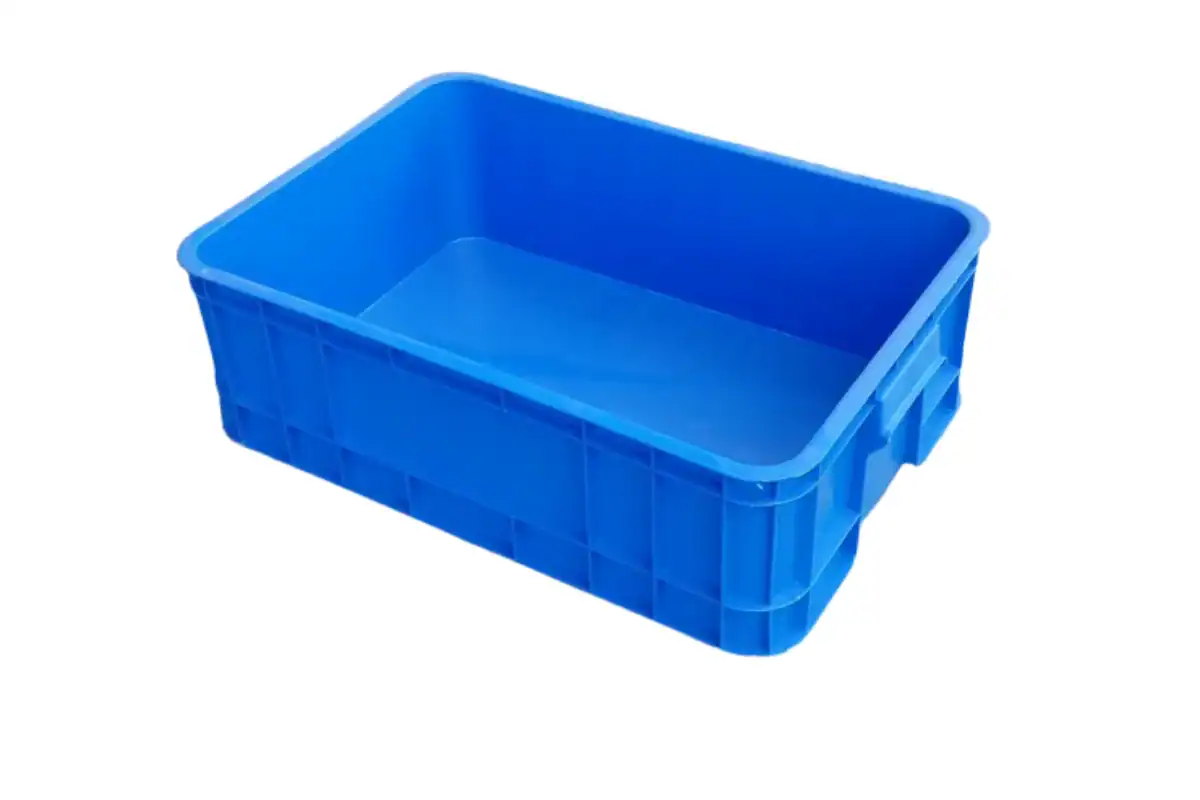
| 50 litres | 610 x 420 x 250 | About 0.26 m² | 5 - 7 crabs, suits trial nursery rearing |
| 200 litres | 910 x 760 x 410 | About 0.69 m² | 14 - 20 crabs |
| 300 litres | 1120 x 910 x 410 | About 1.02 m² | 20 - 30 crabs |
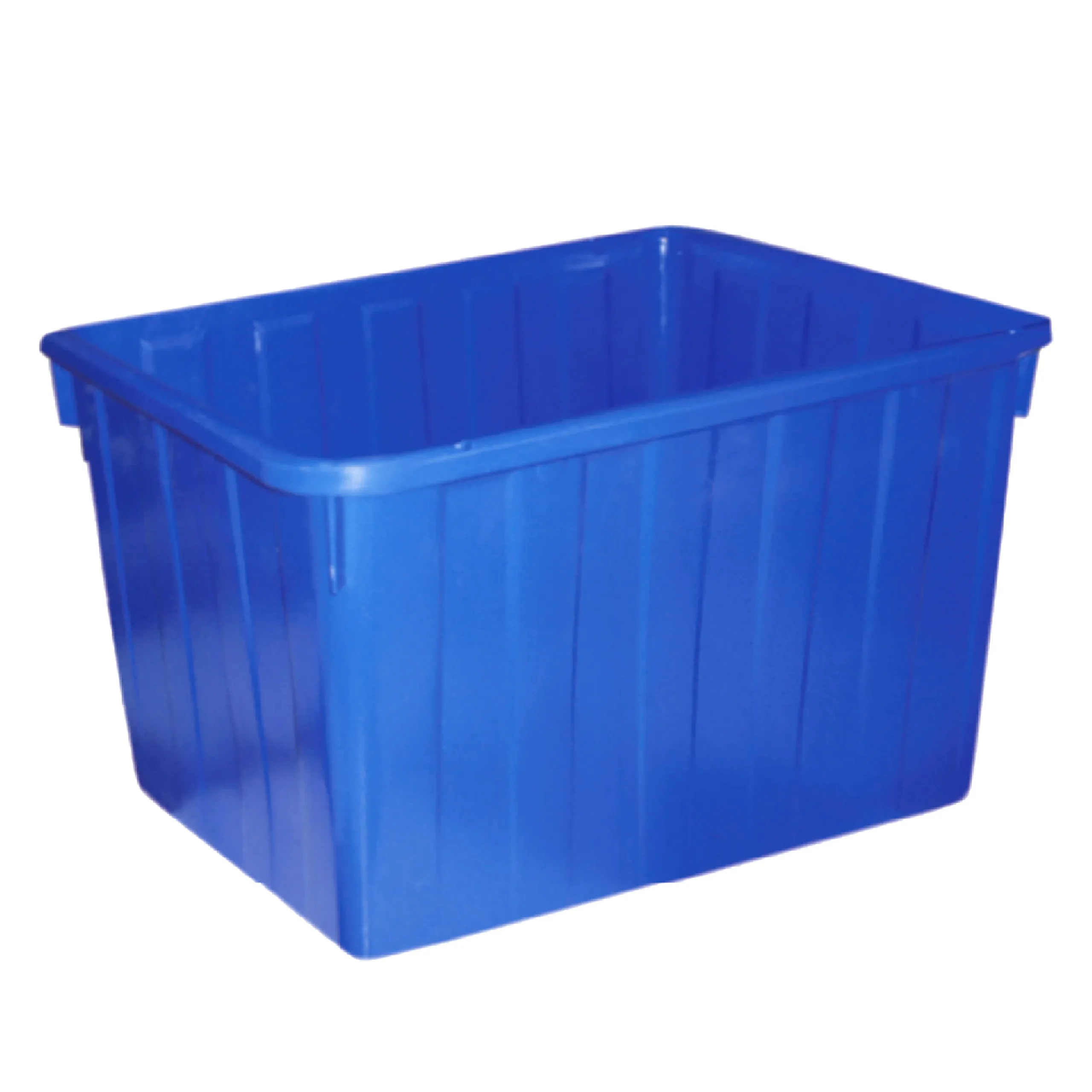
The 200-litre container and the 300-litre container, 410 mm high are the two sizes usable for raising crabs to market size. The 50-litre container holds only 5 - 7 crabs, so use it for nursery rearing, isolating sick crabs or keeping freshly moulted crabs separate. Choose a virgin plastic container that has never held chemicals; an old container of unknown past contents should not be used for aquatic animals, even after washing.
Layout inside the container: pool, dry area and mesh lid
The concrete-tank models in Ninh Binh and Ha Tinh both use a sloping floor: one low end holding water 4 - 7 cm deep, the other end dry so crabs can climb out. Ninh Binh makes water about one third of the floor area. In a plastic container you make the slope with a thin layer of sand that gets thicker toward one side, or simply tilt the container slightly so the water collects in the corner with the drain valve. The container for raising softshell turtles also divides a water zone and a dry shore this way, except that the water surface takes up about two thirds.
For the floor layer, the Nghe An method chooses ponds with a sand or sandy-clay bottom and no mud. In a small container, a thin layer of clean sand is enough, and you can even leave it out; do not pour in a thick layer of mud or clay, because uneaten food mixed into mud fouls the water very quickly in a water layer only a few centimetres deep. With or without sand, the more important part is the shelter.
Why do you need a mesh lid rather than relying on the container wall?
Field crabs can breathe on land and climb well. The Nghe An pond method builds a fence 40 - 50 cm high above the bank. A 200 - 300 litre container is only 410 mm tall, and once you deduct the sand, shelter material and water, the remaining wall is lower than that fence height, not to mention that crabs can grip roof tiles and plastic pipes and reach the container rim. So with a plastic container a tightly closed mesh lid is mandatory, not optional.
Moulting: the stage when crabs die most easily
Crabs grow by shedding their old shell. Right after moulting the new shell stays soft for a few days; the crab is weak, slow and almost defenceless. Both the Ha Tinh and Ninh Binh documents note that this is when crabs eat each other most. The FAO mud crab manual (a sea crab species, but with the same behaviour) also lists cannibalism among the biggest difficulties of crab farming unless stocked at low density.
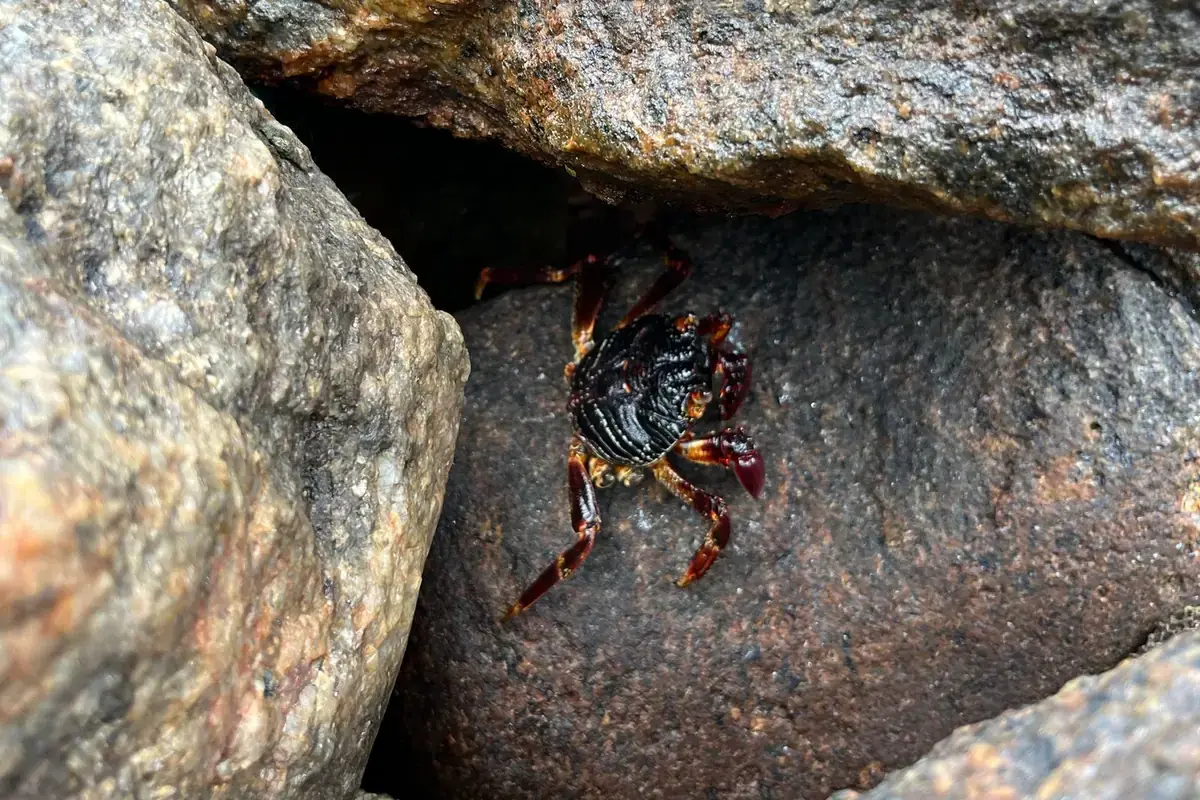
To help crabs harden their shells quickly, the Nghe An method periodically sprays lime dissolved in water to add calcium, combined with mixing vitamin C and minerals into the feed. The lime dose in that method is calculated for an earth pond and should not be mechanically converted to a shallow-water container; for a container, the safer way is to add minerals through the feed and change the water regularly.
How do you limit crabs biting each other in the container?
There is no way to eliminate it entirely, but you can cut it sharply with four things that every method mentions:
- Stock crabs of the same batch and size, with all claws and legs; if sizes differ, the large crab eats the small one when it moults (Ninh Binh, Ha Tinh).
- Provide more shelter than there are crabs: roof tiles, bricks with holes, short plastic pipe sections, water hyacinth or scouring-net mesh.
- Keep the density low, 20 - 30 crabs/m² of container floor.
- Feed enough and regularly, never leaving crabs hungry for long.
For shelter, Ha Tinh uses stones, water hyacinth, scouring-net mesh or plastic pipe; Ninh Binh stacks stones into caves. In a plastic container, plastic pipe and roof tiles are the easiest to do. The FAO notes that creating many shelter microenvironments and rearing animals individually clearly raises crab survival. For family-raised field crabs, applying that idea is enough: every crab has somewhere to hide.
Rearing water and water change schedule
Three parameters to keep are pH, temperature and water level. The methods give close figures, and the differences are mainly due to pond versus tank conditions:
For water changes, the Ninh Binh concrete tank method does this: in the first month change the water every 5 days, from the second month every 2 days. With a plastic container, whose water layer is thinner than a tank, this pace is the minimum; when the water smells or has a film of uneaten feed, change it sooner and do not wait for the schedule. Replace it with settled water at the same temperature as the old water so the crabs are not shocked.
What do field crabs eat and how should you feed them?
Field crabs are omnivores leaning toward animal food: small trash fish, shrimp, worms and chopped snails, combined with cooked corn bran, rice bran or pelleted feed. Ha Tinh recommends feed with 25 - 30% protein. Crabs forage mostly at night, so every method puts the main meal in the evening. The Nghe An method feeds once at 4 - 5 pm, with these rations:
| Type of feed | First 1 - 2 months | Later stage |
|---|---|---|
| Industrial feed (pellets) | 2 - 3% of crab weight/day | 1 - 2% of crab weight/day |
| Home-made feed (trash fish, bran, corn mixed) | 4 - 6% of crab weight/day | 6 - 8% of crab weight/day |
| Vitamin C, minerals mixed into feed | 4 - 5 g/kg of feed | Increase in hot months |
Ninh Binh feeds twice, at 5 am and 6 pm, with the ration increasing from 5% to 7% then 10% of crab weight when switching to snail meat. Both ways work; what they share is to adjust the amount to what the crabs finish. In a small container, put a fixed feeding tray in the dry area: if food is left the next morning, reduce the amount, and if it is all gone, increase slightly, and remove leftover food because in a water layer a few centimetres deep it decays very quickly.
Common diseases and prevention
The Ha Tinh document lists the diseases common in tank-raised field crabs: black gills, white or yellow spots on the carapace, leg atrophy and fouling organisms on the shell. Most start from dirty water and high density, so prevention is mainly water management. Ha Tinh also advises limiting the use of antibiotics.
- Bathe juvenile crabs in 2 - 3 ppt salt water for 10 - 15 minutes before stocking (Nghe An).
- Keep density down, change water on schedule, remove leftover feed every day.
- Mix vitamin C and minerals into the feed, especially in hot months.
How long until harvest?
Rearing time depends on juvenile size and season. According to the Nghe An method, juveniles of 300 - 400 per kg stocked in season take 4 - 5 months to reach market size of 45 - 60 per kg, with a target survival rate of 70 - 80%. Ninh Binh stocks smaller juveniles of 1.2 - 1.4 cm (350 - 400 per kg) in February - April and harvests after 9 - 10 months at 50 - 55 per kg. In a plastic container, harvest is very simple: drain the water through the valve, lift out the shelter material and pick up the crabs.
Frequently asked questions
Does raising field crabs in plastic containers need an aerator?
Usually not required, because the water in the container is only 4 - 7 cm deep and crabs can breathe on land. When you raise the density or in sultry hot weather, you can place a small air stone in the pool section.
Can I raise field crabs in a foam box?
For a short time, yes, but foam boxes crumble easily, are hard to scrub and crabs can scratch and bite the walls. Virgin plastic containers are durable, washable and usable for many crops.
How many field crabs can one 300-litre container hold?
About 20 - 30 crabs, based on a floor area of about 1 m² and a density of 20 - 30 crabs/m². Stocking more densely means crabs bite each other more, especially when moulting.
Where do I buy juvenile crabs?
Buy artificially bred juveniles from a hatchery with a clear origin, of the same batch and size, with all claws and legs. The Nghe An method uses juveniles of 300 - 400 per kg, Ha Tinh 400 - 500 per kg.
Why do field crabs raised in containers often die after moulting?
A freshly moulted crab has a soft shell so it is easily eaten by others, and without calcium the shell hardens slowly. Provide enough shelter for each crab, stock crabs of the same batch, add minerals and avoid stirring the container while crabs are moulting.
How does raising field crabs in a tarpaulin tank differ from a plastic container?
A tarpaulin tank has a wide floor of 5 - 10 m² so it can hold hundreds of crabs and suits grow-out. A plastic container has a small area but is durable, easy to clean and easy to separate stock, suiting nursery rearing, trials or family keeping. How to prepare containers, water and filters for other species is in the article on raising tilapia in plastic containers.
Contact ICD Vietnam
ICD VIETNAM INDUSTRIAL MANUFACTURING CO., LTD
For advice on choosing square plastic containers by floor area and rearing scale, please contact us:
- Address: 3rd Floor, Thang Long A1 Building, Bau Hamlet, Thien Loc Commune (formerly Kim Chung, Dong Anh), Hanoi.
- Phone: 0983 797 186 / 090 345 9186 / 090 5859 186.
- Email: sales@icdvietnam.com.vn.
ICD Vietnam plastic containers carry a 12-month warranty under the warranty and repair policy published on the website.
References
- Nghe An Aquatic Seed Centre, Technical procedure for commercial rearing of field crabs in earth ponds.
- Ninh Binh fisheries extension, Techniques for raising field crabs in concrete tanks.
- Ha Tinh Agricultural Extension Centre, Applying techniques for breeding field crabs and nursing juveniles in concrete tanks and tarpaulin-lined ponds (12/2025).
- FAO, Mud crab aquaculture: A practical manual (2011): cannibalism, role of shelter in mud crabs.
- Ministry of Agriculture and Environment, Circular 69/2025/TT-BNNMT on the List of invasive alien species.