
Table of Contents
- Where to buy plastic crates in Hanoi: which channel should you choose?
- How does ICD Vietnam deliver plastic crates to Hanoi?
- Plastic crate types that Hanoi businesses buy most
- Plastic crate demand in Hanoi’s industrial parks
- Checklist for choosing a trustworthy place to buy plastic crates
- Plastic crate price list in Hanoi: how to ask for the right price
- What to check when you receive plastic crates
- Frequently asked questions
- Does ICD Vietnam have a store or warehouse selling plastic crates in Hanoi?
- How can I tell a good-quality plastic crate?
- Is there a discount for buying in bulk?
- What does a plastic crate warranty usually cover?
- What should I watch for when buying used plastic crates in Hanoi?
- Which plastic drum should I choose in Hanoi?
- Do plastic crate purchases come with a VAT invoice, and at what rate?
- How long does delivery of plastic crates to Hanoi take?
- Contact ICD Vietnam
- References
Reviewed and updated by ICD - Week 44/2026
In Hanoi, plastic crates are sold through four channels: manufacturers delivering straight from the workshop, agents and distributors, supply shops around the industrial parks, and household stores or e-commerce platforms. A business buying in volume should pick a seller whose tax code can be looked up, who issues e-invoices, puts the warranty in writing and commits to a clear delivery time.
I am Le Van Thang and I have worked at ICD Vietnam since 2011. The question Hanoi customers ask me most is not the price but “where is your store, so we can come and look?” The answer is simple: ICD Vietnam has a warehouse in Hanoi, and crates are delivered from it to the customer’s address under ICD Vietnam’s shipping policy. This guide helps you choose the right channel to buy plastic crates, check a supplier before you order and gather the details you need to get the right code quoted the first time.
Where to buy plastic crates in Hanoi: which channel should you choose?
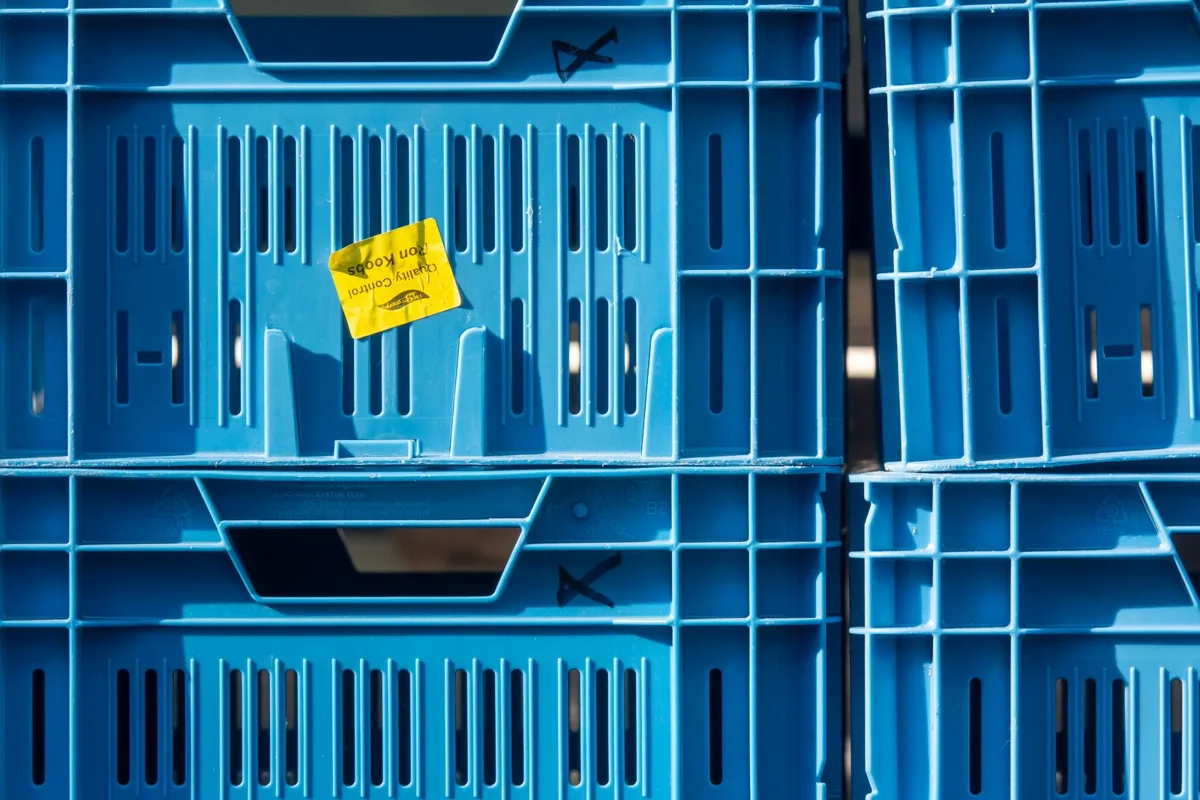
The right channel depends on your quantity and the paperwork you need. For orders from a few dozen crates upwards, with an invoice and delivery to your warehouse, a manufacturer or a large distributor has a clear advantage; for a few crates for the home, a nearby shop or an e-commerce platform is more convenient.
| Channel | Best for | Advantages | Watch out for |
|---|---|---|---|
| Manufacturer (delivery from the workshop) | Businesses, volume orders, logo-printed crates | Tiered pricing, full range of codes, invoice, warranty | You cannot inspect goods in a shop; confirm the code and delivery date first |
| Agents and distributors | Mid-size orders, several brands needed | Wide choice, consolidated delivery | Ask where the goods come from and who covers the warranty |
| Supply shops near industrial parks | Factories that need a quick top-up | Same-day pickup, see the goods in person | Few models, higher retail prices |
| Household stores and wholesale markets | Households, small traders | Buy one crate at a time | Hard to verify virgin or recycled plastic |
| E-commerce platforms | Retail purchases, long-distance delivery | Quick price comparison | Photos and specifications can be misleading; bulky-goods shipping is expensive |
Business customers often worry that they cannot see the real goods before ordering. In my experience the safest approach is to ask for the technical specifications in writing (outer size, inner size, empty weight, material), order a few sample crates and only then confirm the large order. A sample crate placed on your own shelving or conveyor tells you more than any photo.
How does ICD Vietnam deliver plastic crates to Hanoi?
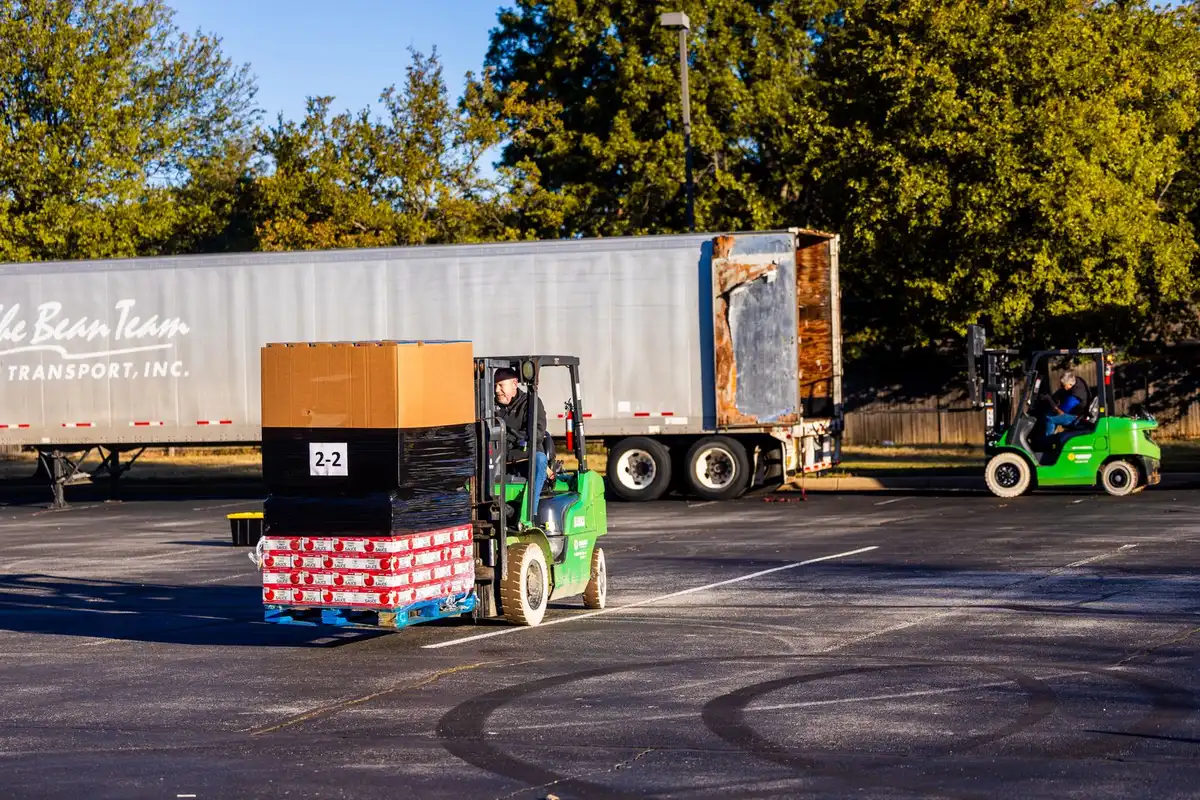
ICD Vietnam takes orders by hotline, email or Zalo and prepares the goods within 1-2 working days of order confirmation, then delivers to the customer’s address. Hanoi addresses receive goods within 1-3 working days of dispatch and neighbouring provinces within 2-5 days, under ICD Vietnam’s shipping policy published on the website. The shipping cost is quoted before the order is confirmed; orders above a minimum value, or within designated areas, may qualify for free shipping.
- Send the type of goods to be stored, the crate size or code, the quantity and the delivery address.
- Receive advice on the right code, with a quote based on quantity and shipping cost.
- Confirm the order; the workshop prepares the goods in 1-2 working days.
- Receive the goods at your warehouse together with the invoice, the delivery note and a warranty slip if applicable.
- Count and inspect the goods on arrival; damaged or missing items are handled under the return and warranty policy.
ICD Vietnam plastic crates carry a 12-month warranty counted from the date on the invoice or delivery note, under the warranty and repair policy. The head office address on the website is 3rd Floor, Thang Long A1 Building, Bau Hamlet, Thien Loc Commune (formerly Kim Chung, Dong Anh), Hanoi; this is a transaction office, so please call before you plan to visit in person. Besides the Hanoi warehouse, ICD Vietnam has a southern workshop at 551/212 Le Van Khuong Street, Tan Thoi Hiep Ward, District 12, Ho Chi Minh City.
Plastic crate types that Hanoi businesses buy most
The two most popular lines are open-wall crates and solid-wall crates, mostly on the 610 x 420 mm base, alongside lidded crates, component trays and crates with wheels. Knowing what you need before you call helps the supplier quote the right code; the section on types of plastic crates explains each line in more detail.
Open-wall crates (mesh crates)
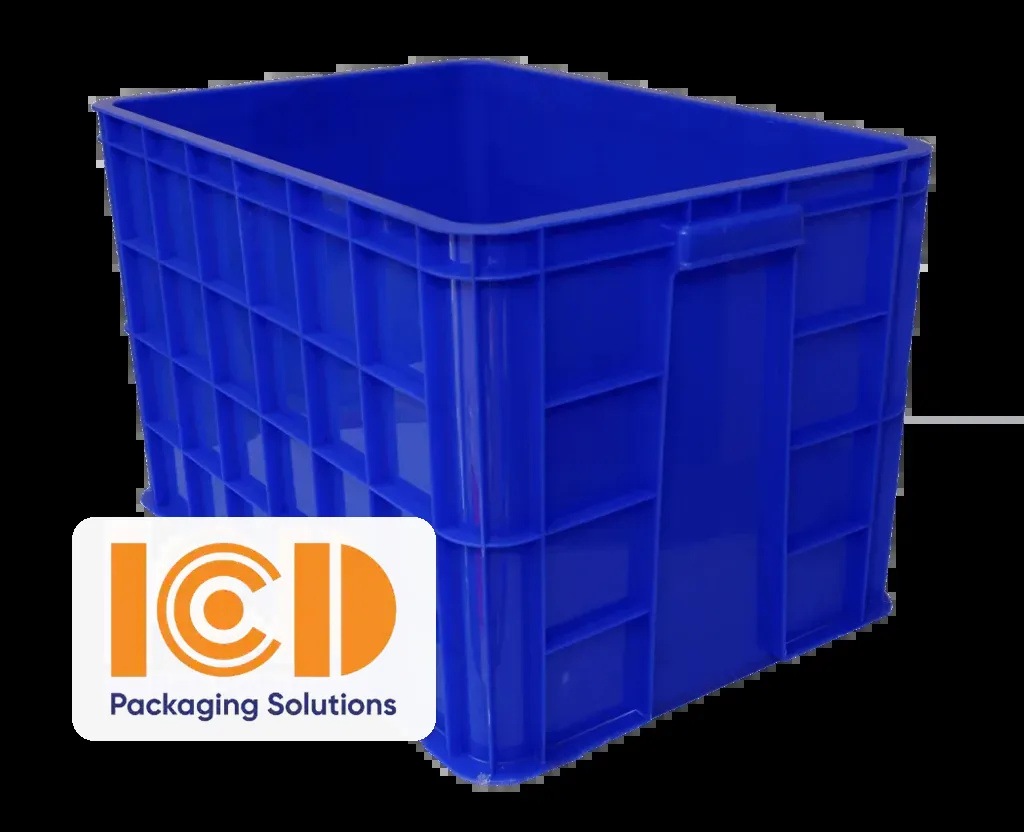
Open-wall crates have slatted or mesh walls and bases for ventilation and drainage. They suit vegetables, fruit and seafood that need to drain, and garments that need airflow to prevent damp and mould. Crates designed for harvesting and transporting produce are in the agricultural produce crates group. Familiar codes such as A2, A3, A5 or HS016 are each manufacturer’s own naming, not an industry standard, so when asking for a price read the dimensions rather than the code alone. Common sizes are gathered in the guide to industrial plastic crate dimensions.
Solid plastic bins (solid-wall crates)
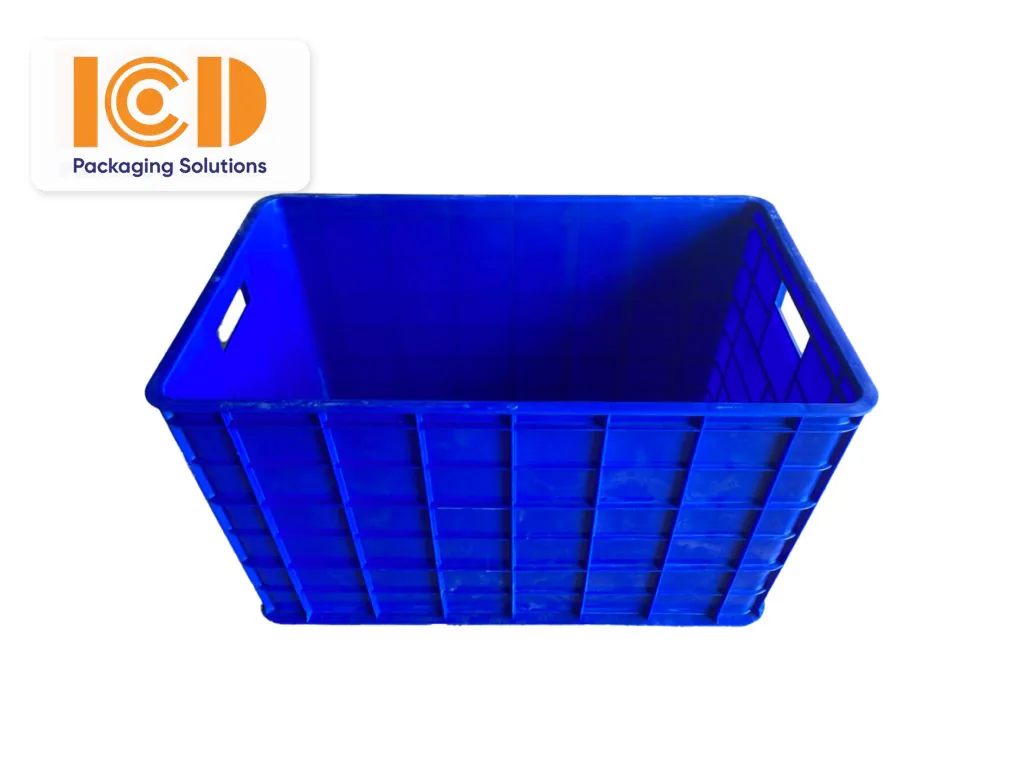
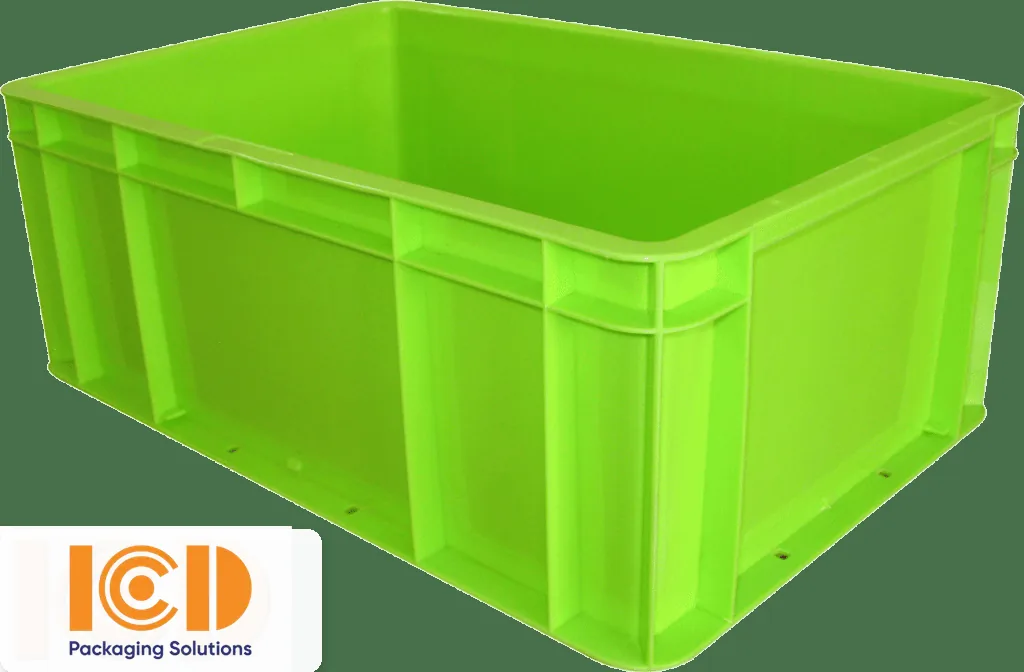
Solid crates have closed walls and bases, usually reinforced with ribs, and hold small components, oily parts and dry materials that must be kept free of dust. Electronics, mechanical and dry-food plants use this group the most; the antistatic type is a specialised line for sensitive components.
| Criterion | Open-wall crate (mesh crate) | Solid-wall crate |
|---|---|---|
| Wall and base construction | Slatted or mesh, drains and ventilates | Fully closed, reinforced with ribs |
| Suitable goods | Vegetables, fruit, seafood, fabric | Components, oily parts, dry food ingredients |
| Use with lids | Rarely used with lids | Often has a loose or attached lid |
| Cleaning | Easy to hose down, dries quickly | Easy to wipe, keeps dust out |
Beyond these two main lines, Hanoi businesses also often order lidded crates for dust protection and enclosed transport, component trays with a bevelled front for hanging on racks on assembly lines, and crates with wheels for warehouses that move goods constantly. In October 2026 the plastic crate catalogue on the ICD Vietnam website lists 117 products, including 37 solid-crate codes and 22 open-crate codes, most made from virgin HDPE or PP.
Plastic crate demand in Hanoi’s industrial parks
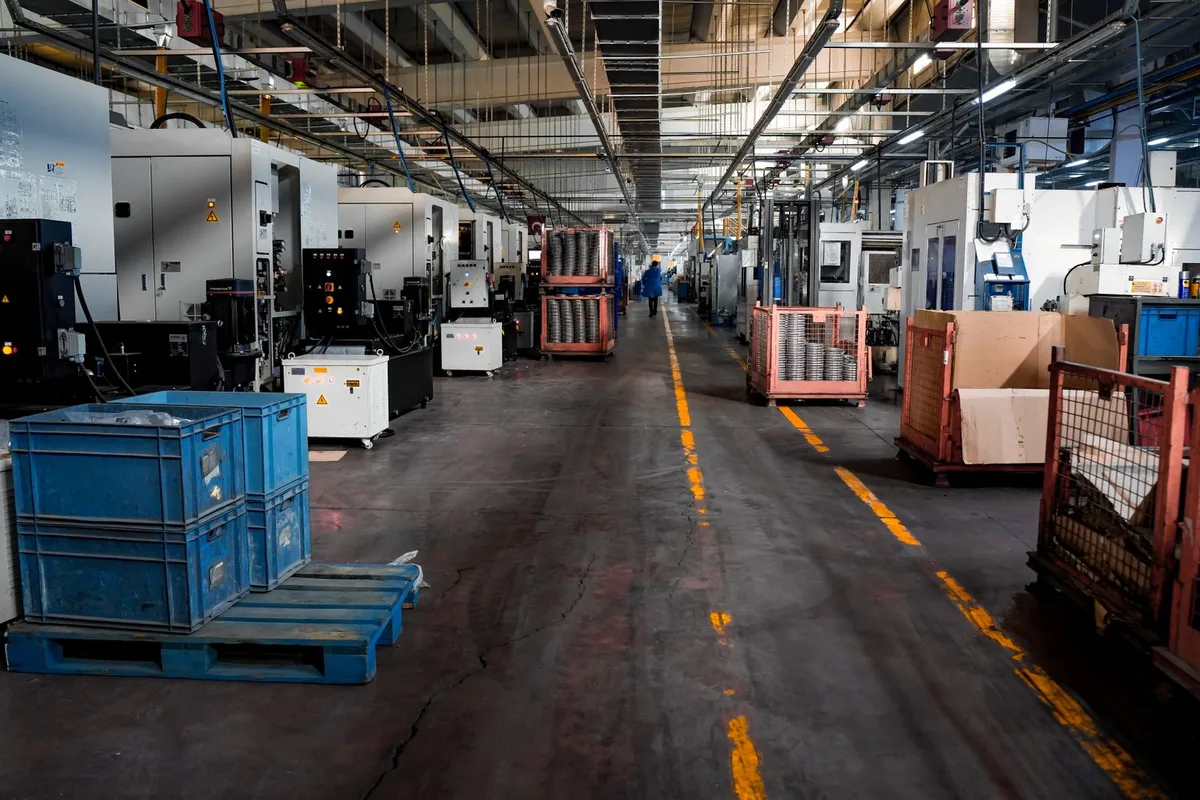
Most industrial plastic crate orders in Hanoi come from factories in industrial parks and clusters. According to the Hanoi Management Board of High-Tech Parks and Industrial Zones, the city has 9 operating industrial parks with a combined area of about 1,348 ha, an occupancy rate of almost 100%, 884 projects and around 185,000 workers. In addition, Hanoi has 70 industrial clusters in operation (figures published by the Hanoi Department of Industry and Trade in April 2024), most of them small and medium-sized production sites.
Electronics, component and mechanical factories make up most of the industrial parks in the north of the city, so the greatest demand is for solid crates, component trays and antistatic crates. For these factories the key criteria are crates that fit the conveyor and the racking, match the colour required by the plant’s 5S rules and arrive on the production schedule; a batch of crates that is off by a few millimetres may not fit racking that has already been installed.
Checklist for choosing a trustworthy place to buy plastic crates
A trustworthy seller is one you can verify with documents, not just with a recommendation. Before placing a large order, I advise customers to run through the list below; each item takes only a few minutes.
- Look up the seller’s name, tax code and operating status on the National Business Registration Portal.
- Ask whether they manufacture the goods themselves or resell them, and who is responsible for the warranty.
- Request a specification sheet with outer size, inner size, empty weight and material.
- Order a few sample crates, weigh them and test them on your real shelving and conveyor before confirming a large order.
- Check the plastic code stamped on the base of the crate: 2 is HDPE, 5 is PP.
- Ask for a written quote stating whether VAT and shipping are included.
- Write the order processing time and delivery time into the purchase order.
- Ask for an e-invoice that matches the item name, quantity and unit price.
- Get a warranty slip or warranty terms stating the period and the defects covered.

Five steps to vet a supplier before a large order
For orders of several hundred crates or more, go through the following steps in order. First, look up the tax code as above to make sure the seller is operating and the name matches the contract. Second, ask where the workshop is and how quickly it can supply your quantity; a company with its own workshop usually controls the delivery schedule and replaces faulty goods more easily than one that only sells online. Third, ask for samples and weigh them: a crate that is unusually light compared with the published specification often has thin walls or recycled plastic mixed in.
Fourth, when you receive an e-invoice you can verify it yourself on the tax authority’s e-invoice portal using the seller’s tax code, the invoice series and the invoice number. Fifth, fix the warranty in writing: the period, the range of defects covered, how cracked crates are handled within the period and who pays the shipping for replacements.
Plastic crate price list in Hanoi: how to ask for the right price
The price of a plastic crate depends on size, height, open or solid wall, material, colour, accessories such as lids or logo printing, and the quantity per order, so the same base size can vary widely in price. ICD Vietnam does not publish fixed prices on its website and quotes per order; the fastest way to get an accurate price is to send the three items below with your first enquiry.
Also ask whether the quote includes VAT. Under Resolution 204/2025/QH15 on VAT reduction, goods eligible for the cut are taxed at 8% until 31 December 2026; from 2027, unless the policy is extended, the rate returns to 10%. Ask the seller to state the tax rate on the quote to avoid a difference when the invoice is issued.
What to check when you receive plastic crates
Check five points: purpose, plastic type, design details, total cost of ownership, and the warranty and delivery policy. Purpose decides almost everything: electronic components need antistatic crates, food needs virgin plastic, and produce needs ventilated crates.
On material, prefer virgin HDPE or PP with a clear code on the base; avoid recycled crates of unknown origin for food or critical production lines. On design, a good crate is not just thick: the walls and base have plenty of reinforcing ribs, the handles are rounded with no sharp edges, and the rim and base have locating lips so stacks do not slide.
On cost, a cheap crate that cracks quickly and must be replaced after a few months costs more than a good crate that lasts for years, not to mention the production line downtime for the replacement. On delivery, count the crates and check their appearance as soon as you unload, and note any cracked or dented crates on the handover record so they can be handled under the return policy.
Frequently asked questions
Does ICD Vietnam have a store or warehouse selling plastic crates in Hanoi?
Yes. ICD Vietnam has a warehouse in Hanoi. Crates are delivered from the warehouse to the customer’s address: 1-2 working days to process the order and 1-3 working days for delivery inside Hanoi, under the shipping policy published on the website.
How can I tell a good-quality plastic crate?
A good crate is usually made from virgin HDPE or PP, has a plastic code on the base, an even colour, thick walls with reinforcing ribs, no flash, no sharp odour, and an empty weight that matches the published specification.
Is there a discount for buying in bulk?
Usually yes. Most manufacturers and distributors quote by quantity tier; send the quantity per batch and how often you order to be quoted at the right tier.
What does a plastic crate warranty usually cover?
Warranty periods differ between suppliers, so ask for it in writing. ICD Vietnam plastic crates carry a 12-month warranty against manufacturing defects, counted from the date on the invoice or delivery note.
What should I watch for when buying used plastic crates in Hanoi?
Used crates are cheaper, but check for cracks at the corners and base, warping when stacked, and the usage history. Crates that have held chemicals, oil or grease should not be reused for food. ICD Vietnam only makes new crates and does not buy or sell used ones. Channels for buying second-hand crates and how to inspect them are covered in the article on where to buy used plastic crates.
Which plastic drum should I choose in Hanoi?
Plastic drums commonly come in 100-220 litres in two styles: a fully open top for solids and pastes, and a two-small-bung type that seals better for liquids. Choose HDPE drums and ask clearly whether the drum is new or used and what it previously held.
Do plastic crate purchases come with a VAT invoice, and at what rate?
Businesses should ask for an electronic VAT invoice. Goods eligible for the cut under Resolution 204/2025/QH15 are taxed at 8% until 31 December 2026; from 2027, unless the policy is extended, the rate returns to 10%.
How long does delivery of plastic crates to Hanoi take?
With ICD Vietnam, orders are processed within 1-2 working days of confirmation, then delivered within 1-3 working days to Hanoi and 2-5 days to neighbouring provinces. Custom-made crates, such as those with a printed logo, need extra time, which is quoted when the order is confirmed.
Contact ICD Vietnam
ICD Vietnam Industrial Manufacturing Co., Ltd
Send the type of goods to be stored, the size or crate code, the quantity and the delivery address in Hanoi so we can advise the right code and quote by quantity and shipping cost.
- Northern Vietnam hotline: 0983 797 186 / 090 345 9186 / 090 5859 186.
- Email: sales@icdvietnam.com.vn.
- Zalo: 090 345 9186.
- Head office: 3rd Floor, Thang Long A1 Building, Bau Hamlet, Thien Loc Commune, Hanoi (transaction office).
- Southern workshop: 551/212 Le Van Khuong Street, Tan Thoi Hiep Ward, District 12, Ho Chi Minh City.
ICD Vietnam plastic crates carry a 12-month warranty under the warranty and repair policy; delivery follows the shipping policy published on the website.
References
- Hanoi Management Board of High-Tech Parks and Industrial Zones, overview of the industrial parks in the city (linked in the industrial parks section).
- Industrial parks and clusters: attracting FDI capital, Government Portal (thanglong.chinhphu.vn), April 2024.
- Resolution 204/2025/QH15 of the National Assembly on VAT reduction (linked in the pricing section).
- National Business Registration Portal, business information lookup (linked in the checklist).
- Tax authority e-invoice portal, invoice lookup (linked in the checklist).
- ASTM D7611, Standard Practice for Coding Plastic Manufactured Articles for Resin Identification: codes 2 (HDPE) and 5 (PP).
- ICD Vietnam: shipping policy (updated 12 August 2025), warranty and repair policy, plastic crate catalogue data for October 2026.