Table of Contents
- Technical properties of virgin PP
- What plastic are clear storage bins made of?
- Design details to check before buying
- Choosing the capacity of a clear plastic bin by need
- What are clear plastic bins used for?
- How to store and clean the bin so it stays clear
- What does the price of a clear plastic bin depend on?
- Buying clear plastic bins at ICD Vietnam
- Frequently asked questions about clear plastic bins
- Do clear plastic bins crack or turn brittle faster than colored bins?
- Why does the plastic surface turn cloudy after some time in use?
- Is a PP plastic bin safe in a cold storage environment?
- Can a clear plastic bin be used to keep fish?
- Can a clear plastic bin hold food?
- Should I leave a clear plastic bin outdoors?
- Which clear plastic bin models does ICD Vietnam have?
- Which clear plastic bin fits under a bed?
- Contact us for advice and a quote on clear plastic bins
- References
Reviewed and updated by ICD - Week 43/2026
A clear plastic storage bin is a lidded bin made of transparent plastic, most commonly PP (resin code 5 under the base), that lets you see what is inside without opening the lid. The most used sizes run from 10 to 55 liters; at ICD Vietnam, the clear lidded range has 5 models: H115 (10 liters), H116 (15 liters), H117 (30 liters), No.0997 (45 liters) and No.0998 (55 liters).
I am Le Van Thang, and I have worked at ICD Vietnam since 2011. Clear plastic bins are the item retail customers ask about most in the lidded group, and also where mix-ups are most common: many people assume every lidded bin is transparent, when the same range includes both clear and opaque white plastic. This article goes in turn through material, design details, how to choose capacity, how to keep a bin clear for longer and what decides the price, and then checks all that against the exact models in our catalog.
The core value of a clear bin is management by eye. Unlike traditional colored plastic crates, where you have to open every lid to know what is inside, a clear bin shows the type of item and the amount left at once, which saves search time at home, in the office and in a workshop supply cabinet.
The quickest way to learn what plastic a clear bin is made of is to turn it over and look for the numbered triangle symbol:
Technical properties of virgin PP
What plastic are clear storage bins made of?
Most clear lidded bins on the market are made of PP; PET, PC and Acrylic appear mainly in small boxes, display boxes or specialty bins. PP itself is only translucent. To reach high light transmission, manufacturers use random copolymer PP or add a clarifying additive, so the bin stays clear indoors and does not cloud early.
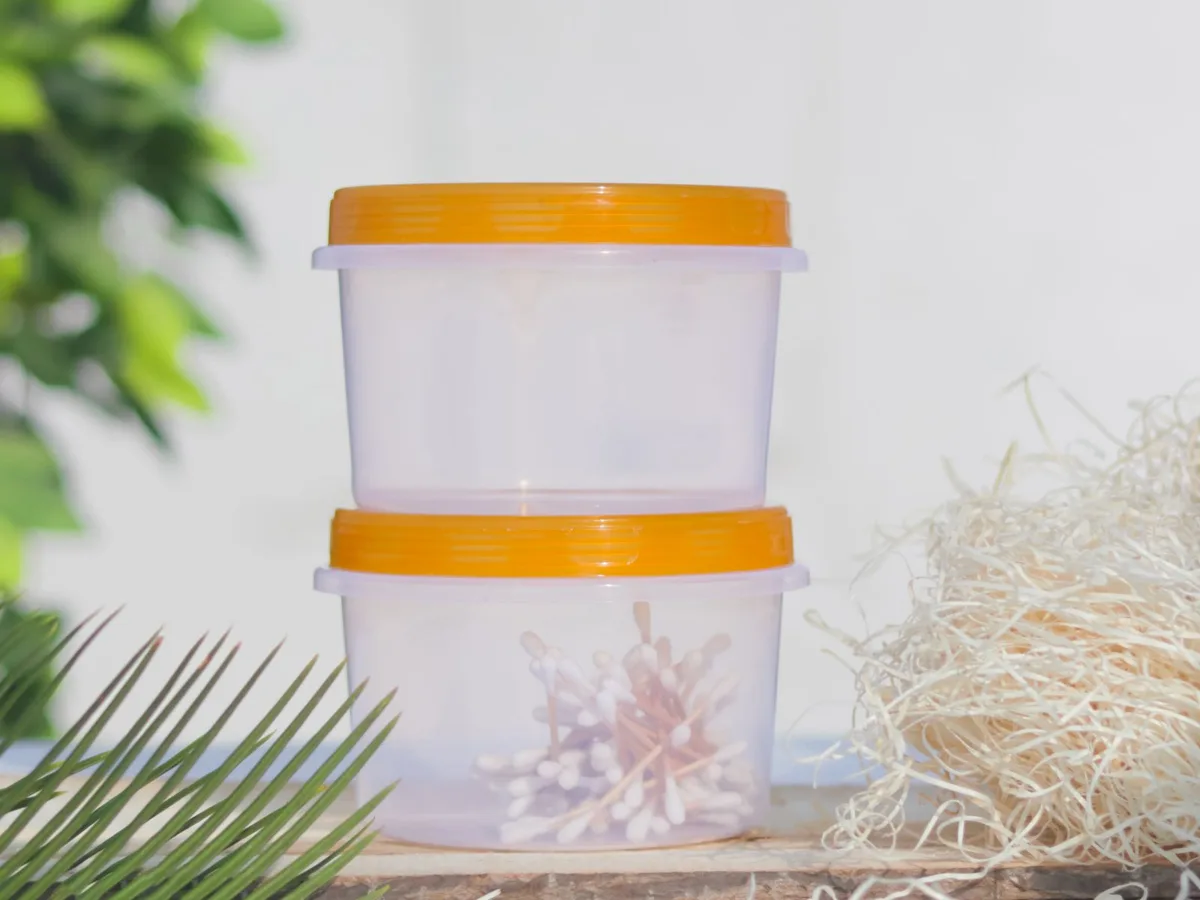
On mechanical properties, virgin PP is tough and impact-resistant at room temperature without cracking. At room temperature this plastic resists oils, greases and many common organic solvents, so it is widely used to store dry food, baby clothes or a household medicine cabinet. Weaknesses to know: ordinary PP turns brittle below 0 °C and is aged by UV rays without a stabilizer additive, so cold storage and outdoor spots need the right resin.
Other clear plastics: PET, PC, Acrylic
Besides PP, each of the other three clear plastics has a clear strength and a clear weakness. PET (polyethylene terephthalate, code 1) is crystal clear like glass with a smooth surface, suited to dry food boxes and decorations; but PET has a glass transition temperature of only about 67 to 81 °C, so it deforms easily in hot water, and it is more brittle than PP.
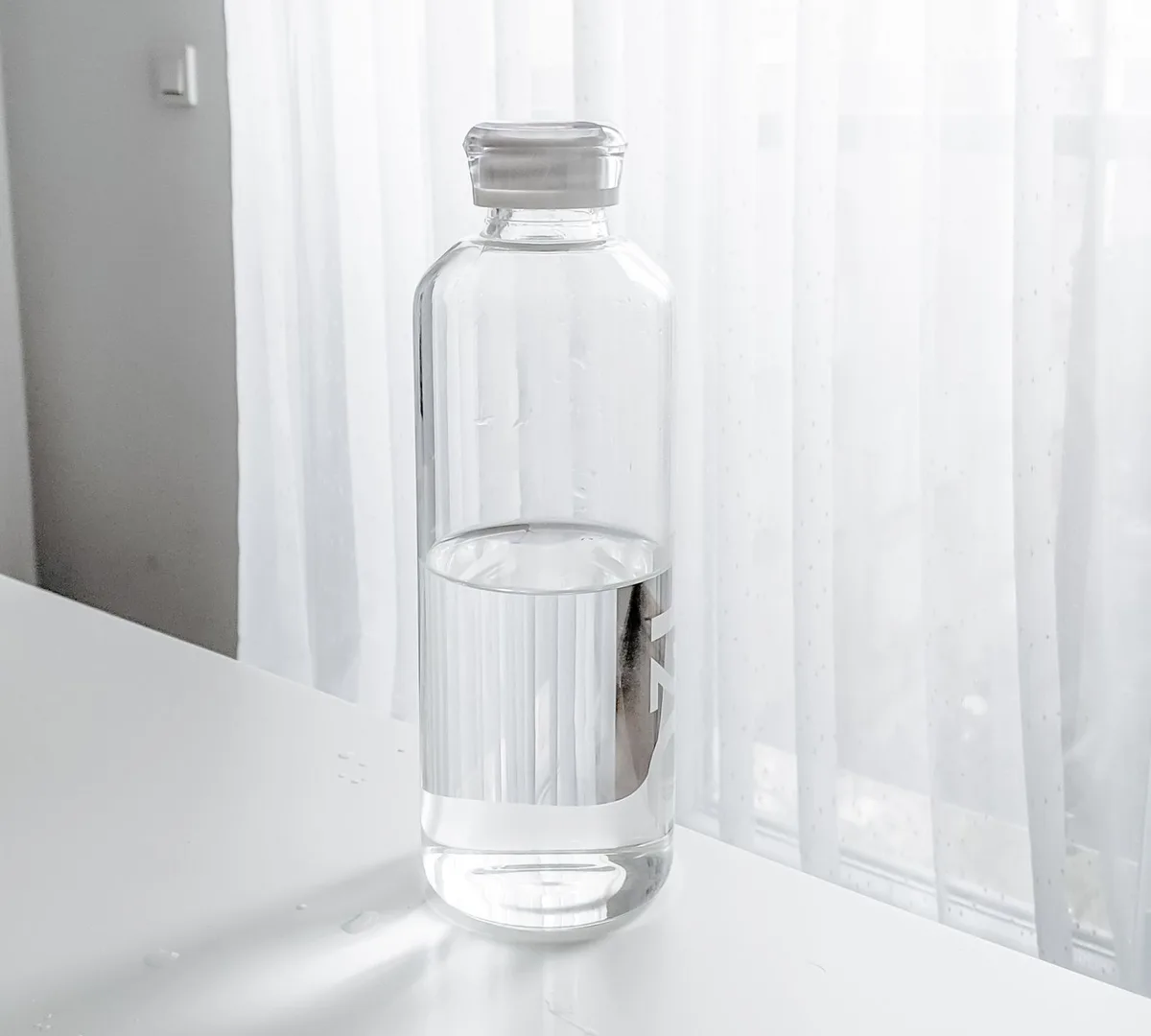
PC (polycarbonate) is an engineering plastic with very good impact resistance and much higher heat resistance, around 120 °C, so it is used for industrial bins or where heat tolerance is needed; the trade-off is a price well above PP. Acrylic (PMMA) is glossy like a mirror, transmits light well and yellows little under UV, suited to cosmetic display boxes and souvenirs; but Acrylic is brittle, cracks when dropped and scratches very easily. PC and Acrylic both fall under resin code 7 (other plastics).
The table below summarizes the differences between the four clear plastics. Choosing the right material keeps you from paying for features you will not use:
| Criterion | PP | PET | PC | Acrylic (PMMA) |
|---|---|---|---|---|
| Clarity | Translucent to clear (depends on additives) | Very clear | Very clear | Glass-clear |
| Heat resistance | Good, tolerates hot water | Deforms above about 70 °C | Up to about 120 °C | Moderate |
| Impact resistance | Tough, hard to break at room temperature | More brittle than PP | Very high | Brittle, cracks when dropped |
| Scratch resistance | Moderate | Moderate | Moderate | Poor, scratches easily |
| Resin code | Code 5 | Code 1 | Code 7 (other) | Code 7 (other) |
| Best suited to | Household storage bins, warehouses | Dry food boxes, decoration | Industrial bins, heat-resistant uses | Display boxes |
Design details to check before buying
Three details decide whether a clear bin works well: a lid with a latch, matching stacking rims between lid and base, and a handle that feels solid in the hand. In my advisory experience, these are also the three places where cheap bins are cut back most often.
A tight lid keeps out dust, insects and moisture. Latches on both sides hold the lid and double as carrying handles when the bin is full, so a latch should snap in with a firm feel and not show white stress marks after a few openings. Stacking rims are the grooves that fit between the lid of the bin below and the base of the bin above; when they fit correctly, many tiers stay stable and you free up floor area in a warehouse or a wardrobe.
Some large bins on the market add wheels under the base for pulling across the floor. For the 5 clear bin models from ICD Vietnam, the product page specifications list only a lid and side-latch handles and no wheels, so these are hand-carried bins or bins placed on shelves or under a bed.

How to tell virgin PP from recycled plastic
A virgin PP bin can be recognized by eye and hand in a few seconds, before you look at the price. A bin blended with recycled plastic is usually cheaper but yellows quickly, turns brittle and should not be used for food. Four quick checks on the spot:
- Turn it over: a virgin bin has the code 5 (PP) and clear manufacturer information, while a recycled blend usually has none or only a faint print.
- Hold it to the light: virgin plastic is evenly clear, while recycled blends often show black specks, gray streaks or a yellow cast.
- Smell it: a virgin bin has almost no smell, a recycled blend smells of burnt plastic or chemicals.
- Flex the lid edge gently: virgin plastic springs back, poor plastic turns white or cracks at the bend.
Choosing the capacity of a clear plastic bin by need
A quick rule of thumb: small desk items call for 10 to 15 liters; shoes, toys, documents and under-bed items call for 30 to 55 liters; bedding and bulky items call for 80 liters and up. How to pack fabric so it does not get damp or musty is covered in the article on storing clothes in plastic bins. Sizes of 10 to 25 liters suit cosmetics, electronic components, household medicine or study supplies, usually placed on a desk or shelf.
The 30 to 65 liter group is the most versatile: it fits shoes, handbags, children’s toys and office files, and sits neatly in a wardrobe compartment or under a bed. Sizes of 80 to 120 liters are for bedding, plush toys and winter clothes; at this size choose thick walls, because a full bin is quite heavy to carry. Note that ICD Vietnam’s clear range stops at 55 liters; our bins of 90 liters and above are opaque white.

The table below lists the 5 ICD Vietnam clear lidded bins, with external dimensions taken from the product page specifications (checked on 16 October 2026). All are made of PP and packed 5 pieces to a carton:
| ICD model | Capacity | External size L x W x H (cm) | Best suited to |
|---|---|---|---|
| H115 | 10 liters | 41.2 x 27.2 x 14.5 | Cosmetics, medicine, small components on a desk |
| H116 | 15 liters | 46 x 32 x 16 | Study supplies, accessories, dry food |
| H117 | 30 liters | 57 x 38 x 21 | Shoes, toys, documents; fits under a low bed |
| No.0997 | 45 liters | 63.4 x 42.7 x 23.9 | Seasonal clothes, household items |
| No.0998 | 55 liters | 67.6 x 45.7 x 25.4 | Clothes, light blankets, warehouse supplies |
One detail that is often overlooked is height. The H117 bin is 21 cm tall, No.0997 is 23.9 cm and No.0998 is 25.4 cm, so before buying for under a bed, measure the real clearance and leave a few extra centimeters for a hand to pull the bin out. Models No.749, No.750, No.748, No.747, No.213, No.214 and No.853 (15 to 220 liters) belong to the same group of square lidded plastic bins but are opaque white, which suits cases where you want to block light more than see through.
Before buying, measure the free space where the bin will sit (the clearance under the bed, the depth of the wardrobe compartment) and compare it with the bin’s outer dimensions. The tool below converts dimensions into capacity so you can compare quickly:
What are clear plastic bins used for?
Clear bins are used most where you need to find things fast or check stock often: homes, offices and workshop supply cabinets. At home, a bin helps sort personal items and keeps dry food from getting damp or moldy. In an office, seeing the type of file inside makes work quicker and cuts mistakes. In engineering, a clear bin holds components and spare parts so maintenance staff see the stock level at a glance.

Even so, clear bins cannot fully replace opaque ones. Goods that are sensitive to light, such as photo paper, some chemicals or some foods, should be stored in opaque bins. Long-term files in clear bins should sit out of the sun. Heavy goods circulating on a line or stacked high should use solid, thick-walled industrial bins, because household storage bins are not designed for repeated impact. Cold storage below 0 °C needs PP copolymer or HDPE bins, which crack less than ordinary PP.
How to store and clean the bin so it stays clear
Three things keep a clear bin clear for longer: wipe with a soft cloth and diluted dish soap, avoid direct sun, and do not put heavy objects on the lid. Sharp tools or metal scouring pads leave tiny scratches that dull the surface, so use only a soft cloth for regular wiping.

Direct sun for many hours a day is the main reason clear bins turn yellow. PP tolerates heat well, but ultraviolet rays break the molecular chains if the plastic has no UV additive, so after a while the surface crazes and gradually turns brittle. Placing the bin in the shade, away from sun-facing windows, is the simplest way to extend its life.
What does the price of a clear plastic bin depend on?
The price of a clear bin depends mainly on three factors: the type of plastic, the wall thickness and accessories such as latches, wheels and gaskets. Even if online photos look almost the same, two bins of the same capacity can differ clearly in price because of these three factors.
On material, a virgin PP bin has the most accessible price, while PC or Acrylic bins cost considerably more because of the price of the resin and its technical properties. On thickness, a bin that feels heavy in the hand uses more resin and has thicker walls, so it carries load and stacks better, at a higher price than a thin-walled bin. Wheels, solid latches and a moisture-proof gasket also add to the price.
In the mainstream segment, PP bins of 10 to 60 liters are the familiar choice for storing clothes, toys and personal items. The premium segment is usually imported or from large brands, with plastic that is almost glass-clear and sturdier stacking rims. When you compare prices, count the cost of use: a bin that costs a little more but is thick, has durable latches and does not yellow early is usually cheaper in the long run than replacing thin bins again and again.
Buying clear plastic bins at ICD Vietnam
ICD Vietnam has 5 clear lidded bin models from 10 to 55 liters, made of virgin PP according to the product pages, sold in cartons of 5 or in large quantities for warehouses and offices. Prices depend on the model and quantity, so contact us for a quote; ICD Vietnam plastic crates carry a 12-month warranty under the warranty and repair policy published on the website.
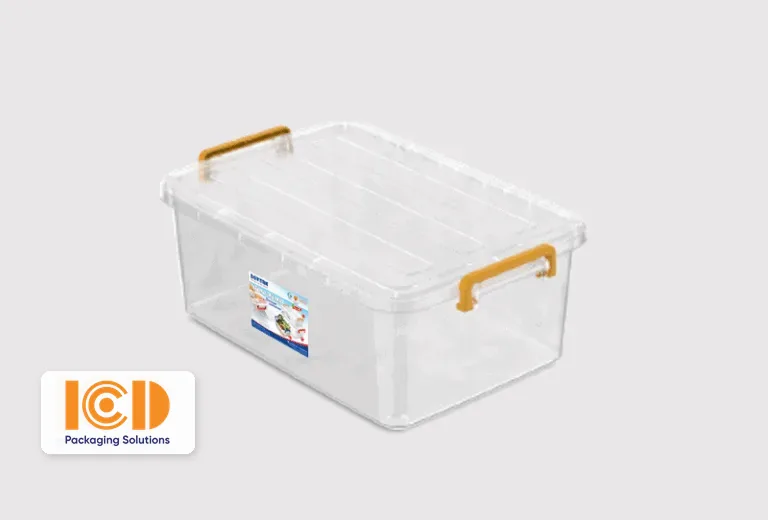
When you send a request, just tell us what you plan to store, where it will sit (shelf, wardrobe, under a bed) and the quantity; we compare dimensions to suggest the best-fitting model, even when an opaque white bin is the right choice for goods that are sensitive to light.
Frequently asked questions about clear plastic bins
Do clear plastic bins crack or turn brittle faster than colored bins?
If both are made of virgin PP, the durability of a clear bin and a colored bin is about the same. The difference lies only in the additive: clear bins add a clarifying additive, colored bins add a colorant, and neither weakens the plastic’s bonds.
Why does the plastic surface turn cloudy after some time in use?
The main causes are dirt that has stuck for a long time and small scratches from knocks. Wiping with a soft cloth dampened in warm water with a little lemon juice brightens the surface again; deep scratches cannot be restored, so avoid metal scouring pads from the start.
Is a PP plastic bin safe in a cold storage environment?
It can be used in a cool room and a refrigerator, but homopolymer PP turns brittle below 0 °C. For cold storage or a freezer, choose a PP copolymer (blended with ethylene) or HDPE bin, and avoid hard knocks while the bin is cold.
Can a clear plastic bin be used to keep fish?
Only for holding fish temporarily or keeping a few small ornamental fish. Storage bins have thin walls and are not designed to withstand water pressure when full for a long time, and the light passing through the walls makes algae grow fast. For long-term keeping, use a purpose-built bin with thick walls, in a dark color and sized for the fish species.
Can a clear plastic bin hold food?
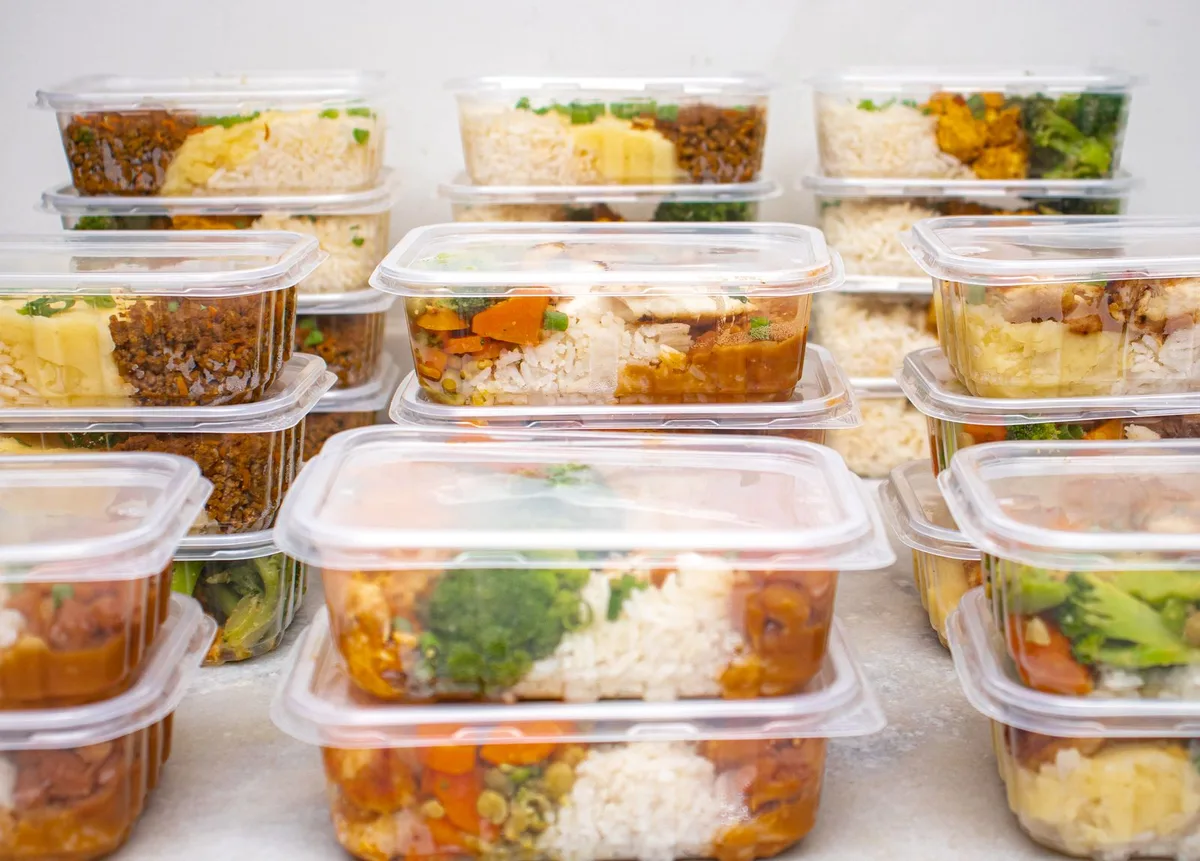
Yes, if the bin is made of virgin PP (code 5) or PET (code 1) and the manufacturer states it is for food use. A bin suits dry food best, such as rice, grains and canned goods; wet or hot food should go in a purpose-made airtight container.
Should I leave a clear plastic bin outdoors?
Not for long. UV rays make PP without a stabilizer additive craze, yellow and gradually turn brittle. If you must place it outdoors, cover it with a tarp or use an opaque bin marked UV resistant.
Which clear plastic bin models does ICD Vietnam have?
There are 5 clear lidded bin models: H115 10 liters (41.2 x 27.2 x 14.5 cm), H116 15 liters (46 x 32 x 16 cm), H117 30 liters (57 x 38 x 21 cm), No.0997 45 liters (63.4 x 42.7 x 23.9 cm) and No.0998 55 liters (67.6 x 45.7 x 25.4 cm). ICD Vietnam’s lidded bin models from 90 liters upward are opaque white.
Which clear plastic bin fits under a bed?
Measure the clearance under the bed first, then choose a bin a few centimeters lower than the gap. In the ICD Vietnam range, H117 is 21 cm tall, No.0997 is 23.9 cm and No.0998 is 25.4 cm; for a low bed under 24 cm, choose the H117.
Contact us for advice and a quote on clear plastic bins
ICD Vietnam Industrial Manufacturing Co., Ltd.
For advice on choosing clear plastic bins and lidded bins for a home, office or warehouse, please contact:
- North Vietnam: 0983 797 186 / 090 345 9186 / 090 5859 186.
- South Vietnam: 098 6784 186.
- Email: sales@icdvietnam.com.vn.
- Zalo: Chat with ICD Vietnam on Zalo.
ICD Vietnam plastic crates carry a 12-month warranty under the warranty and repair policy published on the website.
References
- Wikipedia, Polypropylene: density 0.895 to 0.93 g/cm³, brittle below 0 °C, UV degradation, melting point.
- Wikipedia, Polyethylene terephthalate: glass transition temperature of PET 67 to 81 °C.
- ASTM D7611, Resin Identification Code: PET is code 1, PP is code 5, other plastics are code 7.
- Model, capacity, dimensions, color and packing of lidded bins: ICD Vietnam product pages, checked on 16 October 2026.