
Table of Contents
- Why does quality control matter for plastic crates?
- Step 1: Incoming material inspection (IQC)
- Step 2: Mold and molding machine control
- Step 3: In-process inspection (IPQC)
- Step 4: Finished-goods inspection (FQC)
- Step 5: Output inspection and traceability (OQC)
- What should a buyer check on receiving a batch of plastic crates?
- What do ISO 9001 and ISO 2859-1 say about plastic crate quality?
- Frequently asked questions about plastic crate quality control
- What is quality control (QC) for plastic crates?
- What is the first step in the quality control of plastic crates?
- Which stage of plastic crate manufacturing needs the closest control?
- Which standard applies to the stacking test of plastic crates?
- Which standard must food-grade plastic crates meet in Vietnam?
- How do PP and HDPE crates need different checks?
- Which test checks the heat resistance of a plastic crate?
- If a manufacturer holds ISO 9001 certification, is the crate quality guaranteed?
- How do I tell a good crate from a poor one on receipt?
- How are faulty crates handled after inspection?
- Contact ICD Vietnam for plastic crate advice
- References
Reviewed and updated by ICD - Week 43/2026
Quality control for plastic crates usually runs in 5 steps: incoming resin inspection (IQC), control of the mold and molding machine, in-process checks on the line (IPQC), finished-goods inspection (FQC) and lot inspection before shipping (OQC). The main tests are dimensions, static stacking load under TCVN 12328:2018 (equivalent to ISO 2234), drop and impact, and material safety; crates for food additionally follow QCVN 12-1:2011/BYT.
I am Le Van Thang, and I have worked at ICD Vietnam since 2011. Customers who buy plastic crates often ask me two questions: how does the factory check its crates, and what can I check myself when the goods arrive. This article answers both. The first part walks through each quality control step in injection-molded crate production, what is measured and by which method. The second part covers what a buyer should do when a batch arrives, along with the standards worth asking a supplier about.
The four labels IQC, IPQC, FQC and OQC are familiar manufacturing terms used to divide inspection stages; they are not a mandatory international standard. Each factory builds its own process, so when you compare two suppliers, what to look at is which indicators they measure and whether they have test results, not what name they give each step.

Why does quality control matter for plastic crates?
Quality control decides whether a crate carries its rated load, stacks stably and is safe for the goods inside. A fault found at the factory is always cheaper than a fault found in the customer’s warehouse: one crate with a cracked base on the bottom tier can bring down an entire column of goods, and a batch that is off by a few millimeters will not run on a conveyor or nest cleanly when stacked.
A crate that meets requirements is judged on four groups of factors: mechanical strength, dimensional accuracy, material safety and appearance.
The resin type also decides which indicators are checked. Of the 117 plastic crate models listed on the ICD Vietnam website (counted by the “Material” field on 16 October 2026), 58 models state both PP and HDPE, 46 state PP, 4 state HDPE or PE and 9 do not state the material. PP and HDPE differ in density, melt flow and impact toughness, so the incoming inspection step has to follow the resin of each model.
Step 1: Incoming material inspection (IQC)
IQC checks the resin pellets before they go into the molding machine: it cross-checks the documents of the resin lot and measures a few quick indicators against the specification. Crate quality depends largely on the raw material, so if the resin is wrong from the start, the later steps can only detect faults, not fix them.

On documents, each resin lot needs a COA (certificate of analysis for the batch) and an SDS (safety data sheet). On measurement, the most important indicator is the melt flow index (MFI), also called MFR, measured under ISO 1133-1 or ASTM D1238. It shows how easily or how hard the resin flows when molten, which directly affects how fully it fills the mold and how well the crate resists impact. If MFI falls outside the permitted range, the crate is prone to short shots or brittleness.
Density measured under ISO 1183 helps tell HDPE from PP and detects a lot that has been mixed wrongly. Moisture is usually measured with a moisture analyzer, because damp pellets create gas bubbles and silver streaks on the crate wall. Finally, color and impurities are compared with a standard sample so that lots delivered to the same customer do not differ in color. The acceptance value of each indicator follows the data sheet of the resin supplier for the exact resin grade.
Step 2: Mold and molding machine control
Controlling the mold and machine means making sure the mold is clean and unworn, and that the molding machine runs on the approved set of parameters before mass production. This is where most dimensional faults begin: a mold with residue, burn deposits or a worn parting surface will produce crates with flash and wrong dimensions even when the resin is perfectly good.
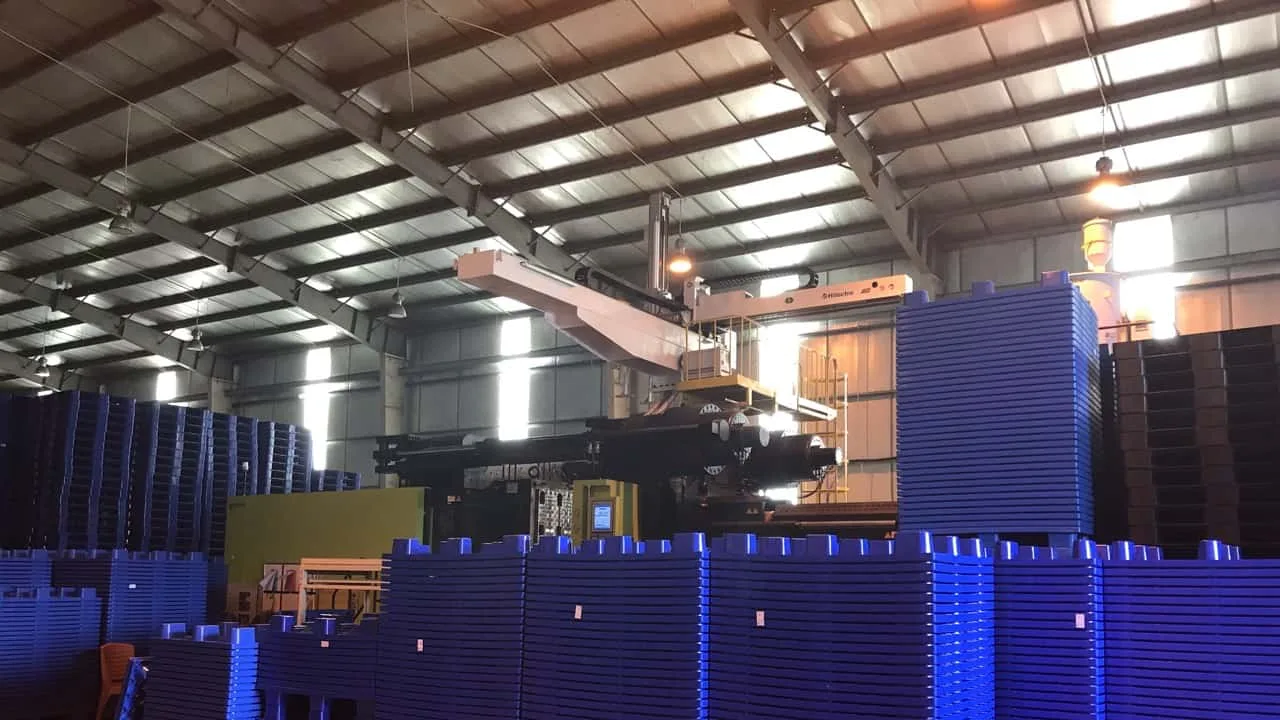
For the machine, the main task is to set the barrel temperature, mold temperature, injection pressure, holding pressure and cooling time correctly according to the process sheet of each mold. This parameter set should be fixed after a trial run and measurement of the first samples, then held constant for the whole lot. When the resin lot or the mold changes, the first sample must be checked again before the machine runs continuously.
Step 3: In-process inspection (IPQC)
IPQC is inspection right on the molding line: it monitors machine parameters and takes samples at intervals to catch faults before they spread across the batch. The inspector measures dimensions with an electronic caliper and checks color, gloss, burn marks and wall thickness at points that tend to run thin, such as corners and ribs. Every parameter change or fault is logged by shift, both to deal with it at once and to trace the cause when a customer reports a problem.
Common injection molding defects in plastic crates and how to handle them are summarized in the table below, following the usual injection molding defect descriptions in technical literature.
| Defect | What it looks like on the crate | Common causes | How to handle it |
|---|---|---|---|
| Short shot | Wall, rib or corner is not filled | Low pressure or melt temperature; unsuitable MFR | Raise pressure and temperature; recheck the resin lot |
| Flash | Extra plastic spilling out at the mold edge | Excess pressure, worn mold, insufficient clamping force | Reduce pressure, maintain the parting surface |
| Sink marks | Dents on the base or at thick ribs | Holding pressure or cooling time too short | Increase holding time and cooling |
| Warpage | Base or wall not flat | Uneven cooling | Balance the mold cooling water |
| Burn marks | Black or brown streaks at the end of the flow | Trapped gas, high temperature | Open mold vents, slow the injection speed |
| Weld lines | A seam where flows meet, prone to cracking under load | Two plastic fronts meet after they have cooled | Raise mold temperature, adjust injection speed |
Of these defects, weld lines and warpage are the two that buyers find hard to see by eye but that affect service life most. A weld line is a weak spot, and the crate can crack along it after a few months under load. A warped base makes a column of stacked crates lean, and the higher it goes the greater the lean.
Step 4: Finished-goods inspection (FQC)
FQC checks the cooled crates for dimensions, strength and appearance on samples drawn under a sampling plan. A common plan is AQL under ISO 2859-1: this standard sets the sample size and the permitted number of defects by lot size; it does not say how many kilograms a crate must bear. Strength tests follow their own standards, compared in the table below.
| Test | Reference standard | What is assessed |
|---|---|---|
| Sampling inspection | ISO 2859-1 (AQL) | Sample size and permitted defects by lot size |
| Static stacking load | TCVN 12328:2018 (ISO 2234:2000) | Deformation or collapse after a set holding time under load |
| Drop and impact | ISO 2248 | Cracks or breakage in a free fall from a set height |
| Material impact | ISO 179 (Charpy), ASTM D256 (Izod) | Impact toughness of the plastic, especially at low temperature |
| Heat resistance | ISO 75 (HDT), ISO 306 (Vicat) | Temperature at which deformation begins under load |
| Flammability | UL 94 | HB, V-0, V-1, V-2 ratings when the buyer asks for them |
The test buyers need most often is stacking. TCVN 12328:2018 allows three ways of applying the load: stacking identical samples, using a free loading plate, or using a guided loading plate. The test surface must be flat, with deviation of no more than 2 mm; the loading plate must be wider than the sample by at least 100 mm on each side. The sample bears the load for a set time or until it collapses, deformation is measured to within ±1 mm, and the sample is conditioned beforehand under TCVN 12327 (ISO 2233).
The standard does not fix a single load for every crate, nor a fixed holding time. Buyer and seller agree the load from the actual number of stacking tiers in the warehouse and the weight of one loaded crate. So when you read a stacking test report, look at the load, the holding time and the sample conditions, not just the line that says “pass”. How to read the dimensions, stacking load and number of crates per layer on a product page is explained in the article on how to read plastic crate model codes.
Step 5: Output inspection and traceability (OQC)
Output inspection confirms that the batch has the right model, the right quantity, a lot code and a production date before it leaves the warehouse. The inspector counts crates by bundle, checks the packing and the pallet loading, and keeps a few sample crates from the lot. The lot code and production date are what let you trace back to the resin lot, the mold and the molding shift when a customer reports a fault.
The documents that travel with a batch depend on the agreement, but a full set usually includes the COA of the resin lot, sample dimension results, load or drop test results, the sample size under AQL and the production lot code. For customers who use crates on automated lines, agree in advance the acceptable dimensional tolerance, because that is the indicator most likely to cause disputes when the goods arrive.
What should a buyer check on receiving a batch of plastic crates?
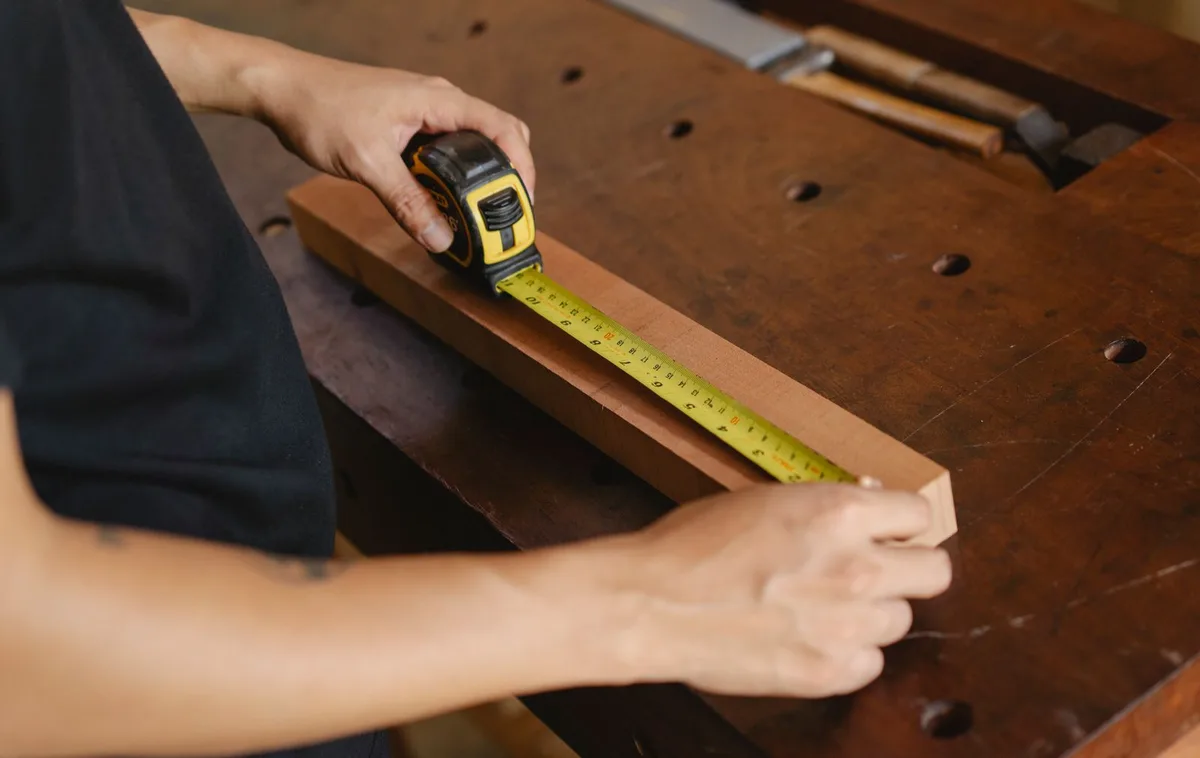
A buyer can check four things without a laboratory: dimensions, crate weight, appearance and consistency between crates in the batch. Pick a few crates at random from different bundles, not all from the top bundle.
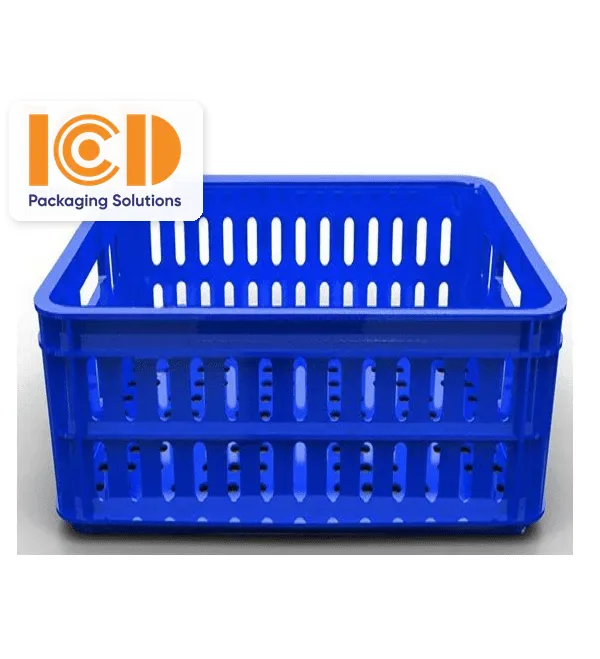
The reference is the specification published for each crate model. For example, on ICD Vietnam’s PP crate and tray product pages (checked on 16 October 2026): model AT8525Q has external dimensions of 840 x 550 x 250 mm, a capacity of 115 liters, a load of 50 kg and a crate weight of 2.90 kg; model AT7416D is 750 x 450 x 160 mm, 54 liters, 50 kg and 2.44 kg; model AT6417H is 615 x 410 x 177 mm, 44 liters, 25 kg and 1.38 kg.
On appearance, look closely at the corners, feet and ribs: are there sharp flash edges, black burn marks, silver streaks or dents? Place a crate on a flat surface to see whether the base is warped, then try nesting five or six crates to see whether the stack stays straight. A clear color difference between bundles is usually a sign of a different resin lot or of blended recycled plastic.
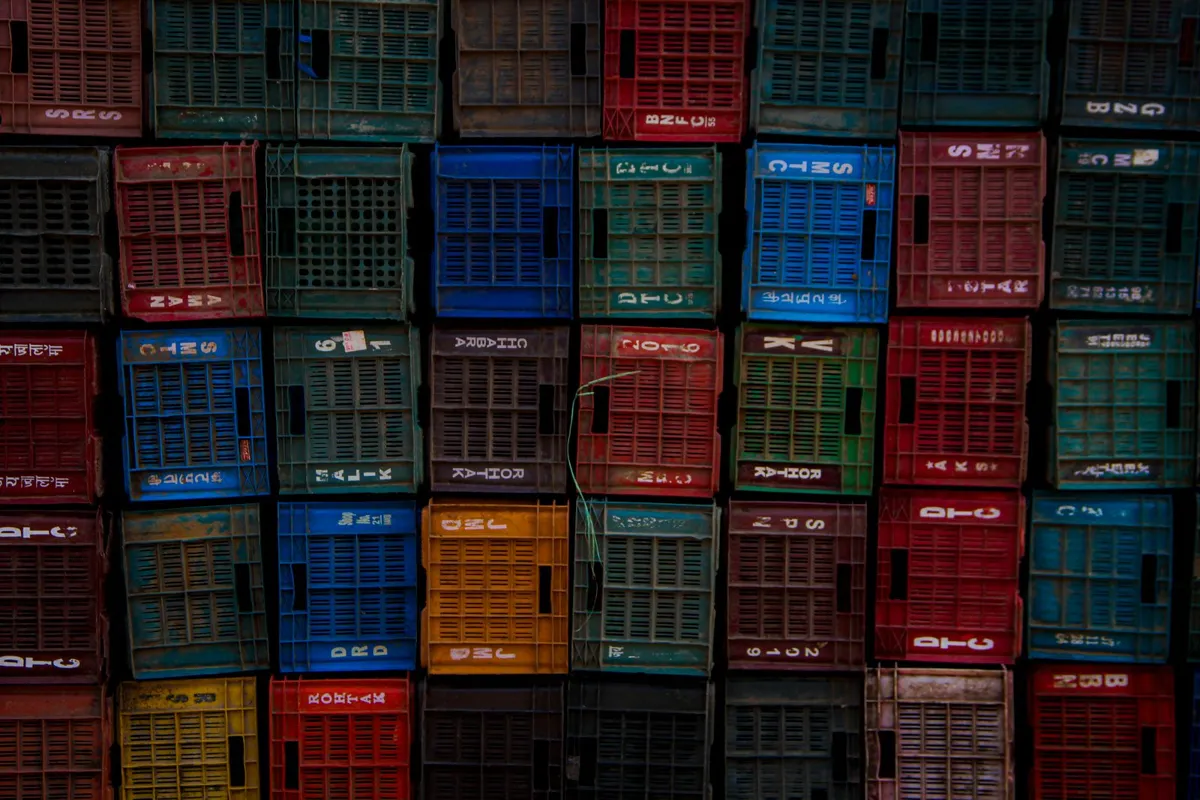
ICD Vietnam plastic crates carry a 12-month warranty under the warranty and repair policy published on the website. When you find a fault on delivery, take a photo showing the lot code and tell the supplier at once, because the lot code is the information used to trace the cause.
What do ISO 9001 and ISO 2859-1 say about plastic crate quality?
ISO 9001 is the standard for an organization’s quality management system, and ISO 2859-1 is the standard for sampling inspection by AQL. Neither is a certification of an individual crate. An ISO 9001 certificate shows that a company has a controlled process that is assessed periodically, but it cannot replace the test results of a specific crate model.
So when a supplier says “we meet ISO”, the next questions should be: which ISO, issued by which body, is it still valid, and is there a stacking and drop test report for the exact crate model I plan to buy? For a buyer, the product’s test results are the direct evidence of crate quality.
Frequently asked questions about plastic crate quality control
What is quality control (QC) for plastic crates?
It is the chain of checks from incoming resin, the mold and molding machine, the product on the line and finished goods to the batch before shipping, to make sure the crate has the right dimensions, enough strength and is safe for the goods inside.
What is the first step in the quality control of plastic crates?
The first step is incoming material inspection (IQC): checking the COA and SDS of the resin lot and measuring the melt flow index (MFI), density and moisture against the specification of the resin grade.
Which stage of plastic crate manufacturing needs the closest control?
Control of the mold and molding machine, and in-process inspection (IPQC), prevents the most faults, because most dimensional faults, flash, sink marks and warpage come from the mold and the molding parameters. Periodic sampling on the line catches faults before they spread across the batch.
Which standard applies to the stacking test of plastic crates?
You can apply TCVN 12328:2018, equivalent to ISO 2234:2000, on the stacking test under static load. The sample bears the load for a set time or until it collapses, deformation is measured to within ±1 mm; the load should be calculated from the actual number of stacking tiers in the warehouse.
Which standard must food-grade plastic crates meet in Vietnam?
Crates in direct contact with food follow QCVN 12-1:2011/BYT on hygiene and safety for packaging and utensils made of synthetic plastic. When buying, ask for test results under this standard and use virgin resin.
How do PP and HDPE crates need different checks?
Both are checked for MFI, density and dimensions, but PP crates need attention to impact toughness at low temperature, while HDPE crates need attention to stiffness and warpage under long loading. Charpy or Izod impact tests at the real working temperature help compare the two.
Which test checks the heat resistance of a plastic crate?
Use heat deflection temperature under load (HDT) under ISO 75 or the Vicat softening point under ISO 306. The UL 94 standard only rates the flammability of the material and does not measure heat resistance.
If a manufacturer holds ISO 9001 certification, is the crate quality guaranteed?
Not necessarily. ISO 9001 certifies a company’s management system, not individual products. The quality of a crate model is proven by test results such as stacking, drop and impact on that exact model.
How do I tell a good crate from a poor one on receipt?
Measure and weigh a few random crates against the published specification, check the corners, feet and ribs for flash, burn marks or silver streaks, place a crate on a flat surface to see whether the base is warped, and check that the crates carry a lot code and production date. A crate clearly lighter than the specification usually has a wall or base thinner than designed.
How are faulty crates handled after inspection?
Faulty crates are separated from the lot as soon as they are found. Crates that fail are usually ground and recycled as raw material for products with lower requirements, while the cause of the fault is recorded so that the mold or the molding parameters can be adjusted.
Contact ICD Vietnam for plastic crate advice
ICD Vietnam Industrial Manufacturing Co., Ltd.
When you ask about plastic crates, send the dimensions, load, stacking method, working environment (cold storage, food, electronic components) and the test records you need, so we can advise the right model.
- North Vietnam: 0983 797 186 / 090 345 9186 / 090 5859 186.
- South Vietnam: 098 6784 186.
- Email: sales@icdvietnam.com.vn.
- Zalo: Chat with ICD Vietnam on Zalo.
ICD Vietnam plastic crates carry a 12-month warranty under the warranty and repair policy published on the website.
References
- Quality management systems: ISO 9001:2015, Quality management systems. Sampling inspection by AQL: ISO 2859-1.
- TCVN 12328:2018 (ISO 2234:2000), Packaging, stacking tests using a static load: Thu vien Phap luat.
- REACH chemicals regulation: ECHA, Understanding REACH. RoHS: Directive 2011/65/EU.
- Common injection molding defects: Wikipedia, Injection moulding.
- Properties of HDPE and PP plastics: British Plastics Federation (BPF).
- QCVN 12-1:2011/BYT, hygiene and safety of synthetic plastic packaging and utensils in direct contact with food, Ministry of Health.
- ISO 1133-1, ISO 1183, ISO 75, ISO 306, ISO 179, ISO 2248, UL 94: test methods for plastic materials and packaging.
- Material and specifications of crates: ICD Vietnam product pages, checked on 16 October 2026.