

Table of Contents
- Construction and features of a component tray
- ICD Vietnam component tray size table
- ESD anti-static component trays - when are they mandatory?
- Component tray applications by industry
- Arranging component trays on shelves and work benches
- Frequently asked questions
- Can component trays be stacked?
- How is an ESD component tray different from an ordinary tray?
- How do component trays A5, A6, A8 and A9 differ?
- Can component trays be printed with a logo or divided with partitions?
- Do component trays withstand oil and grease?
- What does the triangle with a hand symbol on a tray mean?
- How long is the warranty on component trays?
- Conclusion
- Contact us for component tray advice
- References
Reviewed and updated by ICD - Week 43/2026
A component tray is a small plastic tray with a low sloping front so screws and parts can be seen and picked quickly when the tray sits on a shelf or work bench. At ICD Vietnam the bevel-front tray comes in four sizes: A5 (198 x 135 x 90 mm), A6 (238 x 152 x 124 mm), A8 (354 x 210 x 143 mm) and A9 (482 x 308 x 178 mm), made from PP or HDPE; static-sensitive electronic parts go in the ESD anti-static component box range instead.
I am Le Van Thang, and I have worked at ICD Vietnam since 2011. The component tray, also called a bevel-front tray or small-parts tray, is the smallest type of industrial plastic crate, yet every workshop needs it. One assembly station may hold dozens of trays in front of the worker, one tray per part number. With the right tray, a worker picks a part in one motion; with the wrong one, they dig around, put parts in the wrong place, or damage parts without knowing.
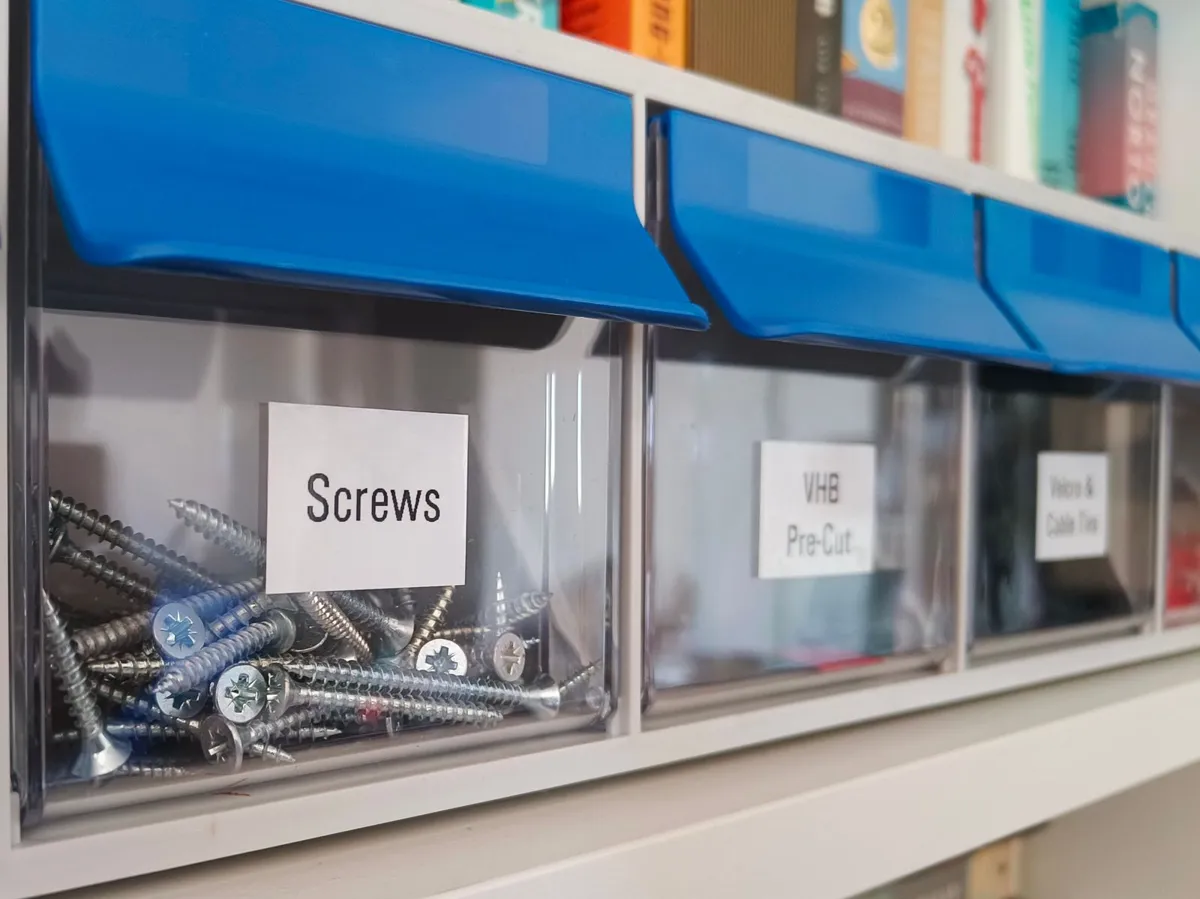
The three tray selection mistakes I meet most often when visiting workshops have nothing to do with price; they come from a tray that does not match the part, the shelf or the work area:
Construction and features of a component tray
A component tray is a single molded plastic body with a sloped front, ribs on the outer wall for stiffness and a groove on the top rim for stacking; those three details are what set it apart from a solid bin of the same size.
The bevel is the most important feature. The ICD A5 tray product page describes a 2/3 bevel front, meaning the front wall is lowered so the worker’s eyes look straight into the tray from above and a hand can reach in for parts without pulling the tray off the shelf. On the bevel there is a slot for a name card to write the part number. Ribs running around the outer wall keep the tray steady on the shelf, even when full. The groove on the top rim lets trays stack in line or staggered, saving bench space.
On material, the product pages for A5, A8 and A9 state PP or HDPE. The three material groups below decide which area of the plant a tray can be used in:
An anti-static tray differs from an ordinary tray in the resistance of the material. The ANSI/ESD S541 standard on packaging for static-sensitive items, issued by the ESD Association (EOS/ESD Association), splits materials into three groups by resistance, and only the conductive or dissipative group may touch sensitive parts directly. The table below helps you read the resistance figures in a catalogue correctly:
| Material group (ANSI/ESD S541) | Resistance | Meaning for a component tray |
|---|---|---|
| Conductive | Under 1.0 x 10^4 Ω | Charge drains away very fast; common in shielding packaging and conductive bins |
| Dissipative | From 1.0 x 10^4 to under 1.0 x 10^11 Ω | The usual range for ESD trays and boxes; charge drains away in a controlled way |
| Insulative | From 1.0 x 10^11 Ω and above | Ordinary PP and HDPE trays; not for sensitive parts inside an ESD protected area |
ICD Vietnam component tray size table
ICD bevel-front trays are named by the letter A plus a number, and the bigger the number the bigger the tray: A5 is 198 mm long for small electronic parts, A9 is 482 mm long for mechanical parts and semi-finished goods. Choose the code by the largest part to be held and the depth of the shelf cell.
The outer size decides whether the tray fits the shelf cell, while the inside size tells you whether the part fits. The table below collects the specifications published on the ICD product pages, checked on 16 October 2026:
| Code | Outer size (mm) | Inside (mm) | Tray weight | Matching tray feet |
|---|---|---|---|---|
| A5 | 198 x 135 x 90 | 180 x 111 x 86 | 150 g | No separate code |
| A6 | 238 x 152 x 124 | 218 x 126 x 118 | 200 g | ICD-CHANKHAY-A6A8 |
| A8 | 354 x 210 x 143 | 300 x 180 x 136 | 400 g | ICD-CHANKHAY-A6A8 |
| A9 | 482 x 308 x 178 | 420 x 270 x 172 | 1,050 g | ICD-CHANKHAY-A9 |
In the ICD Vietnam component tray category, each code has its own page listing colors and options. A5 comes in blue, green, yellow and red; A6 adds purple and gray; A8 comes in all seven colors including black; A9 comes in blue, green and yellow. The A6 tray has outer dimensions of 238 x 152 x 124 mm; if it must fit a cabinet or cart with fixed cells, measure a real sample before ordering a large quantity.
A small tip when counting trays for a shelf cell: divide the inside width of the cell by the outer width of the tray, then subtract 1 tray to leave a gap for pulling trays in and out. For multi-level shelves, also measure the clearance above the bevel edge, because workers need room for a hand to reach in, not just a tray that fits tightly.
ESD anti-static component trays - when are they mandatory?
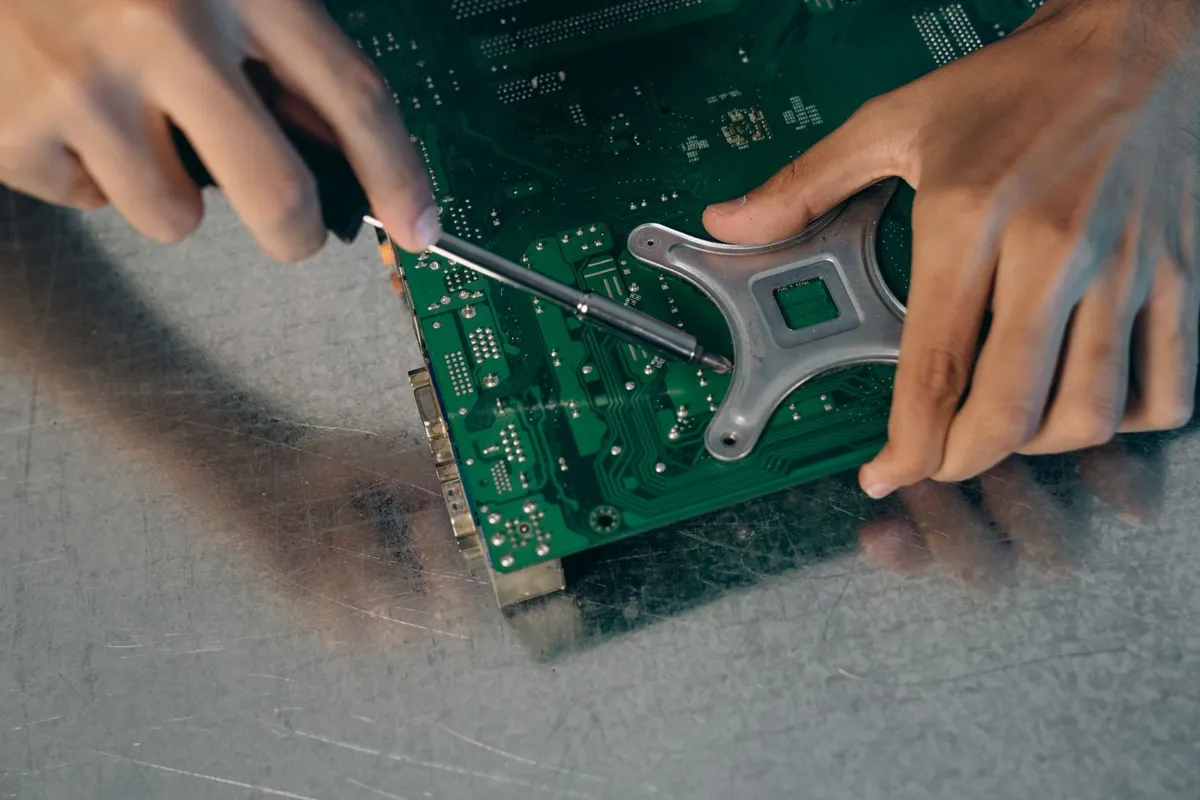
ESD trays are mandatory when the parts inside are static-sensitive, such as ICs, MOSFETs, LEDs and circuit boards, and are handled in an ESD protected area (EPA) under the plant’s ESD control program; for screws and mechanical parts, an ordinary PP or HDPE tray is enough.
Static comes from very ordinary actions: walking, standing up from a chair, lifting a plastic bag. According to the ESD Association’s introductory material, many components can fail at under 100 V, while the voltage generated during handling is usually far higher and depends strongly on humidity. The same action at 10-25% humidity generates voltages dozens of times higher than at 65-90% humidity:
In northern Vietnam, the dry months at the end of the year and cleanrooms with continuous air conditioning are when humidity is lowest, and also when the risk of electrostatic discharge is highest. Damage from static is usually invisible: the part still assembles, still passes inspection, then fails early once it is inside the customer’s product.
Not every tray in an electronics plant has to be ESD. Control programs under ANSI/ESD S20.20 or IEC 61340-5-1, two technically equivalent standards, set the requirements for static-sensitive items. Inside the EPA, packaging and trays touching sensitive parts must be at least low-charging and dissipative material; when parts leave the EPA, the packaging must add a static discharge shielding layer. Mechanical spare parts stores or finished goods packing areas that are already sealed can still use ordinary trays.
To identify ESD items, read the symbol and the figures, not only the color. Under ANSI/ESD S8.1, the ESD protective symbol is a triangle with a hand and an arc around it, printed on materials and packaging that protect; the ESD susceptibility symbol is a triangle with a hand crossed out, used to mark parts and equipment that are easily damaged by static. The black color of an ESD tray comes from an additive, but a black tray is not necessarily an ESD tray, so always ask for the surface resistance value and how it was measured.
The ICD range of ESD anti-static component boxes uses its own numbering, which does not overlap with the A5 to A9 system of ordinary trays. The size table on the product page lists 11 sizes: no. 1 (95 x 105 x 50 mm), no. 2 (165 x 95 x 70), no. 3 (175 x 105 x 80), no. 4 (200 x 130 x 90), no. 5 (235 x 155 x 120), no. 6 (104 x 104 x 49), no. 7 (140 x 122 x 68), A2 (180 x 121 x 79), A3 (253 x 155 x 125), A4 (352 x 201 x 143) and A5 (450 x 300 x 170). So ESD box A4 is close in size to ordinary tray A8, and ESD box A5 is nearly as big as tray A9, so when ordering, state clearly whether you want the ESD range or the ordinary range. If you import trays or component boxes, how to choose the customs code is explained in the article on the HS code for plastic crates.
Component tray applications by industry
Component trays are used most in electronics assembly, machine shops and auto and motorbike parts workshops; they also appear in pharmaceutical packing areas and garment workshops to sort small supplies.
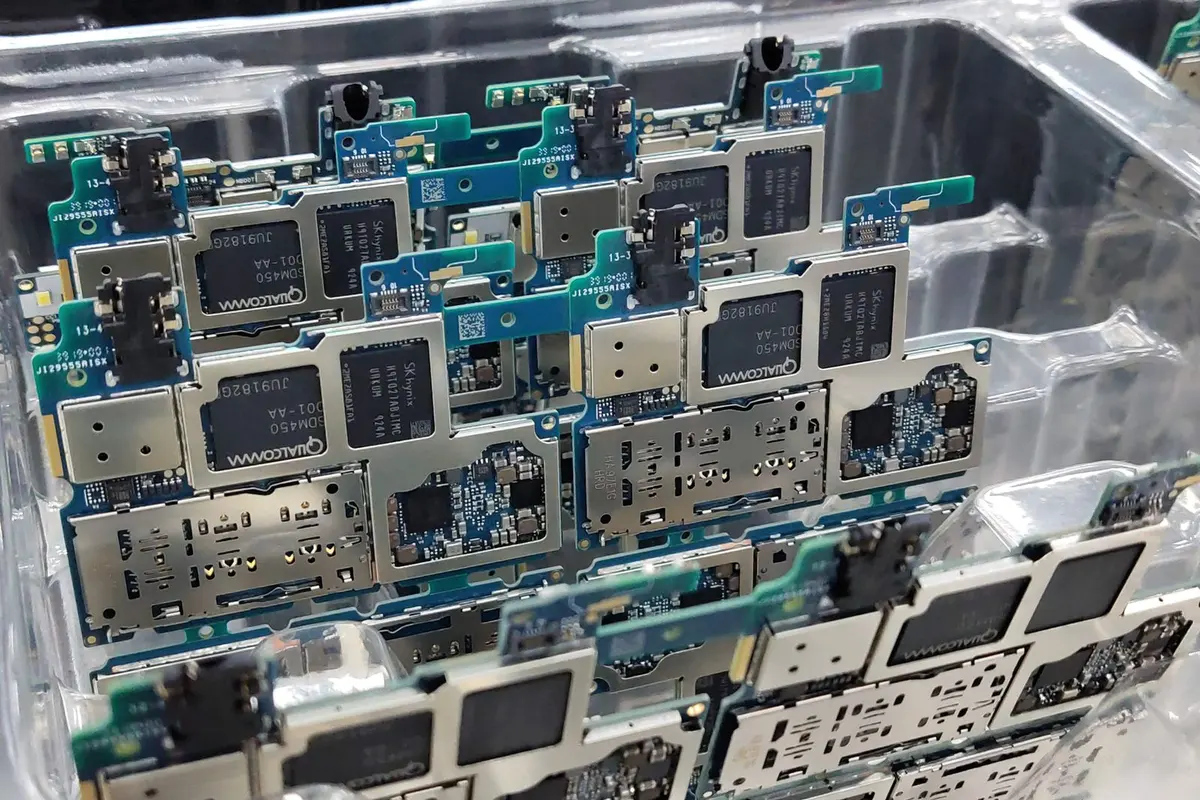
In an electronics workshop, small ESD boxes hold SMD parts and ICs at EPA work benches, while ordinary trays hold screws, plastic bases and accessories that are not static-sensitive in the mechanical assembly area. In machine shops and parts workshops, trays A6, A8 and A9 hold bolts, nuts and couplings on shelves beside the line; where there is oil and grease, choose thick, easy-to-wash trays. Garment workshops use multi-colored trays to separate buttons, zippers and labels, things too small to hold in a large solid bin.

For pharmaceuticals and food, trays holding packaging supplies should be virgin plastic with a smooth surface for wiping. If a tray touches food or unpacked medicine directly, ask the supplier for a certificate of conformity to the food-contact packaging regulations before use, because that is a different requirement from an ordinary component tray.
Arranging component trays on shelves and work benches
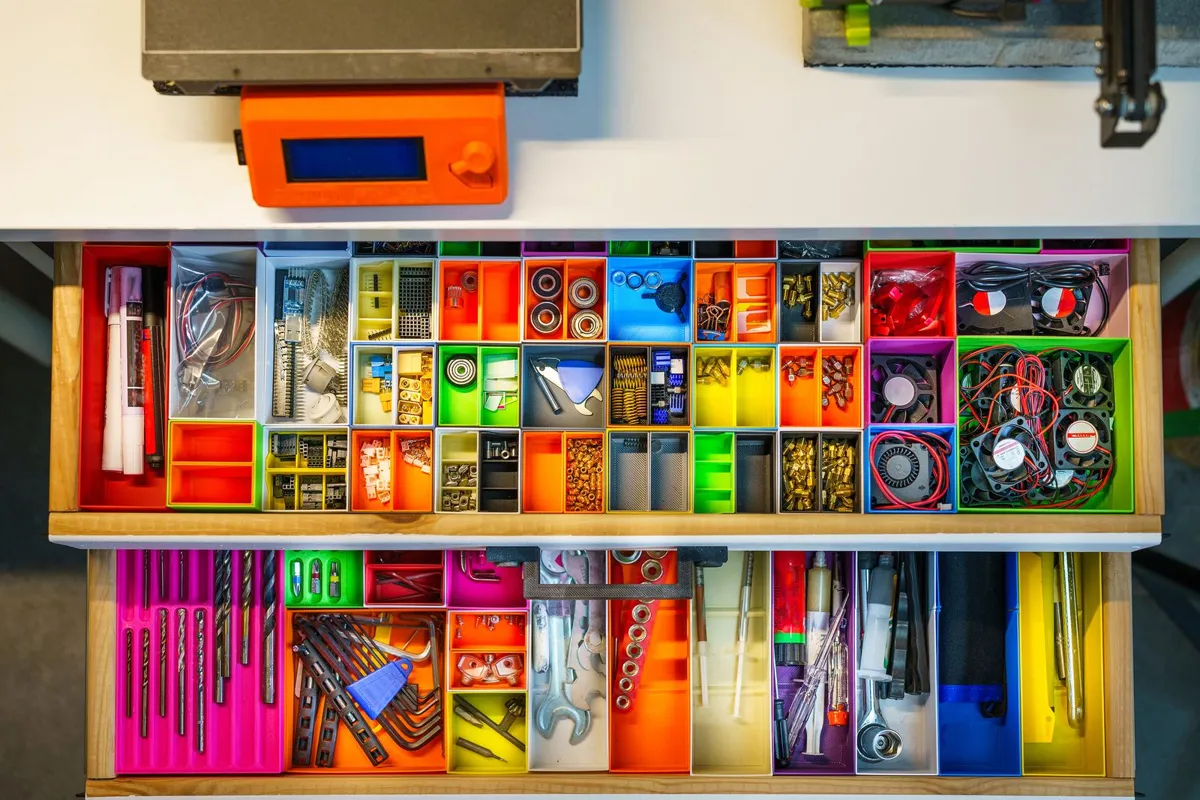
Component trays are usually arranged one of three ways: placed one by one on a sloped shelf, hung on a panel behind the work bench, or stacked into blocks on the bench. The choice depends on the number of part types and how often parts are picked.
For trays A6, A8 and A9, ICD has a separate PP tray foot set, 4 feet per tray, fitting into the 4 base corners without screws or glue. The feet for A6 and A8 share one code, while the A9 feet do not interchange with the other two sizes; the A5 tray currently has no separate feet.
For 5S management, many workshops assign tray colors by supply group or status, for example red trays for defective goods awaiting handling, and place a name card with the part number on the bevel. When buying for a new line, I advise customers to settle the color scheme first and then order the quantity of each color, because not every code is available in every color.
Frequently asked questions
Can component trays be stacked?
Yes. ICD component trays have a groove on the top rim to stack in line or staggered, and there are separate tray feet for A6, A8 and A9 when you need to raise them. The safe number of tiers depends on the weight of the parts inside, so keep the block of trays upright and do not stack beyond the worker’s reach. On a sloped shelf, trays sit alone in each cell.
How is an ESD component tray different from an ordinary tray?
An ESD tray is made from plastic with additives so that surface resistance falls in the dissipative range, from 1.0 x 10^4 to under 1.0 x 10^11 Ω under ANSI/ESD S541, so charge drains away in a controlled way rather than building up. Ordinary PP and HDPE trays have a resistance of 1.0 x 10^11 Ω or more, which puts them in the insulative group.
How do component trays A5, A6, A8 and A9 differ?
They differ mainly in size and weight. A5 is 198 mm long and weighs about 150 g; A6 is 238 mm long, about 200 g; A8 is 354 mm long, about 400 g; A9 is 482 mm long, about 1.05 kg. Small codes suit electronic parts and screws, large codes suit mechanical parts and semi-finished goods.
Can component trays be printed with a logo or divided with partitions?
Yes. The product pages for ICD trays list options for logo printing, name card slots, partitions and covers. Logo printing identifies assets between workshops, and partitions split several screw types within one tray. These options are usually priced by order quantity, so discuss them with the sales team first.
Do component trays withstand oil and grease?
PP and HDPE trays withstand the common lubricating oils and greases in machine shops. With strong solvents or concentrated cleaning chemicals, test on one tray before using them in bulk.
What does the triangle with a hand symbol on a tray mean?
Under ANSI/ESD S8.1, a triangle with a hand and an arc is the ESD protective symbol, showing that the material or packaging protects static-sensitive parts. A triangle with a hand crossed out is the ESD susceptibility symbol, used to mark parts and equipment that are easily damaged by static.
How long is the warranty on component trays?
ICD Vietnam trays and plastic bins carry a 12-month warranty under the warranty and repair policy published on the website.
Conclusion
Choosing a component tray means choosing three things: the tray size by part and shelf cell (A5 to A9), the material by work area (ordinary PP, HDPE or the ESD range), and the layout by how often parts are picked. For static-sensitive parts, ask for the surface resistance value instead of judging by tray color alone.
Contact us for component tray advice
ICD Vietnam Industrial Manufacturing Co., Ltd.
ICD Vietnam makes trays and plastic bins in its own workshop in Vietnam. Send us the type of parts, shelf cell dimensions, work area and quantity to get advice on the right tray code and a quote by quantity.
- North Vietnam: 0983 797 186 / 090 345 9186 / 090 5859 186.
- South Vietnam: 098 6784 186.
- Email: sales@icdvietnam.com.vn.
- Zalo: 090 345 9186.
ICD Vietnam trays and plastic bins carry a 12-month warranty under the warranty and repair policy published on the website.
References
- EOS/ESD Association, Fundamentals of ESD, Part 1: An Introduction to ESD (table of typical static voltages by humidity; linked in the construction section).
- ANSI/ESD S541, Packaging Materials for ESD Sensitive Items (classification of conductive, dissipative and insulative materials; packaging requirements inside and outside the EPA).
- ANSI/ESD S20.20 and IEC 61340-5-1, electrostatic discharge control programs (two technically equivalent standards).
- ANSI/ESD S8.1, ESD identification symbols (protective symbol and susceptibility symbol).
- Specifications for trays A5, A6, A8, A9, tray feet ICD-CHANKHAY-A6A8, ICD-CHANKHAY-A9 and ESD anti-static component boxes: ICD Vietnam product pages, checked on 16 October 2026.