
Table of Contents
- The top 5 plastic bins for growing fruit trees
- Choosing bin volume and depth by plant
- Preparing the bin: drainage, growing mix and position
- Watering, feeding and repotting fruit trees in bins
- Price and where to buy plastic bins for fruit trees
- Frequently asked questions
- What size plastic bin should I choose for growing fruit trees?
- What fruit trees should I grow in plastic bins?
- What volume should long-lived fruit trees like orange and pomelo get in a bin?
- Is a rectangular or round plastic bin better for fruit trees?
- How do I mix soil for fruit trees in a bin?
- How often should I water fruit trees in bins?
- Is it better to grow fruit trees in a foam box or a plastic bin?
- Contact us for plastic bin advice
- References
Reviewed and updated by ICD - Week 43/2026
Plastic bins for growing fruit trees should be HDPE or PP, light in color, deep enough and have drainage holes in the base. Citrus such as lemon, kumquat and grafted orange needs a final container of roughly 57 - 114 liters according to US extension guides; bins for wax apple and guava should be at least 45 - 50 cm wide and tall. Put the bin where it gets 6 - 8 hours of direct sun a day and raise it on feet so water drains completely.
I am Le Van Thang, and I have worked at ICD Vietnam since 2011. Our workshop makes industrial plastic crates, built to hold and move goods, yet many customers buy them, drill the base and grow lemon, guava and orange on their rooftops. This article compares the five types of bin most often used, how to choose a volume for each plant, how to layer the drainage, and a schedule for watering, feeding and repotting. The technical figures come from the extension guides and studies listed at the end.
The top 5 plastic bins for growing fruit trees
The five types differ mainly in volume, depth and how they hold water. The table below gives a quick comparison before we look at each one:
| Bin type | Common volume | Suits | Watch out for |
|---|---|---|---|
| Rectangular bin | 15 - 100 liters | Strawberry, chili, tomato; ambarella, guava and lemon in large sizes | Drill enough base holes; a bin under 30 cm deep suits only shallow-rooted plants |
| Plastic drum | 100 - 220 liters | Pomelo, orange, jackfruit, star apple | Use only drums that held food or new drums; very heavy when full of soil |
| Smart (self-watering) bin | 20 - 80 liters | Plants needing even moisture: lemon, strawberry, fruiting vegetables | Still needs an overflow hole so heavy rain does not flood the roots |
| Black plastic bin | Any size | Heat-loving plants, regions with a cold season | Roots overheat easily in hot sun; shade the bin wall |
| Plastic bucket or pot | 5 - 30 liters | Seedlings, small fruit plants, ornamentals | Move up to a bigger pot once roots fill the root ball |
1. Rectangular plastic bins
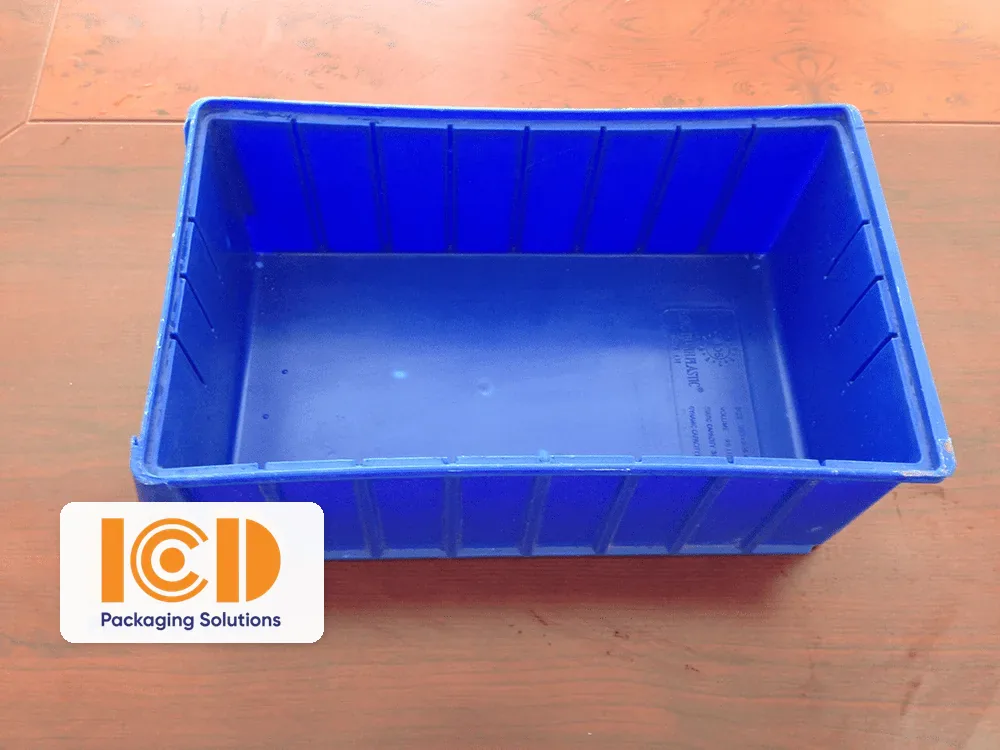
Rectangular bins line up tightly in rows and use every bit of balcony or rooftop floor, so they are the most popular. Small sizes suit strawberry, chili and tomato; large, deep ones work for guava, lemon and ambarella. Most industrial bins have no base holes, so before planting you must drill drainage holes and check the inside depth, because a shallow bin suits only shallow-rooted plants.
2. Plastic drums for large trees
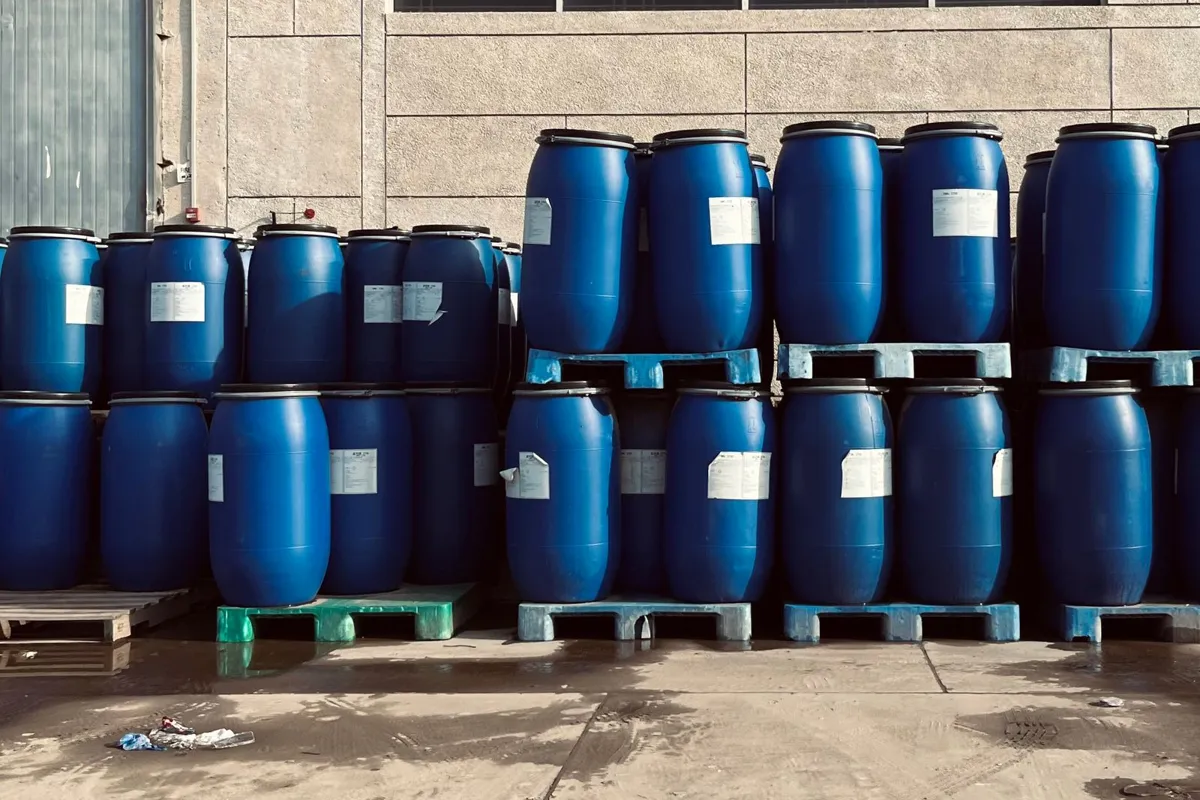
A plastic drum of 100 - 220 liters is the choice for large, long-lived trees such as pomelo, orange, star apple and jackfruit. A drum is heavy and stable, so wind rarely tips it. When you reuse an old drum, pick only one that held food, soft drinks or a new drum; do not use one that held chemicals or oil, because the residue is hard to wash out. A 220 liter drum cut in half across the middle makes two pots of about 110 liters, inside the 76 - 114 liter range that Texas A&M Extension recommends for a citrus final pot. Drill 6 - 10 base holes and raise the drum on bricks or a stand before filling it with growing mix, because once full of wet soil a drum is almost impossible to lift.
3. Smart (self-watering) plastic bins
A self-watering bin has a water reservoir at the bottom, separated from the growing mix by a support plate; water is drawn up through a mix column or a wick by capillary action. The plant still grows in mix like a normal pot, except that moisture is more even and watering takes less effort, which suits people who work all day. This kind of bin must have an overflow hole just under the support plate; otherwise heavy rain will raise the water and flood the root zone.
4. Black plastic bins
A dark bin absorbs more heat, which helps where there is a cold season but hurts in strong sun. In Vietnam, especially on a rooftop in summer, the wall of a black bin facing west can get hot enough to stunt the roots on that side.
5. Plastic buckets and pots
Plastic buckets and pots of 5 - 30 liters are cheap, light and easy to move with the sun, and suit newly bought seedlings, strawberry, chili and small fruit plants. They are only temporary pots: once the roots fill the root ball, the plant needs a larger bin, or it will stay stunted and fruit poorly.
Choosing bin volume and depth by plant
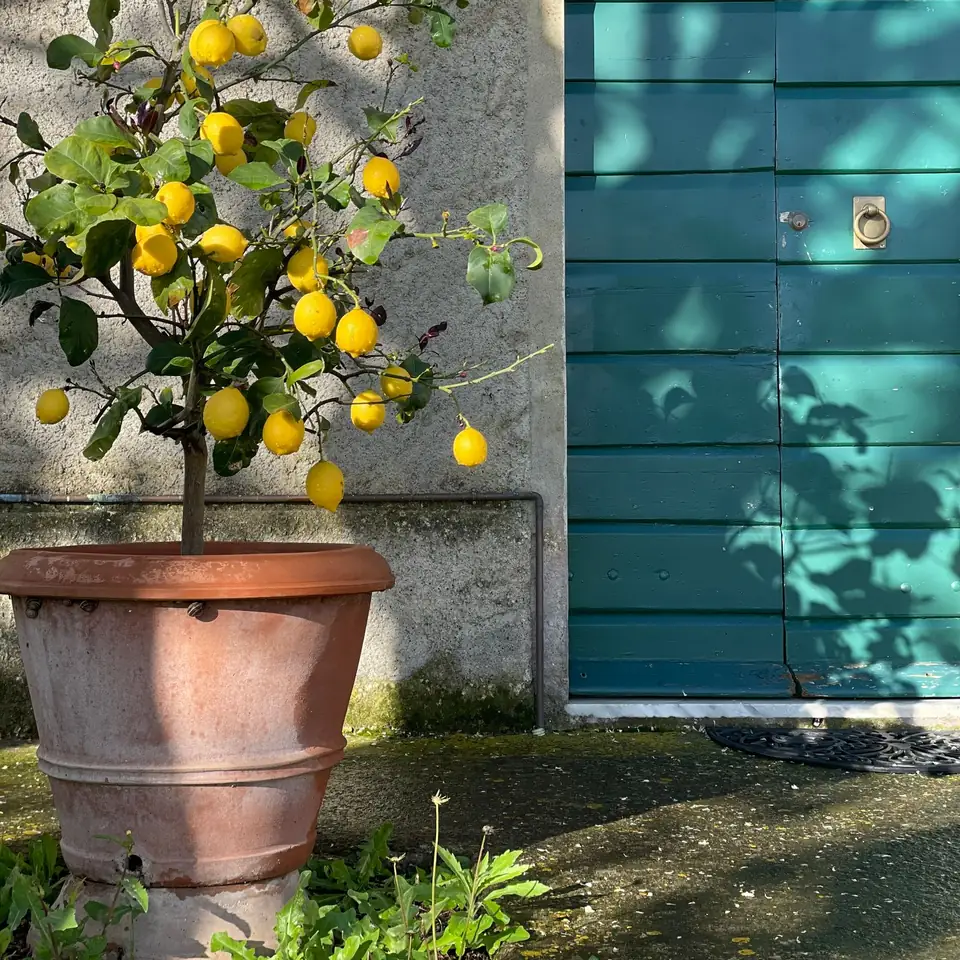
Bin volume (liters) is length x width x height of the inside in cm, divided by 1,000. For example, a bin with an inside of 48 x 39 x 21 cm holds about 39 liters; after subtracting the drainage layer at the bottom and the watering gap at the top, the real amount of mix is only about 25 liters. So choose a bin a little bigger than the minimum. The table below collects the sourced benchmarks:
| Plant, stage | Recommended bin size | Source |
|---|---|---|
| Newly bought citrus (8 - 12 liter root ball) | Move to a larger bin within the first year, then repot every 3 - 5 years | Mississippi State University Extension |
| Citrus, final pot | About 57 liters (15 gallons) up to 76 - 114 liters (20 - 30 gallons) | Mississippi, Texas A&M |
| Citrus, final pot diameter | 46 - 91 cm (18 - 36 inch) | Clemson Extension |
| Guava, lemon on a rooftop | 45 x 45 cm or 45 x 60 cm gave the most fruit of 4 sizes tested | ICAR-CISH, India, 2017 - 2019 |
| Wax apple (rose apple) | Diameter from 50 cm, height over 50 cm, holes drilled in the base | Quang Nam Extension Center |
Do not plant a small tree straight into a very large bin: the mix without roots holds water for a long time and easily causes waterlogging. According to Mississippi State University Extension, citrus is usually sold in a 2 - 3 gallon (8 - 12 liter) root ball, needs a larger pot within the first year, then repotting every 3 - 5 years up to about 15 gallons (57 liters). Enter the inside dimensions of the bin you have into the tool below to see which group of plants it suits:
Preparing the bin: drainage, growing mix and position
Three things keep a plant in a bin healthy: a base that never holds water, a loose, airy mix and enough sun.
The diagram below summarizes how to layer the bin. The guide from UC Master Gardeners advises raising the pot at least half an inch (about 1.3 cm) off the floor and not using plain garden soil because it drains poorly; Clemson Extension notes that the plant should sit so the flare at the base (the root collar) is above the surface of the mix, to avoid collar rot.
Base holes are essential: a plastic bin does not pass water through its wall like a terracotta pot, so all surplus water must leave through the base. After each watering, check that water runs out of the holes; if the base still holds water, drill more holes or raise the bin higher. Bins set close together on a rooftop should sit on timber battens, bricks or a pallet so water can run out onto the floor.
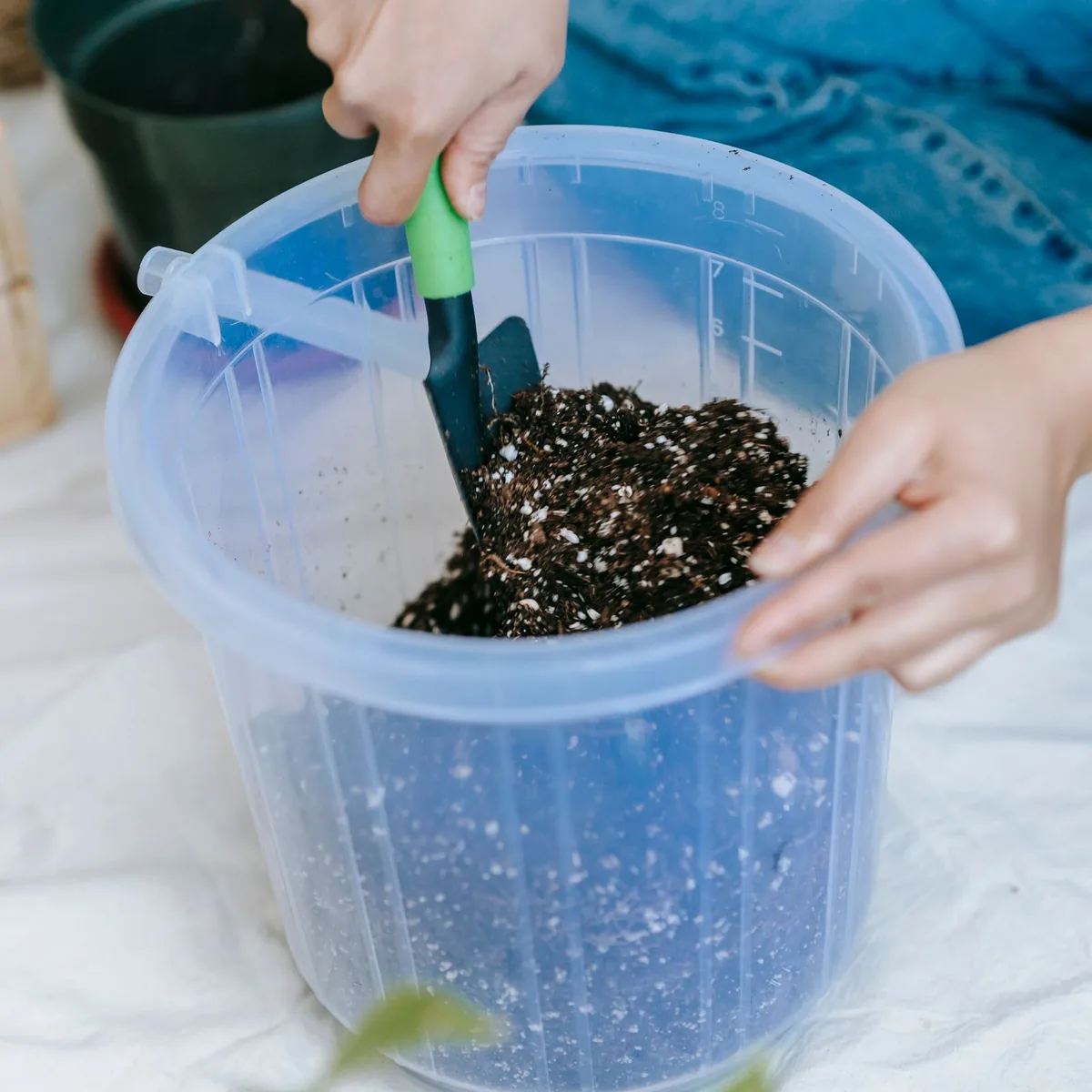
For the growing mix, Clemson Extension suggests 4 parts pine bark to 1 part peat or coconut fiber for citrus, at a pH of about 5.5 - 6.5. In Vietnam, Quang Nam Extension advises growing wax apple in a bin using soil mixed with well-rotted cow manure, chicken manure, worm castings, rice husk, coconut fiber or peat, with lime added as a base dressing and the mix left to air for 7 - 10 days before planting to deal with pathogens. What they share is that plain garden soil is not used, because in a bin soil compacts easily and drains poorly.
On position, University of Maryland Extension advises that container citrus needs at least 6 hours of direct sun, while Clemson gives 8 hours. A balcony or rooftop facing southeast or south usually gets enough sun. Avoid spots with strong drafts, because a tall plant in a bin tips easily; in the rainy season, give a light cover so the mix does not stay waterlogged for long.
Watering, feeding and repotting fruit trees in bins
A plant in a bin cannot send roots out to look for water and nutrients the way a ground-grown plant does, so the schedule for watering, feeding and repotting decides the yield. The four benchmarks below come from the extension guides and studies cited:
Bin volume limits plant size, so do not expect yields like a ground-grown tree. Buy a grafted or air-layered plant rather than a seedling: according to Texas A&M Extension, a citrus tree grown from seed can take 7 - 15 years to fruit. If you only want everyday vegetables, a shallower bin is enough; see also how to grow vegetables in plastic bins.
Price and where to buy plastic bins for fruit trees
The price of plastic bins for planting rises with volume and wall thickness: small buckets and pots are cheapest, drums and self-watering bins cost the most. ICD Vietnam does not list prices in articles; the price of an industrial bin depends on the model, quantity and timing, so please contact us for a quote.
There are three main channels: farm supply shops (see the item in person, usually many small pots and buckets), e-commerce platforms (many models but hard to check the material), and industrial bin manufacturers when you need many bins of the same size. Among the plastic bins ICD Vietnam makes, the closed-wall solid plastic bins are the type customers most often drill to use as planters.
Frequently asked questions
What size plastic bin should I choose for growing fruit trees?
For guava and lemon, choose a bin of 45 x 45 cm or larger; the ICAR-CISH rooftop trial (India) found that 45 x 45 and 45 x 60 cm gave the most fruit. Citrus in its final pot needs about 57 - 114 liters according to Mississippi and Texas A&M extension.
What fruit trees should I grow in plastic bins?
The easiest successes are small-canopy, grafted or air-layered plants such as lemon, kumquat, orange, guava, wax apple and strawberry. Avoid seed-grown plants: citrus grown from seed can take 7 - 15 years to fruit according to Texas A&M.
What volume should long-lived fruit trees like orange and pomelo get in a bin?
Texas A&M Extension recommends a final pot of 20 - 30 gallons, about 76 - 114 liters, for citrus. A 220 liter drum cut in half gives two pots of about 110 liters, which fits this range.
Is a rectangular or round plastic bin better for fruit trees?
Rectangular bins line up tightly in rows and save floor space; round bins such as plastic drums have large volume and suit big-canopy plants. More important than shape are the volume, depth and drainage holes.
How do I mix soil for fruit trees in a bin?
Clemson Extension suggests 4 parts pine bark to 1 part peat or coconut fiber, at pH 5.5 - 6.5 for citrus. With materials readily available in Vietnam, mix loose soil with well-rotted manure, rice husk and coconut fiber; do not use plain garden soil.
How often should I water fruit trees in bins?
Water when the top 5 - 7.5 cm of mix has dried. In hot weather you usually need to water every 2 - 3 days, or more often for a small bin, and much less often in the cool season.
Is it better to grow fruit trees in a foam box or a plastic bin?
A foam box is light, cheap and well insulated, so it suits a trial or the first few years of a plant. For a long-lived plant, a thick-walled HDPE or PP bin is more durable, does not break when moved and bears the weight of the plant and wet mix.
Contact us for plastic bin advice
ICD Vietnam Industrial Manufacturing Co., Ltd.
If you need to choose a plastic bin as a planter by volume, depth and quantity, send the size you want and the plant type, and we will suggest a suitable model.
- North Vietnam: 0983 797 186 / 090 345 9186 / 090 5859 186.
- South Vietnam: 098 6784 186.
- Email: sales@icdvietnam.com.vn.
- Zalo: Chat with ICD Vietnam on Zalo.
ICD Vietnam plastic bins carry a 12-month warranty under the warranty and repair policy published on the website.
References
- Mississippi State University Extension, Growing Citrus in Containers in Mississippi: 2 - 3 gallon root ball, repotting in the first year, every 3 - 5 years, final pot about 15 gallons.
- Texas A&M AgriLife Extension, Container-Grown Citrus: final pot 20 - 30 gallons, seed-grown plants take 7 - 15 years to fruit.
- Clemson Cooperative Extension HGIC, Container Citrus Production: final pot 18 - 36 inches, 8 hours of sun, pH 5.5 - 6.5, mix of 4 pine bark : 1 peat or coconut fiber, water when the top 2 - 3 inches have dried, root collar above the mix surface.
- University of Maryland Extension, Growing Dwarf Citrus: at least 6 hours of sun, N-P-K fertilizer 2-1-1 or 3-1-1, about 3 years between mix changes.
- UC Master Gardeners San Luis Obispo County, Growing Citrus in Pots: raise the pot off the floor, do not use plain garden soil.
- Markham, Boyer et al., Container color affects root and shoot growth, HortScience 46(5): 721-726, 2011.
- Srivastava et al., Standardization of container size and fruit crop for growing in containers, Progressive Horticulture, 2019 (ICAR-CISH, Lucknow): study summary.
- Quang Nam Extension Center, How to grow and care for wax apple (rose apple) in foam boxes, published on the Da Nang Extension site on 31 May 2021.