
Table of Contents
- Is it okay to store rice in a plastic bin?
- Which plastic is safe for storing rice?
- How to tell a plastic bin is safe for storing rice
- What is best for storing rice?
- Tips for storing rice properly in a plastic bin
- From the feng shui and traditional viewpoint
- Frequently asked questions (FAQ)
- Is it safe to store rice in a plastic bin?
- Can I store rice in an old paint bucket that has been washed clean?
- Is a transparent rice bin better than an opaque colored one?
- Can long use of a plastic bin cause food allergies?
- Why do many people advise against storing rice in plastic bins?
- Should I keep rice in the fridge?
- How many kg of rice does a 20 liter bin hold?
- How long does rice keep in a bin?
- Contact ICD Vietnam
- References
Reviewed and updated by ICD - Week 43/2026
Storing rice in a plastic bin is not harmful if the bin is made from virgin food-grade PP (no. 5) or HDPE (no. 2) plastic that meets QCVN 12-1:2011/BYT (heavy metal migration of at most 1 µg/ml, dry residue for PE and PP of at most 30 µg/ml). The bigger real risk is damp, mold and weevils: keep rice below 14% moisture, close the lid tightly and store it somewhere cool.
I am Le Van Thang, and I have worked at ICD Vietnam since 2011. Customers who buy lidded plastic bins for the home or a canteen kitchen often ask one question: “Is it toxic to store rice in one?” The answer depends on the type of plastic. A bin made from PP (no. 5) plastic is the best choice for long-term rice storage because it handles heat well, needs no BPA to make and lasts through many openings and closings. HDPE (no. 2) plastic is also a safe choice, inert to most foods.
Is it okay to store rice in a plastic bin?
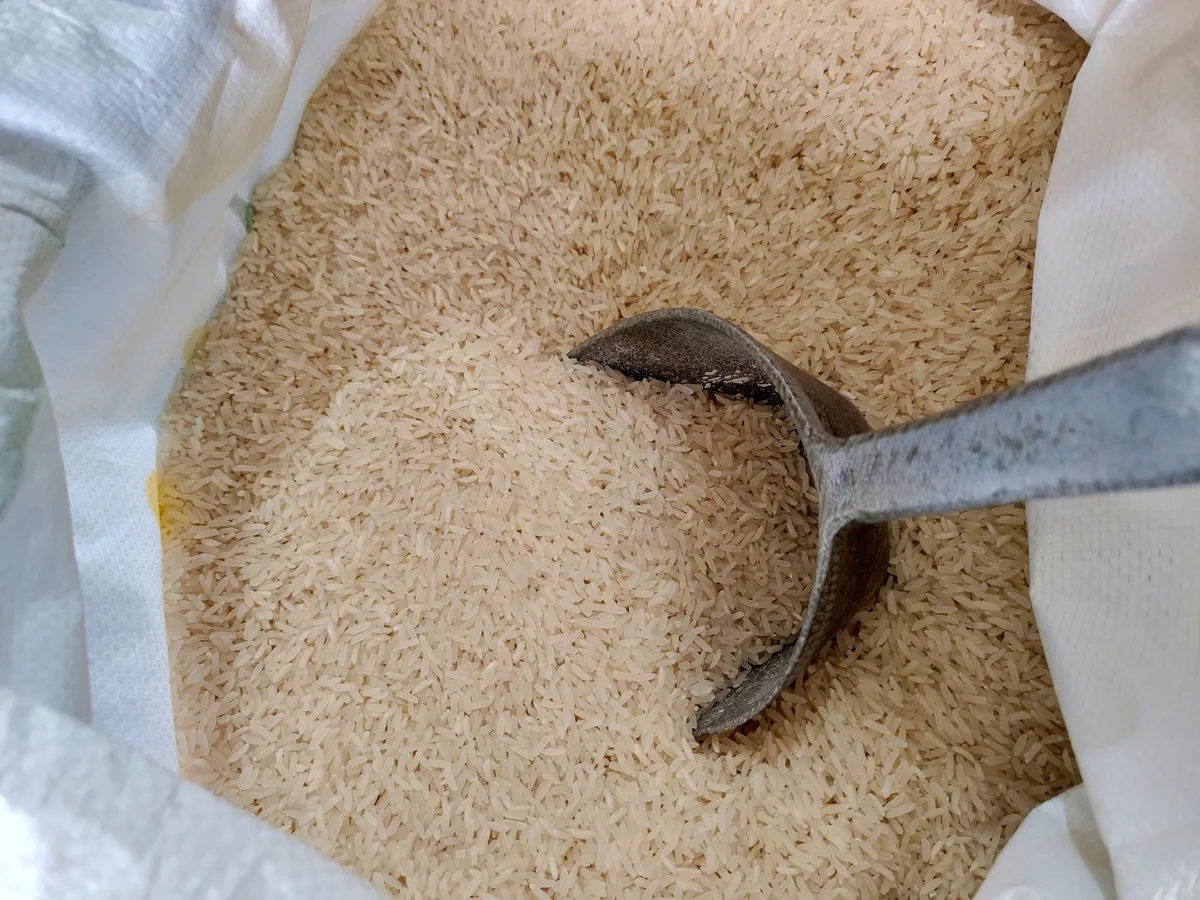
Yes, as long as the bin is made for food contact. Rice is a dry food kept at room temperature, while the QCVN 12-1:2011/BYT tests soak the plastic in simulating liquids under far harsher conditions than storing rice involves.
Many families worry that chemicals or additives in plastic can migrate into the rice. The regulation tests exactly this using four test solutions, each simulating a food group:
A bin that has passed these tests faces much milder conditions when holding rice.
Guidance from the Hong Kong Centre for Food Safety says the same: the amount released from plastic rises with the fat content, acidity and temperature of the food, while with proper use the migration is very low and unlikely to pose a health risk. They also advise reusing a container only for its original purpose, for example a water bottle should only hold water again. So for rice, what matters is the material and origin of the bin, not the use of plastic itself.
Which plastic is safe for storing rice?
PP (no. 5) and HDPE (no. 2) are the two most suitable plastics for long-term rice storage; PET (no. 1) should be used once only, and PVC (no. 3), PS (no. 6) and PC (no. 7) should be avoided.
Under most plastic items there is a triangle with a number from 1 to 7, the code that identifies the plastic type. The figure below summarizes how suitable each code is for storing rice:
Plastics that are safe for storing rice
PP is the top choice for a rice bin. It is durable, withstands temperatures above 100°C, does not react with dry food and needs no BPA to make. PP belongs to the olefin polymer group that the US Food and Drug Administration (FDA) permits for food contact under regulation 21 CFR 177.1520. The FDA does not certify individual products, so the manufacturer must show that its bin meets the regulation. Most food containers, yogurt cups and baby bottles are made from PP. Because it handles heat, a lidded PP bin also suits soaking beans in warm water and sprouting bean sprouts at home.
HDPE is also a very safe choice: impact resistant and chemically inert, so it is often used for jerrycans, food and water containers. Compared with PP, HDPE is more flexible and less brittle in cold weather, but it handles heat less well, which does not matter when you only keep rice at room temperature.
Plastics to be careful with or avoid for rice
PET (no. 1) is used for mineral water and soft drink bottles. It is safe for single use but is not designed as a long-term food container, so used bottles should not be repurposed as rice jars. PVC (no. 3), PS (no. 6), PC and other types (no. 7) should not be used for rice or food in general, because they may contain substances such as vinyl chloride monomer (VCM), styrene or BPA.
Some rice bins on the market are made from ABS plastic, which falls under group no. 7. ABS is rigid and impact resistant but is not the default choice for food; use it only when the manufacturer clearly states that the product meets the food-contact packaging regulation.
How to tell a plastic bin is safe for storing rice
A bin that is safe for rice has a no. 5 or no. 2 code on the bottom, a food-use symbol, no odd smell and papers showing it meets QCVN 12-1:2011/BYT. When buying, check in this order:
- Turn the bin over and look for a triangle with the number 5 (PP) or 2 (HDPE).
- Look for the glass and fork symbol on the label or the bin body, the manufacturer’s statement that the product is food-safe.
- Choose a bin with even color and no smell; avoid plastic bins of unknown recycled origin, with garish color and a strong plastic smell.
- Buy from a seller who states the material clearly and can supply a declaration of conformity or a test result sheet.
A no. 5 code is not enough: a food bin must meet QCVN 12-1:2011/BYT
The number in the triangle only tells you the plastic type, not that the bin is safe for food. In Vietnam, plastic packaging and utensils in direct contact with food must meet QCVN 12-1:2011/BYT, issued with Circular 34/2011/TT-BYT and in force from 1 March 2012. The regulation tests two groups: toxic metals present in the material, and the amount released when the plastic is soaked in solutions simulating food.
| Parameter | Test condition | Maximum limit |
|---|---|---|
| Lead in the plastic material | Direct analysis of the material | 100 µg/g |
| Cadmium in the plastic material | Direct analysis of the material | 100 µg/g |
| Heavy metal migration | Acetic acid 4%, 60°C for 30 minutes | 1 µg/ml |
| KMnO4 consumed | Water, 60°C for 30 minutes | 10 µg/ml |
| Dry residue (PE and PP only) | Heptane 25°C for 1 hour; ethanol 20%, water, acetic acid 4% at 60°C for 30 minutes | 30 µg/ml |
When buying a bin to store rice for a family, shop or canteen kitchen, you can ask the seller for a declaration of conformity or a test result sheet under the regulation above. Ordinary industrial plastic bins, used for parts, chemicals and rubbish, are not designed for this purpose even when they carry the same no. 2 or no. 5 code. For ICD Vietnam bins, the material of each code is stated on the product page; if you plan to store food, state the purpose when asking for a quote so we can advise on the model and the papers that come with it.
What is best for storing rice?
For most families, a lidded PP or HDPE plastic bin with a tight seal is the most balanced choice; a clay jar keeps rice cool but is heavy and breakable, a stainless steel bin is durable but costs more, and a glass jar suits small amounts.
| Material | Advantages | Drawbacks | Best for |
|---|---|---|---|
| PP, HDPE plastic bin | Light, sealed, easy to clean, reasonable price | May scratch after a long time | Everyday rice, 1 - 2 months of stock |
| Clay or ceramic jar | Inert, keeps cool, insulates well | Heavy, breakable, lid often seals poorly | Families who value tradition |
| Stainless steel bin | Durable, rustproof, easy to clean | Higher price, heavier than plastic | Kitchen cabinets with a built-in rice tray |
| Glass jar | Inert, rice visible, weevils spotted early | Breakable, small capacity | A few kg of specialty rice |
| Wooden bin | Attractive | Prone to damp, mold and termites if untreated | Decoration, needs careful moisture protection |
Weighing safety, convenience, durability and cost, a lidded virgin PP bin is the most reasonable choice for most families. Clay jars and glass jars suit small amounts of rice and when you want a completely inert material; just make sure the lid seals well enough to keep out weevils and damp.
How many liters of bin hold how many kg of rice?
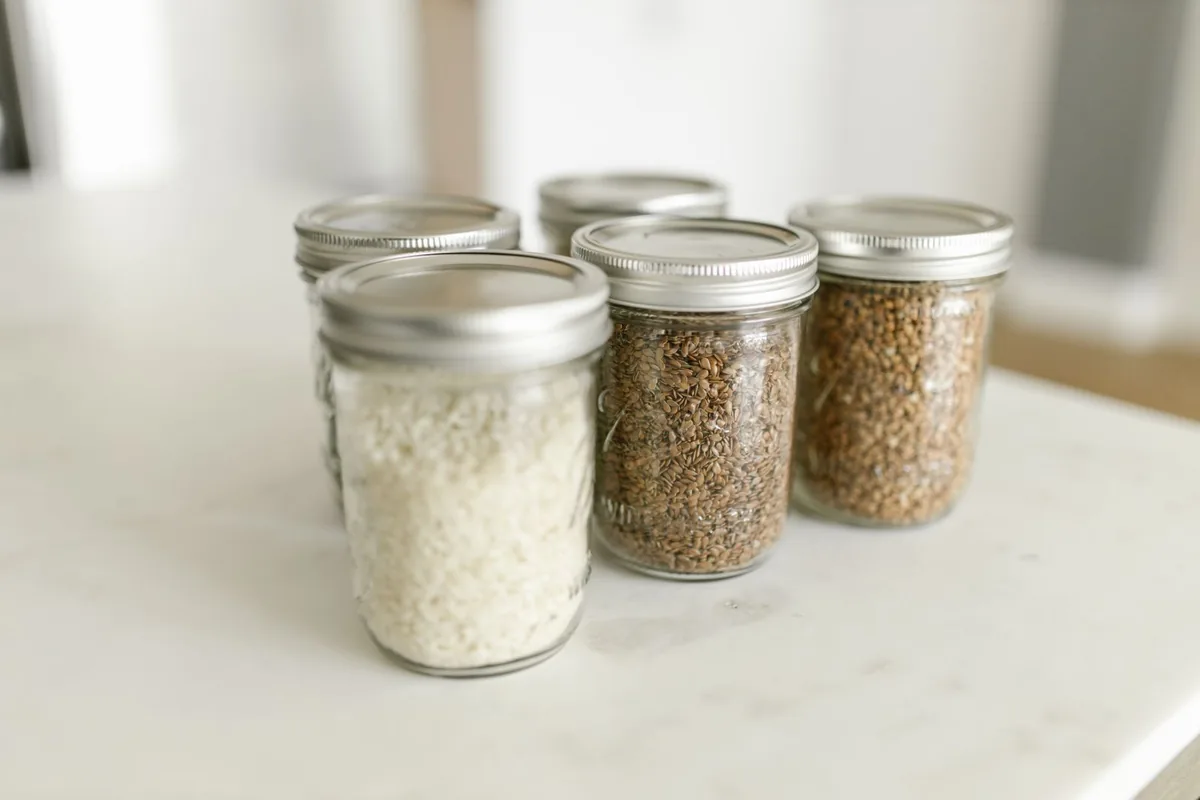
One liter of white rice weighs about 0.78 to 0.85 kg, depending on long-grain or round-grain variety (the rounder the grain, the denser it packs). Adding about 15% headspace for scooping and closing the lid, 10 kg of rice needs a 15 liter bin, 20 kg needs 30 liters, 25 kg needs 45 liters, 40 kg needs a 55 to 60 liter bin and 50 kg needs about 90 liters. You can enter the kg in the tool below for a quick calculation:
Do not choose a bin far larger than you need. Milled rice keeps good quality only for several weeks to several months in kitchen conditions, so the ideal amount to buy each time is enough for 1 to 2 months.
Tips for storing rice properly in a plastic bin
Rice keeps longest when dry, cool and sealed. According to IRRI, rice above 14% moisture is prone to mold, while most stored-grain insects thrive best at 25 to 32°C and about 70% air humidity, exactly the conditions of a summer kitchen in Vietnam.
- Wash the bin and dry it completely before pouring in new rice.
- Close the lid tightly after each use to keep out damp, weevils and rats. If the house already has rats, you can make a rat trap from a plastic bucket instead of spreading poison near where the rice is kept.
- Place the bin in a kitchen cabinet or a dry spot, away from direct sun and the cooker.
- Use up the old rice and clean the bin before adding new rice; do not pour new rice on top of old rice at the bottom.
Why does rice in a sealed bin still get weevils and mold?
The cause is usually not the bin but the rice and where the bin sits. The rice weevil (Sitophilus oryzae) lays eggs inside the grain, up to about 150 eggs per female, so rice bought may already carry eggs invisible to the eye. At 28°C and 70% air humidity, one life cycle from egg to adult weevil takes about 35 days, which is why weevils often appear after about a month.
On mold, FAO notes that in the humid tropics, sealed storage is safe only when the grain is dry and the temperature is stable. If you pour warm rice into the bin, or put the bin next to the cooker or a sun-facing wall, water vapor condenses into droplets on the walls and lid of the bin and soaks into the top layer of rice. According to IRRI material, rice needs 13 to 14% moisture to stay safe for several weeks to several months (the main risk is mold and discoloration), 12 to 13% if kept 8 to 12 months (the main risk is weevils), and 9% or below if kept for more than a year, a level that applies only to seed rice.
How does the national reserve keep rice?
National reserve rice is kept long by cutting oxygen and controlling moisture, not by special materials. Under QCVN 06:2019/BTC, a lot of rice is wrapped airtight and nitrogen is pumped in so nitrogen is at least 98% and oxygen at most 2%, inside a sealed warehouse with relative humidity no higher than 80%; with that method the storage time is 15 months.
At home, a rice bin cannot hold nitrogen like that. Every time you open the lid, humid air flows back in, so the bin only keeps out dust, weevils and rats, while rice quality still declines over time. That is why I always advise customers to buy just enough rice for 1 to 2 months, choose a bin with a tight lid and put it in the coolest spot in the kitchen, rather than buying a huge bin to store a whole year.
From the feng shui and traditional viewpoint
The advice “do not store rice in a plastic bin” comes mainly from feng shui beliefs, not from evidence about safety. If a family values this, it can use a clay or ceramic jar for everyday rice and a lidded plastic bin for reserve rice.
Why feng shui advises against plastic rice bins
Many families treat the rice jar as the “treasury” of the home. Under the Five Elements belief, plastic, an artificial industrial product, is classed as Fire, while rice, the crystallization of earth, belongs to Earth. Feng shui belief holds that Fire and Earth are in a clashing relationship, so using a Fire container for rice may cause an energy conflict and drain the household’s fortune.
Alternative materials favored in feng shui
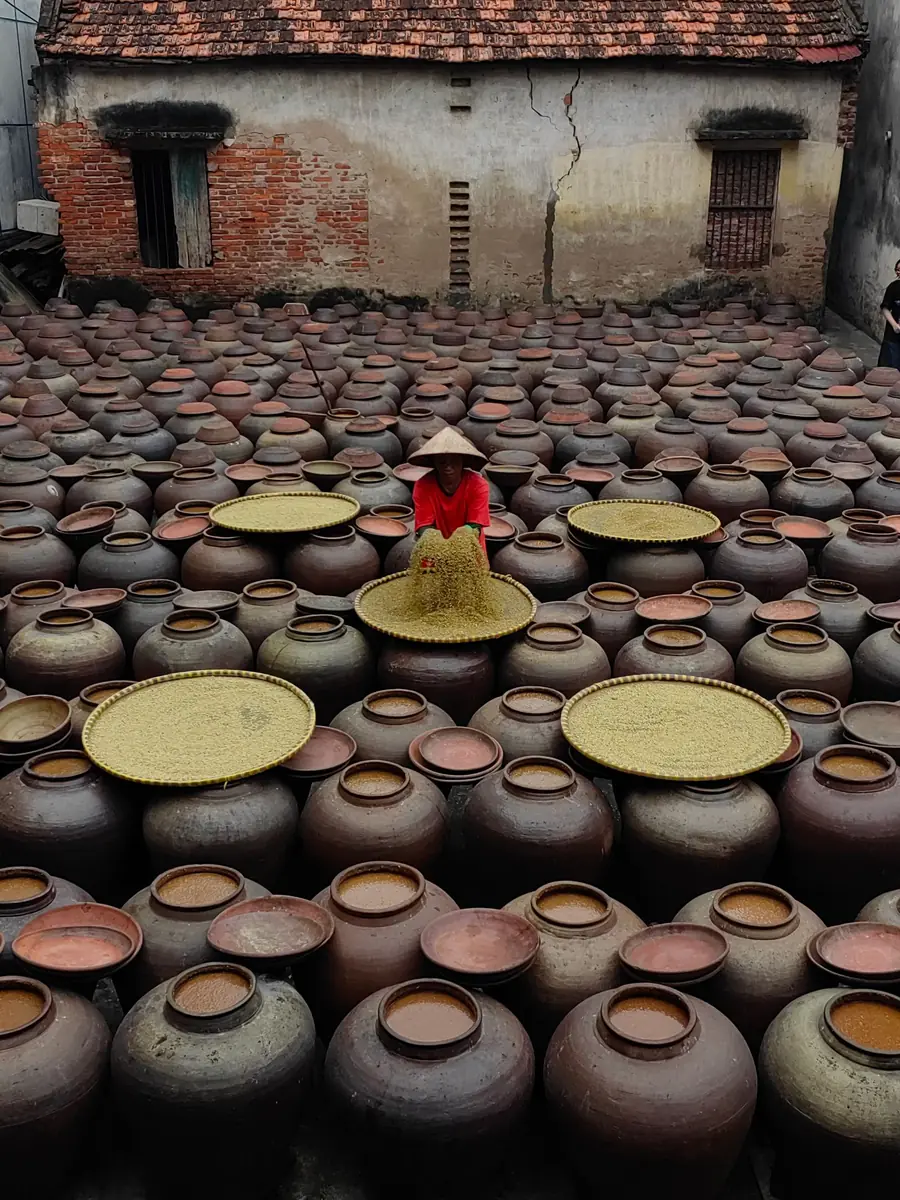
Pottery and ceramic, made from clay and also of the Earth element, are seen as the ideal choice: “Earth with Earth” suggests stability and a treasury that stays full. Physically, a clay jar also keeps rice cool and dry. Wood belongs to the Wood element; under the generating cycle where Wood generates Fire and Fire generates Earth, some people see a wooden bin as a good choice, provided the wood is treated against damp and termites.
Frequently asked questions (FAQ)
Is it safe to store rice in a plastic bin?
Yes, when the bin is made from virgin food-grade PP (no. 5) or HDPE (no. 2) plastic that meets QCVN 12-1:2011/BYT. Dry rice at room temperature causes much less migration than acidic, fatty or hot food; the bigger real risk is damp, mold and weevils.
Can I store rice in an old paint bucket that has been washed clean?
No. Paint buckets are made from industrial plastic and may still hold chemical or heavy metal residue. However well they are washed, substances that have soaked into the plastic can still migrate into the rice. Used oil jerrycans and chemical jerrycans must also never be reused to hold food.
Is a transparent rice bin better than an opaque colored one?
A transparent bin lets you see the rice level and spot weevils early; an opaque colored bin blocks some light. Both work well if made from food-grade PP or HDPE and placed somewhere cool, out of the sun.
Can long use of a plastic bin cause food allergies?
Food allergy is caused mainly by proteins in the food itself, not by an inert, stable container material like PP. If you use the right food-grade plastic and keep the bin clean, the allergy risk from the bin is almost negligible.
Why do many people advise against storing rice in plastic bins?
There are two main reasons: the feng shui belief that plastic is Fire and clashes with rice, which is Earth; and concern about recycled plastic bins of unknown origin. For virgin PP or HDPE bins that meet QCVN 12-1:2011/BYT, there is no evidence that storing dry rice at room temperature harms health.
Should I keep rice in the fridge?
You can, especially in hot, humid weather or when rice already shows signs of weevils. The fridge compartment below 5°C makes most stored-grain insects die off gradually and slows mold. Put the rice in a sealed box or bag so it does not absorb moisture or odors, and let the box return to room temperature before opening to avoid condensation.
How many kg of rice does a 20 liter bin hold?
About 15.5 to 17 kg of white rice if filled to the brim, since each liter of rice weighs 0.78 to 0.85 kg. If you leave headspace for scooping and closing the lid, plan on about 15 kg for a 20 liter bin.
How long does rice keep in a bin?
In kitchen conditions, milled rice keeps good quality for several weeks to several months if the grain moisture is about 13 to 14%. The national reserve keeps rice for 15 months by wrapping it airtight and pumping in nitrogen under QCVN 06:2019/BTC, which a household rice bin cannot do, so buy only enough for 1 to 2 months at a time.
Contact ICD Vietnam
ICD Vietnam Industrial Manufacturing Co., Ltd.
For advice on lidded plastic bins by volume and use, please contact:
- North Vietnam: 0983 797 186 / 090 345 9186 / 090 5859 186.
- South Vietnam: 098 6784 186.
- Email: sales@icdvietnam.com.vn.
- Zalo: Chat with ICD Vietnam on Zalo.
ICD Vietnam plastic bins carry a 12-month warranty under the warranty and repair policy published on the website.
References
- Ministry of Health, QCVN 12-1:2011/BYT national technical regulation on hygiene and safety of synthetic plastic packaging and utensils in direct contact with food.
- Hong Kong Centre for Food Safety (CFS), Know More about the Plastic Food Packaging and Containers: factors that increase migration, reuse for the proper purpose.
- BBC Food, Are plastic containers safe for food?
- HDPE material properties, British Plastics Federation (BPF).
- US federal regulations database, 21 CFR 177.1520 Olefin polymers.
- IRRI Rice Knowledge Bank, Grain Storage and Pest Management: safe storage moisture, stored-grain insect development temperatures, rice weevil life cycle.
- FAO, Mycotoxin prevention and control in foodgrains: Insect pests of stored products; Manual on the prevention of post-harvest grain losses: sealed storage in the humid tropics.
- Ministry of Finance, QCVN 06:2019/BTC national technical regulation on national reserve rice: sealed storage with added nitrogen, storage time.
- Kramer, H. A. (1973). Some physical properties of paddy and rice and their interrelations. Journal of the Science of Food and Agriculture: bulk density of milled rice 0.777 - 0.847 g/ml.