


Table of Contents
- What do you need to prepare to grow bean sprouts?
- Which plastic container should you use to grow bean sprouts?
- The 5-step method for growing bean sprouts in a plastic container
- How important is hygiene when growing sprouts at home?
- How do you store bean sprouts to keep them crisp?
- What nutrients do bean sprouts contain?
- Common mistakes when growing bean sprouts and how to fix them
- Frequently asked questions about growing bean sprouts in a plastic container
- Why do you need to press bean sprouts?
- Can I use a clear plastic container?
- Besides mung beans, which other beans can be used for sprouts?
- Why are home-grown sprouts not as white and plump as those at the market?
- How many steps are there in growing bean sprouts in a plastic container?
- How many beans do I need for one batch?
- How many kilograms of sprouts does 1 kg of mung beans make?
- How many hours should the beans be soaked?
- Can I grow bean sprouts in a plastic basket with a towel?
- Can I grow bean sprouts in a foam box?
- Is it safe to eat raw bean sprouts?
- How many calories are in bean sprouts?
- Contact ICD Vietnam
- References
Reviewed and updated by ICD - Week 43/2026
How to grow bean sprouts in a plastic container: soak 100 - 200 g of mung beans in warm water for 6 - 8 hours, spread them in a basket set inside a lidded plastic container, cover with a damp towel, press down with a weight and keep in the dark; water 2 - 3 times a day and drain off all the water. After 3 - 4 days, when the stems are 5 - 7 cm long, they are ready to harvest.
I am Le Van Thang and I have worked at ICD Vietnam since 2011. Quite a few customers buy small lidded plastic containers to grow sprouts, and the question I get most is not how to grow them, but why home-grown sprouts are not as white and plump as the ones at the market. This article answers both: the 5-step method in a plastic container, how to choose the right container, and what you need to know about hygiene so a batch is both tasty and safe.
Growing sprouts at home lets you control your beans and water, with no worry about growth chemicals. The three words above are the whole secret: the container must be dark so the sprouts do not turn green and bitter, it must have pressure so the stems come out plump, and it must drain so the sprouts do not rot. The sections below go through each detail, with a day-by-day schedule.
What do you need to prepare to grow bean sprouts?
One batch for a family of 3 - 4 needs about 100 - 200 g of whole mung beans with their skins, clean water, a lidded plastic container of about 5 - 15 litres, a plastic basket that fits inside the container, a clean cotton towel and a weight to press down.
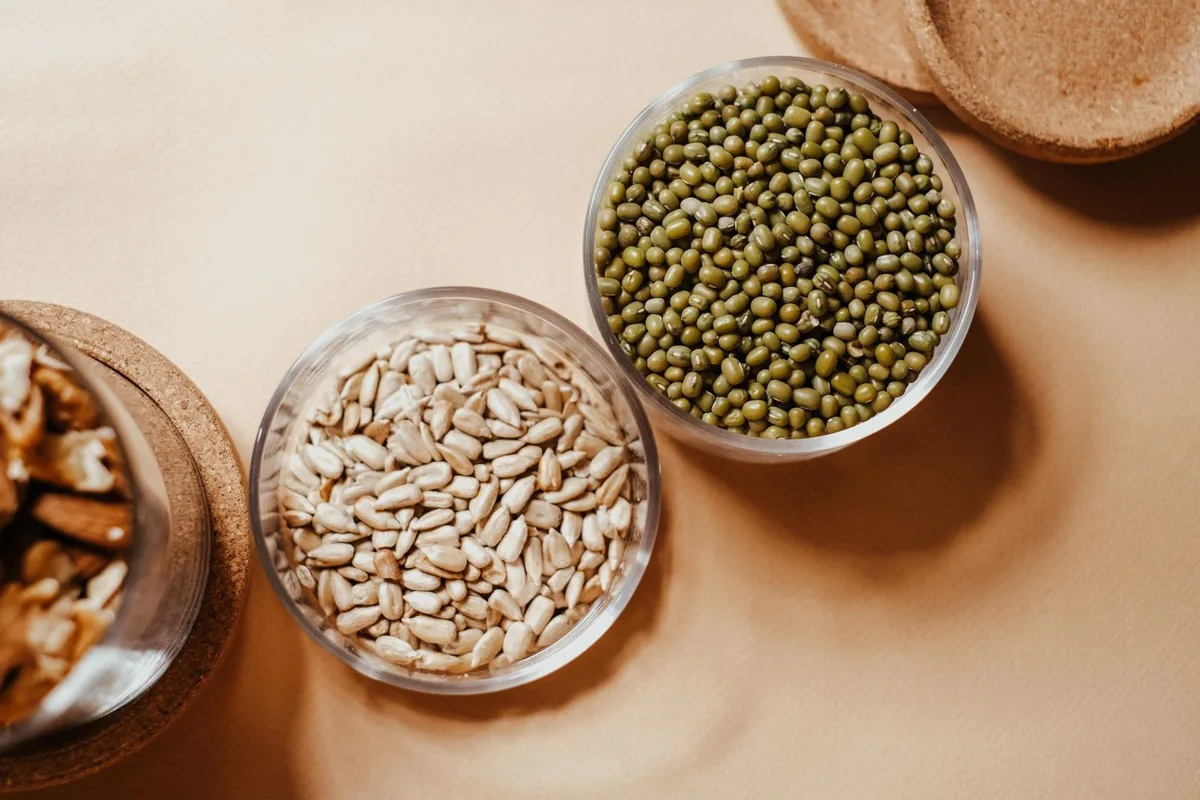
- Whole mung beans, even, shiny and plump, with no mould and no shrivelled beans, preferably fresh.
- Clean water for soaking and watering; if tap water smells of chlorine, leave it in a basin for a few hours to let the smell off.
- A lidded plastic container wide enough to hold the basket with some space left under the base for water to run down.
- A plastic basket that fits inside the container so the sprouts stay drained after watering.
- A clean, dark-coloured cotton towel to cover the surface of the beans.
- A flat ceramic plate and a clean weight such as a water bottle or a washed stone to press down.
Bean quality decides most of the result. Shrivelled, old or mouldy beans sprout poorly, and are also where fungi and bacteria take hold and then spread through the batch. When soaking, beans that float to the surface are usually shrivelled or spoiled, so skim them off at the start.
Which plastic container should you use to grow bean sprouts?
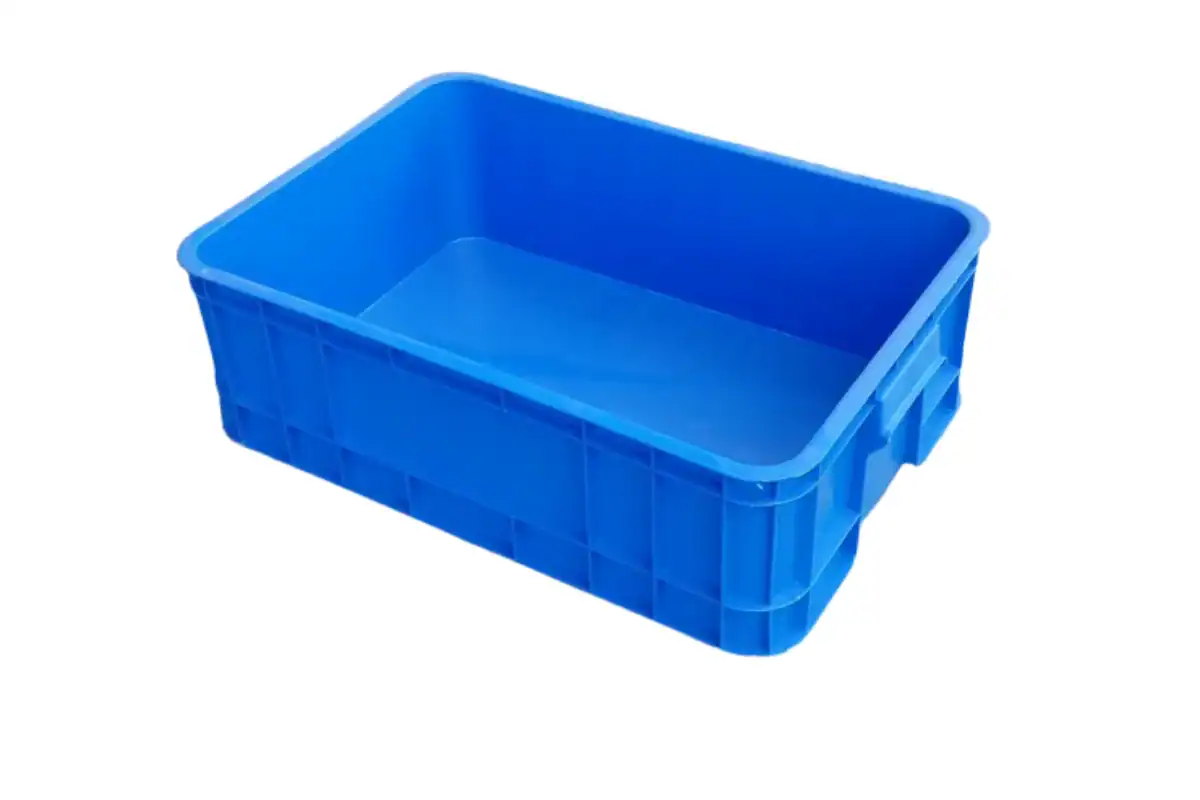
The best container is a virgin PP or HDPE plastic container with a tight lid, a dark colour, a capacity of 5 - 15 litres and a way for water to drain; a light-coloured or transparent container still works if you wrap it fully in a black plastic bag.
On material, PP (code 5 in the triangle under the base) and HDPE (code 2) are the two common plastics for food boxes and containers. PP tolerates heat better so it suits soaking the beans in warm water, and PP is not made with BPA in its formulation (BPA is a substance associated with polycarbonate plastic). HDPE is durable and easy to wash. The differences between container plastics are compared in more detail in the article on what is a plastic container. A foam box (PS, code 6) holds moisture well but crumbles easily, is hard to clean and should not meet hot water. Never use a container of unknown origin or one that previously held chemicals, even after washing.
On container type, a solid plastic container with a lid (closed walls, no holes) is a compact choice: closed walls keep moisture and block light better than an open basket. The point to handle is that a closed-wall container has no drain holes, so you must put a basket inside so the water flows to the bottom, then tilt the container to drain it after every watering. If you dedicate one container to growing sprouts, you can drill a few small holes in the base so water drains by itself; in that case stand the container on a tray to catch the water.
On colour, black or dark blue containers block light naturally. Many small lidded containers on the market, including ICD Vietnam’s 15-litre square lidded container (virgin PP, in blue, green, yellow or red), are bright colours, so when growing sprouts cover them with an extra black plastic bag or put the container in a cupboard or under a table where there is no light. On capacity, 5 - 10 litres is enough for 100 - 200 g of beans; a 15-litre container lets you grow more or spread the beans in a thinner layer. For a small batch, a 10-litre square plastic container (265 x 265 x 240 mm) is a handy size.
The 5-step method for growing bean sprouts in a plastic container
The method consists of soaking the beans, preparing the container, pressing and covering in the dark, watering daily, and harvesting after 3 - 4 days; each step has a sign that tells you whether you are doing it right.
Step 1: Soak the beans
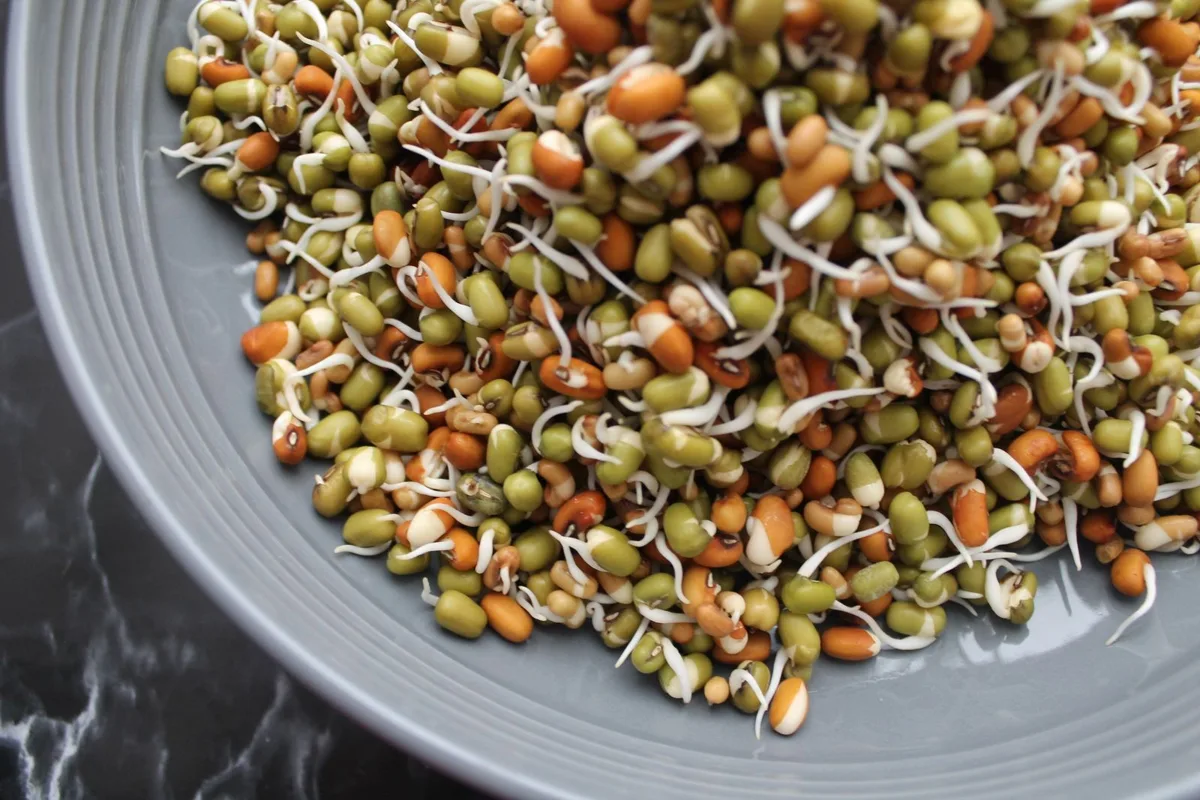
Rinse the mung beans, discard any spoiled beans, then soak in warm water mixed at a ratio of 2 parts boiling water to 3 parts cold water for about 6 - 8 hours, until the beans have absorbed water, split their skins and started to show a sprout. Soaking too long makes the beans waterlogged and sour and lowers the germination rate. In cold weather the beans absorb water more slowly and can be soaked a little longer; seeing the skins split is enough.
Step 2: Prepare the growing container
Wash the container, basket and towel before every batch. Put the basket inside the container so there is space under it for excess water to drain. Lift out the soaked beans, let them drain, then spread them evenly in a thin layer in the basket; a layer that is too thick easily becomes stuffy and waterlogged in the middle.
Step 3: Press and cover in the dark
This step decides whether the sprouts are plump with few roots. The pressure imitates sprouts having to push up through soil, so the stems grow thick instead of just stretching long.
- Take a dark cotton towel, dip it in clean water, wring it out and cover the whole surface of the bean layer.
- Place the ceramic plate on top of the towel.
- Put the weight on the plate. This pressure will “squeeze” the sprout stems to grow thicker, making them plump.
- Finally, put the lid on the container so it is completely dark inside, which keeps the stems pure white and not bitter.
The diagram above shows the order of the layers from top to bottom. The ceramic plate spreads the force of the weight over the whole towel; put the weight directly on the towel and some spots get pressed and others do not, so the sprouts grow unevenly. With a completely dark container the stems do not turn green and are not bitter.
Step 4: Water every day
Water 2 - 3 times a day, in the morning, at noon and in the evening. Lift off the lid and the pressing weight, use a shower head or a jug to wet the towel thoroughly, then tilt the container to let all the excess water run out. Never let water stand at the bottom of the container, because that is the most common cause of sprouts rotting and smelling. After watering, put the weight back and close the lid as before. The day-by-day schedule for one batch is as follows:
| When | What to do | Right sign |
|---|---|---|
| Day 0 (evening) | Rinse the beans, discard shrivelled ones, soak in warm water 6 - 8 hours | Beans have absorbed water and split their skins |
| Day 1 | Spread the beans in the basket, cover with a damp towel, press, close the lid; water 2 - 3 times | Sprouts start to show clearly |
| Day 2 - 3 | Water 2 - 3 times, drain all the water, keep dark | Stems grow longer, white |
| Day 3 - 4 | Harvest, wash, drain, refrigerate | Sprouts 5 - 7 cm long, short roots |
Step 5: Harvest
After about 3 - 4 days, when the stems are 5 - 7 cm long, they are ready. Lift out the whole mat of sprouts, put it in a basin of water, swirl gently so the bean skins float up and remove them, then let it drain thoroughly before putting it in the fridge.
How important is hygiene when growing sprouts at home?
Very important: the warm, moist, nutrient-rich conditions that make beans sprout are also conditions for bacteria to multiply if the beans or equipment are contaminated, and a person growing sprouts at home faces this risk just as a commercial producer does.
The US Food and Drug Administration (FDA) records that from 1996 to 2020 the United States had 52 outbreaks of foodborne illness linked to sprouts, with at least 2,700 illnesses, 200 hospitalisations and 3 deaths; the pathogens included Salmonella, Listeria and several strains of E. coli. In outbreaks where a source was found, the seed was usually the source of contamination, but poor hygiene during growing also contributed. The University of Connecticut food safety material stresses that people who grow sprouts at home take the same risk as producers, and everything revolves around clean seed and good hygiene.
At household scale, the following are enough to cut the risk substantially:
- Buy mung beans from a place with a clear origin and discard mouldy or shrivelled beans.
- Wash the container, basket and plate with hot water and dish soap before every batch and dry them completely.
- Wash the growing towel after every batch and dry it in the sun; do not reuse a towel that is still damp or smells.
- Wash your hands before watering and when harvesting.
- If you see mould, slime or an unusual smell, discard the whole batch, then wash and disinfect the container before starting again.
Healthy people who want to eat sprouts raw should wash them thoroughly in clean water and refrigerate straight after harvest; if there is someone in the at-risk groups listed above in the household, cook them thoroughly.
How do you store bean sprouts to keep them crisp?
Wash, drain thoroughly, line a lidded plastic box with dry paper towel, add the sprouts, cover with another layer of paper, close tightly and keep in the fridge at 4 °C or below; sprouts usually stay crisp for about 5 - 7 days.
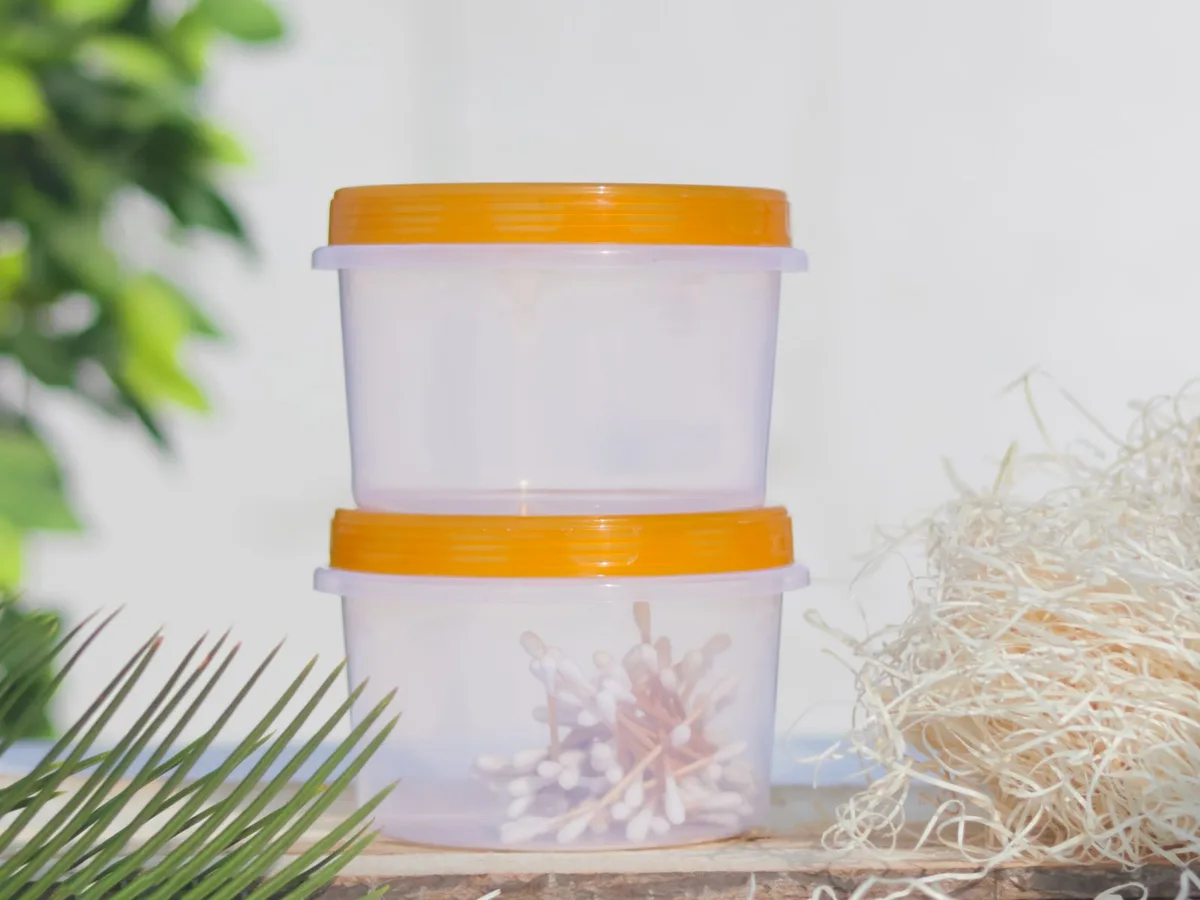
The paper towel absorbs leftover water, because wet sprouts in a closed box quickly turn slimy. The USDA FoodKeeper data says bean sprouts keep quality for about 5 - 10 days in a 4 °C fridge; for home-grown sprouts I recommend using them within about a week and discarding them straight away if they turn brown, smell sour or feel slimy. Do not leave sprouts at room temperature overnight.
What nutrients do bean sprouts contain?
Mung bean sprouts are a low-energy, high-water food: according to the USDA FoodData Central database, 100 g of raw sprouts contains about 30 kcal, 3.04 g of protein, 1.8 g of fibre and 13.2 mg of vitamin C, with the rest mostly water (90.4 g).
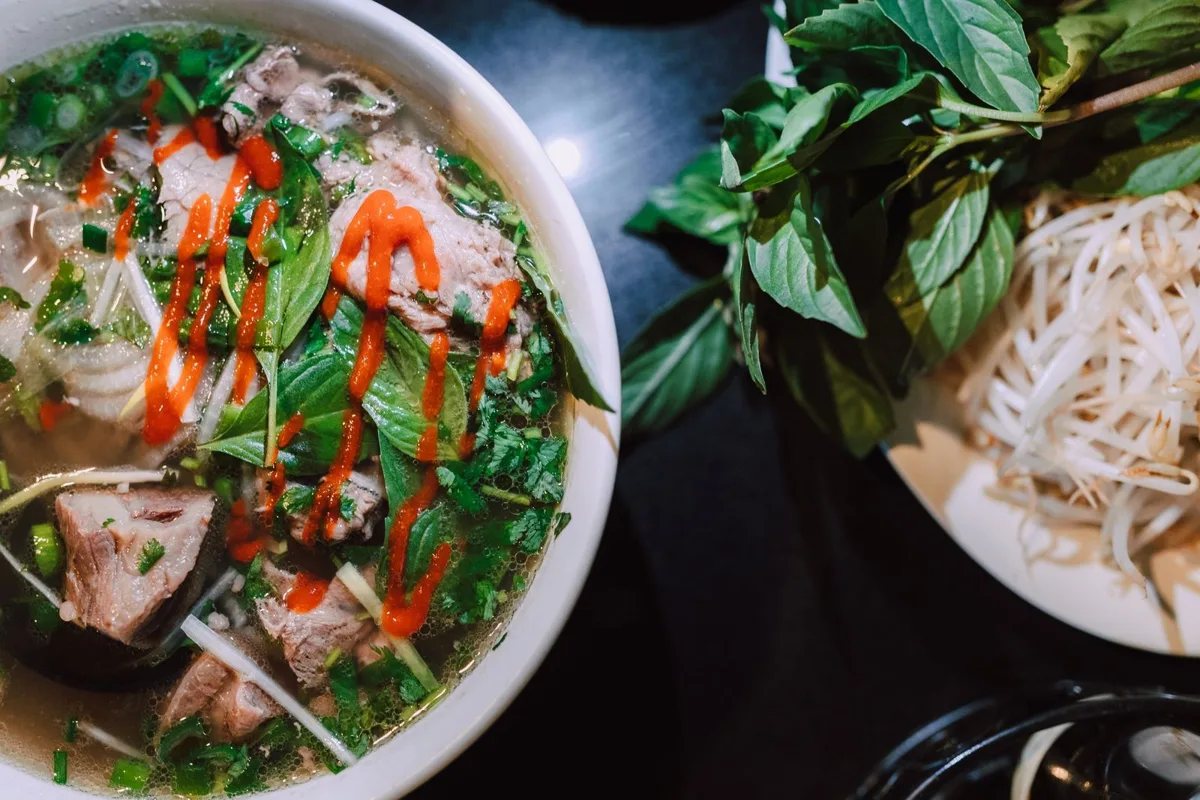
Home-grown sprouts taste sweet and crisp and go well with pho, summer rolls, stir-fried beef or soup. If the household has small children, elderly people or pregnant women, prefer stir-fried or cooked dishes.
Common mistakes when growing bean sprouts and how to fix them
The three most common mistakes are bitter sprouts from light getting in, rotten sprouts from standing water, and thin sprouts with many roots from too little pressure; each has a clear cause and can be fixed in the next batch.
| Symptom | Cause | How to fix it in the next batch |
|---|---|---|
| Bitter sprouts with green leaves | Light is getting into the container | Use a dark container, close the lid tightly or wrap in a black plastic bag |
| Rotten, smelly, waterlogged sprouts | Water standing at the bottom | Drill drain holes, use a basket inside, tilt the container to drain all the water |
| Thin sprouts with long roots | Not enough pressure | Add weight, use a flat plate so the pressure is even |
| Many beans do not sprout | Shrivelled, mouldy or old beans | Choose fresh, even beans and remove the ones that float when soaking |
On the water used for watering the sprouts: many guides advise reusing it to water plants. Water that has run through sprouting beans can carry bacteria from the seed; the FDA itself requires sprout producers to sample and test this water. At home, if you want to reuse it, only water ornamental plants, not raw-eaten vegetables, and do not leave the water standing overnight.
Frequently asked questions about growing bean sprouts in a plastic container
Why do you need to press bean sprouts?
The pressure imitates the sprouts having to push up through soil, which encourages the stems to grow thick and plump instead of just long, and also limits side roots. Put a flat plate under the weight so the force is spread evenly.
Can I use a clear plastic container?
Yes, but do not leave it uncovered. A clear container must be fully wrapped in black cloth or thick black plastic bag, or kept in a dark cupboard, so the sprouts do not turn green and bitter.
Besides mung beans, which other beans can be used for sprouts?
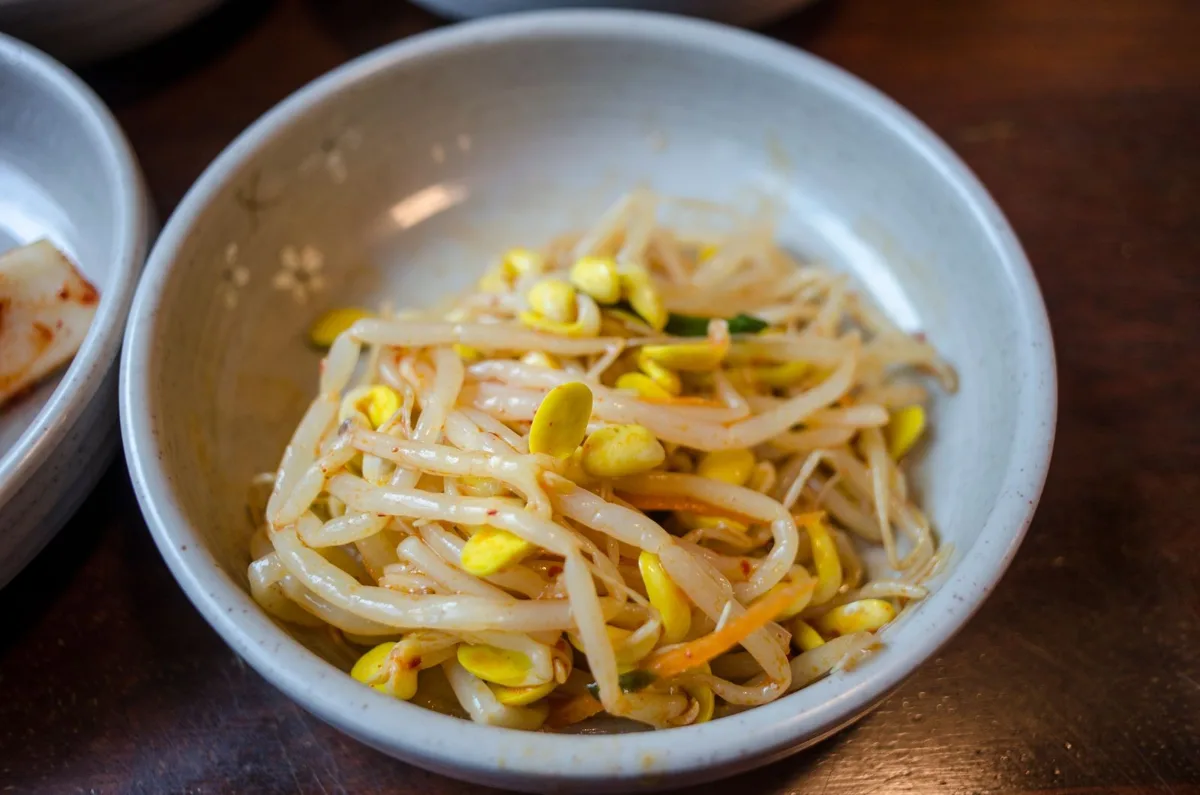
You can grow sprouts from black beans, soybeans (soybean sprouts) or mustard seed. Mung bean sprouts remain the most common and easiest to grow.
Why are home-grown sprouts not as white and plump as those at the market?
Traditionally grown sprouts are usually thinner, ivory-yellow and have many roots. Porcelain-white, plump, round sprouts with almost no roots may have been soaked in the stimulant 6-benzylaminopurine. Even pressing, enough darkness and enough moisture will make home-grown sprouts plumper.
How many steps are there in growing bean sprouts in a plastic container?
There are 5 steps: soak the beans, prepare the growing container, press and cover in the dark, water daily, and harvest after 3 - 4 days.
How many beans do I need for one batch?
About 100 - 200 g of whole mung beans for a family of 3 - 4, using a 5 - 10 litre container. Choose even, shiny, plump beans with no mould and no shrivelled beans.
How many kilograms of sprouts does 1 kg of mung beans make?
In a sand-bed sprout-growing village in Quang Ngai, growers say 1 kg of beans gives about 7 kg of sprouts (VnExpress); Wikipedia records that a traditional pot gives 8 - 10 kg of finished sprouts. Small home containers usually yield less and depend on stem length, so for 100 - 200 g of beans you should expect at most about 0.7 - 1.4 kg of sprouts if you reach the 7-fold ratio.
How many hours should the beans be soaked?
About 6 - 8 hours in warm water, until the beans have absorbed water, split their skins and started to show a sprout. Soaking too long makes the beans waterlogged and sour and lowers the germination rate.
Can I grow bean sprouts in a plastic basket with a towel?
Yes. A basket lined with a damp towel, covered with a dark towel and pressed with a weight still produces sprouts. However, an open basket lets light in and the towel dries quickly; putting the basket inside a lidded plastic container keeps it dark and holds moisture more steadily.
Can I grow bean sprouts in a foam box?
Yes, a foam box holds moisture well, but it crumbles easily, is hard to clean thoroughly and should not meet hot water. A PP or HDPE plastic container is durable and easier to wash and dry, so it can be used for many batches.
Is it safe to eat raw bean sprouts?
There is a risk. The warm, moist conditions for growing sprouts also suit bacteria such as Salmonella and E. coli if the beans are contaminated. The FDA recommends that children, older adults, pregnant women and people with weakened immune systems eat only cooked sprouts; healthy people should wash them thoroughly and keep them cold.
How many calories are in bean sprouts?
According to USDA FoodData Central, 100 g of raw mung bean sprouts contains about 30 kcal, 3 g of protein, 1.8 g of fibre and 13.2 mg of vitamin C, and most of the rest is water.
Contact ICD Vietnam
ICD VIETNAM INDUSTRIAL MANUFACTURING CO., LTD
If you need lidded PP or HDPE plastic containers for growing sprouts, food storage or use in a canteen kitchen, please contact us for advice on a suitable model and capacity:
- Hotline: 0983 797 186.
- Email: sales@icdvietnam.com.vn.
ICD Vietnam plastic containers carry a 12-month warranty under the warranty and repair policy published on the website.
References
- FDA, Guidance for Industry: Standards for the Growing, Harvesting, Packing, and Holding of Sprouts for Human Consumption (9/2023): number of outbreaks 1996 - 2020, sources of contamination, testing of sprout irrigation water.
- University of Connecticut, Seed and Bean Sprouts: advice on eating raw sprouts, cold storage, risks of growing sprouts at home.
- USDA, FoodData Central: Mung beans, mature seeds, sprouted, raw.
- FoodSafety.gov, FoodKeeper App (USDA): storage time for bean sprouts in the refrigerator.
- Suc khoe va Doi song (Health and Life) newspaper, An expert explains how to tell clean bean sprouts from chemical-soaked sprouts (12/2024).
- VnExpress, The one-of-a-kind sprout growing trade (6/2013): yield of sprouts per bean in a sand-bed growing village.
- Vietnamese Wikipedia - Gia do (Bean sprouts): characteristics and growing method.