
Table of Contents
- HS code for plastic crates by type
- Import duty on plastic crates
- Which plastic crates are not in heading 3923?
- How to look up the HS code for plastic crates accurately
- Notes on importing and exporting plastic crates
- Frequently asked questions
- What are plastic crates called in English on a customs declaration?
- Do solid plastic bins and open plastic baskets have the same HS code?
- Do exported plastic crates pay export duty?
- What is the HS code for plastic waste bins?
- What is the HS code for plastic crate lids sold separately?
- What duty applies to plastic crates imported from China?
- Are semiconductor wafer trays declared under the same code as plastic crates?
- How long is an advance ruling valid?
- Conclusion
- Contact us for plastic crate advice
- References
Reviewed and updated by ICD - Week 43/2026
Plastic crates, baskets and trays used to hold and circulate goods are declared under HS code 3923.10.90, with a preferential (MFN) import duty of 10% under Decree 26/2023/ND-CP, falling to 0% with a valid C/O under ATIGA, ACFTA, VKFTA, CPTPP or EVFTA. Lids sold separately are declared under 3923.50.00 (MFN 10%); other shipping containers in heading 39.23 such as plastic pallets fall under 3923.90.90 (MFN 15%). Import VAT is currently 8% until 31 December 2026.
I am Le Van Thang, and I have worked at ICD Vietnam since 2011. Importers ask me one very short question: what code do plastic crates go under, and how much duty do they pay? The short answer is 3923.10.90, but that is only right when the crate is really used to hold and carry goods. For businesses importing or exporting industrial plastic crates, declaring the right code decides the duty payable, the documents to prepare and the specialized inspection rules; a wrong declaration can lead to back taxes and administrative penalties.
The HS Code (Harmonized System Code) is a number series that classifies goods for use across international trade. This article goes through the code for each type of crate, the duty under each agreement, a worked duty example, the boundary with headings 39.24 and 39.25, and then how to look up a code and request an advance ruling. All duty rates were checked against documents in force as of 16 October 2026.
HS code for plastic crates by type
Most industrial plastic crates are declared under 3923.10.90; lids sold separately use 3923.50.00, and shipping containers that are not boxes, cases, crates, bottles or lids fall under 3923.90.90.
Plastic crates belong to Chapter 39 (plastics and articles thereof), heading 39.23 “Articles for the conveyance or packing of goods, of plastics; stoppers, lids, caps and other closures, of plastics”. Each 6-digit subheading is divided further into 8-digit lines in Vietnam’s Export and Import Tariff Nomenclature issued with Circular 31/2022/TT-BTC, and the preferential duty of each line is in Appendix II of Decree 26/2023/ND-CP. The table below collects the lines commonly met with plastic packaging products:
| 8-digit code | Description in the tariff | MFN duty | Common products |
|---|---|---|---|
| 3923.10.10 | Boxes for film, magnetic tape and optical discs | 12% | Disc boxes, tape boxes |
| 3923.10.20 | Other, of a special shape or suitable for carrying or packing thin semiconductor wafers, masks or reticles | 10% | Semiconductor wafer boxes and trays |
| 3923.10.90 | Boxes, cases, crates and similar articles, other | 10% | Solid plastic bins, open baskets, lidded plastic crates, component trays, folding crates |
| 3923.30.90 | Carboys, bottles, flasks and similar articles, other | 15% | Plastic jerrycans, containers |
| 3923.50.00 | Stoppers, lids, caps and other closures | 10% | Crate lids and drum lids sold separately |
| 3923.90.90 | Other (subheading 3923.90 has only 3923.90.10 toothpaste tubes and 3923.90.90) | 15% | Plastic pallets and other shipping containers |
Heading 39.23 has no line 3923.90.19, 3923.90.99 or 3923.50.90. Declaring a code that does not exist in the nomenclature makes the VNACCS system return an error as soon as the declaration is transmitted. Note that the first 6 digits are the international code under the WCO HS Convention, while the last 2 are the ASEAN and Vietnam level of detail, so the 8-digit code declared in Vietnam may differ from the code a foreign supplier writes on the invoice.
Solid bins, open baskets, lidded crates and component trays
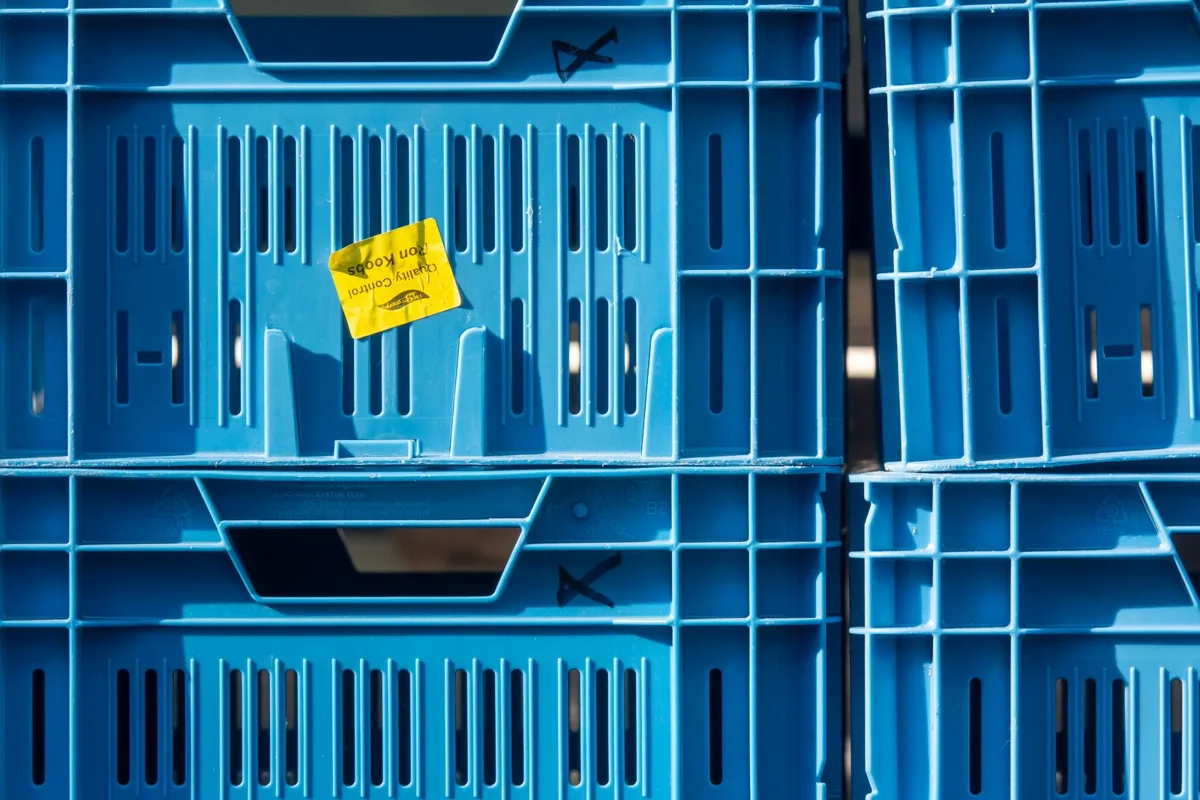
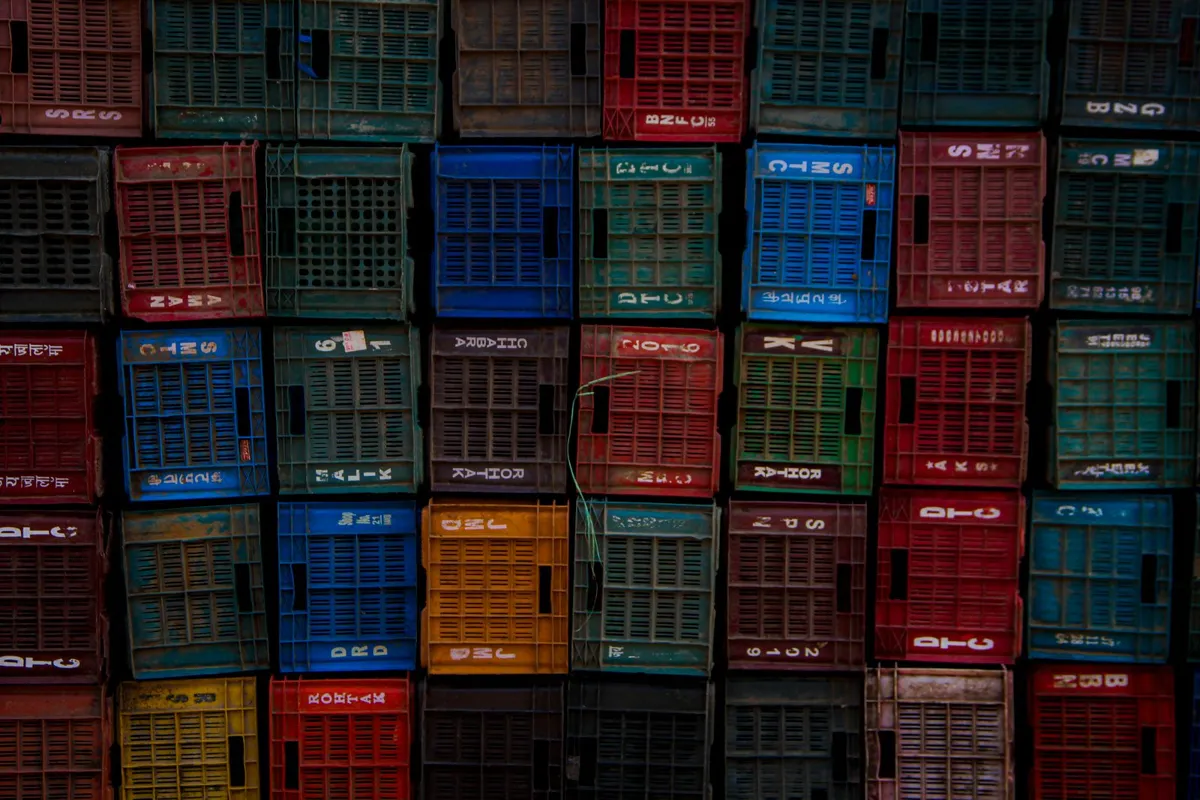
Solid crates, open baskets, lidded crates, folding crates and beveled trays are all “boxes, cases, crates” used to hold and circulate goods, so they are all declared under 3923.10.90. Closed or open, lidded or not, PP or HDPE: none of these changes the code. A notable exception is the tray or box with its own shape for packing thin semiconductor wafers: line 3923.10.20, also MFN 10%. Ordinary electronic component trays, including anti-static ones, do not automatically belong to this line unless they are designed specifically for wafers.
Plastic drums, IBC tanks and plastic pallets
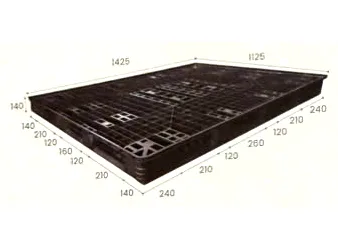
Drums, IBC tanks and pallets do not have the form of a box, case or crate, so they are not declared under 3923.10. A plastic pallet is used to carry goods but does not belong to the subheadings for boxes, bags, bottles, spools or lids, so it falls into the remaining line 3923.90.90 with MFN 15%. Drums depend on the type: a closed-lid drum with small pouring openings is close to a container of the carboy type and needs to be checked against subheading 3923.30 (carboys, bottles, flasks); a fully open-top drum is considered under another subheading. The two readings can lead to two different codes, so the declared code must be consistent across shipments.
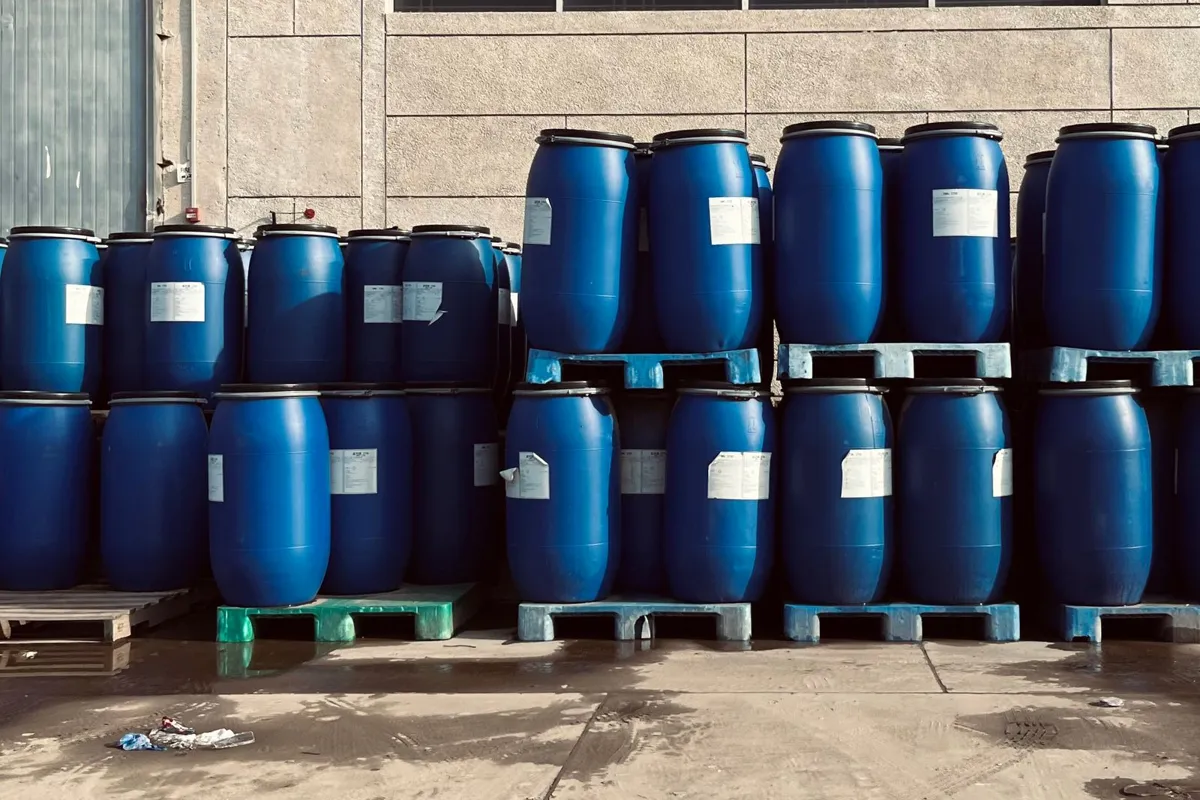
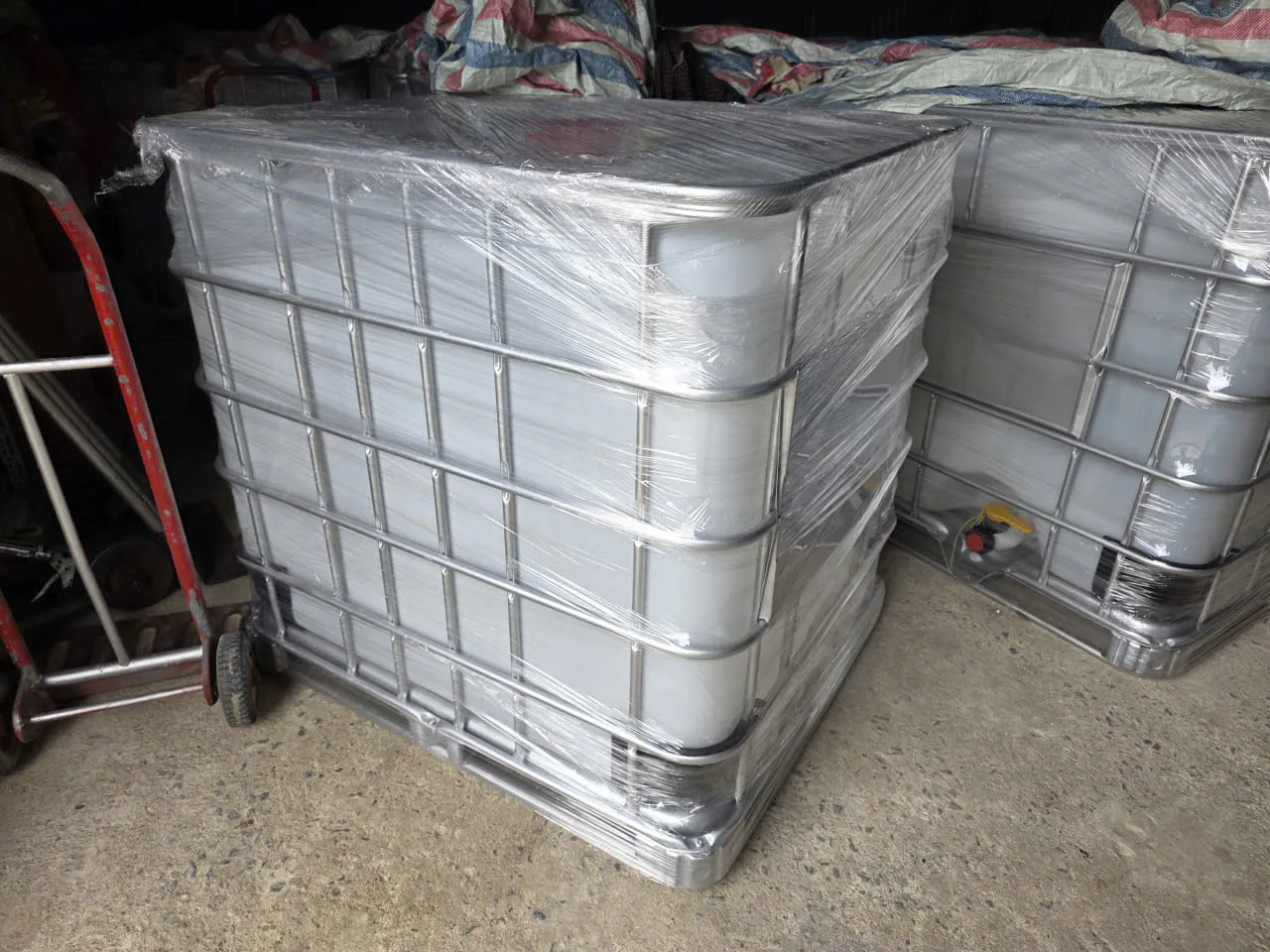
A 1,000 liter IBC tank consists of an HDPE inner bottle in a galvanized steel cage, with a steel or plastic pallet base. Goods made of several materials are classified under the General Rules for the Interpretation of the Nomenclature (Appendix II of Circular 31/2022/TT-BTC), including the rule that looks at the material giving the essential character. I have not seen any public customs classification ruling specifically for IBC tanks, so I do not give a fixed code here; for this item, the safe approach is to submit an advance ruling request as described in the lookup section.
Import duty on plastic crates
Plastic crates under code 3923.10.90 carry MFN import duty of 10%, falling to 0% with a valid C/O under most FTAs; pallets and containers under code 3923.90.90 carry MFN 15%. Goods that do not qualify for MFN or a special preferential rate are charged the ordinary rate, equal to 150% of the MFN rate under Decision 15/2023/QD-TTg, that is 15% and 22.5%.
The special preferential rates are in the tariff decrees for 2022-2027: Decree 126/2022/ND-CP (ATIGA), 118/2022/ND-CP (ACFTA), 115/2022/ND-CP (CPTPP), 116/2022/ND-CP (EVFTA). The table below shows the rates applying in 2026 for the two commonly met codes:
| Type of duty | HS 3923.10.90 | HS 3923.90.90 | Condition |
|---|---|---|---|
| MFN duty (preferential) | 10% | 15% | Goods from a country that has a most-favored-nation arrangement with Vietnam |
| Ordinary duty | 15% | 22.5% | Does not qualify for MFN or a special preferential rate |
| ATIGA (ASEAN) | 0% | 0% | Valid C/O Form D |
| ACFTA (ASEAN - China) | 0% | 0% | C/O Form E; some ASEAN countries excluded line by line |
| VKFTA (Korea) | 0% | 0% | C/O Form VK |
| CPTPP | 0% | 0% | C/O or self-certification under CPTPP |
| EVFTA (EU) | 0% | 0% | EUR.1 or self-certification of origin |
| VAT | 8% | 8% | Until 31 December 2026, if not on the exclusion list |
Not every agreement reaches 0% for both codes. In 2026, code 3923.90.90 under RCEP, AHKFTA (ASEAN - Hong Kong) and AIFTA (ASEAN - India) still carries a rate above 0%, so a shipment of plastic pallets imported under these agreements needs the right line and the right year checked before you choose the C/O form.
On VAT, Resolution 204/2025/QH15 and Decree 174/2025/ND-CP cut 2 percentage points off goods taxed at 10% from 1 July 2025 to 31 December 2026, applied uniformly at import, production and trading; groups that do not qualify include metal products, mining products, goods subject to special consumption tax and some services, according to guidance from the Government’s Online Policy Portal. Plastic crates are not in those excluded groups, but a business should still check Appendix I of the decree against the product’s industry code when issuing invoices.
Plastic crates made domestically, such as ICD Vietnam crates made in its own workshop, do not go through import duty. VAT applies equally to imported and domestic goods, so the real difference lies in import duty when there is no C/O, international freight and the wait for the goods.
Worked example: duty on an imported batch of plastic crates
Import duty is calculated on the dutiable value (usually the CIF value), while VAT is calculated on the dutiable value plus import duty. Suppose a batch of crates under code 3923.10.90 is imported from China with a dutiable value of VND 100 million. With no C/O, import duty is VND 100 million x 10% = VND 10 million, VAT is (100 + 10) million x 8% = VND 8.8 million, a total of VND 18.8 million. With a valid C/O Form E, import duty is zero and VAT is VND 100 million x 8% = VND 8 million.
Import VAT is deductible if the business files under the credit method, so the real cost lies in the import duty. The C/O must be the right form, within the deadline, and the goods must meet the origin rules of the agreement before the 0% rate applies.
Which plastic crates are not in heading 3923?
Waste bins and household containers belong to heading 39.24, while tanks, vats and containers over 300 liters used in construction belong to heading 39.25, with much higher MFN duty (22% and 25%). The boundary lies in the use: heading 39.23 is for containers used to carry and pack goods.
Note 11 to Chapter 39 limits heading 39.25 to containers over 300 liters not covered by the preceding headings, so a tank used to carry goods is still considered under 39.23 first, while a water tank fixed on a roof goes to 39.25. Codes 3924.90.90 and 3925.10.00 are also named in the list of used consumer goods banned from import under Circular 08/2023/TT-BCT, so only new goods can be imported. A 120-240 liter wheeled waste bin used in an industrial park is still a waste bin by use; do not declare it under 3923.10.90 just to get the lower rate.
How to look up the HS code for plastic crates accurately
The surest way is to look up the tariff on the customs portal, check the notes and classification rules, and then request an advance ruling when the goods have a complex construction. The order I advise customers to follow:
- Look up the code and rate on customs.gov.vn, in the Tariff section, by keyword or by code 3923.
- Cross-check with the article on HS codes on the ICD Vietnam website, which collects codes for pallets, plastic crates and PE film.
- Ask a customs officer or customs broker about mixed plastic and metal goods such as an IBC tank with a steel cage.
- Submit an advance ruling request if the goods are imported regularly or are being declared under several different codes.
An advance ruling is a procedure under Article 28 of the Customs Law and Article 24 of Decree 08/2015/ND-CP: the business submits an application form, catalogue, a description of construction, material and use, and a sample if requested. Under clause 6 of Article 24 of Decree 08/2015/ND-CP, the notice of the result is valid for at most 3 years and does not apply when the actual goods differ from the sample requested.
From 1 March 2025, the General Department of Customs was reorganized into the Customs Department under the Ministry of Finance under Decision 382/QD-BTC; looking up the tariff and submitting advance ruling requests are still done on the customs portal.
Notes on importing and exporting plastic crates
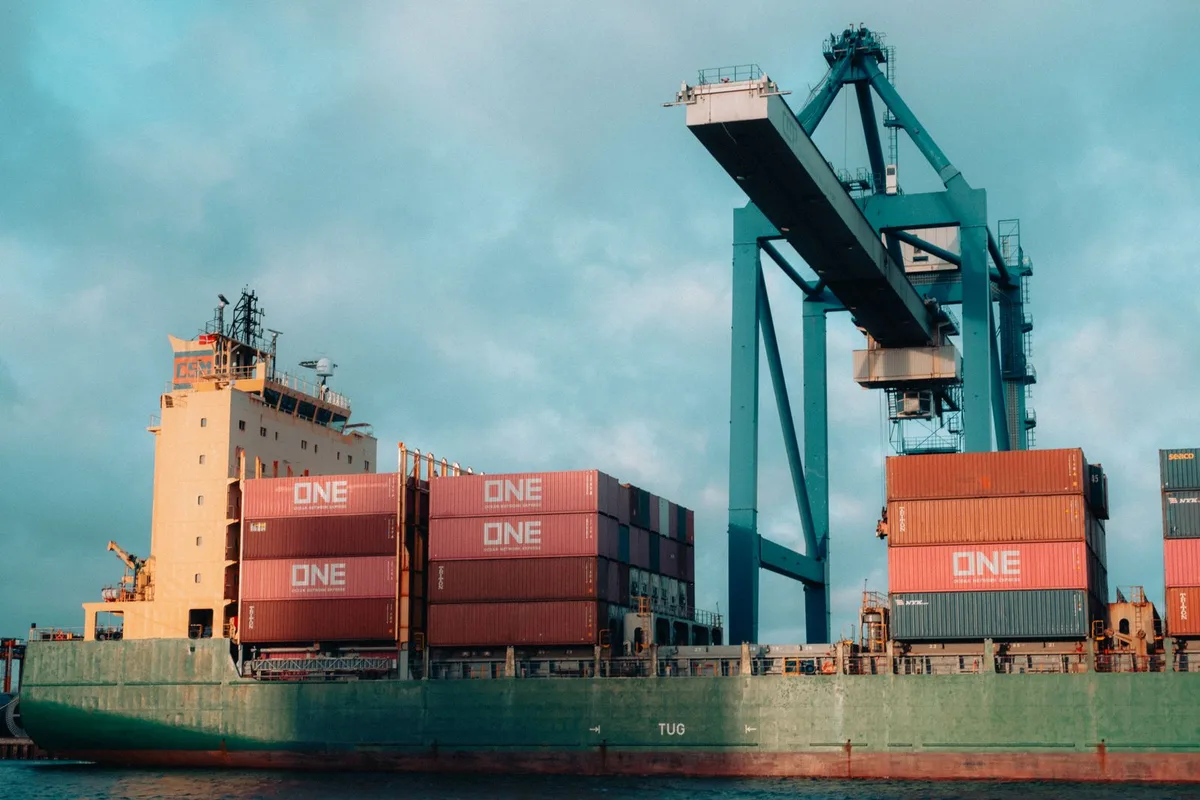
Four points to check before importing a batch of plastic crates: the HS code and description of goods, the document set, requirements by the crate’s use, and the landed cost against domestically made goods.
A wrong code leads to wrong duty in both directions: underpaying means back taxes and penalties, overpaying means lost money. The goods description on the declaration should state material, dimensions and use, for example “HDPE plastic industrial crate, 610x420x310 mm, for storage and transportation”; the clearer the description, the less likely you are to be asked for an explanation. The minimum document set includes:
- Customs declaration on the VNACCS system.
- Commercial invoice.
- Bill of lading (B/L or AWB).
- Packing list.
- Certificate of origin (C/O) if you want the FTA rate.
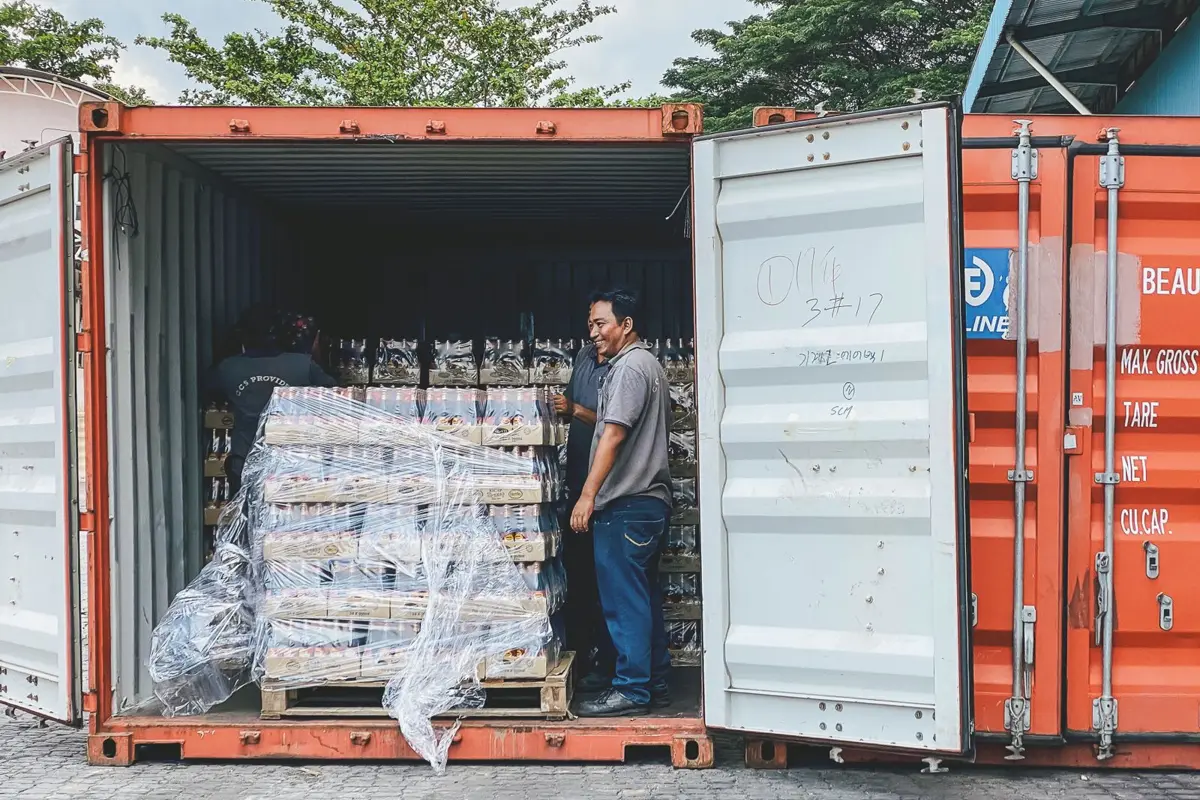
For crates that hold food, the hygiene and safety papers must show conformity with QCVN 12-1:2011/BYT, the national standard for synthetic plastic packaging and utensils in direct contact with food. Ask the supplier to send migration test results before you order so the shipment does not sit at the port waiting for extra documents. Crates and jerrycans used to carry dangerous goods are a different matter: the packaging must bear the UN certification mark under the dangerous goods transport rules, and that requirement is tied to the use, not to the procedure for importing empty containers.

When comparing prices, add the full import duty if there is no C/O, international freight, port charges and the wait for the goods, then place the total next to a domestic manufacturer’s quote for the same crate model. Unless you need a special model that cannot be made domestically, this calculation is usually enough to decide between importing and buying locally.
Frequently asked questions
What are plastic crates called in English on a customs declaration?
Common English names are plastic crate (open crate), plastic container (bin), plastic box (box) and plastic bin (tray, open bin). On the declaration, write a detailed description with material, dimensions and use, for example HDPE plastic industrial crate, 610x420x310 mm, for storage and transportation.
Do solid plastic bins and open plastic baskets have the same HS code?
Yes. Both are declared under 3923.10.90 because both are plastic boxes, cases and crates used to carry or pack goods. Closed or open, lidded or not, none of that changes the code.
Do exported plastic crates pay export duty?
No. Heading 39.23 is not named in the Export Tariff in Appendix I of Decree 26/2023/ND-CP. Exported goods are subject to 0% VAT and may qualify for a refund of input VAT if they meet the conditions of the VAT Law.
What is the HS code for plastic waste bins?
Plastic waste bins are household and sanitary goods, so they belong to heading 39.24, and the line usually declared is 3924.90.90 with MFN duty of 22%. This code is named in the list of used consumer goods banned from import under Circular 08/2023/TT-BCT, so only new goods can be imported.
What is the HS code for plastic crate lids sold separately?
A lid sold separately, including crate lids and drum lids, is declared under code 3923.50.00 with MFN duty of 10%. A lid imported together with the crate as a matched set is usually declared under the crate’s code.
What duty applies to plastic crates imported from China?
Plastic crates under code 3923.10.90 of Chinese origin carry 0% import duty with a valid C/O Form E under ACFTA, and 10% (MFN) without a C/O. VAT of 8% (until 31 December 2026) is added, calculated on the dutiable value plus import duty.
Are semiconductor wafer trays declared under the same code as plastic crates?
No. Boxes and trays with a special shape for carrying or packing thin semiconductor wafers, masks or reticles are declared under their own line 3923.10.20, MFN duty 10%. Ordinary electronic component trays are still declared under 3923.10.90.
How long is an advance ruling valid?
Under clause 6 of Article 24 of Decree 08/2015/ND-CP, the notice of an advance ruling result is valid for at most 3 years from the date of signing, and does not apply if the actual goods differ from the sample or the application submitted.
Conclusion
Plastic crates, baskets and trays that hold and circulate goods are declared under 3923.10.90, MFN 10%, falling to 0% with a valid C/O under most FTAs; separate lids under 3923.50.00; plastic pallets under 3923.90.90. For drums, IBC tanks and goods made of several materials, requesting an advance ruling is the way to avoid disputes later.
The duty and VAT rates in this article are correct against documents in force as of 16 October 2026; from 2027, the FTA tariff schedule for the new period and VAT policy may change, so always check the tariff on the date you file the declaration.
Contact us for plastic crate advice
ICD Vietnam Industrial Manufacturing Co., Ltd.
ICD Vietnam makes plastic crates in its own workshop in Vietnam. Send us the dimensions, load, use and quantity to get advice on the right crate model and a quote by quantity.
- North Vietnam: 0983 797 186 / 090 345 9186 / 090 5859 186.
- South Vietnam: 098 6784 186.
- Email: sales@icdvietnam.com.vn.
- Zalo: Chat with ICD Vietnam on Zalo.
ICD Vietnam plastic crates carry a 12-month warranty under the warranty and repair policy published on the website.
References
- Principles of HS classification: World Customs Organization (WCO), What is the Harmonized System.
- Decree 26/2023/ND-CP on the Export Tariff and Preferential Import Tariff, Appendix II, Chapter 39, headings 39.23, 39.24, 39.25 (linked in the section on codes by type).
- Circular 31/2022/TT-BTC issuing Vietnam’s Export and Import Tariff Nomenclature and the 6 General Rules for the Interpretation of the Nomenclature.
- Decision 15/2023/QD-TTg on the application of ordinary duty rates (linked in the duty section).
- Decree 115/2022/ND-CP (CPTPP), 116/2022/ND-CP (EVFTA), 118/2022/ND-CP (ACFTA), 126/2022/ND-CP (ATIGA), tariff schedules for 2022-2027.
- Resolution 204/2025/QH15 and Decree 174/2025/ND-CP on the VAT reduction from 1 July 2025 to 31 December 2026 (linked in the duty section).
- Customs Law 2014, Article 28, and Decree 08/2015/ND-CP, Article 24, on advance rulings on codes (linked in the lookup section).
- Decision 382/QD-BTC on the functions, duties and organizational structure of the Customs Department, effective 1 March 2025.
- Circular 08/2023/TT-BCT, Appendix I, list of used consumer goods banned from import.
- QCVN 12-1:2011/BYT on hygiene and safety of synthetic plastic packaging and utensils in direct contact with food.