Table of Contents
Reviewed and updated by ICD - Week 43/2026
PP plastic is technically recyclable, but whether it is actually recycled depends on whether your area collects and sorts PP; the number 5 on the bottom of a product does not guarantee it. This article explains the recycling process, why PP is harder to recover than PET bottles, and where recycled PP pellets can be used. For the material’s properties, see whether PP can hold hot water.
What is PP plastic?
PP (polypropylene) is a thermoplastic made from propylene. It melts at about 160-165 °C, is light (0.90-0.91 g/cm³) and resists many chemicals. Its identification code is number 5 in the SPI system (1988), now managed by ASTM International under ASTM D7611.
Can PP plastic be recycled?
Yes. PP is a thermoplastic, so it can be melted and shaped again. The EPA chose PP as the second plastic (after PET) for which it mapped the recycling material flow in the US. Even so, the EPA does not publish a separate recycling rate for PP in its 2018 packaging data, while PET bottles reached 29.1% and natural HDPE bottles 29.3%. That places PP among the plastics that are harder to collect.
| Plastic packaging group (US, 2018) | Recycling rate (EPA) |
|---|---|
| PET bottles | 29.1% |
| Natural HDPE bottles | 29.3% |
| All plastic packaging | 13.6% |
| PP on its own | No separate figure published by the EPA |
Why is PP harder to recycle?
- Sorting: according to the EPA, the mixed rigid plastics stream (numbers 3-7) contains only about 44% PP on average; the rest is PET, HDPE, small fragments and plastic mixed with metal.
- Collection: collection of rigid plastics differs from state to state, so the number 5 does not guarantee a collection point near you.
- Quality of recycled pellets: pellets blended from several sources have properties that vary, and whether they suit a given use has to be checked batch by batch.
The PP recycling process
The EPA describes the recycling chain for rigid plastics, using PET as the example, in these steps: opening the bales, removing unwanted material, grinding, washing, separating by density, air drying and air sieving. The flakes are then melted, filtered and extruded into pellets. The real recovery yield is always lower than the theoretical figure because of contaminants and mixed plastics in the bales.
What is recycled PP used for?
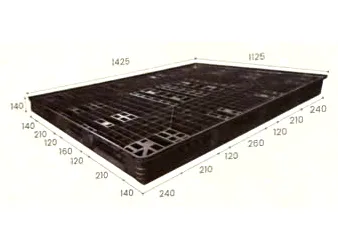
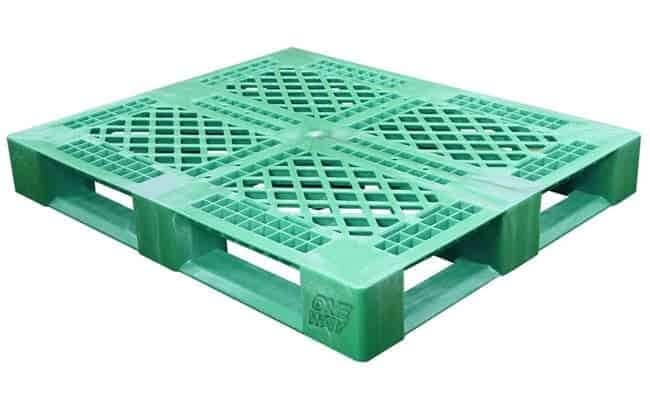
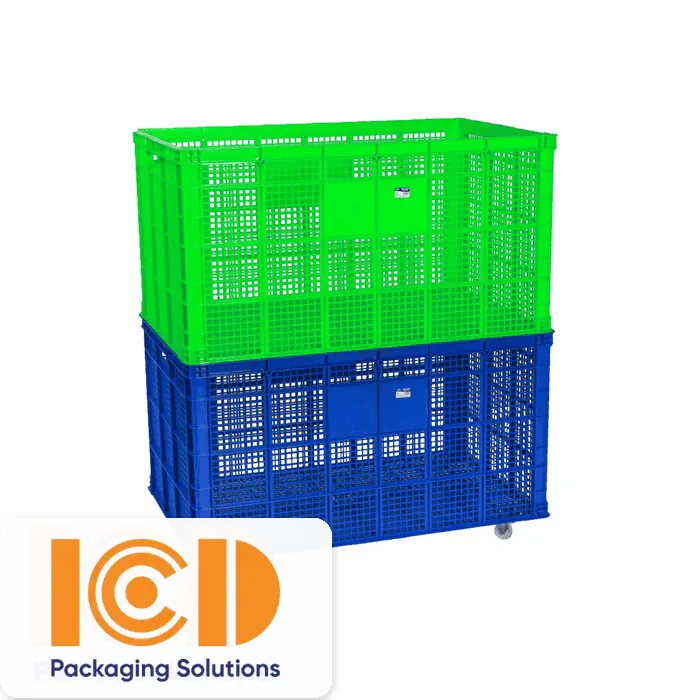
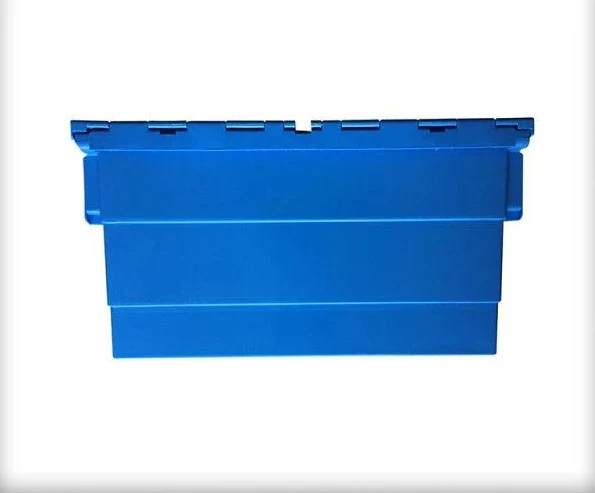
Under European rules, recycled plastic that is to touch food must go through a process assessed and authorised by EFSA (Regulation 2022/1616), so ordinary recycled pellets are best used for products that do not contact food. In industry, PP is used for plastic pallets, plastic crates and plastic baskets. At ICD Vietnam there are many lines of PP plastic pallets; whether virgin or recycled resin is used is stated in the specifications of each product.
Plastic transport baskets such as the 780x500x430 mm express-delivery basket are also made from PP. If you need to use one with food, read whether plastic number 5 is safe as well.
Frequently asked questions
Can PP plastic be recycled?
Yes, technically, because PP is a thermoplastic. Actual recycling depends on collection and sorting; the EPA does not publish a separate rate for PP.
What are the main properties of PP plastic?
Light (0.90-0.91 g/cm³), stiffer than PE, melting at about 160-165 °C and resistant to many chemicals.
Is recycled PP safe to use in industry?
It can be used for products that do not touch food, such as crates and pallets; quality depends on the pellet batch. Use with food must follow an authorised process (EU 2022/1616).
Contact us for plastic crates and pallets from ICD Vietnam
ICD Vietnam Industrial Manufacturing Co., Ltd.
North: 3rd Floor, Thang Long A1 Building, Bau Hamlet, Thien Loc Commune, Hanoi, 0983 797 186 / 090 345 9186 / 090 5859 186
South: 551/212 Le Van Khuong Street, Tan Thoi Hiep Ward, District 12, Ho Chi Minh City, 098 6784 186
Email: sales@icdvietnam.com.vn
Zalo: Chat on Zalo now
References
- US EPA, Containers and Packaging: Product-Specific Data (2018 recycling rates) - epa.gov
- Smith R.L., Takkellapati S., US EPA, Recycling Plastics in the U.S.: Polypropylene Flows and Recycling Processes (AIChE 2023; plastic code list, PP properties) - cfpub.epa.gov
- Wikipedia, Resin identification code (SPI 1988, ASTM D7611, resin codes do not mean a plastic is recyclable) - en.wikipedia.org
- Commission Regulation (EU) 2022/1616 on recycled plastic food contact materials (OJ L 243, 20.9.2022, EUR-Lex)
- Basell, Moplen HP500N datasheet (HDT, Vicat, density) - pimd.vn