Table of Contents
Reviewed and updated by ICD - Week 43/2026
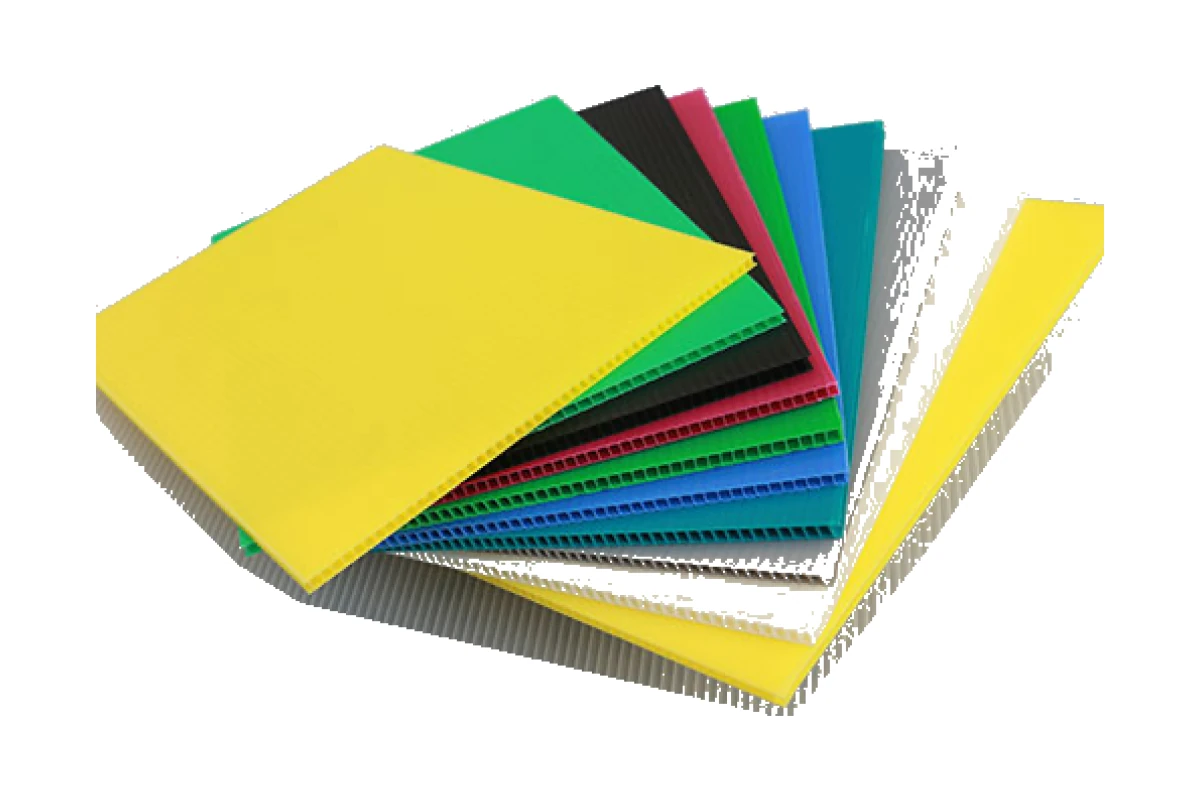
Danpla beats corrugated cardboard where it is damp, where goods must be wiped or washed, and where the sheet is reused; cardboard wins for one-way packing, multi-colour printing and boxes with complex structure. The biggest technical difference is humidity: the compression strength of a cardboard box falls to about 57% when air humidity rises from 30% to 90%, while PP sheet does not absorb water and does not change with humidity.
This article compares the two materials using independent studies on cardboard and manufacturer documents for PP sheet, not price lists. Danpla costs more per sheet, so the practical questions are the number of uses, the humidity where it is used and the cost of getting sheets back; the use-count calculation is already in the article on returnable Danpla packaging, and here I focus on the material differences.
Humidity: a measured difference
Cardboard is made of cellulose fibre, which absorbs moisture. Brown’s study (Clemson, 2019) tested 3,000 boxes at seven humidity levels from 30 to 90% and showed compression strength falling as a quadratic function of humidity; each 1% rise in moisture in the material cuts compression strength by about 7%. A review in another study gives a strength factor between 1.07 and 0.57 as humidity rises from 30 to 90%. The guidance of the Fibre Box Association and PMMI recommends storage at 30 to 70% RH and warns that above 70% or on contact with water, the board can soften, the glue weakens, and it may even delaminate and change size enough to jam machines.
Coroplast’s documents say humidity does not change the performance of a Danpla box, while cardboard strength drops sharply as humidity rises. That is a statement by a PP-sheet manufacturer; it fits the very low water absorption (0.02 to 0.03%) in the datasheet. But PP sheet is still affected by heat: Coroplast also notes that very high temperature lowers stacking strength and low temperature raises it, so a hot warehouse needs load testing under real conditions. The stacking safety factor commonly used for cardboard boxes is 1.5 to 4.5 depending on storage conditions, while for Danpla boxes Coroplast considers 1.5 to 3.5 enough within the normal temperature range; this is manufacturer documentation, not a substitute for load testing.
One point in cardboard’s favour: a study in Chemical Engineering Transactions shows that boxes soaked in water and then dried keep most of their strength, losing only 17 to 31%. That means a box that got wet need not be thrown away, but you should not stack heavy goods on it without measuring.
Comparison by criterion
| Criterion | Corrugated cardboard | PP Danpla sheet |
|---|---|---|
| High humidity | Compression strength falls to about 57% at 90% RH | Unchanged with humidity (manufacturer) |
| Weight per m² | About 539 g/m² (single wall), 1,096 g/m² (double wall) in the CET study | About 600 to 900 g/m² at 4 mm (Coroplast, Americover) |
| Washing | Cannot be washed | Wipe with water or alcohol |
| Printing | Direct offset and flexo printing | Needs corona treatment or special ink (above 46 dyne/cm) |
| Number of uses | Depends on conditions, usually one to a few uses | Reusable, number of uses depends on handling |
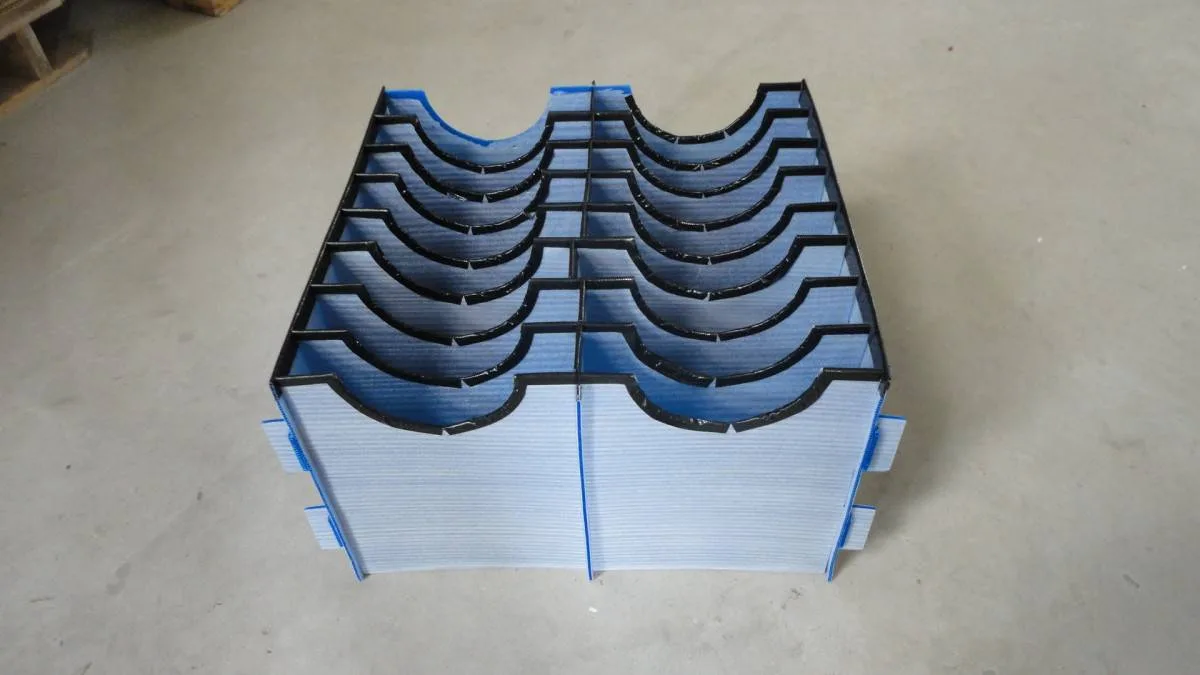
| Box shape | Complex glued folds, many compartments | Scored and folded, suits simple boxes and dividers |
The two weight figures are only to show they are the same order of magnitude, not a performance comparison, because cardboard and Danpla were measured under different conditions. Sheet sizes and weights are in standard Danpla sheet dimensions; the factors affecting price are in the Danpla sheet price list.
When to choose Danpla and when to choose cardboard
Danpla suits cold stores and damp areas, floor liners or dividers used many times on a line, goods that need washing (food, pharmaceuticals, electronics) and places where staff time spent replacing cardboard is costly. Cardboard suits one-way packing for shipping out or for delivery to the end consumer because nothing needs to be recovered, with cheap multi-colour printing, and multi-compartment box structures. When the investment budget is limited or the need is not certain, starting with cardboard and then trialling a batch of Danpla at the most failure-prone point is the lower-risk way. Raw sheet and construction are in ICD Danpla plastic and the article on Danpla sheet construction.
Frequently asked questions
Can Danpla fully replace cardboard in a warehouse?
Only in internal uses such as floor liners, dividers and returnable boxes. For goods delivered to end consumers, recovery is hard and costly, so cardboard is usually more suitable.
Can cardboard that got wet and dried still be used?
One study shows cardboard boxes soaked in water and then dried lose 17 to 31% of compression strength, meaning they keep most of it. It may do for light goods, but for heavy goods you should measure first.
How many Danpla pieces earn a discount?
ICD sets a minimum order of 50 pieces. For the volume discount policy, please contact us for a quote based on your actual order.
How do I work out how many Danpla sheets to buy?
Divide the total area to be lined or made into boxes by the area of one sheet (2.977 m² for a 1220 x 2440 mm sheet), then add cutting waste; the waste rate depends on how the parts are nested, so it needs to be worked out from a specific drawing.
Can old Danpla be recycled?
PP sheet is plastic code 5 and can be recycled where a suitable collection facility exists; actual recyclability depends on local conditions.
Contact
ICD Viet Nam Industrial Production Company Limited
North: 3rd Floor, Thang Long A1 Building, Bau Hamlet, Thien Loc Commune, Hanoi - 0983 797 186 / 090 345 9186 / 090 5859 186
South: 551/212 Le Van Khuong, Tan Thoi Hiep, District 12, Ho Chi Minh City - 098 6784 186
Email: sales@icdvietnam.com.vn
Zalo: Chat Zalo ngay
References
- Brown G.A., Relative Humidity Effects on the Compression Strength of Corrugated Boxes, Clemson University (2019; 3,000 boxes, humidity 30 to 90%) - open.clemson.edu
- Fibre Box Association and PMMI, Storage and Handling of Corrugated (2018): storage conditions 30 to 70% RH - fibrebox.org
- Coroplast, Coroplast Packaging (stacking safety factor, effect of humidity) - coroplast.com
- Compression Strength Recovery of Corrugated Boxes after Water Exposure, Chemical Engineering Transactions 25 (cardboard boxes soaked in water then dried, losing 17 to 31% of compression strength) - cetjournal.it
- Interstate Plastics, Fluted Polypropylene specifications (melting 150 to 170 °C, water absorption 0.03%) - interstateplastics.com
- Americover, Corrugated Plastic Boards Standard Products and Tolerance (g/m² by thickness, corona treatment above 46 dyne/cm) - americover.com
- Wikipedia, Corrugated plastic (trade names, additives, recycling code 5) - wikipedia.org