Table of Contents
Reviewed and updated by ICD - Week 43/2026
Plastic number 5 (PP) is safe to use when it is the right kind of container, used at the right temperature and still intact; the number 5 only identifies the plastic type and does not replace a “food safe” or “microwave safe” label. This guide focuses on everyday use: which containers to use, when to throw them out, and how to read the symbols. For the definition and properties of PP, see what PP plastic number 5 is; the full regulatory picture is in is PP plastic safe.
What is plastic number 5?
Plastic number 5 is polypropylene, a thermoplastic made from propylene. The triangle symbol with a number belongs to the SPI code system created in 1988, now managed by ASTM International; the code only identifies the plastic type and does not signal that the product is recyclable or food safe.
Is plastic number 5 safe?
Food-grade PP containers and utensils are widely used to hold food. In the US, polypropylene belongs to the olefin polymer group regulated by the FDA under 21 CFR 177.1520; in Vietnam, PE and PP plastic boxes in contact with food must meet QCVN 12-1:2011/BYT, in which the dry residue in testing may not exceed 30 µg/ml. That means safety lies in the specific container that has been tested, not in the number 5.
Using plastic number 5 safely: do and don’t
| Situation | Recommendation | Basis |
|---|---|---|
| Holding cold or warm food | Fine if the container is food grade | QCVN 12-1:2011/BYT |
| Reheating in a microwave | Only if the container says microwave safe; leave the lid slightly open | Harvard Health |
| Takeaway containers, reused butter and ice cream tubs | Do not use for reheating | Harvard Health |
| Scratched, discolored or cracked containers | Replace; old containers leach more | Harvard Health |
| Containers holding contents above 100 °C | Need a container tested at 95 °C for 30 minutes | QCVN 12-1:2011/BYT |
PP melts at about 160-165 °C, but the product softens gradually from about 85-100 °C, so do not confuse the melting point with a safe service temperature. Detailed heat limits are covered in the guide on the heat resistance of PP plastic.
How to read the plastic number 5 symbol
Look for a triangle with the number 5 on the base of the product, usually with the letters PP. Also look for the cup-and-fork symbol (food use) and the wave symbol (microwave), because these symbols are the ones that tell you about use. Do not rely on color or clarity: PP is usually translucent, but some copolymer grades are clearer, so color does not prove the plastic type.
Plastic number 5 and other plastics
PET (number 1) and HDPE (number 2) are also used for food; PET melts at about 250-260 °C and HDPE at about 130 °C, so PP sits in the middle for heat tolerance. This guide does not rank any plastic as “very safe” or “unsafe” because no standard classifies plastics that way.
Recycled and virgin PP
Virgin PP is new pellets from a petrochemical plant, with a clear specification sheet. Recycled PP is made from recycled material; under EU Regulation 2022/1616, recycled plastic for food use must go through a process assessed and authorized by EFSA. Recycled pellets should therefore be used only for products that do not touch food, such as trash bins or plant pots.
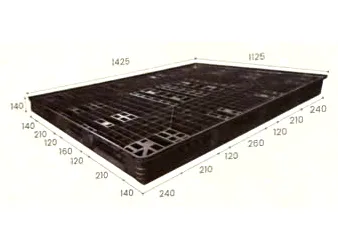
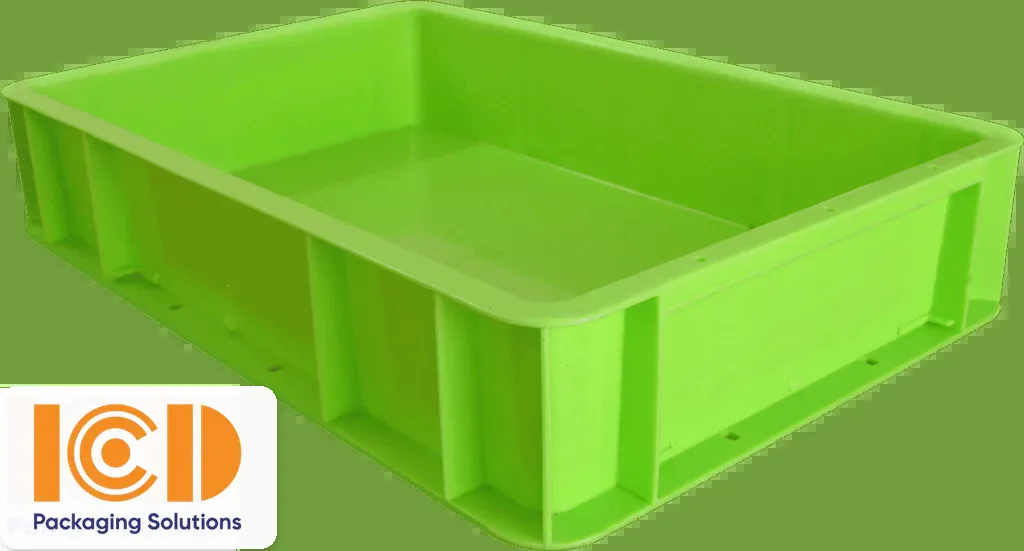
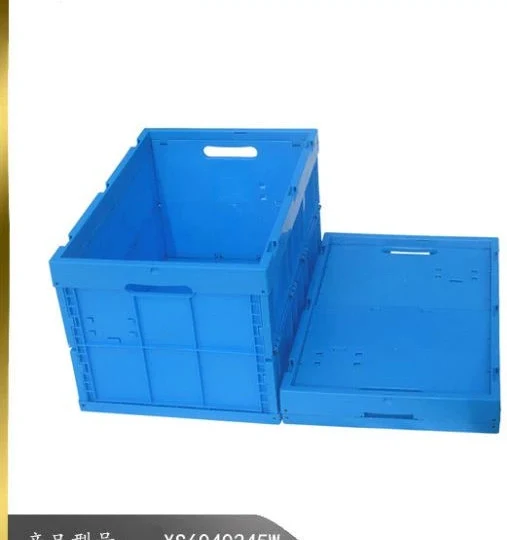
ICD Vietnam makes industrial plastic crates and plastic pallets for transport and storage; these are not food containers, so do not use them to hold food directly.
Frequently asked questions
Is plastic number 5 (PP) safe for holding food?
Yes, if it is a food-grade container (FDA 21 CFR 177.1520, QCVN 12-1:2011/BYT) and still intact. The number 5 only identifies the plastic type; it is not a safety certification.
Can PP plastic withstand microwave temperatures?
Only if the container clearly says microwave safe; Harvard Health advises leaving the lid slightly open and not using takeaway containers or butter and ice cream tubs.
Can PP plastic products be reused many times?
Yes if the container is intact; scratched or discolored containers should be replaced because they leach more. There is no general figure for number of uses.
Contact ICD Vietnam for crate and plastic pallet advice
ICD Vietnam Industrial Manufacturing Co., Ltd.
North: 3rd Floor, Thang Long A1 Building, Bau Hamlet, Thien Loc Commune, Hanoi, 0983 797 186 / 090 345 9186 / 090 5859 186
South: 551/212 Le Van Khuong Street, Tan Thoi Hiep Ward, District 12, Ho Chi Minh City, 098 6784 186
Email: sales@icdvietnam.com.vn
Zalo: Chat on Zalo now
References
- US FDA, 21 CFR 177.1520 Olefin polymers - law.cornell.edu
- QCVN 12-1:2011/BYT, National technical regulation on hygiene and safety of synthetic plastic packaging and utensils in direct contact with food - nafiqad5.gov.vn
- Harvard Health, Microwaving food in plastic: dangerous or not? - health.harvard.edu
- Wikipedia, Resin identification code (SPI 1988, ASTM D7611, resin codes do not indicate recyclability) - en.wikipedia.org
- Basell, Moplen HP500N datasheet (HDT, Vicat, density) - pimd.vn
- Commission Regulation (EU) 2022/1616 on recycled plastic food contact materials (OJ L 243, 20.9.2022, EUR-Lex)