Table of Contents
Reviewed and updated by ICD - Week 43/2026
Antistatic Danpla sheet is hollow PP sheet with additives so that surface resistance falls in the conductive or static-dissipative range, used for boxes, trays, dividers and liners in ESD-protected areas. Under ANSI/ESD S541, packaging used in an EPA must have two properties: low charging, and resistance in the conductive or dissipative group; use outside an EPA also needs discharge-shielding capability.
Choosing an ESD sheet of the wrong group, or buying a “black” sheet without measuring it, is a common mistake. This article sets out the resistance groups per ESD Association documents, where resistance alone is not enough to conclude, and what to ask the supplier before ordering. Construction and sheet sizes are in the article on Danpla sheet construction and specifications.
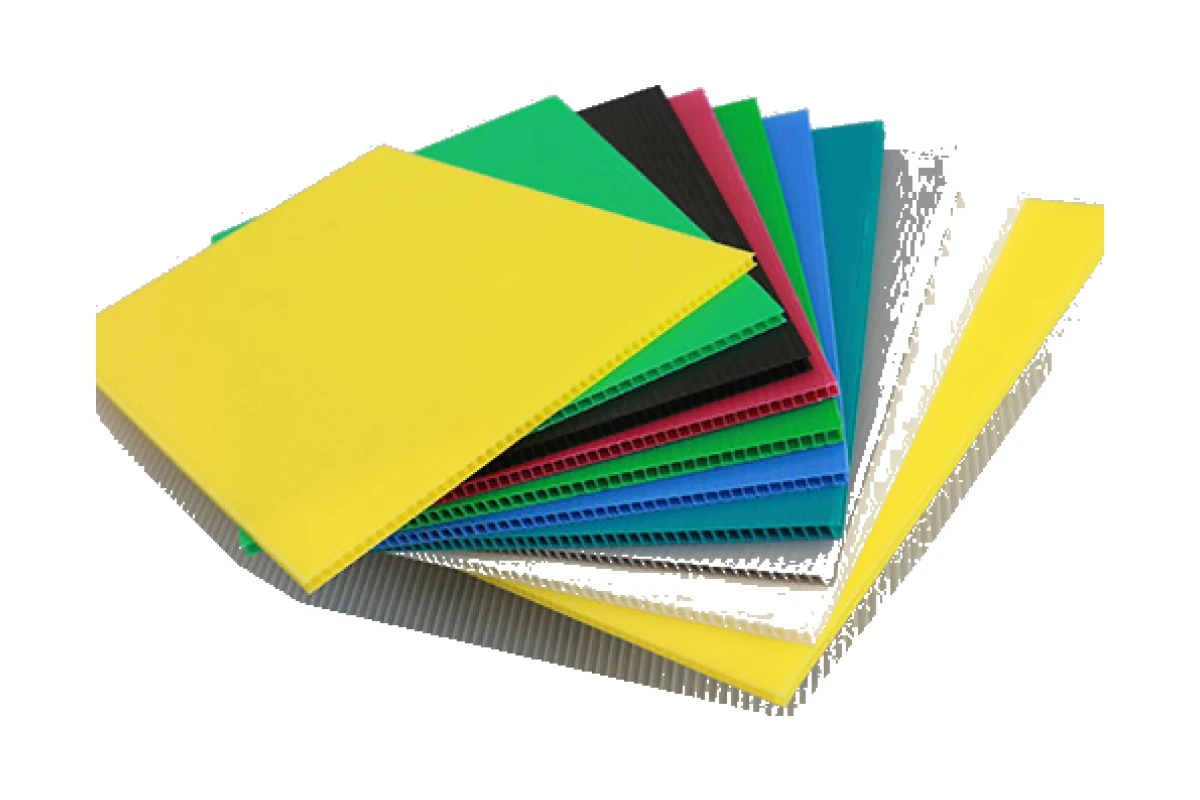
Three properties of ESD packaging
The ESD Association describes the main purpose of packaging and shipping boxes as limiting the effect of static electricity from three mechanisms: charging by friction (triboelectric), direct discharge, and in some cases the electric field. Three properties follow. First, material in contact with components must charge little, for example when sliding a circuit board into a box. Second, the material must be groundable, so its resistance falls in the conductive or dissipative group. Third, outside an EPA, packaging must also shield against discharge. Under standard S541, packaging inside an EPA needs low charging and conductive or dissipative resistance; outside an EPA it must also have shielding (ESD Association).
The practical consequence: an ESD Danpla box with good resistance may still not be enough to send outside the factory without discharge shielding. Danpla sheet is usually used for internal transport and inside the EPA; for packaging sent out, many factories add an outer ESD shielding bag or test to S541 for the final packaging configuration. I have no information that ICD supplies a sheet type that has met the shielding criteria, so this is something to ask ICD’s technical team.
Conductive or dissipative: which group to choose
| Material group | Surface resistance | Characteristics |
|---|---|---|
| Conductive | below 10⁴ Ω | Charge spreads evenly and drains very quickly when grounded |
| Dissipative | from 10⁴ to below 10¹¹ Ω | Charge drains in a controlled way, slower than conductive material |
| Insulative | 10¹¹ Ω or more | Holds charge for a very long time, not used as ESD packaging |
The thresholds above follow the ESD Association definitions (ESD ADV1.0). For packaging, S541 gives the dissipative range as greater than 10 kΩ and less than 100 GΩ when measured under STM11.11, and discharge-shielding material has a surface resistance of no more than 1 kΩ. ESD Association documents say charge drains from dissipative material much faster than from insulators but more slowly than from conductive material; so component trays and boxes usually choose dissipative, and conductive material suits places that need faster discharge such as grounded surfaces.
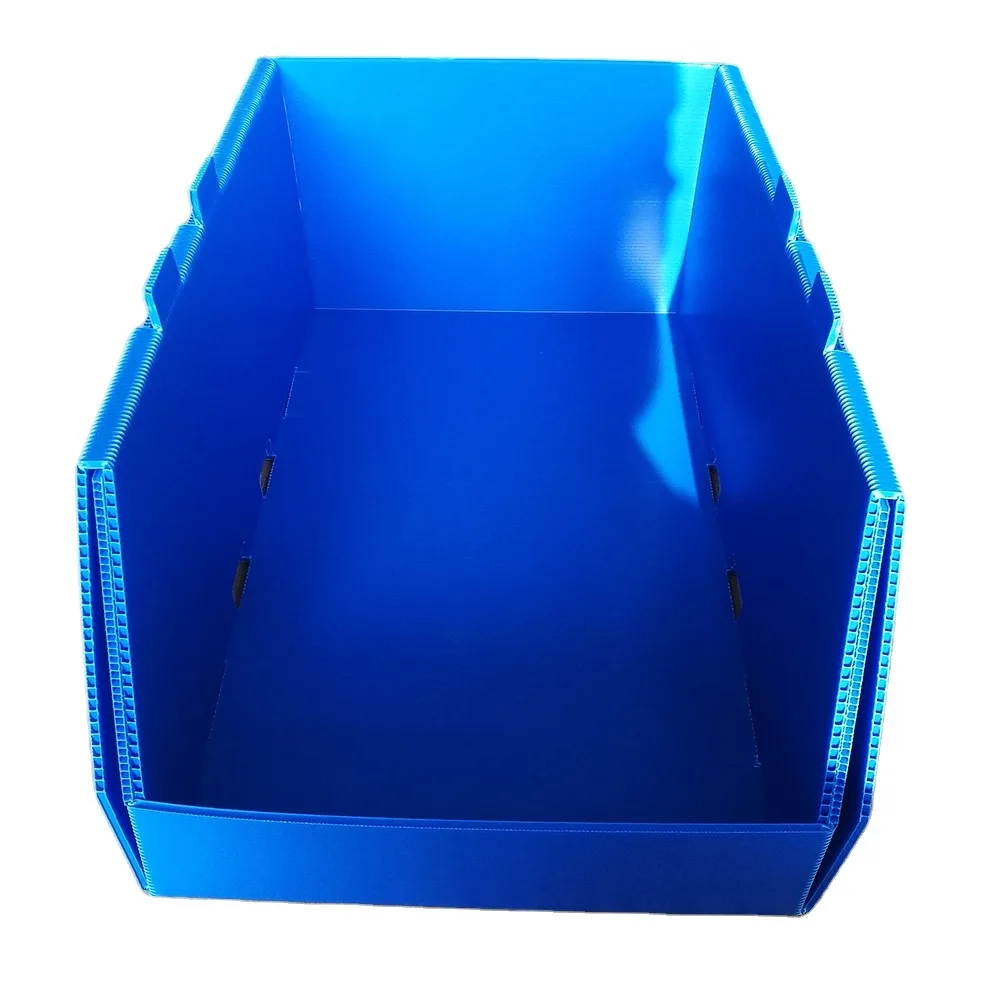
Resistance does not tell the whole story: low charging is a separate property
The ESD Association notes that a material’s low-charging property cannot necessarily be inferred from resistance or resistivity. That means two sheets in the same dissipative range can still rub against components and generate different amounts of charge. So when ordering, ask the supplier how they demonstrate low charging, in addition to the resistance report. Do not rely on colour either: a black sheet is often just a sheet tinted black, and only with a resistance measurement or test report should it count as an ESD sheet.
What to ask the supplier
A short list of questions before a bulk order: which group is the sheet (conductive or dissipative) and by which measurement method (STM11.11 is the ESD Association method for measuring surface resistance of flat sheet); does the test report come with a lot number and measurement conditions (humidity, voltage); is the additive inside the plastic body or only a surface coating (a coating wears off under friction and wiping); does the resistance stay stable after cutting, folding and welding. ICD’s Danpla plastic range includes antistatic sheet in thicknesses of 3, 4 and 5 mm (ICD Danpla plastic); compartment trays for components are at ICD component trays.
On cleaning, PP sheet suppliers such as Coroplast state that the sheet can be wiped with alcohol without affecting the base material; for ESD sheet, ask the manufacturer separately whether it affects the additive and the resistance, and choose the solvent per their instructions rather than trying strong solvents yourself.
Frequently asked questions
Is black ESD Danpla always antistatic?
No. Black colour does not prove ESD properties; ordinary black sheet also exists. You need a surface resistance measurement or a test report under STM11.11 for the exact lot.
Does ESD Danpla need grounding?
Conductive or dissipative material drains charge only when it can be grounded; in an EPA, bench and floor mats need grounding under the factory’s ESD control programme. For component boxes, per S541 the material needs to be groundable, meaning its resistance falls in the conductive or dissipative group.
How does ESD Danpla differ from ESD cardboard boxes?
PP sheet does not absorb water, can be wiped and reused many times; ESD cardboard depends on a coating and on humidity. The number of uses and the stability of resistance depend on the specific material, so measurements on the real material are needed.
Does ICD Vietnam supply resistance reports by lot?
I have not been able to confirm the scope of ICD’s ESD test reports (material group, measurement method, lot). When you need documents, please contact ICD to send the documents for the exact sheet you plan to buy.
Contact
ICD Viet Nam Industrial Production Company Limited
North: 3rd Floor, Thang Long A1 Building, Bau Hamlet, Thien Loc Commune, Hanoi - 0983 797 186 / 090 345 9186 / 090 5859 186
South: 551/212 Le Van Khuong, Tan Thoi Hiep, District 12, Ho Chi Minh City - 098 6784 186
Email: sales@icdvietnam.com.vn
Zalo: Chat Zalo ngay
References
- ESD Association, Fundamentals of ESD Part 3 (resistance classification per ANSI/ESD S541 and STM11.11) - esda.org
- ANSI/ESD S541-2019, Packaging Materials for ESD Sensitive Items (preview: purpose, scope, low charging and shielding criteria) - webstore.ansi.org
- Coroplast, Overview & Product Details, Technical Bulletins CSS-001/002/005 (copolymer, properties, chemical resistance, fabrication, sterilisation) - professionalplastics.com