
Table of Contents
Reviewed and updated by ICD - Week 43/2026
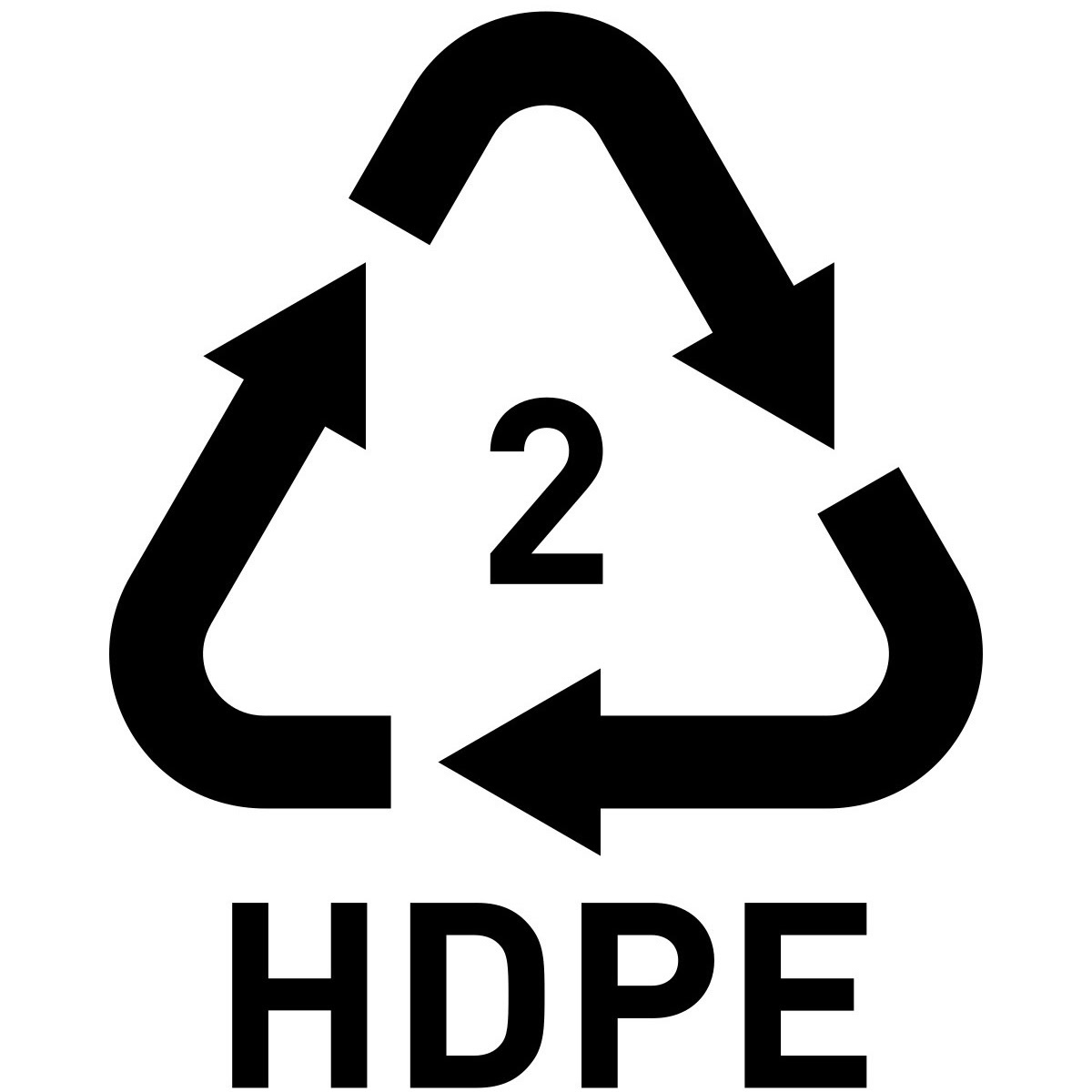
Plastic number 2 is HDPE (high-density polyethylene): the 2 inside the triangle on the bottom of a product is a resin identification code, used to sort plastics for collection and recycling. It is not a safety certificate and does not by itself mean the product can be recycled. It is the HDPE plastic used for milk bottles, shampoo bottles, jerrycans, crates and pallets.
The common questions are whether number 2 plastic is safe and whether it can be reused. This article explains what the code means, the real strengths and weaknesses of HDPE, and sensible ways to reuse it, with sourced figures.
Why is it called number 2 plastic?
The Resin Identification Code was created by the US Society of the Plastics Industry (SPI) in 1988 so that collection and recycling facilities could sort plastics by type; since 2010 it has been the ASTM D7611 standard. There are seven groups: 1 is PET (PETE), 2 is HDPE, 3 is PVC, 4 is LDPE, 5 is PP, 6 is PS and 7 is other, including products made of several resins. Since 2013 the standard has replaced the “chasing arrows” symbol with a solid triangle to avoid the misreading that the item has “already been recycled”.
The point to remember: ASTM states clearly that the code is not a “recycling code”. It only identifies the resin and supports recycling; printing the code does not mean the product has been recycled or that a collection system exists for it. Not every plastic product carries a code.
| Code | Plastic type | Common examples |
|---|---|---|
| 1 | PET (PETE) | Soft drink bottles, mineral water bottles |
| 2 | HDPE | Milk bottles, jerrycans, crates, pallets |
| 3 | PVC | Pipes, wrapping film |
| 4 | LDPE | Bags, shrink film |
| 5 | PP | Food containers, bottle caps |
| 6 | PS | Foam boxes, disposable cups |
| 7 | Other | Polycarbonate, multilayer plastics |
Strengths of number 2 plastic
HDPE stands out for its stiffness and toughness at a density lighter than water (0.93 to 0.97 g/cm3), its moisture resistance and its use at deep-freeze temperatures (brittleness temperature below -75 °C). Chemically, HDPE resists acids, dilute alkalis, salts and alcohols well according to the British Plastics Federation (BPF) rating table; aromatic hydrocarbons are rated only poor, and concentrated strong oxidising acids attack polyethylene. HDPE is also a good electrical insulator, and it can be recycled.
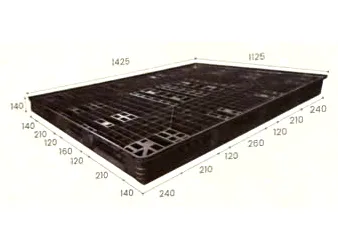
In manufacturing, HDPE is easy to process by injection moulding, blow moulding and extrusion. Logistics uses it widely for crates and pallets; see the plastic pallet category.
Weaknesses of number 2 plastic
HDPE does not biodegrade in a short time, so HDPE waste pollutes if it is not collected. It is sensitive to UV without a stabiliser, has modest heat resistance (continuous use at about 65 to 80 °C), and its inert surface is hard to print on or glue. On leaching, a 2011 survey in Environmental Health Perspectives found detectable estrogen-like activity in 9 of 13 HDPE products when extracted with ethanol; this is an in vitro result, not a conclusion about harm to ordinary users (Yang et al.).
Recycling HDPE requires sorting and washing, but it is well established: according to the EPA, natural HDPE bottles reached a recycling rate of 29.3% in the United States in 2018.
Is number 2 plastic safe?
Number 2 plastic used in the right grade and for the right purpose is considered relatively safe: HDPE contains no BPA (that is a monomer of polycarbonate), and polyethylene for food contact is regulated by 21 CFR 177.1520 (United States) and QCVN 12-1:2011/BYT (Vietnam). But the number 2 code does not guarantee that a product meets food-contact standards. A detailed analysis, including temperature limits and standards, is in the article on whether HDPE plastic is safe.
Can number 2 plastic be reused?
It can be reused and recycled, but the two ideas are separate. Recycling means returning plastic to a plant to make new pellets; ASTM lists the uses of recycled HDPE as non-food bottles, plastic lumber for outdoor use and garden edging, while milk, cosmetics and detergent bottles are also made of HDPE. The recycling process is described in the article on recycled HDPE plastic.
Reuse at home is a different matter. A container that once held chemicals, pesticides or solvents should not be reused for food, drinking water or for small children. For food, choose purpose-made packaging with a compliance declaration, and do not pour hot liquid into an HDPE container unless the manufacturer allows it.
In short: number 2 plastic is a common, easily recycled plastic that serves many purposes, but the code only says the material is HDPE; the safety and recyclability of a specific product must still be checked against that product’s documentation.
Frequently asked questions
Why is it called number 2 plastic?
Because HDPE carries code 2 in the plastic identification code created by SPI in 1988, now the ASTM D7611 standard, which has seven groups.
Does the 2 on a plastic product mean it can be recycled?
Not necessarily. According to ASTM, the code only identifies the type of plastic; it is not a recycling code and does not mean the product has been recycled or that a collection system exists for it.
What are the standout features of HDPE?
Stiff, tough, lighter than water, moisture resistant, resistant to acids and dilute alkalis, usable at deep-freeze temperatures; sensitive to UV without a stabiliser, with continuous heat resistance of about 65 to 80 °C.
Is number 2 plastic safe?
Safe when used in the right grade and for the right purpose, but the number 2 code does not replace the compliance declaration under QCVN 12-1:2011/BYT for products in contact with food.
Should I reuse a number 2 plastic bottle for food?
Not if the bottle once held chemicals or solvents, and do not pour hot liquid into it unless the manufacturer allows it.
Contact ICD Vietnam for plastic pallet advice
ICD Vietnam Industrial Manufacturing Co., Ltd.
Northern Vietnam: 3rd Floor, Thang Long A1 Building, Thon Bau, Thien Loc Commune, Hanoi - 0983 797 186 / 090 345 9186 / 090 5859 186
Southern Vietnam: 551/212 Le Van Khuong Street, Tan Thoi Hiep Ward, District 12, Ho Chi Minh City - 098 6784 186
Email: sales@icdvietnam.com.vn
Zalo: Chat on Zalo now
References
- ASTM International, Modernizing the Resin Identification Code (ASTM D7611: SPI created the code in 1988, solid triangle symbol, codes 1 to 7) - astm.org
- US EPA, Plastics: Material-Specific Data (natural HDPE bottle recycling rate 29.3% in 2018) - epa.gov
- Yang C.Z. et al., Most Plastic Products Release Estrogenic Chemicals, Environmental Health Perspectives (2011) - ehp.niehs.nih.gov
- eCFR, 21 CFR 177.1520 Olefin polymers (polyethylene for food contact in the United States) - ecfr.gov
- Ministry of Health (Vietnam), QCVN 12-1:2011/BYT on safety and hygiene of synthetic plastic packaging and utensils in direct contact with food - nafiqad5.gov.vn
- BPF, Plastipedia: Polyethylene (High Density) HDPE - bpf.co.uk
- Wikipedia, High-density polyethylene (density 0.93 to 0.97 g/cm3, applications, recycling code 2) - en.wikipedia.org