
Table of Contents
- Ways to measure humidity
- How to measure room humidity in the right place
- How to calibrate a hygrometer with salt
- The sensor inside a hygrometer: capacitive vs resistive
- Relative humidity and dew point: why reading humidity alone is not enough
- Humidity indicator cards (HIC): how to read them correctly
- Measuring humidity in cartons and containers
- How often to calibrate or replace a hygrometer
- Reading the result and acting on it
- Frequently asked questions
- What is the dew point and why do I need to know it?
- How do you read a humidity indicator card?
- What is the difference between capacitive and resistive hygrometers?
- How do you measure humidity in a room?
- Which hygrometer is accurate?
- How do I know if my hygrometer is right?
- How much does a hygrometer cost?
- How do you measure humidity in a wardrobe?
- Contact ICD Vietnam for desiccant advice
- References
- Related articles
Reviewed and updated by ICD - Week 40/2026
Measure humidity with a hygrometer: an electronic type is accurate to about 5% RH, a mechanical dial type about 10% RH, and it can be checked with a salt test (a reference humidity of 75% RH after 12 to 24 hours). The EPA notes that a hygrometer measuring both temperature and humidity usually costs under 50 USD. This article explains the types of hygrometer, how to place one correctly, how to calibrate it with salt, how to read results and how to use a hygrometer with desiccant packets.
Ways to measure humidity
| Method | Accuracy (reference) | Advantages | Limitations | Suited to |
|---|---|---|---|---|
| Electronic hygrometer (sensor) | About 5% RH, good ones ±3% | Easy to read, shows temperature | Needs a battery, drifts over time | Homes, warehouses, cabinets, boxes |
| Dial hygrometer (analog) | About 10% RH | Cheap, no battery | Easily sticks, drifts | Rough reference only |
| Humidity indicator card (HIC) in a carton | Only a threshold (e.g. 10, 20, 30%) | Attached directly, visible at once | No continuous number | Cartons, storage packs |
| Data logger | Accurate, records over time | Humidity history per voyage | Higher cost | Containers, pharmaceutical stores, high-value goods |
| Material moisture meter (wood, paper) | Measures moisture inside a material | Measures wooden pallets directly | Different from air humidity | Wooden pallets, furniture timber |
How to measure room humidity in the right place
Place the hygrometer in the middle of the room, 1 to 2 m from the wall, away from windows, air conditioners, kitchens, heat sources and sunlight, hung at living height of about 1.2 to 1.5 m. When newly placed or moved to another room, wait 15 to 30 minutes for it to stabilize before reading.
Humidity changes by hour and by room, so measure at several times (morning, afternoon, evening), and record the temperature as well so you know the dew point.
How to calibrate a hygrometer with salt
Cigar enthusiast sources (JR Cigars, Neptune, Boveda) all describe the salt test, because salt and water create a stable environment of about 75% RH:
The method has these steps:
- Put about a spoonful of table salt in a bottle cap and add a few drops of water until the salt is damp and pasty but not liquid.
- Place the salt cap together with the hygrometer in a sealed bag or box, without letting the hygrometer touch the salt.
- Keep the temperature stable for 12 to 24 hours.
Read it as soon as you open it: an accurate hygrometer shows about 75%; note the deviation to add or subtract, or adjust with the calibration button (electronic) or the rear screw (dial).
Room humidity changes quickly, so you must read the instant the hygrometer comes out of the salt box. According to the sources, even a new hygrometer is often off by about ±3%.
The sensor inside a hygrometer: capacitive vs resistive
An electronic hygrometer uses one of two principles. A capacitive sensor measures the change in dielectric constant of a polymer or ceramic layer as it absorbs moisture; a resistive sensor measures the change in electrical resistance of a moisture-absorbing material layer.
Technical comparisons show that the capacitive type is usually more accurate, stable and faster, while the resistive type is cheaper but responds poorly at low humidity (around 10% RH).
According to technical comparisons, capacitive types have typical accuracy of 2 to 3% RH, a response time of about 10 seconds and drift from about 0.25 to 0.5% (high-end) up to 1 to 3% RH per year; resistive types usually drift 1 to 5% RH per year, respond more slowly (about 100 seconds) and cost less.
The accuracy printed on household hygrometer packaging (usually ±3 to ±5% RH) is only achieved when new and in the 20 to 80% RH range. Direct condensation on the sensor, volatile chemicals (paint, solvents, cleaners) and long exposure above 90% humidity all throw the sensor off, and most of this drift accumulates and is hard to recover.
Relative humidity and dew point: why reading humidity alone is not enough
Relative humidity (RH) is the ratio of the water vapor present to the maximum the air can hold at that temperature.
Because the maximum rises sharply with temperature, the same amount of water vapor gives a different RH as temperature changes: a room at 70% RH in the day can approach 100% when it cools at night, even though the vapor has not increased.
The dew point is the temperature at which air becomes saturated (100% RH) and water vapor begins to condense. The Magnus-Tetens formula (a = 17.625; b = 243.04 degrees C) gives an error of about 0.35 degrees C in the range -40 to 50 degrees C. The table below is calculated with this formula:
| Temperature | RH | Dew point | Meaning |
|---|---|---|---|
| 30 degrees C | 70% | About 23.9 degrees C | Surfaces below 23.9 degrees C will get wet |
| 30 degrees C | 50% | About 18.4 degrees C | Drier, less risk of condensation |
| 25 degrees C | 60% | About 16.7 degrees C | A 15 degree cold pipe will get wet |
| 25 degrees C | 40% | About 10.5 degrees C | Very little risk of condensation |
That is why a hygrometer that also shows temperature is very useful: if a window pane, cold pipe or container wall is colder than the dew point, water will form there even though the average RH in the room is still “acceptable”. This is exactly the mechanism of condensation in containers; see the container rain section in safe humidity for storing goods.
Humidity indicator cards (HIC): how to read them correctly
The card has chemical spots that change color from blue (dry) to pink (humid); a pale lavender color shows RH exactly at that spot’s threshold. How to read: find the spot whose color is nearest to the comparison band printed on the card, and the measured humidity is the percentage written next to that spot.
The reaction is reversible and the spots change color within about 8 hours after humidity changes, so the card reflects recent conditions and not the instant.
Cards usually have spots at 10, 30, 50 and 60%, and for moisture-sensitive components, a pink 10% spot means the packaging needs checking and the desiccant packet replacing, while a pink 60% spot shows a risk of mold.
The semiconductor packaging standard IPC/JEDEC J-STD-033 requires a card with 5, 10 and 60% RH marks, placed with a desiccant packet in a moisture barrier bag; if the bag is opened and the 10% spot is already pink, the components have absorbed moisture beyond the permitted threshold.
For ordinary goods, 30, 40 and 50% cards are more common.
Measuring humidity in cartons and containers
There are three common ways to measure:
- Humidity indicator card: attached next to the desiccant packet in the carton, visible through the opening, read when the carton is opened at the receiving warehouse.
- Data logger (temperature and RH): placed in two positions, near the door and deep inside the container, with the data downloaded at delivery to check against the dew point.
- Electronic hygrometer in the warehouse: mounted mid-warehouse, 1 to 2 m from the wall, recorded in a daily log.
For sea freight, a hygrometer hung at one point cannot reflect the whole container because moisture is unevenly distributed (near the roof, near the door and near the walls all differ).
The practical approach: place a data logger or indicator card in at least two positions (near the door and deep inside), record temperature as well to calculate the dew point, and check when the container is opened. For desiccant doses for each voyage see how to use desiccant packets correctly.
How often to calibrate or replace a hygrometer
Do the salt test when new and then every 6 to 12 months for household devices; high-end manufacturers publish drift of about 1 to 2% RH per year, while household types usually deviate more.
Replace the hygrometer when the difference from the salt test exceeds about 5% RH, or after the sensor has suffered condensation or chemical exposure. Placing two hygrometers of different brands side by side is the cheapest way to spot one that has drifted.
Reading the result and acting on it
Below 30% is dry and you need to add humidity if people are in the room. 30 to 50% is ideal according to the EPA, so keep it. 50 to 60% is acceptable but needs monitoring and ventilation.
Above 60% mold begins to grow, so dehumidify and place desiccant packets in wardrobes; above 70% it is the damp season, and you need a dehumidifier and a search for the moisture source.
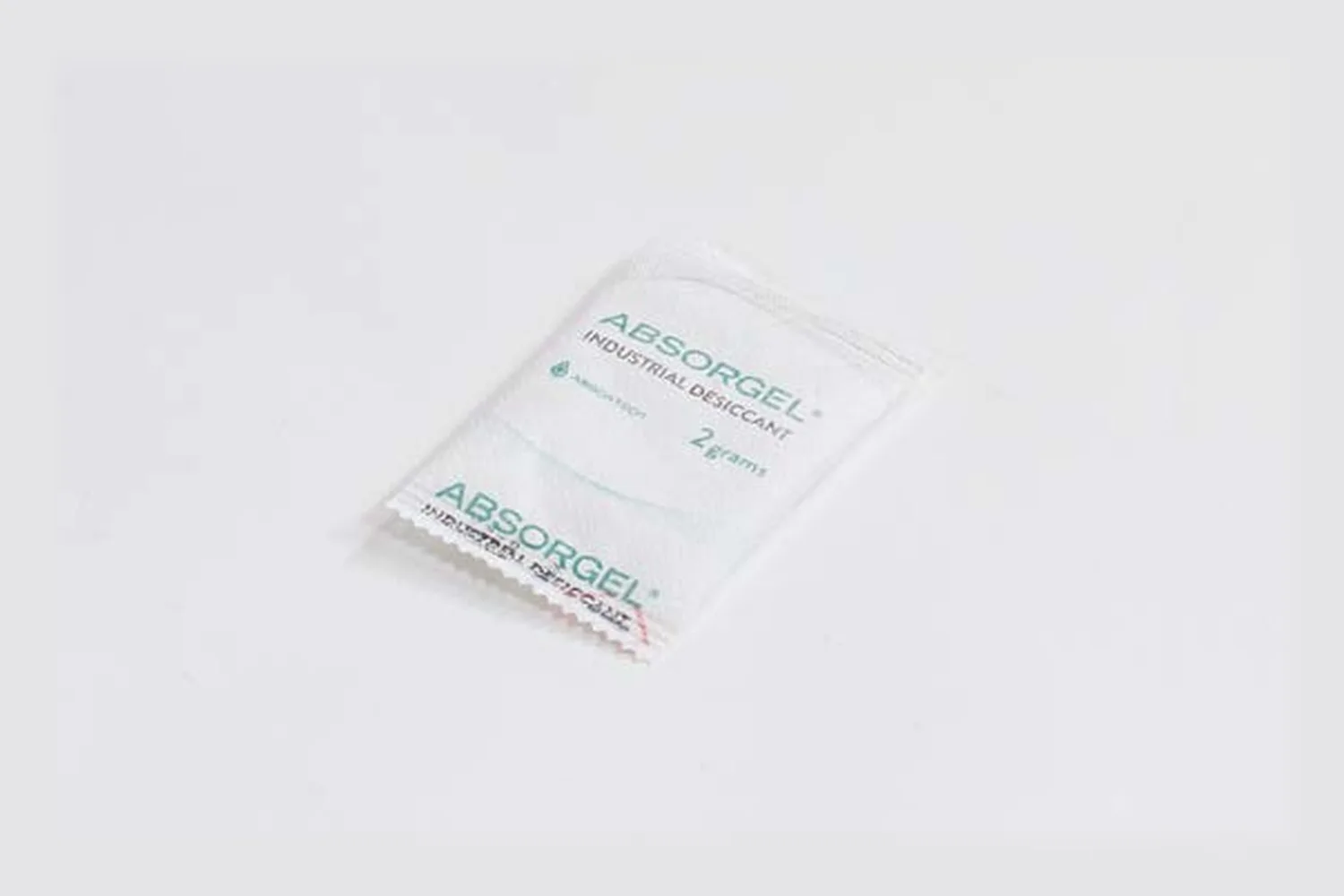
When you use desiccant packets in a wardrobe, box or carton, place a small hygrometer next to the packet: an indicator packet only shows when the packet is full, while the hygrometer shows the real humidity.
For the targets to reach see ideal indoor humidity level and safe humidity for storing goods. The packet dose formula is in how to use desiccant packets. The range is at ICD desiccants.
Frequently asked questions
What is the dew point and why do I need to know it?
It is the temperature at which air becomes saturated and water vapor begins to condense. A surface colder than the dew point gets wet; for example 30 degrees C and 70% RH has a dew point of about 23.9 degrees C.
How do you read a humidity indicator card?
Find the spot whose color is nearest to the comparison band; blue is dry, pink is humid, and pale lavender is exactly the RH of that spot.
What is the difference between capacitive and resistive hygrometers?
Capacitive types are usually more accurate, stable and faster; resistive types are cheaper but poorer at low humidity.
How do you measure humidity in a room?
Use an electronic hygrometer placed mid-room, away from walls, windows, air conditioners and heat sources; wait 15 to 30 minutes to stabilize and then read.
Which hygrometer is accurate?
Electronic types usually give an error of about 5% RH, dial types about 10%. Good ones can reach ±3%.
How do I know if my hygrometer is right?
The salt test: leave the hygrometer with damp salt in a sealed box for 12 to 24 hours; a reading of about 75% means it is correct.
How much does a hygrometer cost?
The EPA notes that models measuring both temperature and humidity usually cost under 50 USD at a hardware store. Local prices vary by type.
How do you measure humidity in a wardrobe?
Place a small hygrometer in the wardrobe next to the desiccant packet, close the door for 30 minutes and then read; keep it below 60%.
Contact ICD Vietnam for desiccant advice
ICD Vietnam Industrial Production Co., Ltd.
North: 3rd Floor, Thang Long A1 Building, Bau Hamlet, Thien Loc Commune, Hanoi, 0983 797 186 / 090 345 9186 / 090 5859 186
South: 551/212 Le Van Khuong, Tan Thoi Hiep, District 12, Ho Chi Minh City, 098 6784 186
Email: sales@icdvietnam.com.vn
Zalo: Chat on Zalo
References
- US EPA, Mold course chapter 2: Moisture control
- JR Cigars, How to calibrate a hygrometer
- Hygrometer.net, How to calibrate a hygrometer
- Vaisala, Accuracy that lasts: an analysis of humidity sensor drift
- Wikipedia, Humidity indicator card