Table of Contents
- Which desiccants can be reused
- Temperature and time: comparing the sources
- Drying in an oven, step by step
- How many times can desiccant be reused
- Shelf life and when to replace
- Disposing of expired beads and what to use dried beads for
- Industrial desiccants are not designed for reuse
- Frequently asked questions
- Can desiccant beads be reused?
- At what temperature should desiccant beads be dried?
- Can desiccant beads be dried in an air fryer?
- Can desiccant beads go in the microwave?
- Can desiccant beads be dried in the sun?
- How many times can desiccant beads be reused?
- Do desiccant beads have an expiry date?
- How long do desiccant beads last?
- Contact ICD Vietnam for desiccant advice
- References
- Related articles
Reviewed and updated by ICD - Week 40/2026
Only silica gel, molecular sieve and, to a degree, clay can be dried and reused; calcium chloride (container desiccant bags, gel packets) and oxygen absorbers cannot. For silica gel, the regeneration level that most international technical sources agree on is about 120 °C for 2 to 3 hours in a thin layer, never above 125 °C for beads with a color indicator and absolutely not above 200 °C. Vietnamese-language websites quote very different figures (from 100 to 180 °C), and this article compares them so you can choose a level with a basis.
Which desiccants can be reused
| Type | Reusable | Conditions | Notes |
|---|---|---|---|
| Clear, white or orange silica gel | Yes, many times | 120 °C, 2 to 3 hours, thin layer | Reusable almost indefinitely if kept clean; some sources say the pores can collapse after about 100 cycles |
| Blue silica gel (cobalt indicator) | Yes | Not above 125 °C | High heat destroys the indicator, so the beads stop showing color |
| Molecular sieve | Yes, needs high heat | Higher than silica gel, needs a dedicated oven | Industrial use, not suited to a home oven |
| Clay (bentonite) | Yes, less durable | About 105 °C for 6 hours, or up to 150 °C | Performance drops after each regeneration |
| Calcium chloride, gel packets | No | Needs industrial equipment | Saturated, it becomes a brine; heating that brine is dangerous and can rupture the pouch or spray a corrosive liquid |
| Oxygen absorber (iron powder) | No | One-way reaction | Iron that has rusted does not return to its original state |
Packets that have been used inside shipping cartons should also not be reused, because their saturation level cannot be controlled and they may carry mold or bacteria.
To tell whether beads are full, look at the color if they have an indicator: blue turns violet and then pink at about 8% moisture by weight, and goes milky white at about 40%, while the orange type turns green; the meaning of each color is in color-changing desiccant beads. For beads with no color change, weigh a sample: saturated beads are 30 to 40% heavier than when dry, soft, sticky and crumbly.
Temperature and time: comparing the sources
Beyond Photo Tips gives 120 °C for 2 to 3 hours (or 100 °C for 4 to 6 hours), stressing no more than 125 °C for indicator beads and no more than 200 °C for any type. Industry documents give 120 to 150 °C for 2 to 4 hours, using the higher level for large or heavily saturated beads.
Some technical documents give about 150 °C for 1 to 2 hours with a maximum of 162 °C, while Edco-type guidance suggests only about 80 °C for 15 minutes for packets that are not heavily saturated.
Some Vietnamese websites quote up to 180 °C, which is above the limit in most documents and can damage the bead structure.
From this comes a practical recommendation: dry at 120 °C for 2 to 3 hours, spread no more than 2.5 cm deep on a metal or heat-resistant glass tray; if the beads have an indicator, do not exceed 125 °C. Trust the signs rather than the clock: indicator beads return to their original color, or the weight stops dropping, meaning they are dry.
Drying in an oven, step by step
- Pour the beads out of the paper or fabric sachet, since the casing can burn, melt or smell.
- Spread them in a layer at most 2.5 cm deep on a tray so moisture escapes evenly.
- Wear a mask and gloves while working, and avoid breathing dust or broken beads.
- Dry at 120 °C for 2 to 3 hours, leaving the oven door slightly open for the first few minutes so steam can escape. If it is not done, dry another 30 to 60 minutes.
- Let the beads cool in the oven or pour them straight into an airtight container: hot beads left in open air re-absorb moisture within minutes, wasting the drying.
Other methods are less reliable. Beyond Photo Tips does not recommend microwaves because heat cannot be controlled and steam peaks break the porous structure; if you must, work in rounds of about 3 minutes, spread thin in a ceramic bowl, and watch the color.
An air fryer is only suitable if it can be set to a true 120 °C, because many run hotter than the setting (this is an inference from the technical temperature limits, not a recommendation from air fryer makers).
Pan roasting is hard to control and tends to scorch spots, and sun drying for 48 to 72 hours, as some sites suggest, only partly restores beads that were not very wet.
How many times can desiccant be reused
Figures online contradict each other: one site says 2 to 3 times, another 5 to 7 times, and one says only 15 to 20% effectiveness remains after the first cycle.
Industry documents say there is no fixed number, because lifespan depends on contamination: clean water vapor allows many cycles, while an environment with oil or chemicals can ruin the beads after only a few.
Discard beads when drying takes noticeably longer, they shed dust, the color change is weak or uneven, or they are crumbly or moldy.
Shelf life and when to replace
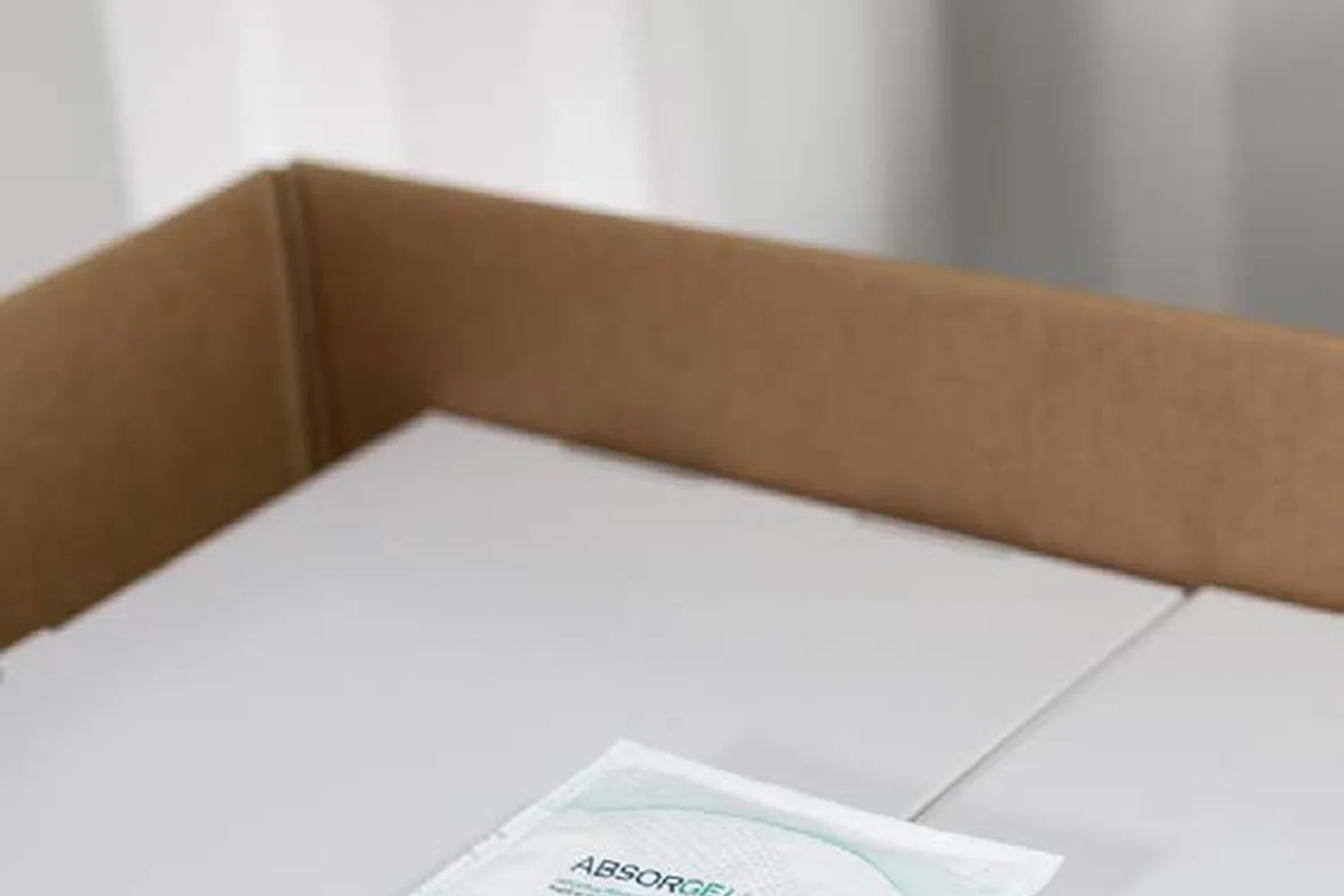
An unopened packet stored airtight usually lasts 1 to 3 years; for Absortech industrial products, AbsorGel is rated 3 years and AbsorTerra 1 year from the production date.
Once in use, packets in a wardrobe or shoe cupboard last only 1 to 3 months depending on humidity and should be replaced when they change color, soften or feel wet. In a camera or electronics storage box, expect a few weeks to a few months, and replace when a hygrometer reads over 50% or the indicator beads turn pink.
In cartons and containers, packets are used once per trip, and replaced when calcium chloride bags are full of gel. Dosage and placement are covered in how to use desiccant packets correctly.
To keep beads usable for longer, store them in a glass or plastic airtight box or a zip bag in a cool, dry place away from sunlight. Do not open a packet before use, because an opened packet slowly absorbs moisture and loses capacity, and freshly dried beads must be sealed as soon as they cool. If they must sit in a damp place, use the dried beads within 1 to 2 weeks.
Disposing of expired beads and what to use dried beads for
Clean silica gel and clay can usually go with ordinary household waste, but do not flush them down the drain because swollen beads cause blockages.
Beads with a cobalt indicator, or contaminated with chemicals or oil, should be handled according to the manufacturer’s safety data sheet (SDS) and a waste collection service; this is general guidance and does not replace local regulations, and businesses disposing of large volumes should ask the supplier for the SDS, see HS code and MSDS for desiccant beads. Dried beads can be used in wardrobes, shoe boxes, camera boxes, toolboxes and for drying flowers (see drying flowers with silica gel), but should not touch food or medicine directly because beads recycled at home cannot be guaranteed clean.
Industrial desiccants are not designed for reuse
Hanging bags and calcium chloride packets for containers and export cartons are designed for single use, absorbing over 300% of their own weight and forming a gel.
To protect sea freight, use ICD desiccants at the right dose rather than trying to recycle used packets; for the suitable type see types of desiccant. If beads get wet, read desiccant packet hot, wet or leaking, and if a child swallows beads, see what happens if you swallow a desiccant packet.
Frequently asked questions
Can desiccant beads be reused?
Silica gel, molecular sieve and, to a degree, clay can, by drying them out. Calcium chloride (container desiccant bags, gel packets) and oxygen absorbers cannot.
At what temperature should desiccant beads be dried?
About 120 °C for 2 to 3 hours in a thin layer. Beads with a color indicator should not exceed 125 °C, and no type should exceed 200 °C (Beyond Photo Tips). Some documents allow up to 150 °C, maximum 162 °C.
Can desiccant beads be dried in an air fryer?
Only if it can be set to a true 120 °C with a thin layer, because many run hotter than the setting. Do not use a hot grill mode.
Can desiccant beads go in the microwave?
Not recommended because it creates steam peaks that break the porous structure. If you must, work in 3-minute rounds, spread thin in a ceramic bowl.
Can desiccant beads be dried in the sun?
It only partly restores beads that were not very wet. Oven drying is more effective and controllable.
How many times can desiccant beads be reused?
There is no fixed number. In a clean environment many times; contamination reduces it quickly. Discard when beads are crumbly, shed dust, show a weak color change or take much longer to dry.
Do desiccant beads have an expiry date?
Yes, usually 1 to 3 years when unopened and stored airtight. AbsorGel packets are 3 years and AbsorTerra 1 year from the production date.
How long do desiccant beads last?
It depends on humidity and quantity: a few weeks to a few months in a wardrobe; one voyage for container packets.
Contact ICD Vietnam for desiccant advice
ICD Vietnam Industrial Production Co., Ltd.
North: 3rd Floor, Thang Long A1 Building, Bau Hamlet, Thien Loc Commune, Hanoi, 0983 797 186 / 090 345 9186 / 090 5859 186
South: 551/212 Le Van Khuong, Tan Thoi Hiep, District 12, Ho Chi Minh City, 098 6784 186
Email: sales@icdvietnam.com.vn
Zalo: Chat on Zalo