
Table of Contents
- 1. What is PE plastic and why are there so many types
- 2. The PE types: how they differ
- 3. How PE and PP differ
- 4. How to identify PE at home
- 5. Is PE plastic safe
- 6. Applications of PE
- 7. Price, imports and the plastic bag tax
- 8. How much PE is recycled
- Frequently asked questions
- Contact ICD Vietnam for advice
- References
- Related articles
Reviewed and updated by ICD - Week 43/2026
PE (polyethylene) is a thermoplastic made from ethylene gas. It is lighter than water, flexible, resistant to moisture and chemicals, and melts at roughly 105 to 130 °C depending on the type. PE divides into LDPE, LLDPE, MDPE, HDPE and a few special grades such as UHMWPE and PEX, found in bags, films, bottles, cans, water pipe and plastic pallets. This guide goes from structure and classification to how safe PE is, how to identify it and how much of it is recycled.
1. What is PE plastic and why are there so many types
A PE molecule is a long chain made only of carbon and hydrogen, linked from thousands of ethylene units. What separates the PE types is not the chemistry but the shape of the chain. Straight, lightly branched chains pack tightly and crystallize more, giving a dense, rigid plastic: HDPE. Heavily branched chains pack loosely, giving a light, soft plastic: LDPE. Production differs too: LDPE is polymerized at very high pressure, while HDPE and LLDPE use lower pressure with Ziegler-Natta or Phillips catalysts (Wikipedia, Polyethylene).
One point that often comes up: the triangle symbol 2 is HDPE and 4 is LDPE (and LLDPE is usually printed under 4 as well, per the ASTM D7611 resin identification code). So a roll of stretch film or a thin bag usually carries 4, while HDPE cans, crates and plastic pallets carry 2.
2. The PE types: how they differ
| Type | Density (g/cm³) | Characteristics | Commonly found in |
|---|---|---|---|
| LDPE | 0.910 - 0.940 | Soft, flexible, clear, many branches | Thin bags, shrink film, wrap |
| LLDPE | 0.915 - 0.925 | Tougher and stretches better than LDPE at the same thickness | Pallet stretch wrap, agricultural film |
| MDPE | 0.926 - 0.940 | Intermediate, resists impact and stress cracking | Gas pipe, water pipe, tanks |
| HDPE | from 0.941 | Rigid, dense, chemical resistant, melts at 120-130 °C | Cans, crates, plastic pallets, pipe, milk bottles |
| UHMWPE | 0.930 - 0.935 | Molecular weight 3.5 to 7.5 million, very tough and abrasion resistant | Gears, bearings, artificial joints |
| PEX | close to HDPE | Cross-linked, becomes a thermoset, better heat resistance | Hot water pipe, cable insulation |
The figures above come from the Wikipedia page on Polyethylene, and the cross-link level of PEX under ASTM F876 lies between 65% and 89%. The point to remember when choosing: if you need a rigid product that carries load or holds chemicals, look at HDPE; if you need something soft, stretchable and sealing, look at LDPE or LLDPE. Plastic pallets and industrial crates usually use HDPE or PP, while pallet stretch wrap uses LLDPE.
3. How PE and PP differ
PE and PP both belong to the polyolefin family, so they are easy to confuse. The biggest difference is heat: PP melts at around 165 °C, well above the 120-130 °C of HDPE, so lunch boxes and utensils that need boiling water or the microwave are usually made of PP. In return PE is tougher and holds its strength better at low temperature, so it is chosen for frozen goods, wrap and soft bottles. The density of PP is about 0.905, lighter even than dense PE.
4. How to identify PE at home
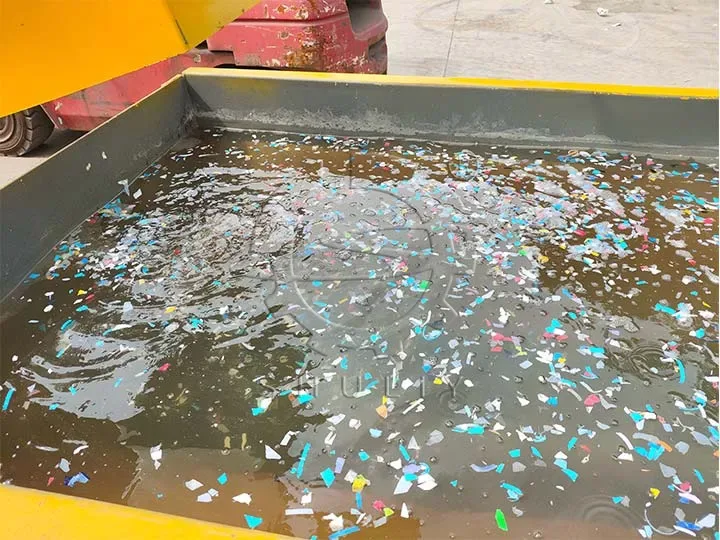
The fastest way is to read the symbol: 2 or 4, or the letters PE, HDPE, LDPE stamped on the bottom of the product. Without a symbol there are three supporting signs. PE feels slippery like wax. A small piece floats in water. A small piece burned as a test keeps burning with a blue flame with a yellow tip, smells like paraffin candle wax and melts into drips (Boedeker Plastics, plastic identification by flame).
5. Is PE plastic safe
For virgin PE, the answer is yes, under proper use. In the United States, olefin polymers for food contact packaging are regulated under 21 CFR 177.1520 (Food and Drug Administration). In Vietnam, synthetic plastic utensils in contact with food must meet QCVN 12-1:2011/BYT, which sets limits on evaporation residue, heavy metals and migrating substances for each plastic type, including PE and PP. BPA is not a raw material of PE (BPA is used for polycarbonate and epoxy resin), so the statement “PE contains no BPA” is true in essence, but it does not replace checking additives, printing inks and the source of the resin.
The real risks lie in heat and in recycled resin. Putting hot food in a thin PE container easily softens and warps it, and you should only microwave it when the product label says it is allowed. Recycled resin of unknown origin should not be used for food packaging because impurities cannot be controlled. On thermal decomposition, the international chemical safety card ICSC 1488 states that PE starts to decompose thermally from around 290 °C, so in processing and storage the main hazards are fire and fine pellet dust, not toxicity at normal temperature.
6. Applications of PE
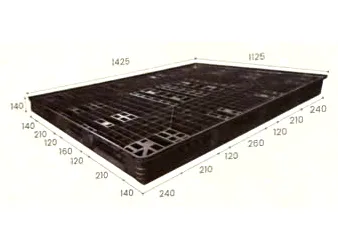
Packaging takes the largest share: bags, shrink film, pallet stretch wrap, food wrap. Industry uses HDPE for cans, chemical containers, pallets and plastic crates; MDPE and HDPE for water pipe and gas pipe. Agriculture uses mulch film and greenhouse film. Medicine and engineering use UHMWPE for artificial joints and wear parts. PEX serves hot water pipe and cable insulation. In the packaging and logistics business ICD Vietnam works in every day, the two most notable groups are PE film (LLDPE, LDPE) for wrapping goods and crates, and HDPE plastic pallets for handling.
7. Price, imports and the plastic bag tax
PE resin prices follow oil and ethylene prices and differ between virgin and recycled, between HDPE and LDPE, and between imported and domestic, so this guide gives no fixed price table: a table more than a week old is usually out of date. For reference, look at plastic price reports that show an update date, or ask for a quote by lot and date. Imported virgin PE resin falls under Chapter 39 of the tariff schedule (heading 3901, ethylene polymers in primary forms), so confirm the exact code with customs before declaring.
One point few articles mention: plastic bags made of single-layer HDPE, LDPE or LLDPE film are subject to an environmental protection tax of VND 50,000 per kg under Resolution 579/2018/UBTVQH14 (effective 01/01/2019). Under Circular 159/2012/TT-BTC, packaging that comes pre-packed with goods and bags meeting environmentally friendly criteria with a certificate are not taxable. A business buying PE bags to resell or use should ask its tax accountant about its own business type.
8. How much PE is recycled
PE is technically recyclable because it is a thermoplastic that can be remelted and pelletized. In practice, though, recovery rates are not high. According to the US Environmental Protection Agency (EPA) for 2018, natural-color HDPE bottles (milk and water bottles) were recycled at 29.3%, plastic bags, sacks and wraps (including shrink film) at only 10%, and all plastics together at 8.7%. Thin film is harder than rigid bottles because it is dirty, carries labels and tangles in sorting machines.
For a business this means recycled PE resin is cheaper but uneven in quality, suited to bins, mulch film and industrial packaging, while food packaging should use virgin resin.
Frequently asked questions
What is PE plastic?
PE (polyethylene) is a thermoplastic made from ethylene, lighter than water, flexible, with good moisture and chemical resistance. It makes up about 34% of the world plastics market.
How many types of PE are there?
The most common are LDPE, LLDPE, MDPE and HDPE, distinguished by density from about 0.91 to above 0.94 g/cm³. There are also UHMWPE (very high molecular weight) and PEX (cross-linked).
Is PE plastic harmful?
Virgin PE that meets food contact standards (21 CFR 177.1520 in the US, QCVN 12-1:2011/BYT in Vietnam) is safe when used correctly. Recycled resin of unknown origin should not be used for food.
What temperature can PE withstand?
HDPE melts at about 120-130 °C and LDPE at about 105-115 °C. Practical use temperature is much lower because the plastic softens early, so avoid putting boiling food in thin PE containers.
How do you tell PE from PP?
Check the symbol: PE is 2 or 4, PP is 5. PP melts higher (about 165 °C) and is stiffer, while PE is more flexible and slippery. The burn test gives almost the same result, so use it only as a hint.
Can PE be recycled?
Yes, but the actual recovery rate is low: 2018 US EPA data gives 29.3% for HDPE bottles and 10% for plastic bags, sacks and wraps.
Contact ICD Vietnam for advice
ICD Vietnam Industrial Production Co., Ltd.
Northern Vietnam: 3rd Floor, Thang Long A1 Building, Bau Hamlet, Thien Loc Commune, Hanoi - 0983 797 186 / 090 345 9186 / 090 5859 186
Southern Vietnam: 551/212 Le Van Khuong Street, Tan Thoi Hiep Ward, District 12, Ho Chi Minh City - 098 6784 186
Email: sales@icdvietnam.com.vn
Zalo: Chat on Zalo now
References
- Wikipedia, Polyethylene (classification by density, melting temperature, UHMWPE, PEX, 34% market share) - en.wikipedia.org
- ICSC 1488 Polyethylene, International Programme on Chemical Safety (density, thermal decomposition) - inchem.org
- 21 CFR 177.1520, Olefin polymers (Cornell LII) - law.cornell.edu
- Boedeker Plastics, Plastic Identification (burn test) - boedeker.com
- Resolution 579/2018/UBTVQH14 on the Environmental Protection Tax Schedule (plastic bags taxed at VND 50,000/kg) - luatvietnam.vn
- Circular 34/2011/TT-BYT issuing QCVN 12-1:2011/BYT on hygiene and safety of synthetic plastic packaging and utensils in contact with food (30/08/2011)
- US EPA, Plastics: Material-Specific Data (2018 recycling figures) - epa.gov