
Table of Contents
- What parts does a spill containment pallet have?
- Spill pallet sizes by number of drums
- What plastic are spill pallets made of?
- Spill pallet capacity: do not confuse it with drum volume
- How is spill pallet load rating worked out?
- Which regulations apply to spill pallets?
- Choosing a spill pallet in 5 steps
- Frequently asked questions
- Contact ICD Vietnam
- References
- Related articles
Reviewed and updated by ICD - Week 44/2026
Spill containment pallets come in three common sizes according to how many 200-litre drums they hold: 1 drum (deck about 680 x 680 mm), 2 drums (about 1300 x 660 mm) and 4 drums (about 1300 x 1300 mm), mostly made of HDPE. No Vietnamese document sets dimensions for spill pallets. What the rules require is that an area storing hazardous liquids must be able to collect leakage; for example, QCVN 05A:2020/BCT requires a toxic-chemical storage area to have a collection system of at least 110% of the total volume.
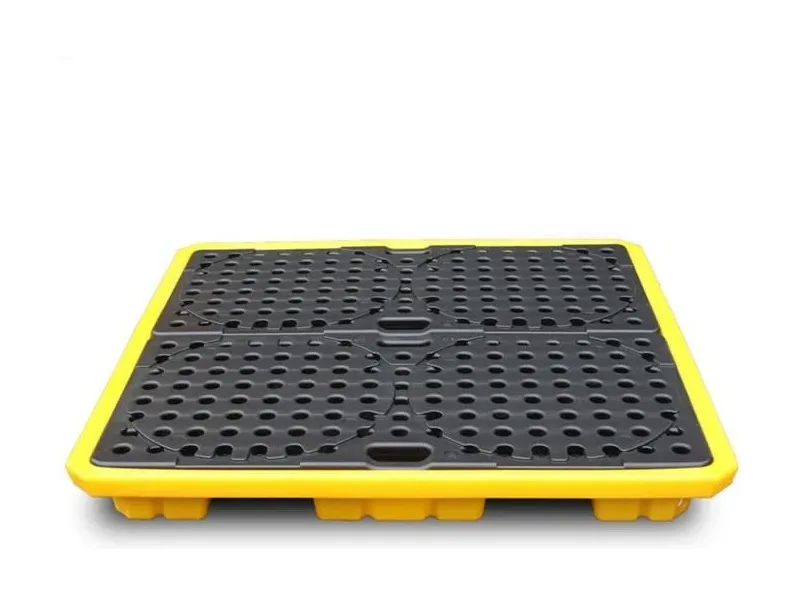
A spill containment pallet, also called a chemical pallet, has a sealed collection sump underneath and a grating on top that holds the drums, used to support drums of lubricant, solvent, chemicals or liquid waste. ICD Vietnam has a line of spill containment plastic pallets made of HDPE for 2 drums and 4 drums. When customers ask to buy, the question of size usually comes first, but the numbers that decide whether the pallet does its job are the sump capacity and the load rating. This article goes through size, material, capacity, load rating and the Vietnamese and US regulations most often cited.
What parts does a spill containment pallet have?
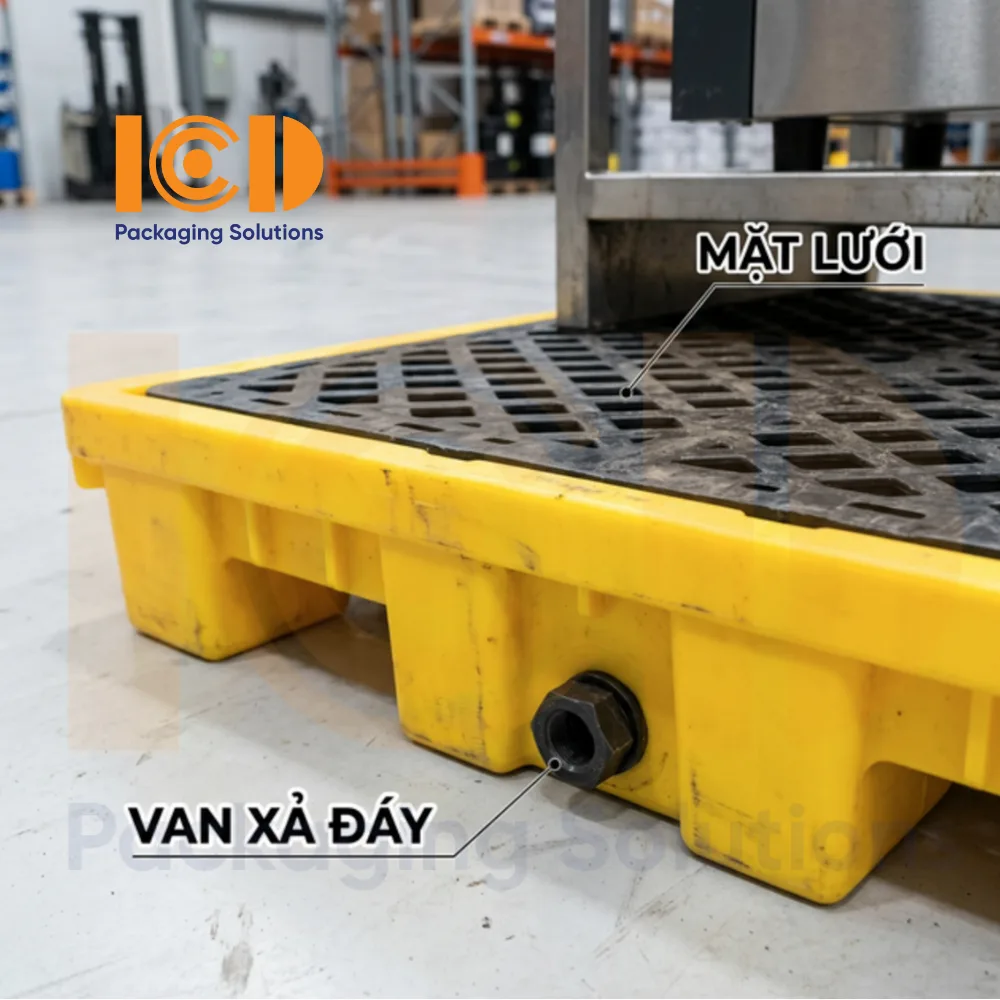
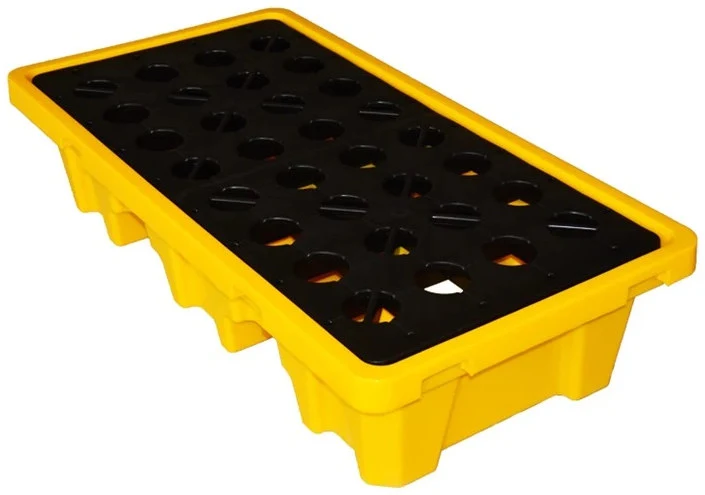
A spill containment pallet has three main parts: the grating that holds the drums, the sump that collects liquid, and a bottom drain valve on some models. The grating supports the drums and lets leaked liquid flow down into the sump; on many models it lifts out so the sump can be washed. The sump is the part that decides how many litres the pallet can hold when a drum is punctured or a transfer is spilled. The drain valve lets the collected liquid be drawn off into a container and handled according to the rules, instead of tipping the whole pallet.
Spill pallet sizes by number of drums
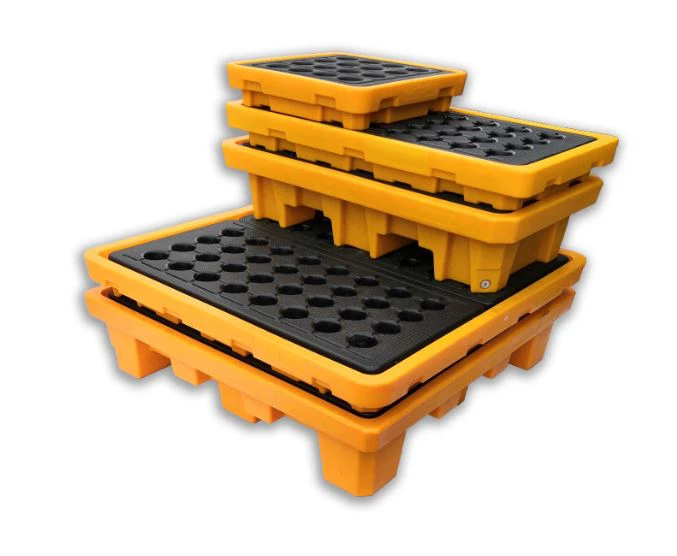
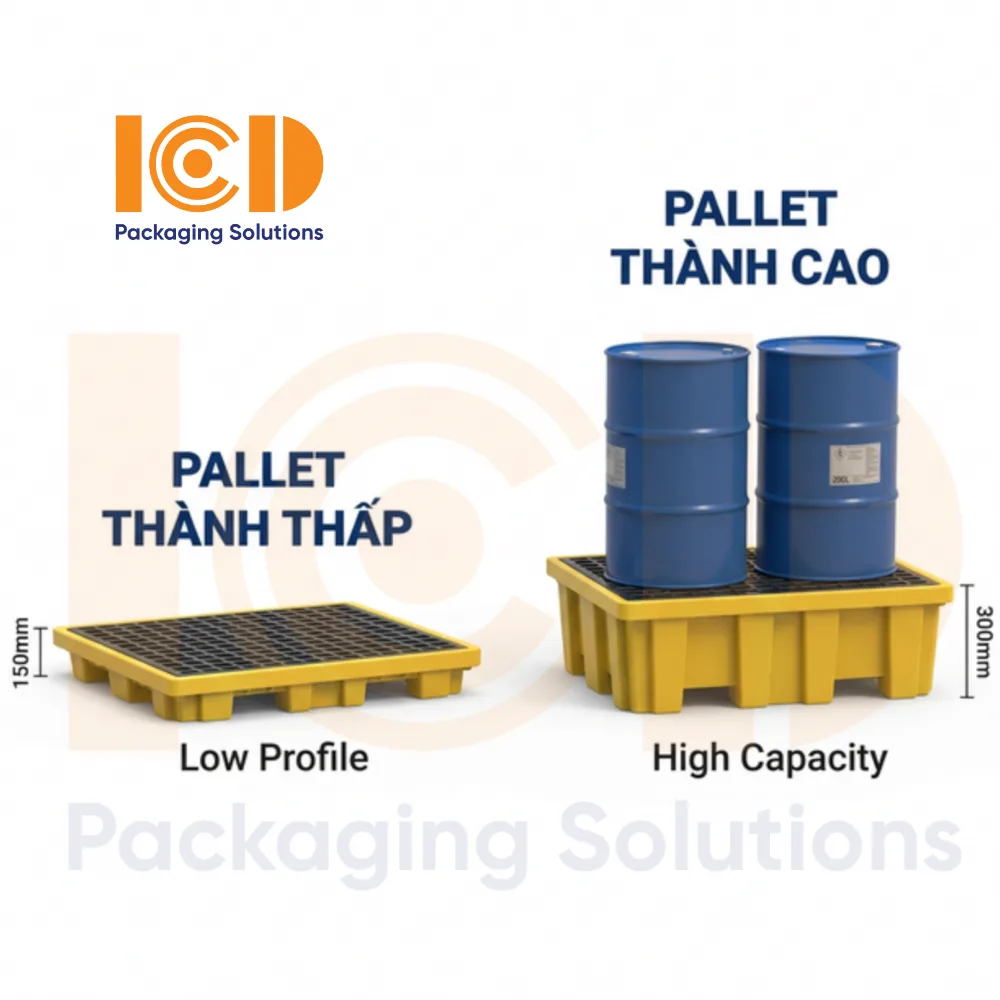
Spill pallet size follows the number of drums: a 1300 x 660 mm deck for 2 drums, 1300 x 1300 mm for 4 drums, with each size usually offered in a low version about 150 mm high and a tall version about 300 mm. A 200-litre steel drum is about 57 to 59 cm in diameter, so a 660 mm deck fits one row of drums, while 1300 mm fits two drums side by side. On the market, 1-drum pallets usually have a deck of about 680 x 680 mm; some manufacturers make the short side 680 instead of 660 mm, so when replacing an old pallet in a rack or fixed storage area, measure the real size rather than reading the name alone. This section ties in with the 1-drum spill pallet, which has its own article.
The low and tall versions differ in sump capacity, not in the number of drums they take. The low version is easier to roll drums onto and fits where ceilings are low or under a filling bench; the tall version holds more liquid on the same floor area. The table below gives the specifications of the spill pallet models in the ICD Vietnam catalogue, taken from the technical specifications on each product page. You can see the actual specifications of the 4-drum spill pallet 1300x1300x300 mm.
| Model | Size (mm) | Material | Static load | Dynamic load | Sump capacity |
|---|---|---|---|---|---|
| 2 drums, low | 1300 x 660 x 150 | HDPE | 2,000 kg | 1,000 kg | Not published |
| 2 drums, tall | 1300 x 660 x 300 | HDPE | 1,000 kg | 500 kg | Not published |
| 4 drums | 1300 x 1300 x 300 | HDPE | 2,000 kg | 1,000 kg | 150 litres |
Figures checked against ICD Vietnam product pages on 15 October 2026. “Not published” means the product page does not state it, so ask again when ordering.
What plastic are spill pallets made of?
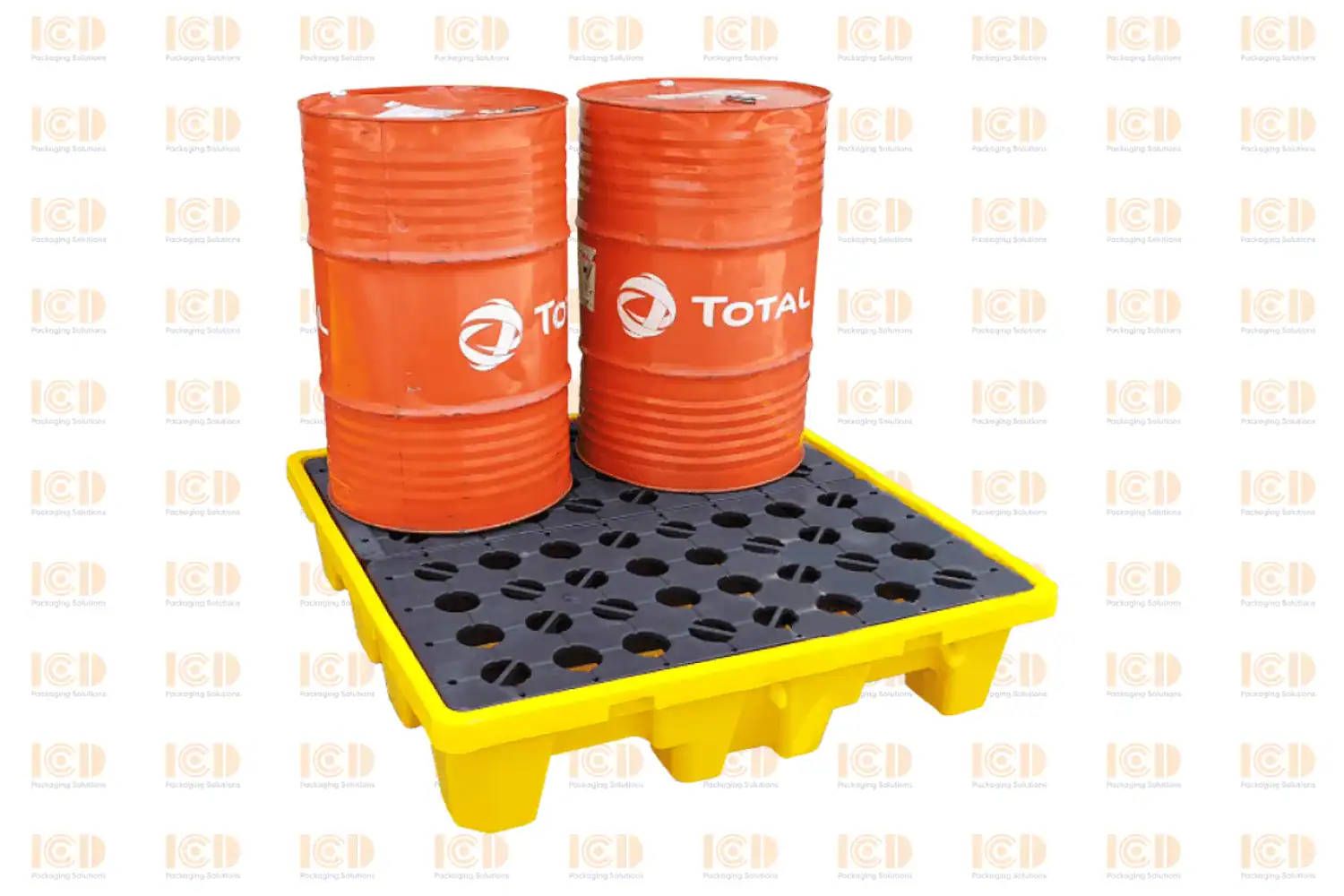
Most spill pallets are made of polyethylene, mainly HDPE, with some imported products using LLDPE. The reason is that polyethylene withstands most dilute acids, alkalis, oils and water at normal temperature, does not rust like a steel sump and is much lighter; the ICD Vietnam 4-drum model weighs about 30 kg according to its product page. A one-piece moulded sump also has no welds, which are the weak points for corrosion in a steel sump. Another angle is in the article on types of plastic pallets.
Polyethylene is not a material that resists everything. With strong solvents or concentrated acids, a plastic sump can swell, soften or crack over time, exactly when it needs to hold liquid most. So before choosing a pallet for a particular chemical, read two documents: the chemical’s safety data sheet (SDS) and the plastic material’s chemical resistance chart.
Spill pallet capacity: do not confuse it with drum volume
The number to check when buying is the sump capacity, not the total volume of the drums placed on the pallet. Many places describe a 1-drum pallet as “holding 200 litres”, a 2-drum one “400 litres” and a 4-drum one “800 litres”; that is the volume of 1, 2 or 4 drums of 200 litres, while the sump underneath usually holds only a few tens to a few hundred litres. For example, the ICD Vietnam 4-drum model of 1300 x 1300 x 300 mm has a 150-litre sump according to its product page, which is less than one full drum.
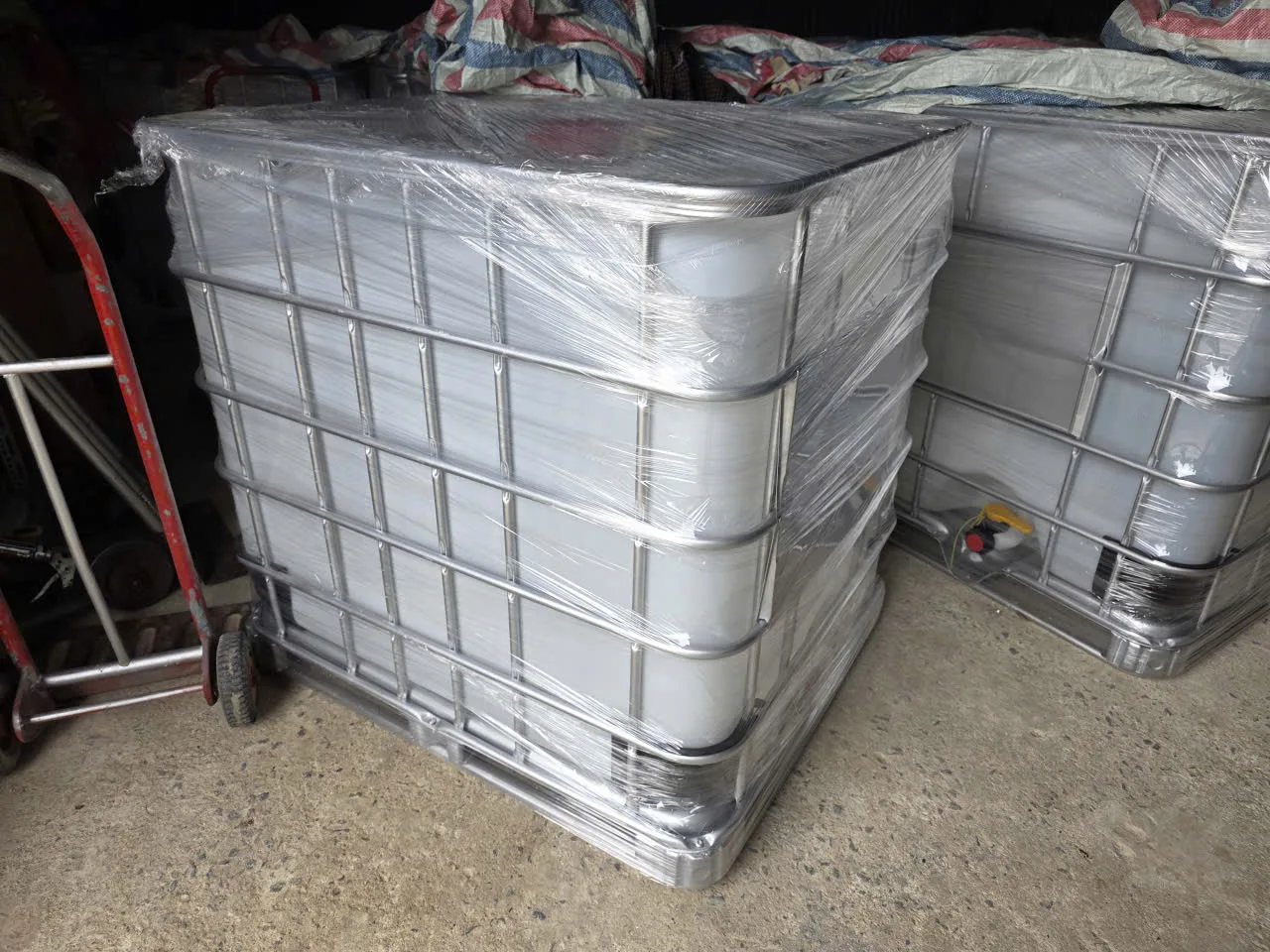
A pallet can also take a 1000-litre IBC if it is a type designed for IBCs, with a wider deck and a much deeper sump than a drum pallet. This is where the wrong choice is most often made: an IBC tank may fit the deck of a 4-drum pallet, but the sump holds only a small part of the contents if the tank leaks.
How to work out the sump capacity you need
Under the US Environmental Protection Agency (EPA) rule for hazardous waste container storage areas (40 CFR 264.175), the containment system must hold 10% of the total volume of the containers or the volume of the largest container, whichever is greater; containers holding no free liquids are not counted. For 1 to 4 drums of 200 litres, 10% of the total volume is always less than 200 litres, so the required level is 200 litres. In Vietnam, section 10.1.7 of QCVN 05A:2020/BCT requires an area storing toxic chemicals to have a bund or collection trench with a capacity of at least 110% of the total volume of goods.
Applying the same “largest container” rule to an IBC tank, the sump must hold about 1000 litres, so an IBC pallet needs a much wider deck and deeper sump than a drum pallet; when buying, ask for the sump capacity as a specific number of litres. When the pallet’s sump is smaller than the level required, a business can still comply by placing the pallet inside a warehouse area with a kerb or collection trench. Reducing the number of drums per pallet only helps with the 110%-of-total-volume level; under the largest-container rule the sump must still hold a full 200-litre drum even with a single drum on it. A spill pallet is a local collection layer and does not replace the collection system of the whole storage area.
How is spill pallet load rating worked out?
A pallet’s static load must exceed the total weight of the full drums, and that weight depends on the liquid’s density, not just the number of litres. Static load is the capacity when the pallet stands still on the floor; dynamic load is the capacity while the pallet is lifted and moved, and is always much lower. For the ICD Vietnam 4-drum model these two figures are 2,000 kg and 1,000 kg according to its product page.
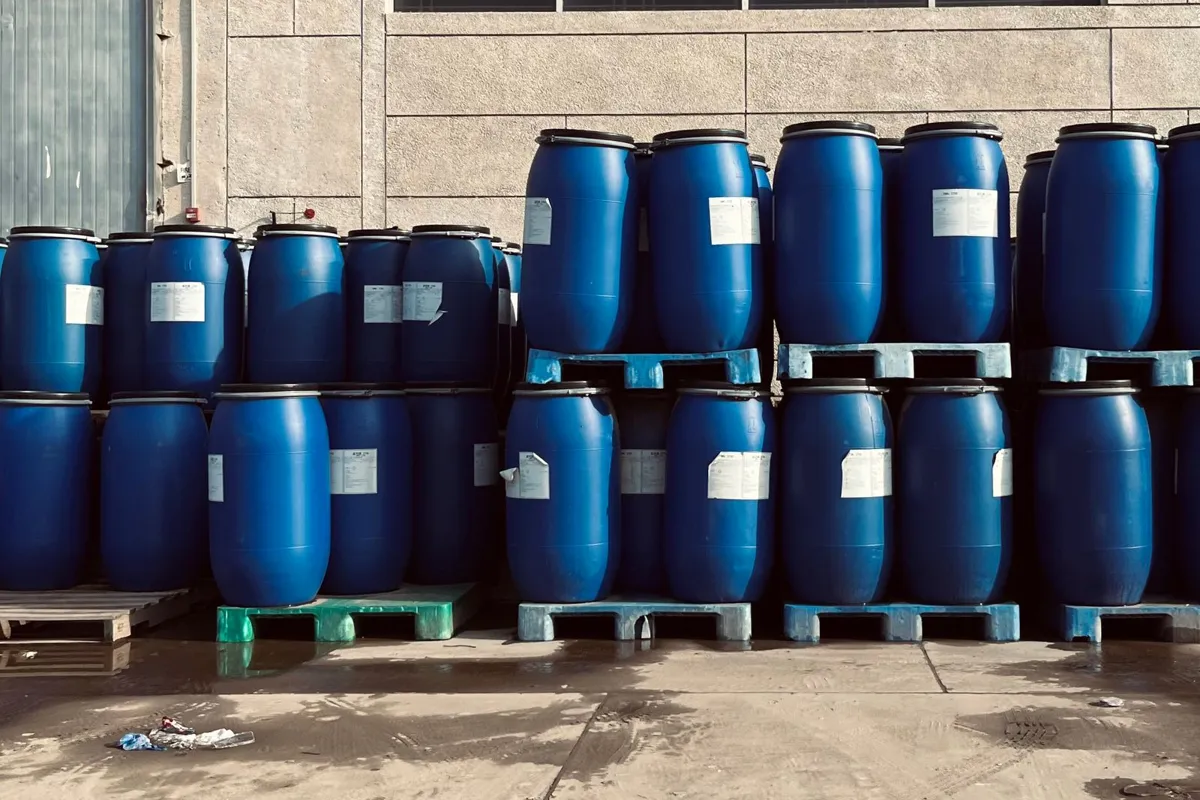
For the same 4 drums of 200 litres, the liquid weighs about 680 to 720 kg if it is lubricant (density about 0.85 to 0.9), 800 kg if it is water or a water-based solution, and about 1,220 kg if it is a 50% caustic soda solution (density about 1.52), not counting the drum shells. So 4 drums of caustic soda standing still on the pallet are still within the 2,000 kg static load, but already exceed the 1,000 kg dynamic load. In other words, a pallet full of drums should be set in place, and when it must be moved, reduce the number of drums first.
Moving also depends on the leg style. The ICD Vietnam 4-drum model of 1300 x 1300 x 300 mm is used with a hand pallet truck or pallet jack, not with a forklift according to its product page; some other models have entry for powered forklifts. Whichever type, do not move a pallet while its sump holds liquid, since sloshing liquid easily spills over the sump wall.
Which regulations apply to spill pallets?
Current documents do not set spill pallet dimensions; they require that areas storing chemicals and liquid hazardous waste have collection measures so that liquid does not escape into the environment, and a spill pallet is one such measure, alongside the warehouse’s kerbs, trenches, collection pits and absorbent materials.
Regulations in Vietnam
In Vietnam, spill containment requirements sit in two groups of documents: the hazardous-chemical safety standard of the Ministry of Industry and Trade, and the circular guiding the Law on Environmental Protection on hazardous waste, now under the Ministry of Agriculture and Environment after the consolidation from March 2025. The table below summarises the provisions that bear directly on storing liquids.
| Document | Applies to | Relevant requirement | Role of a spill pallet |
|---|---|---|---|
| QCVN 05A:2020/BCT (Circular 48/2020/TT-BCT), section 5.15 | Plants and stores holding liquid hazardous chemicals | A system of bunds and collection trenches so chemicals do not escape into the environment and do not contact chemicals they could react with | Local collection for each group of drums |
| QCVN 05A:2020/BCT, section 10.1.7 | Toxic chemical storage areas | Bunds and collection trenches with a capacity of at least 110% of the total volume of goods | Supplementary; hard to reach 110% with pallets alone |
| Circular 02/2022/TT-BTNMT, Article 35 | Hazardous waste generators | Storage area lets no liquid spill out on leakage; dry sand or sawdust and a shovel available; liquid waste held in rigid packaging not above 90% of capacity | Holds liquid waste leaking from drums and cans |
| Circular 02/2022/TT-BTNMT, Article 36 clause 5 | Transfer stations and hazardous waste treatment facilities | Liquid waste storage with walls, dikes, kerbs or other secondary containment, with a trench leading to a sump pit | A form of secondary containment for each group of containers |
Circular 02/2022/TT-BTNMT has been amended and supplemented by Circular 07/2025/TT-BTNMT; QCVN 05A:2020/BCT has Amendment 1:2024 issued with Circular 19/2024/TT-BCT, effective 15 April 2025. Businesses should read the latest consolidated version before designing a storage area, because figures and provisions may have changed from the original.
EPA regulations (United States)
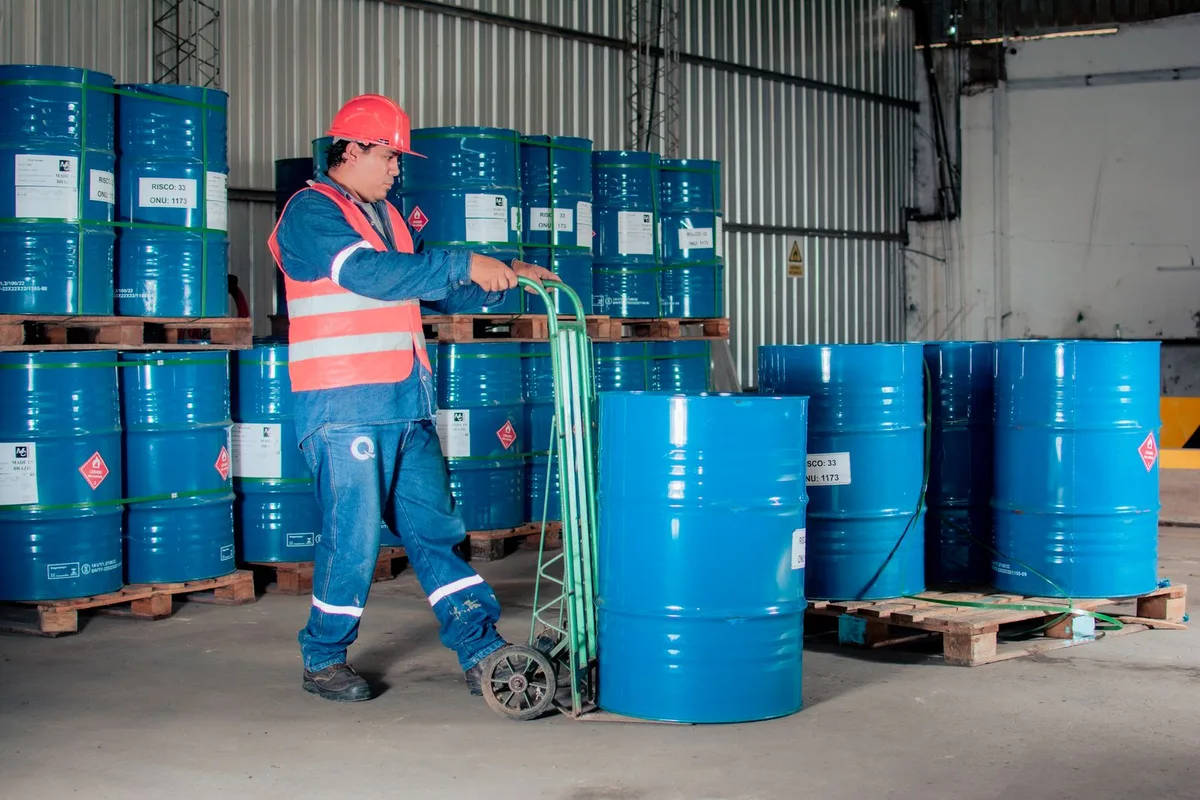
In the United States, the two rules most often mentioned when choosing a spill pallet are SPCC for oil and 40 CFR 264.175 for hazardous waste container storage areas. Under EPA guidance, the SPCC rule (40 CFR 112) applies to facilities with total aboveground oil storage capacity above 1,320 gallons (about 5,000 litres), counting only containers of 55 gallons (about 208 litres) or more. These rules are not mandatory in Vietnam, but exporters or businesses working with US groups often use them as an internal standard for chemical stores, so they turn up fairly often in plant audit files.
Choosing a spill pallet in 5 steps
Choose a spill pallet by three numbers: the number of drums and deck size, the sump capacity against the applicable level, and the load rating against the weight of full drums. When working with customers, we usually follow the order below:
- Count the drums or cans to go on each pallet and measure the actual place.
- Identify the liquid in the drums and check the SDS against the plastic’s chemical resistance.
- Work out the sump capacity needed by the largest drum, or 110% for a toxic chemical storage area.
- Work out the weight of full drums from density, then compare it with the pallet’s static and dynamic loads.
- Choose the leg style by how it will be moved: hand pallet truck, powered forklift or fixed in place.
See also: standard plastic pallet sizes by ISO and container dimensions.
See also: container pallet loading diagram.
Frequently asked questions
What is a plastic spill pallet used for?
A spill pallet is used to support drums and cans of lubricant, chemicals, solvent or liquid waste, with a sump underneath that holds liquid leaking or spilled during transfer, so it does not spread over the floor and into the environment.
What material is a plastic spill pallet made of?
Usually polyethylene, mainly HDPE, with some models using LLDPE. The material resists dilute acids, caustic soda, oils and water well at normal temperature; with concentrated acids, aromatic solvents or chlorinated solvents, check the chemical’s safety data sheet (SDS) before use.
What is the common size of a 4-drum spill pallet?
A 4-drum spill pallet usually has a 1300 x 1300 mm deck, about 150 mm high in the low version and 300 mm in the tall version. The ICD Vietnam 4-drum model measures 1300 x 1300 x 300 mm.
How many litres does a 4-drum spill pallet hold in a spill?
It depends on each model’s sump capacity, not 800 litres. The ICD Vietnam 4-drum model of 1300 x 1300 x 300 mm has a 150-litre sump according to its product page. If you need to reach the largest-drum level (200 litres) under 40 CFR 264.175 or 110% under QCVN 05A for toxic chemicals, combine it with the warehouse’s kerbs and collection trenches; at the 110% level, reducing the number of drums per pallet also helps meet the requirement.
Can a spill pallet be used with a forklift?
It depends on the model. Some have entry for powered forklifts, others are for hand pallet trucks or fixed placement only; the ICD Vietnam 4-drum model of 1300 x 1300 x 300 mm is used with a hand pallet truck or pallet jack according to its product page. Do not move a pallet while its sump holds liquid.
Is a spill pallet mandatory in a hazardous waste store?
Not specifically a spill pallet. Circular 02/2022/TT-BTNMT requires a hazardous waste storage area to let no liquid spill out on leakage and to have absorbent material such as dry sand or sawdust with a shovel; a business can comply with kerbs, trenches, collection pits, pallets or spill trays.
Contact ICD Vietnam
ICD Vietnam supplies 2-drum and 4-drum HDPE spill pallets with specifications for size, load rating and sump capacity. Tell us the number of drums, the type of liquid and how you move them to get advice on a suitable model.
- North: 0983 797 186 / 090 345 9186 / 090 5859 186.
- South: 098 6784 186.
- Email: sales@icdvietnam.com.vn.
- Zalo: Chat with ICD Vietnam on Zalo.
References
- Legal documents on hazardous waste management: Government web portal, legal document system.
- Circular 02/2022/TT-BTNMT (amended by Circular 07/2025/TT-BTNMT): Government Gazette.
- QCVN 05A:2020/BCT on safety in producing, trading, using, storing and transporting hazardous chemicals, issued with Circular 48/2020/TT-BCT, Amendment 1:2024 under Circular 19/2024/TT-BCT, Ministry of Industry and Trade.
- Containment for hazardous waste container storage areas: 40 CFR 264.175.
- Scope of SPCC: EPA, Does the SPCC Rule Apply to Your Facility.
- Product specifications: ICD Vietnam spill pallet product pages, checked 15 October 2026.
Related articles
- 1-drum spill pallet: a safe solution for the chemical industry
- Hazardous waste decree and the role of spill pallets