
Table of Contents
- What do VietGAP, GlobalGAP and HACCP require of pallets?
- What material should plastic pallets for seafood and agricultural products be made from?
- Which plastic pallet should seafood cold stores choose?
- What do post-harvest preparation and storage of agricultural products need from pallets?
- What steps does a HACCP plastic pallet cleaning procedure include?
- What mistakes are common when choosing plastic pallets for seafood and agricultural products?
- Frequently asked questions
- Do plastic pallets need food-grade certification for use in the seafood industry?
- Can heat-treated (HT) wooden pallets be used in a seafood store?
- What pallet size suits seafood exports to Japan and the EU?
- How often should pallets be cleaned in a seafood processing plant?
- Are white plastic pallets durable in a cold store?
- What regulations must plastic pallets meet in a seafood plant exporting to the EU?
- How much load does a seafood cold-store plastic pallet carry?
- Is colour-coding pallets by zone mandatory?
- Contact ICD Vietnam
- References
- Related articles
Reviewed and updated by ICD - Week 44/2026
Seafood and agricultural supply chains working to VietGAP, GlobalGAP or HACCP should use virgin plastic pallets: HDPE for cold stores at -18 to -25 °C, HDPE or PP for cool stores and preparation areas, with a water-proof surface that withstands disinfectant chemicals, supported by material records and a cleaning schedule. Wooden pallets are not banned outright, but they are a microbiological and physical hazard that the business must prove it has under control.
I am Le Van Thang, and I have worked with pallets at ICD Vietnam since 2011. Seafood and agricultural customers usually invest heavily in the processing line, cold stores and plant, yet leave the pallets to the last minute. When an audit team walks through the warehouse, the first questions often land on the pallets themselves: is the wood damp or mouldy, what resin is the plastic made from, is there a cleaning log. This article goes through those questions in the order I usually put them back to customers when advising.
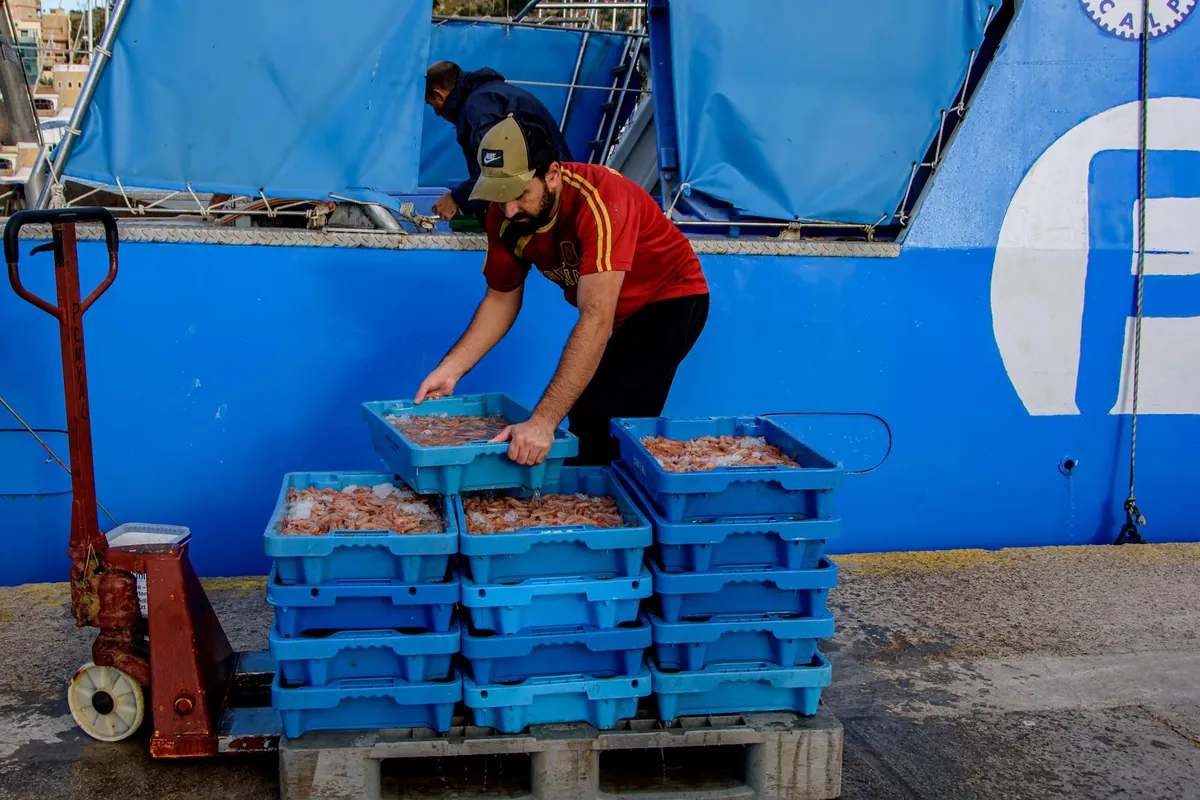
The market context also means pallets are no longer a minor matter. Vietnam’s seafood exports reached USD 11.3 billion in 2025, up 12.4% on 2024, according to the Vietnam Association of Seafood Exporters and Producers (VASEP). Most of that value goes to the EU, Japan and the US, where importers want a clean supply chain with records from the harvest point to the delivery point. For agricultural products, GlobalGAP certification is almost a condition for entering European supermarket systems.
What do VietGAP, GlobalGAP and HACCP require of pallets?
All three standards require that tools in production and food storage areas be made of non-toxic, non-absorbent material that is easy to clean and disinfect; HACCP also requires the business to treat the pallet as a hazard to be analysed and to keep control records. No standard names a specific type of pallet, so choosing correctly is the business’s responsibility. You can also read on about plastic pallets for the livestock industry.
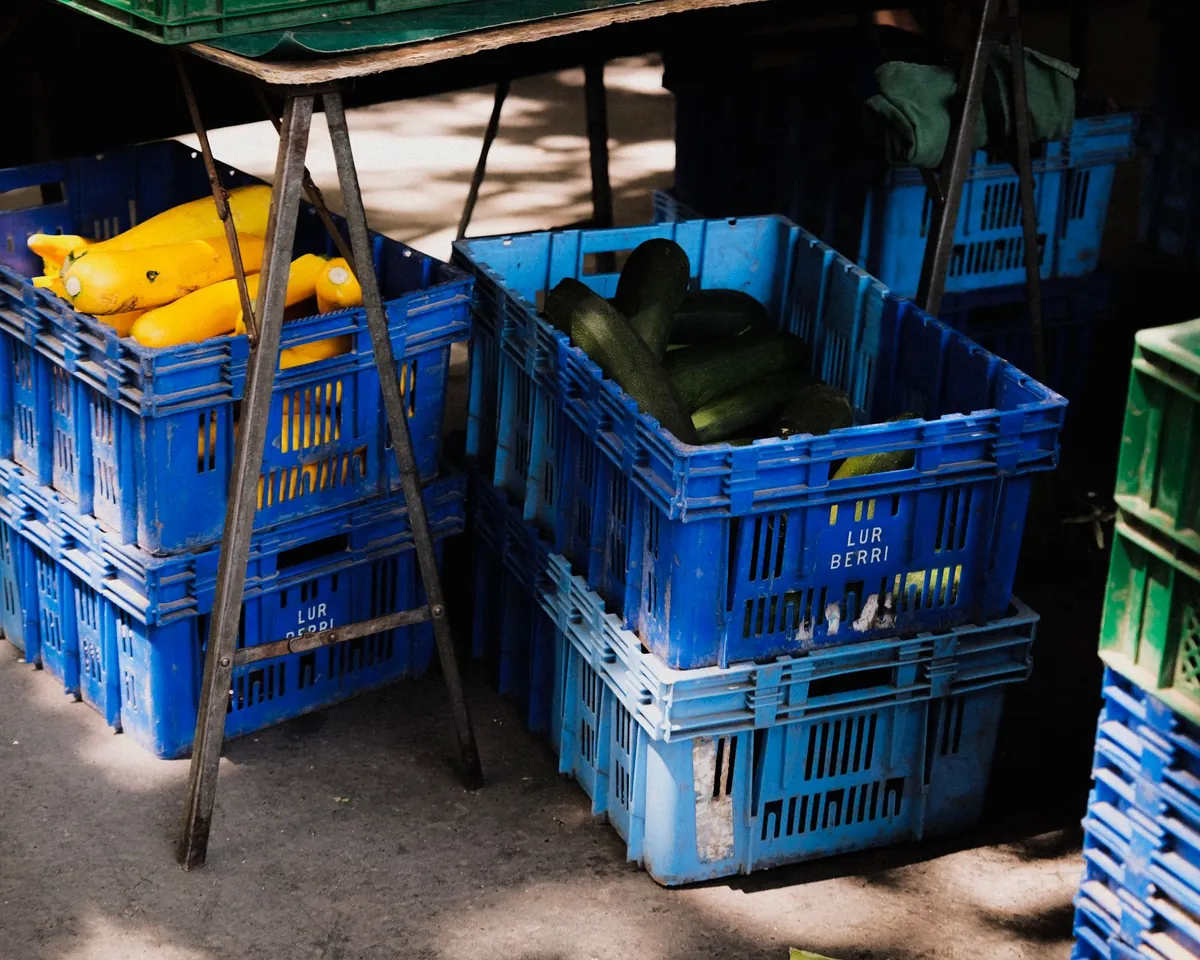
VietGAP is a set of good agricultural practice procedures issued by the Ministry of Agriculture and Rural Development (now the Ministry of Agriculture and Environment) for crops, livestock and aquaculture; for crops, the content is standardised in TCVN 11892-1:2017. The part relevant to pallets is the requirement that tools in contact with the product be cleaned and disinfected regularly and cause no physical, chemical or biological contamination. To compare sizes and load ratings, see open-deck pallets that drain water.
GlobalGAP is an international standard for primary production and post-harvest handling, assessed by a certification body approved by GLOBALG.A.P. The criteria fall into three levels: Major Must, Minor Must and Recommendation. Under GLOBALG.A.P.’s general rules, a site must meet 100% of the applicable Major Must criteria and at least 95% of the Minor Must criteria to be certified; the exact number of criteria varies by version and scope. The requirement for non-toxic, washable product-contact surfaces sits in the post-harvest handling group. Related product: closed-deck plastic pallets for packaged finished goods.
HACCP is the hazard analysis and critical control points system, set out by the Codex Alimentarius Commission of FAO and WHO in the General Principles of Food Hygiene CXC 1-1969, with 7 principles. HACCP does not list approved equipment; it requires the business to identify every biological, chemical and physical hazard itself. In a seafood store, a damp wooden pallet is a microbiological hazard (mould, bacteria) and a physical one (wood splinters, nails). Switching to virgin plastic pallets is the neatest way to remove that hazard, rather than having to prove it is under control.
The three standards differ in scope, assessor and the market that demands them. The table below gathers those differences in one place so a business knows which standard to meet before choosing a pallet.
| Criterion | VietGAP | GlobalGAP | HACCP |
|---|---|---|---|
| Scope | Primary production: crops, livestock, aquaculture | Primary production and post-harvest handling | The whole food processing and storage chain |
| Assessor | Domestically designated certification body | Certification body approved by GLOBALG.A.P. | Certification body or inspection agency as the market requires |
| Market that usually requires it | Domestic, local supermarkets | Supermarkets, EU, US and Japanese importers | Most importing markets for processed food |
| Touch point with pallets | Clean tools, regularly disinfected | Non-toxic, non-absorbent, easily cleaned contact surfaces | Pallets are a physical and microbiological hazard to be analysed |
| Hygiene records | Notes following the production process | Cleaning procedure and evidence of implementation | Required, under HACCP’s record-keeping principle |
| Wooden pallets | Restricted, depending on the area | Not recommended in preparation areas | High hazard, must be controlled separately |
The level of strictness also differs. HACCP is strictest on hygiene records, GlobalGAP is strictest in independent third-party assessment: failing a Major Must criterion means no certificate, with no “nearly passed”. VietGAP is more flexible but is gradually being tightened to approach GlobalGAP. Colour-coding pallets by zone is only recommended by all three, not separately required.
What material should plastic pallets for seafood and agricultural products be made from?
Choose virgin HDPE or PP with a disclosed composition; recycled plastic of unknown origin should not enter food-contact areas. One point is often misunderstood: QCVN 12-1:2011/BYT is the hygiene and safety standard for plastic packaging and utensils in direct contact with food, with specific migration limits for PE and PP. It has no separate provision for pallets. A pallet falls within its scope only when food sits directly on the plastic surface, without packaging.
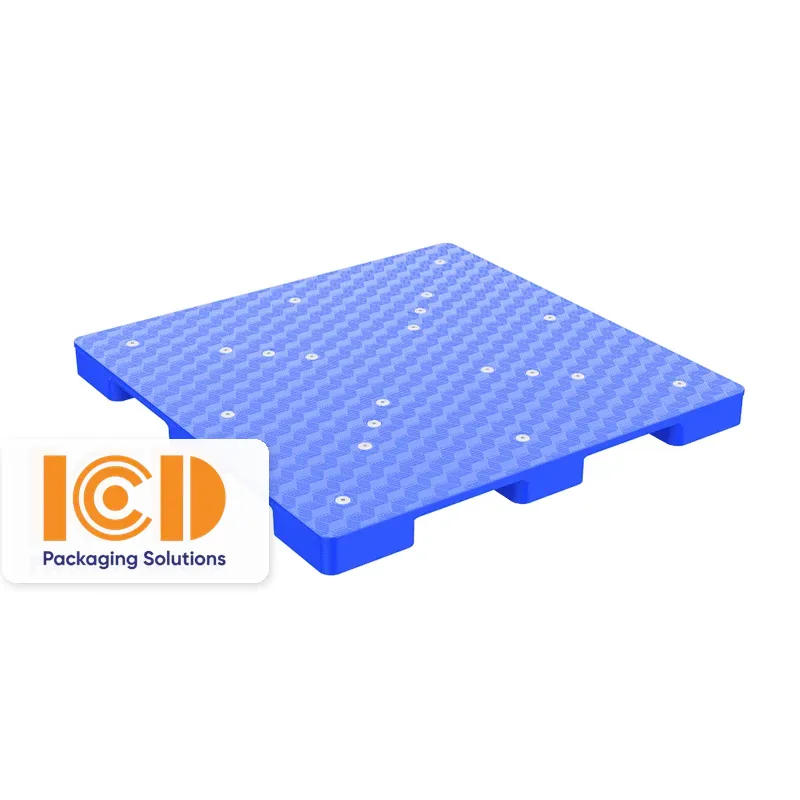
Virgin HDPE is the first choice for cold stores and damp environments. The material absorbs almost no water, stays flexible at deep sub-zero temperatures and withstands common sanitising chemicals such as chlorine, iodophor, dilute caustic soda or peracetic acid at working concentrations. Virgin PP has a harder surface, suits cool stores at 0 to 5 °C and preparation areas at normal temperature, but handles deep cold less well than HDPE, so it is not a good choice for freezer stores.
Recycled plastic of unknown origin is the group to avoid in food areas, because its composition cannot be controlled and it may carry additives or impurities from old plastic sources. When an audit team asks what material the pallets are made from, the business has almost no document to answer with. Recycled pallets still work well in packaging stores, materials stores and holding yards outside controlled areas.
For goods exported to the EU, Regulation (EC) No 852/2004 on food hygiene requires tools and equipment in contact with food to be cleaned effectively, disinfected when necessary and made of materials that minimise the risk of contamination; equipment surfaces in processing areas must be smooth, washable, corrosion-resistant and non-toxic. A virgin plastic pallet with a solid deck or an open-ribbed mesh deck is the easiest way to meet these requirements when inspectors arrive.
Which plastic pallet should seafood cold stores choose?
A seafood cold store should use virgin HDPE pallets with a mesh deck or drainage channels, a dynamic load of 1,000 to 1,500 kg, in 1100 x 1100 mm for goods going to Japan and 1200 x 1000 mm for domestic stores. This is the harshest environment for any supply: temperatures of -18 to -25 °C, high humidity and frequent sanitation cycles with strong chemicals.
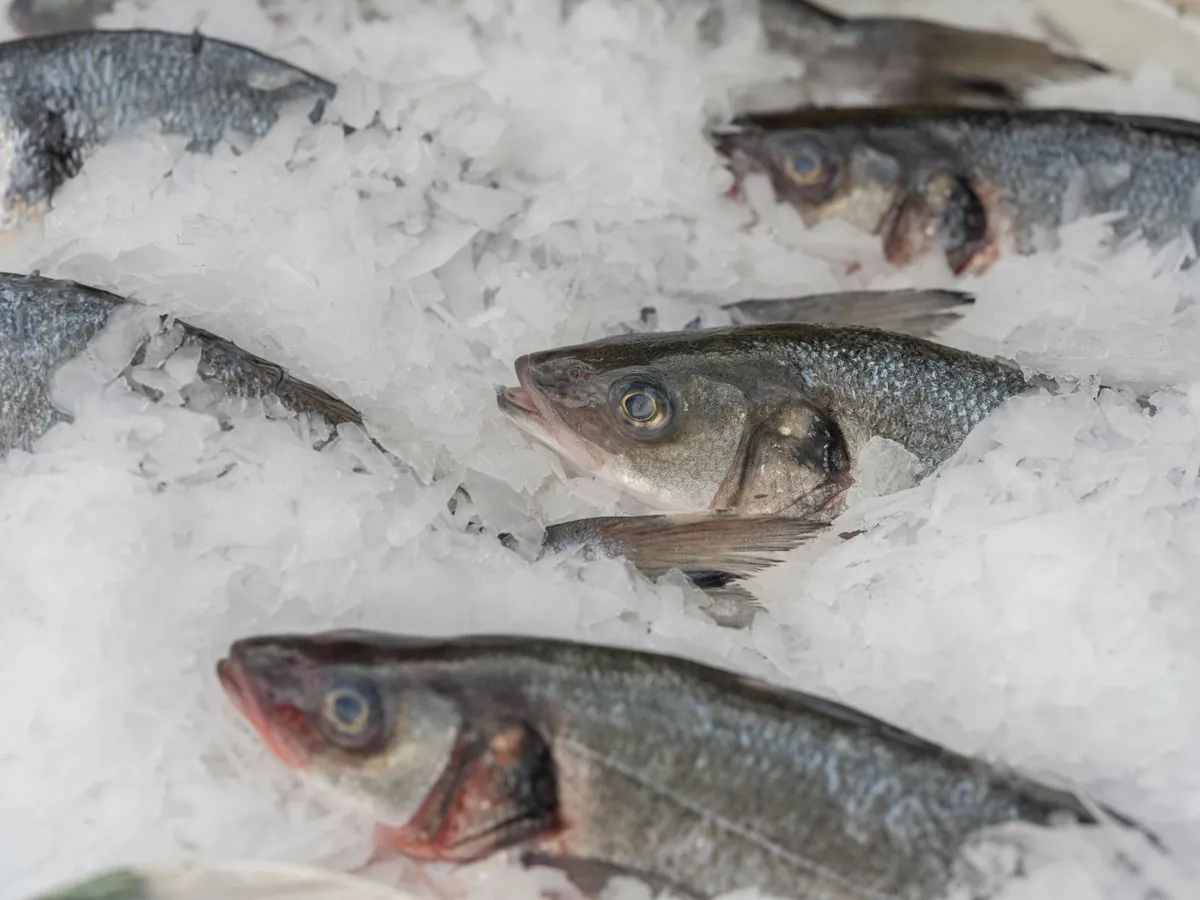
There are two differences from a normal warehouse pallet. The first is cold tolerance: at -18 °C, many ordinary plastics turn brittle and break easily when a fork tine hits them, and fragments falling into the goods are a physical hazard. Cold-store pallets are therefore made from HDPE or HDPE blended with PP copolymer (PPC), materials that keep their toughness at low temperatures. The second is drainage: a mesh deck or one with channels keeps water from pooling during defrost cleaning, limiting bacterial growth.
Each environment in the chain needs a different configuration. The table below is how I usually advise customers who have a cold store, a cool store and a preparation area in the same plant.
| Criterion | Seafood cold store (-18 °C) | Agricultural cool store (0 to 5 °C) | Normal-temperature preparation area |
|---|---|---|---|
| Material | Cold-resistant virgin HDPE | Virgin HDPE or PP | Virgin HDPE or PP |
| Deck design | Mesh deck or drainage channels | Mesh deck or solid deck | Solid deck |
| Dynamic load | 1,000 to 1,500 kg | 1,000 to 1,200 kg | 800 to 1,200 kg |
| Common size | 1100 x 1100 mm (goods for Japan) | 1,200 x 1,000 mm | 1200 x 1000 mm or 1200 x 800 mm |
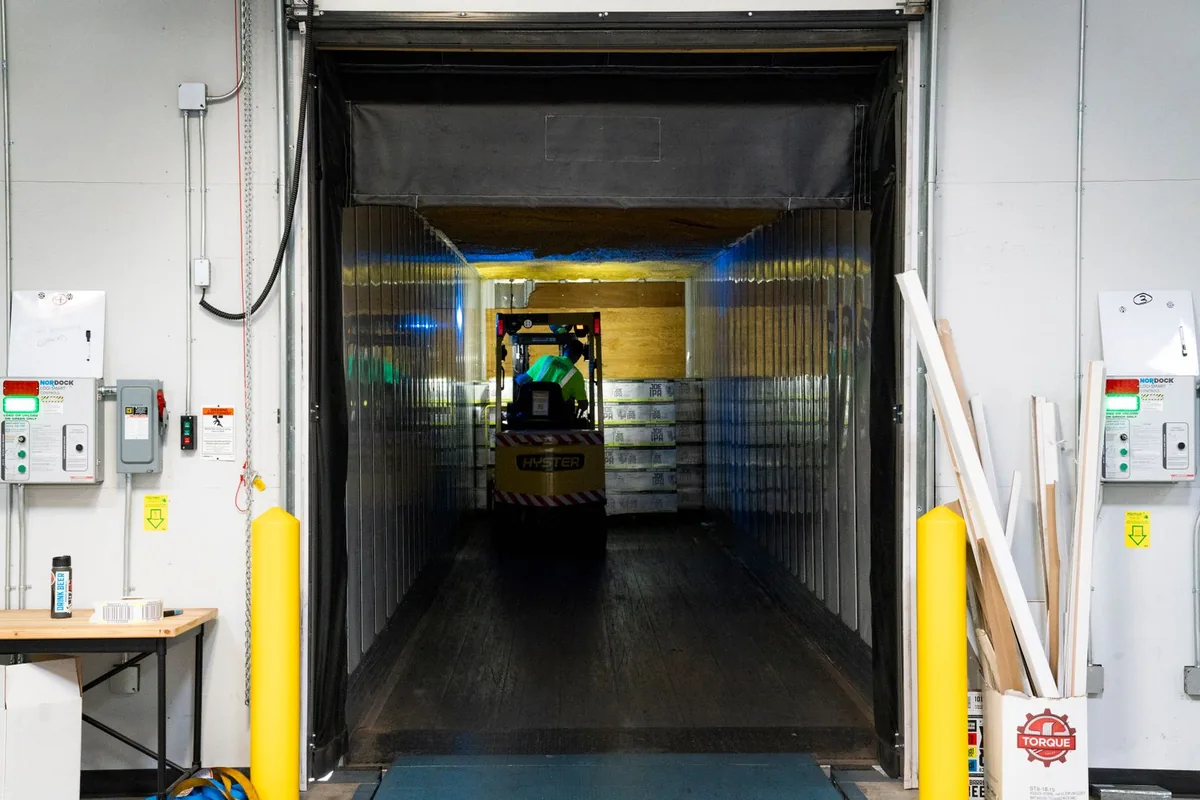
Checked against the catalogue on 11 October 2026, ICD Vietnam has 12 plastic pallet models for cold-store use, made of HDPE or HDPE blended with PPC, with a dynamic load of 800 to 1,500 kg, a static load of 1,500 to 5,000 kg, and sizes 1100 x 1100, 1200 x 1000 and 1200 x 800 mm. Among these 12 models, one is a recycled green model; it suits stores of sealed packaged goods better than processing areas, so when ordering for a food area, state clearly that virgin plastic is required.
What do post-harvest preparation and storage of agricultural products need from pallets?
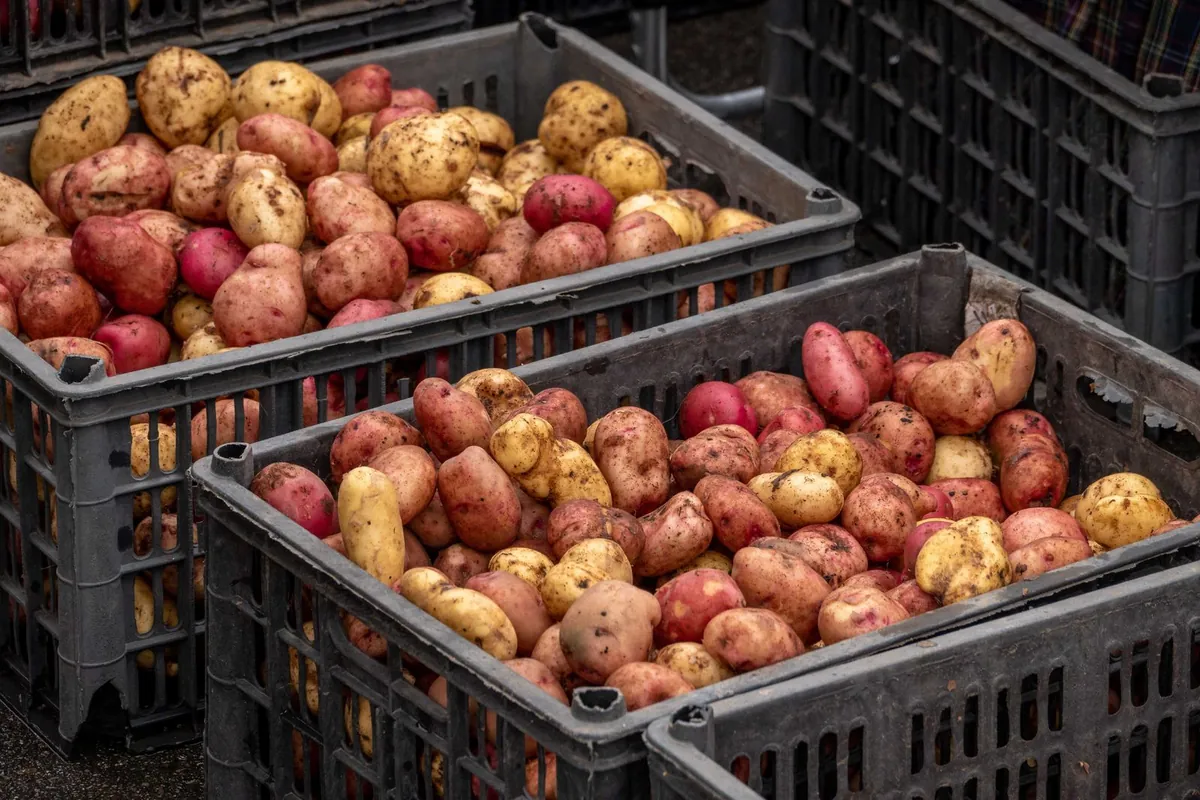
Preparation areas and agricultural stores should use solid-deck plastic pallets in wet zones, colour-code pallets by area and attach codes for traceability as GlobalGAP requires. In the agricultural chain, pallets appear at many points: the loading yard in the field, the fruit and vegetable preparation area, the cool store and the export packing area. Each point has different requirements, but all must meet the common VietGAP and GlobalGAP criterion of causing no contamination of the product.
In a VietGAP-compliant preparation area, solid-deck pallets are preferred because there are no gaps for dust, soil, product debris or wash water to collect. This matters especially in wet preparation steps such as washing, soaking in disinfectant solution and bagging. A solid-deck pallet can be wiped completely clean after each shift, whereas a mesh deck needs each cell washed carefully.
For agricultural exports under GlobalGAP there is one more requirement that is often overlooked: traceability. Plastic pallets support this in two simple ways:
- Attach a QR code, barcode or RFID tag directly to the pallet leg.
- Use pallets of a separate colour for each growing region or each zone in the plant.
The cost of colour-coding pallets and attaching codes for a store depends on quantity, colours and pallet type, so it needs a quote for each project. It is a one-off investment, while the benefit is a clear traceability record when importers ask. Dry agricultural goods such as nuts and spices also easily go damp and mouldy in containers in transit; for this group, see desiccant packs for cartons and containers suitable for dry food.
What steps does a HACCP plastic pallet cleaning procedure include?
HACCP pallet cleaning has four steps: remove coarse debris, wash with pressurised water, disinfect with the chemical at the right concentration, rinse clean and let dry, with a record of each occasion. Choosing the right pallet is only the first step; many sites with good plastic pallets are still cited at audit because the cleaning procedure is not systematic or there is no log.
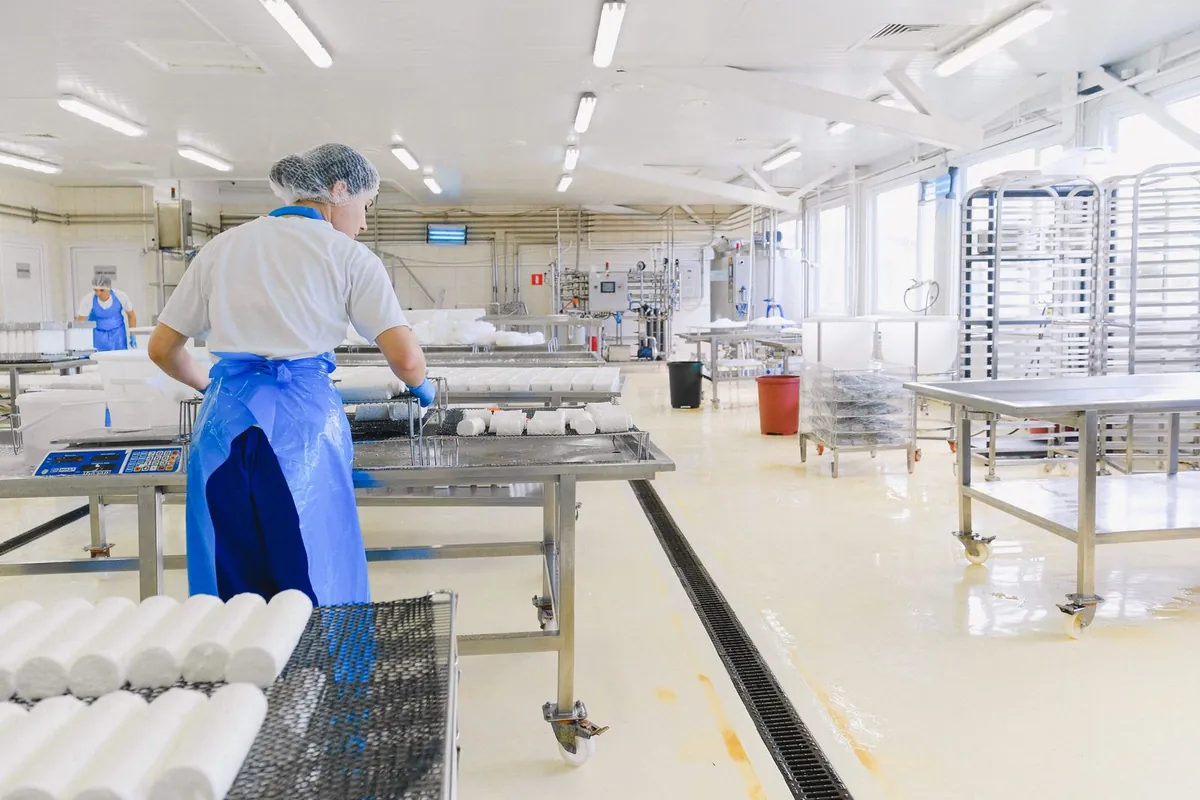
- Remove coarse debris: unload, then sweep or blow the surface clean with compressed air.
- Wash with pressurised water to dislodge stuck dirt, more thoroughly for mesh-deck pallets.
- Disinfect with a chemical mixed to the right concentration, holding the contact time stated on the label.
- Rinse again with clean water and let dry naturally or with warm air before use.
On concentration, the US FDA rule on sanitising solutions for food processing equipment (21 CFR 178.1010) limits hypochlorite solutions to no more than 200 ppm active chlorine and iodophor solutions to about 12.5 to 25 ppm iodine, and requires them to drain before contacting food. A stronger mix is not cleaner; it only increases chemical residue and fades the plastic faster. Two steps are often done carelessly: rinsing and drying. Without a thorough rinse, detergent residue remains; without drying, water pooling in the corners of the pallet legs becomes a place for microorganisms to grow.
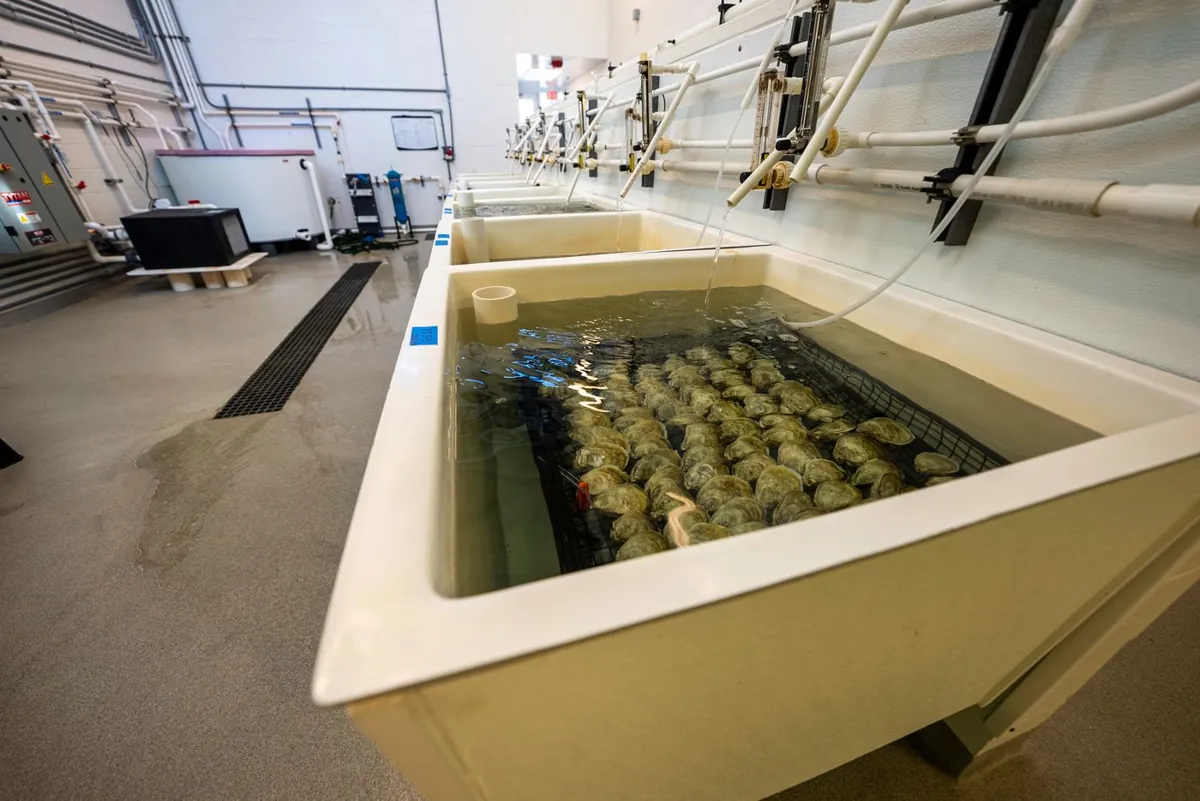
Hygiene records matter as much as washing clean. HACCP requires full records of date and time, type of chemical, concentration and the person who did it; without a log, a genuinely clean pallet is still hard to rate as compliant. A simple pallet cleaning log needs only the following columns; what matters is that it is filled in regularly and a supervisor signs to confirm:
- Date, time and shift of cleaning, for example 11/10, 14:30, after shift 1.
- Pallet code or group, for example green preparation-area pallets No. 01 to 40.
- Chemical and concentration mixed, for example chlorine 200 ppm.
- Contact time as per the chemical label.
- Name of the person who did it and the person who checked.
- Number of pallets rejected and the reason, for example 2 pallets with cracked legs set aside.
What mistakes are common when choosing plastic pallets for seafood and agricultural products?
The four mistakes I see most often are buying pallets of unknown plastic origin, using ordinary-warehouse pallets in deep cold stores, not colour-coding by zone, and not removing damaged pallets in time. All four are cheap to avoid if considered from the start, but expensive if found only when the audit team arrives.
Buying plastic pallets of unknown material origin
The market has many cheap pallets that do not disclose the ratio of virgin to recycled plastic. Ask the supplier for a technical document stating the plastic type, the virgin ratio and the working temperature range; a serious supplier will send this information straight away.
Using ordinary-warehouse pallets in a deep cold store
Ordinary pallets are designed for ambient temperature, not -18 or -25 °C. At deep sub-zero temperatures, unsuitable plastic turns brittle and can shatter when a forklift hits it, and plastic fragments falling into the product are a serious physical hazard in a HACCP analysis.
Not separating pallets by zone
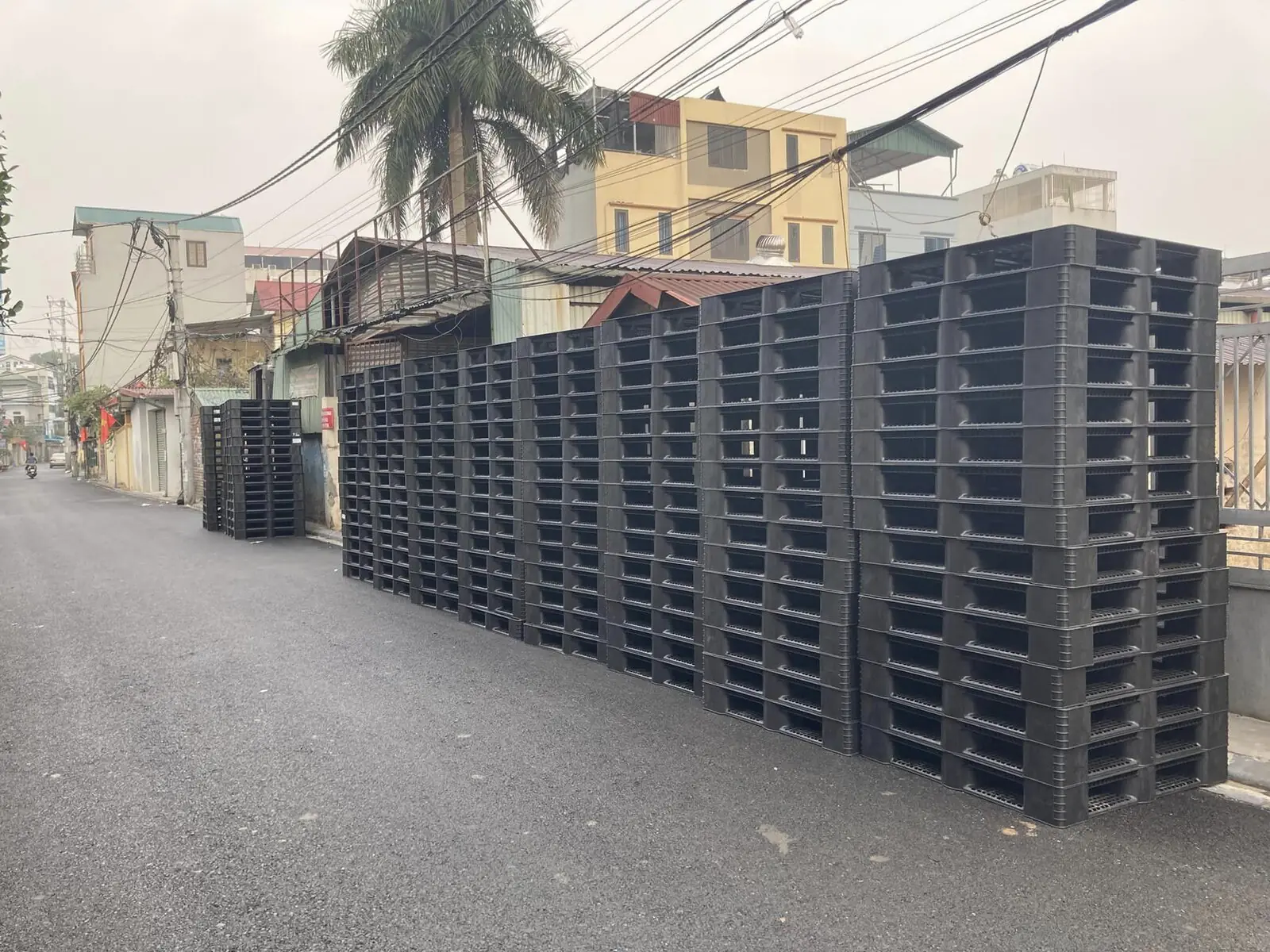
Using the same pallet for raw material receiving, preparation, finished goods and rejects is a source of cross-contamination, one of the mistakes marked down hardest in a HACCP inspection. The cost of colour-coding is low, while the control benefit is very clear.
Not removing damaged pallets in time
A pallet with cracks, a broken leg or a chipped deck must be set aside at once. A crack is a refuge for bacteria that even strong chemicals cannot fully clean out. Many sites keep damaged pallets because “it can still carry the load”, but in a food environment that is a microbiological risk that cannot be accepted.
In short, pallets in the seafood and agricultural chain are a link in the food safety system, not an ancillary supply. The principle I still advise customers: virgin HDPE for cold stores and damp environments, virgin PP for normal-temperature preparation areas, colour-coding by zone to block cross-contamination, and a cleaning log for each round. The cost of doing it right from the start is not large, yet it makes both the certification file and the product safer.
Frequently asked questions
Do plastic pallets need food-grade certification for use in the seafood industry?
Not required when the pallet only carries packaged goods. QCVN 12-1:2011/BYT applies to plastic packaging and utensils in direct contact with food; a pallet carrying cartons or bags is indirect contact. When food sits directly on the pallet surface, the material must meet this standard. In GlobalGAP and HACCP assessments, the team may ask for proof that the pallet material causes no contamination, so choose a supplier who can send material information and confirm virgin plastic.
Can heat-treated (HT) wooden pallets be used in a seafood store?
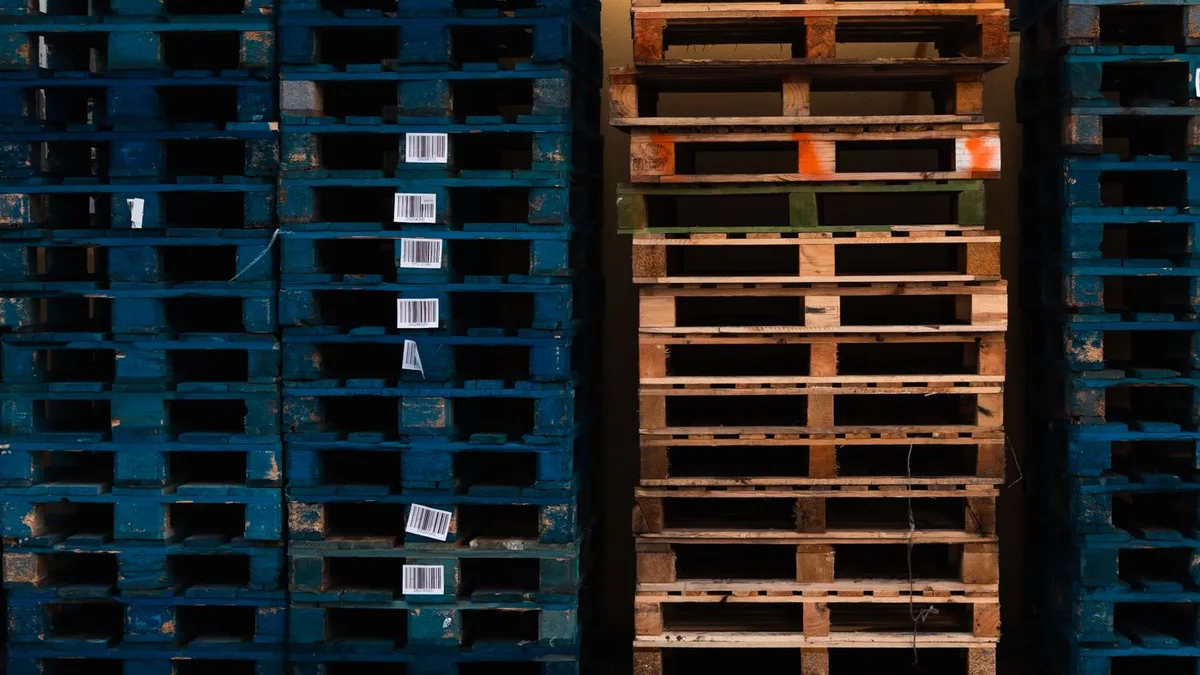
A wooden pallet heat-treated to ISPM 15 solves the plant quarantine issue for export, not food hygiene. HT wood is still a porous material that absorbs water and moulds easily in a damp cold store, so in HACCP and GlobalGAP analysis it is still treated as a higher hazard than a plastic pallet. Most seafood export plants already use plastic pallets in the production area.
What pallet size suits seafood exports to Japan and the EU?
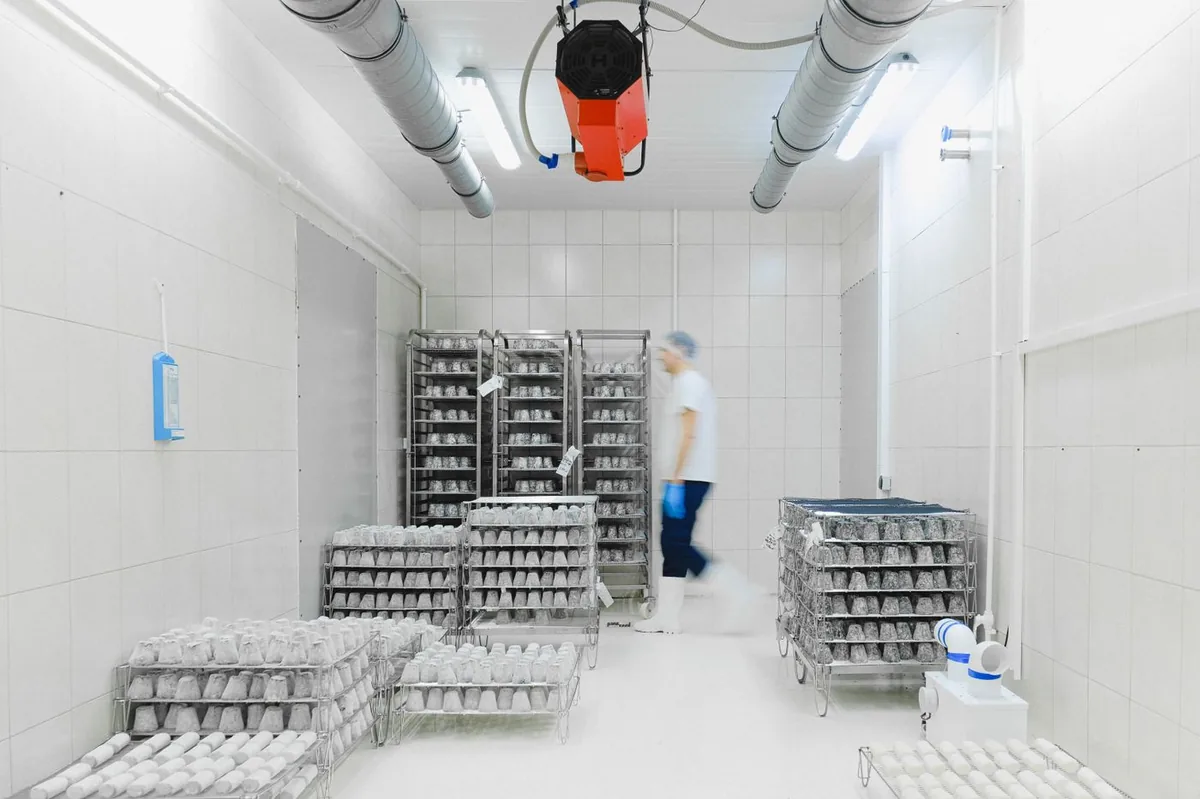
Japan commonly uses the 1100 x 1100 mm size (T11). The EU uses 1200 x 800 mm (the Euro size) and 1200 x 1000 mm. The most common domestic Vietnamese store size is 1200 x 1000 mm. All three sizes are on the size list of ISO 6780, so many businesses keep two sizes in stock side by side according to the market they ship to.
How often should pallets be cleaned in a seafood processing plant?
The frequency is set by the business’s written cleaning plan. In wet preparation areas, pallets are usually washed at the end of each shift; in a cold store holding stable packaged goods, they can be cleaned on a regular schedule and every time the store is emptied. Beyond the schedule, a pallet needs washing at once when it is soiled or goods spill, and every wash must be logged.
Are white plastic pallets durable in a cold store?
Yes, if made from virgin HDPE and designed for cold stores. White is favoured because dirt, cracks and fragments show easily. A white pallet can yellow faster under strong UV or continuous high-concentration chlorine solution, which does not affect performance; so many plants choose pale green or pale blue instead of pure white.
What regulations must plastic pallets meet in a seafood plant exporting to the EU?
A plant exporting to the EU must meet Regulation (EC) 852/2004 on food hygiene: tools and equipment in contact with food must be cleaned effectively, disinfected when necessary and made of materials that cause no contamination. A virgin plastic pallet with a smooth, low-gap surface that withstands chlorine and iodophor at working concentrations, with cleaning records, is the most convenient way to comply. Plastic pallets fall outside ISPM 15, unlike wooden pallets.
How much load does a seafood cold-store plastic pallet carry?
In the ICD Vietnam catalogue, 12 cold-store pallet models have a dynamic load of 800 to 1,500 kg and a static load of 1,500 to 5,000 kg. When a forklift moves goods in a cold store, use the dynamic load, not the static load, and in my advisory experience you should leave a safety margin of about 20 to 30% over the actual weight of goods.
Is colour-coding pallets by zone mandatory?
Not separately required; VietGAP, GlobalGAP and HACCP all only recommend it. Even so, HACCP requires control of cross-contamination between the raw material area, preparation area, finished goods area and rejects area, and colour-coding pallets is the cheapest, easiest-to-check way to prove that control.
Contact ICD Vietnam
ICD Vietnam supplies virgin HDPE and PP plastic pallets for cold stores, cool stores and seafood and agricultural preparation areas, with technical specification sheets and material information for GlobalGAP, VietGAP and HACCP audit files.
- North: 0983 797 186 / 090 345 9186 / 090 5859 186.
- South: 098 6784 186.
- Email: sales@icdvietnam.com.vn.
- Zalo: Chat with ICD Vietnam on Zalo.
References
- Seafood export turnover in 2025: VASEP, 2025 seafood export review.
- Global good agricultural practice standard and the 100% Major Must, 95% Minor Must rule: GLOBALG.A.P..
- HACCP and the general principles of food hygiene CXC 1-1969: Codex Alimentarius (FAO, WHO).
- Food hygiene in the EU: Regulation (EC) No 852/2004.
- Plastics in direct food contact: QCVN 12-1:2011/BYT.
- Concentration limits for food equipment sanitising solutions: FDA, 21 CFR 178.1010.
- Wood packaging material in international trade: IPPC, ISPM 15.
- Cold-store pallet counts and load ratings: ICD Vietnam plastic pallet catalogue, checked 11 October 2026.
Related articles
- Plastic pallets for the livestock industry: VietGAHP standards and how to choose correctly
- What is an ESD anti-static plastic pallet? Uses in the electronics industry