Mục lục
Key takeaways:
PA plastic (Polyamide) is a completely safe material, contains zero BPA, and offers outstanding heat resistance up to 260 degrees C. In everyday life it is used for food-grade membranes and toothbrushes; in industry it is the top choice for equipment requiring high durability and cleanliness. This article explains PA plastic safety characteristics and how to distinguish PA grades for the most effective use.
1. Is PA plastic safe?
The short answer is yes. PA plastic, commonly known as Nylon, belongs to the premium engineering-plastic category and is considered one of the safest plastics available today. The biggest advantage that reassures both consumers and manufacturers is its composition.
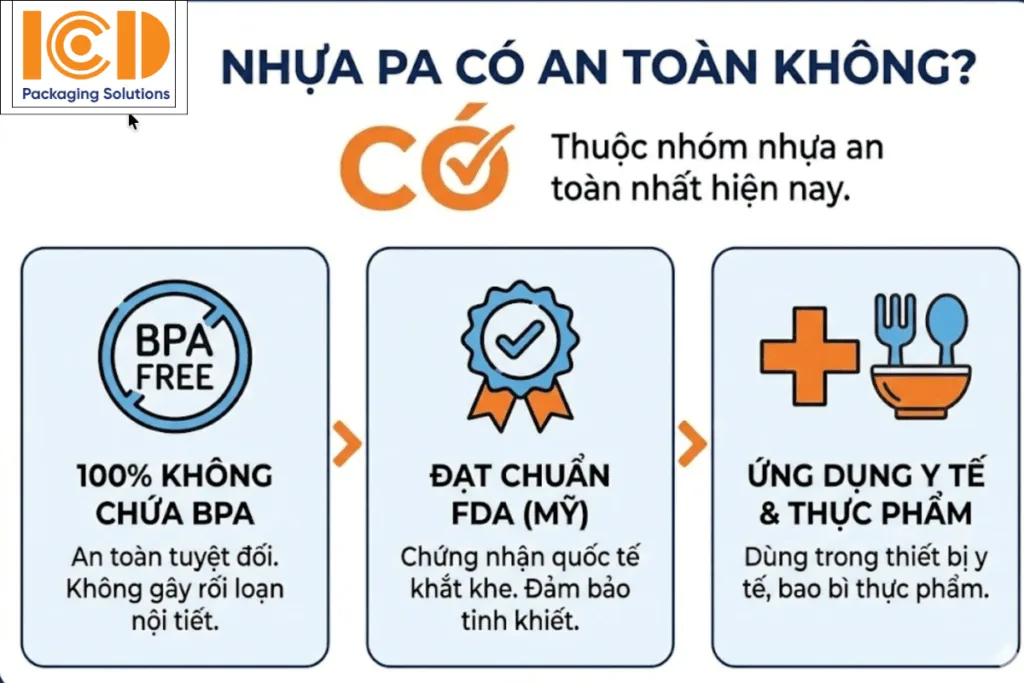
- Regarding BPA: 100% virgin PA plastic contains no Bisphenol A (BPA). BPA is an endocrine-disrupting chemical often found in older or lower-quality plastics. Because PA contains none of this substance, it is widely approved for applications that come into direct contact with humans.
Many premium PA grades today have earned stringent international certifications such as the US FDA standard. This allows the material to be used in medical applications, food-filtering meshes, and packaging that demands absolute purity. If you use household items made from genuine Nylon 6 or Nylon 66, you can have complete peace of mind about your health.
2. Heat resistance of PA plastic - the primary safety factor
The biggest concern users have with plastic is the leaching of toxic substances at high temperatures. For PA plastic, this risk is almost entirely eliminated thanks to its exceptionally impressive heat-resistance threshold.
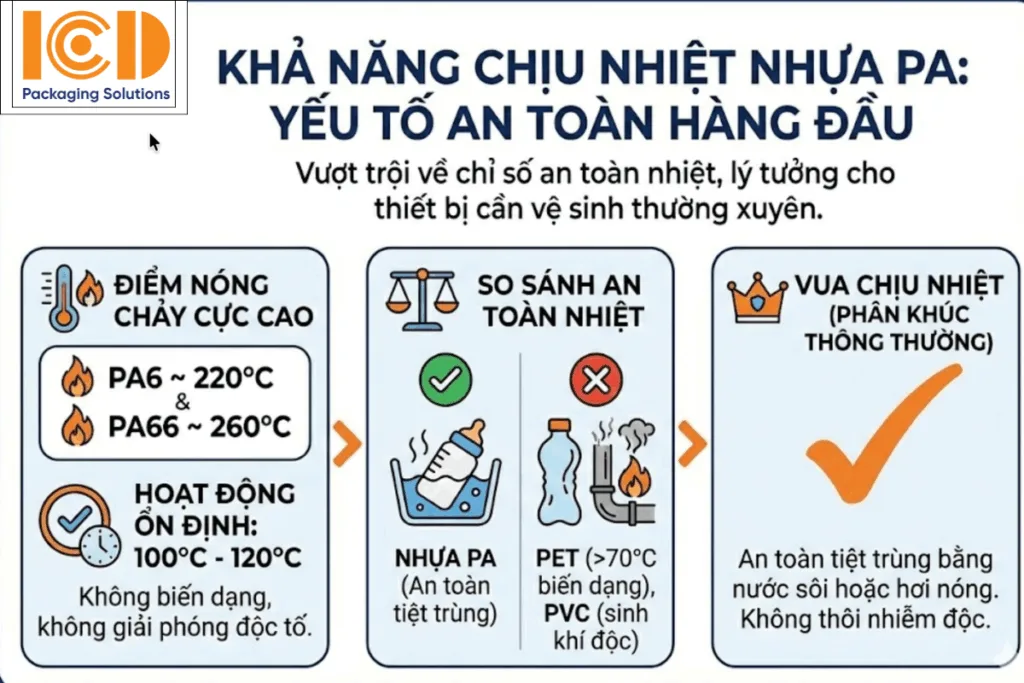
PA plastic has a very high melting point compared to common plastics. The standard PA6 grade melts at around 220 degrees C, while PA66 can reach up to 260 degrees C. This means that under all normal usage conditions - boiling water, dishwasher hot cycles, or even brief exposure to open flames - PA plastic retains its structure without deforming or releasing harmful chemicals.
Practical comparison:
- Boiling water (100 degrees C): Completely safe for PA plastic - far below its melting point.
- Dishwasher (70-80 degrees C): No problem at all. PA plastic does not warp in this temperature range.
- Microwave: Not recommended, not because of toxicity concerns but because PA plastic may heat unevenly and cause hot spots that could affect the food container’s structural integrity.
3. When is PA plastic unsafe? Edge cases to watch
Although PA plastic is inherently very safe, there are a few specific scenarios where users need to be careful:
- Recycled or low-quality PA: During the recycling process, some manufacturers add colorants, fillers, or other additives that are not food-grade. If the recycled PA product is not certified, do not use it for food contact.
- Prolonged UV exposure: As analyzed in the related article on sterilization, PA plastic yellows and becomes brittle with long-term UV exposure. For outdoor applications, always use UV-stabilized PA grades.
- Strong acids and oxidizing agents: PA plastic resists most common chemicals, but concentrated sulfuric acid or strong oxidizing agents can degrade the material over time.
4. How to identify genuine safe PA plastic
Not all products labeled “Nylon” or “PA” are of the same quality. Here is how to verify:
- Check for certification: For food or medical applications, look for FDA, NSF, or equivalent certification on the product label.
- Check the color: Virgin PA plastic is typically off-white or white. Unusual colors (deep black, bright red) without a stated reason may indicate large amounts of colorant have been added.
- Check the texture: Genuine PA plastic surfaces are smooth, with a slightly waxy feel, and do not have a noticeable odor.
- Buy from reputable suppliers: ICD Vietnam only supplies virgin-grade PA plastic raw materials with clear certificates of origin and standard technical specifications.
Frequently Asked Questions
1. Does PA plastic contain BPA?
No. Virgin PA plastic (Polyamide) is structurally completely different from polycarbonate (PC) - the plastic that contains BPA. PA plastic has 0% BPA content.
2. Can PA plastic hold hot food or liquids?
Yes, food-grade PA plastic certified to FDA standards can safely hold hot food and liquids up to its recommended temperature range (typically around 120 degrees C for continuous use). Always check the product’s certification before use.
3. What is the difference between PA plastic and PP or PE plastic in terms of safety?
All three - PA, PP, and PE - are considered safe thermoplastics when used correctly. The key difference lies in heat resistance: PA plastic withstands significantly higher temperatures (up to 260 degrees C) compared to PP (around 160 degrees C) and PE (around 120 degrees C).
References
- US FDA: FDA Regulations for Food-Contact Plastics
- Wikipedia: Nylon (Polyamide) - Material Properties