
Mục lục
A plastic pallet is a flat load-bearing platform moulded from HDPE, PP or PET, capable of carrying 1,000-5,000 kg static, reusable for 10-15 years and compliant with international export regulations without heat treatment. ICD Vietnam stocks four main lines - floor skid, export-grade, standard 3-leg/cup-foot and heavy-duty steel-core - covering warehouses, cold stores, food processing and racking systems. This guide explains what each type is designed for and how to choose the right specification for your operation.
What is a plastic pallet?
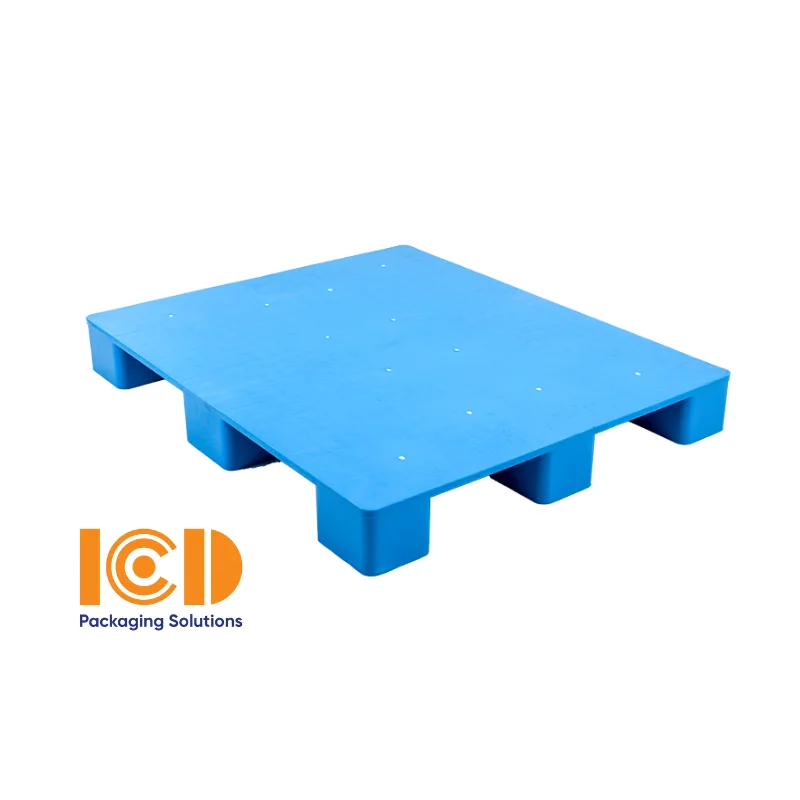
A plastic pallet is a rigid platform manufactured from synthetic polymers - most commonly HDPE (High-Density Polyethylene) or PP (Polypropylene) - that forms the base of a unit load in logistics, manufacturing and warehousing. The deck is moulded with forklift entry channels underneath so a pallet truck or forklift can lift and move the load from any required direction.
Compared with wooden pallets, plastic pallets eliminate rot, mould, insect infestation and the ISPM-15 heat-treatment requirement for international shipments. Because the surface is non-porous and smooth, cleaning takes minutes with water or a compatible detergent.
Four main types of plastic pallet
ICD classifies its pallet range by structure and intended duty. Choosing the wrong type is the most common procurement mistake - the table below shows where each type fits.
| Type | Static capacity | Dynamic capacity | Typical application |
|---|---|---|---|
| Floor skid pallet | up to 1,000 kg | Limited - not for regular forklift movement | Static storage, moisture barrier under cargo |
| Export-grade pallet (single-use) | up to 2,000 kg | up to 1,000 kg | One-way international shipments, container loading |
| Standard 3-leg / cup-foot pallet | up to 3,000 kg | up to 1,500 kg | High-frequency warehouse cycling, compatible with most lift equipment |
| Heavy-duty steel-core pallet | up to 5,000 kg | up to 2,500 kg | Multi-level racking systems, very heavy industrial loads |
Floor skid pallets
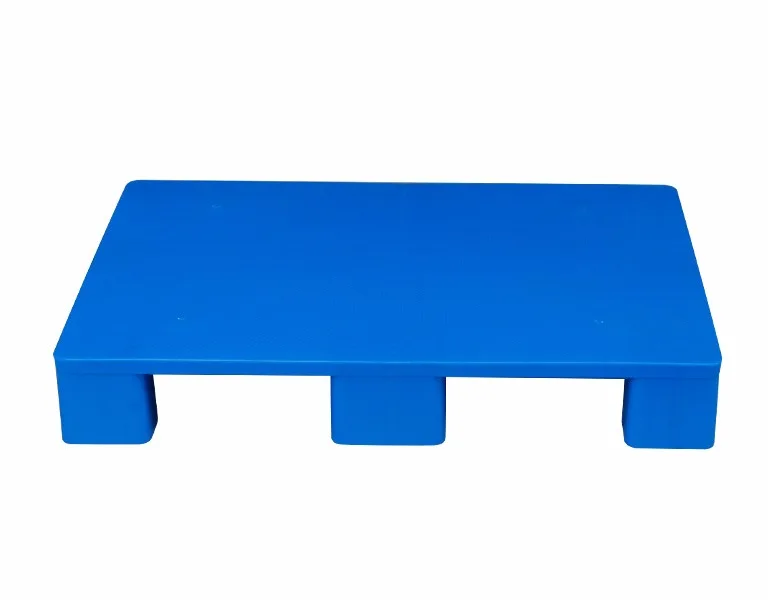
A floor skid pallet has a solid flat deck with no forklift channels or feet of significant height. Its job is to sit on the ground and keep cargo off the floor, blocking moisture and contamination. These are the most economical option per unit and the best choice for long-term static storage where the load is not moved by forklift on a daily basis.
Export-grade pallets (single or limited use)
Export-grade plastic pallets are light, low-profile and built to the minimum specification needed to survive a one-way container journey. No fumigation certificate is required because plastic does not harbour insects or plant diseases. The lower initial unit cost makes them the right choice for outbound supply chains where the pallet is not returned.
Standard 3-leg and cup-foot pallets
This is the workhorse of the ICD range and the most common pallet in Vietnamese warehouses and factories. The three-leg or cup-foot design distributes load evenly, accepts four-way entry for pallet trucks and counterbalance forklifts, and handles the repetitive lifting cycles of a busy distribution centre. With 3,000 kg static and 1,500 kg dynamic capacity at standard sizes (1100 x 1100 mm and 1200 x 1000 mm), it covers the vast majority of manufacturing and FMCG applications.

Heavy-duty steel-core pallets
A steel-core pallet has galvanised steel reinforcement moulded inside the plastic deck. This is the only type suitable for multi-level pallet racking (selective racking, narrow-aisle racking) because the steel prevents the deck from deflecting under sustained load at height. Static capacity reaches 5,000 kg; dynamic capacity 2,500 kg. The higher unit price is offset by the elimination of costly racking incidents caused by pallet deflection.
Additional types by function
| Variant | Key feature | Sector |
|---|---|---|
| Double-face (reversible) pallet | Identical top and bottom deck - use either side | Cold stores, heavy stacking |
| 4-way entry pallet | Forklift access from all four sides | High-density warehouses with limited turning space |
| Spill containment pallet | Raised lip or tray deck catches liquid | Chemicals, drums, IBCs |
| Cup-foot pallet | Circular recesses locate round-base containers | Food, beverage, pharmaceuticals |
| Solid-deck pallet | No gaps - easy to clean, no product fall-through | Food, pharmaceuticals, clean rooms |
Plastic vs wood: a direct comparison
| Criterion | Wood pallet | Plastic pallet (ICD) |
|---|---|---|
| Purchase price | Low | Higher initial cost, lower lifetime cost |
| Service life | 1-3 years typical | 10-15 years with correct use |
| ISPM-15 fumigation | Required for most export destinations | Not required - plastic is exempt |
| Mould and insects | Susceptible | Not susceptible |
| Cleaning | Difficult, absorbs contaminants | Wash with water, compatible detergent |
| Repairability | Easy to nail or reinforce | Difficult to repair; replace when damaged |
| Weight | Heavier (15-30 kg typical) | Lighter (8-18 kg depending on type) |
How to choose the right plastic pallet
Step 1 - Define your load weight
Identify the maximum static load (pallet sitting still, fully loaded) and the maximum dynamic load (pallet lifted by forklift while loaded). Dynamic capacity is always lower than static capacity. If your load regularly exceeds 1,500 kg in motion, you need the standard or heavy-duty line, not the export-grade.
Step 2 - Match the environment
- Cold stores and freezers: HDPE retains flexibility at low temperature; PP can become brittle below -10 C.
- Food and pharmaceutical facilities: Specify virgin-grade HDPE with a solid deck for easiest sanitation and regulatory compliance.
- Chemical storage: Specify a spill containment pallet with a raised bund to prevent liquid reaching the floor.
- Multi-level racking: Steel-core pallets only - standard plastic deflects over time under sustained load at height.
Step 3 - Check the footprint and entry direction
Standard Vietnamese and export footprints are 1100 x 1100 mm and 1200 x 1000 mm. If your forklift needs to enter from all four sides, confirm the pallet is four-way entry. Two-way entry pallets only accept fork tines from two opposing sides.
Industry applications
| Industry | Recommended type | Key requirement |
|---|---|---|
| Food and beverage | Solid-deck, virgin HDPE | Sanitation, no product contamination |
| Pharmaceuticals | Solid-deck, virgin HDPE or PP | GMP compliance, easy audit trail |
| Cold chain / frozen foods | HDPE (remains flexible at low temperature) | Temperature resistance down to -30 C |
| Chemicals / oil drums | Spill containment pallet | Liquid bund, chemical resistance |
| General warehousing | Standard 3-leg or cup-foot | Forklift compatibility, durability |
| Export / international logistics | Export-grade (single-use) | No ISPM-15 certificate needed |
| Heavy industry / racking | Steel-core | 5,000 kg static, no racking deflection |
Related articles
| What is a pallet? Concept, types and applications | Static load vs dynamic load: what the numbers mean | Plastic pallet vs wood pallet: detailed comparison |
1. What material is used to make plastic pallets, and which is best?
Most plastic pallets are moulded from HDPE or PP. HDPE stays flexible and impact-resistant at low temperatures, making it the preferred choice for cold stores and freezers. PP is stiffer and better suited to ambient or slightly elevated temperatures. For food or pharmaceutical contact, always specify virgin-grade resin - recycled resin can introduce contaminants and may not meet food-safety regulations.
2. Plastic pallet or wood pallet - which should I choose?
Wood pallets cost less upfront and are easier to repair on site. However, over a 3-5 year horizon, plastic pallets typically have a lower total cost of ownership: they last 10-15 years, require no fumigation for export, resist mould and insects, and can be cleaned in minutes. If your supply chain crosses international borders or operates in a hygiene-sensitive environment, plastic is the better long-term investment.
3. What is the difference between static load and dynamic load capacity?
Static load is the maximum weight the pallet can carry when sitting still on a flat floor or stacked. Dynamic load is the maximum weight it can carry while being moved by a forklift - always lower than static because movement adds inertia, vibration and side forces. When specifying a pallet, check the dynamic capacity against the actual loaded weight you will lift. A common mistake is buying to the static rating and then overloading the pallet in motion.
4. Can plastic pallets be slippery?
A smooth solid-deck plastic surface can be more slippery than rough sawn timber. Quality manufacturers address this with moulded-in anti-slip studs or rubber anti-slip plugs on the deck surface. In all cases, securing the unit load with stretch film or strapping bands before moving is good practice regardless of pallet material.
5. How long does a plastic pallet last?
A quality plastic pallet used within its rated load and kept away from prolonged direct UV exposure will typically last 10-15 years or more. UV radiation degrades polymer chains over time, so storage under roof or under tarpaulin extends service life significantly. The most common cause of early failure is repeated overloading in dynamic use - always respect the dynamic capacity rating.
Contact ICD Vietnam
Hotline: 0983 797 186 / 090 345 9186 / 090 5859 186
Email: sales@icdvietnam.com.vn | Zalo: Chat Zalo