
Mục lục
- 5 Core Components of the Hydraulic Jack
- How the Hydraulic Jack Works
- Pump force calculation: how much effort does each stroke take?
- Pallet Jack vs Bottle Jack / Floor Jack: key differences
- 6 Common Hydraulic Faults and How to Fix Them
- Monthly Maintenance Checklist
- Related articles
- Frequently asked questions
- Contact ICD Vietnam
The hydraulic jack is the heart of every pallet jack: it converts the operator’s arm force into high-pressure oil that lifts loads of several tonnes. This guide covers the 5 core components (pump piston, main cylinder, check valves, oil reservoir, and release valve), the Pascal’s Law cycle behind every pump stroke, fixes for the 6 most common faults (no lift, load drift, oil leak, and more), the correct oil grade (ISO VG46), and a monthly maintenance checklist to extend service life.
5 Core Components of the Hydraulic Jack
A standard pallet jack hydraulic unit contains dozens of small parts, but 5 main components are what you need to focus on when inspecting or repairing the pump.
1. Pump Piston (Small Piston)
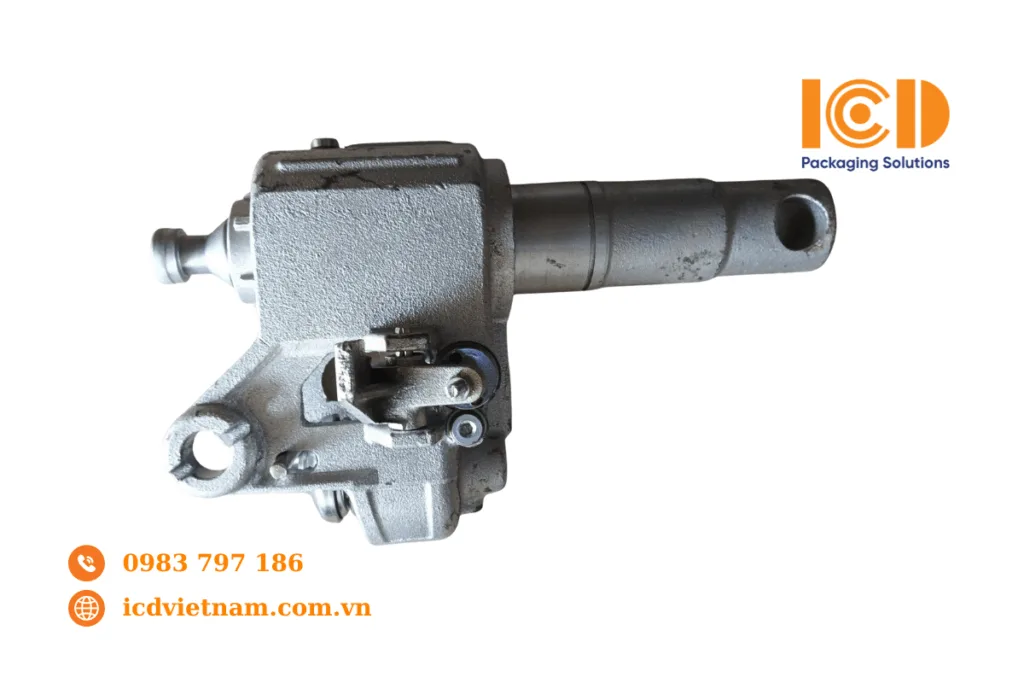
The pump piston receives force directly from the operator’s handle. Its diameter is small - typically 15 mm to 18 mm - which allows a moderate arm force to generate very high pressure. The material is usually chrome-plated hardened steel to resist wear and corrosion caused by constant friction against the rubber seal.
2. Main Cylinder and Lift Piston (Large Piston)
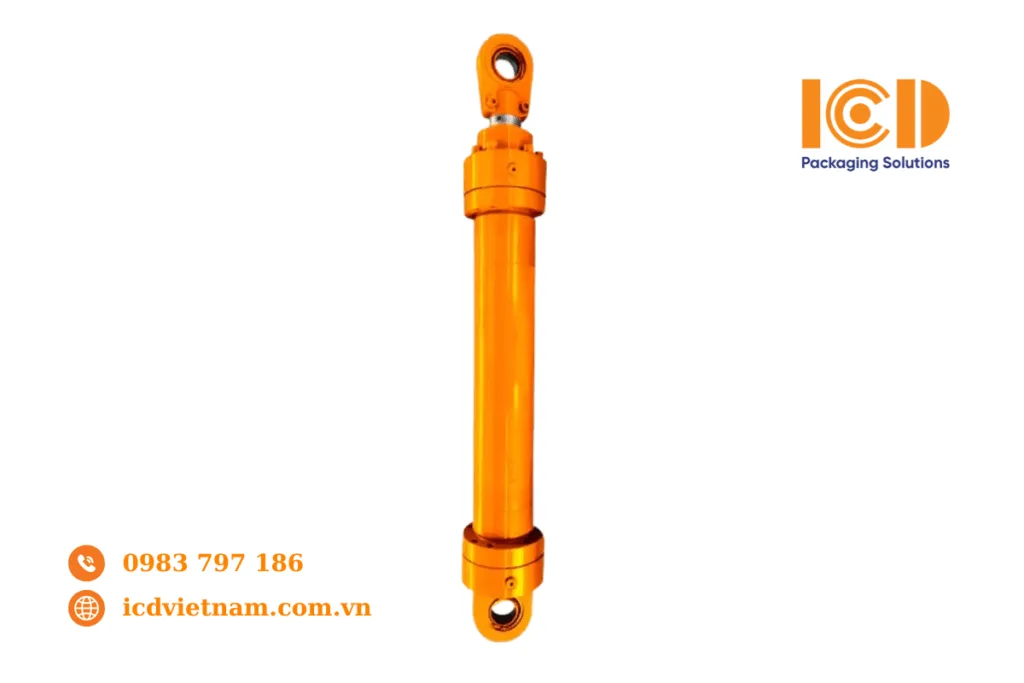
The main cylinder houses the lift piston with a diameter of 35 mm to 45 mm. This is the component that bears the pallet load directly. Its surface is heavily chrome-plated to withstand high pressure and resist scoring. The stroke range is typically 110 mm to 200 mm depending on the model.
3. Ball Check Valve System
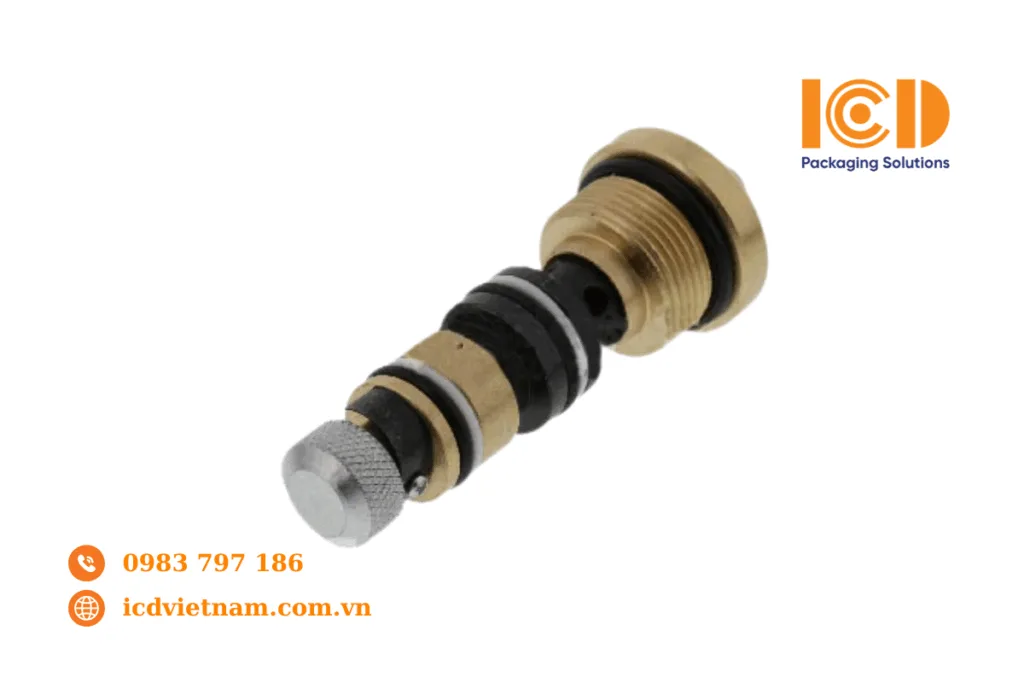
At least two ball check valves sit inside the pump body. The first valve allows oil to flow from the reservoir into the pump chamber but blocks reverse flow. The second valve allows oil from the pump chamber to enter the lift cylinder but prevents the load from dropping when the operator raises the handle. The retaining spring must have the correct tension to hold against pressures up to 300 bar.
4. Oil Reservoir
Surrounding or adjacent to the cylinder, the reservoir holds approximately 0.5 to 1 litre of hydraulic oil - enough to fill the large cylinder when the lift piston is at maximum height. The reservoir cap typically integrates a breather hole or bleed screw to equalize internal pressure.
5. Release Lever and Release Valve Assembly
Located at the base of the handle and connected by a chain or push rod, the release lever opens the release valve when the operator squeezes it. This creates a return path for oil from the large cylinder back to the reservoir. The lowering speed depends on how far the release valve opens.
Component specification table:
| Component | Common material | Standard dimensions | Primary function |
|---|---|---|---|
| Pump piston | Chrome-plated steel | 16 mm / 18 mm diameter | Compress oil to generate pressure |
| Lift cylinder | High-strength steel | 40 mm / 45 mm diameter | Raise the pallet load |
| Check valve | Steel ball + spring | 4-6 mm ball diameter | Direct oil flow |
| Hydraulic seal | Nitrile / PU rubber | Matched to piston size | Seal the oil chamber |
| Hydraulic oil | Refined mineral oil | ISO VG46 viscosity | Transfer energy |
How the Hydraulic Jack Works
The entire system relies on Pascal’s Law: pressure applied to an enclosed fluid is transmitted equally in all directions throughout the fluid and against the walls of the container.
Suction stroke (handle moves up)
When the operator lifts the handle, the small pump piston moves upward, creating an instantaneous vacuum in the pump chamber. Atmospheric pressure and a light spring force the first check valve open, drawing oil from the reservoir into the pump chamber. At the same time, the second check valve (connecting to the large cylinder) stays closed under the weight of the load on the forks, keeping the unit from dropping.
Compression stroke (handle moves down)
Pressing the handle down forces the pump piston to compress the oil in the pump chamber. Rising pressure snaps the first check valve shut. When pressure exceeds the spring force of the second valve, oil is pushed into the base of the large piston. Because the surface area of the large piston is much greater than that of the small piston, the force is multiplied proportionally.
The governing formula:
P = F1 / A1 = F2 / A2
- F1 - force applied to the small pump piston
- A1 - area of the small piston
- F2 - lift force at the large piston
- A2 - area of the large piston
If the large piston has 5 times the area of the small piston, the lift force is 5 times greater (before accounting for the handle lever ratio).
Pressure release
Squeezing the release lever opens the release valve mechanically. Under the weight of the pallet, oil is forced back from the large cylinder through a narrow passage into the reservoir, and the system returns to its rest position.
Pump force calculation: how much effort does each stroke take?
F_handle = (Load x g) x (D_smallPiston squared / D_largePiston squared) / lever_ratio
- g: gravitational acceleration = 9.81 m/s2
- D_smallPiston, D_largePiston: piston diameters in mm
- lever_ratio: approximately 5-7 (handle length divided by piston pivot distance)
Example: 2,500 kg load, small piston 12 mm, large piston 38 mm, lever ratio 6:
F = (2500 x 9.81) x (12 squared / 38 squared) / 6 = 24,525 x 0.10 / 6 = approx. 408 N = 41 kg at the piston tip, divided by lever ratio 6 = approx. 7 kg hand force per stroke.
If actual hand force exceeds 15 kg, the pump is damaged or the wrong oil is in use.
Pallet Jack vs Bottle Jack / Floor Jack: key differences
| Feature | Bottle / floor jack | Pallet jack hydraulic pump |
|---|---|---|
| Purpose | Lift a stationary load (vehicle, machine repair) | Lift and move loads on forks |
| Capacity | 2-50 tonnes | 1-5 tonnes (typical) |
| Stroke height | 200-700 mm | 100-200 mm (low-lift), 1.6-3 m (high-lift) |
| Construction | Single piston, no lateral push handle | Dual piston (small + large), lateral steering handle |
| Sustained load holding | Yes (manual release valve) | Yes, but seal wear causes drift over time |
| Approximate cost | USD 20-120 (jack only) | USD 50-70 (pump assembly), USD 160-280 (complete unit) |
6 Common Hydraulic Faults and How to Fix Them
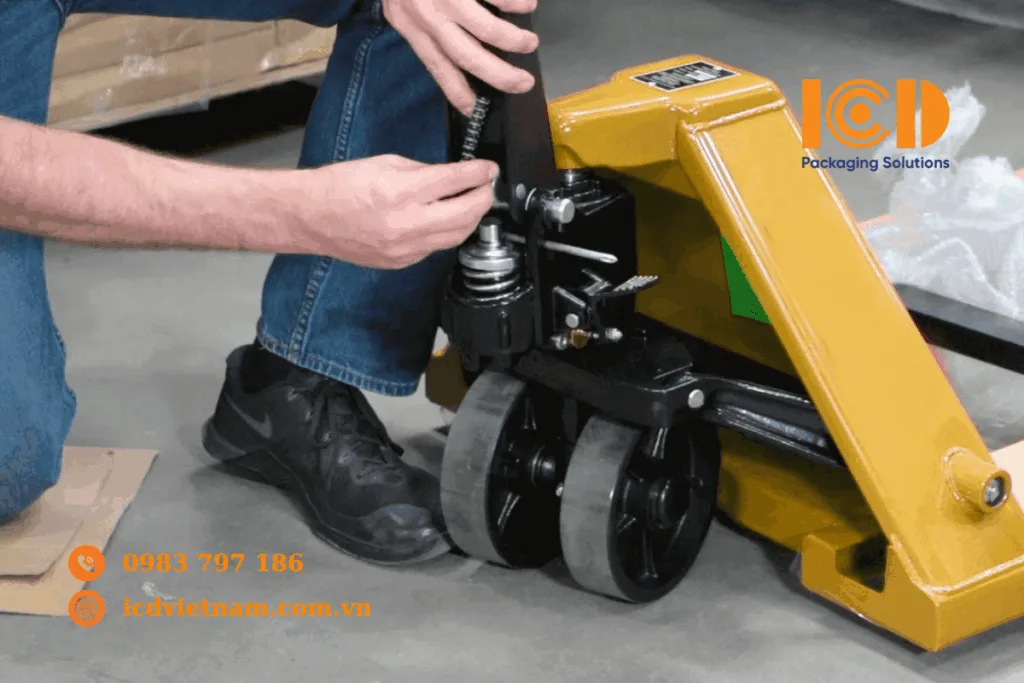
Based on field experience across warehouse operations, these are the most frequent faults and practical fixes any operator or technician can perform on-site.
1. Unit does not lift or lifts very slowly
Accounts for up to 50% of all faults. The usual cause is a check valve ball stuck by metal filings or oil contamination.
Fix: Remove the hex-head screw at the valve assembly and take the steel ball out. Rinse with clean solvent, wipe the valve chamber dry, and reassemble. If the ball is deformed, replace it with a new one (typically 6 mm diameter).
2. Load drifts down after lifting (cylinder creep)
The primary cause is a worn or torn hydraulic seal (seal kit) on the large piston, allowing oil to leak back into the reservoir past the piston.
Fix: Disassemble the main cylinder completely and replace the seal kit with the correct size. Clean the cylinder bore thoroughly; if the bore is deeply scored, a new seal alone will not provide a lasting fix.
3. Handle is hard to pump but load does not lift
Usually caused by heavily contaminated hydraulic oil that has thickened, or by a foreign object blocking an oil passage.
Fix: Drain all old oil, flush the reservoir several times with fresh hydraulic oil, then refill with clean ISO VG46 hydraulic oil.
4. Oil leaks from the pump body
O-rings at the fittings or pump piston seals have degraded after extended use.
Fix: Identify the leak point, disassemble the fitting, and replace the rubber O-ring. This is inexpensive but requires care to avoid damaging thread surfaces.
5. Forks feel weak and cannot lift rated capacity
Air trapped in the system or a low oil level is the likely cause. Air is compressible, so pump strokes compress the air pocket rather than driving the piston.
Fix: Bleed the system by holding the release lever open and pumping the handle rapidly 10-15 times. If the problem persists, check the oil level and top up if low.
6. Forks will not lower
Usually caused by a jammed release lever, a broken release valve spring, or a bent large piston from off-center overloading.
Fix: Inspect the release chain for excess tension and adjust. If the piston is bent, replace it with a new one; straightening with a hydraulic press is possible but reduces long-term accuracy.
Monthly Maintenance Checklist
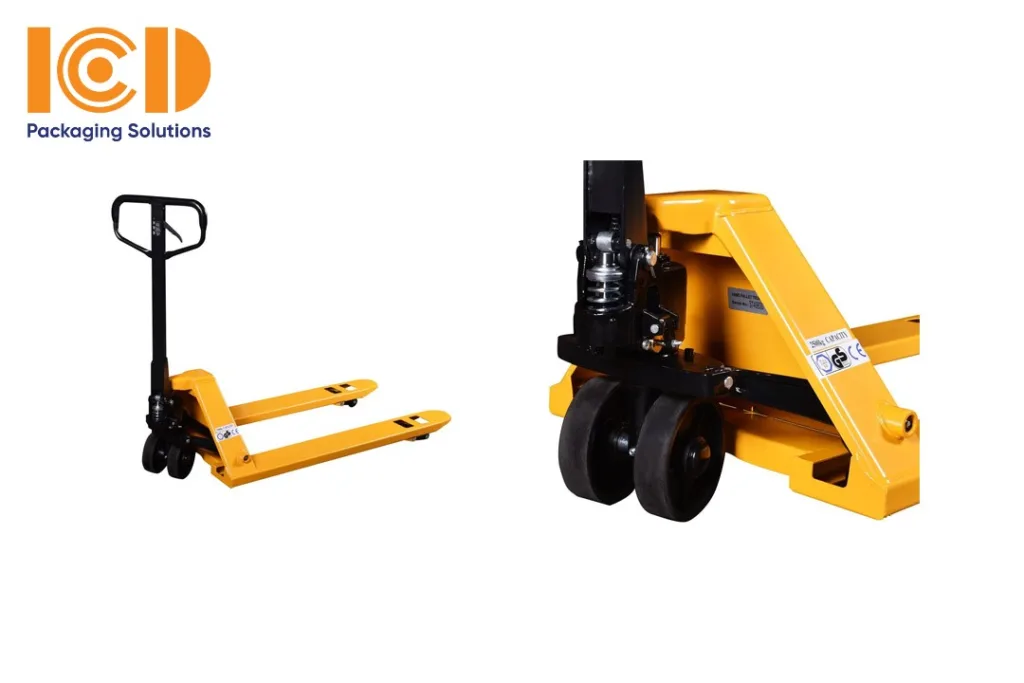
Regular preventive maintenance keeps the pump running smoothly and avoids costly faults.
- Check oil level: with forks fully lowered, oil should sit approximately 20 mm below the reservoir cap. Top up with ISO VG46 if low.
- Lubricate joints: apply grease to the pump piston rod and handle pivot points.
- Clean the lift piston: wipe the large piston clean before lowering the forks to prevent dirt entering and damaging the seal.
- Inspect for leaks: check under the pump body for oil puddles or wet spots after each shift.
Recommended oil grade: ISO VG46 hydraulic oil (for example Shell Tellus S2 M46 or Castrol Hyspin AWH-M 46). Never use engine oil or brake fluid - their viscosity and chemical properties destroy rubber seals quickly. Do not use VG68 in normal climates; it is too viscous and makes pumping hard in cool weather.
| Service item | Interval | Notes |
|---|---|---|
| Oil level check | Monthly | Top up with ISO VG46 if below mark |
| Full oil change | Every 12 months | Every 6 months in dusty or cold-store environments |
| Piston rod lubrication | Monthly | Light grease on rod and handle pivots |
| Seal kit inspection | Annually or on drift fault | Replace if visible wear or load drift observed |
| Check valve cleaning | When lift slows | Rinse ball and seat with clean solvent |
Related articles
| How to operate a pallet jack safely | Pallet jack capacity: choosing the right load rating | Pallet jack vs forklift: when to use each |
Frequently asked questions
1. What are the most important components of a pallet jack hydraulic system?
The three most critical components are the piston (generates force), the check valves (hold pressure), and the rubber seals (contain oil). If any one of these fails, the unit cannot function reliably.
2. Why does the pallet jack fail to lift after an oil change?
Air has entered the oil circuit - a condition called air lock. Hold the release lever open and pump the handle rapidly 10-15 times to push the air pocket back into the reservoir. The system will then lift normally.
3. How often should hydraulic oil be changed?
In a normal warehouse environment, change the oil every 12 months. In dusty or cold-storage environments, every 6 months to maintain oil cleanliness and protect seals.
4. What oil grade is correct for a pallet jack?
ISO VG46 mineral hydraulic oil. Never substitute engine oil or brake fluid - their viscosity and chemical properties rapidly degrade rubber seals and check valve springs.
5. Can the hydraulic pump be repaired without replacing the whole unit?
Yes. Most faults (stuck check valve, worn seal kit, low oil, air lock) are field-repairable with standard tools. Only a cracked or severely scored cylinder bore requires full pump replacement.
6. What causes a pallet jack to lower on its own after lifting?
Load drift is almost always caused by a worn or torn hydraulic seal (O-ring or piston seal) on the large lift piston, allowing pressurized oil to leak slowly back into the reservoir. Replace the seal kit to fix this.
7. Does ICD Vietnam supply Xilin pallet jacks and spare parts?
Yes. ICD Vietnam is the exclusive distributor of Xilin (Ningbo Ruyi) pallet jacks in Vietnam, with a stock of over 500 units and genuine spare parts (seal kits, check valves, pump assemblies). 2-year manufacturer warranty included. Contact our technical team for same-day parts availability in Hanoi and Ho Chi Minh City.
Contact ICD Vietnam
Hotline: 0983 797 186 / 090 345 9186 / 090 5859 186
Email: sales@icdvietnam.com.vn | Zalo: Chat Zalo