
Table of Contents
- Why pallet jack forks sink on their own
- How to diagnose it on the spot
- How to fix each cause
- Air in the oil and how to bleed it
- Understanding the 3-position release lever
- Preventing forks from sinking
- Frequently asked questions about sinking pallet jack forks
- 1. Is it a problem if the forks sink a few millimetres slowly?
- 2. What is the fault if the forks sink fast but no oil seeps out?
- 3. Can I replace the seals on a pallet jack myself?
- 4. How often should the hydraulic oil be changed?
- 5. Are sinking forks dangerous?
- 6. Why is a newly bought pallet jack already sinking?
- 7. What hydraulic oil should I use for a hand pallet truck?
- Contact ICD Vietnam for Xilin forklift technical support
- References
- Related articles
Reviewed and updated by ICD - Week 43/2026
A pallet jack with forks that sink on their own is one where the forks have been pumped up and then drop slowly although nobody has pulled the lowering lever. The cause always lies in the oil-holding path: a control lever not fully back in position, air in the oil, dirty oil jamming a valve, a leaking check valve, or a worn piston seal. The first three causes can be fixed in a few minutes on your own; the last two need the pump assembly taken apart.
A load that drifts down while being pulled is both unsafe and a loss of productivity. This article ranks the five causes from the easiest to check, with on-the-spot diagnosis and reference values taken from the Xilin hand pallet truck manual and data sheets, so you know when you can fix it yourself and when to replace the seals or send the truck for repair.
Why pallet jack forks sink on their own
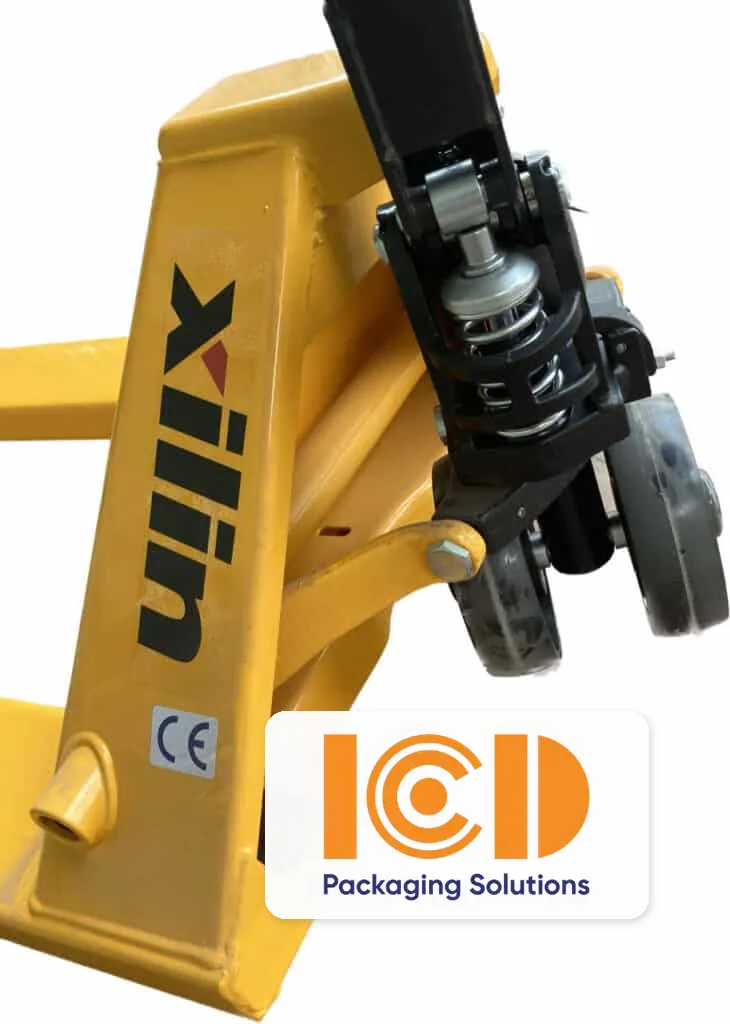
When you pump, hydraulic oil is pushed into the cylinder and raises the forks. A check valve and seals hold the oil so it cannot flow back, which is why the forks stay at the height you lifted them. If any oil-holding part fails, oil leaks back to the reservoir and the forks sink gradually. The five causes below run from easy to check to complex.
| Cause | Signs | Level of repair |
|---|---|---|
| Release valve not fully closed | Release lever stuck between positions, forks sink quickly | Adjust yourself, easy |
| Dirty oil, debris jamming the valve | Forks sink slowly, oil turns cloudy | Change the oil, easy |
| Check valve (ball) leaking | Forks sink steadily even with the release valve closed | Clean or replace the valve ball |
| Worn piston seal | Forks sink with oil seeping around the cylinder rod | Replace the seal, technician needed |
| Scored cylinder, bent rod | Fast sinking, with scratches along the rod | Replace the cylinder assembly |
In short, there are two kinds of leak. An external leak is oil escaping from the truck through the rod seal, and you can see it. An internal leak is oil slipping back from the cylinder to the reservoir past a valve: you see no drops, yet the forks still sink. Telling the two apart already narrows the causes by half.
How to diagnose it on the spot
Step 1: check the release lever
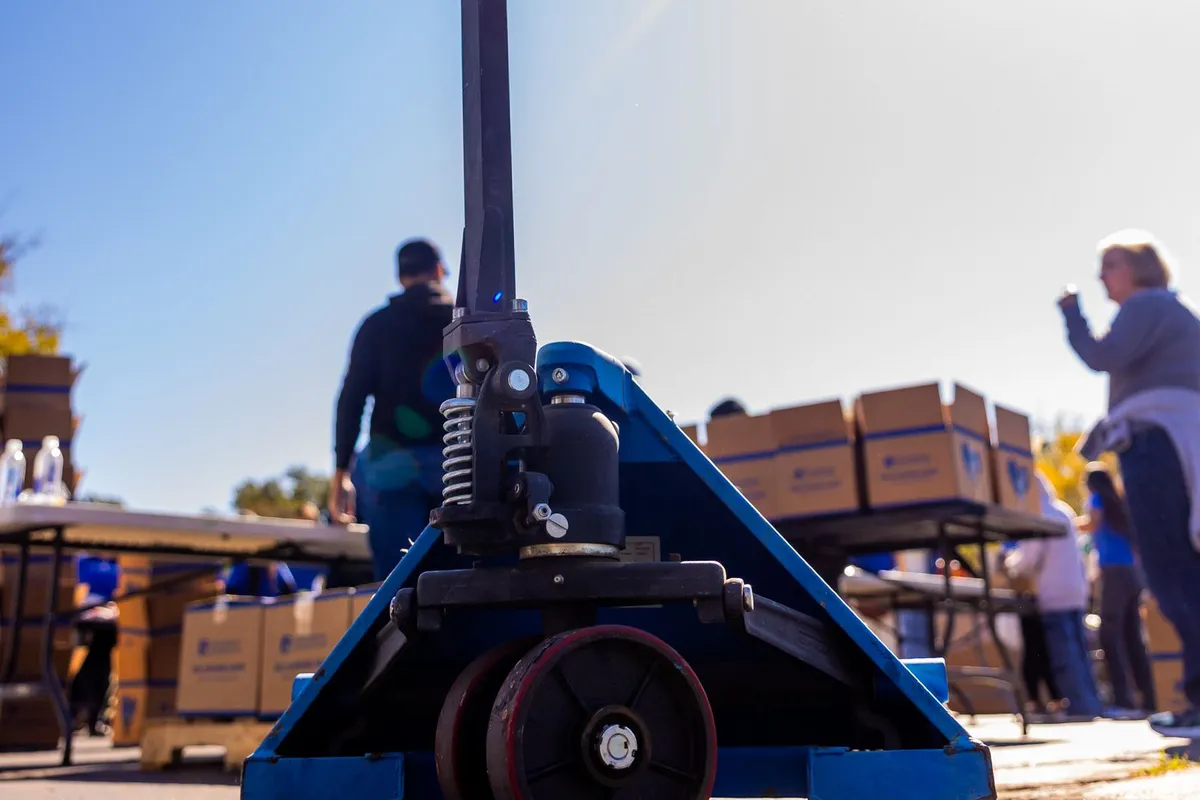
A hand pallet truck has a 3-position lever: lift, hold (neutral) and lower. The Xilin manual says to keep the lever in the lift position while pumping and in the neutral position while pulling a load. If the lever is stuck between hold and lower, the release valve does not seal and the forks sink. Push the lever firmly to hold and check that the chain or control rod down to the valve assembly is adjusted correctly. This is the easiest cause and can be fixed immediately.
Step 2: lift a light load and watch how fast it sinks
Lift a light load and leave it for 2-3 minutes. Very slow sinking while holding a load for a long time can be acceptable; sinking you can clearly see within a few minutes is a fault to fix. Fast, steady sinking with the release valve closed is usually caused by a leaking check valve or a worn seal.
Step 3: check for oil around the cylinder rod
Look around the rod and the cylinder head. A film of oil seeping out means the piston seal is worn, which both lets the forks sink and loses oil. This case needs a seal replacement and cannot be cured by valve adjustment.
Step 4: count the pump strokes
The Xilin data sheet states that the DF-III hand pallet truck needs about 10 strokes to reach full lift, with each stroke raising about 11 mm. If the truck needs clearly more strokes to reach full height, or each stroke barely moves the forks, oil is leaking back during pumping itself: a sign of air in the oil, low oil, a leaking check valve or a worn piston seal. If the forks still will not lift after many strokes, read why a hand pallet truck will not lift.
How to fix each cause
Minor faults: adjust the release valve, change the oil
If the release lever is out of adjustment, resetting the stop is enough. If dirty oil lets debris jam the valve, drain the old oil, clean the assembly and refill with the correct new hydraulic oil. The Xilin manual recommends 46# anti-wear hydraulic oil, with about 0.41 litres for the pump assembly: even a small shortage is enough to make the pump feel spongy. You can do both jobs yourself at low cost.
Check valve fault: clean or replace the valve ball
A dirty or pitted valve ball and seat let oil slip back. Take it apart and clean the ball; if it is pitted, fit a new one. This requires taking the pump assembly apart, so leave it to a technician if you are not used to it.
Seal and cylinder fault: replace with genuine parts
A worn piston seal or a scored cylinder is the most serious cause. You need to replace the seal kit or the whole cylinder assembly. Use genuine Xilin parts to ensure a tight fit and durability; a seal that is not to standard will fail again quickly. If the rod is scored lengthwise, even a new seal will only hold for a short time, so replace the rod or the whole cylinder assembly.
Air in the oil and how to bleed it
One important cause many people overlook is air getting into the hydraulic oil. It is common in newly bought trucks, trucks that have just been shaken in transport, trucks laid on their side, or trucks just refilled with oil. Symptoms: jerky sinking, a pump handle that feels spongy, and sinking without oil seeping out.
How to bleed the air in 2 minutes
According to the Xilin manual, move the lever to the lower position and pump the handle several times with no load to push air bubbles out of the pump chamber. Repeat until the handle no longer feels spongy, then move the lever to the lift position and pump to see whether the forks now rise smoothly.
This fix costs no parts, so try it first before thinking about replacing seals.
Understanding the 3-position release lever
Knowing how the 3 positions work makes self-diagnosis faster.
| Position | Function | Relation to sinking forks |
|---|---|---|
| Lift | Return valve closed; pumping raises the forks | Normal |
| Hold (neutral) | Used when pulling the truck along | If stuck here or slipped toward lower, oil returns continuously and the forks sink |
| Lower | Opens the return valve, releases oil and lowers the forks | Normal when you lower on purpose |
Lowering speed adjusting screw
The pump assembly has a screw that adjusts the lowering speed. A screw that is set wrongly or has come loose keeps the return valve from sealing and causes sinking. You can adjust it a little at a time and test after each adjustment; note that over-tightening will stop the forks from lowering at all. For the BF-III series, the manufacturer states that the fork lowering speed is adjustable and the truck has an overload valve: when the load exceeds the rated capacity, the pump will not lift further, which is a protection mechanism and not a fault.
Newly bought truck sinking: what to do and warranty
A new truck that sinks is usually due to air getting in during transport, and bleeding the air first fixes most cases. If it still sinks, it may be a seal or valve defect from the factory; Xilin pallet trucks at ICD carry a 12-month warranty, so contact us to exchange or repair, and do not take it apart yourself or you may void the warranty. To revisit the basic construction and specifications, see what is a low-lift pallet jack.
Preventing forks from sinking
Check and change the hydraulic oil on schedule
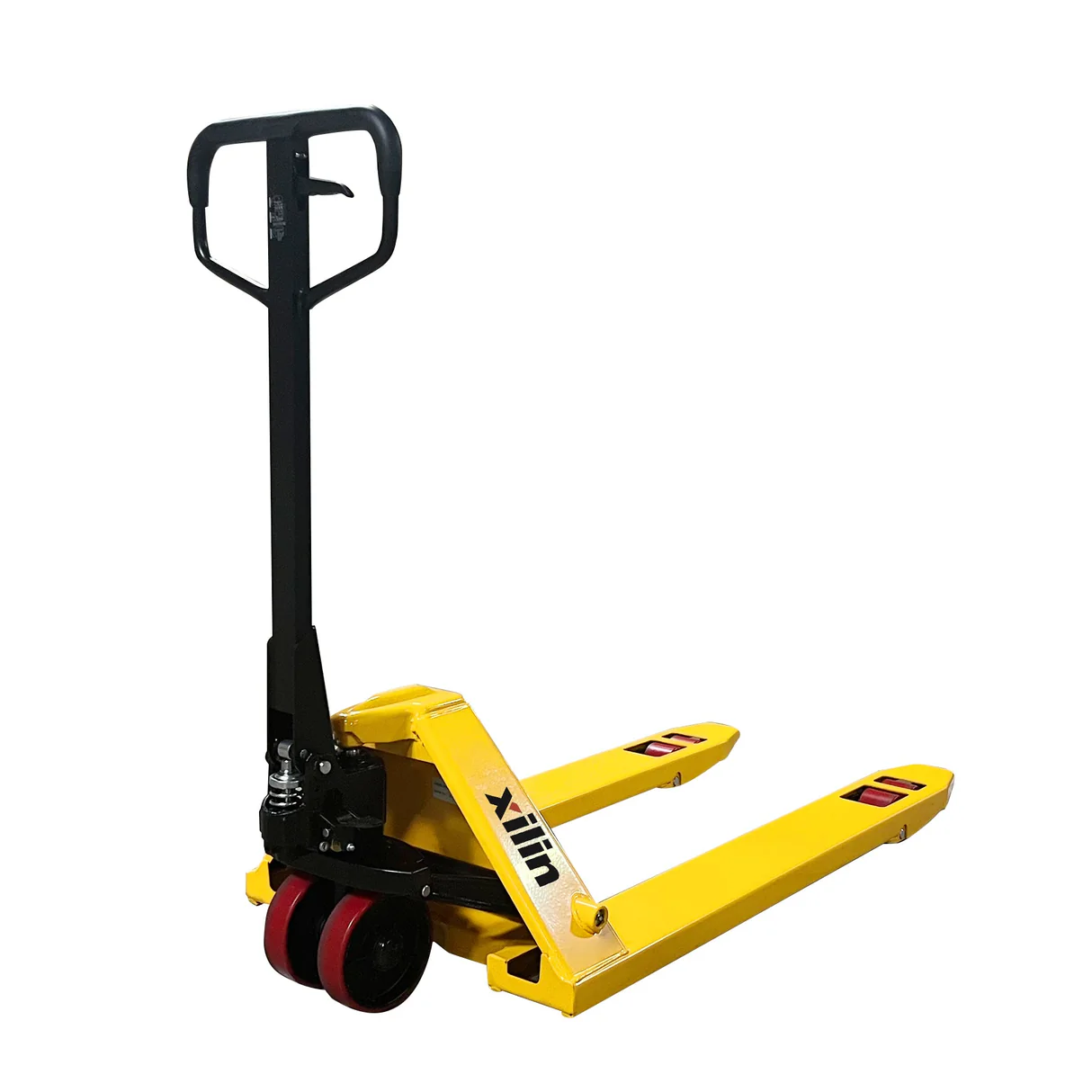
The Xilin hand pallet truck manual sets an oil level check every 3 months. At each check, look at the colour as well: oil that turns cloudy, contains water or has debris should be replaced at once with the correct 46# type. Clean oil keeps valves and seals durable and lowers the risk of debris jams that cause sinking.
Do not overload, and do not leave loads hanging
Lifting above the rated load puts high pressure on the seals and cylinder and wears them quickly. Do not leave a load hanging on the forks longer than needed; lower it when you stop to take pressure off the hydraulic system.
Maintain to the manufacturer’s schedule
Besides oil, the Xilin manual calls for checking the wheels and axle daily and lubricating joints and pins monthly. A slack or dry lever chain is a common reason the lever does not return to the correct position.
| Item | Per the Xilin manual |
|---|---|
| Hydraulic oil type | 46# anti-wear hydraulic oil |
| Oil quantity for the pump assembly | About 0.41 litres |
| Oil level check | Every 3 months |
| Wheels and axle | Check daily |
| Joints and pins | Lubricate monthly |
Frequently asked questions about sinking pallet jack forks
1. Is it a problem if the forks sink a few millimetres slowly?
Very slow sinking while holding a load for a long time can be acceptable on a hand pallet truck. Worry only when the forks sink visibly within a few minutes, which signals a valve or seal problem. Use the marking test to measure for certain.
2. What is the fault if the forks sink fast but no oil seeps out?
Usually a leaking check valve (valve ball) or a release valve that is not fully closed, so oil slips back to the reservoir inside without leaking outside. Check the release valve first, then the valve ball.
3. Can I replace the seals on a pallet jack myself?
Replacing seals means taking the cylinder assembly apart and having suitable tools. A technically minded person can do it; otherwise take it to a repair shop to avoid reassembling it wrongly and causing more damage. Always use genuine seals of the correct size.
4. How often should the hydraulic oil be changed?
The Xilin manual sets an oil level check every 3 months. Change it at once when the oil turns cloudy, contains water or has debris; clean oil keeps valves and seals durable and prevents sinking caused by jammed debris.
5. Are sinking forks dangerous?
Yes. A load that drifts down while moving can fall or tip, causing accidents and damaged goods. Stop using the truck and fix it at once when you see clear sinking; do not keep operating it.
6. Why is a newly bought pallet jack already sinking?
Usually air got into the oil during shaking in transport. Bleeding the air first (move the lever to the lower position and pump the handle several times with no load) fixes most cases. If it still sinks, it may be a seal or valve fault; contact the genuine warranty service and do not take it apart yourself.
7. What hydraulic oil should I use for a hand pallet truck?
The Xilin hand pallet truck manual recommends 46# anti-wear hydraulic oil, filled with the correct type and to the right level. Do not mix different oils and do not use engine oil, to avoid a heavy pump and jammed valves.
Contact ICD Vietnam for Xilin forklift technical support
ICD Vietnam Industrial Manufacturing Co., Ltd.
Northern Vietnam: 3rd Floor, Thang Long A1 Building, Bau Hamlet, Thien Loc Commune, Hanoi - 0983 797 186 / 090 345 9186 / 090 5859 186
Southern Vietnam: 551/212 Le Van Khuong Street, Tan Thoi Hiep Ward, District 12, Ho Chi Minh City - 098 6784 186
Email: sales@icdvietnam.com.vn · Zalo: Chat on Zalo now
Describe the symptoms (fast or slow sinking, any oil seepage, number of strokes to reach full lift), and ICD Vietnam will advise on the repair and the right parts.
References
- Xilin hand pallet truck manual (Ningbo Ruyi): lever positions, 46# hydraulic oil, oil quantity, bleeding method, inspection and lubrication schedule.
- DF-III and BF-III data sheets: Ningbo Ruyi - Hand Pallet Truck (stroke count, 11 mm per stroke; overload valve, adjustable lowering speed).
- The guidance applies to hydraulic hand pallet trucks, focusing on the Xilin (Ningbo Ruyi) series that ICD Vietnam distributes. Updated October 2026. Genuine parts, 12-month warranty.